If you’ve noticed one extra small tooth growing between your upper front teeth, have you been brushing it off as no big deal?
Left alone, it can gradually cause the roots of a neighboring tooth to resorb.
This unfamiliar tooth is often a mesiodens.
When it’s found and how it’s treated can significantly change the shape of the entire dental arch.
This article covers why a mesiodens develops and the problems it can cause when left untreated.
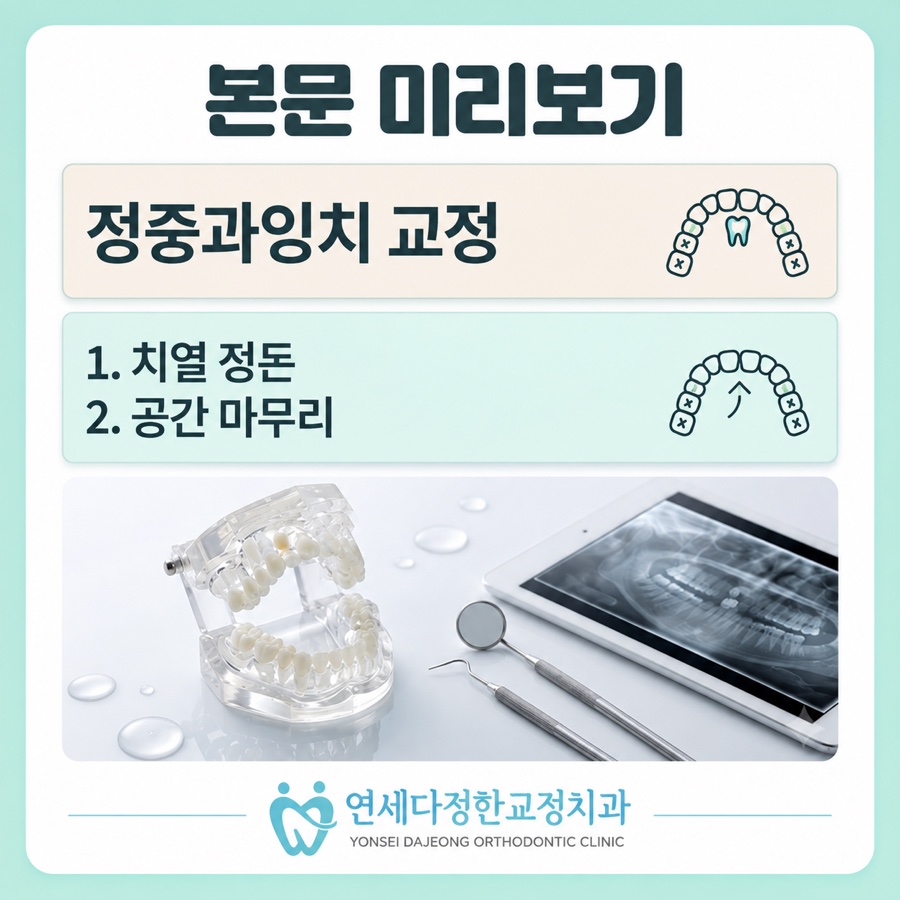
We’ll also walk through actual mesiodens treatment, step by step, including extraction and how the resulting gap is closed with orthodontics.

What Is a Supernumerary Tooth and a Mesiodens?
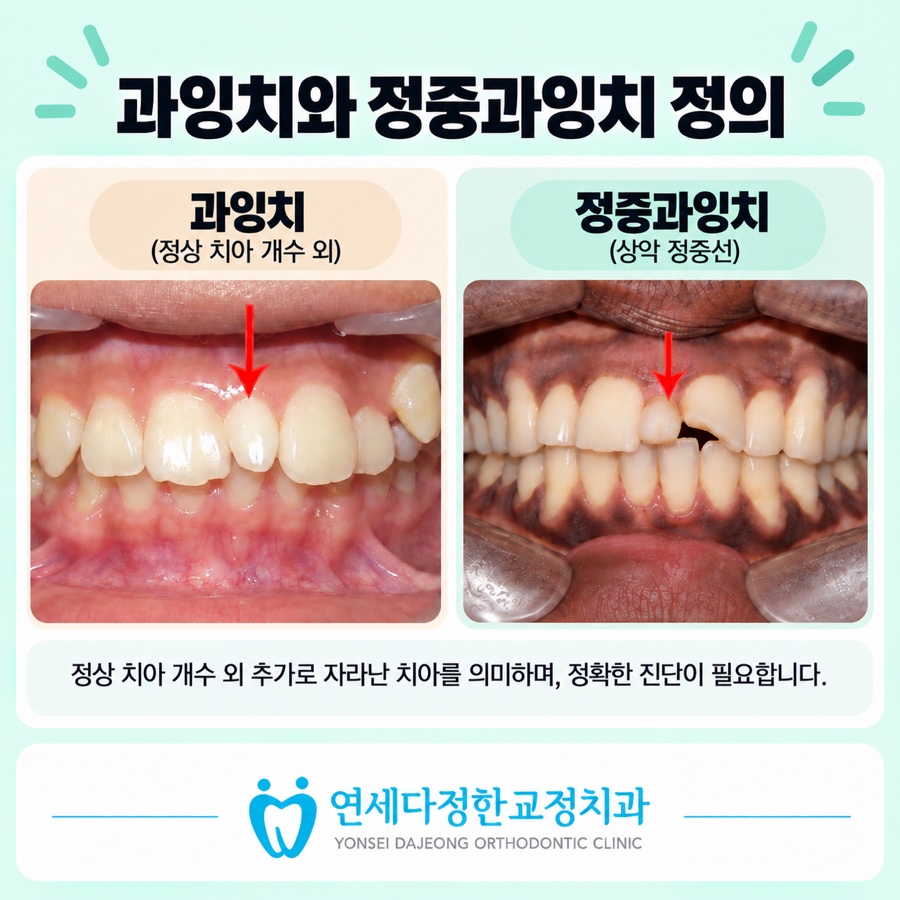
A supernumerary tooth is an extra tooth that develops beyond the normal count of 32, and when it appears between the upper front teeth at the midline, it’s called a mesiodens.
Most people have felt self-conscious about crooked teeth whenever they smile.
But spotting an unexpected extra tooth between the front teeth raises even more concern.
Misaligned teeth don’t just affect appearance — they can directly impact overall dental health.
✅ Studies report that mesiodens occurs in roughly 0.3–0.8% of children in the primary dentition stage.
✅ In the permanent dentition stage, that rate is reported to rise to 1.5–3.5%.
✅ It is reported to occur about twice as often in males as in females.
Statistically, mesiodens is notably more common in males.
Both domestic and international studies report a male-to-female ratio of roughly 2 to 1.
If a mesiodens is found, it’s important to first accurately assess its position, orientation, and relationship to neighboring teeth.
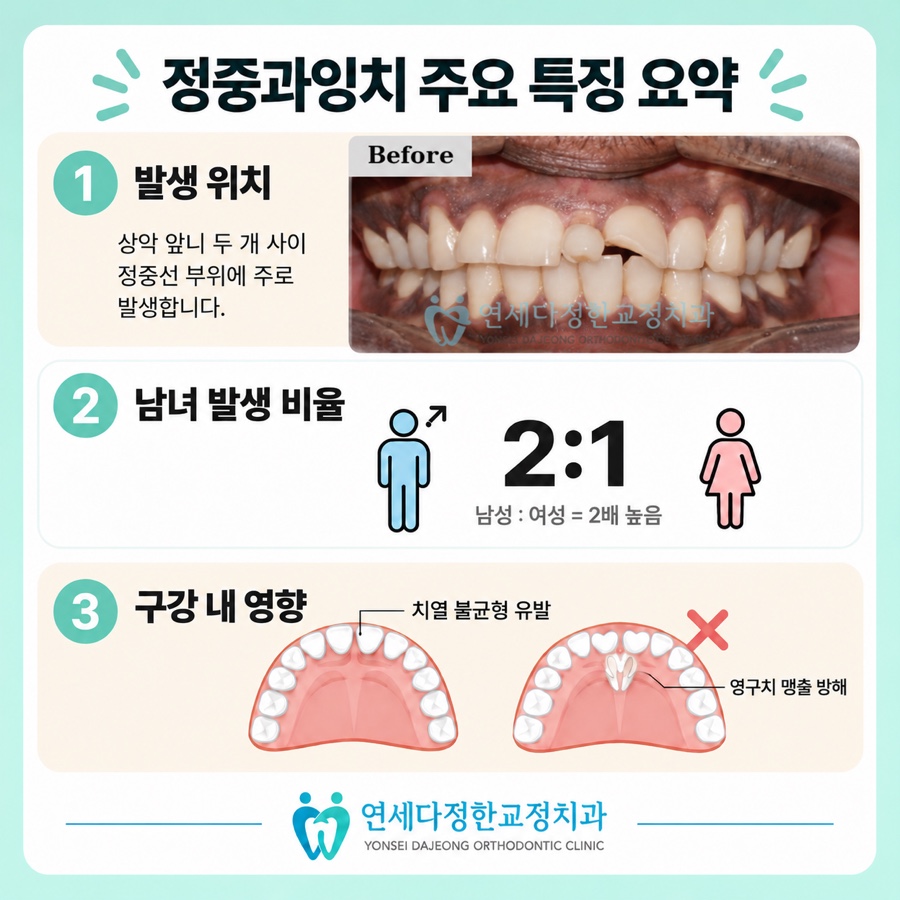
✅ Occurs at the center of the upper jaw, either erupted or impacted
✅ About twice as common in males as in females
✅ Can block permanent tooth eruption and cause dental misalignment
What Happens If a Mesiodens Is Left Untreated?
Leaving a mesiodens untreated can block the eruption path of permanent teeth and put pressure on the roots of neighboring teeth, potentially leading to root resorption.
When a supernumerary tooth blocks a permanent tooth from erupting, that tooth may fail to come in at its proper position.
This often disrupts overall tooth alignment and can lead to malocclusion.
Cyst formation inside the jawbone has also been reported in some cases, so it’s worth watching for.
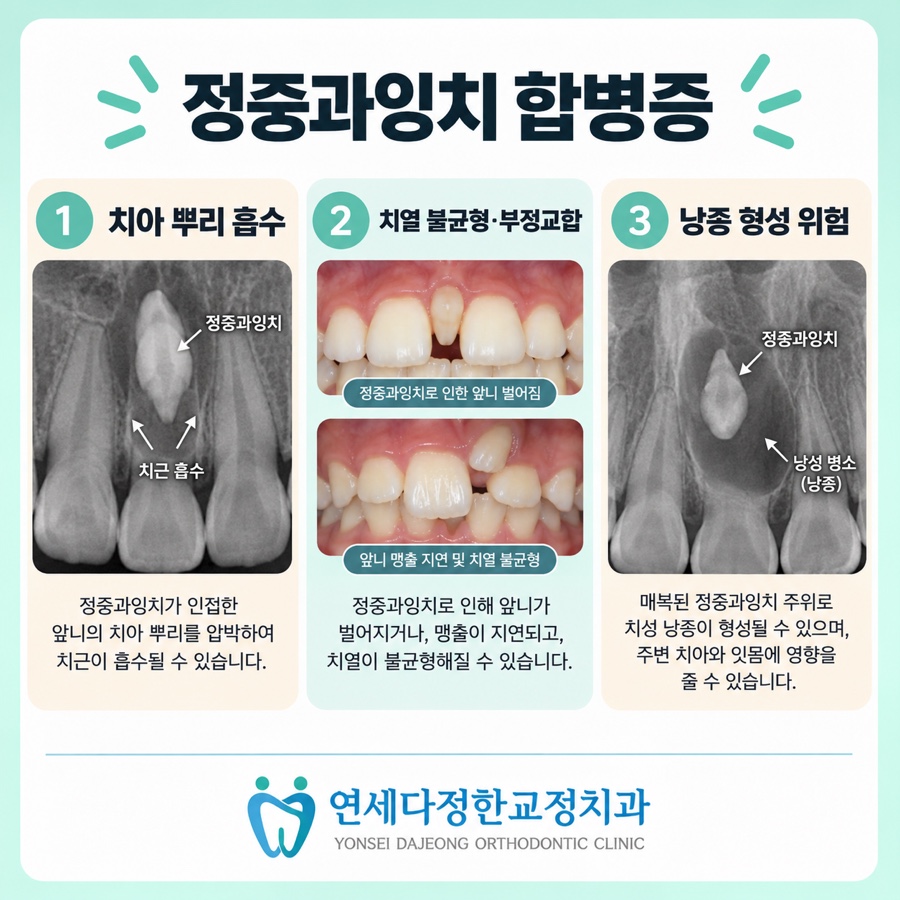
⚠️ Ignoring it just because there’s no pain can allow damage to neighboring teeth to progress.
⚠️ Treatment differs greatly depending on position and shape, so a thorough exam should come first.
If the tooth is small and isn’t causing other effects, periodic monitoring alone can sometimes be enough.
But if it’s causing complications, surgical extraction becomes necessary.
To address both the leftover space and any malocclusion after extraction, orthodontic treatment is typically needed alongside it.

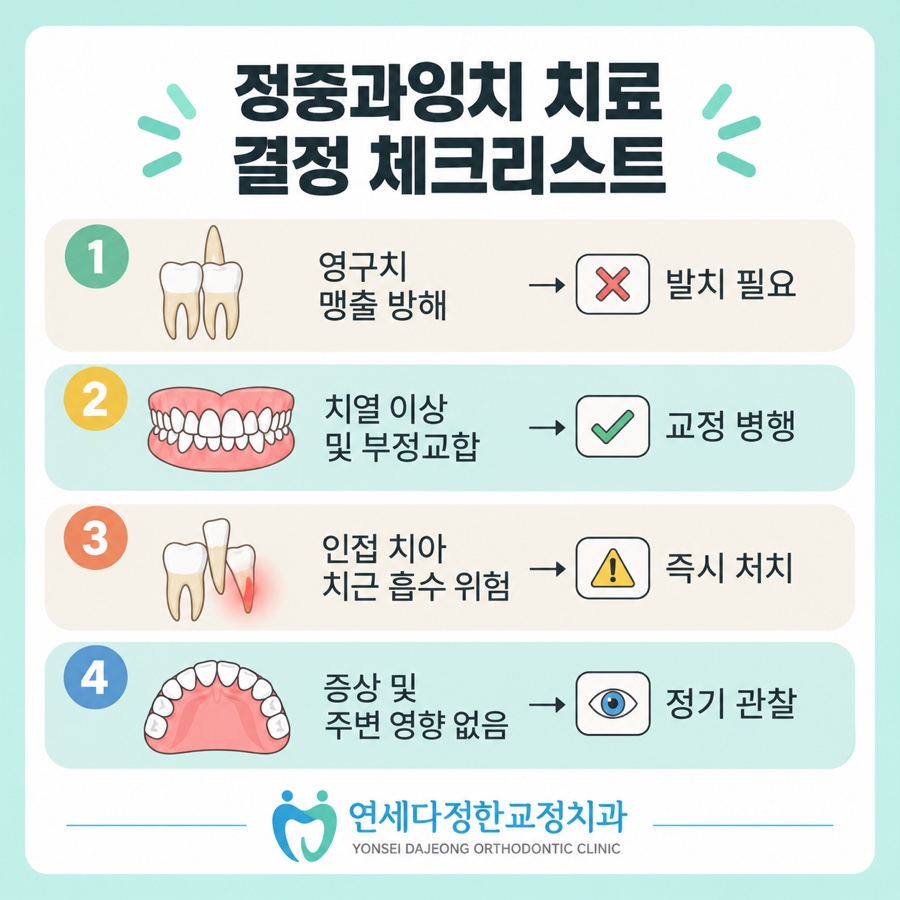
✅ Blocking permanent tooth eruption → Extraction needed
✅ Causing dental misalignment or malocclusion → Orthodontic treatment combined
✅ Risk of root resorption in a neighboring tooth → Prompt treatment
✅ No discomfort and no effect on surrounding teeth → Regular monitoring
How Does Mesiodens Treatment Work After Extraction?
After mesiodens extraction, orthodontic treatment typically follows to close the gap between the front teeth by moving the upper front teeth backward.
Take, for example, a patient in their twenties who came in with cosmetic concerns.
The mesiodens had erupted much like an ordinary tooth, but its shape was abnormal.
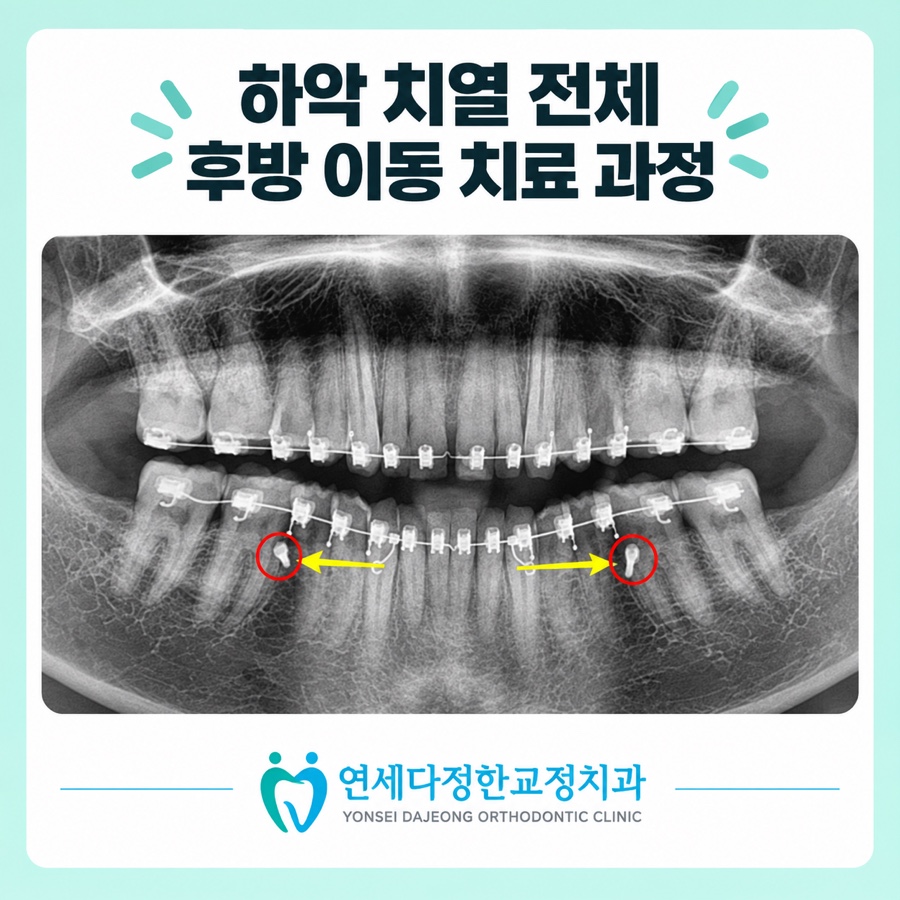
A panoramic X-ray showed a peg-shaped tooth with a short root. Since it wasn’t impacted, extraction was relatively straightforward.
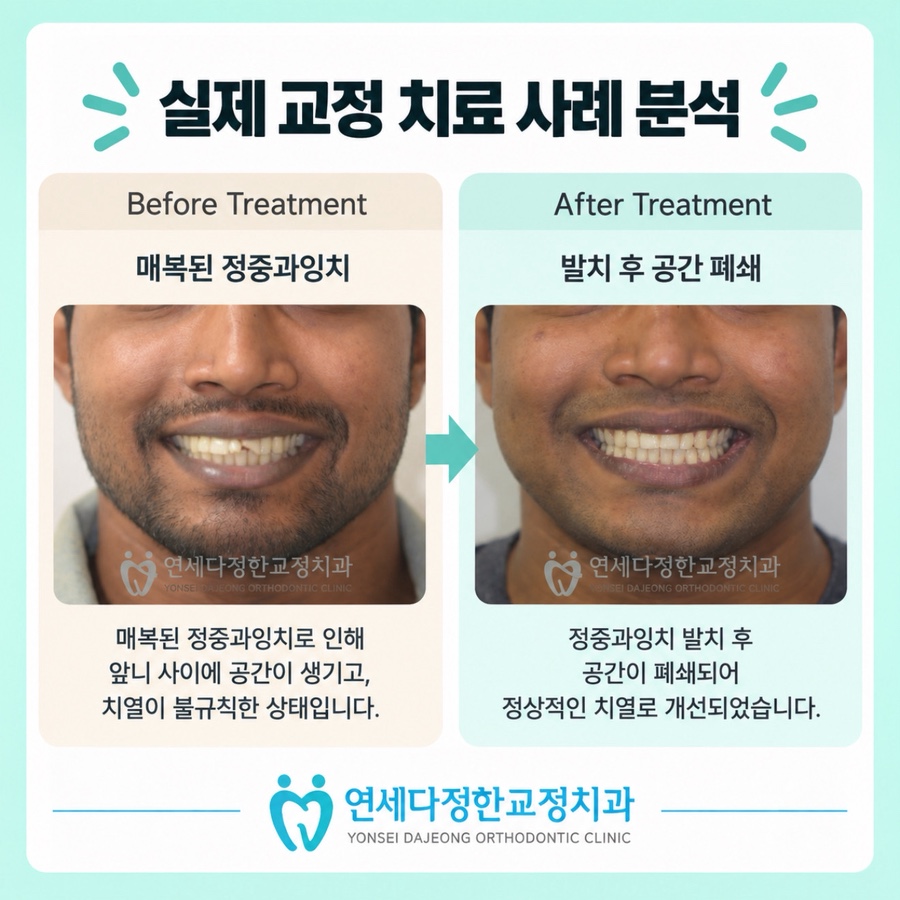
Extracting the tooth leaves an open space between the front teeth.
Closing that space requires moving the upper front teeth backward.
But the lower front teeth, which were blocking that movement, also needed to shift for the space to close.
So the plan called for moving the entire lower dental arch backward.
To create room in the lower arch, the wisdom teeth were extracted first.
Orthodontic mini-screws were then placed to move the entire lower arch backward.
| Category | Condition Before Treatment | Treatment Plan and Progress |
|---|---|---|
| Upper jaw (maxilla) | Abnormally shaped mesiodens erupted, creating an interdental gap | Space closed with orthodontics after extraction of the supernumerary tooth |
| Lower jaw (mandible) | Insufficient space was blocking movement of the upper arch | Wisdom teeth extracted and the entire arch moved backward using mini-screws |
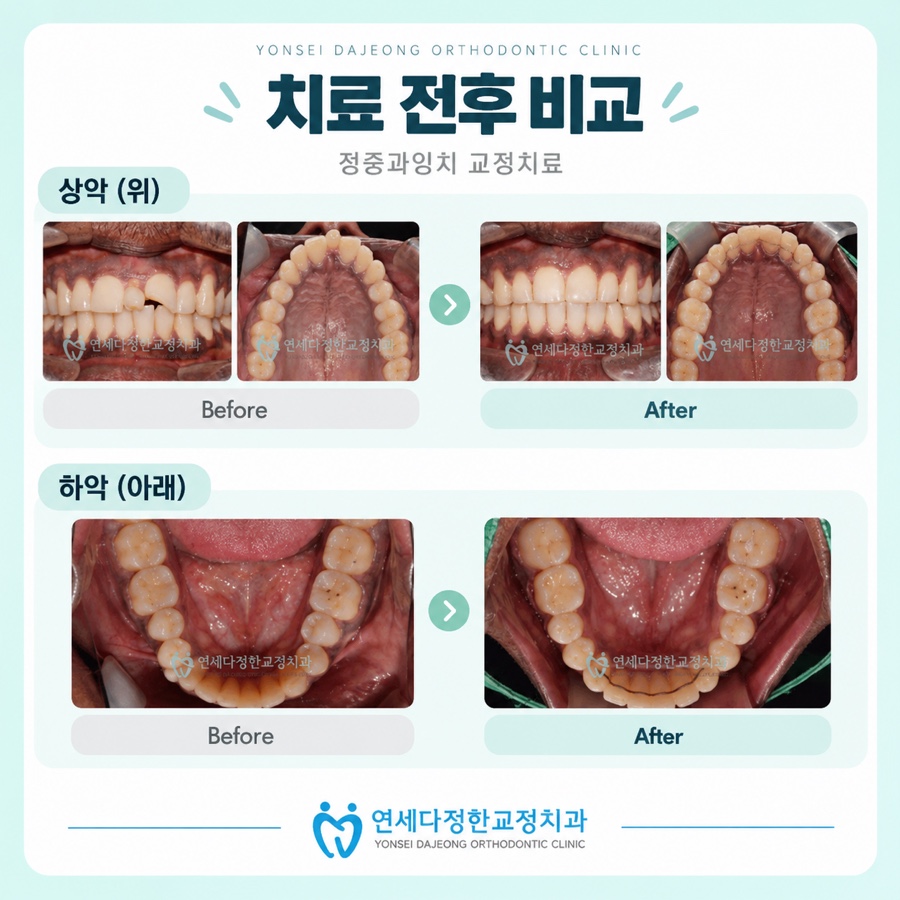
✅ The gap left by extraction gradually closed as orthodontic treatment progressed.
✅ As the entire arch moved backward, the previously protruding lower lip line also became more balanced.
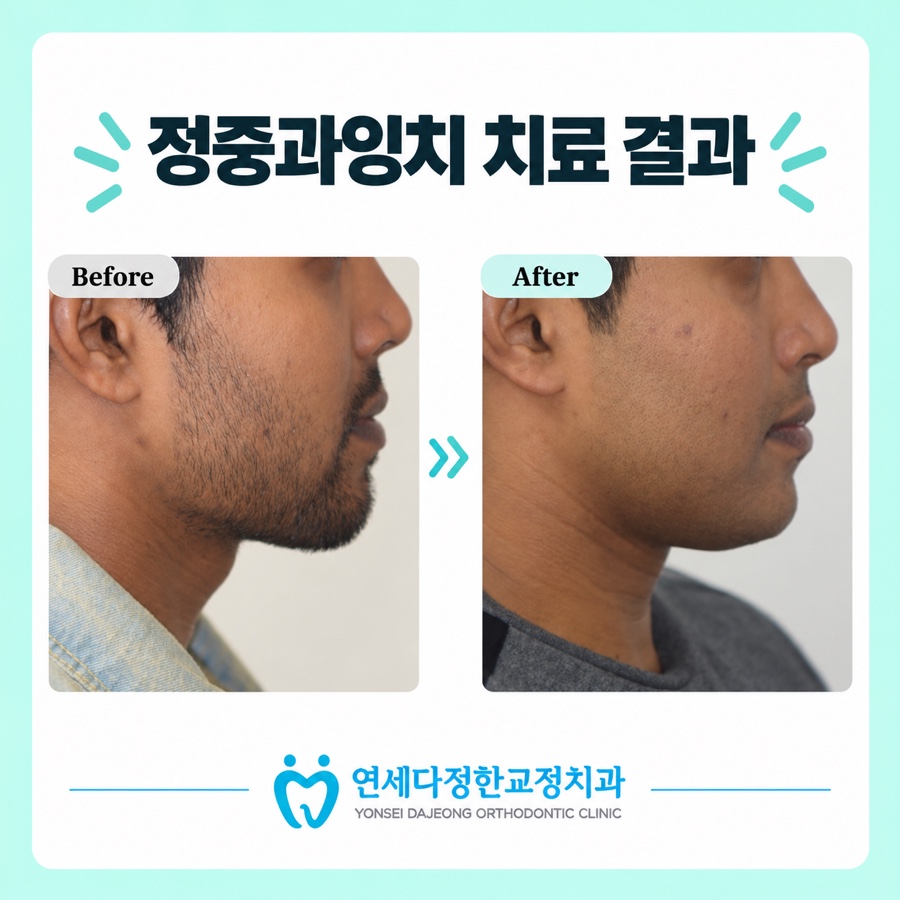
Leaving a mesiodens untreated can allow dental misalignment to worsen over time.
We recommend visiting an orthodontic dental clinic in Cheongnyangni for a thorough examination.
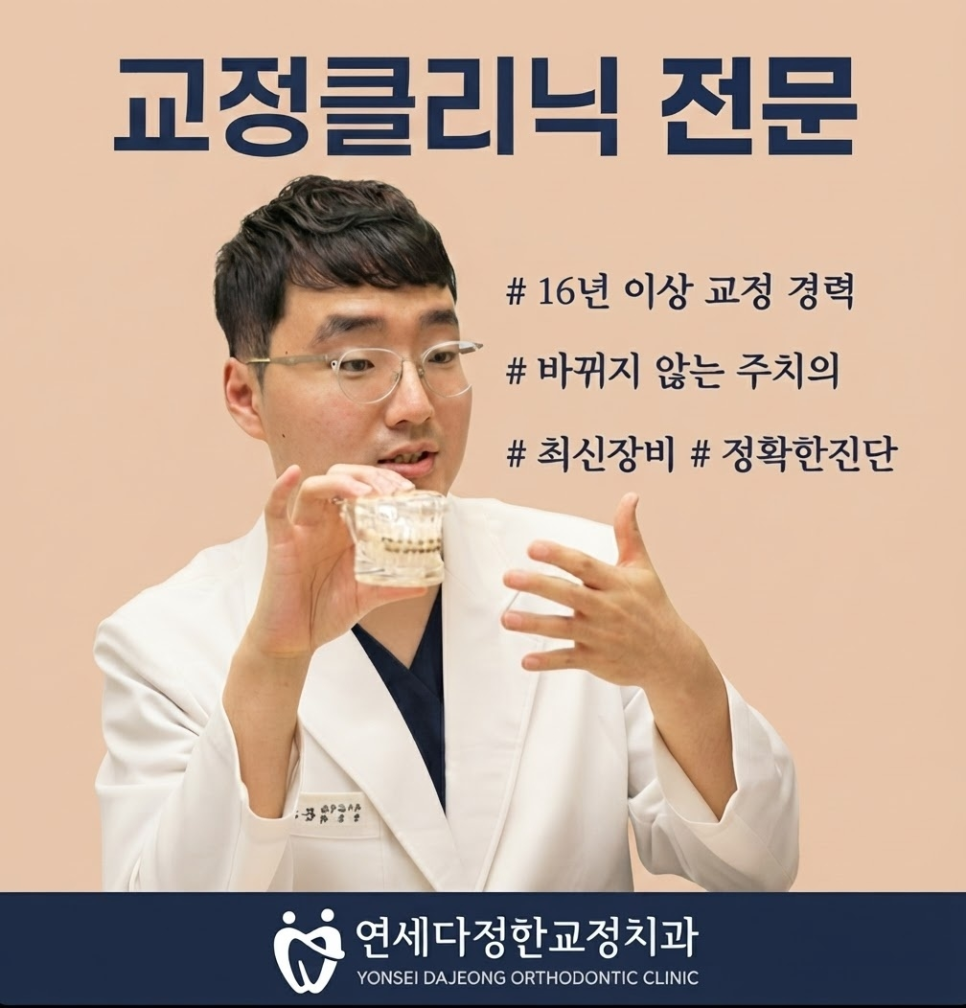
Getting systematic care at Yonsei Dajeonghan Orthodontic Clinic in Cheongnyangni, where a specialist is on staff, is a sound option.
Even complex dental issues, when addressed in the right order, may help support a more balanced overall appearance.
Frequently Asked Questions

1. Does a supernumerary tooth always need to be surgically extracted?
Surgical extraction is needed when a supernumerary tooth is deeply impacted in the jawbone or causes complications such as blocking permanent tooth eruption or forming a cyst. If it’s small and has no significant effect, however, regular monitoring without extraction may be enough.
2. Is orthodontic treatment required after mesiodens extraction?
Orthodontic treatment is generally needed when the extraction leaves a sizable gap or when misalignment and malocclusion have already developed. If the space is left as is, neighboring teeth can tilt into the gap, which may disrupt the entire dental arch.
3. Is moving teeth backward with mini-screws painful?
The procedure is done under local anesthesia, so there is little to no pain during the process. It involves placing a small screw into the jawbone through a relatively simple procedure, and it helps move teeth efficiently, which can reduce the likelihood of needing further extractions.
4. At what age is a mesiodens usually discovered?
It’s often found during routine checkups around the time permanent teeth are erupting. Some cases are discovered incidentally in adulthood, so regardless of age, a thorough exam is recommended whenever one is found.
References
· Seoul National University Hospital, “Mesiodens,” Medical Information, Seoul National University Hospital. View source
· Korea Institute of Science and Technology Information (KISTI) Academic Information, “Complications of Anterior Maxillary Supernumerary Teeth.” View source
· Gündüz K, et al., “Prevalence and characteristics of supernumerary teeth in a non-syndrome Turkish population,” PubMed, 2010. View source
This article is intended for general health information purposes only and is not a substitute for individual diagnosis or treatment. If you have symptoms, please consult a specialist.