What if your headache only eases for a moment after taking painkillers, then comes right back?
According to news reports citing National Health Insurance Service (NHIS) statistics, about 414,000 patients visited a hospital for TMJ (temporomandibular joint) disorder in 2019 alone.
Did you know a large share of them also report headaches?

Key takeaway: TMJ headaches are a well-documented TMJ headache cause, occurring when tension in the jaw muscles and facial nerves travels to the head’s sensory nerves through the trigeminal nerve. In fact, 40-60% of patients with temporomandibular disorder (TMD) also experience headaches, and Seoul National University Dental Hospital reports that 67% of TMJ disorder patients experienced headaches and 50% experienced insomnia. This article breaks down why jaw pain and headaches show up together and what to know before visiting a Cheongnyangni orthodontic clinic.

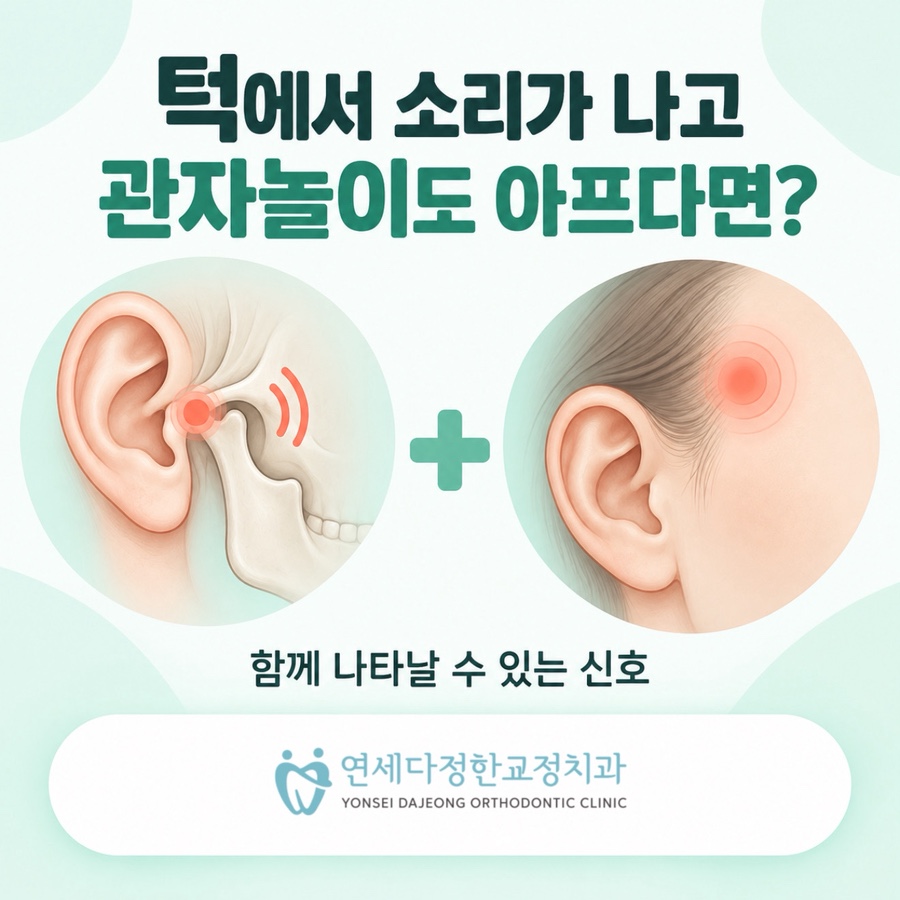
If you wake up feeling like you never really rested, with your temples throbbing more days than not,
it’s worth considering whether jaw clicking or popping could be behind it.
That stiffness in your head and jaw you’ve been chalking up to fatigue may actually be a sign of an underlying imbalance in your body.

Chronic headaches and facial pain are more closely linked than most people realize.
When the chewing muscles that move your jaw and the nerves connecting to your head tense up together, both types of pain can strike at once.
Here’s an easy-to-follow breakdown of how jaw pain and headaches are connected.

Why Does TMJ Disorder Happen?
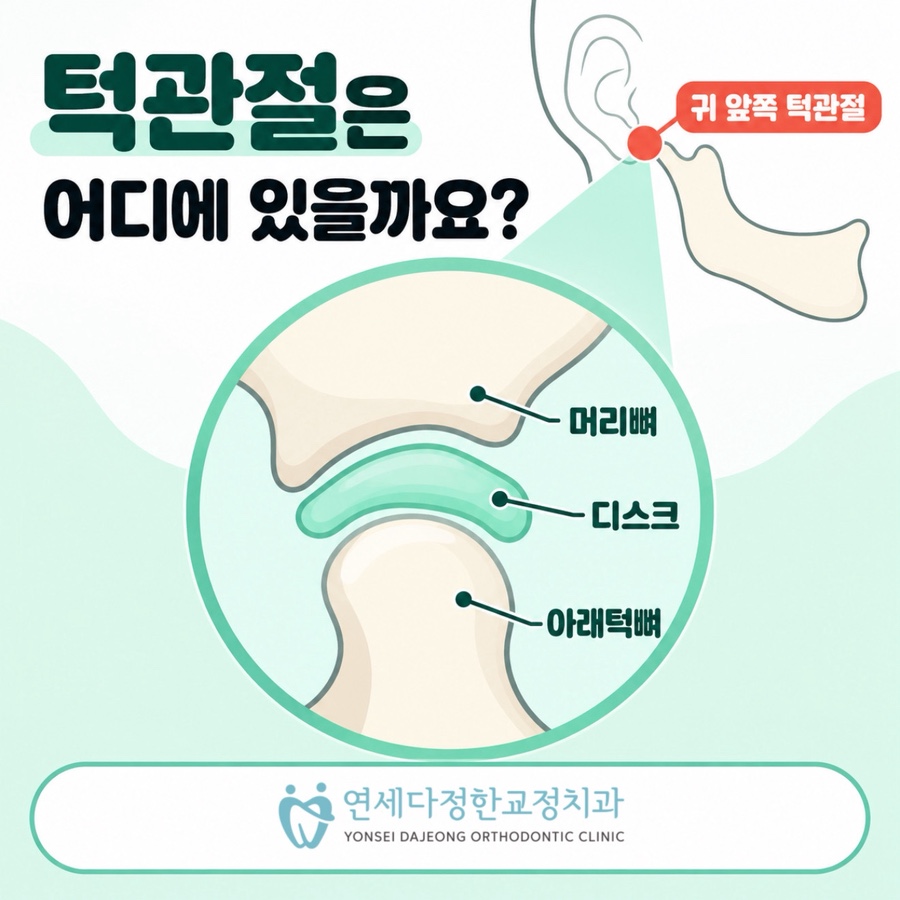
TMJ disorder occurs when the disc or ligaments between the lower jawbone and skull develop problems, causing pain and dysfunction.
This area is a critical junction where the nerves and muscles supporting the head and neck intersect.
✅ Your jaw makes a sound when you open your mouth
✅ Your jaw feels stiff and sore
✅ In severe cases, your mouth doesn’t open all the way
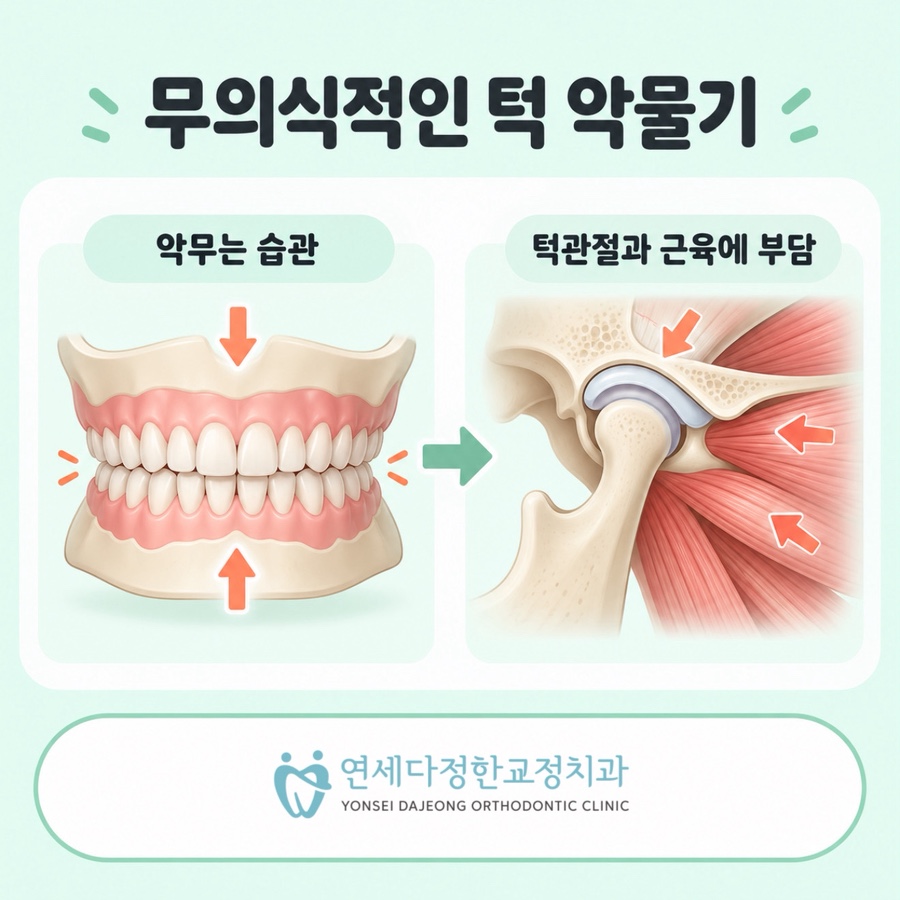
If you unconsciously clench your jaw or grind your teeth, your TMJ stays under constant pressure.
As a result, the surrounding muscles tire out quickly.
Left unaddressed, this can progress to facial asymmetry or neck and shoulder pain, which is why early management matters.
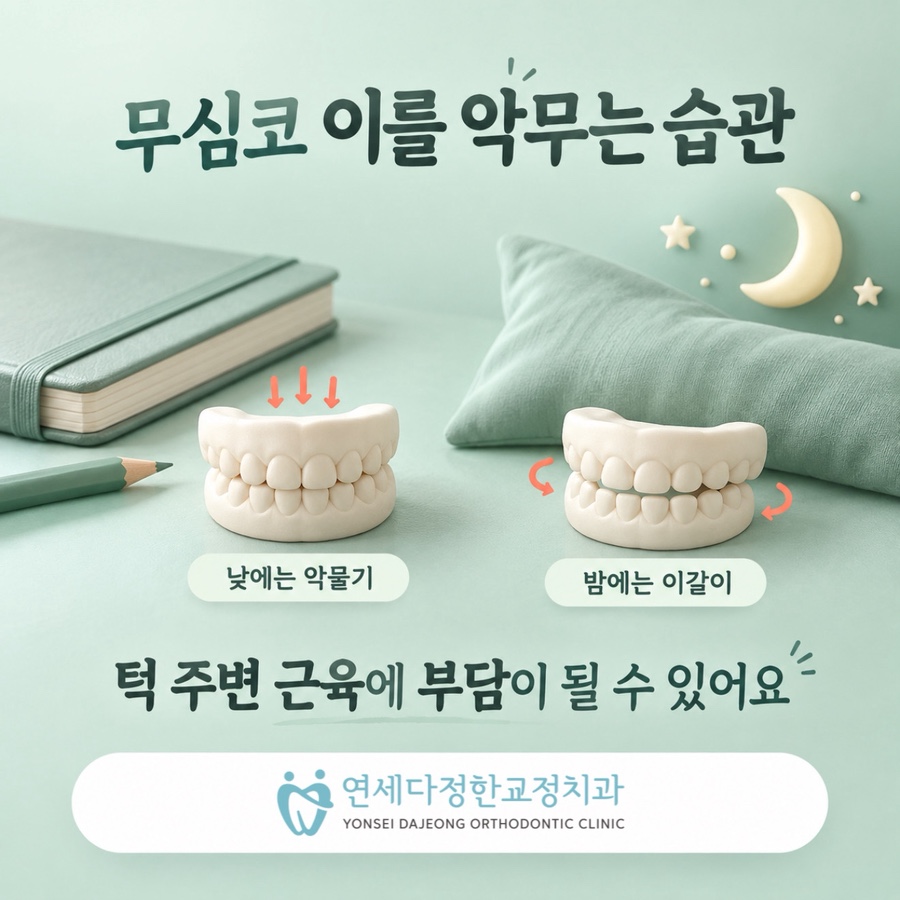
Unconsciously clenching your jaw or grinding your teeth places continuous pressure on the joint, quickly fatiguing the surrounding muscles.
Jaw Clicking or Popping: Is It Safe to Ignore?
The short answer: a clicking or popping sound in the jaw can be an early sign that the disc has shifted out of place.
Even without pain, it’s safer to get it checked early.
Chewing on one side of the mouth out of habit wears down the TMJ faster over time.
Common warning signs include the following.
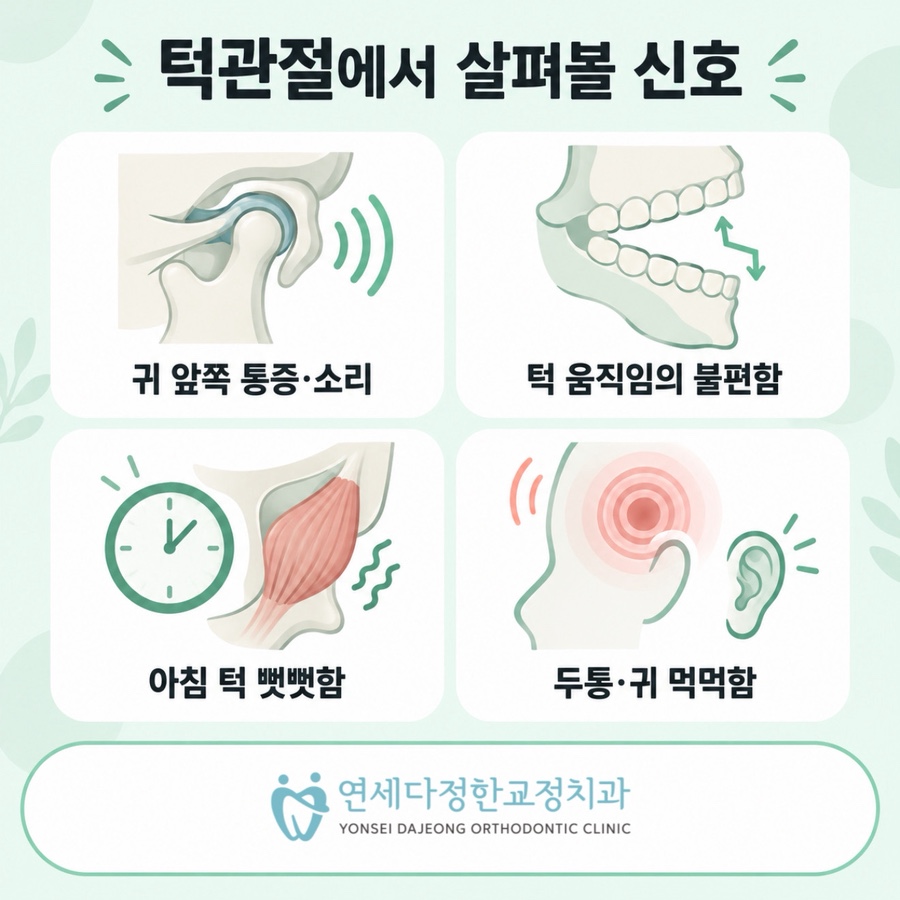
- A sharp sensation or a grinding, sandy sound in front of the ear
- The jaw shifts side to side when opening the mouth
- Significant stiffness around the jaw upon waking
- A feeling of fullness in the ear or pressure behind the eyes

Why Do TMJ Headache Causes Overlap With Migraines?
TMJ headaches happen when tension in the chewing muscles and temple muscles spreads to head pain through the trigeminal nerve.
This occurs because the nerves responsible for facial and head sensation run close together.
Indeed, 40-60% of patients with temporomandibular disorder also experience headaches, according to published reports.
In a case series described by Seoul National University Dental Hospital, of 308 patients with TMJ disorder, 67% reported headaches and 50% reported insomnia.
This pattern also shows up in news coverage citing National Health Insurance Service statistics.
Among patients treated for TMJ disorder in 2019, 245,987 were women — about 1.5 times more than men.
The condition was most common among women in their 20s.
The number of patients treated for TMJ disorder grew from 353,000 in 2015 to 414,000 in 2019, a 17.1% increase over five years.
The related news coverage cited these treatment statistics from the National Health Insurance Service.
When the TMJ stiffens, the chewing muscles and temple muscles tend to tighten in a chain reaction.
A throbbing headache often follows.
If painkillers only bring temporary relief and the pain keeps returning, it may be worth checking the root cause around the jaw rather than treating the head alone.
| Category | Typical Tension Headache | TMJ Headache |
|---|---|---|
| Pain location | Whole head / back of neck | Mainly temples / in front of the ears |
| Accompanying symptoms | Shoulder tightness | Jaw clicking / jaw stiffness |
| When it worsens | Stress / fatigue | While chewing or talking |
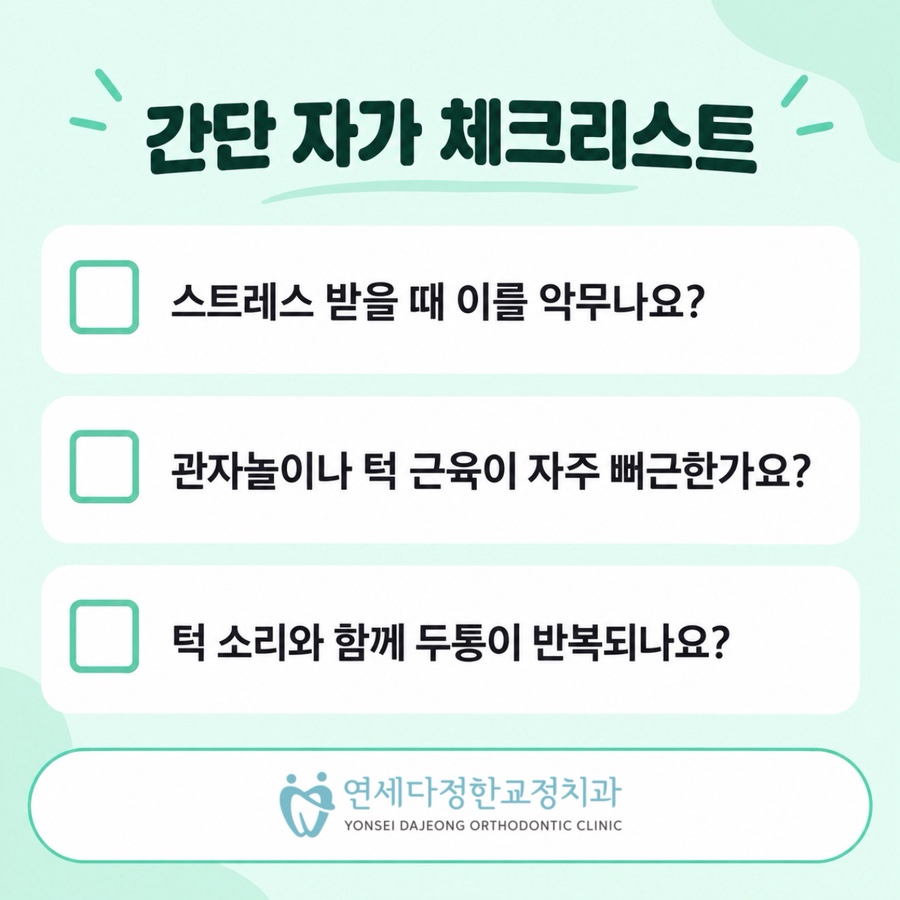
✅ You clench your jaw without realizing it when stressed
✅ Pressing on your temples or jaw muscles feels sore
✅ A migraine tends to follow whenever your jaw clicks
How Can You Manage TMJ Health Day to Day?
The key to managing TMJ health is cutting back on harmful habits and easing muscle tension.
Hard, chewy foods and habits like resting your chin on your hand put a lot of strain on the joint.

- Avoid tough, chewy foods such as squid, gum, or chewy noodles when possible
- Use warm compresses regularly to relax tight muscles
- Get into the habit of keeping a slight gap between your upper and lower teeth
- Keep your tongue resting lightly against the roof of your mouth
If your jaw already makes noise or headaches are already occurring, home care alone may not be enough.

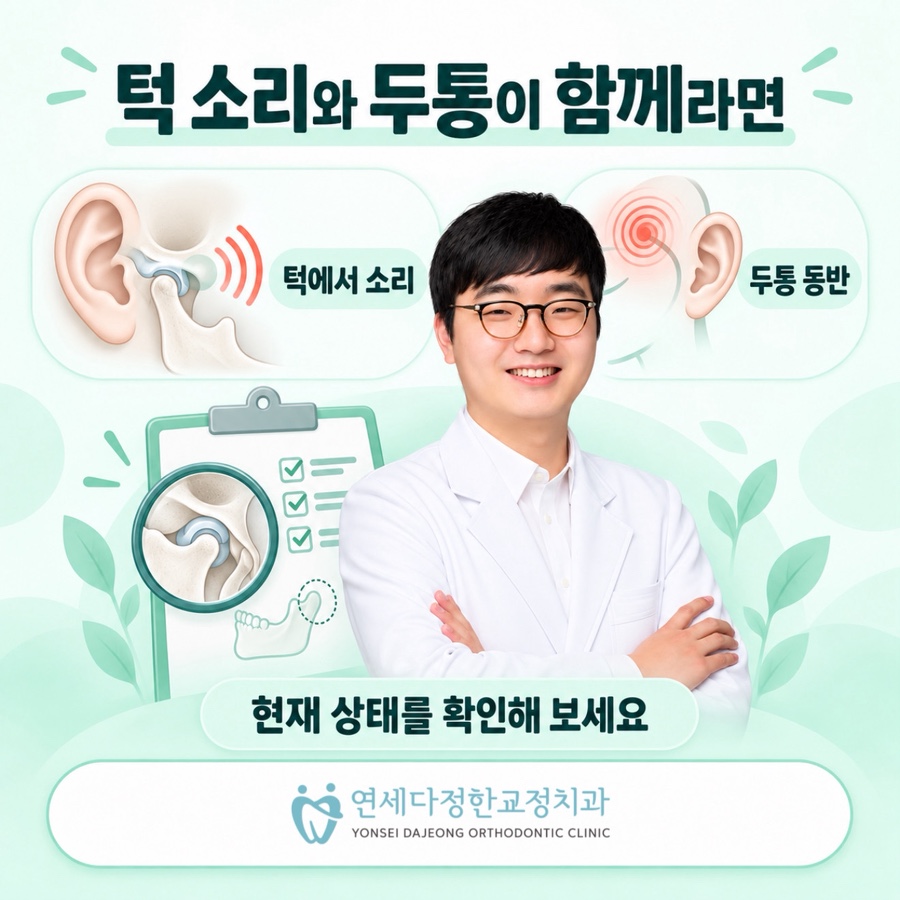
The TMJ is closely tied to how your teeth come together (your bite), so symptoms tend to get worse the longer they’re left unaddressed.
Many cases of TMJ disorder stem from bite misalignment or an imbalance in jaw position.
It’s a good idea to get an accurate assessment at a clinic that can evaluate both your teeth and skeletal structure together.
You can find more information at Yonsei Dajeonghan Orthodontic Clinic, Cheongnyangni.
Accurately identifying and managing the underlying cause of TMJ issues may also help improve related symptoms such as headaches and insomnia.
Frequently Asked Questions
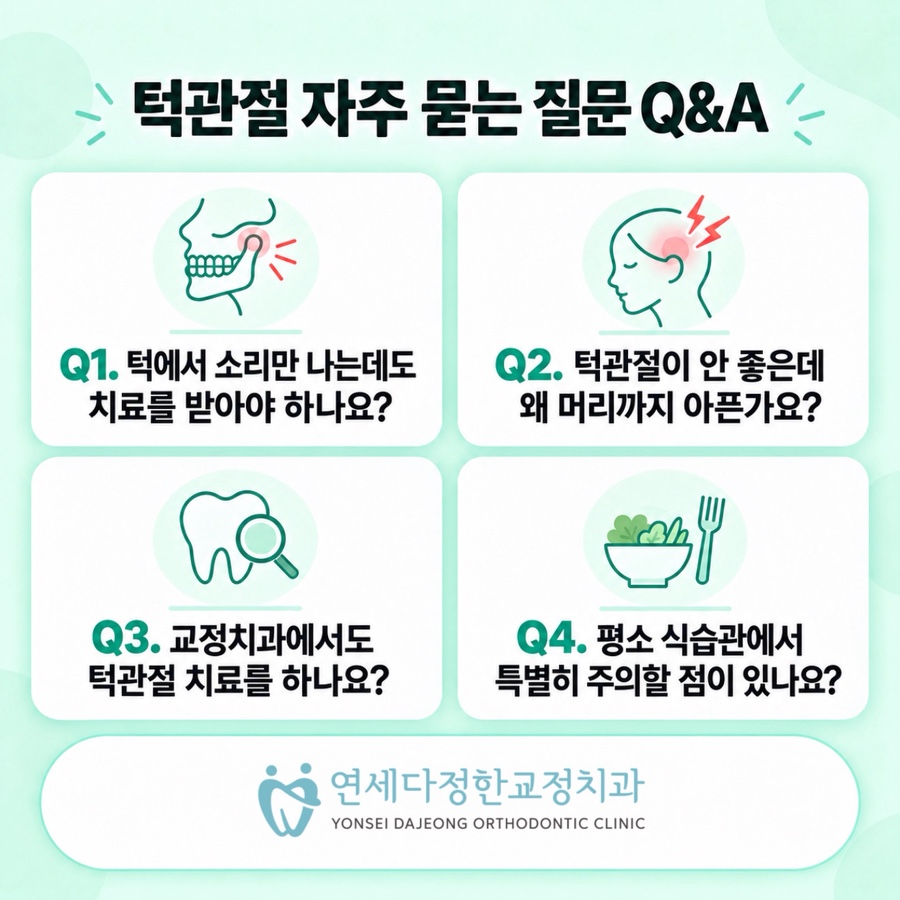
1. My jaw only makes noise with no pain — do I still need treatment?
Even without pain, a clicking sound can be an early sign that the TMJ disc has shifted slightly. Getting it checked early is recommended.
2. Why does my head hurt when the problem is in my jaw?
The facial nerves that move your jaw and the sensory nerves in your head run close together. Tension signals from the jaw muscles can travel easily to the head, contributing to migraines or temple pain.
3. Do orthodontic clinics treat TMJ disorder too?
Yes. Since many cases of TMJ disorder stem from bite misalignment or jaw position imbalance, an evaluation from an orthodontic specialist can be helpful.
4. Are there dietary habits I should watch out for?
Tough, hard foods like squid, gum, or chewy noodles put strain on the jaw muscles. If pain keeps recurring, don’t put it off — get it checked at a dental clinic.
References
· Health Insurance Review & Assessment Service / National Health Insurance Service statistics (as cited by Gyeonggi Medinews), “TMJ Disorder Treatment Statistics,” 2020. Read more
· Seoul National University Dental Hospital, “Persistent Headaches and Indigestion — TMJ Disorder May Be the Hidden Cause,” SNU Dental Hospital News, 2023. Read more
· Kim et al., “Increased Risk of Migraine in Patients with Temporomandibular Disorder: A Longitudinal Follow-Up Study Using a National Health Screening Cohort,” PMC (PubMed Central), 2020. Read more
· Korea Disease Control and Prevention Agency, “TMJ Disorder,” National Health Information Portal. Read more
This article is intended for general health information purposes only and is not a substitute for individual diagnosis or treatment. If you’re experiencing symptoms, please consult a specialist.