Have you ever brushed your teeth, then stuck your tongue out in front of the mirror without really thinking about it?
You brushed thoroughly, yet a white film is still sitting on your tongue, and you might even notice a faint odor in your mouth.
Actually, this issue often has more to do with the surface of the tongue than with the teeth themselves.
Understanding the causes of tongue coating is the first step toward managing bad breath as well.
In this article, we’ll walk through the most common tongue coating causes and how dry mouth and everyday habits contribute to it, followed by a gentle tongue scraper technique and the precautions to keep in mind while using one.


If your mouth still feels coated or you notice an odor even after a thorough brushing,
it’s worth looking at the surface of the tongue as well as the teeth.
Food debris, bacteria, and shed epithelial cells can build up between the tiny papillae on the tongue and give it a whitish appearance.
Let’s go through the causes of tongue coating and how to manage it gently, step by step.

Tongue Coating Causes: What Makes the Tongue Turn White?
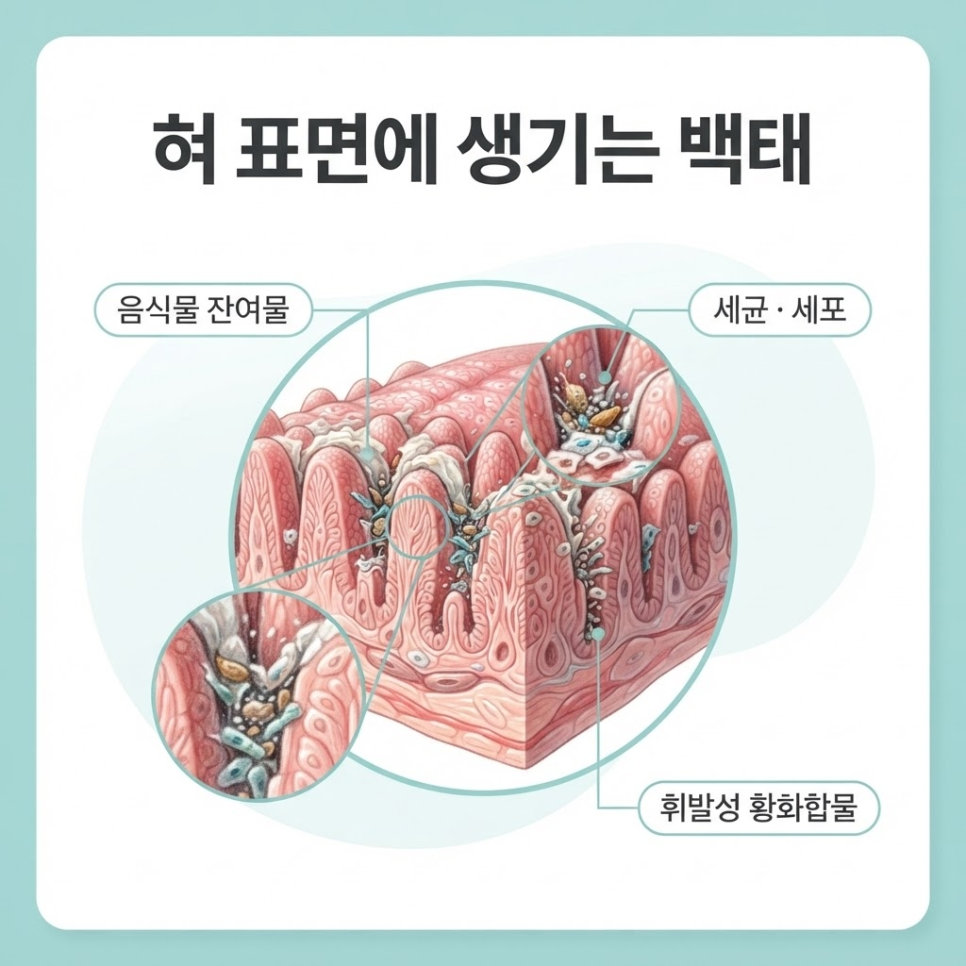
Put simply, tongue coating usually isn’t a specific condition — it’s often a natural buildup of waste material on the tongue’s surface.
Tongue coating refers to a whitish appearance caused by food debris, bacteria, and shed epithelial cells collecting between the tiny papillae on the tongue.
The surface of the tongue has many grooves and ridges, which makes it an easy place for waste material to settle.
Bacteria that accumulate there can produce volatile sulfur compounds, which may contribute to bad breath.
Bacteria on the tongue’s surface can produce volatile sulfur compounds such as hydrogen sulfide and methyl mercaptan, which have been reported as one of the main contributors to bad breath.
When saliva flow is sufficient, this waste is naturally rinsed away — but when saliva production drops, tongue coating can become noticeably thicker.

One of the most common tongue coating causes is dry mouth.
Saliva helps keep the mouth moist while washing away food particles and bacteria.
When you’re dehydrated or saliva production decreases, waste material is more likely to stay on the tongue’s surface.

Another common cause is mouth breathing during sleep.
When the tongue’s surface stays dry for long stretches, waste material can stick to it more easily.
Habits that dry out the mouth, such as smoking or frequent alcohol use, can also make tongue coating worse.
✅ Your mouth tends to feel dry often
✅ You have a habit of breathing through your mouth while sleeping
✅ Your daily water intake is usually low
✅ You smoke or drink alcohol frequently
✅ You don’t usually clean your tongue separately

What’s the Right Way to Use a Tongue Scraper to Reduce Bad Breath?

In short, a tongue scraper isn’t a tool for forcing tongue coating off — it’s better understood as an aid that gently clears the tongue’s surface.
A tongue scraper is an oral care tool used to remove the bacterial film and waste material on the tongue’s surface with light pressure.
What matters most isn’t trying to eliminate every trace of tongue coating by scraping hard, but rather using just enough pressure that the tongue isn’t strained.
A tongue scraper isn’t a tool that works better the harder you press.
Too much pressure can leave tiny scratches on the tongue’s surface, so it’s more important to use light pressure and sweep from back to front.

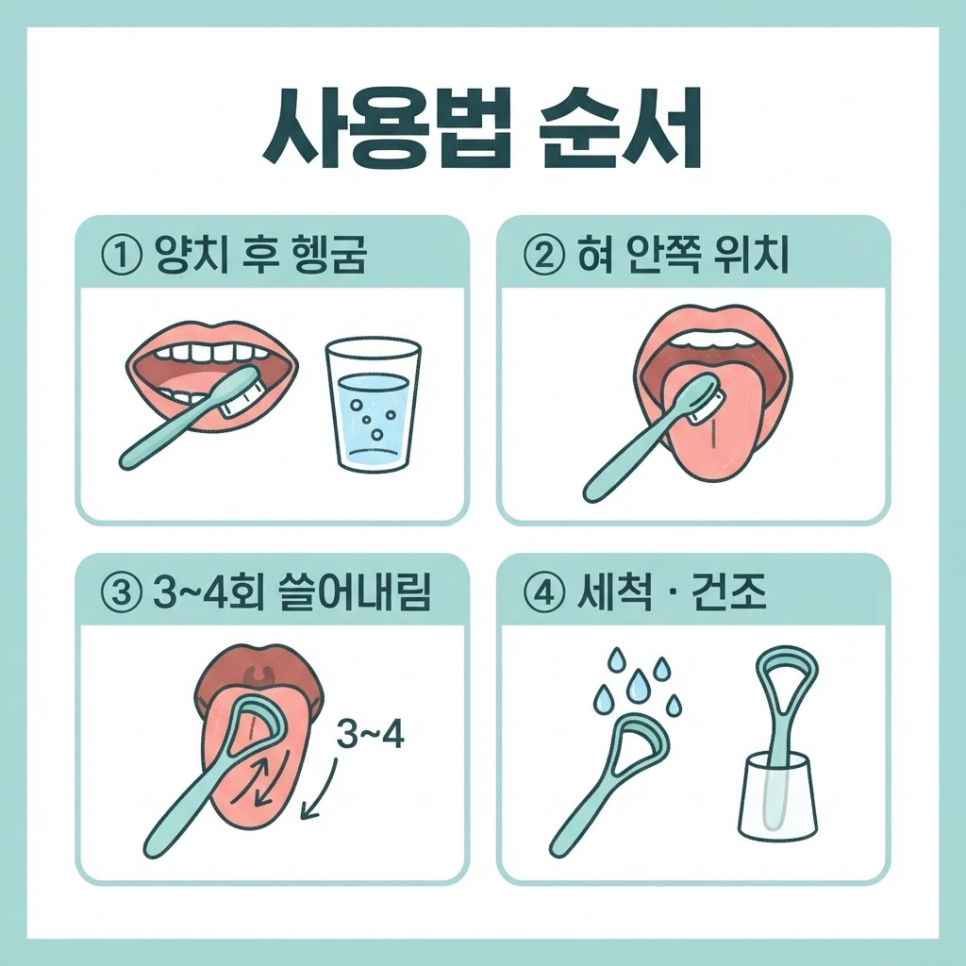
The basic tongue scraper routine is to rinse your mouth after brushing, then gently sweep the scraper from the back of the tongue toward the front.
Inserting the tool too far back can trigger a gag reflex, so it’s best to start within a range that feels comfortable.
- Rinse your mouth thoroughly with water after brushing.
- Stick your tongue out slightly and place the scraper gently near the back of the tongue.
- Sweep gently from back to front about 3-4 times.
- Rinse the scraper under running water and let it dry fully before storing it.
According to a Cochrane systematic review, using a tongue scraper may help reduce volatile sulfur compound levels more than brushing alone in the short term.
The same review also noted that sustaining this benefit requires consistent daily oral hygiene.
What Should You Watch Out for When Removing Tongue Coating?

In short, scraping harder doesn’t make tongue coating better — it can actually harm the health of your tongue.
Scrubbing hard enough to cause stinging or bleeding can create tiny wounds that may lead to pain or inflammation.
That, in turn, can make oral care even harder overall.
Using the scraper more often isn’t better either — a light routine of about 1-2 times a day, adjusted to your own tongue’s condition, is generally enough.
If a thick white coating keeps coming back, or if you notice pain, bleeding, or other unusual symptoms in your mouth, don’t try to scrape it off — have it checked at a dental or medical office instead.
Some tongue coating causes aren’t simply waste buildup; they can be related to an underlying oral condition or infection.

Along with cleaning the tongue, it’s also important to keep the mouth from getting too dry.
Drinking enough water and cutting back on habits that dry out the mouth can go a long way toward managing many of the causes of tongue coating.

Tongue Coating and Bad Breath: How Should You Manage Them Day to Day?
In short, managing tongue coating starts with pairing a tongue-cleaning habit with overall oral health care.
Drinking water often and rinsing your mouth lightly after meals can make a real difference.
That said, if tongue coating persists for a long time or you can’t pin down the cause on your own, it may help to have your overall oral condition checked at a dental clinic.
A regular checkup can help confirm whether there are other factors contributing to your bad breath or tongue coating.
If you’d like to learn more about oral care or schedule a checkup, you can find visit information at the Cheongnyangni Yonsei Dajeonghan Orthodontic Clinic homepage.
Frequently Asked Questions
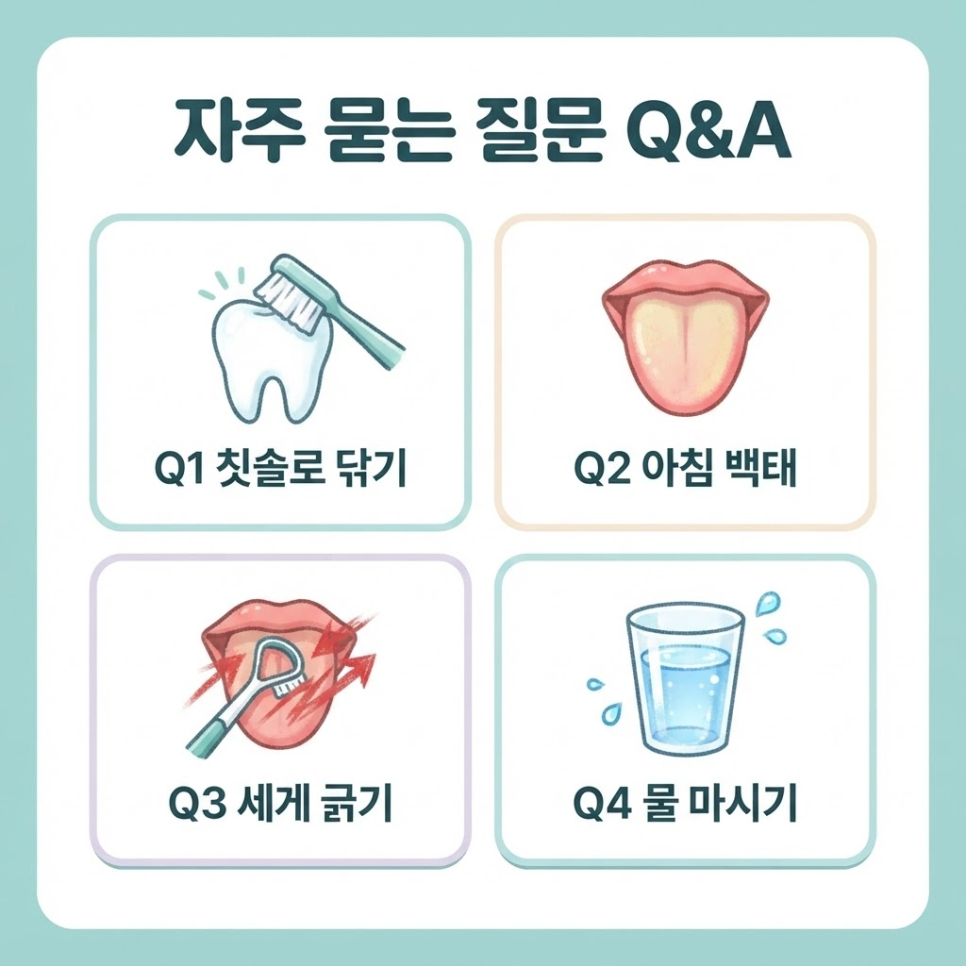
1. Is it okay to clean my tongue with a regular toothbrush?
You can use a toothbrush, but scrubbing too hard may irritate the tongue. If you use a dedicated tongue scraper, it’s best to sweep gently rather than press hard.
2. Is it a problem that my tongue looks especially white in the morning?
Saliva production decreases during sleep, so the tongue’s surface may temporarily look whiter. If a thick coating remains even after brushing and cleaning your tongue, it’s worth checking whether another cause is involved.
3. Does scraping the tongue harder remove tongue coating more effectively?
No. Scraping too hard can actually injure the tongue’s surface, so it’s important to stick to proper tongue scraper technique — light strokes from back to front.
4. Does drinking water often help manage tongue coating?
Yes, it can help. Dry mouth is one of the most common tongue coating causes, so drinking water regularly to keep your mouth moist can support both tongue coating and bad breath management.
5. How many times a day should I use a tongue scraper?
It depends on your individual tongue condition, but generally 1-2 times a day with light pressure is recommended. Using it more often doesn’t necessarily make it more effective.
References
· Lee CH et al., “The relationship between volatile sulfur compounds and major halitosis-inducing factors,” Journal of Periodontology, 2003. View source
· Outhouse TL et al., “Tongue scraping for treating halitosis,” Cochrane Database of Systematic Reviews, 2006. View source
This article is intended for general health information purposes only and is not a substitute for professional diagnosis or treatment. If you have symptoms, please consult a healthcare professional.