Does your face look noticeably tilted to one side every time you check the mirror?
Most people who notice this immediately think of jaw-shaving surgery.
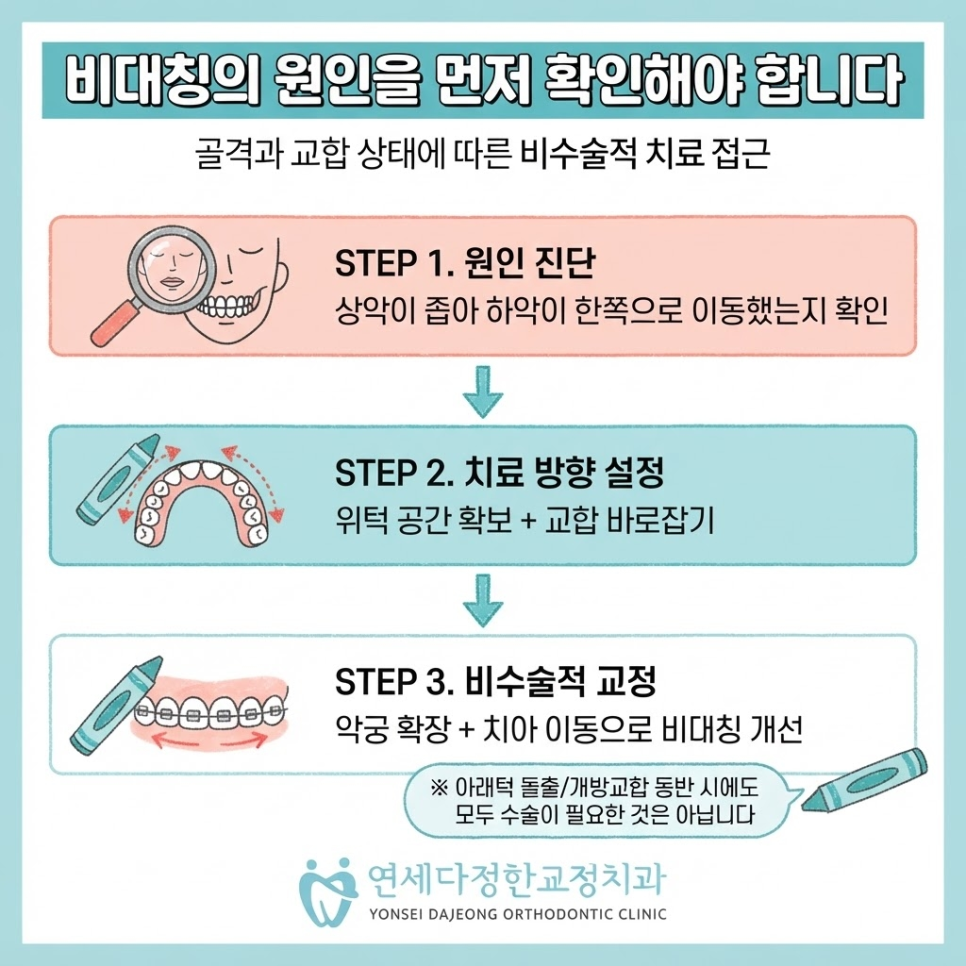
However, depending on what’s causing the asymmetry and how the upper and lower jaws relate to each other, some cases can be balanced with facial asymmetry braces alone, without surgery.
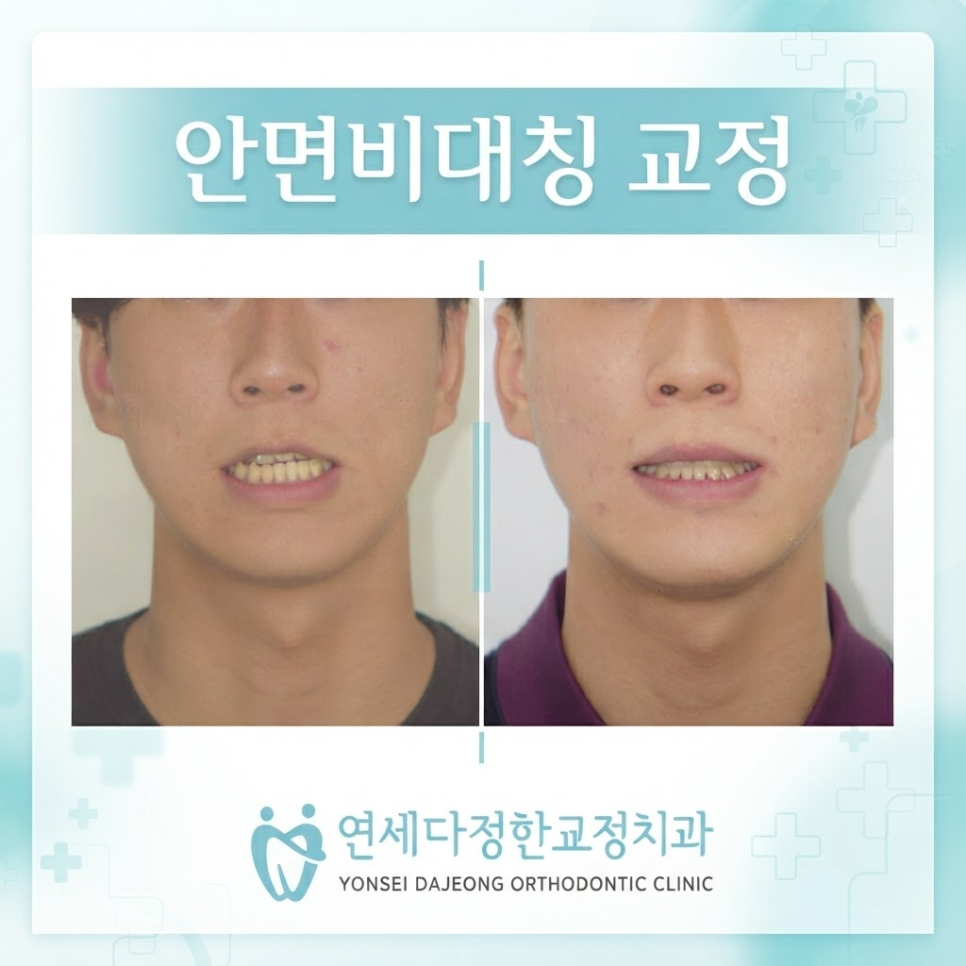
When comparing actual cases, this difference often becomes fairly clear.
In this article, we’ll walk through the principle behind maxillary arch expansion, the non-surgical facial asymmetry correction process using MARPE and mini-screws, and how the bite changes before and after treatment.
If you’re weighing whether surgery is necessary, we recommend first getting a diagnosis of what’s causing your asymmetry.
Why Does Facial Asymmetry Happen, and Why Is Maxillary Arch Expansion Necessary?
To put it simply, if a narrow upper jaw has pushed the lower jaw to one side, widening the maxillary arch alone may help improve the asymmetry in some cases.
Maxillary arch expansion is a treatment process that widens a narrowed upper jaw to help address issues such as posterior crossbite.
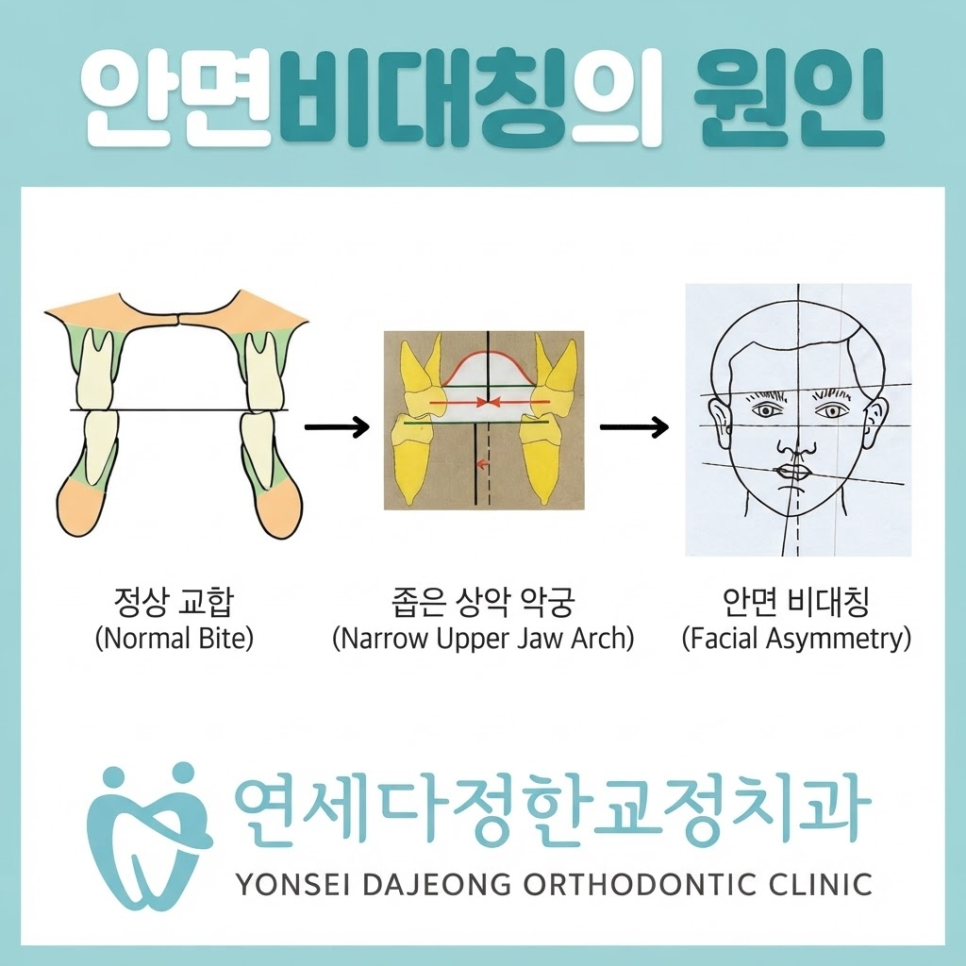
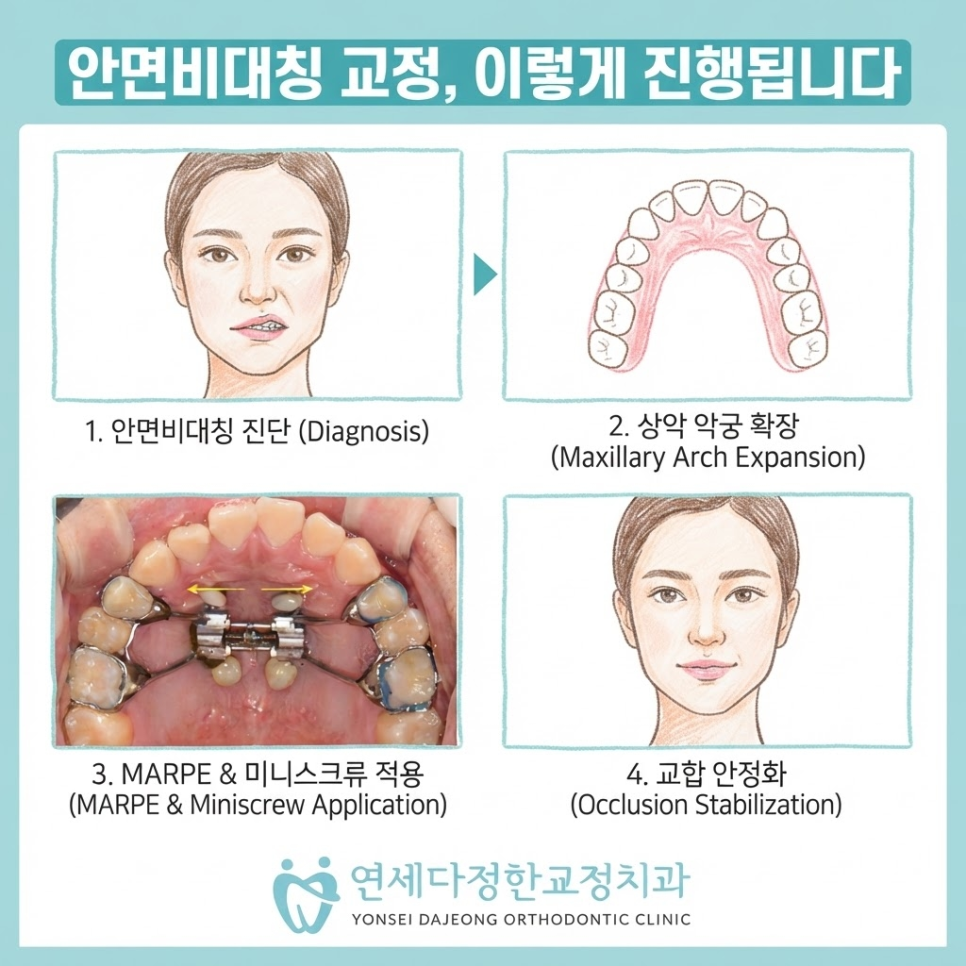
When the upper jaw is narrow, the lower jaw tends to shift and bite to one side, which can also throw off the dental midline.
For this reason, rather than judging by outward facial appearance alone, it’s important to evaluate the width of the upper jaw, the position of the lower jaw, and how the teeth come together.
✔ If a narrow maxilla has caused the mandible to shift to one side, treatment to create space in the upper jaw is generally considered first.
✔ Not every case involving a protruding lower jaw or open bite requires surgery.
✔ Depending on the skeletal and bite pattern, non-surgical arch expansion combined with tooth movement may be considered.
How Do Non-Surgical Facial Asymmetry Braces Work With MARPE and Mini-Screws?
In short, using an upper jaw expansion appliance together with mini-screws in stages may make it possible to align the midline and bite without surgery in some cases.
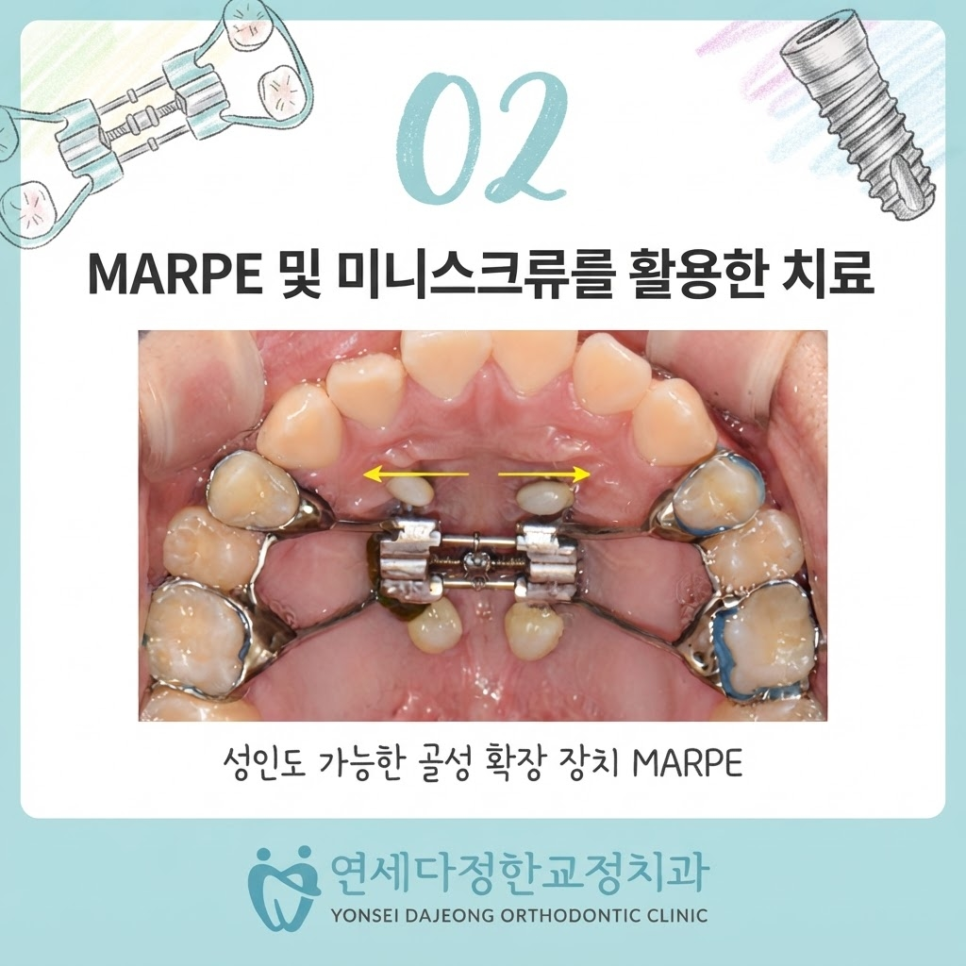
MARPE is an appliance that uses mini-screws to gain anchorage in the maxilla and expand a narrowed upper jaw.
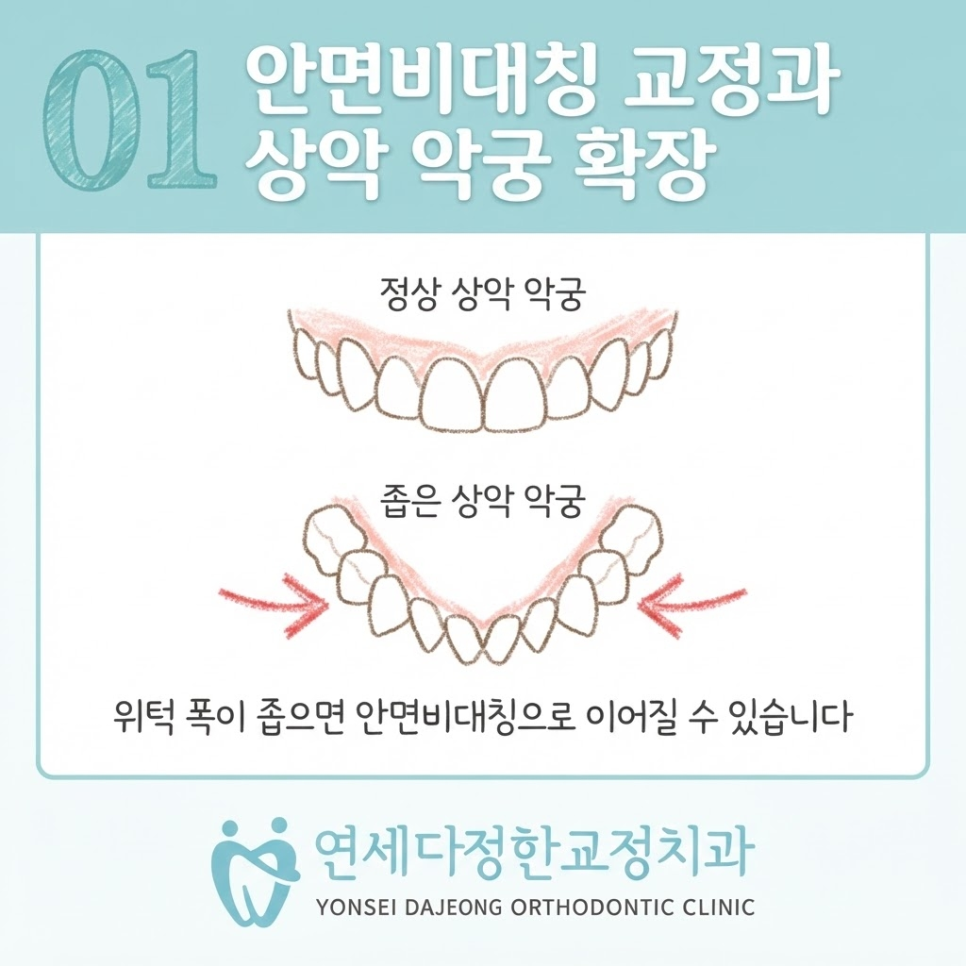
Expanding the maxilla can help correct posterior crossbite and create the space needed to adjust the midline.
Afterward, depending on the degree of lower jaw protrusion or open bite, extraction and orthodontic mini-screws may be used together to move the teeth.
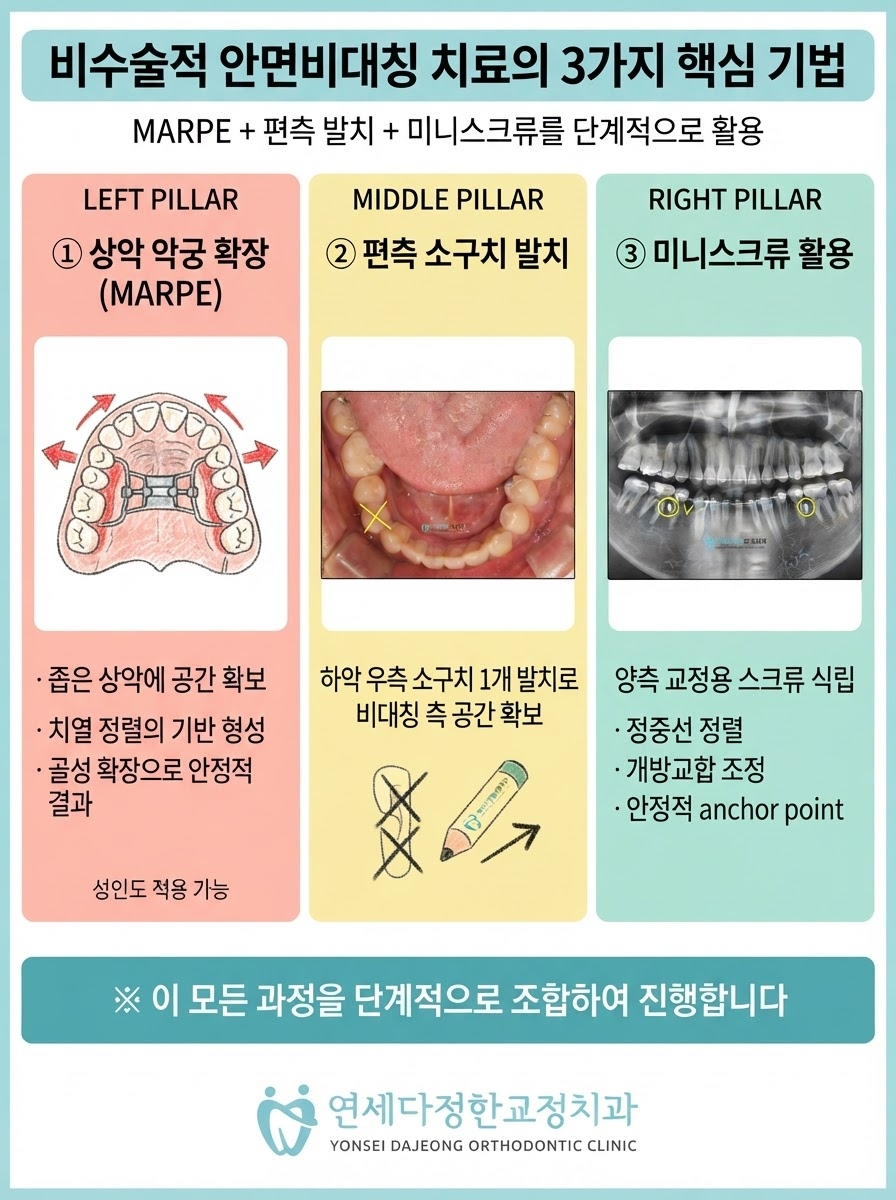
Step-by-Step Treatment Process
- Expand the maxillary arch with a MARPE appliance.
- If needed, extract a premolar on one side to create space.
- Use mini-screws as anchorage to adjust the midline and open bite.
✅ Have you checked whether a narrow maxillary width is causing a crossbite?
✅ Have you been diagnosed for one-sided lower jaw displacement and midline discrepancy?
✅ Have you checked whether an open bite is present, and to what degree?
✅ Have you factored in the adjustment period after getting a MARPE appliance?
⚠ If the skeletal discrepancy is significant, non-surgical treatment alone may not be enough to achieve improvement.
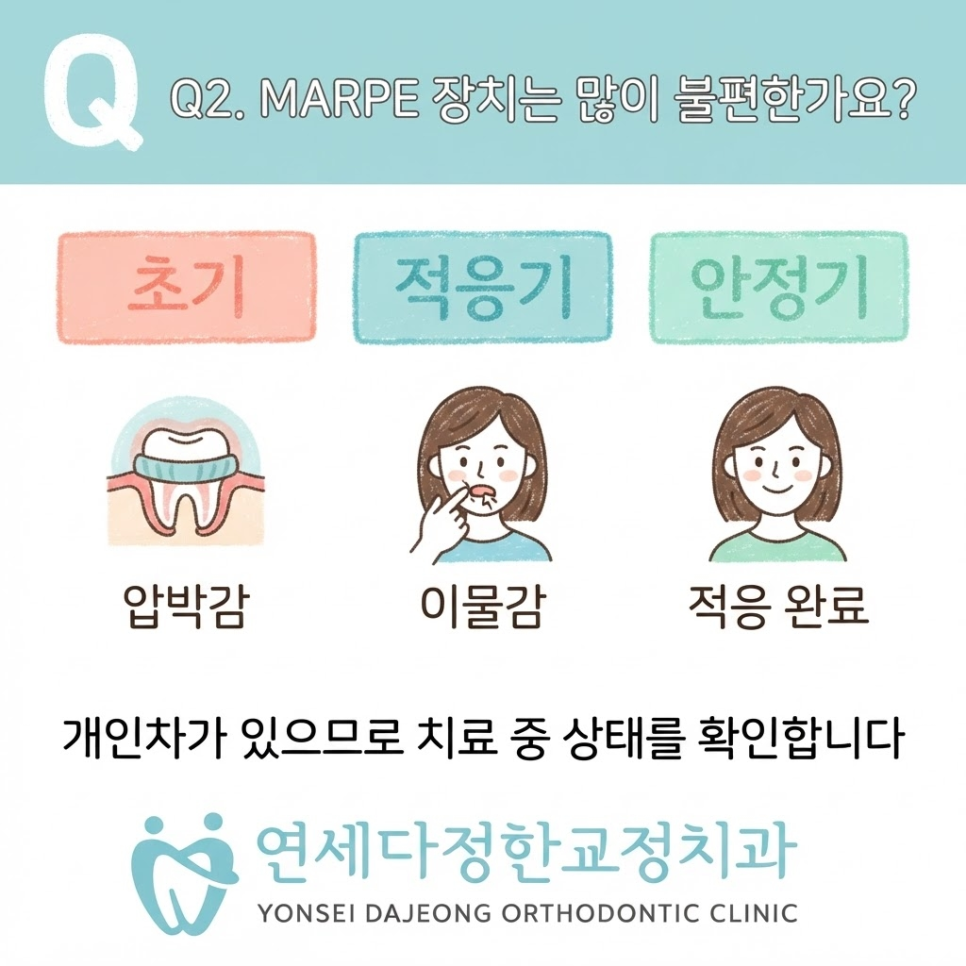
⚠ In the early period after MARPE placement, you may feel pressure or a foreign-body sensation, and this varies from person to person.
How Does the Bite Change Before and After Facial Asymmetry Correction?
Before treatment, a narrow upper jaw often causes the back teeth to bite in crossbite, or the lower jaw shifts to one side so the midline doesn’t align.
The before-and-after change refers to a process in which maxillary expansion and repositioning of the lower jaw may help improve the midline and bite together.

Expanding the maxillary arch and adjusting the position of the lower dental arch may help improve both the midline of the upper and lower front teeth and the bite of the back teeth together.
As the open bite improves, changes may also appear in how much the lower jaw and lips protrude when viewed from the front and side.
| Category | Pre-Treatment Condition | Appliance & Process Used | Expected Change After Treatment |
|---|---|---|---|
| Maxillary Arch | Constricted maxillary width, posterior crossbite | MARPE (Miniscrew-Assisted Rapid Palatal Expander) | Tendency toward normalized upper jaw width and resolved crossbite |
| Lower Dental Arch & Bite | One-sided lower jaw displacement, midline discrepancy, open bite | Lower premolar extraction, mini-screw placement | Tendency toward improved midline and reduced open bite and protrusion |
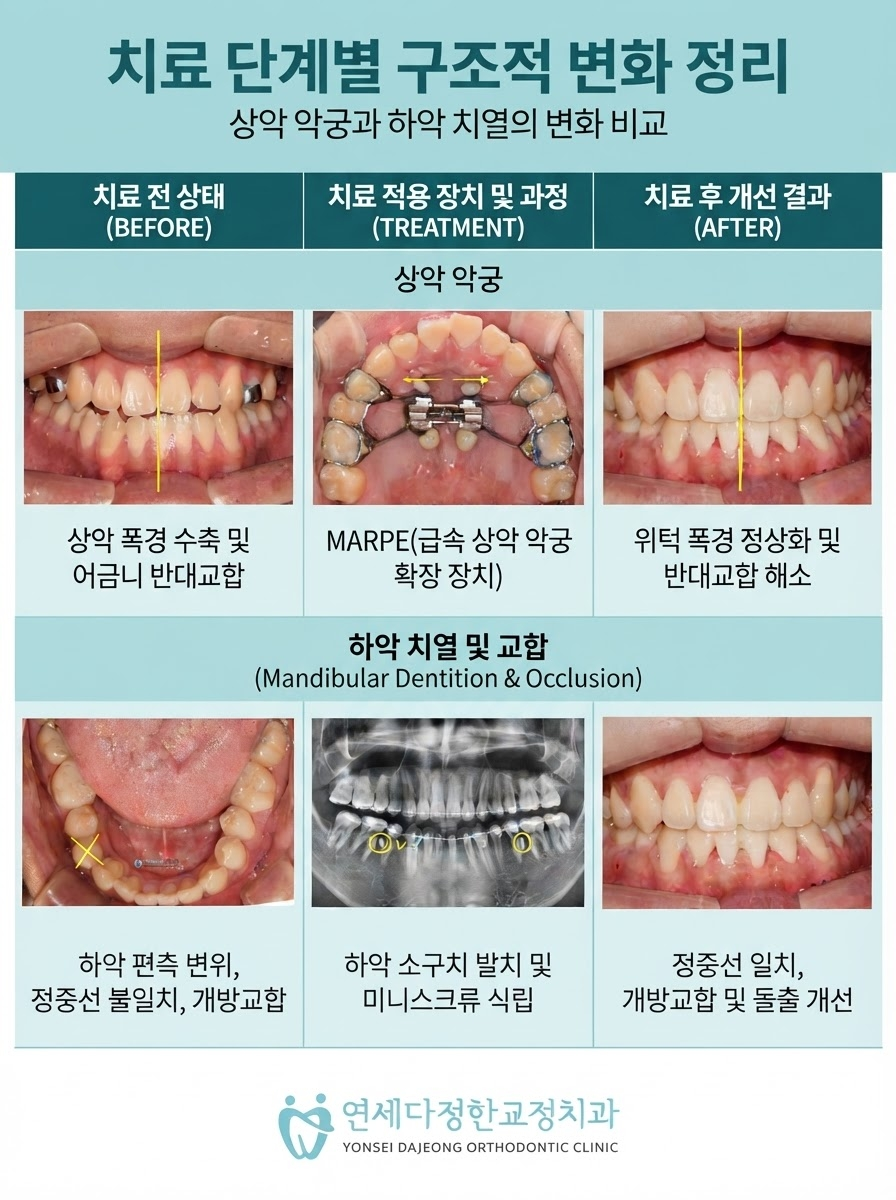
🟢 Upper jaw width is reported to normalize, with a tendency for posterior crossbite to resolve.
🟢 The midline is reported to align, with open bite and protrusion tending to improve together.
🟢 A South Korean study (published in the Journal of the Korean Dental Association in 2013, examining a miniscrew-assisted palatal expander in adults) also reported that miniscrew-assisted expansion appliances maintained arch-expansion effects while reducing load on the teeth; this reflects the findings of that specific study, not the clinical results of any particular clinic or patient.
Correcting facial asymmetry is less about simply straightening the teeth and more about identifying what caused the asymmetry and adjusting the relationship between the upper and lower jaws and teeth together.
If you’d like a detailed diagnosis, you can check consultation information on the Cheongnyangni Yonsei Dajeonghan Orthodontic Clinic homepage.
Frequently Asked Questions
1. Can every case of facial asymmetry be treated without surgery?
No. Non-surgical treatment can be considered when the cause is a narrow maxilla or a functional shift of the lower jaw, but if the skeletal discrepancy is significant, the appropriate treatment method should be determined after a detailed diagnosis.

2. Is the MARPE appliance very uncomfortable?
You may feel pressure or a foreign-body sensation early on. Since adjustment varies from person to person, your condition should be monitored continuously throughout treatment.
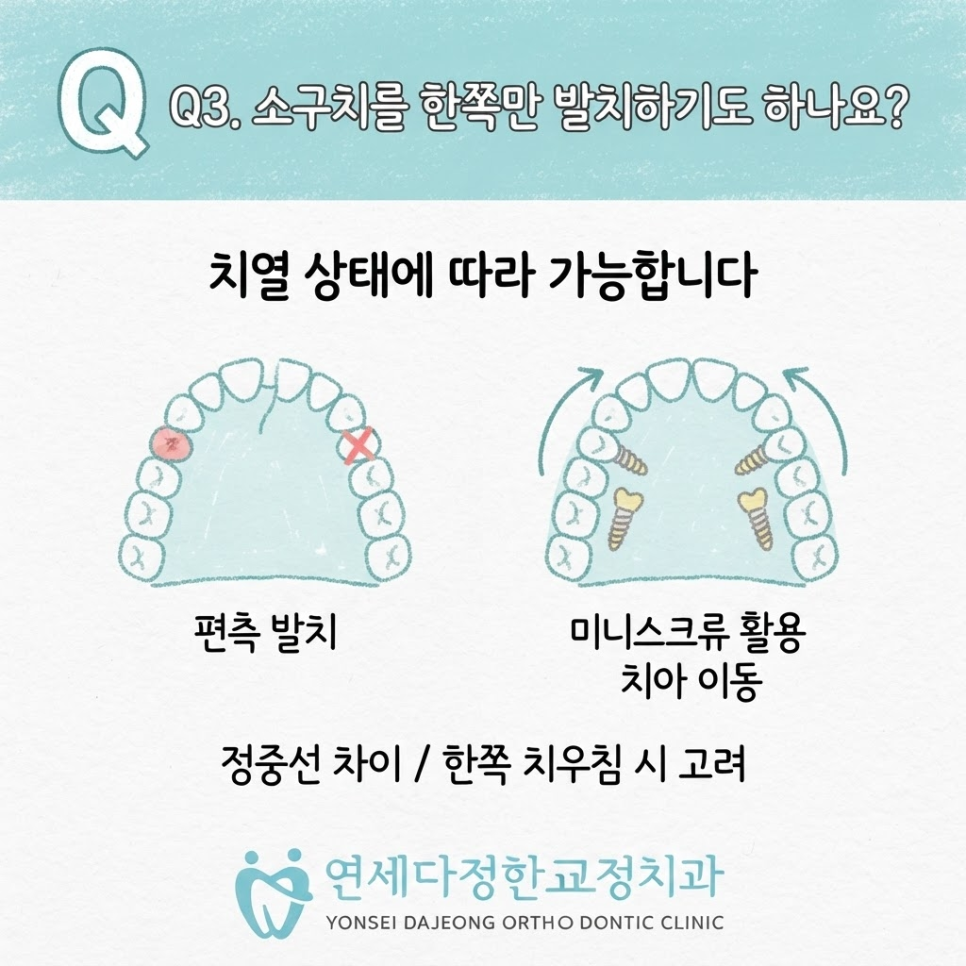
3. Is a premolar sometimes extracted on only one side?
When the dental arch is shifted to one side or there’s a midline discrepancy, one-sided extraction may be considered depending on the case. Mini-screws are used together to move the teeth in the needed direction.
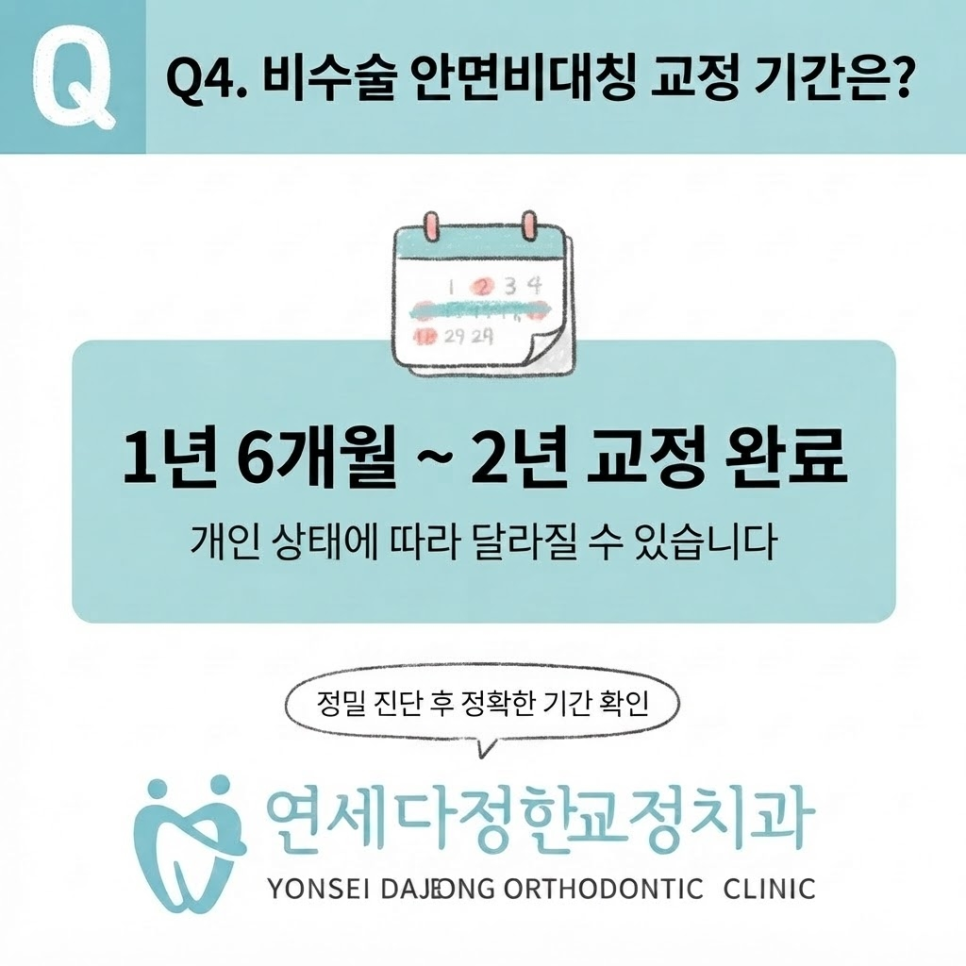
4. How long does non-surgical facial asymmetry correction take?
This varies depending on the amount of arch expansion and tooth movement needed, but some cases require roughly 1.5 to 2 years. It’s best to confirm the exact duration after a detailed diagnosis.
References
· Clinical Feature Team, Journal of the Korean Dental Association, “Comparison of Arch Expansion Effects Between a Miniscrew-Assisted Non-Surgical Palatal Expander and Continuous Archwire in Adults,” Journal of the Korean Dental Association 51(6), 2013.View source
· Ventura V, Botelho J, Machado V, et al., “Miniscrew-Assisted Rapid Palatal Expansion (MARPE): An Umbrella Review,” Journal of Clinical Medicine, 2022.View source
This article is intended to provide general health information and cannot replace individual diagnosis or treatment. If you have symptoms, please consult a specialist.