One of the biggest concerns when getting a dental consultation is being recommended more treatment than you actually need.
Especially when there’s a visible issue like a gap between the front teeth or an underbite,
it’s easy to assume prosthetic treatment is the first step.
However, when researching a Hoegi Station orthodontist, it’s important to check whether the practice diagnoses the underlying cause, not just the visible symptom.
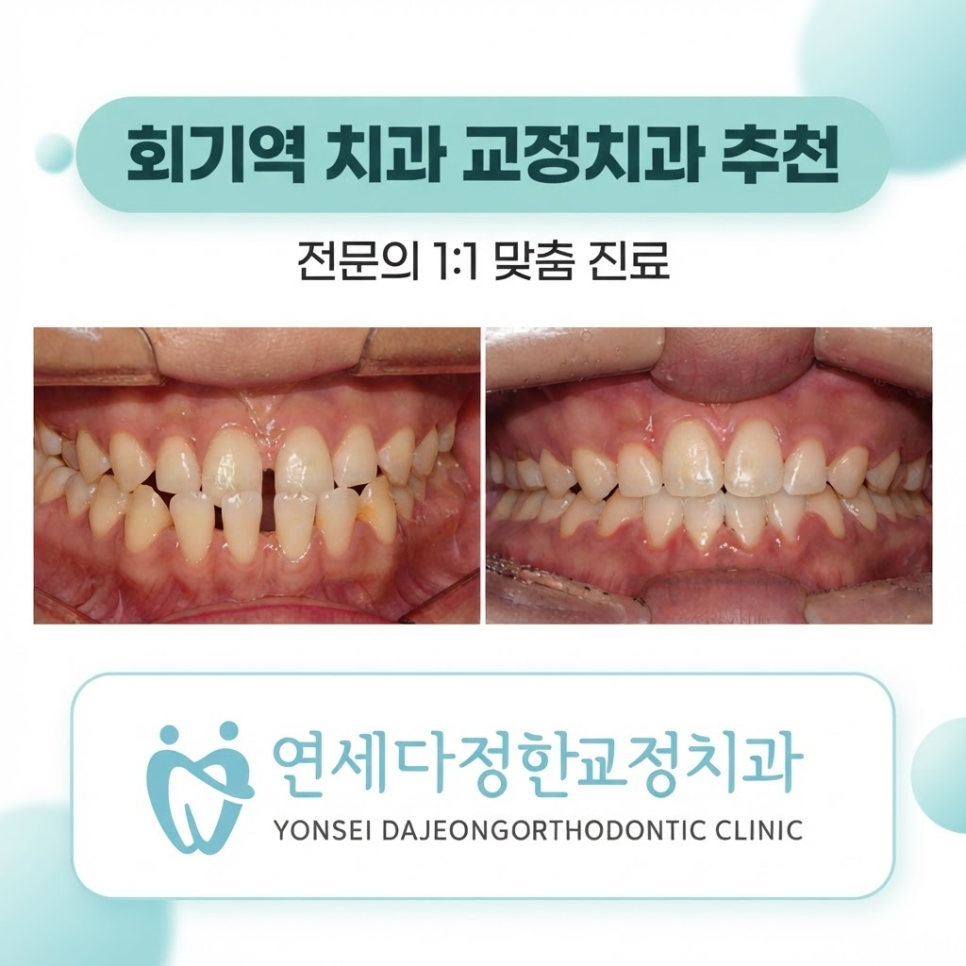
When there’s a significant gap between the front teeth along with an underbite,
it’s easy to assume you need prosthetic treatment such as implants or veneers.
However, depending on the condition of the teeth and bite, orthodontic treatment that moves the natural teeth
may be considered instead of adding artificial restorations.
When choosing a Hoegi Station dentist, it’s important to check whether the practice can diagnose
both the cause of the underbite and the overall bite relationship, rather than just closing the visible gap.
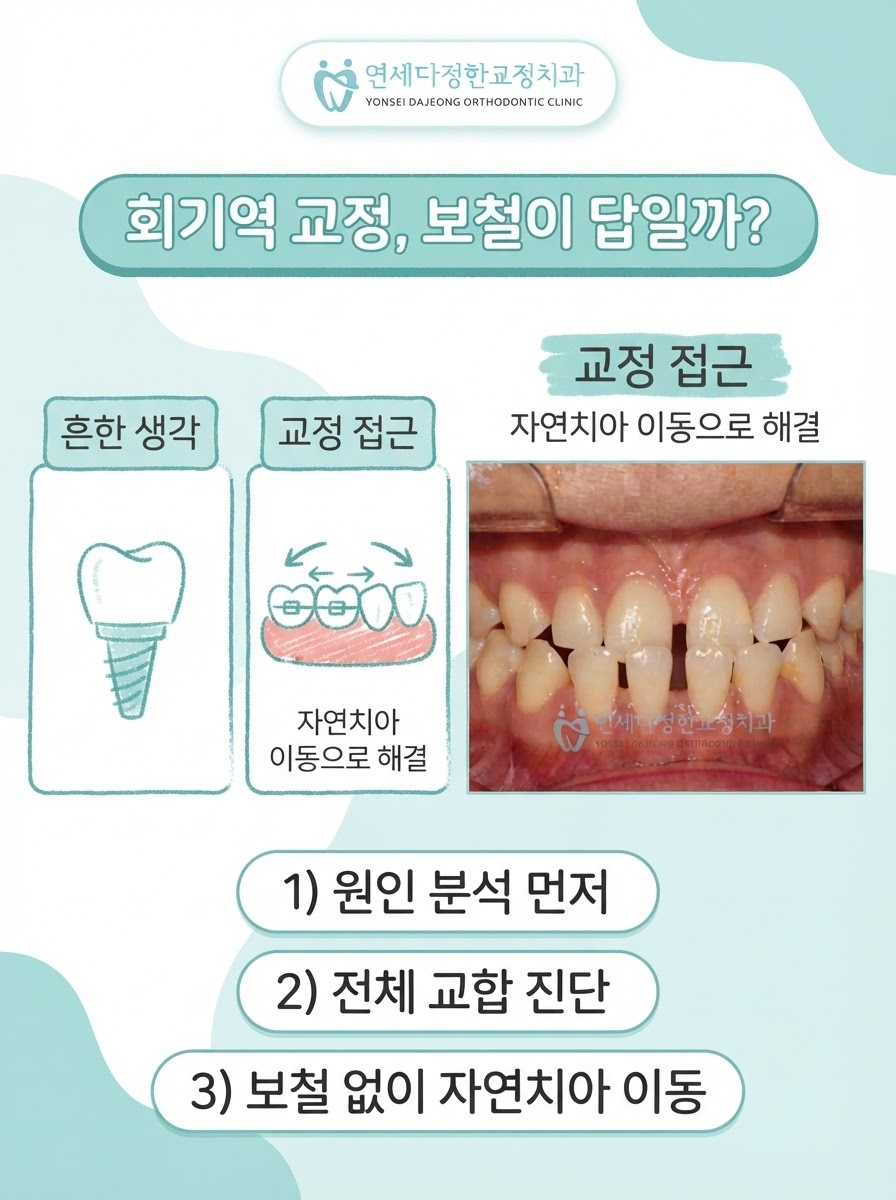
Having both a front teeth gap and an underbite does not automatically mean prosthetic treatment is required.
A Hoegi Station orthodontist uses a comprehensive diagnostic workup to first determine whether the natural teeth can be moved and whether a retained baby tooth can be preserved.
This article walks through the diagnostic criteria, the non-surgical orthodontic process, and how the underbite was corrected, in order.
Table of Contents
- Diagnosing the Front Teeth Gap and Underbite
- Non-Surgical Orthodontics That Preserves a Retained Baby Tooth
- Resolving the Underbite and Completing the Final Bite
- Frequently Asked Questions
How Can You Tell a Hoegi Station Orthodontist Avoids Overtreatment?
A practice that avoids overtreatment diagnoses the underlying cause
rather than simply filling in the visible gap.
An underbite is a condition in which the lower front teeth sit further forward than the upper front teeth, causing them to bite in reverse.
This condition, often referred to as a protruding jaw, is classified as Class III malocclusion.
If a gap between the front teeth is also present,
the position and number of the upper and lower teeth, as well as the overall bite, need to be examined, rather than simply closing the visible space.
However, some dental practices only suggest filling the gap with veneers or implants.
Depending on the size of the gap and the position of the teeth, this can make the restoration look unnatural or affect the overall bite, so caution is needed.
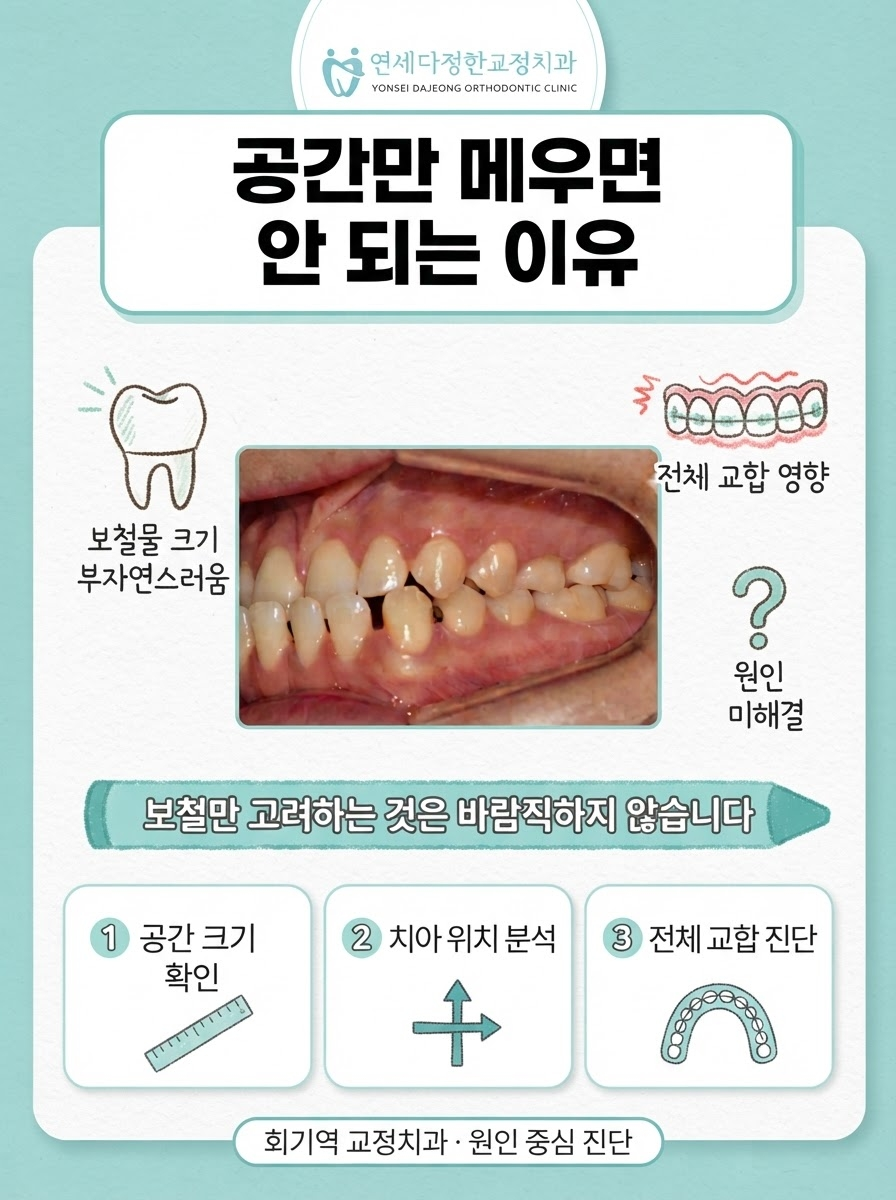
✅ Does the practice diagnose the cause of the underbite, not just the visible gap?
✅ Does it review whether the natural teeth can be moved before recommending prosthetic treatment?
✅ Does it check the bite of the upper and lower back teeth as well?
✅ Does it explain findings based on diagnostic data such as X-rays and model analysis?
Do a Front Teeth Gap and Underbite Always Require Prosthetic Treatment?
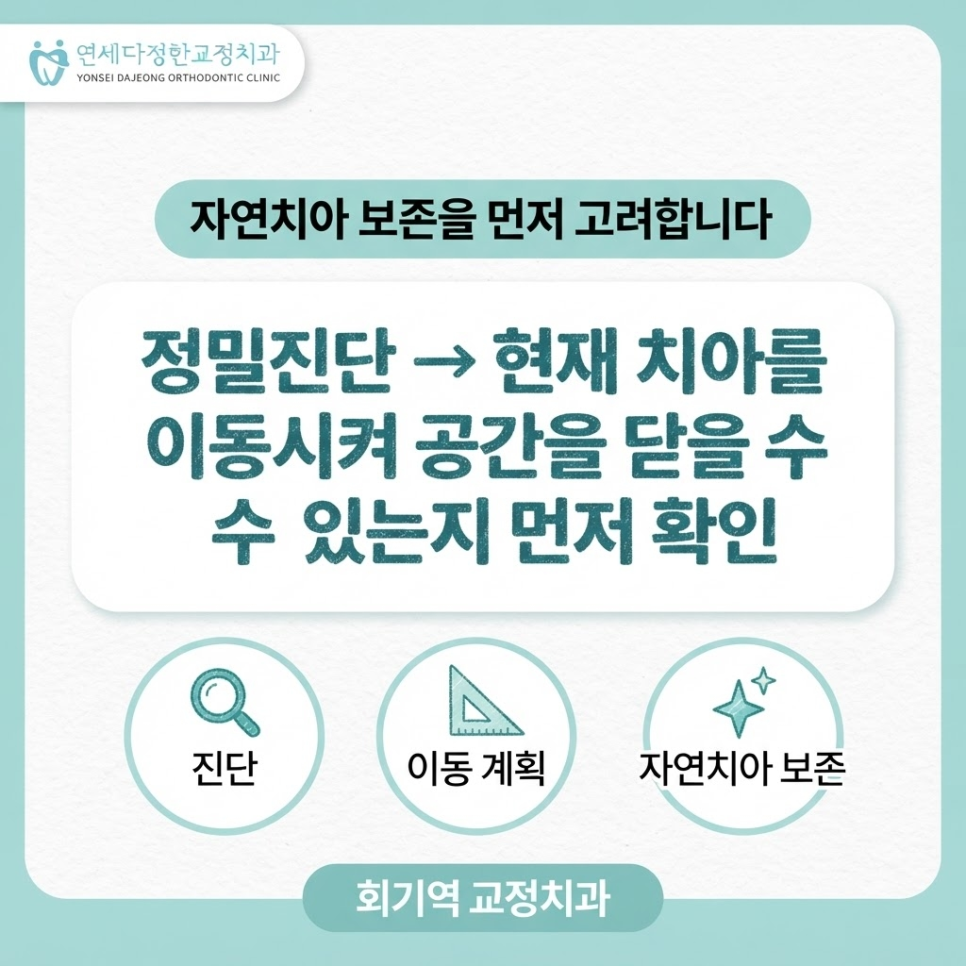
The short answer: depending on the condition of the teeth and jawbone, moving the natural teeth alone may be enough to close the gap.
A comprehensive orthodontic diagnostic workup is needed first
to check whether the existing teeth can be moved to close the gap.
It’s important not only to close the gap but also to adjust the bite so the upper and lower front teeth meet normally.
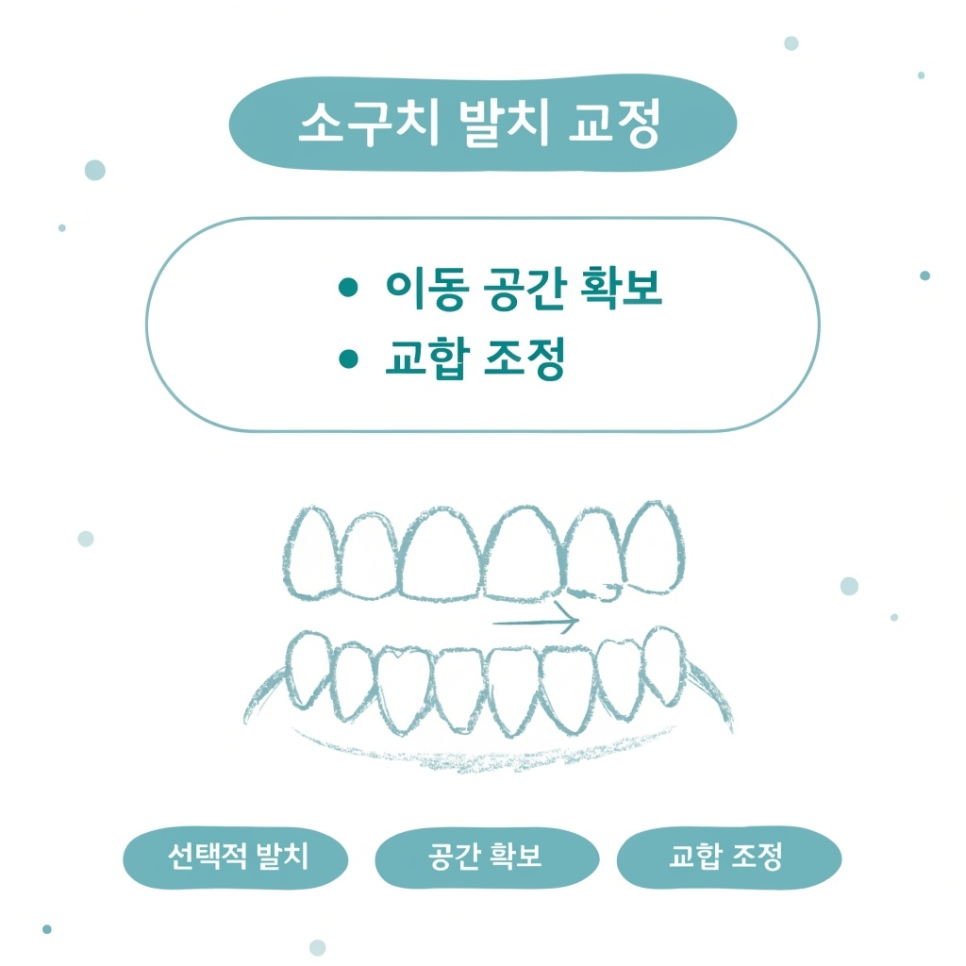
Premolar extraction orthodontics is a method of selectively extracting premolars to create space for tooth movement and adjust the bite.
However, extraction is not required in every case;
whether to extract is decided by comprehensively considering crowding, the amount of space shortage, and facial balance.
If You Have a Retained Baby Tooth, Must It Always Be Extracted?
No — the first step is to check whether the tooth can be preserved.
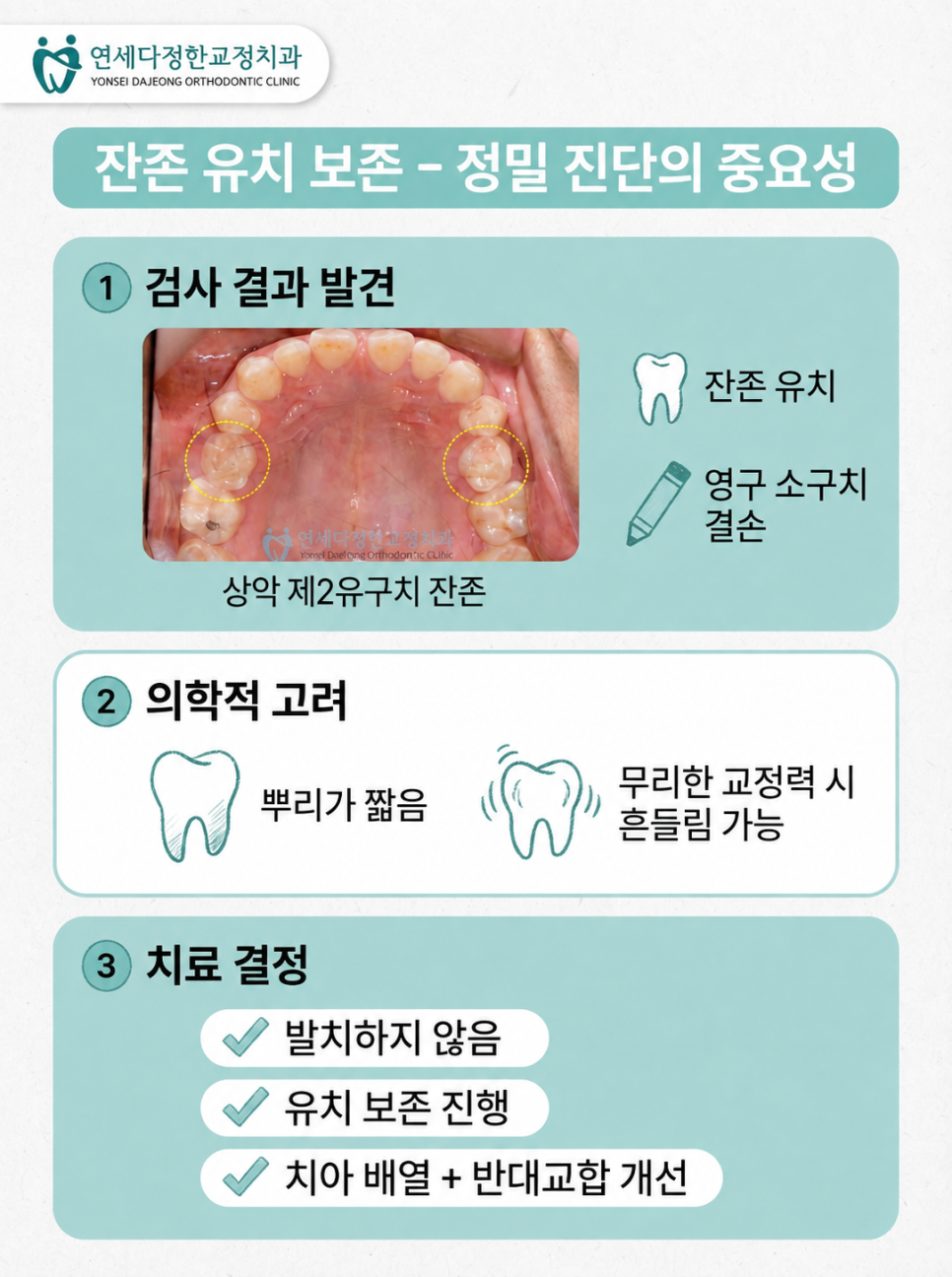
Depending on the examination results, a retained baby tooth — a baby tooth still present in the spot where a permanent tooth should have erupted — may be identified.
Because a retained baby tooth has a shorter root than a permanent tooth,
applying excessive orthodontic force can cause it to loosen.
For this reason, if the diagnostic workup determines that tooth alignment and underbite correction are possible without extraction,
treatment can proceed while preserving the baby tooth.
A retained baby tooth has a short root, so excessive orthodontic force may cause it to loosen or become damaged.
Whether it can be preserved must always be determined through a comprehensive diagnostic workup.
How Does the Step-by-Step Treatment Process Work?
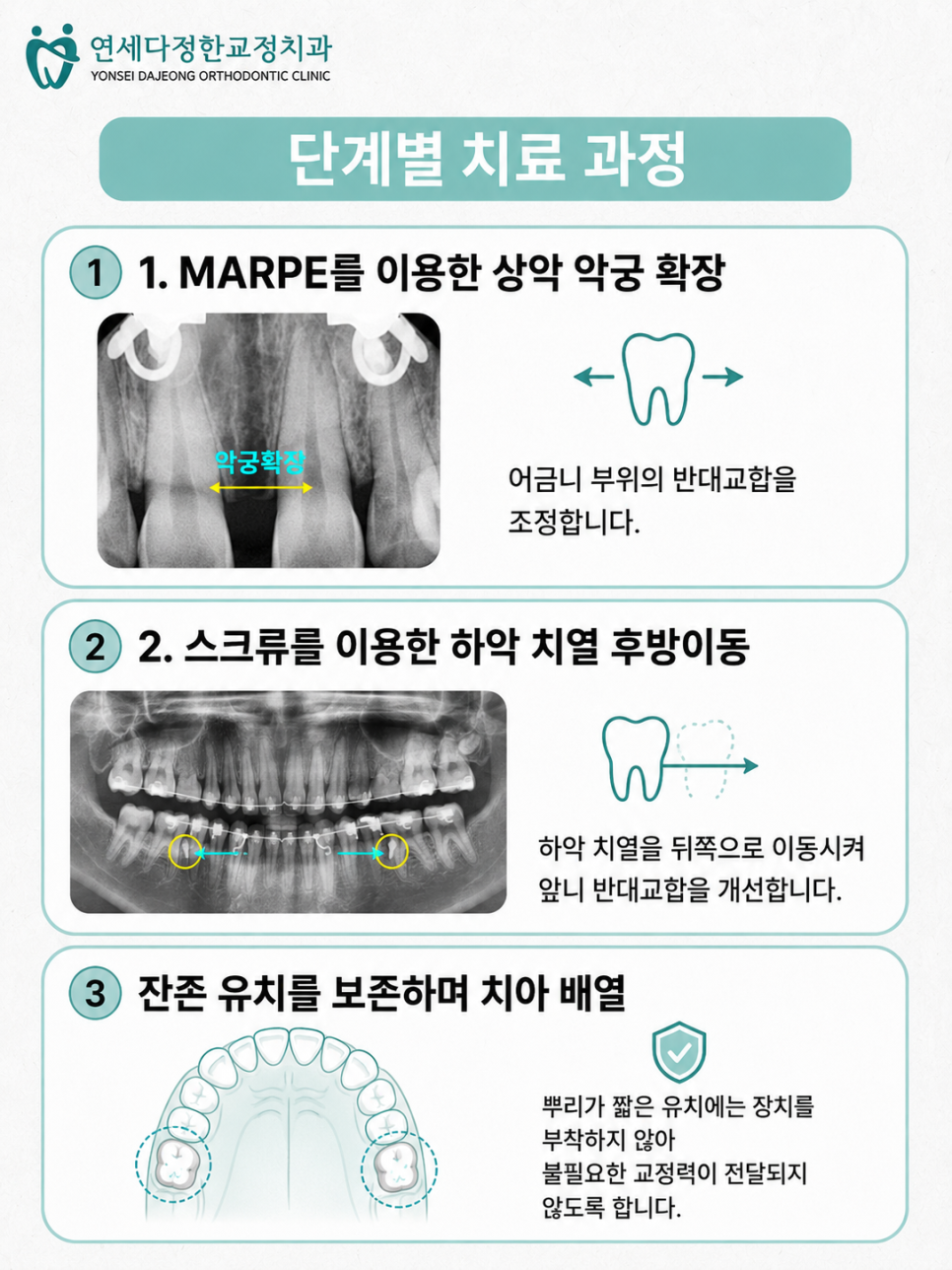
- Maxillary Arch Expansion Using MARPE — adjusts the underbite in the back tooth (molar) region.
- Posterior Movement of the Lower Dental Arch Using Screws — moves the lower arch backward to correct the front-teeth underbite.
- Tooth Alignment While Preserving the Retained Baby Tooth — no appliance is attached to the short-rooted baby tooth, avoiding unnecessary orthodontic force.
MARPE combined with screw-assisted posterior movement of the lower arch is a common non-surgical approach to correcting an underbite.
For a retained baby tooth, the key is to avoid excessive force and first evaluate whether it can be preserved.
MARPE is known as a device that uses mini-screws to widen the upper jawbone itself,
creating space without extraction.
This approach can be used by a Hoegi Station orthodontist to close a front-teeth gap
and correct an underbite.
Treatment duration and outcomes can vary from person to person depending on the condition of the teeth.
Does Underbite Treatment End Once the Front Teeth Are Corrected?
No — treatment is only complete once the back teeth (molars) are also adjusted to bite properly.
Orthodontic treatment doesn’t end simply by closing the gap between the front teeth.
A lateral cephalometric X-ray can be used to diagnose the direction in which the upper and lower front teeth meet
and to track treatment progress.
Both the front and back teeth need to be adjusted so the upper and lower teeth can bite together stably.

| Category | Before Treatment | Treatment Goal |
|---|---|---|
| Front teeth condition | Gapped space | Space closed |
| Front teeth bite | Underbite | Normal bite |
| Molar bite | Underbite | Stable bite |
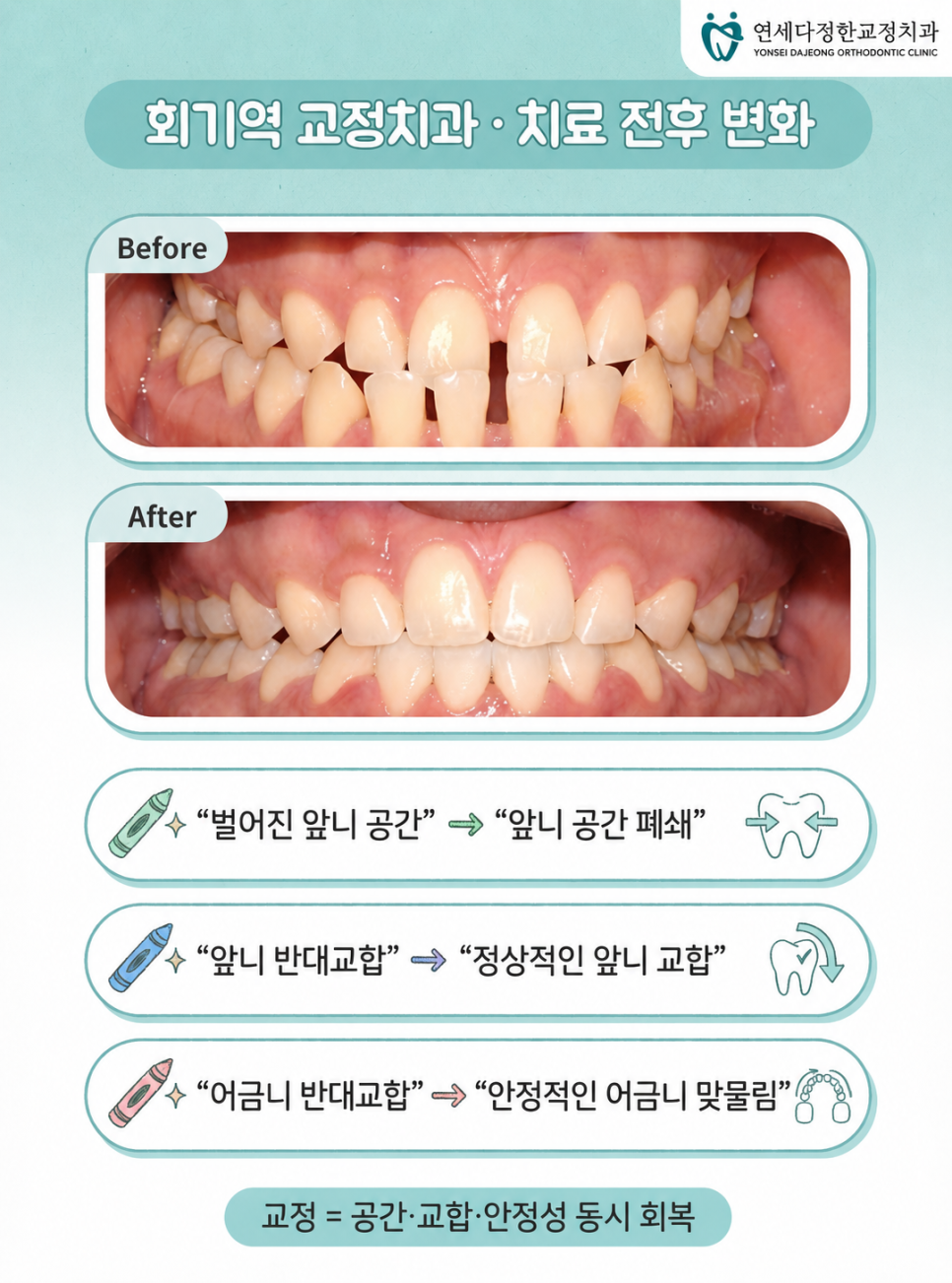
In lateral X-ray comparisons, the upper and lower front teeth that were biting in reverse before treatment
may show a change to a normal bite direction after treatment.
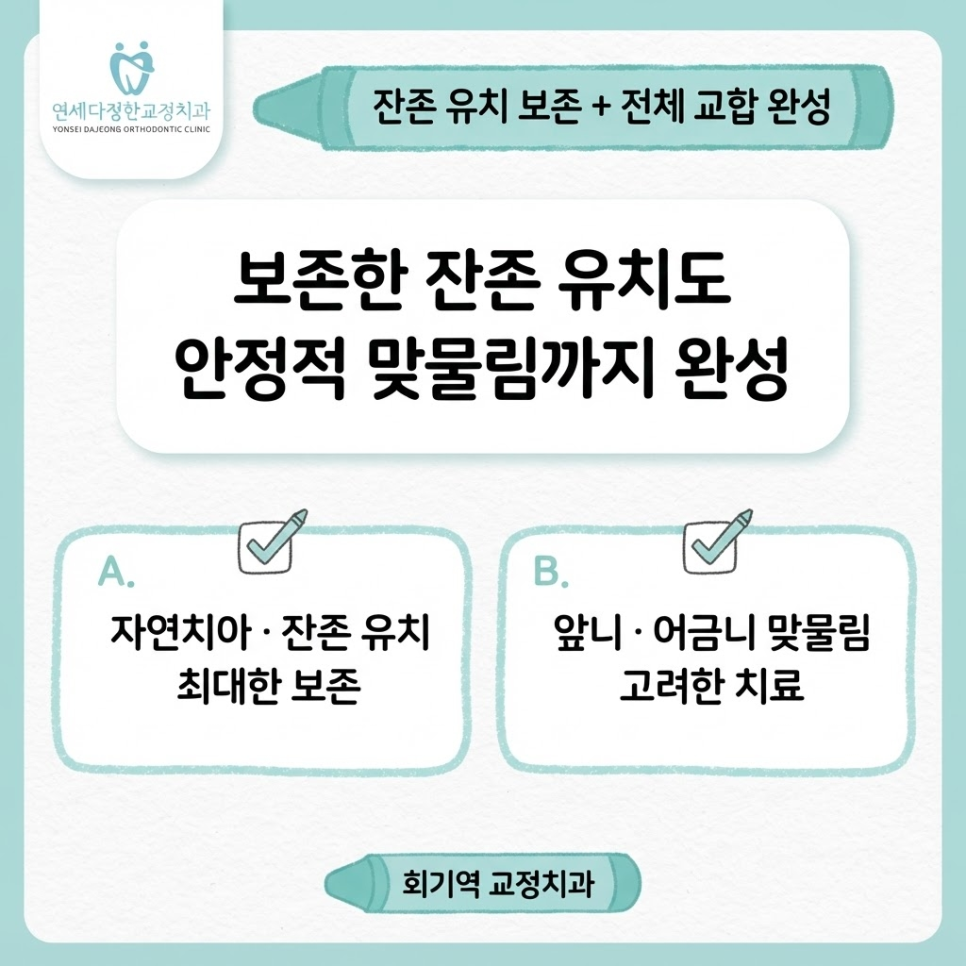
The treatment goal also includes managing the preserved baby tooth so it bites stably with the surrounding teeth.
When researching a Hoegi Station dentist, it’s important to look beyond front-teeth alignment alone
and check the overall bite as well.
We recommend looking for a practice that preserves natural teeth and retained baby teeth as much as possible
while building a treatment plan that accounts for both front and back tooth alignment.
If you’re curious about an orthodontic consultation, you can check treatment information at the Yonsei Dajeonghan Orthodontic Clinic homepage in Cheongnyangni.
Frequently Asked Questions
1. Can a front-teeth gap be corrected without implants or veneers?
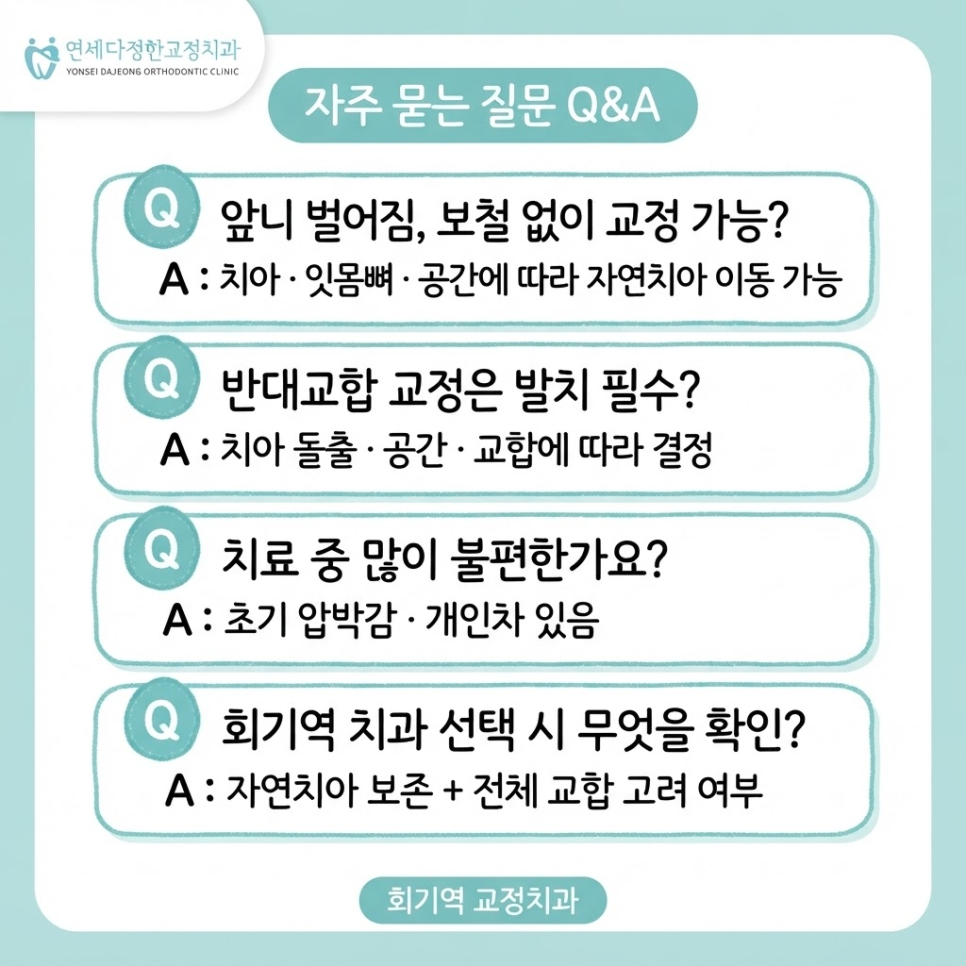
Depending on the condition of the teeth and gums and the size of the gap, moving the natural teeth to close the space may be considered. A comprehensive diagnostic workup is needed to confirm feasibility.
2. Does correcting an underbite always require extraction?
No. Whether extraction is needed depends on the degree of tooth protrusion, available space, and bite condition. If necessary, premolar extraction can be used to create space for tooth movement.
3. Is treatment at a Hoegi Station orthodontist very uncomfortable?
Pressure or discomfort can occur right after an appliance is first attached or adjusted. Most patients go through an adjustment period, but the degree and duration of discomfort vary from person to person.
4. What should I check when choosing a Hoegi Station dentist?
Rather than just asking whether prosthetic treatment or extraction is needed, it’s a good idea to check whether the practice first considers ways to preserve the natural teeth and builds a treatment plan that accounts for the overall bite and tooth movement.
References
· Seoul Asan Hospital, “Underbite (Class III Malocclusion),” Disease Encyclopedia, Seoul Asan Hospital (Korean-language source). View source
· Daily Dental, “Resolving Maxillary Transverse Discrepancy with ‘MARPE’,” Daily Dental (Korean-language source). View source
· Health Kyunghyang, “Is It Okay for ‘Baby Teeth’ to Remain into Adulthood for Oral Health?,” Health Kyunghyang (Korean-language source). View source
This article is intended for general health information purposes only and cannot replace individual diagnosis or treatment. If you have symptoms, please consult a specialist.