Tag: Orthodontics

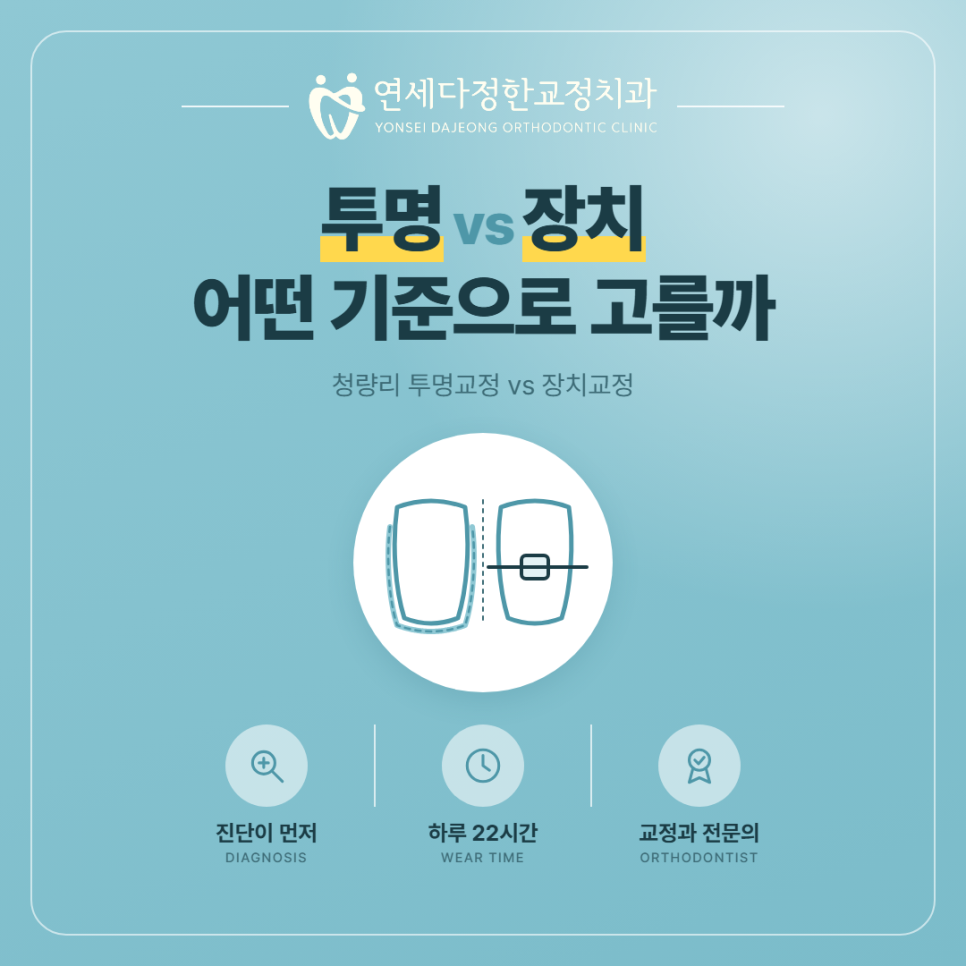
  • Clear Aligners vs Braces: How to Choose and 3 Rules for 22-Hour Wear

    Clear Aligners vs Braces: How to Choose and 3 Rules for 22-Hour Wear

    SummaryWhen comparing clear aligners vs braces, the real deciding factors are diagnosis and wear habits. In one study, only 36% of patients consistently met the 22-hour daily wear target, and both Korea’s MFDS and the U.S. FDA have warned against using clear aligners without a specialist’s diagnosis. A Cheongnyangni orthodontic specialist breaks down how to choose.

    Almost every patient who sits down in the consultation room asks the same question first.
    Whether clear aligners or braces would be the better choice.

    Clinical experience suggests the answer is a little different.
    What matters more than the type of appliance is your tooth condition and your wear habits.

    This article breaks down the criteria for a clear aligners vs braces comparison.
    We’ll walk through the differences in structure and pain, when clear aligners have the advantage, how to correct teeth that don’t move as planned, the daily wear-time standard, and how to verify an orthodontic specialist.

    Key takeaway
    A clear aligners vs braces comparison isn’t about which appliance is “better” — it comes down to diagnosis and wear habits.
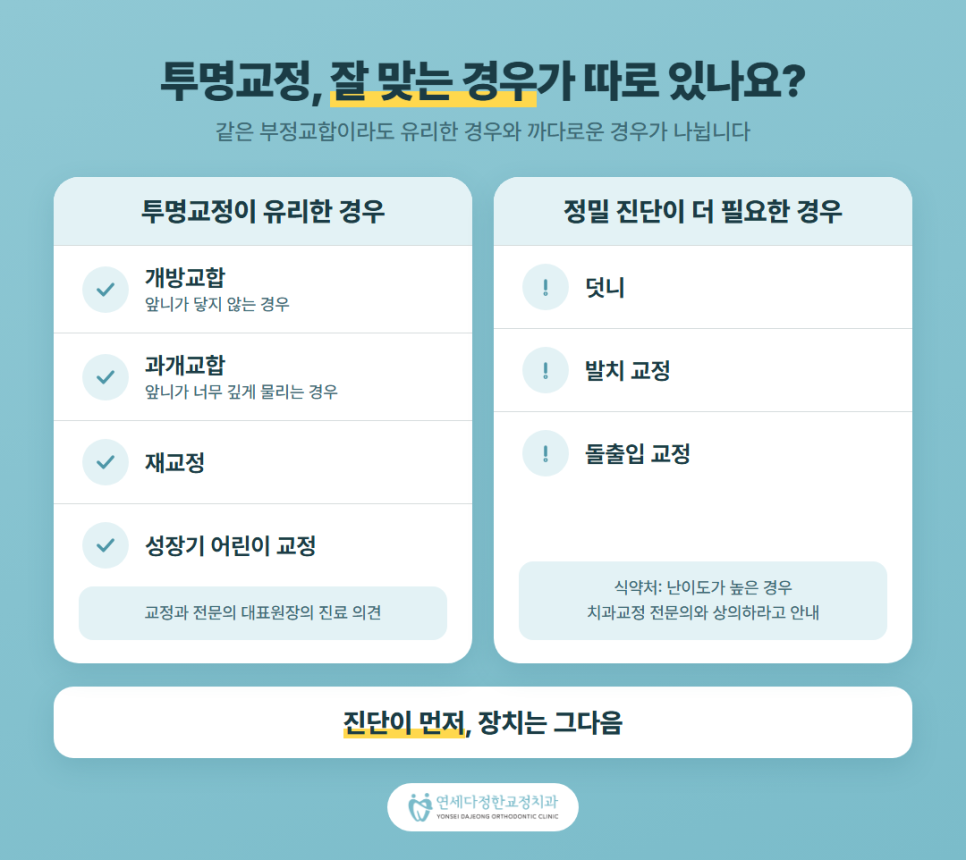
    Clear aligners tend to work well for open bite, deep bite, re-treatment cases, and growing children, while more complex cases — such as crowding, extractions, or protruding teeth — call for a specialist consultation first.
    One study found that only 36% of patients consistently wore their aligners 22+ hours a day, making wear habits a key variable in treatment outcomes.

    Clear Aligners vs Braces: How Do They Differ in Structure and Pain?

    The two methods differ in where and how the force that moves your teeth is applied.
    Clear aligners are an orthodontic method that gradually moves teeth by switching through a series of clear plastic trays.
    Braces, by contrast, work by bonding brackets to the teeth and applying force through a wire.

    Invisalign is simply one brand of clear aligner.
    Just as many people use “Kleenex” to mean any tissue or “Band-Aid” for any adhesive bandage, the Invisalign name has become shorthand for clear aligners as a whole.
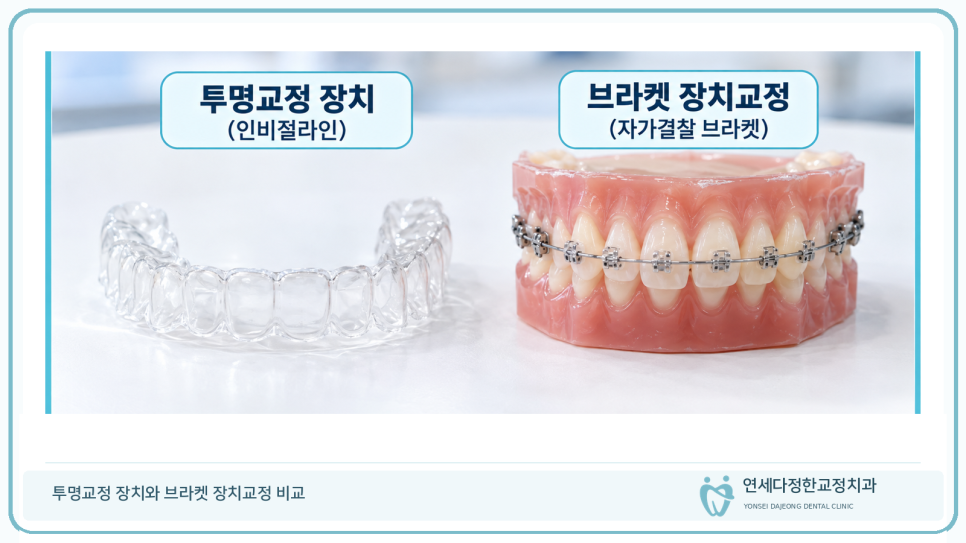
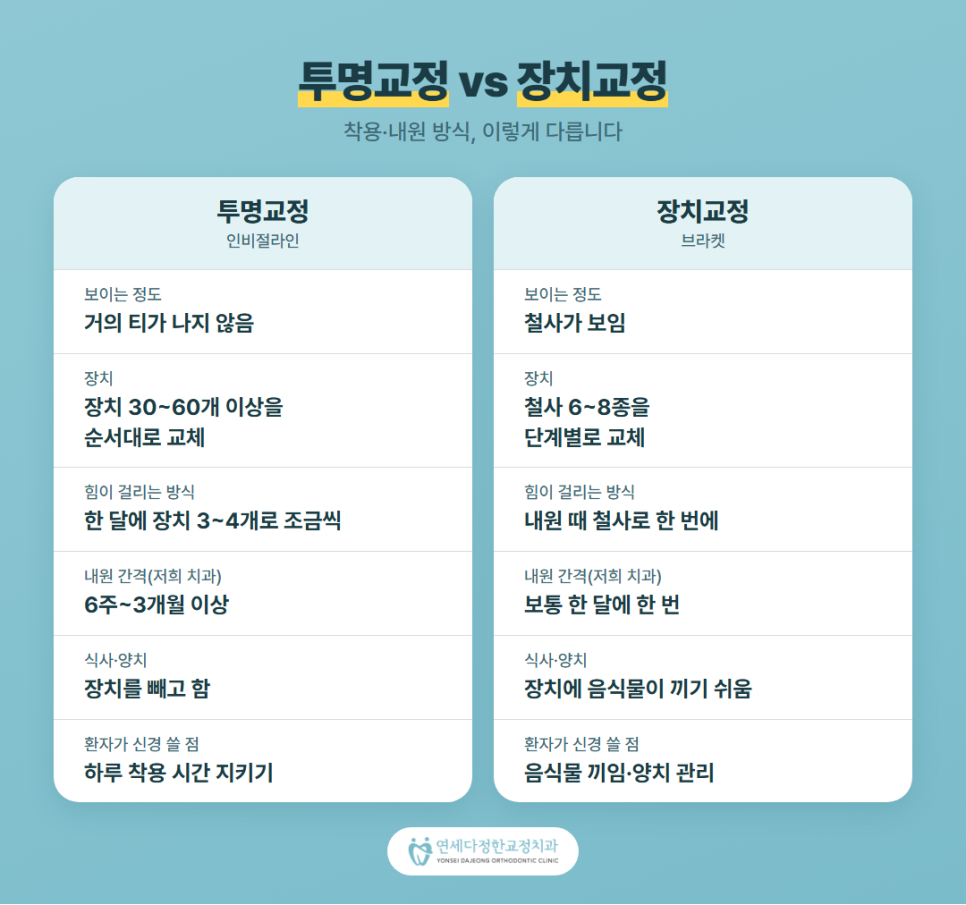
    Clear aligners vs braces comparison

    Clear aligners vs braces comparison image 2

    Category Clear Aligners Braces
    Appliance type Clear trays, changed every 1-2 weeks Brackets + wire
    Removable Removable for eating and brushing Not removable
    Visit frequency Every 6 weeks to 3 months Every 3-4 weeks
    Appearance Barely noticeable Visible appliance
    Pain pattern Mild discomfort spread over several occasions Sharper pain concentrated right after adjustments

    Clear aligners vs braces comparison image 3

    The way pain is experienced also differs.
    Traditional wire braces tend to cause a spike of discomfort right after each adjustment,
    while clear aligners tend to produce milder discomfort spread out over several weeks.


    When Are Clear Aligners Especially Advantageous?

    Even among patients with malocclusion, how much clear aligners help can vary.
    Malocclusion refers to a condition where the upper and lower teeth or jaw don’t align within a normal range.
    Clinically, clear aligners tend to work especially well in the following four situations.

    • Open bite — when the front teeth don’t meet when biting down
    • Deep bite — when the front teeth overlap excessively
    • Re-treatment — when teeth shift back out of alignment after previous orthodontic treatment
    • Orthodontic treatment for growing children

    On the other hand, more complex cases that require significant tooth movement — such as crowding, extraction cases, or protruding teeth — need careful evaluation to determine whether clear aligners alone are sufficient.
    The more complex the case, the more important it is to start with a detailed diagnostic consultation with a board-certified orthodontic specialist.

    For complex cases like an underbite where the lower jaw protrudes, some treatment approaches combine mini-screws with clear aligners to avoid extractions altogether.
    The guiding principle is always diagnosis first, with the choice of appliance coming second.
    Clear aligners vs braces comparison image 4


    What Happens When Teeth Don’t Move as Planned?

    In practice, teeth don’t always move exactly as planned with clear aligners.
    Studies report that the accuracy of rotational movement for canines — rotating the tooth into position — ranges from 35.8% to 64%, depending on the study.
    By contrast, intrusion of front teeth (moving them up to 2mm toward the gum line) has a much higher predictability, around 92%.

    That’s why treatment planning builds in safeguards from the start, with mid-course check-ins and additional trays to finish the job.
    Here are the four correction methods actually used in treatment planning.

    1. Attachments — small resin bumps bonded to teeth so the aligner can grip them more effectively
    2. Staging — breaking difficult tooth movements into smaller steps
    3. Mini-screws (orthodontic anchors) — small screws that anchor the back teeth so they don’t shift unintentionally
    4. Refinement trays — additional aligners made after a mid-treatment check to correct any teeth that haven’t moved as planned

    Clear aligners vs braces comparison image 5

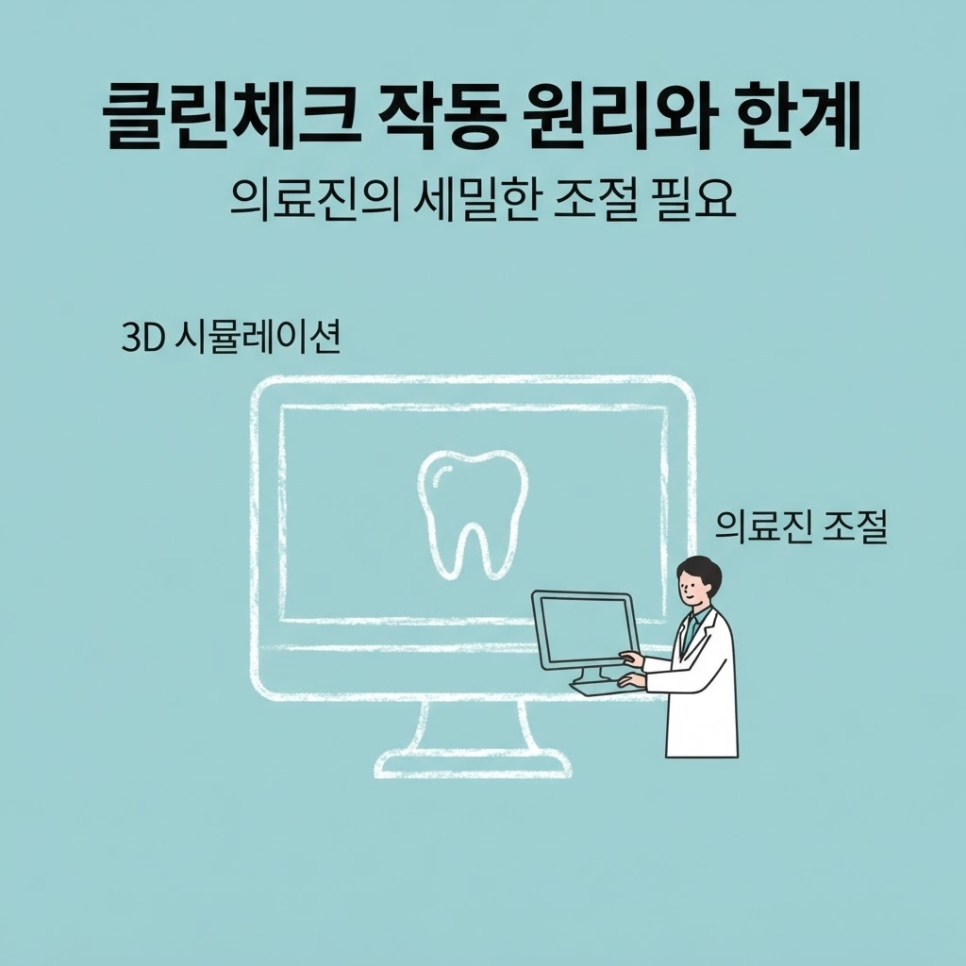
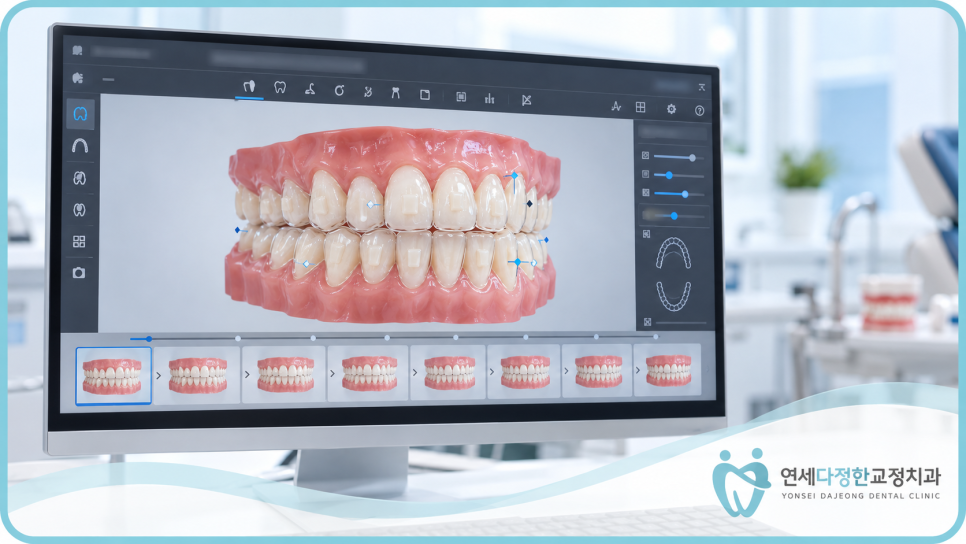
    Invisalign plans tooth movement using a 3D simulation called ClinCheck.
    However, ClinCheck isn’t a system that creates the treatment plan on its own.
    It’s a tool that carries out the plan the dentist designs.
    Clear aligners vs braces comparison image 6


    How Many Hours a Day Should You Wear Clear Aligners?

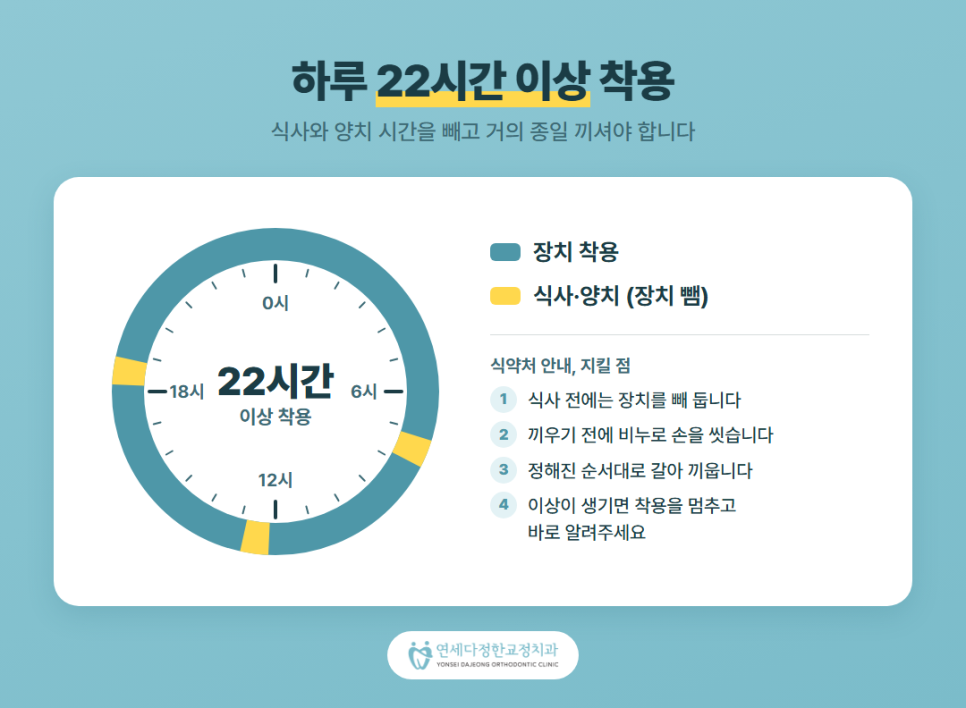
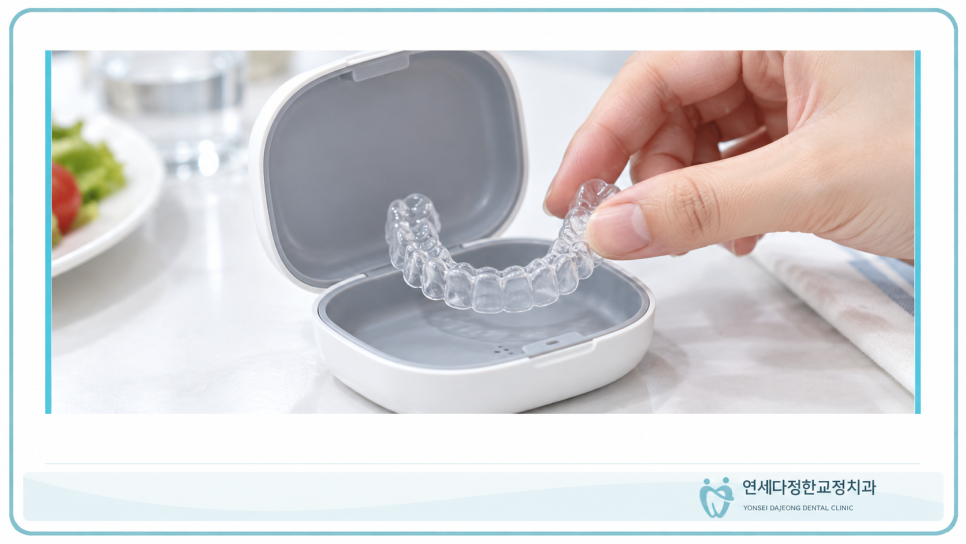
    The basic rule is to wear your aligners nearly all day, removing them only to eat and brush.
    Research also considers 22+ hours a day to be the benchmark for adequate wear.

    Results
    In a study analyzing 2,644 clear aligner patients, only 36% (953 patients) were classified as “fully compliant,” meaning they consistently met this wear-time standard.
    The rest either fell short of the target or wore their aligners only intermittently.
    No matter how precisely an appliance is designed, treatment won’t progress as planned without enough wear time.
    Wear checklist
    ✅ Remove your aligners before eating
    ✅ Wash your hands with soap before putting them back in
    ✅ Switch to the next set in the correct order
    ✅ Confirm you’re wearing them more than 22 hours a day
    Caution
    If you experience discomfort, a damaged tray, a bite that feels off, or gum inflammation, stop wearing the aligner and contact your dentist right away rather than waiting for your next scheduled visit.
    Clear aligners vs braces comparison image 7

    Clear aligners vs braces comparison image 8


    How Do You Verify an Orthodontic Specialist?

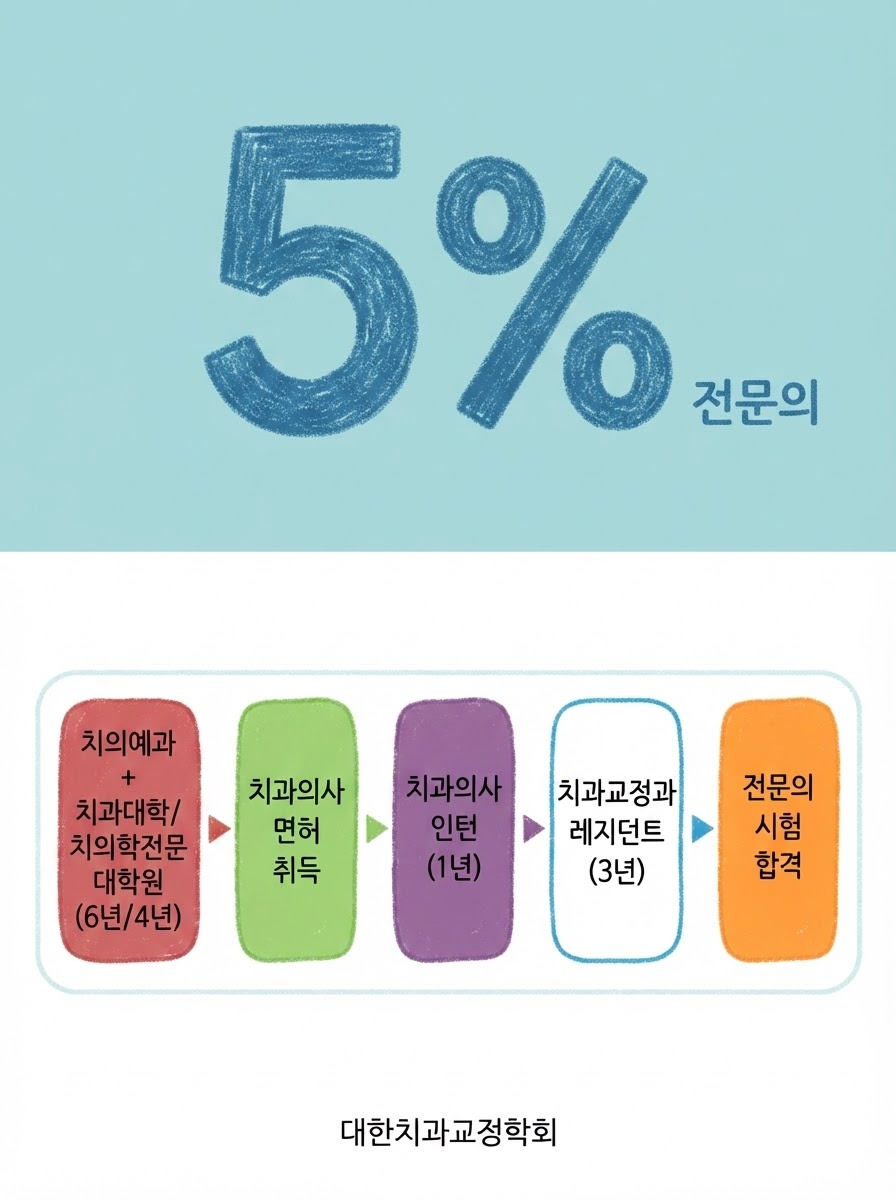
    A board-certified orthodontist is a dentist who, after graduating from dental school, has completed a one-year internship and three-year residency, then passed the specialist qualifying exam administered by Korea’s Minister of Health and Welfare.
    Having “orthodontic training experience” or having “attended orthodontic conferences” is not the same as holding this specialist certification.

    • Directly confirm whether the doctor is a certified orthodontic specialist
    • Check whether the specialist director personally handles your case from the initial consultation through appliance removal
    • Check whether you receive a detailed diagnosis (such as X-rays) and a clear explanation of the treatment plan

    These days, clear aligners sold directly online have also become more common.
    However, regulators have actually caught cases where simple mouthguards with no real tooth-moving function were falsely advertised as clear aligners.

    “Clear dental aligners sold online through direct overseas purchase or purchasing-agent services have not been verified for safety or effectiveness, and consumers should never buy them.”

    Korea’s Ministry of Food and Drug Safety (MFDS) issued this warning in 2020 after catching 92 cases of false or exaggerated advertising for clear dental aligners sold online.

    In October 2026, the U.S. FDA also issued an official warning that it has never approved any clear aligner sold directly to consumers without dentist supervision.
    This came after reports of real complications, including tooth pain, jaw pain, and bite problems.
    Clear aligner treatment should always begin with an in-person diagnosis at a dental clinic.

    Clear aligners vs braces comparison image 9

    Located across from Cheongnyangni Station in Dongdaemun-gu, Seoul, Cheongnyangni Yonsei Dajeonghan Orthodontics is an orthodontic clinic where a director who is a board-certified specialist in orthodontics and integrated dentistry personally handles every patient from the initial consultation through appliance removal.


    Frequently Asked Questions

    1. Does Invisalign hurt?
    It’s not entirely painless. However, because the force is applied gradually over many small steps, the discomfort is often milder compared to traditional braces.

    2. How often do I need to visit the clinic for clear aligner treatment in Cheongnyangni?
    Check-ups are typically scheduled every 6 weeks, sometimes up to every 3 months or more.

    3. Is clear aligner treatment covered by national health insurance?
    General orthodontic treatment, including clear aligners, is not covered by national health insurance in Korea and is billed as an out-of-pocket procedure. Costs are provided after a detailed diagnosis.

    4. Should I choose clear aligners or braces?
    Rather than the type of appliance, the priority is a detailed diagnosis of your teeth and jaw, and whether you can realistically commit to wearing aligners 22+ hours a day for the full treatment.

    5. Are clear aligners sold online safe?
    Clear aligners sold without an in-person dental diagnosis are not recommended — both Korea’s MFDS and the U.S. FDA have warned that their safety has not been verified.


    References

    · Khosravi R, et al., “Factors Influencing Patient Compliance during Clear Aligner Therapy: A Retrospective Cohort Study,” PMC, 2021. View source
    · Korea Ministry of Food and Drug Safety (MFDS), “92 Cases of False and Exaggerated Advertising for Unauthorized Dental Aligners Caught,” Hit News, 2020. View source
    · ADA News, “FDA warns public about unauthorized direct-to-consumer clear aligners,” American Dental Association, 2026. View source
    · Ministry of Health and Welfare, “Regulations on Specialist Training and Qualification Recognition,” Korea Law Information Center, 2025. View source
    · “Accuracy of Invisalign aligners in adult patients: a retrospective study of angular tooth movements,” PMC, 2024. View source


    This article is intended for general health information purposes only and is not a substitute for individual diagnosis or treatment. If you have symptoms, please consult a specialist.
  • Diastema Causes: 6 Reasons for Gap Teeth and the 49% Relapse Risk

    Diastema Causes: 6 Reasons for Gap Teeth and the 49% Relapse Risk

    SummaryDiastema causes determine the entire treatment plan for closing a front teeth gap. From the 6 most common causes—gum disease, bite issues, and tooth size—to how it differs from resin bonding and veneers, and the retainer habits that help lower the 49% relapse rate, this Dongdaemun orthodontic clinic guide covers it all.

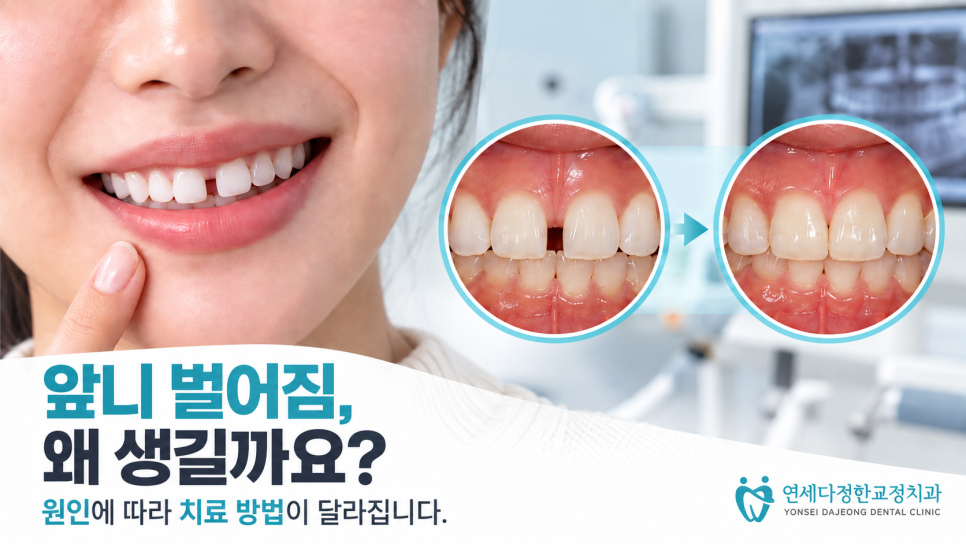
    Many people start researching diastema treatment for a gap between their front teeth, then hesitate.
    That’s often because of accounts describing the gap reopening even after braces closed it.

    But moving teeth to close a gap
    and addressing why the gap formed in the first place are two different problems.
    Depending on whether gum disease or a bite issue is the cause,
    the treatment order and outlook change completely.

    Key Takeaways
    The treatment order for diastema depends on its cause.
    If gum disease is the cause, gum treatment comes first; if a bite issue is the cause, moving the lower teeth as well may help reduce relapse.
    Some studies report a relapse rate as high as 49% after treatment, which is why retainer care matters so much.

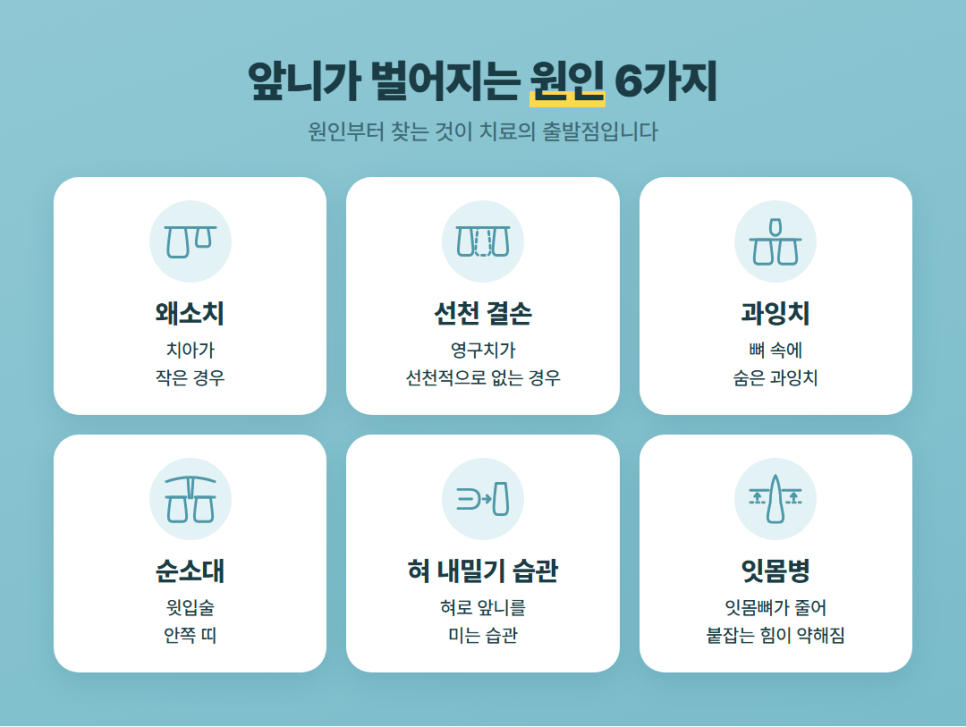
    What Are the 6 Diastema Causes of a Front Teeth Gap?

    The short answer: there are six main diastema causes, so identifying the cause is always the starting point for treatment.
    A diastema is a gap between the two upper front teeth.

    diastema causes

    The most common diastema causes are:

    1. Small teeth (microdontia)
    2. Congenitally missing permanent teeth
    3. A hidden extra tooth (supernumerary tooth) in the bone
    4. A thick labial frenum (the tissue band inside the upper lip)
    5. A tongue-thrusting habit against the front teeth
    6. Gum disease (periodontal disease)

    diastema causes illustration 2

    In adult patients, though,
    a bite (occlusion) problem is especially often the cause.

    If the lower teeth sit too far forward and keep pushing the upper front teeth outward,
    closing just the upper front teeth tends to let the gap reopen.
    In these cases, moving the lower teeth back as well may help the gap stay closed.


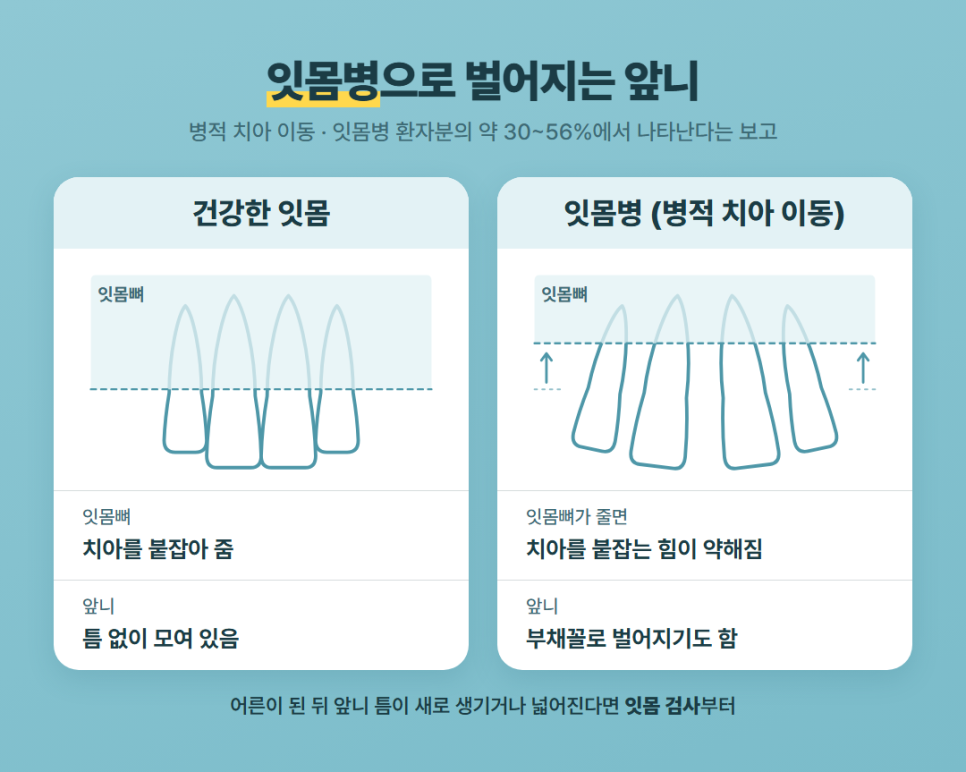
    If Gum Disease Is One of the Diastema Causes, How Does Treatment Work?

    If periodontal disease is the cause, gum treatment comes first and orthodontic treatment follows.
    Pathologic tooth migration is when weakened support from bone loss lets the front teeth fan outward.

    diastema causes illustration 3

    Pathologic tooth migration becomes more common as periodontitis severity increases.
    One study observed it in about 51% of patients with severe periodontitis and about 50% of those with aggressive periodontitis.

    “Pathologic tooth migration is relatively common among patients with periodontal disease, and its frequency increases with disease severity.”

    This finding comes from a 2016 paper by Khorshidi and colleagues at Shiraz University, published in the Journal of International Society of Preventive and Community Dentistry.

    So if a gap between your front teeth appears or widens after adulthood,
    a gum exam should come before orthodontic treatment.

    diastema causes illustration 4

    Checklist · Signs You Need a Gum Exam First
    ✅ A front teeth gap appeared after adulthood
    ✅ The gap has been widening over time
    ✅ Gums bleed frequently while brushing
    ✅ Teeth feel loose
    Important Note
    Moving teeth while inflammation is still present can make gum disease worse.
    Teeth with reduced gum support bear more strain even under the same force, so inflammation needs to be brought under control first, and orthodontic movement should then proceed carefully with lighter force.

    Cheongnyangni Yonsei Dajeonghan Orthodontic Clinic has orthodontists, periodontists, and comprehensive dentistry specialists working together,
    so gum treatment and orthodontic care can continue seamlessly in one place.


    How Is Orthodontic Treatment Different from Resin Bonding or Veneers?

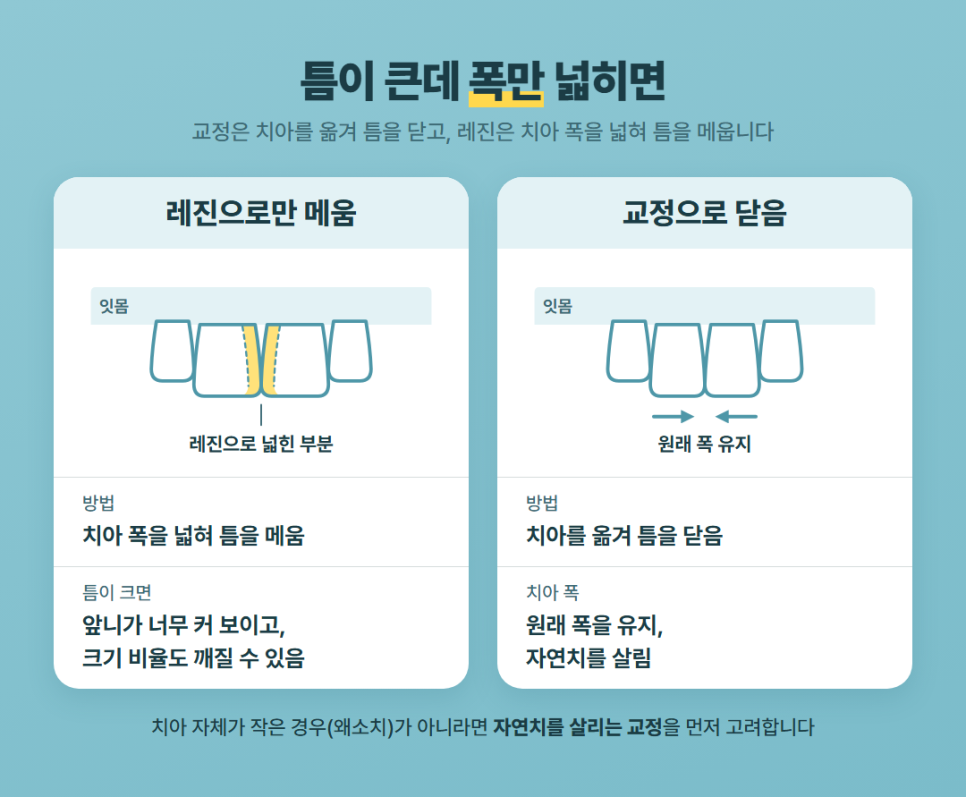
    The biggest difference is how the gap gets filled.
    Braces move the teeth to close the gap, while resin bonding and veneers widen the teeth to fill it.

    diastema causes illustration 5

    Category Braces Resin Bonding Veneers
    Tooth Reduction None Minimal Thin layer removed from front surface
    Duration Varies by cause and extent Usually one visit Requires a fabrication process
    Things to Watch For Possible relapse (retainer required) Discoloration, surface roughening Chipping; higher risk with teeth grinding
    Typically Used For Large or multiple gaps, bite-related causes Gaps from small teeth Gaps from small teeth

    If the gap is large, though, simply widening the teeth can make the front teeth look unnaturally big
    and throw off the tooth size ratio (Bolton ratio).

    So unless the teeth themselves are genuinely small, as with microdontia,
    orthodontic treatment that preserves the natural teeth is generally considered first.

    Also, having a gap only in the upper front teeth doesn’t mean only the upper arch can be treated.
    If the lower front teeth are pushing from behind, moving the lower arch as well may help the gap stay closed.


    Can a Gap Closed by Braces Reopen?

    Yes — a closed front teeth gap relapses relatively often, which is why retainer care matters.
    Relapse refers to a gap that was closed with braces reopening after treatment.

    In a study that followed patients for several years after diastema correction,
    the relapse rate was reported at 49% in one case.
    Even after the gap closes, the gum fibers (gingival fibers) take time to settle into their new position.

    diastema causes illustration 6

    Key Point · Two Types of Retainers
    Fixed (wire bonded behind the front teeth): stays attached 24/7 unless it comes loose
    Removable (clear/transparent type): wear time is self-managed; watch for loss or damage
    At Cheongnyangni Yonsei Dajeonghan Orthodontic Clinic, every patient
    receives both a fixed and a removable retainer.
    If your fixed retainer comes loose, please come in right away rather than waiting.

    A front teeth gap is a question of ‘why did it form’ before it’s a question of ‘how do I fill it.’

    Closing a front teeth gap is sometimes associated with greater comfort when smiling in social situations,
    though this is not a guaranteed outcome.
    Outcomes can vary depending on the cause and individual condition.

    diastema causes illustration 7

    If you’re considering diastema treatment in the Dongdaemun area,
    we recommend diagnosing the diastema causes before deciding on a treatment method.
    The clinic is a 5-minute walk from Exit 3 of Cheongnyangni Station, and also easily reached from Dapsimni and Jeonnong-dong.
    You can find detailed treatment information on the Cheongnyangni Yonsei Dajeonghan Orthodontic Clinic website.


    Frequently Asked Questions

    1. My child has a gap between their front teeth — do they need braces right away?
    In most cases, it’s fine to simply watch and wait. This is a common, often temporary stage around age 6; one survey found that the proportion of children with a front teeth gap dropped from about 65% at age 6 to about 14% by age 12, once the canine teeth come in. That said, an unusually large gap can sometimes signal a hidden extra tooth or a missing tooth, so an orthodontic checkup around age 7 is recommended.

    2. How long does gap teeth treatment take in the Dongdaemun area?
    It depends on the cause and extent of the gap. In some cases, closing the space alone took 9 months, with another 3-4 months for retention. Overall treatment time typically ranges from about 1 year on the shorter end to 2-3 years on the longer end.

    3. I was told I need an implant — can braces replace it?
    That’s a decision best made after a detailed diagnosis. Even when an implant is ultimately needed, closing the space with braces first may contribute to a better outcome in some cases. For patients who are still growing, implants are generally placed only after growth is complete, with timing typically determined through growth-plate analysis around the sophomore or junior year of high school.

    4. Can a front teeth gap be fixed with just resin bonding or veneers instead of braces?
    If the gap is simply due to naturally small teeth, that can work. But if the gap is large or caused by a bite issue, widening the teeth alone can leave the proportions looking off or leave a risk of relapse, so it’s safer to consider braces as well.

    References

    · Khorshidi H, Moaddeli MR, Golkari A, et al., 「The prevalence of pathologic tooth migration with respect to the severity of periodontitis」, Journal of International Society of Preventive and Community Dentistry, 2016. View source
    · Shashua D, Artun J, 「Relapse after orthodontic correction of maxillary median diastema: a follow-up evaluation of consecutive cases」, The Angle Orthodontist, 1999. View source
    · Liu JF, Hsu CL, Chen HL, 「Prevalence of developmental maxillary midline diastema in Taiwanese children」, Journal of Dental Sciences, 2013. View source

    This article is intended for general health information purposes only and is not a substitute for individual diagnosis or treatment.
    If you have symptoms, please consult a specialist.
  • Non-Surgical Underbite Correction: 3 Criteria You Need to Know

    Non-Surgical Underbite Correction: 3 Criteria You Need to Know

    SummaryA protruding lower jaw doesn’t automatically mean you need surgery. This guide covers the skeletal criteria for non-surgical underbite correction, how to tell a pseudo (dental) underbite apart, typical treatment timelines, and what to check when reading non-surgical underbite correction reviews.

    When you notice your lower jaw standing out in profile, it’s easy to assume jaw surgery is the only option.
    However, if the difference in jaw bone size is minor and the main issue is how the teeth are arranged, non-surgical underbite correction alone may be able to correct the bite.

    Even so, many people look into surgery first without knowing these criteria.
    With a thorough consultation and diagnosis, some cases are reported to improve with orthodontic treatment alone, without surgery.

    Key Takeaways
    If your back teeth bite normally but only your front teeth meet in reverse — a pattern known as a pseudo (dental) underbite — non-surgical underbite correction may help improve the bite.
    Treatment typically takes about 18 to 30 months, and the first step is always an accurate 3D CT scan to measure any skeletal discrepancy.
    Below, we outline the specific criteria for non-surgical correction and what to watch for when reading treatment reviews.

    What Causes an Underbite, and What Types Are There?

    non-surgical underbite correction

    To put it simply, underbites fall into two categories — skeletal and dental — and the more dental the cause, the better the odds for non-surgical correction.
    An underbite refers to a condition in which the lower jaw protrudes forward relative to the upper jaw or grows excessively.

    Asan Medical Center classifies an underbite as a type of malocclusion.
    Below is the definition published by the hospital.

    An underbite (mandibular protrusion, mandibular prognathism) occurs when the lower jaw is abnormally large relative to the upper jaw, resulting in malocclusion.

    According to Asan Medical Center’s health information, this is how it’s explained.
    An underbite is classified as Class III malocclusion.

    Causes include not only genetic jaw growth patterns but also habits such as tongue-thrusting or mouth breathing.
    Viewed from the front, it’s often accompanied by facial asymmetry, and from the side, the lower third of the face tends to look elongated.

    non-surgical underbite correction illustration 7

    Key Point
    Not every underbite requires surgery.
    If the difference in jaw bone size is minor and tooth position is the main issue, bite adjustment alone may bring improvement.
    A detailed diagnostic exam is the first step toward understanding exactly where you stand.

    What Are the Criteria for Non-Surgical Underbite Correction?

    non-surgical underbite correction illustration 8

    In short, this approach is an option when the size difference between the upper and lower jaw bones is minor and the back teeth already bite normally.
    Non-surgical underbite correction is a treatment that aims to improve a reverse bite through tooth movement and bite adjustment alone, without jaw surgery.

    This approach is reported to be particularly effective for a pseudo (dental) underbite, where the back teeth bite correctly but only the front teeth meet in reverse.
    In these cases, moving the teeth backward or adjusting their angle can help create a normal bite.

    Category Non-Surgical Correction Possible Surgery Required
    Jaw bone size difference Minor Clearly significant
    Molar (back teeth) bite Normal bite Misaligned
    Main cause Tooth position/angle (pseudo underbite) Excessive skeletal growth itself
    Treatment method Adjustment with orthodontic appliances alone Orthodontics combined with jaw surgery

    non-surgical underbite correction illustration 9

    Changes You May Expect
    ✅ Moving the lower dental arch backward can help the upper and lower teeth meet more normally.
    ✅ Correcting the angle of front teeth that previously met in reverse may help improve the reverse bite.
    ✅ Chewing may feel more comfortable, and the lip line may look more natural as a result.

    Treatment length varies from person to person, but non-surgical correction generally takes about 18 to 30 months.
    Cases like a pseudo underbite, where only tooth alignment needs adjusting, can sometimes finish sooner.

    Timing also matters for growing children — the Korean Association of Orthodontists recommends starting treatment around ages 7 to 9 if a skeletal reverse bite is suspected.
    This recommendation applies specifically to children who are still growing; whether non-surgical correction is possible for an adult needs to be determined through a separate diagnosis.


    Reading Non-Surgical Underbite Correction Reviews: What to Look For

    non-surgical underbite correction illustration 10

    A review is only meaningful if you look past subjective impressions and focus on bite measurements and the treatment process.
    A trustworthy review is one that includes before-and-after bite data from a case with a jaw structure similar to your own.

    You need to objectively assess how much improvement in appearance and function is realistic through tooth movement alone, within the limits of the jaw bone itself.
    Rather than taking someone else’s success story at face value, check first whether the treatment plan actually fits your own oral structure.

    non-surgical underbite correction illustration 11

    Checklist
    ✅ Was the degree of skeletal discrepancy accurately measured with a 3D CT scan?
    ✅ Was it confirmed that the upper and lower teeth bite evenly after treatment?
    ✅ Was the treatment plan based on a range of clinical cases?

    Because outcomes for underbite correction vary depending on each person’s individual jaw structure, a detailed diagnostic exam is essential.


    How Do You Care for Your Orthodontic Appliance Safely?

    non-surgical underbite correction illustration 12

    The key to safe management is keeping up with regular visits and thorough at-home care.
    How finely the force from the appliance is adjusted directly affects how the teeth move and how the bite ultimately turns out.

    Food tends to get trapped around the appliance easily, so it’s important to make active use of oral hygiene tools.

    non-surgical underbite correction illustration 13

    Precautions
    Chewy or hard foods can dislodge the appliance or put excess strain on tooth movement, so it’s best to avoid them.
    Skipping regular checkups can cause the bite to end up not aligning as planned.

    Following your provider’s guidance for thorough home care alongside regular checkups can help support a well-balanced result.
    If you’re wondering whether your own case meets the criteria for non-surgical correction, consult an orthodontic specialist first.
    For more details on treatment options, visit the Yonsei Dajeonghan Orthodontics Cheongnyangni homepage.


    Frequently Asked Questions

    non-surgical underbite correction illustration 14

    1. Can every underbite be corrected with orthodontics alone, without surgery?
    If the skeletal discrepancy is very severe, orthodontic treatment combined with surgery may be necessary, so a detailed diagnosis should always come first.

    non-surgical underbite correction illustration 15

    2. How long does non-surgical underbite correction usually take?
    It varies depending on the speed of tooth movement and the severity of the malocclusion, but it generally takes about 18 to 30 months.
    Cases involving only tooth alignment, like a pseudo underbite, may finish sooner.

    non-surgical underbite correction illustration 16

    3. What should I watch out for most when reading reviews?
    Rather than relying on someone else’s subjective impressions, it’s important to check whether the case involves a jaw structure similar to your own.

    non-surgical underbite correction illustration 17

    4. Why is it essential to wear a retainer after orthodontic treatment?
    Teeth naturally tend to shift back toward their original position, so a retainer is essential for keeping the bite stable over the long term.


    References

    non-surgical underbite correction illustration 18

    · Asan Medical Center, “Underbite (Class III Malocclusion),” Asan Medical Center Health Information. View source
    · Korean Association of Orthodontists, “Underbite: Treatment Should Start Around Ages 7–9 to Correct It Properly,” Korean Association of Orthodontists. View source
    · Pharm News, “Adult Reverse Bite Improved Through Non-Surgical Underbite Correction,” Pharm News. View source


    This article is intended for general health information purposes only and is not a substitute for individual diagnosis or treatment. If you have symptoms, please consult a specialist.
  • Facial Asymmetry Orthodontic Treatment: 4 Key Diagnostic Steps

    Facial Asymmetry Orthodontic Treatment: 4 Key Diagnostic Steps

    SummaryThis article looks at how facial asymmetry orthodontic treatment works at Dongdaemun Orthodontics. From bite diagnosis and 3D CT imaging to jaw joint and muscle evaluation and tips for maintaining facial balance, here’s everything worth knowing before your visit.

    Have you ever noticed that one side of your face looks noticeably larger every time you check the mirror?

    In fact, this appearance is far more often caused by a misaligned bite between the upper and lower teeth than by a truly severe skeletal asymmetry.

    That’s exactly why Dongdaemun Orthodontics pays such close attention to the left-right balance of the chewing muscles as part of every evaluation.

    Key Takeaways
    Dongdaemun Orthodontics evaluates both tooth alignment and how the upper and lower jaws come together, which may help the appearance associated with facial asymmetry improve naturally over the course of facial asymmetry orthodontic treatment.
    The process relies on 3D CT imaging and facial analysis equipment to map the relationship between the skeleton and the teeth, then plans tooth movement around the center line of the face.
    A significant share of Korean adults live with some degree of malocclusion, which is why identifying the underlying cause through precise diagnosis is such an important first step.

    Dongdaemun Orthodontics

    If crooked teeth have you considering orthodontic treatment,
    it helps to look beyond simply straightening the teeth
    and also consider how the teeth show when smiling and the overall shape of the mouth.

    Because the cause of crooked teeth differs from person to person,
    what needs to be checked also depends on whether the issue is limited to tooth alignment or also involves the position of the upper and lower jaws.

    Dongdaemun Orthodontics related image 2

    Can Orthodontic Treatment Alone Improve Facial Asymmetry?

    Dongdaemun Orthodontics related image 3

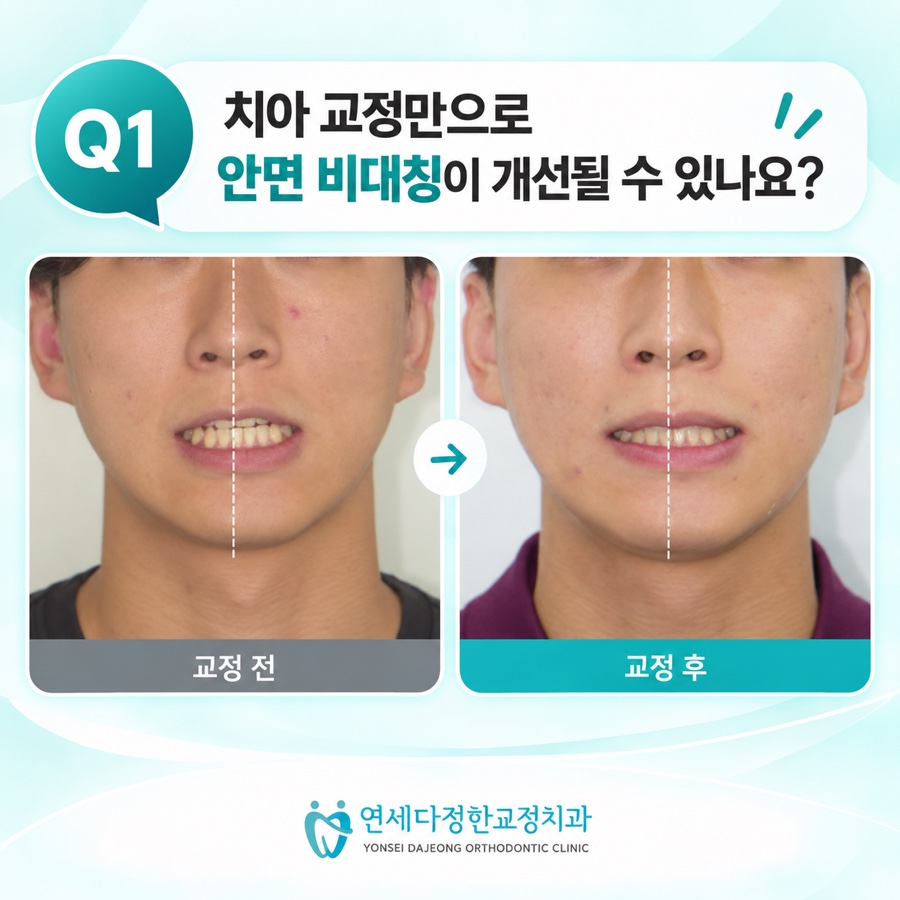
    When the skeleton itself isn’t severely asymmetrical,
    orthodontic treatment alone may help improve the appearance of facial asymmetry.

    Facial asymmetry refers to a condition where, relative to the center line of the face, the eyes, cheekbones, or corners of the mouth appear uneven in height or size from left to right.

    There are broadly two causes:
    skeletal asymmetry, where the bone itself grew unevenly,
    and functional asymmetry, where a misaligned bite causes the chewing muscles to develop unevenly on one side.

    Dongdaemun Orthodontics related image 4

    Seoul National University Hospital describes malocclusion as follows.

    Malocclusion refers to a condition in which the upper and lower jaws do not come together normally, or the teeth are uneven and crooked.

    Dongdaemun Orthodontics related image 5

    Type Main Cause Effect of Orthodontic Treatment
    Functional asymmetry Misaligned bite position, one-sided chewing habits May improve with orthodontic treatment alone
    Skeletal asymmetry Uneven growth of the jawbone itself Treatment direction must be determined after precise diagnosis

    According to a report by Edaily, surveys indicate that more than one in two Korean adults experiences some degree of malocclusion,
    so this is a common concern rather than a rare one.

    Key Point
    Simply straightening the teeth into a line doesn’t address an underlying skeletal imbalance, and an unnatural look can remain.
    Analyzing the face’s center line together with the horizontal bite relationship is what allows both function and appearance to be addressed at the same time.

    Dongdaemun Orthodontics related image 6


    How Does Dongdaemun Orthodontics Perform a Precision Diagnosis?

    Dongdaemun Orthodontics related image 7

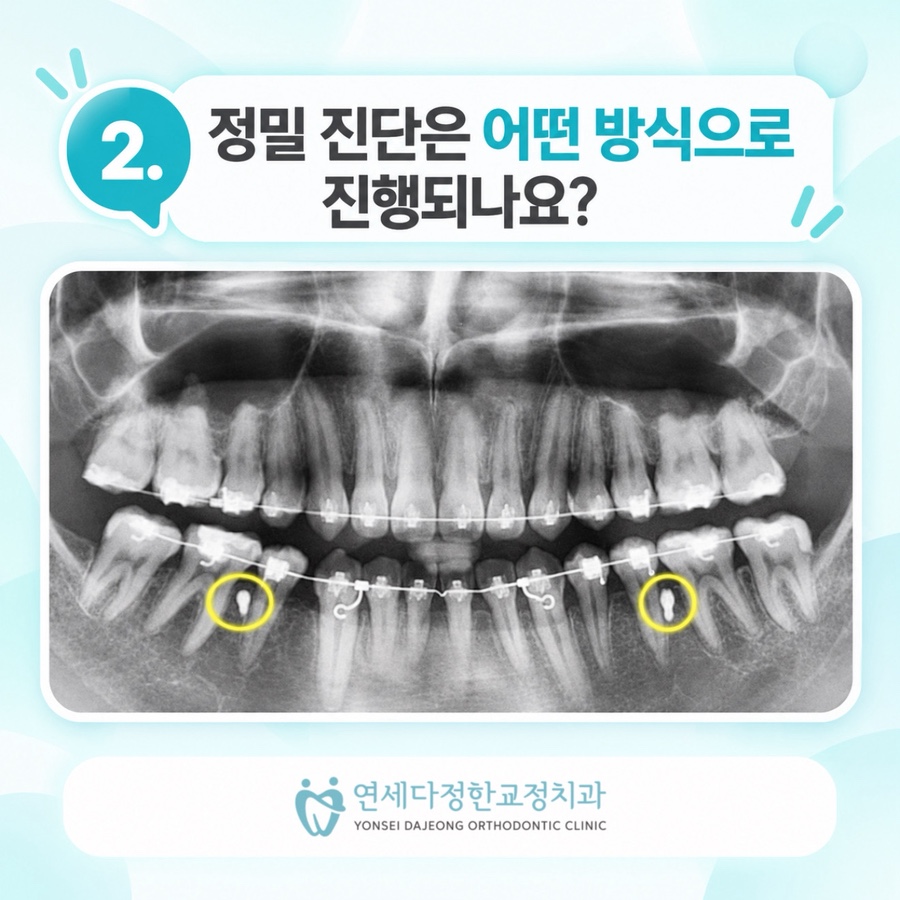
    A precise diagnosis at Dongdaemun Orthodontics begins with combining 3D CT imaging and facial analysis equipment.

    Rather than simply photographing the inside of the mouth,
    examining the three-dimensional structure of the skull and jawbone is what makes an accurate treatment plan possible.

    It’s especially important that the plan also factors in details such as how much gum shows when smiling and lip thickness.

    1. Simulating in advance the direction the teeth will move and how the bone is likely to develop
    2. Thoroughly evaluating the condition of the jaw joints and the tension in the surrounding muscles
    3. Setting the bite position in line with the overall balance of the face

    Dongdaemun Orthodontics related image 8

    Key Point
    3D CT analysis examines the jawbone and surrounding muscles in three dimensions, not just the teeth, which can help reduce variables during treatment and improve predictability.

    In recent years, the number of orthodontic patients aged 40 and older has been steadily rising.

    According to a Korean Association of Orthodontists survey reported by Dental Times (Daily Dental) in 2018, the share of orthodontic patients aged 40 and older grew from 4.9% in 2010 to 6.1% in 2017,
    while the proportion of new patients in their 40s starting treatment climbed from just 1.2% in 2000 to 9.3% in 2017.

    This is exactly why precise diagnosis to pinpoint the exact cause matters even more for adults whose growth is already complete.


    How Can You Maintain Facial Balance During Orthodontic Treatment?

    Dongdaemun Orthodontics related image 9

    Treatment at Dongdaemun Orthodontics tracks not just how quickly the teeth move,
    but also changes in the surrounding soft tissue, such as the lips and cheeks.

    As the teeth shift and the profile of the mouth changes, fine adjustments are made so the angle between the nose and chin stays in harmony,
    and progressing gradually in stages — rather than forcing rapid change — tends to produce a more natural-looking result.

    Checklist
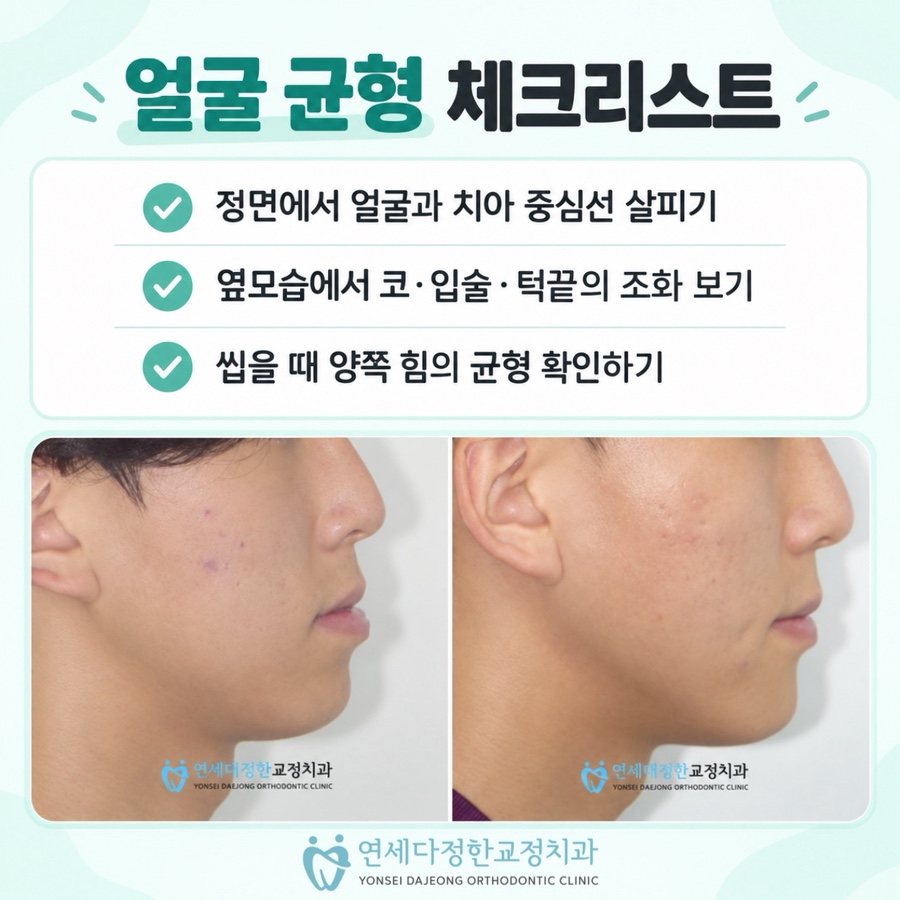
    ✅ From the front, check whether the center line of the face lines up with the center line of the teeth
    ✅ From the side, check whether the nose, lips, and chin form a balanced profile
    ✅ Check whether chewing force is distributed evenly rather than concentrated on one side

    Dongdaemun Orthodontics related image 10

    Adjusting the appliance to the individual based on thorough bone analysis may help support left-right symmetry over the course of treatment.

    The goal isn’t simply straightening the teeth —
    it’s completing the balance of the whole face alongside that.


    What Kind of Care Is Needed During Treatment?

    Dongdaemun Orthodontics related image 11

    Once the appliance is attached, it’s important to keep strictly to a schedule of regular dental visits.

    That’s because the fine adjustments made to the force applied to the teeth have a major effect on overall bone alignment and facial balance.

    Food also tends to get caught around the appliance easily,
    so it’s important to actively use oral hygiene tools such as interdental brushes and floss to keep the area clean at all times.

    Caution
    Chewy or hard foods can dislodge orthodontic appliances or place unnecessary strain on tooth movement, so it’s best to get in the habit of avoiding them where possible.

    Dongdaemun Orthodontics related image 12

    What You Can Expect
    With thorough at-home care and regular checkups following your provider’s guidance, not just the alignment of the teeth but a more balanced overall appearance can gradually take shape.

    If you’re researching orthodontic clinics in the Dongdaemun area,
    checking treatment information first on the Cheongnyangni Yonsei Dajeonghan Orthodontics website is one way to get started.


    Dongdaemun Orthodontics related image 13

    Frequently Asked Questions

    1. Can orthodontic treatment alone improve facial asymmetry?
    If the asymmetry isn’t caused by a severe skeletal issue but rather by a misaligned bite that makes the face look uneven, orthodontic treatment may help bring about improvement.

    2. How is a precision diagnosis carried out?
    It combines 3D CT imaging, an intraoral scan, and detailed facial measurements to analyze the relationship between the skeleton and the teeth in three dimensions.

    Dongdaemun Orthodontics related image 14

    3. Does attaching an appliance also change the shape of the face?
    As the protrusion of the mouth area decreases or the jawline becomes more defined, changes in overall appearance can occur. That said, the degree of change varies from person to person.

    4. Is there anything to be especially careful about during treatment?
    To avoid damaging the appliance, steer clear of sticky or hard foods, and brush thoroughly to help prevent cavities.

    Dongdaemun Orthodontics related image 15

    5. Can adults get facial asymmetry orthodontic treatment at Dongdaemun Orthodontics too?
    Yes — adults whose growth has finished can proceed with treatment once the cause is identified through precise diagnosis, and the proportion of patients aged 40 and older has in fact been rising steadily.

    Dongdaemun Orthodontics related image 16

    References

    · Seoul National University Hospital, “Malocclusion,” Medical Information, Seoul National University Hospital. View source
    · Dental Times (Daily Dental), “Orthodontic Patients Under 10 and Over 40 on the Rise,” Nov. 23, 2018. View source
    · Edaily, “More Than Half of Koreans Have Malocclusion… What’s the Best Time for Adult Orthodontic Treatment?” View source
    · Korean Association of Orthodontists (KAO), Official Website. View source


    This article is intended for general health information purposes and is not a substitute for individual diagnosis or treatment. If you have symptoms, please consult a qualified specialist.

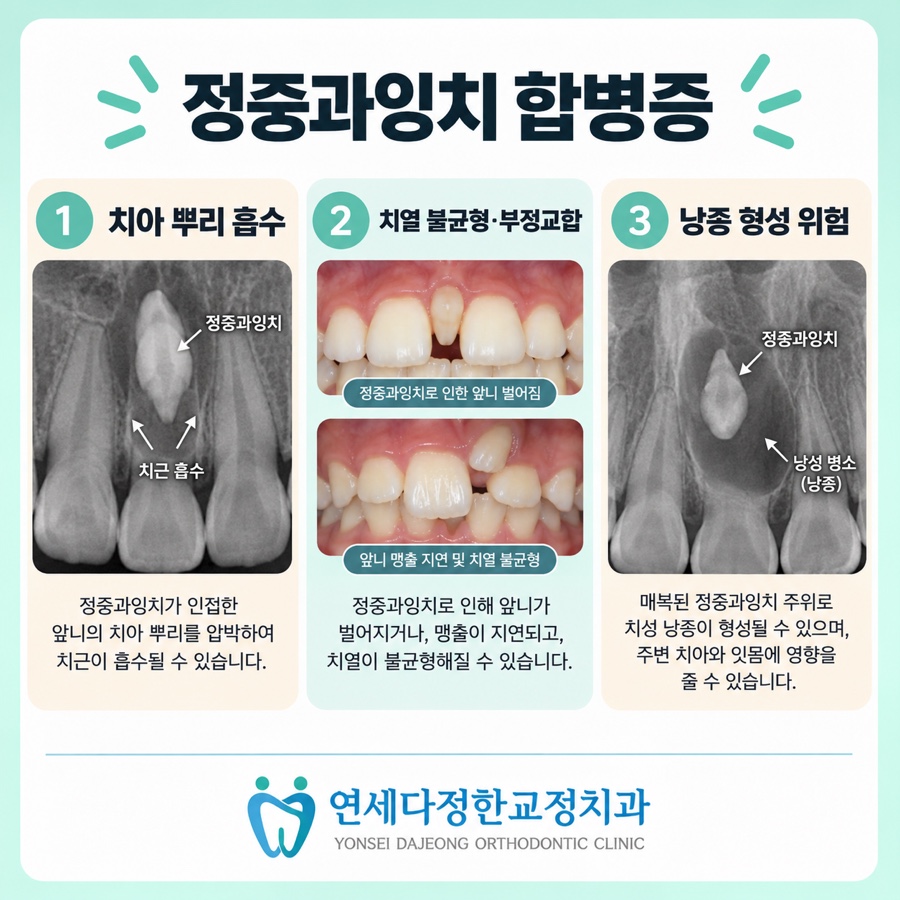
  • Mesiodens Treatment: 3-Step Orthodontic Space Closure After Extraction

    Mesiodens Treatment: 3-Step Orthodontic Space Closure After Extraction

    SummaryLeaving a mesiodens untreated can block permanent tooth eruption and damage the roots of neighboring teeth. Here’s a look at a mesiodens treatment case involving extraction and orthodontic space closure at a Cheongnyangni dental clinic.

    If you’ve noticed one extra small tooth growing between your upper front teeth, have you been brushing it off as no big deal?
    Left alone, it can gradually cause the roots of a neighboring tooth to resorb.

    This unfamiliar tooth is often a mesiodens.
    When it’s found and how it’s treated can significantly change the shape of the entire dental arch.

    This article covers why a mesiodens develops and the problems it can cause when left untreated.
    We’ll also walk through actual mesiodens treatment, step by step, including extraction and how the resulting gap is closed with orthodontics.

    mesiodens

    mesiodens case image 2

    What Is a Supernumerary Tooth and a Mesiodens?

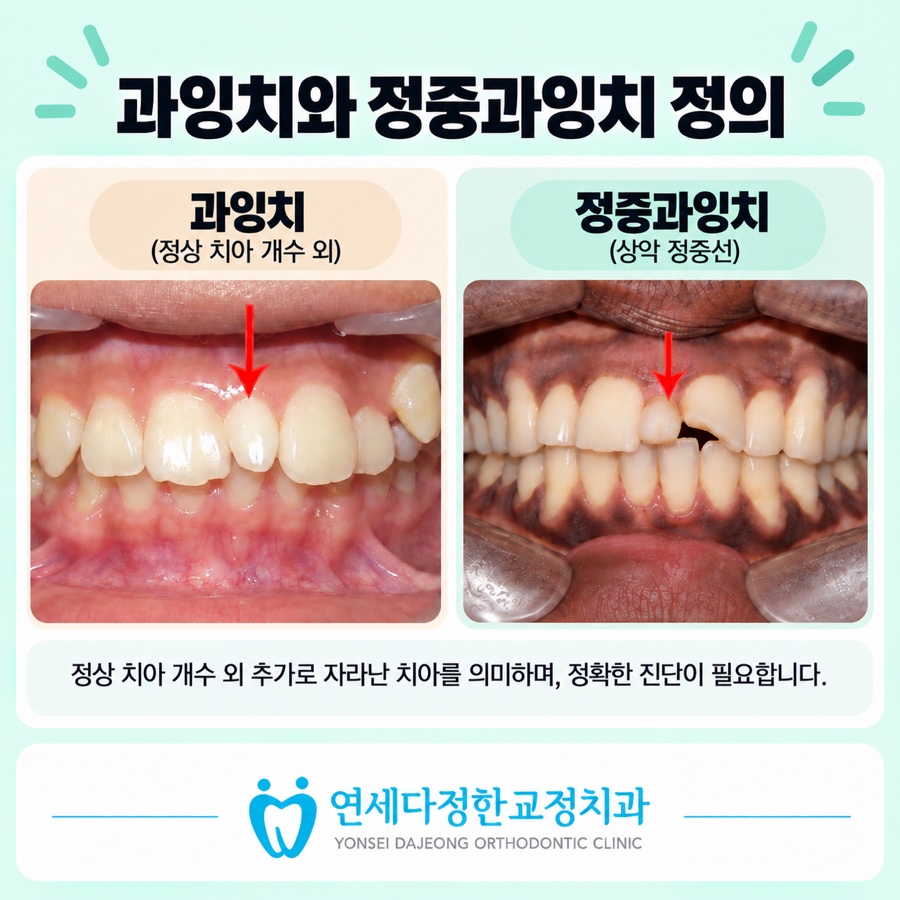
    A supernumerary tooth is an extra tooth that develops beyond the normal count of 32, and when it appears between the upper front teeth at the midline, it’s called a mesiodens.

    Most people have felt self-conscious about crooked teeth whenever they smile.
    But spotting an unexpected extra tooth between the front teeth raises even more concern.

    Misaligned teeth don’t just affect appearance — they can directly impact overall dental health.

    mesiodens case image 3

    Key Points
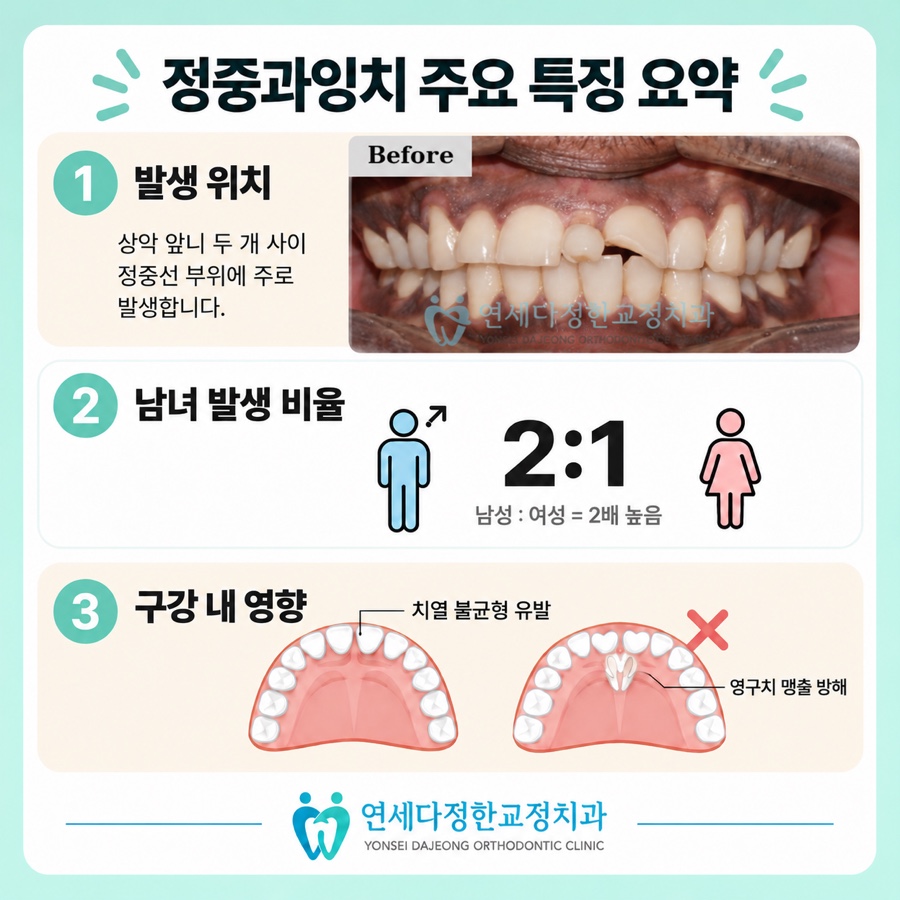
    ✅ Studies report that mesiodens occurs in roughly 0.3–0.8% of children in the primary dentition stage.
    ✅ In the permanent dentition stage, that rate is reported to rise to 1.5–3.5%.
    ✅ It is reported to occur about twice as often in males as in females.

    mesiodens case image 4

    mesiodens case image 5

    Statistically, mesiodens is notably more common in males.
    Both domestic and international studies report a male-to-female ratio of roughly 2 to 1.

    If a mesiodens is found, it’s important to first accurately assess its position, orientation, and relationship to neighboring teeth.

    mesiodens case image 6

    Key Characteristics of Mesiodens: Checklist
    ✅ Occurs at the center of the upper jaw, either erupted or impacted
    ✅ About twice as common in males as in females
    ✅ Can block permanent tooth eruption and cause dental misalignment

    What Happens If a Mesiodens Is Left Untreated?

    Leaving a mesiodens untreated can block the eruption path of permanent teeth and put pressure on the roots of neighboring teeth, potentially leading to root resorption.

    When a supernumerary tooth blocks a permanent tooth from erupting, that tooth may fail to come in at its proper position.
    This often disrupts overall tooth alignment and can lead to malocclusion.

    Cyst formation inside the jawbone has also been reported in some cases, so it’s worth watching for.

    mesiodens case image 7

    Things to Watch For
    ⚠️ Ignoring it just because there’s no pain can allow damage to neighboring teeth to progress.
    ⚠️ Treatment differs greatly depending on position and shape, so a thorough exam should come first.

    If the tooth is small and isn’t causing other effects, periodic monitoring alone can sometimes be enough.
    But if it’s causing complications, surgical extraction becomes necessary.

    To address both the leftover space and any malocclusion after extraction, orthodontic treatment is typically needed alongside it.

    mesiodens case image 8

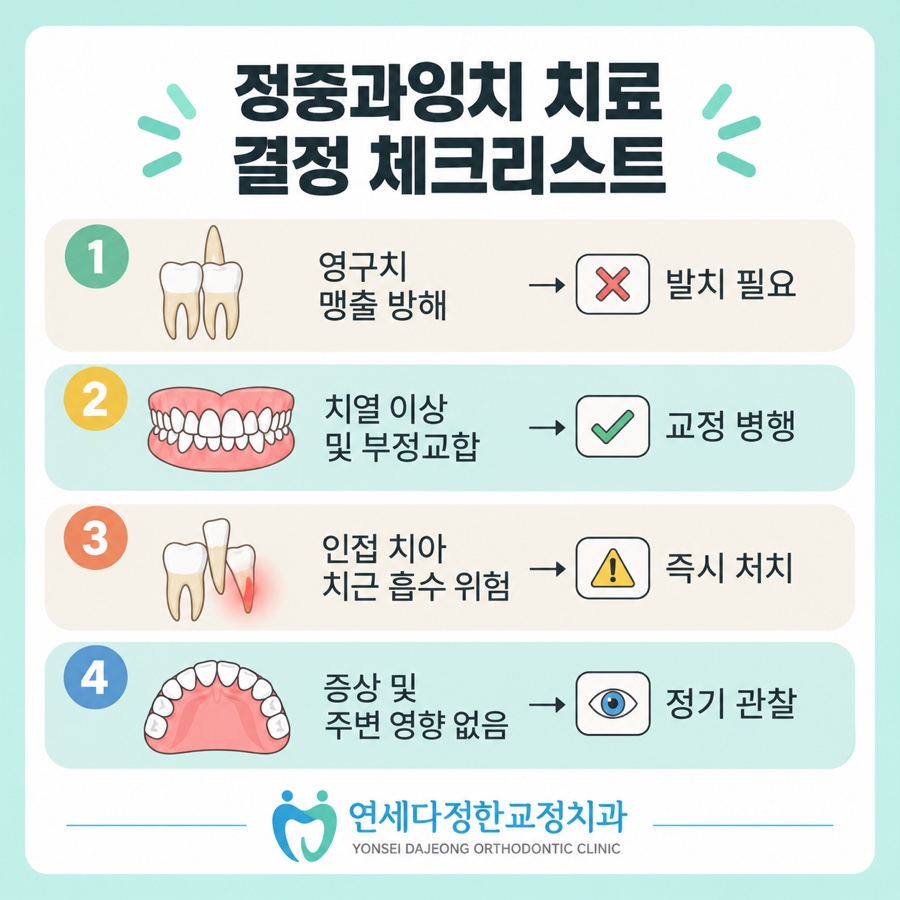
    Mesiodens Treatment Decision Checklist
    ✅ Blocking permanent tooth eruption → Extraction needed
    ✅ Causing dental misalignment or malocclusion → Orthodontic treatment combined
    ✅ Risk of root resorption in a neighboring tooth → Prompt treatment
    ✅ No discomfort and no effect on surrounding teeth → Regular monitoring

    mesiodens case image 9


    How Does Mesiodens Treatment Work After Extraction?

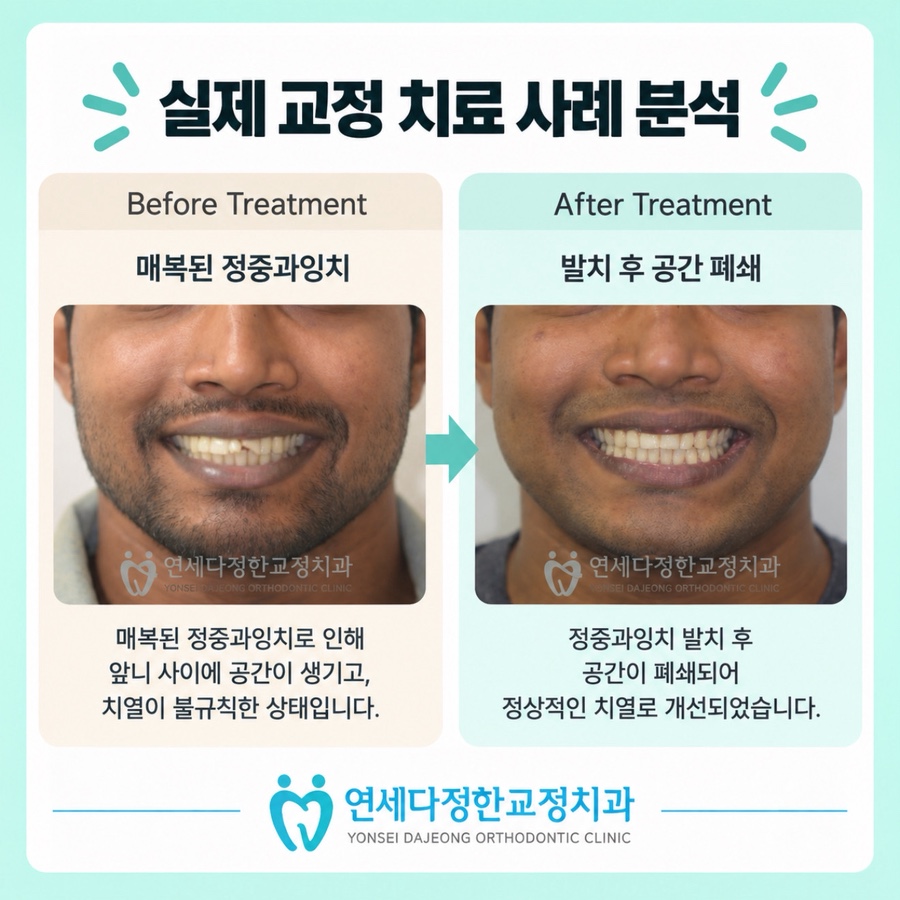
    After mesiodens extraction, orthodontic treatment typically follows to close the gap between the front teeth by moving the upper front teeth backward.

    Take, for example, a patient in their twenties who came in with cosmetic concerns.
    The mesiodens had erupted much like an ordinary tooth, but its shape was abnormal.

    A panoramic X-ray showed a peg-shaped tooth with a short root. Since it wasn’t impacted, extraction was relatively straightforward.

    mesiodens case image 10

    Extracting the tooth leaves an open space between the front teeth.
    Closing that space requires moving the upper front teeth backward.

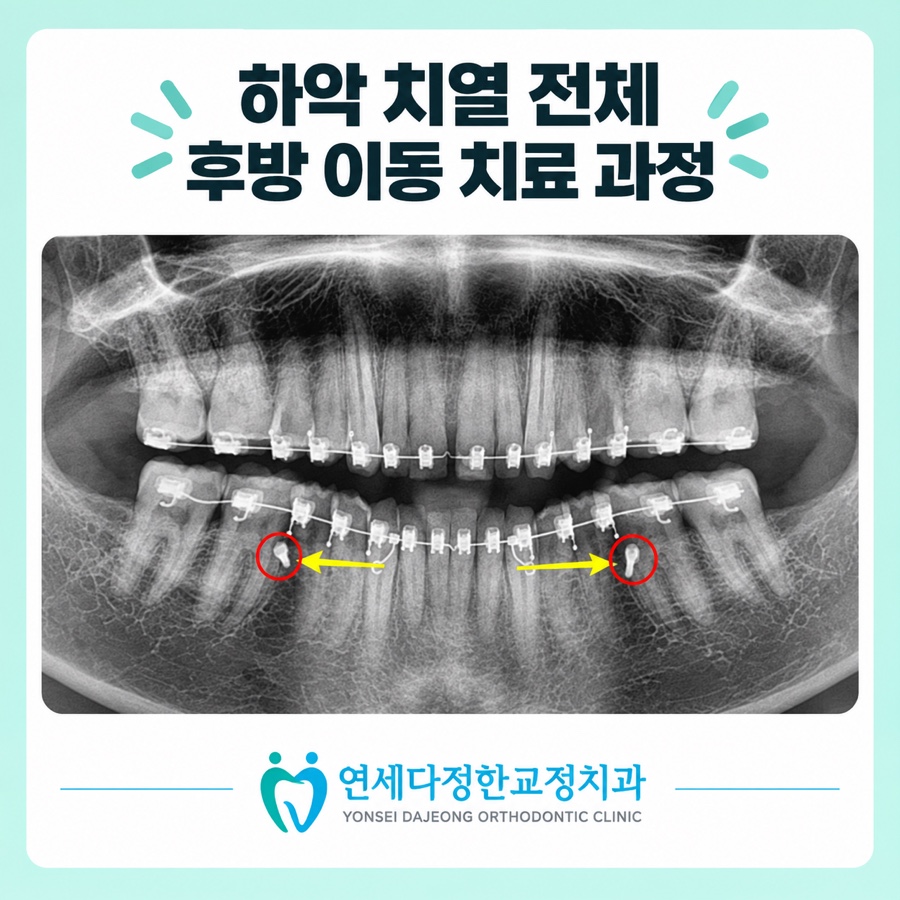
    But the lower front teeth, which were blocking that movement, also needed to shift for the space to close.
    So the plan called for moving the entire lower dental arch backward.

    To create room in the lower arch, the wisdom teeth were extracted first.
    Orthodontic mini-screws were then placed to move the entire lower arch backward.

    mesiodens case image 11

    Category Condition Before Treatment Treatment Plan and Progress
    Upper jaw (maxilla) Abnormally shaped mesiodens erupted, creating an interdental gap Space closed with orthodontics after extraction of the supernumerary tooth
    Lower jaw (mandible) Insufficient space was blocking movement of the upper arch Wisdom teeth extracted and the entire arch moved backward using mini-screws

    mesiodens case image 12

    Treatment Progress
    ✅ The gap left by extraction gradually closed as orthodontic treatment progressed.
    ✅ As the entire arch moved backward, the previously protruding lower lip line also became more balanced.

    mesiodens case image 13

    Leaving a mesiodens untreated can allow dental misalignment to worsen over time.
    We recommend visiting an orthodontic dental clinic in Cheongnyangni for a thorough examination.

    Getting systematic care at Yonsei Dajeonghan Orthodontic Clinic in Cheongnyangni, where a specialist is on staff, is a sound option.
    Even complex dental issues, when addressed in the right order, may help support a more balanced overall appearance.


    Frequently Asked Questions

    mesiodens case image 14

    1. Does a supernumerary tooth always need to be surgically extracted?
    Surgical extraction is needed when a supernumerary tooth is deeply impacted in the jawbone or causes complications such as blocking permanent tooth eruption or forming a cyst. If it’s small and has no significant effect, however, regular monitoring without extraction may be enough.

    2. Is orthodontic treatment required after mesiodens extraction?
    Orthodontic treatment is generally needed when the extraction leaves a sizable gap or when misalignment and malocclusion have already developed. If the space is left as is, neighboring teeth can tilt into the gap, which may disrupt the entire dental arch.

    3. Is moving teeth backward with mini-screws painful?
    The procedure is done under local anesthesia, so there is little to no pain during the process. It involves placing a small screw into the jawbone through a relatively simple procedure, and it helps move teeth efficiently, which can reduce the likelihood of needing further extractions.

    4. At what age is a mesiodens usually discovered?
    It’s often found during routine checkups around the time permanent teeth are erupting. Some cases are discovered incidentally in adulthood, so regardless of age, a thorough exam is recommended whenever one is found.


    mesiodens case image 15

    References

    · Seoul National University Hospital, “Mesiodens,” Medical Information, Seoul National University Hospital. View source
    · Korea Institute of Science and Technology Information (KISTI) Academic Information, “Complications of Anterior Maxillary Supernumerary Teeth.” View source
    · Gündüz K, et al., “Prevalence and characteristics of supernumerary teeth in a non-syndrome Turkish population,” PubMed, 2010. View source

    This article is intended for general health information purposes only and is not a substitute for individual diagnosis or treatment. If you have symptoms, please consult a specialist.
  • Hoegi Station Orthodontist: 3 Criteria for No Overtreatment

    Hoegi Station Orthodontist: 3 Criteria for No Overtreatment

    SummaryBefore you choose a Hoegi Station orthodontist, here are the diagnostic criteria that indicate a practice avoids overtreatment. Explore a real case where a gap between the front teeth and an underbite were addressed together while preserving natural teeth and a retained baby tooth, plus a checklist and frequently asked questions.

    One of the biggest concerns when getting a dental consultation is being recommended more treatment than you actually need.

    Especially when there’s a visible issue like a gap between the front teeth or an underbite,
    it’s easy to assume prosthetic treatment is the first step.

    However, when researching a Hoegi Station orthodontist, it’s important to check whether the practice diagnoses the underlying cause, not just the visible symptom.

    Hoegi Station orthodontist

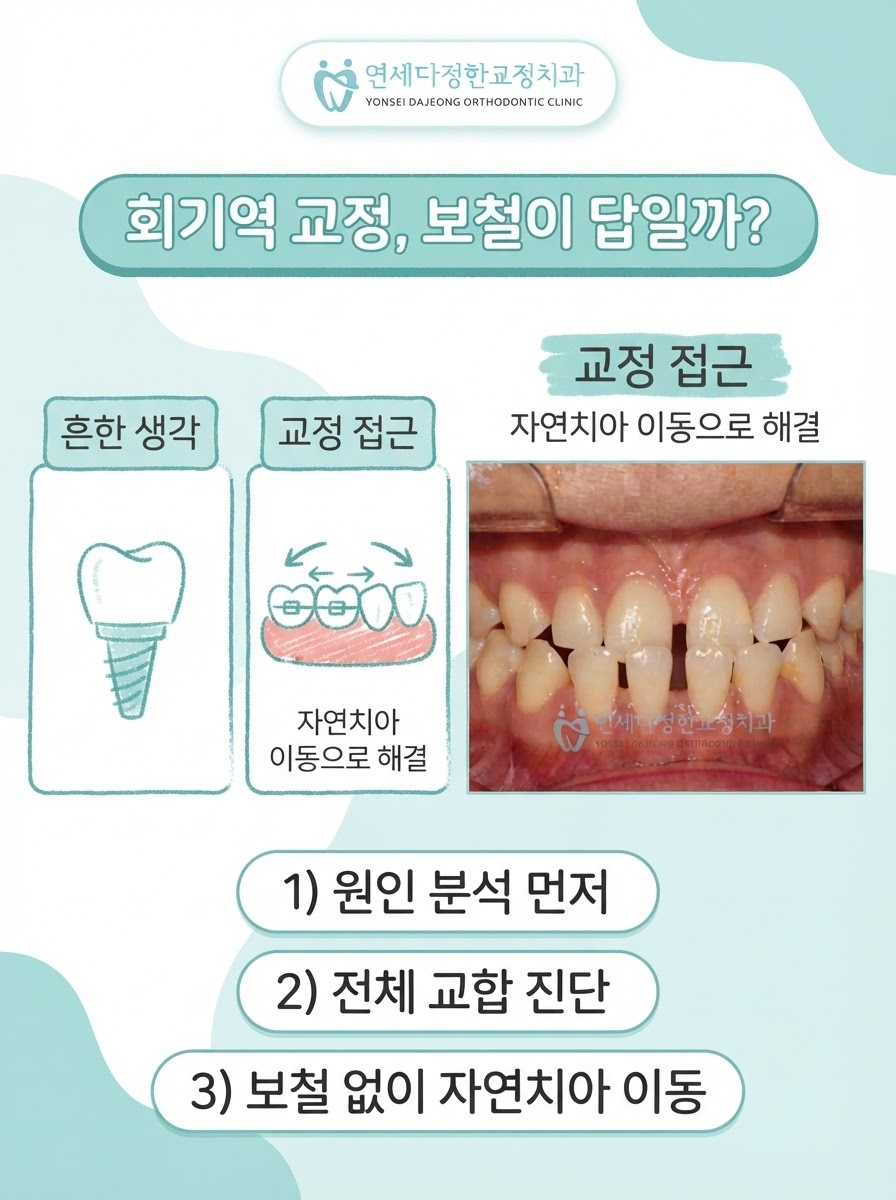
    When there’s a significant gap between the front teeth along with an underbite,
    it’s easy to assume you need prosthetic treatment such as implants or veneers.

    However, depending on the condition of the teeth and bite, orthodontic treatment that moves the natural teeth
    may be considered instead of adding artificial restorations.
    When choosing a Hoegi Station dentist, it’s important to check whether the practice can diagnose
    both the cause of the underbite and the overall bite relationship, rather than just closing the visible gap.

    Hoegi Station orthodontist related image 2

    Key Point
    Having both a front teeth gap and an underbite does not automatically mean prosthetic treatment is required.
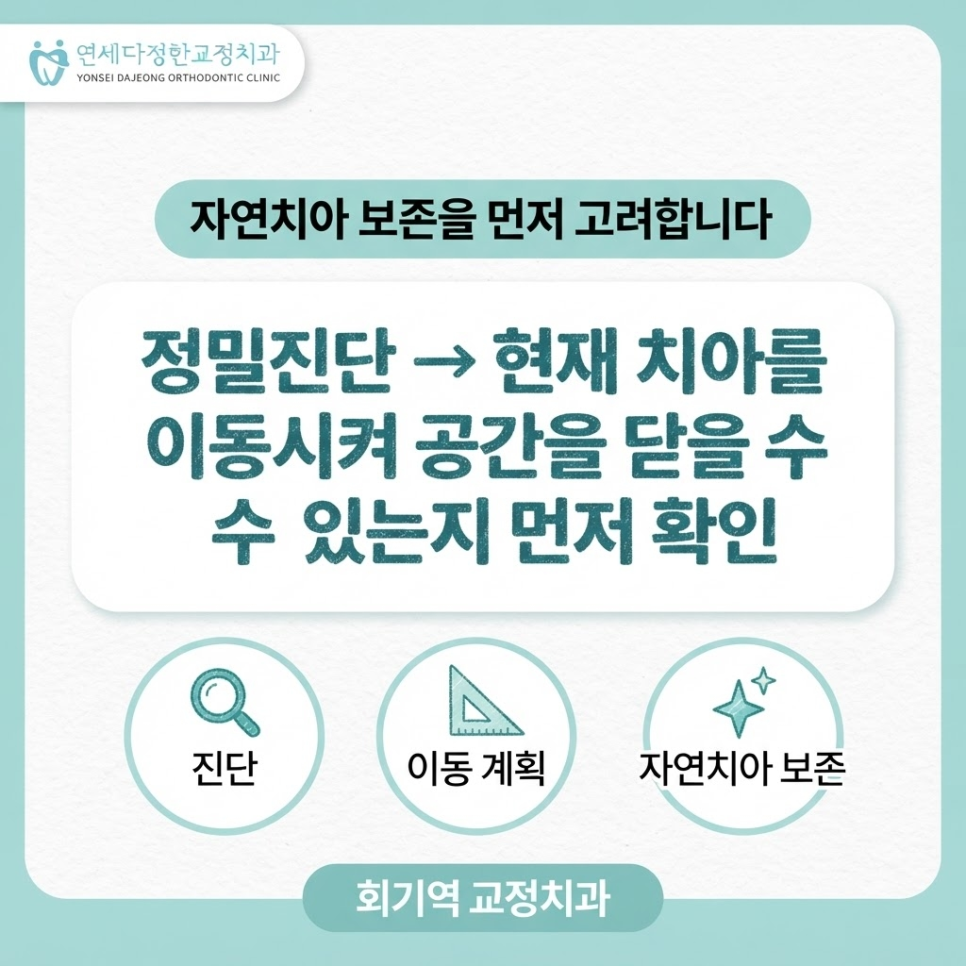
    A Hoegi Station orthodontist uses a comprehensive diagnostic workup to first determine whether the natural teeth can be moved and whether a retained baby tooth can be preserved.
    This article walks through the diagnostic criteria, the non-surgical orthodontic process, and how the underbite was corrected, in order.

    Hoegi Station orthodontist related image 3

    Table of Contents

    • Diagnosing the Front Teeth Gap and Underbite
    • Non-Surgical Orthodontics That Preserves a Retained Baby Tooth
    • Resolving the Underbite and Completing the Final Bite
    • Frequently Asked Questions

    Hoegi Station orthodontist related image 4

    How Can You Tell a Hoegi Station Orthodontist Avoids Overtreatment?

    A practice that avoids overtreatment diagnoses the underlying cause
    rather than simply filling in the visible gap.

    An underbite is a condition in which the lower front teeth sit further forward than the upper front teeth, causing them to bite in reverse.
    This condition, often referred to as a protruding jaw, is classified as Class III malocclusion.

    If a gap between the front teeth is also present,
    the position and number of the upper and lower teeth, as well as the overall bite, need to be examined, rather than simply closing the visible space.
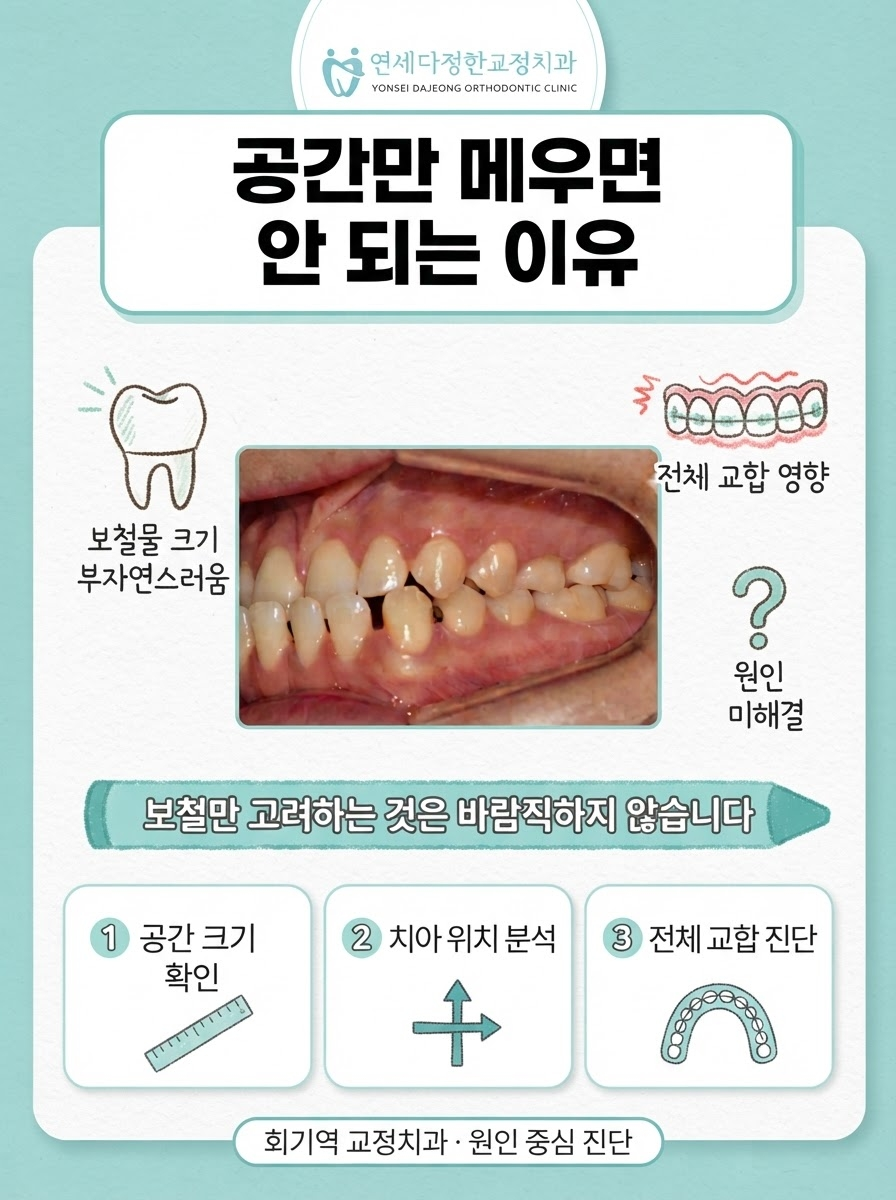
    However, some dental practices only suggest filling the gap with veneers or implants.
    Depending on the size of the gap and the position of the teeth, this can make the restoration look unnatural or affect the overall bite, so caution is needed.

    Hoegi Station orthodontist related image 5

    Checklist
    ✅ Does the practice diagnose the cause of the underbite, not just the visible gap?
    ✅ Does it review whether the natural teeth can be moved before recommending prosthetic treatment?
    ✅ Does it check the bite of the upper and lower back teeth as well?
    ✅ Does it explain findings based on diagnostic data such as X-rays and model analysis?

    Do a Front Teeth Gap and Underbite Always Require Prosthetic Treatment?

    The short answer: depending on the condition of the teeth and jawbone, moving the natural teeth alone may be enough to close the gap.

    A comprehensive orthodontic diagnostic workup is needed first
    to check whether the existing teeth can be moved to close the gap.
    It’s important not only to close the gap but also to adjust the bite so the upper and lower front teeth meet normally.

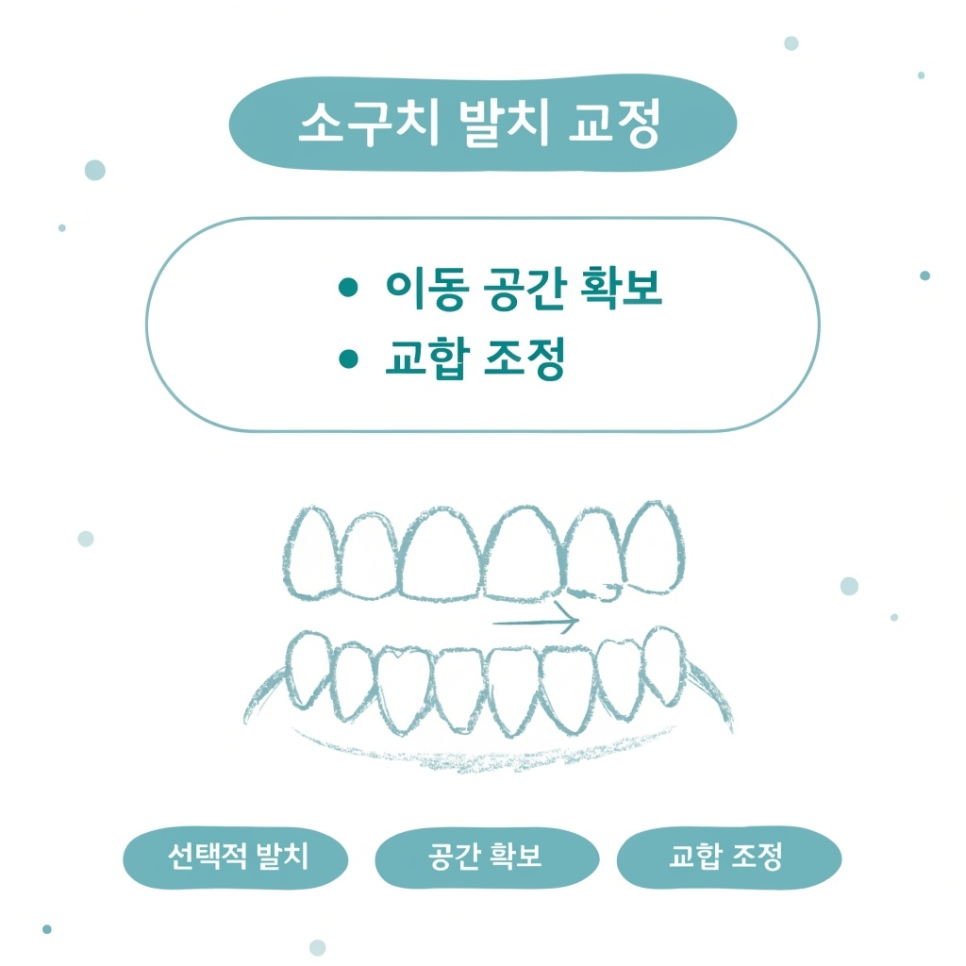
    Premolar extraction orthodontics is a method of selectively extracting premolars to create space for tooth movement and adjust the bite.
    However, extraction is not required in every case;
    whether to extract is decided by comprehensively considering crowding, the amount of space shortage, and facial balance.

    Hoegi Station orthodontist related image 6


    If You Have a Retained Baby Tooth, Must It Always Be Extracted?

    No — the first step is to check whether the tooth can be preserved.

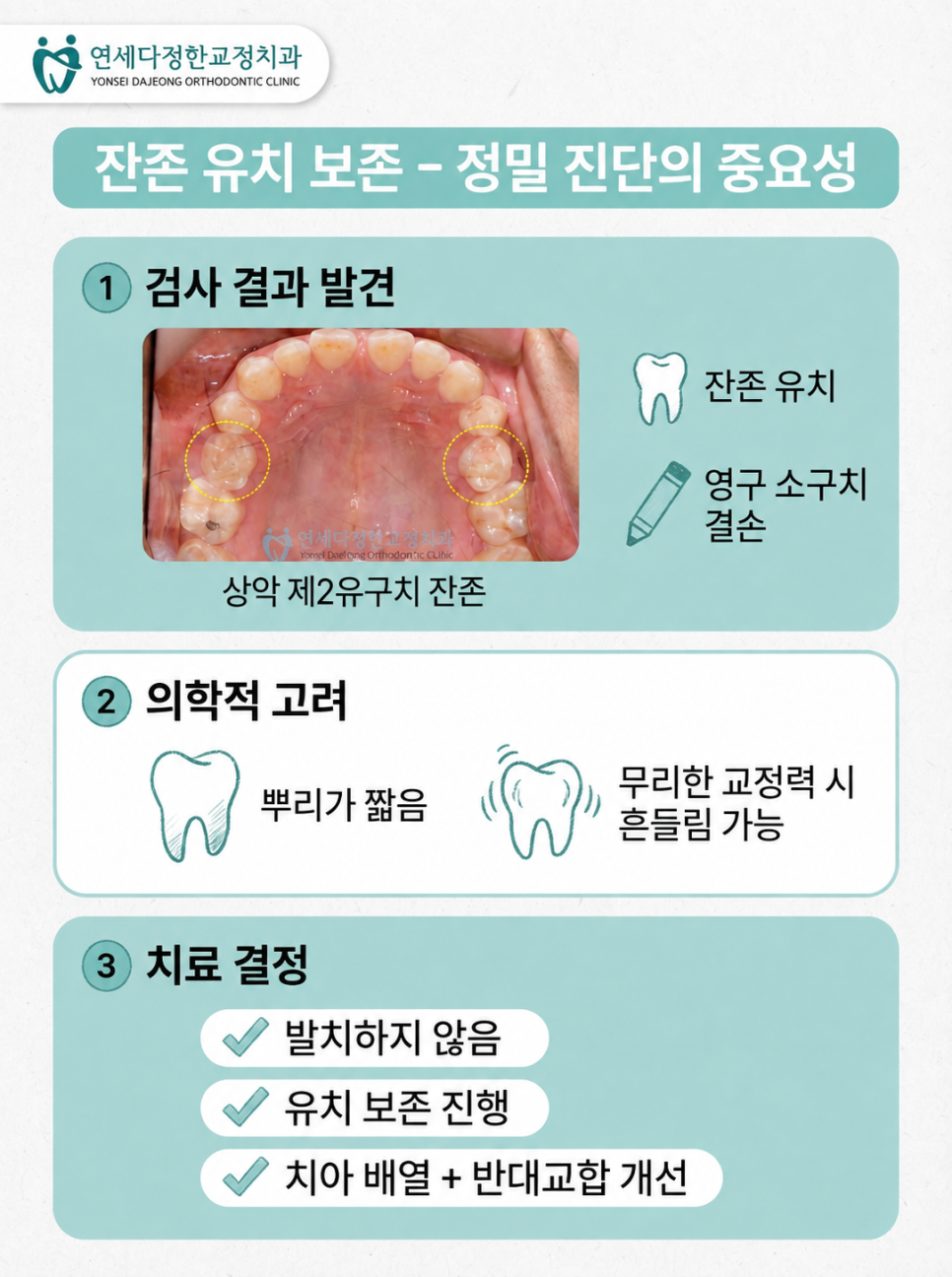
    Depending on the examination results, a retained baby tooth — a baby tooth still present in the spot where a permanent tooth should have erupted — may be identified.
    Because a retained baby tooth has a shorter root than a permanent tooth,
    applying excessive orthodontic force can cause it to loosen.
    For this reason, if the diagnostic workup determines that tooth alignment and underbite correction are possible without extraction,
    treatment can proceed while preserving the baby tooth.

    Caution
    A retained baby tooth has a short root, so excessive orthodontic force may cause it to loosen or become damaged.
    Whether it can be preserved must always be determined through a comprehensive diagnostic workup.

    Hoegi Station orthodontist related image 7

    Hoegi Station orthodontist related image 8

    How Does the Step-by-Step Treatment Process Work?

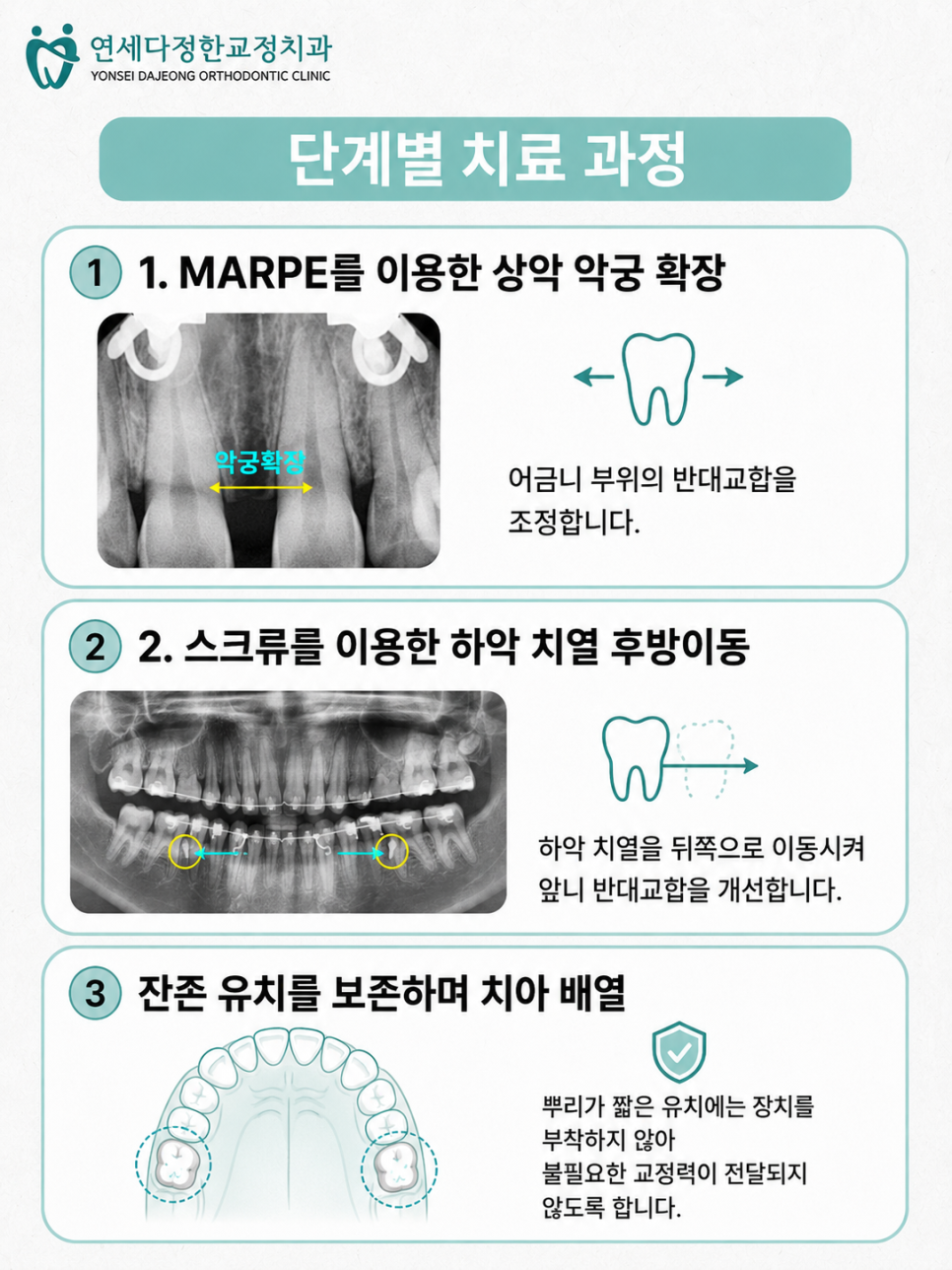
    1. Maxillary Arch Expansion Using MARPE — adjusts the underbite in the back tooth (molar) region.
    2. Posterior Movement of the Lower Dental Arch Using Screws — moves the lower arch backward to correct the front-teeth underbite.
    3. Tooth Alignment While Preserving the Retained Baby Tooth — no appliance is attached to the short-rooted baby tooth, avoiding unnecessary orthodontic force.
    Key Point
    MARPE combined with screw-assisted posterior movement of the lower arch is a common non-surgical approach to correcting an underbite.
    For a retained baby tooth, the key is to avoid excessive force and first evaluate whether it can be preserved.

    MARPE is known as a device that uses mini-screws to widen the upper jawbone itself,
    creating space without extraction.

    This approach can be used by a Hoegi Station orthodontist to close a front-teeth gap
    and correct an underbite.
    Treatment duration and outcomes can vary from person to person depending on the condition of the teeth.

    Hoegi Station orthodontist related image 9


    Does Underbite Treatment End Once the Front Teeth Are Corrected?

    No — treatment is only complete once the back teeth (molars) are also adjusted to bite properly.

    Orthodontic treatment doesn’t end simply by closing the gap between the front teeth.
    A lateral cephalometric X-ray can be used to diagnose the direction in which the upper and lower front teeth meet
    and to track treatment progress.
    Both the front and back teeth need to be adjusted so the upper and lower teeth can bite together stably.

    Hoegi Station orthodontist related image 10

    Category Before Treatment Treatment Goal
    Front teeth condition Gapped space Space closed
    Front teeth bite Underbite Normal bite
    Molar bite Underbite Stable bite

    Hoegi Station orthodontist related image 11

    Result
    In lateral X-ray comparisons, the upper and lower front teeth that were biting in reverse before treatment
    may show a change to a normal bite direction after treatment.
    The treatment goal also includes managing the preserved baby tooth so it bites stably with the surrounding teeth.

    Hoegi Station orthodontist related image 12

    When researching a Hoegi Station dentist, it’s important to look beyond front-teeth alignment alone
    and check the overall bite as well.

    We recommend looking for a practice that preserves natural teeth and retained baby teeth as much as possible
    while building a treatment plan that accounts for both front and back tooth alignment.
    If you’re curious about an orthodontic consultation, you can check treatment information at the Yonsei Dajeonghan Orthodontic Clinic homepage in Cheongnyangni.


    Frequently Asked Questions

    Hoegi Station orthodontist related image 13

    1. Can a front-teeth gap be corrected without implants or veneers?
    Depending on the condition of the teeth and gums and the size of the gap, moving the natural teeth to close the space may be considered. A comprehensive diagnostic workup is needed to confirm feasibility.

    2. Does correcting an underbite always require extraction?
    No. Whether extraction is needed depends on the degree of tooth protrusion, available space, and bite condition. If necessary, premolar extraction can be used to create space for tooth movement.

    3. Is treatment at a Hoegi Station orthodontist very uncomfortable?
    Pressure or discomfort can occur right after an appliance is first attached or adjusted. Most patients go through an adjustment period, but the degree and duration of discomfort vary from person to person.

    4. What should I check when choosing a Hoegi Station dentist?
    Rather than just asking whether prosthetic treatment or extraction is needed, it’s a good idea to check whether the practice first considers ways to preserve the natural teeth and builds a treatment plan that accounts for the overall bite and tooth movement.


    References

    · Seoul Asan Hospital, “Underbite (Class III Malocclusion),” Disease Encyclopedia, Seoul Asan Hospital (Korean-language source). View source
    · Daily Dental, “Resolving Maxillary Transverse Discrepancy with ‘MARPE’,” Daily Dental (Korean-language source). View source
    · Health Kyunghyang, “Is It Okay for ‘Baby Teeth’ to Remain into Adulthood for Oral Health?,” Health Kyunghyang (Korean-language source). View source


    This article is intended for general health information purposes only and cannot replace individual diagnosis or treatment. If you have symptoms, please consult a specialist.

  • Hoegi Station Orthodontist: 3 Diagnostic Criteria to Avoid Overtreatment

    Hoegi Station Orthodontist: 3 Diagnostic Criteria to Avoid Overtreatment

    SummaryBefore choosing a Hoegi Station orthodontist, here are the diagnostic criteria that distinguish a clinic that avoids overtreatment. Explore a real case where a gapped front tooth and an underbite were corrected while preserving natural teeth and a retained baby tooth, plus a checklist and FAQ.

    One of the biggest worries when getting a dental consultation is being recommended more treatment than you actually need.

    When there’s a visible issue like a gap between the front teeth
    or an underbite, it’s easy to assume prosthetic treatment is the only option.

    However, when researching a Hoegi Station orthodontist, it’s important to check whether the clinic diagnoses the underlying cause — not just the visible symptom.

    Hoegi Station orthodontist

    When there’s a noticeable gap between the front teeth along with an underbite,
    it’s easy to assume prosthetic treatment like implants or veneers is necessary.

    However, depending on the condition of the teeth and bite, orthodontic treatment that moves the natural teeth
    without adding artificial restorations may also be an option.
    When choosing a dental clinic near Hoegi Station, it matters less that the visible gap gets closed
    and more whether the clinic can diagnose both the cause of the underbite and the overall bite relationship.

    Hoegi Station orthodontist related image 2

    Key Point
    Having both a gap between the front teeth and an underbite doesn’t automatically mean prosthetic treatment is required.
    At a Hoegi Station orthodontist, a comprehensive diagnostic workup first checks whether the natural teeth can be moved and whether a retained baby tooth can be preserved.
    This article walks through the diagnostic criteria, the non-surgical orthodontic process, and how the underbite is corrected — in order.

    Hoegi Station orthodontist related image 3

    Contents

    • Diagnosing a Gapped Front Tooth and Underbite
    • Non-Surgical Orthodontics That Preserves a Retained Baby Tooth
    • Resolving the Underbite and Finalizing the Bite
    • Frequently Asked Questions

    Hoegi Station orthodontist related image 4

    How Do You Identify a Hoegi Station Orthodontist That Avoids Overtreatment?

    A clinic that avoids overtreatment diagnoses the underlying cause
    rather than simply filling in a visible gap.

    An underbite is a condition in which the lower front teeth sit in front of the upper front teeth, reversing the normal bite relationship.
    Often called a “prognathic jaw,” this is classified as a Class III malocclusion.

    When a gap between the front teeth is also present,
    the position and number of the upper and lower teeth, and the overall bite, need to be evaluated — not just the visible space.
    However, some clinics only suggest filling the gap with veneers or implants.
    Depending on the size of the gap and the position of the teeth, restorations can look unnatural or affect the overall bite, so caution is needed.

    Hoegi Station orthodontist related image 5

    Checklist
    ✅ Does the clinic diagnose the cause of the underbite, not just the visible gap?
    ✅ Does it evaluate whether the natural teeth can be moved before recommending prosthetic treatment?
    ✅ Does it check the bite relationship of the back teeth as well?
    ✅ Does it explain findings based on diagnostic data such as X-rays and model analysis?

    Do a Gapped Front Tooth and Underbite Always Require Prosthetic Treatment?

    The short answer: depending on the condition of the teeth and jawbone, moving the natural teeth alone can close the gap.

    A comprehensive orthodontic diagnosis is needed first,
    to determine whether the existing teeth can be moved to close the space.
    Closing the gap isn’t the only goal — adjusting the bite so the upper and lower front teeth meet normally is an equally important part of the process.

    Premolar extraction orthodontics is a method that selectively extracts premolars to create space for tooth movement and help correct the bite.
    That said, extraction isn’t necessary in every case;
    whether to extract is decided by comprehensively weighing crowding, the amount of space deficiency, and facial balance.

    Hoegi Station orthodontist related image 6


    If You Have a Retained Baby Tooth, Must It Always Be Extracted?

    No — the first step is to determine whether the tooth can be preserved.

    Depending on the exam results, a retained baby tooth — a baby tooth still occupying the spot where a permanent tooth should be — may be found.
    A retained baby tooth has a shorter root than a permanent tooth,
    so applying excessive orthodontic force can make it loose.
    So if the comprehensive diagnosis shows that tooth alignment and underbite correction are possible without extraction,
    treatment can proceed while preserving the baby tooth.

    Caution
    A retained baby tooth has a short root, so excessive orthodontic force can loosen or damage it.
    Whether to preserve it should always be determined through a comprehensive diagnostic workup.

    Hoegi Station orthodontist related image 7

    Hoegi Station orthodontist related image 8

    How Does the Step-by-Step Treatment Process Work?

    1. Maxillary arch expansion with MARPE — corrects the underbite in the back-tooth (molar) region.
    2. Mandibular dental arch distalization with screws — moves the lower dental arch backward to correct the front-tooth underbite.
    3. Tooth alignment while preserving the retained baby tooth — no appliance is attached to the short-rooted baby tooth, avoiding unnecessary orthodontic force.
    Key Point
    MARPE combined with screw-assisted mandibular distalization is a non-surgical approach used to correct an underbite.
    For a retained baby tooth, the key is to avoid excessive force and first evaluate whether it can be preserved.

    MARPE is known as a device that uses mini-screws to widen the upper jawbone itself,
    creating extra space without extraction.

    This approach can be used at a Hoegi Station orthodontist to close a gap between the front teeth
    and correct an underbite.
    Treatment duration and outcomes can vary from person to person depending on the condition of the teeth.

    Hoegi Station orthodontist related image 9


    Is Underbite Treatment Complete Once the Front Teeth Are Fixed?

    No — treatment isn’t complete until the back-tooth (molar) bite is adjusted as well.

    Orthodontic treatment doesn’t end with simply closing the gap between the front teeth.
    A lateral cephalometric X-ray can be used to diagnose the bite direction of the upper and lower front teeth
    and to track treatment progress.
    Beyond the front teeth, the molars also need to be adjusted so the upper and lower teeth meet in a stable bite.

    Hoegi Station orthodontist related image 10

    Category Before Treatment Treatment Goal
    Front tooth condition Gapped space Space closed
    Front tooth bite Underbite Normal bite
    Molar bite Underbite Stable bite

    Hoegi Station orthodontist related image 11

    Result
    Comparing lateral cephalometric X-rays, the front teeth that met in reverse before treatment
    may show a shift to a normal bite direction afterward.
    The treatment goal also includes managing the preserved baby tooth so it fits stably with the surrounding teeth.

    Hoegi Station orthodontist related image 12

    When researching a dental clinic near Hoegi Station, it’s important to look beyond just the alignment of the front teeth
    and check the overall bite as well.

    We recommend looking for a clinic that preserves as much natural tooth structure and the retained baby tooth as possible
    while building a treatment plan that also accounts for the front and back tooth bite.
    If you’d like to learn more about an orthodontic consultation, you can check treatment information at the Yonsei Dajeonghan Orthodontic Clinic (Cheongnyangni) homepage.


    Frequently Asked Questions

    Hoegi Station orthodontist related image 13

    1. Can a gap between the front teeth be corrected without implants or veneers?
    Depending on the condition of the teeth and jawbone and the size of the gap, moving the natural teeth to close the space may be considered. A comprehensive diagnostic exam is needed to confirm whether this is possible.

    2. Does correcting an underbite always require extraction?
    No. Whether extraction is needed depends on the degree of tooth protrusion, available space, and bite condition. When necessary, premolar extraction can create space for tooth movement.

    3. Is treatment at a Hoegi Station orthodontist very uncomfortable?
    Some pressure or discomfort can occur right after an appliance is first attached or adjusted. An adjustment period is generally expected, and the degree and duration of discomfort vary by individual.

    4. What should you check when choosing a dental clinic near Hoegi Station?
    Rather than focusing only on whether prosthetic treatment or extraction is needed, it’s best to confirm that the clinic first considers ways to preserve your natural teeth and builds a treatment plan that accounts for overall bite and tooth movement.


    References

    · Asan Medical Center, “Prognathism (Class III Malocclusion),” Disease Encyclopedia, Asan Medical Center. View source
    · Daily Dental, “Correcting Maxillary Transverse Discrepancy with ‘MARPE’,” Daily Dental. View source
    · Health Kyunghyang, “Is It Okay for ‘Baby Teeth’ to Remain into Adulthood?,” Health Kyunghyang. View source


    This article is intended for general health information purposes only and is not a substitute for individual diagnosis or treatment. If you have symptoms, please consult a specialist.
  • Invisalign Cost Guide: 13-Month Treatment Timeline at a Dongdaemun-gu Dental Clinic

    Invisalign Cost Guide: 13-Month Treatment Timeline at a Dongdaemun-gu Dental Clinic

    SummaryIf you’re wondering about Invisalign cost, take a look at how one Dongdaemun-gu dental clinic structured its treatment process. This guide walks through every stage, step by step — the principles and limits of ClinCheck, posterior molar movement, TAD screw use, and refinement.

    Many people researching Invisalign find themselves pausing at the Invisalign cost.

    But what actually determines the outcome isn’t the price list — it’s the treatment plan.

    It’s easy to assume clear aligners will line up your teeth perfectly on their own, but in practice, the clinician’s careful adjustments matter far more.

    This article walks through an actual Invisalign case at a Dongdaemun-gu dental clinic, covering how ClinCheck works and where it falls short, the posterior molar movement stage, TAD screw use, and how the final bite is completed.

    We’ll also cover the key treatment-planning factors worth checking alongside the Invisalign cost itself.

    Invisalign cost

    Invisalign cost illustration 2

    Invisalign cost illustration 3

    How Does Invisalign ClinCheck Actually Move Your Teeth?

    ClinCheck isn’t a device that moves teeth on its own — it’s a planning tool that calculates and previews the sequence of tooth movement in advance.

    ClinCheck is Invisalign’s proprietary software that uses 3D simulation to map out the direction and order of tooth movement before treatment begins.

    Many people visiting a Dongdaemun-gu dental clinic assume this software alone produces a perfect result.

    In reality, the clinician’s role — adjusting the direction and sequence of movement based on the patient’s dental arch, skeletal structure, and bite — matters far more.

    Key Points
    ✔ ClinCheck is a planning tool, not a device that guarantees results.
    ✔ How the teeth actually move depends on how carefully the clinician refines the digital plan.

    Invisalign cost illustration 4

    What Should You Watch Out for in the Digital Setup?

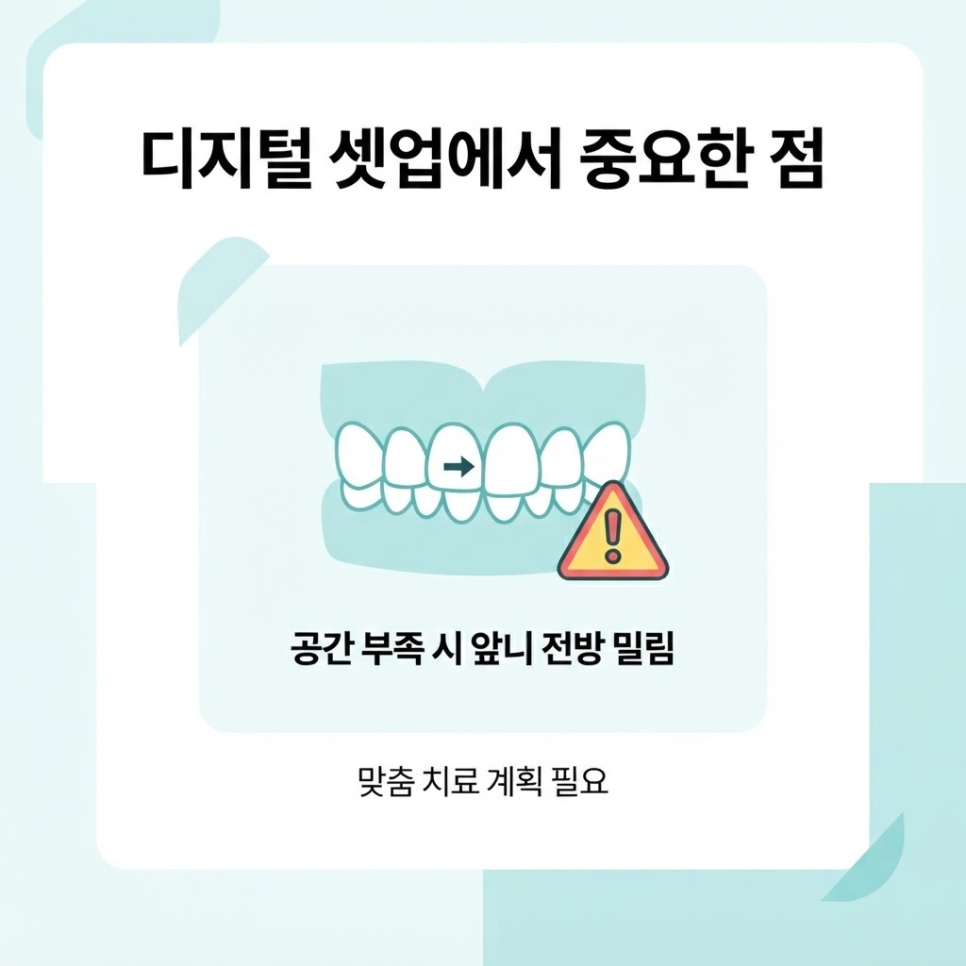
    If front teeth are aligned too quickly without enough space, they can end up protruding forward.

    To reduce this risk, the treatment plan needs to be tailored to the patient’s current dental condition.

    Caution
    ⚠ Rushing front-tooth alignment without adequate space can lead to protrusion.
    ⚠ A detailed treatment plan tailored to the current dental condition must be in place.

    Invisalign cost illustration 5


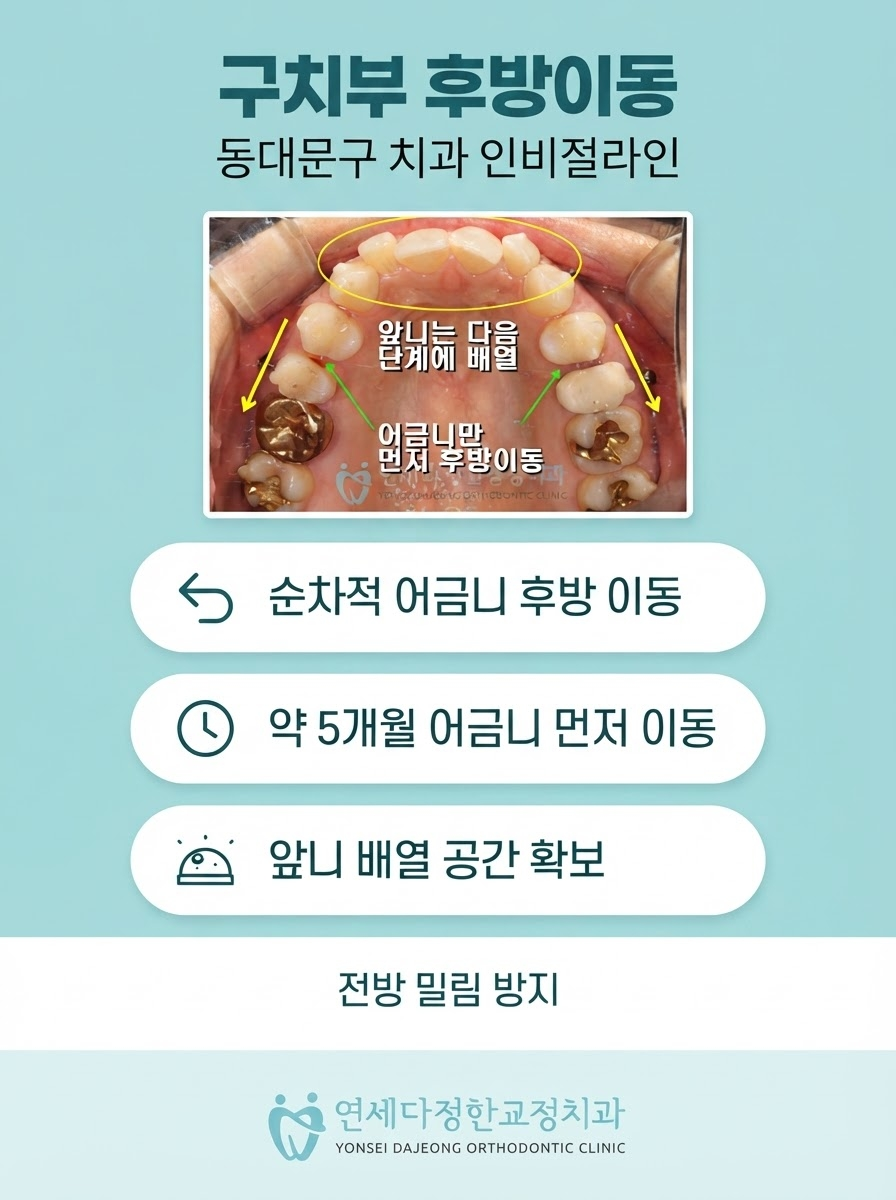
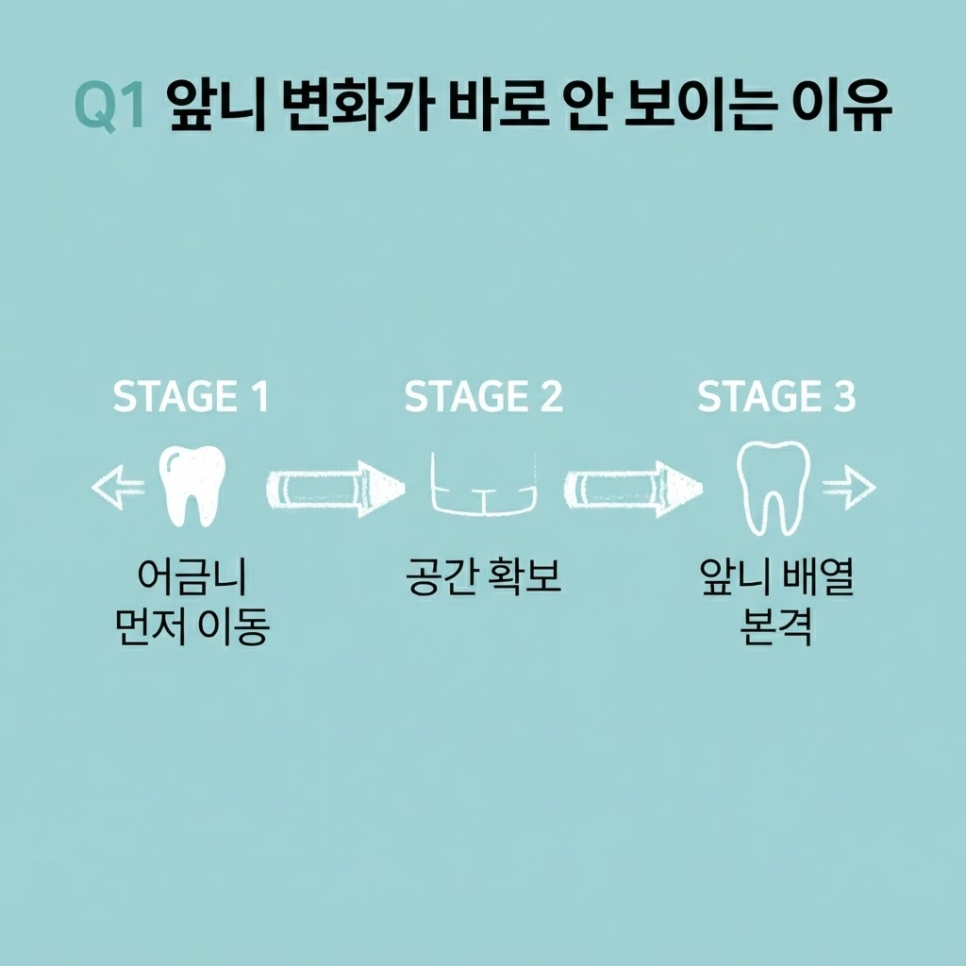
    Why Are Molars Moved Before Front Teeth in Posterior Movement?

    Aligning the front teeth first without enough space can push them forward, so molars are moved backward first to create room.

    Posterior molar movement is the process of shifting the molars backward in sequence to create space for the front teeth to align.

    When teeth are crowded or protruding without adequate space, aligning them first can push the front teeth outward.

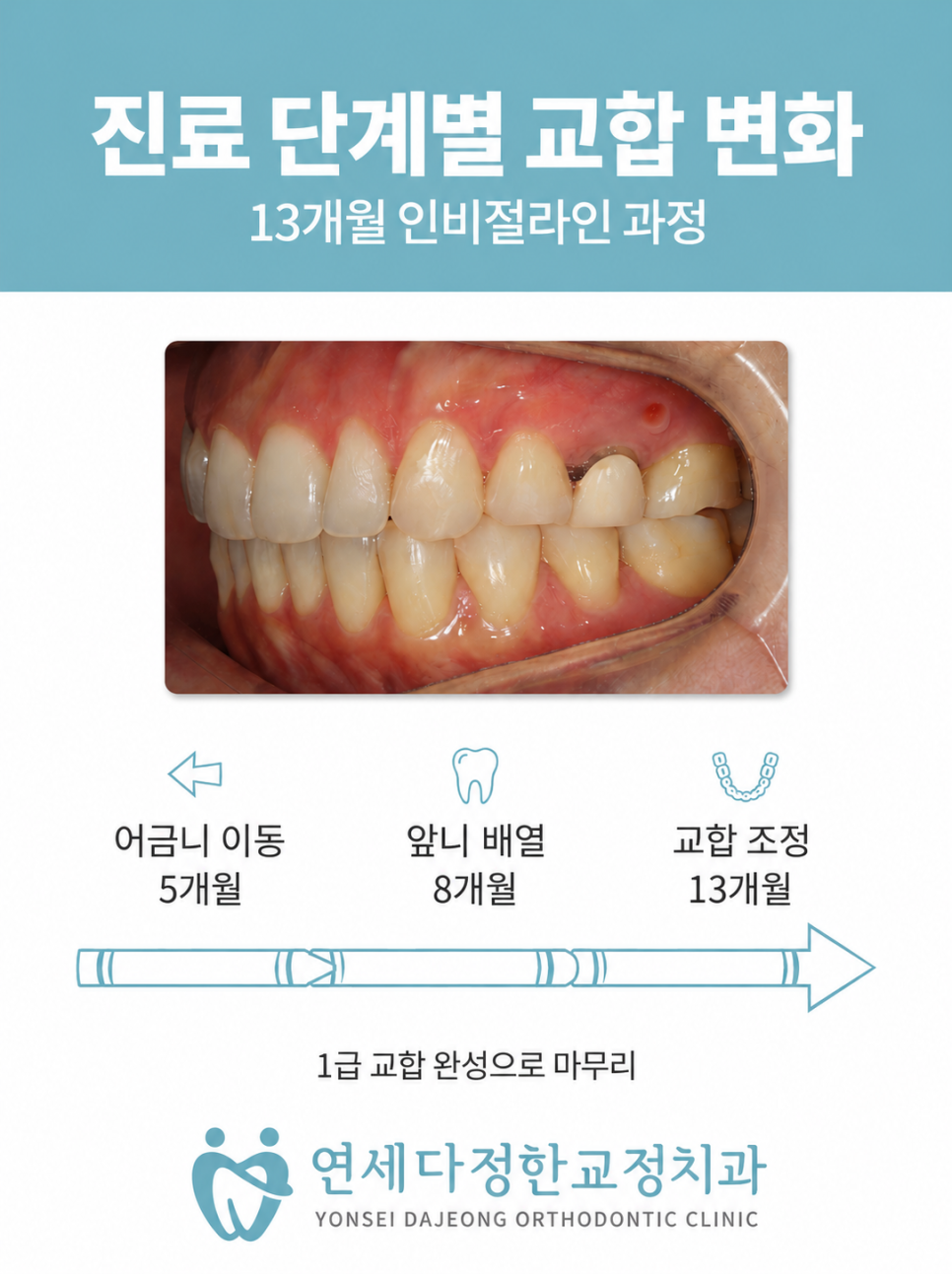
    That’s why, depending on the patient’s condition, a Dongdaemun-gu dental clinic may move the molars first for roughly the first 5 months.

    Even if the front teeth don’t show much change during this period, it doesn’t mean treatment is falling behind.

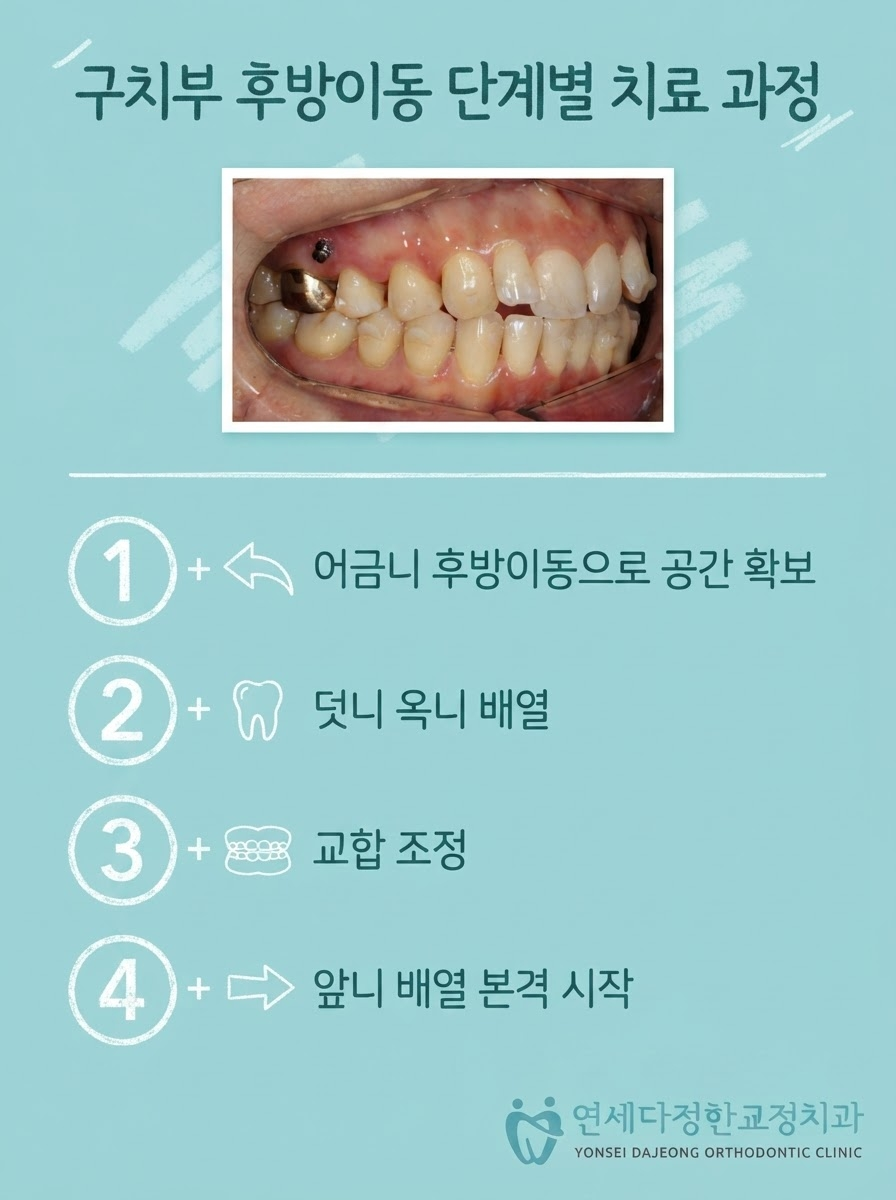
    1. Create space through posterior molar movement
    2. Align crowded or protruding teeth using the newly created space
    3. Adjust the bite between front teeth and molars
    After This Stage
    ✅ It reduces the risk of front-tooth protrusion caused by insufficient space.
    ✅ It creates room for crowded or protruding teeth to align naturally.

    Invisalign cost illustration 6

    Invisalign cost illustration 7

    Once enough space has been created, front-tooth alignment begins in earnest.

    This is also why the timing of visible front-tooth change varies across different Invisalign patient experiences — it comes down to differences in the tooth-movement sequence.


    When and Why Are TAD Screws and Refinement Needed?

    After the molars are moved backward, a step may be needed to keep them from drifting forward again.

    A TAD (Temporary Anchorage Device) screw is a temporary fixation device that holds the molars in place while helping move the front teeth.

    Depending on the patient’s condition, an orthodontic screw may be used as an anchorage point to keep the molars stable while the front teeth continue moving.

    Once the teeth are aligned, the midline and molar occlusion are checked, and refinement is used if needed to fine-tune the bite.

    Key Points
    ✔ Screws aren’t used for every patient — they’re applied selectively based on the amount of movement and the bite condition.
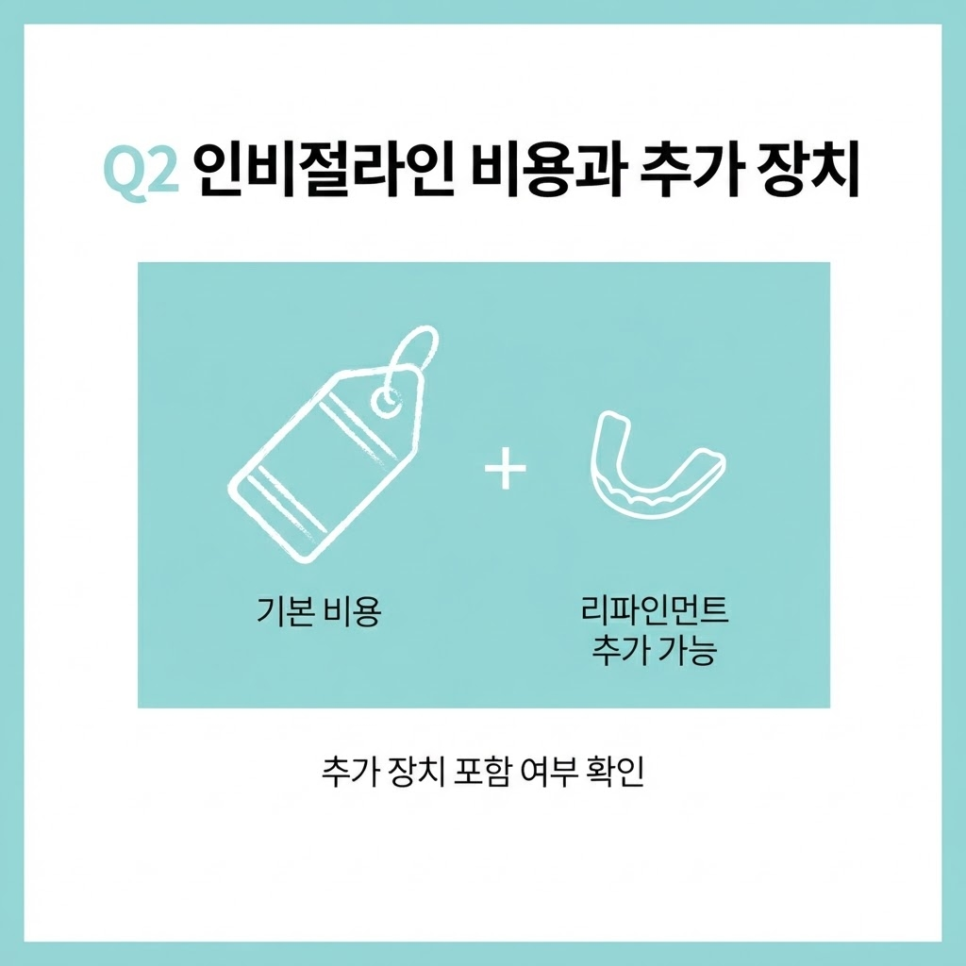
    ✔ Refinement is an additional step to fine-tune the final bite, so it’s worth confirming in advance whether it’s included in the cost.

    Invisalign cost illustration 8

    What’s the Timeline and Bite Change at Each Treatment Stage?

    Treatment Stage Duration Key Change
    Stage 1: Molar Movement About 5 months Space created through posterior movement
    Stage 2: Front-Tooth Alignment About 8 months TAD screw use; alignment of crowded/protruding teeth
    Stage 3: Bite Adjustment Total: Month 13 Bite finalized through refinement

    ※ Treatment duration and process may vary depending on each patient’s dental arch and bite condition.

    Invisalign cost illustration 9


    What Else Should You Check Besides the Invisalign Cost?

    Invisalign cost shouldn’t be judged by the price of the aligners alone — it should factor in the treatment plan and any follow-up adjustments.

    When researching a Dongdaemun-gu dental clinic, it’s worth checking not just cost or convenience, but whether the clinic carefully refines the treatment plan and manages the bite through to completion.

    In particular, ask in advance whether additional devices like TAD screws or refinement are included in the cost.

    Invisalign Cost Checklist
    ✅ Does the clinic adjust the ClinCheck simulation to match your actual dental condition?
    ✅ Is an early-stage plan in place, such as posterior molar movement?
    ✅ Are additional devices like TAD screws included in the cost?
    ✅ Is refinement billed separately or included?

    Asking these questions during your initial consultation can help you compare treatment plans more thoroughly.

    For more information before your consultation, you can also visit the Cheongnyangni Yonsei Dajeonghan Orthodontic Clinic homepage.


    Frequently Asked Questions

    Invisalign cost illustration 10

    1. Why don’t I see front-tooth changes right away?
    Because the molars are moved first to create space and prevent the front teeth from being pushed forward. Front-tooth alignment begins in earnest afterward.

    Invisalign cost illustration 11

    2. Does the Invisalign cost include additional devices?
    Depending on how the teeth move, refinement may be needed as an additional step. When checking the cost, it’s a good idea to also confirm whether additional devices are included.

    Invisalign cost illustration 12

    3. Are TAD screws needed for every Invisalign treatment?
    No. They’re used selectively, only when needed based on the amount of tooth movement and the bite condition.

    Invisalign cost illustration 13

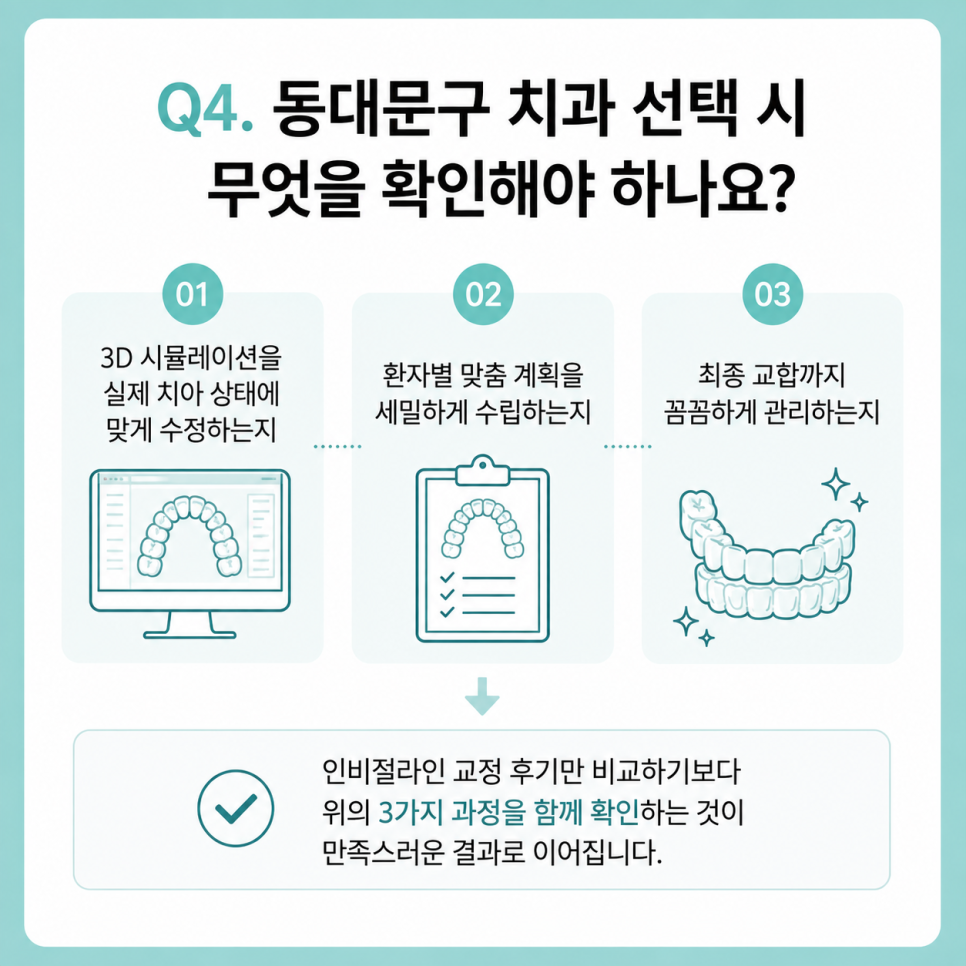
    4. What should I check when choosing a Dongdaemun-gu dental clinic?
    Rather than comparing reviews alone, it’s worth checking whether the clinic adjusts the 3D simulation to your actual dental condition and carefully manages the bite through to the final result.


    References

    · Dhingra A, Palomo JM, Stefanovic N, Eliliwi M, Elshebiny T, “Comparing 3D Tooth Movement When Implementing the Same Virtual Setup on Different Software Packages,” Journal of Clinical Medicine, 2022. View source
    · Shen C, Zhou S, Wang Q, Bowman SJ, Chung CH, Li C, “Maxillary Molar Distalization With Clear Aligner Therapy and Infrazygomatic Temporary Skeletal Anchorage Devices,” American Journal of Orthodontics and Dentofacial Orthopedics, 2025. View source


    This article is intended for general health information purposes only and is not a substitute for individual diagnosis or treatment. If you have symptoms, please consult a specialist.
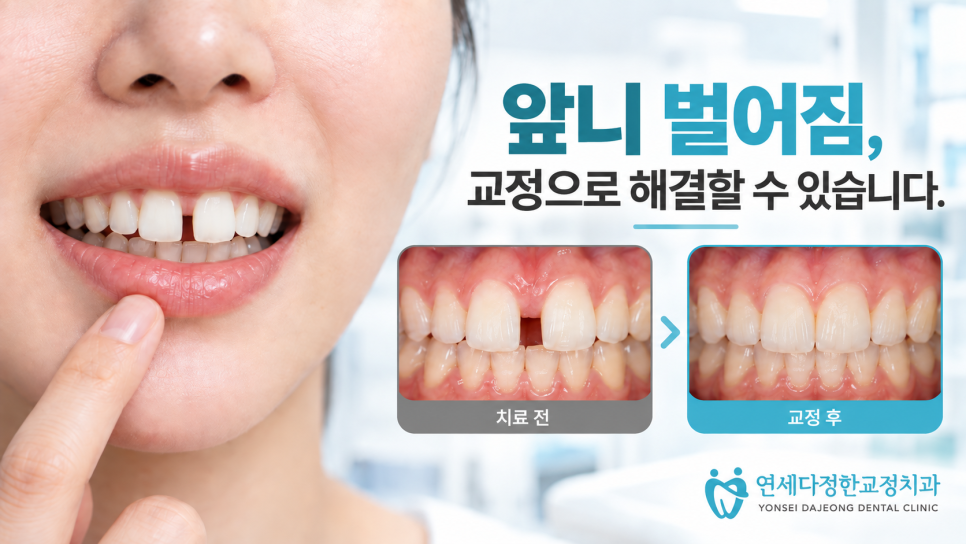
  • Retroclined Teeth: 3 Ways to Help Prevent Relapse After Braces

    Retroclined Teeth: 3 Ways to Help Prevent Relapse After Braces

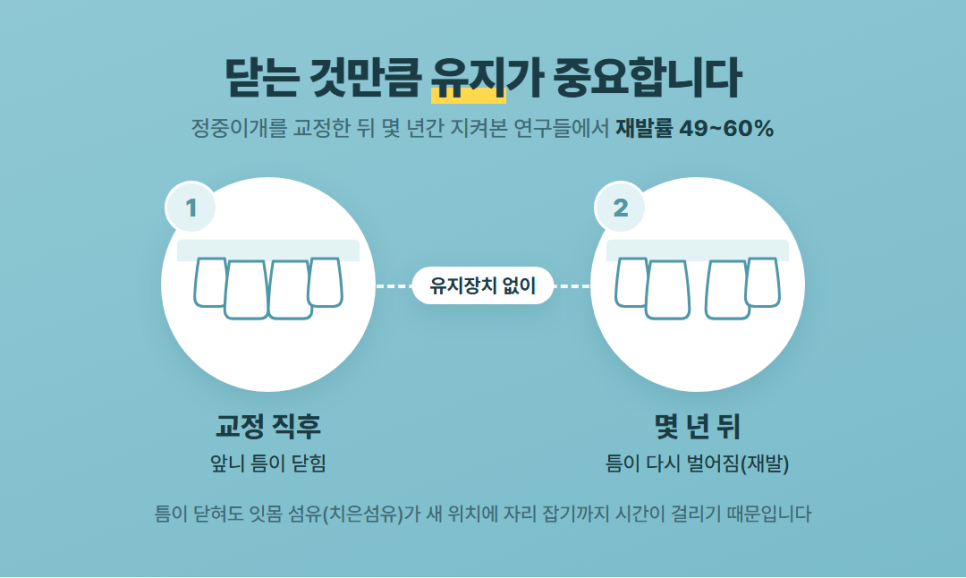
    SummaryDoes it bother you every time you look in the mirror and notice your front teeth curling inward? This guide covers what retroclined teeth are, why they happen, when correction may be needed, how the treatment process works, and how to care for your retainer to help prevent relapse after treatment.
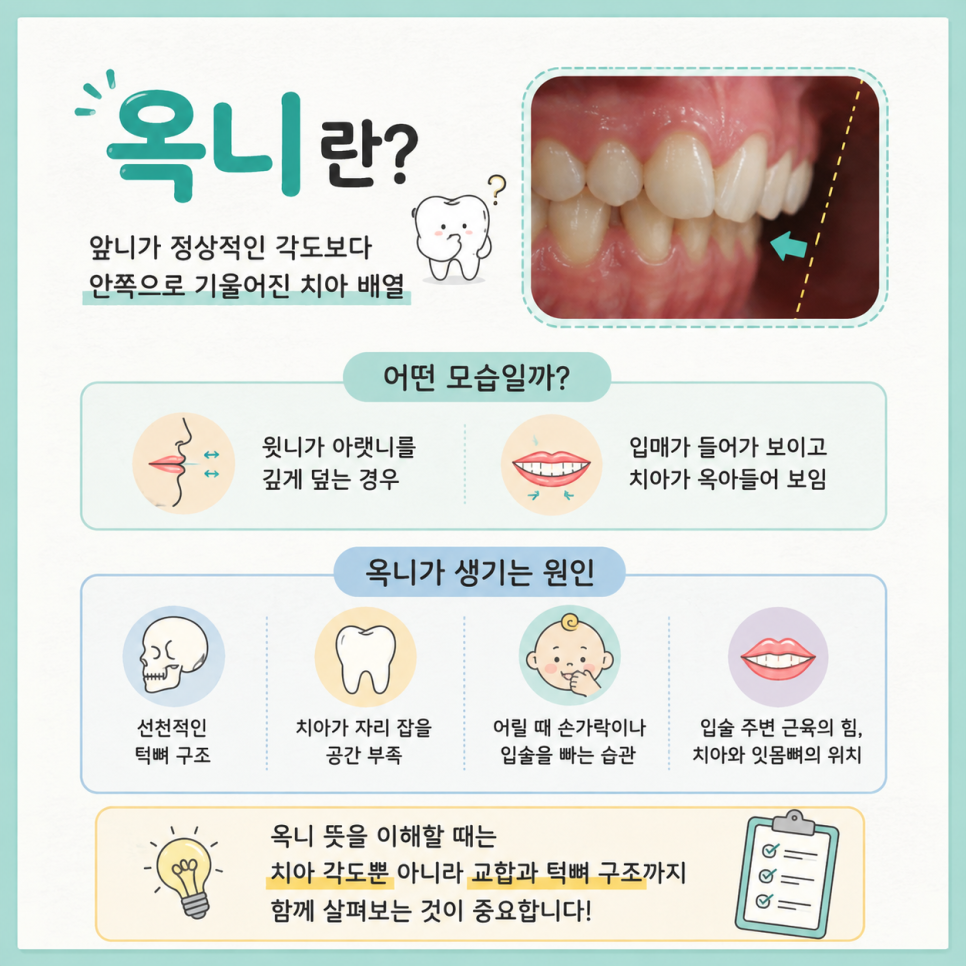
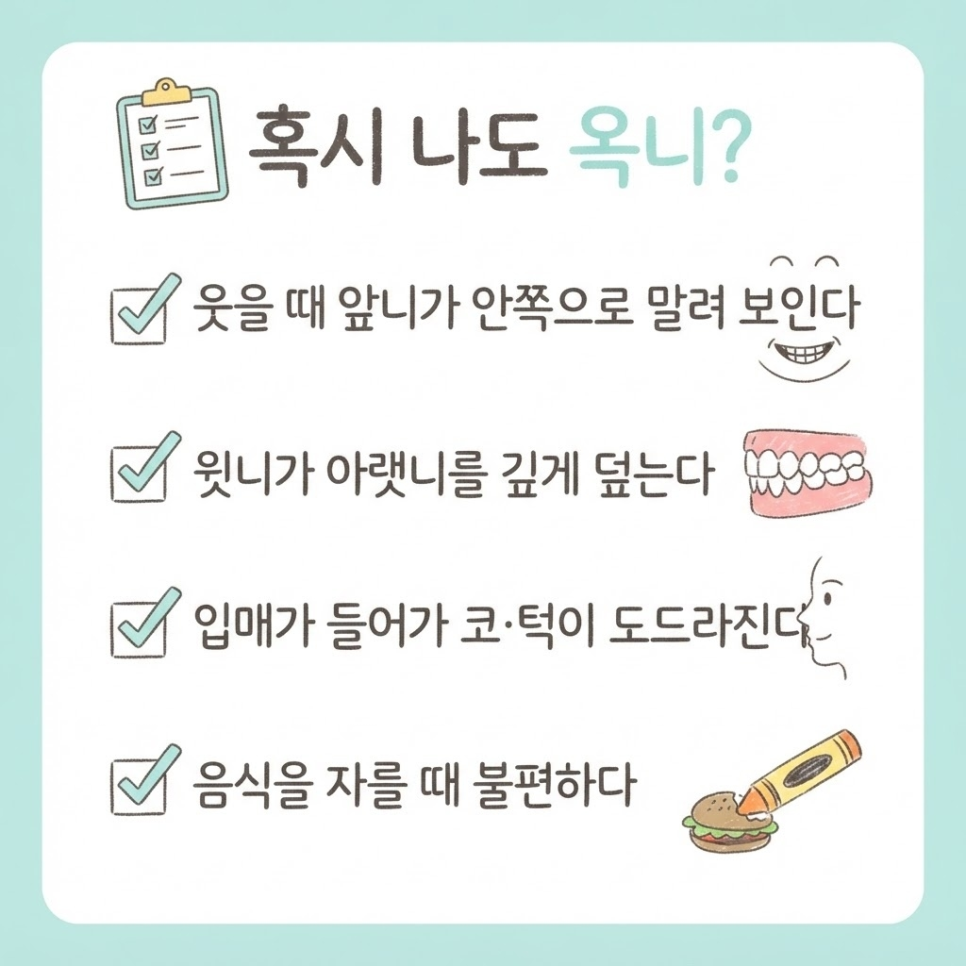
    Do your front teeth look like they curl inward when you smile?

    If your mouth looks slightly sunken in the mirror and the angle of your teeth seems off, retroclined teeth could be the reason.
    What exactly are retroclined teeth, and why does this kind of tooth alignment happen in the first place?

    And why do some people notice their front teeth tilting inward again even after finishing orthodontic correction for retroclined teeth?

    💡 Quick preview
    Retroclined teeth are teeth angled further inward than a normal bite. Here’s what causes this and how it develops.
    You’ll also find the signs that suggest correction may be needed, what the treatment process actually looks like, and how proper retainer care can help prevent teeth from tilting inward again after treatment.
    retroclined teeth correction

    retroclined teeth correction image 2

    retroclined teeth correction image 3

    retroclined teeth correction image 4

    What exactly are retroclined teeth, and why do they happen?

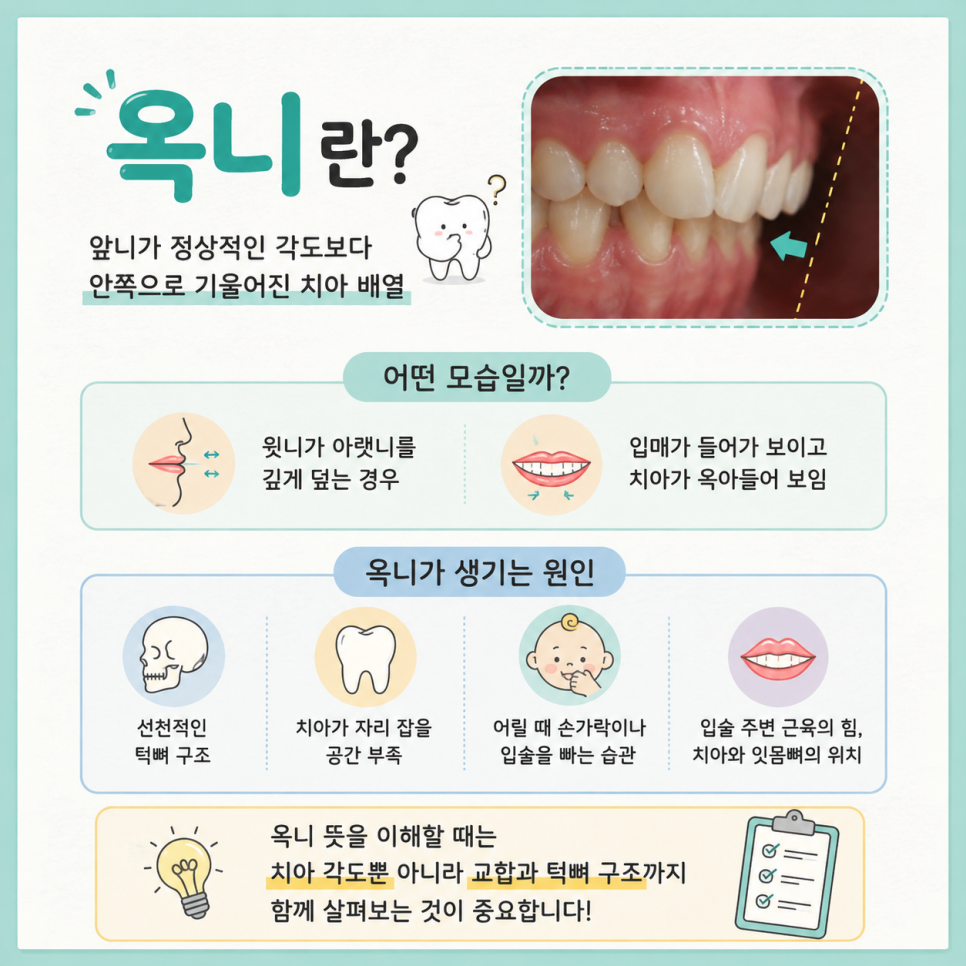
    Put simply, retroclined teeth are front teeth angled further into the mouth than a normal bite position.
    This can include cases where the upper teeth deeply overlap the lower teeth, or where the whole set of teeth appears tucked inward.

    The causes vary.
    Genetic jaw structure, limited space for teeth to settle into, and childhood habits like thumb-sucking or lip-sucking can all play a role.

    The strength of the muscles around the lips, along with the position of the teeth and jawbone, can also influence how far the front teeth tilt inward.

    So to really understand what retroclined teeth are, you need to look beyond just the angle of the teeth — the bite and jaw structure matter too.

    retroclined teeth correction image 5

    📊 Key points — structural traits of retroclined teeth
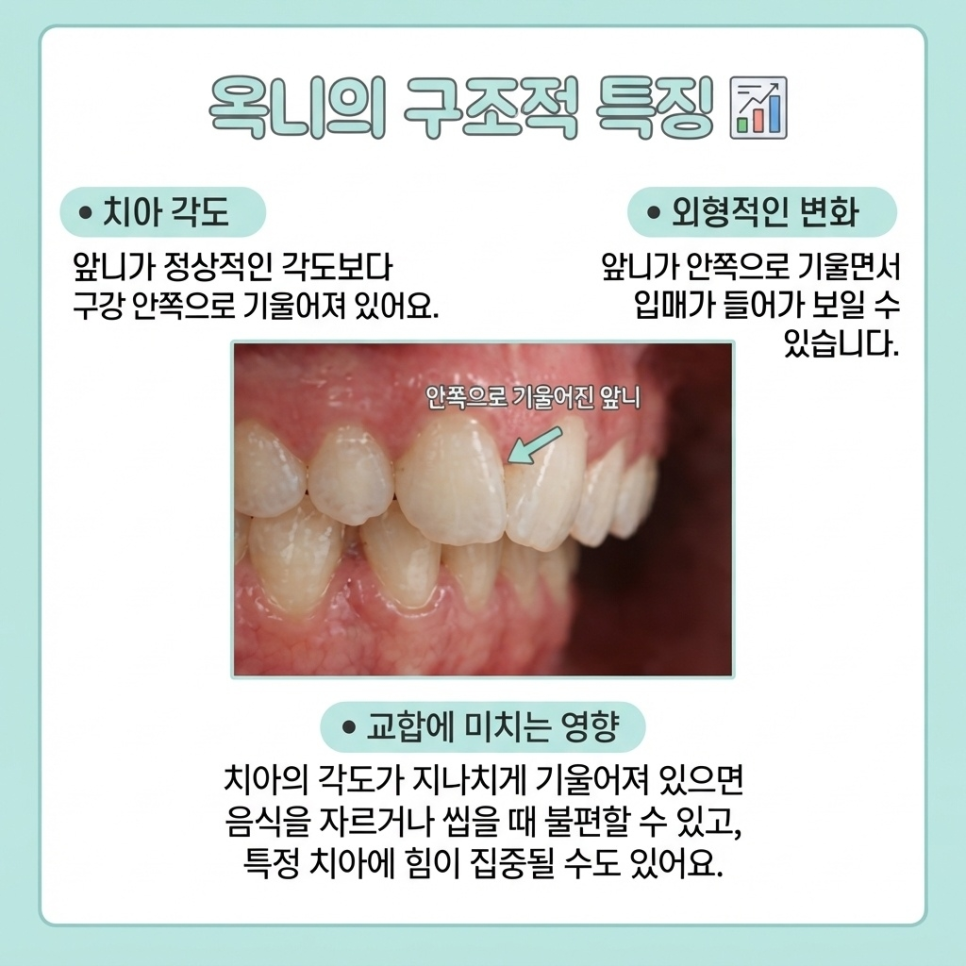
    • Tooth angle: Front teeth tilt further into the mouth than a normal angle.
    • Appearance: The mouth area can look sunken, which may create a closed-off expression.
    • Bite impact: Force can concentrate on certain teeth when biting or chewing.

    retroclined teeth correction image 6


    How do you know if you need correction for retroclined teeth?

    Correction for retroclined teeth is a treatment that repositions inward-angled teeth to a healthier angle, improving both alignment and bite.

    When the front teeth are noticeably tilted inward, the mouth area can look sunken and create a closed-off appearance.

    A poor bite can also mean force concentrates on certain teeth while chewing, sometimes causing discomfort.

    That’s why treatment planning for retroclined teeth should take into account not just tooth angle, but bite alignment and overall facial profile as well.

    retroclined teeth correction image 7

    📋 Checklist — could you have retroclined teeth?
    ✅ Your front teeth look like they curl inward when you smile
    ✅ Your upper teeth deeply overlap your lower teeth, so the lower front teeth are barely visible
    ✅ Your mouth area looks sunken overall, making your nose or chin look more prominent
    ✅ Biting into food with your front teeth feels awkward or uncomfortable

    retroclined teeth correction image 8


    How does treatment for retroclined teeth work?

    Before treatment begins, 3D imaging is typically used to precisely check the position of the teeth and tooth roots.

    After reviewing jawbone condition, root angle, and available space for tooth movement, an individualized treatment plan is developed.

    With retroclined teeth in particular, the decision on whether to extract teeth needs careful consideration.
    Moving the front teeth too far back can actually make the inward tilt more pronounced.

    That’s why treatment for retroclined teeth focuses on adjusting the angle of both the tooth crown and root together.

    retroclined teeth correction image 9

    🚀 Treatment stages for retroclined teeth
    1. Detailed diagnosis: Assess tooth and root angle, jawbone structure, and bite condition.
    2. Appliance placement: Fit an appliance suited to your case to begin adjusting the inward angle.
    3. Tooth movement and alignment: Gradually reposition the teeth, considering both crown and root together.
    4. Bite refinement: Fine-tune how the upper and lower teeth come together for a stable bite.

    Treatment time varies by individual, but it commonly takes around 18 months to 2 years.

    The exact duration can only be confirmed after a detailed exam, so it’s worth discussing your specific timeline with your provider during a consultation.

    Treatment length can also differ significantly depending on whether extraction is needed.

    retroclined teeth correction image 10

    For treatments like retroclined teeth correction, where tooth angle and bite need to be considered together, a detailed diagnosis is especially important.

    If you’d like to learn more about a treatment plan, you can check the care information at Cheongnyangni Yonsei Dajeonghan Orthodontic Clinic’s homepage.


    How should you care for your retainer to prevent relapse?

    Having your braces removed doesn’t mean orthodontic treatment is fully finished.

    Teeth naturally tend to drift back toward their original position, so movement can still occur after treatment ends.

    If the front teeth tilt inward again, it can look like the retroclined pattern has returned, which is why wearing your retainer consistently matters.

    A combination of a fixed retainer bonded behind the teeth and a removable retainer that can be taken in and out is a common approach to retention.

    Following the wear schedule your provider recommends can help lower the risk of relapse.

    Some research has reported an association between consistent retainer wear and a reduced risk of teeth shifting back, though the certainty of this evidence is still limited and results can vary by individual.

    retroclined teeth correction image 11

    ⚠️ Checklist for preventing relapse after correction
    • Wear your retainer consistently: Follow the recommended wear time and method as directed.
    • Reduce habits that put pressure on your teeth: Avoid repeatedly pushing on your teeth with your tongue or fingers.
    • Check in on your teeth regularly: Get routine dental checkups to monitor alignment and bite changes.

    retroclined teeth correction image 12


    Frequently Asked Questions

    retroclined teeth correction image 13

    1. What exactly does “retroclined teeth” mean?
    Retroclined teeth means the front teeth are angled further into the mouth than normal, which can also affect the shape of the mouth and the bite.

    retroclined teeth correction image 14

    2. Can adults get treatment for retroclined teeth?
    Yes. As long as the gums and jawbone are healthy, correction can be carried out at any age, including adulthood.

    retroclined teeth correction image 15

    3. Why do teeth become retroclined again after treatment?
    It happens because teeth naturally tend to shift back toward their original position, which is why wearing your retainer consistently is important for prevention.

    retroclined teeth correction image 16

    4. Is extraction always necessary for correcting retroclined teeth?
    No. Whether extraction is needed depends on available tooth space, bite condition, and jawbone health, which are evaluated on a case-by-case basis.


    References

    · Martin, C. et al., “Retention procedures for stabilising tooth position after treatment with orthodontic braces,” Cochrane Database of Systematic Reviews, 2023. View source
    · Modoodoc Editorial Team, “What retroclined teeth mean, related symptoms, and considerations for re-treatment” (Korean), Modoodoc, 2025. View source
    · Medical Today, “Correcting inward-curling retroclined teeth” (Korean), Medical Today. View source

    This article is provided for general health information purposes only and is not a substitute for individual diagnosis or treatment. If you have symptoms, please consult a qualified dental professional.

  • Board-Certified Orthodontist: 3 Credentials to Help Avoid Retreatment

    Board-Certified Orthodontist: 3 Credentials to Help Avoid Retreatment

    SummaryWhen choosing an orthodontist in Cheongnyangni, it’s worth checking for board-certified orthodontic specialist credentials, training recognized by the Ministry of Health and Welfare, and whether the lead doctor provides continuous, hands-on care from start to finish. Outcomes can vary depending on the provider you choose first, so checking these criteria from the start may help support a more stable treatment course.

    Two patients can receive the exact same malocclusion diagnosis, yet one finishes treatment in two years while the other ends up needing retreatment.

    Much of that difference is often attributed to the expertise of the provider chosen at the very start.

    If you’re researching a board-certified orthodontist in Cheongnyangni, there are criteria worth checking before you even look at cost or reviews.

    Cheongnyangni orthodontist

    This article walks through, in order, the specialist credentials, the Ministry of Health and Welfare-designated training process, and why continuous care from the lead doctor matters when choosing an orthodontic clinic in Cheongnyangni.

    Orthodontic treatment can take one to two years, or more than three years in some cases, so the provider you choose first can shape the outcome.

    Cheongnyangni orthodontist related image 2

    Key Points
    ✔ According to one media report, board-certified orthodontists are said to make up only about 4% of all licensed dentists
    ✔ Earning this specialist credential requires four years of training in total — a one-year internship plus a three-year residency
    ✔ It matters whether the clinic follows a continuity-of-care model, where the lead doctor treats you personally from start to finish

    Cheongnyangni orthodontist related image 3

    Cheongnyangni orthodontist related image 4

    What Does “Model Specialist” Mean at a Cheongnyangni Orthodontic Clinic?

    A “Model Specialist” is generally described as a board-certified orthodontist who has continued academic activity and clinical experience after earning their specialty credential.

    That said, the specific selection criteria and appointment process behind this title aren’t publicly detailed at the association level, so it’s worth confirming directly with the clinic during a consultation.

    In general, it also helps to review the items below.

    Cheongnyangni orthodontist related image 5

    Checklist
    ✅ Holds a board-certified orthodontic specialist license issued by the Ministry of Health and Welfare
    ✅ Active membership and ongoing academic involvement with the Korean Association of Orthodontists
    ✅ Consistent research into diagnostic approaches for clinical care
    ✅ Adherence to the ethical responsibilities expected of a medical professional

    Cheongnyangni orthodontist related image 6

    A Note of Caution
    Some clinics use language that sounds like a specialist credential based only on completing association coursework or attending seminars.
    It’s safer to confirm directly, before your consultation, whether the license was actually issued by the Ministry of Health and Welfare.

    What Training Is Required to Become a Board-Certified Orthodontist?

    A board-certified orthodontist earns this credential only after completing dental school, a one-year internship, and a three-year residency — four years of training in total — and then passing a national qualifying exam.

    According to one media report, board-certified orthodontists are said to account for only about 4% of all dentists in Korea, meaning relatively few practitioners hold this credential.

    That reflects just how demanding the qualification process is.

    Cheongnyangni orthodontist related image 7

    Training institutions designated by the Ministry of Health and Welfare require residents to gain experience in the following areas:

    1. Orthodontic approaches for congenital dental abnormalities
    2. Jaw-orthopedic treatment for growing children
    3. Complex orthodontic treatment coordinated with orthognathic surgery
    4. Treatment of a minimum number of clinical cases plus presentations at academic conferences
    5. Passing the national board-certification exam for orthodontic specialists administered by the Ministry of Health and Welfare

    Cheongnyangni orthodontist related image 8

    Confirming whether a provider has completed this formal training process is the most basic step when comparing orthodontic clinics in Cheongnyangni.


    Why Does It Matter Whether the Lead Doctor Treats You Personally, Start to Finish?

    Lead-doctor continuity of care means the same provider oversees your case from the initial treatment plan all the way through completion.

    Orthodontic treatment unfolds over months or years, and it matters that it follows the original treatment plan.

    If your provider changes partway through, however, there’s a chance the details of your treatment plan could be adjusted.

    Cheongnyangni orthodontist related image 9

    Category Features & Considerations
    Lead-doctor continuity of care The same provider can continue overseeing your case from initial diagnosis through long-term maintenance
    If your provider changes The treatment direction and details may need to be reassessed

    Cheongnyangni orthodontist related image 10

    Key Points
    ✔ Check whether the same provider handles your case from diagnosis through long-term maintenance
    ✔ It’s a good idea to ask directly, during your consultation, exactly who your treating doctor will be

    When comparing orthodontic clinics in Cheongnyangni, it’s worth looking closely at this kind of continuity-of-care structure as well.

    You can find more details about the clinic’s care system at Yonsei Dajeonghan Orthodontics Cheongnyangni.


    Frequently Asked Questions

    Cheongnyangni orthodontist related image 11

    1. How can I verify a board-certified orthodontic specialist credential?
    You can check through the Ministry of Health and Welfare’s specialist license records or the specialist lookup menu on the Korean Association of Orthodontists website.

    2. How is a “Model Specialist” different from a regular board-certified orthodontist?
    It refers to a board-certified orthodontist who has continued academic activity and clinical experience over time; the exact criteria are best confirmed directly during a consultation.

    3. What happens if my treating doctor changes during orthodontic treatment?
    Since treatment plans and approaches can vary between providers, some parts of your treatment process may need to be adjusted.

    4. What should I check before consulting an orthodontist in Cheongnyangni?
    It’s worth confirming whether the provider holds a Ministry of Health and Welfare-certified orthodontic specialist credential, whether the lead doctor treats patients directly, and whether they have broad clinical case experience.

    5. Why is the proportion of board-certified orthodontists so low?
    Because the process — a one-year internship and three-year residency after dental school, followed by a national qualifying exam — is demanding, only a relatively small share of dentists ultimately earn this credential.

    Cheongnyangni orthodontist related image 12

    Cheongnyangni orthodontist related image 13

    Cheongnyangni orthodontist related image 14

    References

    · Korea Law Information Center, “Regulations on the Training and Qualification of Dental Specialists,” Ministry of Government Legislation.View
    · BioTimes Expert Column, “The Importance of Systematic Orthodontic Treatment,” 2021.View
    · Korean Association of Orthodontists, “Find Association Members and Board-Certified Orthodontists.”View

    Cheongnyangni orthodontist related image 15

    This article is provided for general health information purposes only and is not a substitute for individual diagnosis or treatment. If you have symptoms, please consult a specialist.