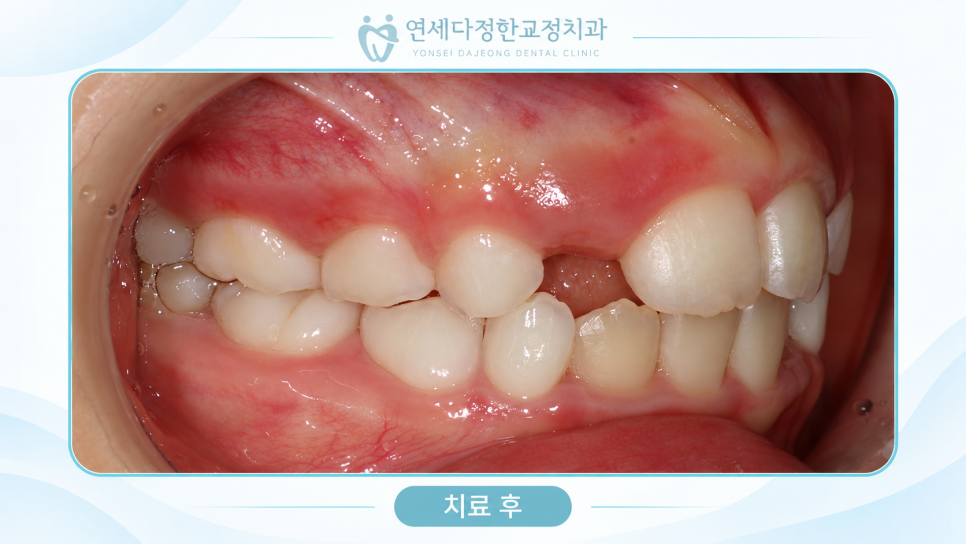
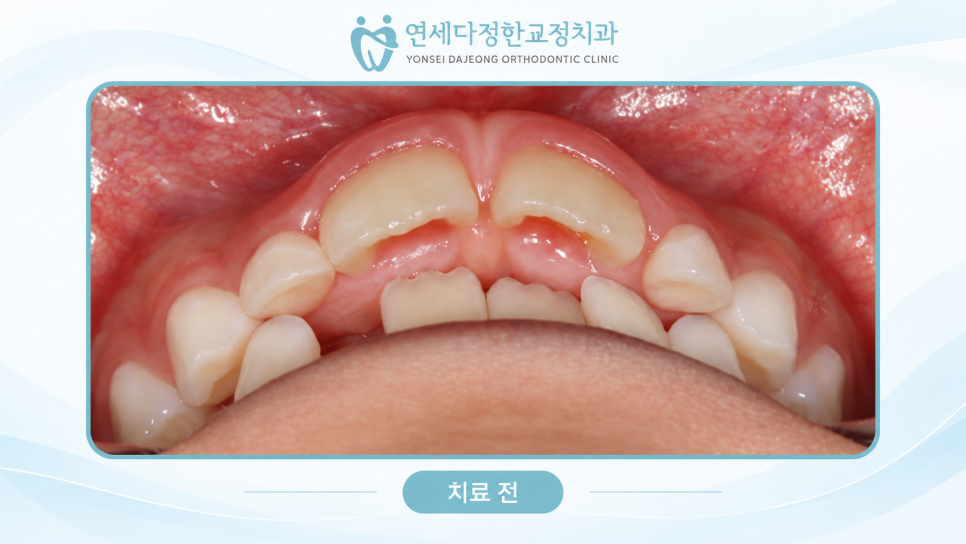
Tag: Overbite (Deep Bite)

  • Clear Aligners vs Braces: How to Choose and 3 Rules for 22-Hour Wear

    Clear Aligners vs Braces: How to Choose and 3 Rules for 22-Hour Wear

    SummaryWhen comparing clear aligners vs braces, the real deciding factors are diagnosis and wear habits. In one study, only 36% of patients consistently met the 22-hour daily wear target, and both Korea’s MFDS and the U.S. FDA have warned against using clear aligners without a specialist’s diagnosis. A Cheongnyangni orthodontic specialist breaks down how to choose.

    Almost every patient who sits down in the consultation room asks the same question first.
    Whether clear aligners or braces would be the better choice.

    Clinical experience suggests the answer is a little different.
    What matters more than the type of appliance is your tooth condition and your wear habits.

    This article breaks down the criteria for a clear aligners vs braces comparison.
    We’ll walk through the differences in structure and pain, when clear aligners have the advantage, how to correct teeth that don’t move as planned, the daily wear-time standard, and how to verify an orthodontic specialist.

    Key takeaway
    A clear aligners vs braces comparison isn’t about which appliance is “better” — it comes down to diagnosis and wear habits.
    Clear aligners tend to work well for open bite, deep bite, re-treatment cases, and growing children, while more complex cases — such as crowding, extractions, or protruding teeth — call for a specialist consultation first.
    One study found that only 36% of patients consistently wore their aligners 22+ hours a day, making wear habits a key variable in treatment outcomes.

    Clear Aligners vs Braces: How Do They Differ in Structure and Pain?

    The two methods differ in where and how the force that moves your teeth is applied.
    Clear aligners are an orthodontic method that gradually moves teeth by switching through a series of clear plastic trays.
    Braces, by contrast, work by bonding brackets to the teeth and applying force through a wire.

    Invisalign is simply one brand of clear aligner.
    Just as many people use “Kleenex” to mean any tissue or “Band-Aid” for any adhesive bandage, the Invisalign name has become shorthand for clear aligners as a whole.
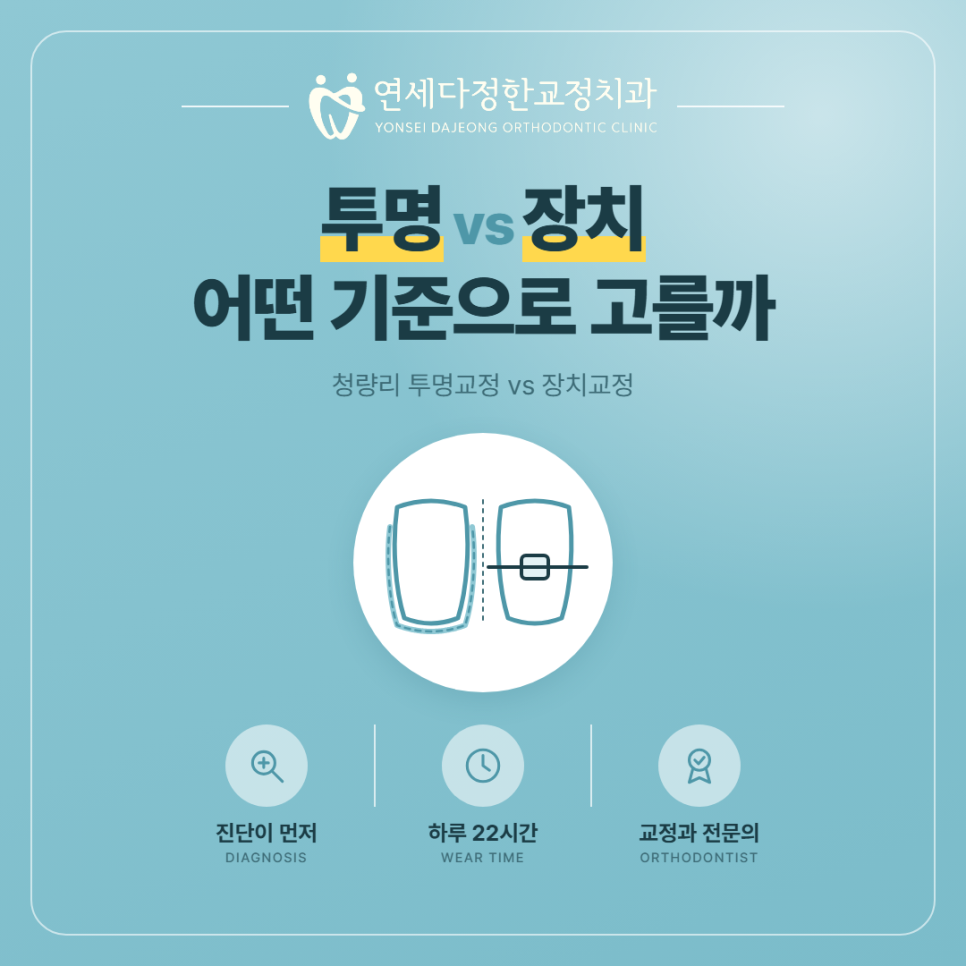
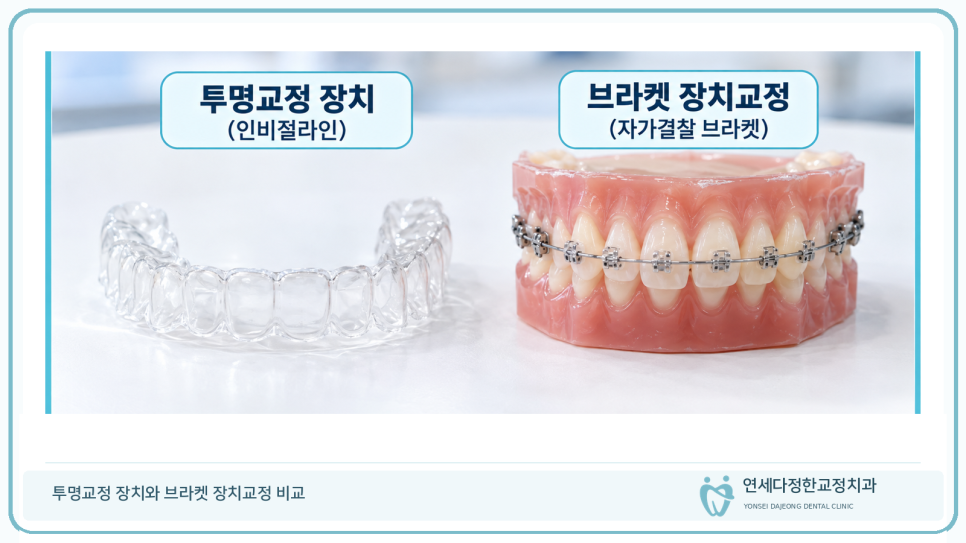
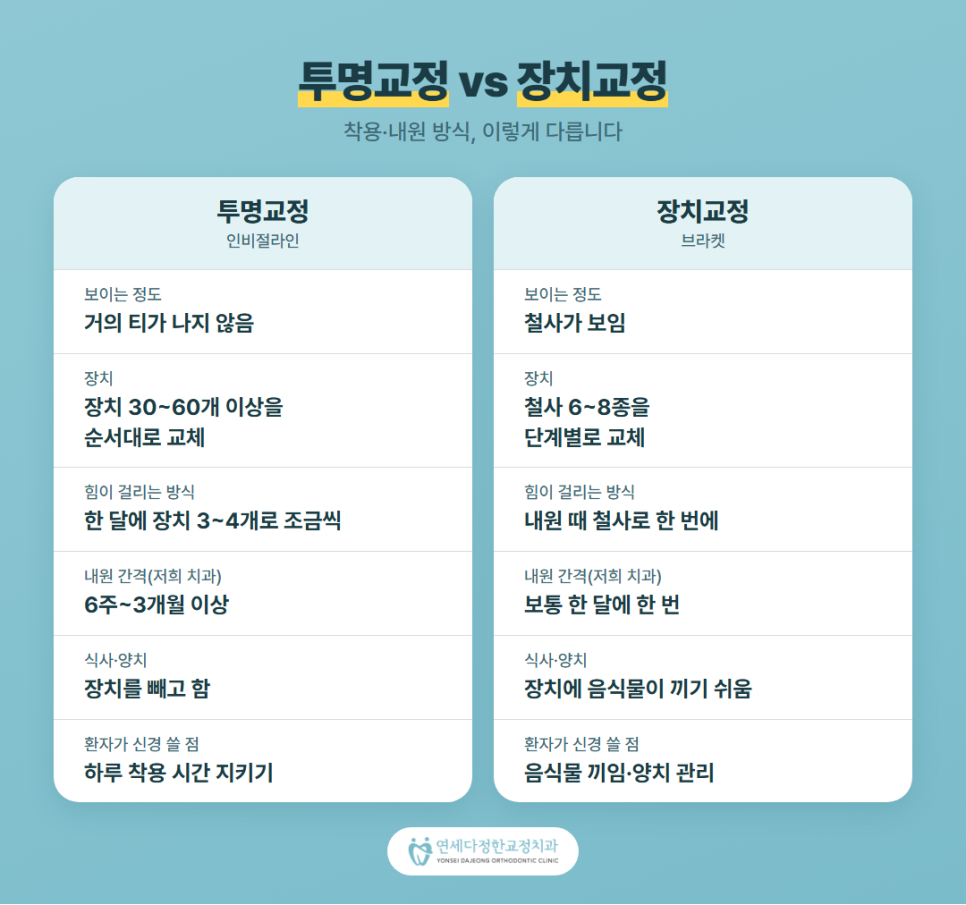
    Clear aligners vs braces comparison

    Clear aligners vs braces comparison image 2

    Category Clear Aligners Braces
    Appliance type Clear trays, changed every 1-2 weeks Brackets + wire
    Removable Removable for eating and brushing Not removable
    Visit frequency Every 6 weeks to 3 months Every 3-4 weeks
    Appearance Barely noticeable Visible appliance
    Pain pattern Mild discomfort spread over several occasions Sharper pain concentrated right after adjustments

    Clear aligners vs braces comparison image 3

    The way pain is experienced also differs.
    Traditional wire braces tend to cause a spike of discomfort right after each adjustment,
    while clear aligners tend to produce milder discomfort spread out over several weeks.


    When Are Clear Aligners Especially Advantageous?

    Even among patients with malocclusion, how much clear aligners help can vary.
    Malocclusion refers to a condition where the upper and lower teeth or jaw don’t align within a normal range.
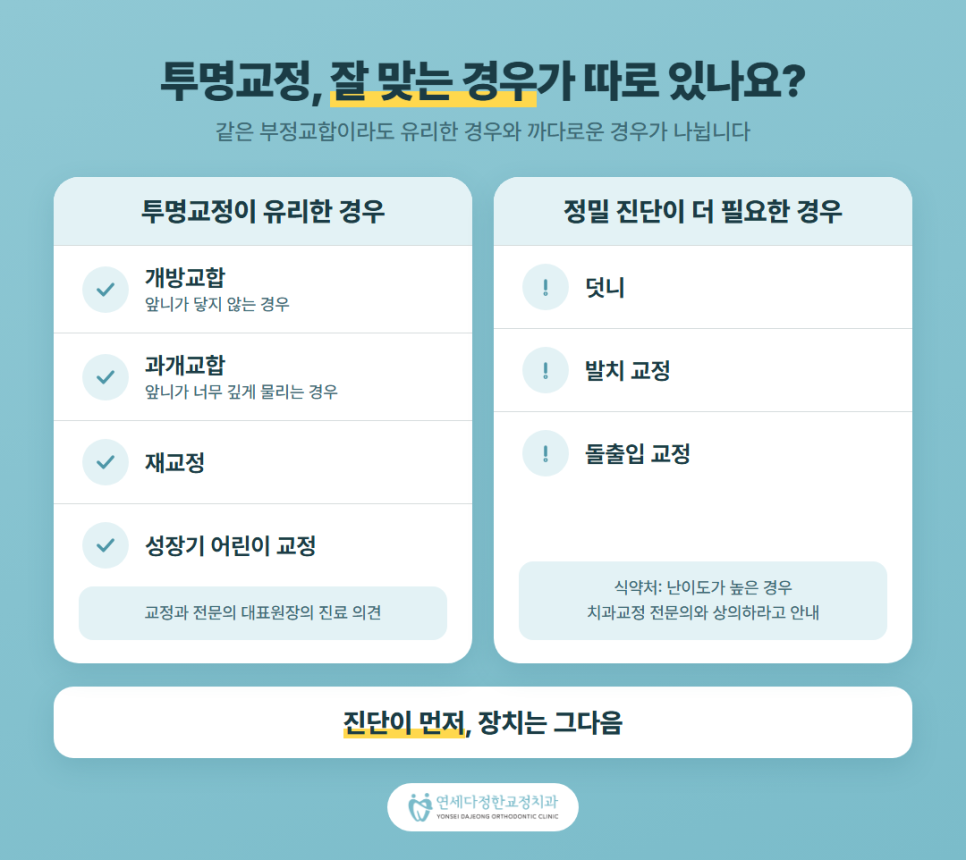
    Clinically, clear aligners tend to work especially well in the following four situations.

    • Open bite — when the front teeth don’t meet when biting down
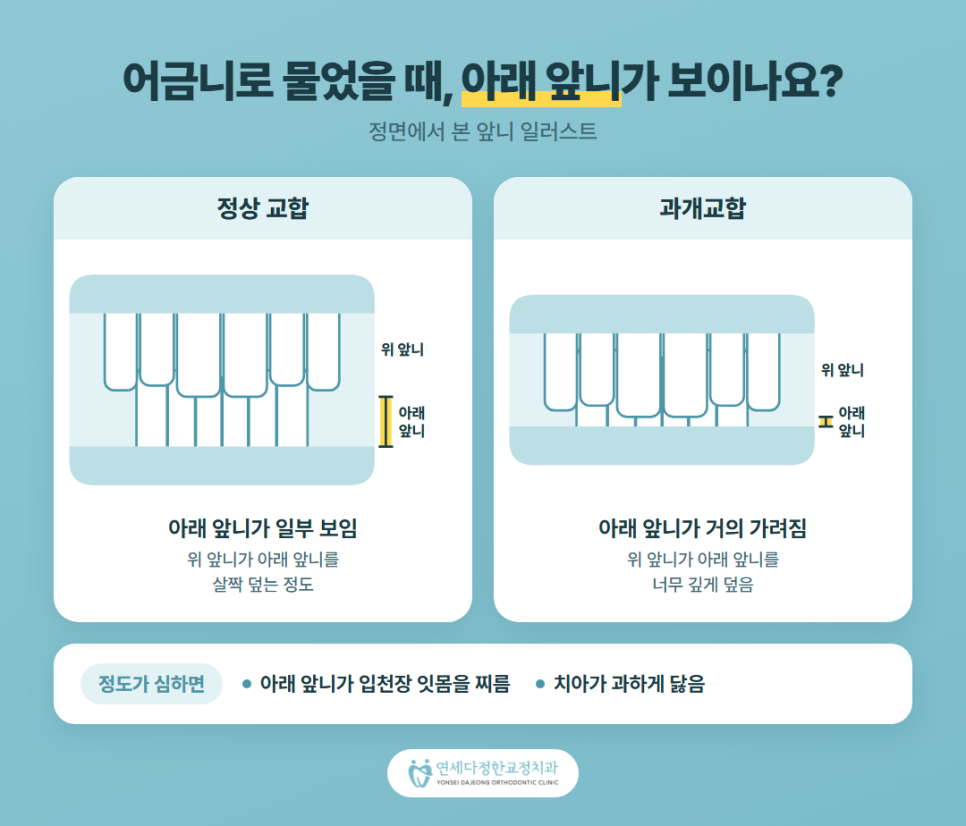
    • Deep bite — when the front teeth overlap excessively
    • Re-treatment — when teeth shift back out of alignment after previous orthodontic treatment
    • Orthodontic treatment for growing children

    On the other hand, more complex cases that require significant tooth movement — such as crowding, extraction cases, or protruding teeth — need careful evaluation to determine whether clear aligners alone are sufficient.
    The more complex the case, the more important it is to start with a detailed diagnostic consultation with a board-certified orthodontic specialist.

    For complex cases like an underbite where the lower jaw protrudes, some treatment approaches combine mini-screws with clear aligners to avoid extractions altogether.
    The guiding principle is always diagnosis first, with the choice of appliance coming second.
    Clear aligners vs braces comparison image 4


    What Happens When Teeth Don’t Move as Planned?

    In practice, teeth don’t always move exactly as planned with clear aligners.
    Studies report that the accuracy of rotational movement for canines — rotating the tooth into position — ranges from 35.8% to 64%, depending on the study.
    By contrast, intrusion of front teeth (moving them up to 2mm toward the gum line) has a much higher predictability, around 92%.

    That’s why treatment planning builds in safeguards from the start, with mid-course check-ins and additional trays to finish the job.
    Here are the four correction methods actually used in treatment planning.

    1. Attachments — small resin bumps bonded to teeth so the aligner can grip them more effectively
    2. Staging — breaking difficult tooth movements into smaller steps
    3. Mini-screws (orthodontic anchors) — small screws that anchor the back teeth so they don’t shift unintentionally
    4. Refinement trays — additional aligners made after a mid-treatment check to correct any teeth that haven’t moved as planned

    Clear aligners vs braces comparison image 5

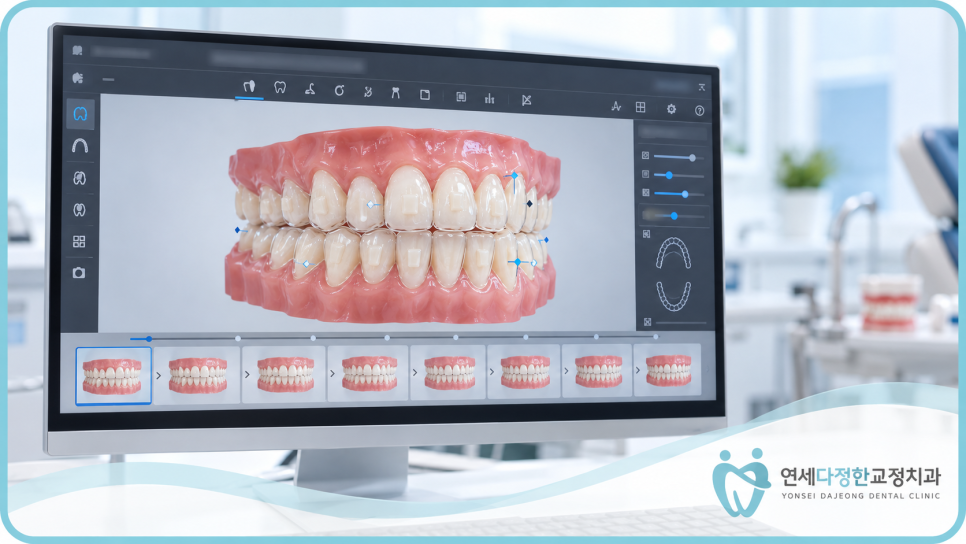
    Invisalign plans tooth movement using a 3D simulation called ClinCheck.
    However, ClinCheck isn’t a system that creates the treatment plan on its own.
    It’s a tool that carries out the plan the dentist designs.
    Clear aligners vs braces comparison image 6


    How Many Hours a Day Should You Wear Clear Aligners?

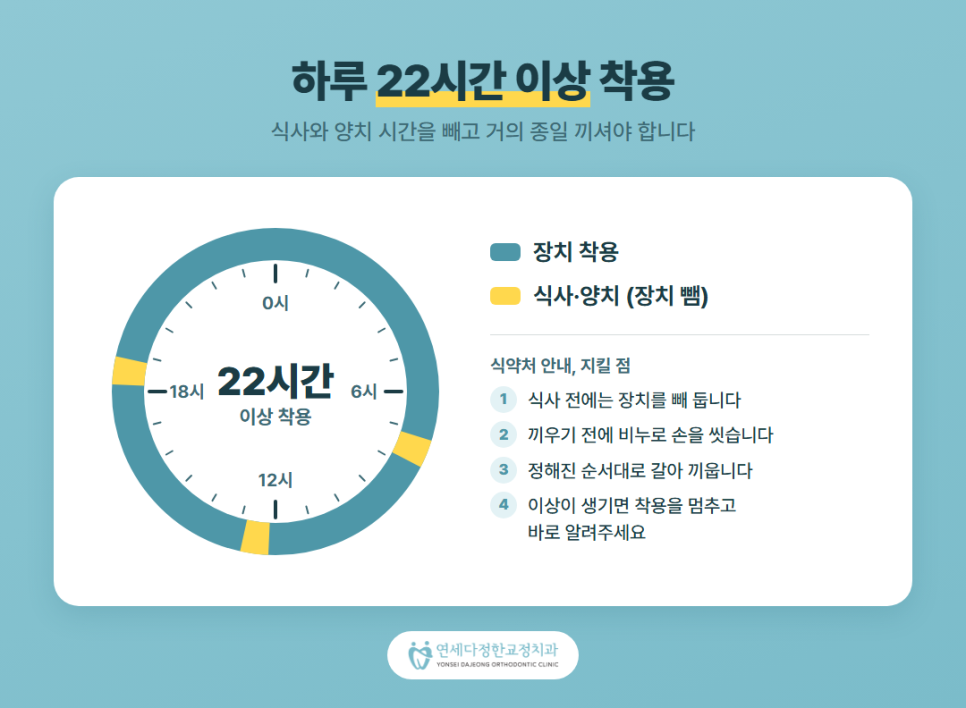
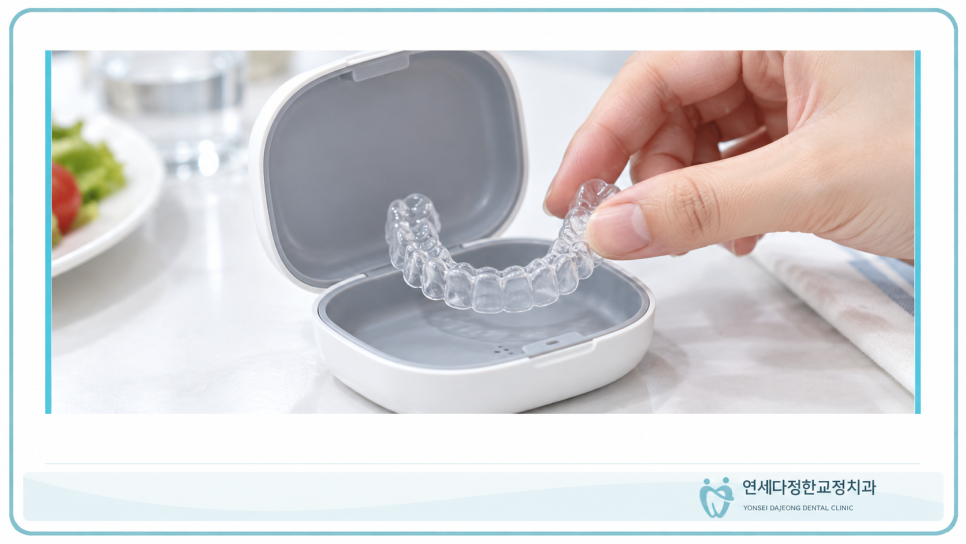
    The basic rule is to wear your aligners nearly all day, removing them only to eat and brush.
    Research also considers 22+ hours a day to be the benchmark for adequate wear.

    Results
    In a study analyzing 2,644 clear aligner patients, only 36% (953 patients) were classified as “fully compliant,” meaning they consistently met this wear-time standard.
    The rest either fell short of the target or wore their aligners only intermittently.
    No matter how precisely an appliance is designed, treatment won’t progress as planned without enough wear time.
    Wear checklist
    ✅ Remove your aligners before eating
    ✅ Wash your hands with soap before putting them back in
    ✅ Switch to the next set in the correct order
    ✅ Confirm you’re wearing them more than 22 hours a day
    Caution
    If you experience discomfort, a damaged tray, a bite that feels off, or gum inflammation, stop wearing the aligner and contact your dentist right away rather than waiting for your next scheduled visit.
    Clear aligners vs braces comparison image 7

    Clear aligners vs braces comparison image 8


    How Do You Verify an Orthodontic Specialist?

    A board-certified orthodontist is a dentist who, after graduating from dental school, has completed a one-year internship and three-year residency, then passed the specialist qualifying exam administered by Korea’s Minister of Health and Welfare.
    Having “orthodontic training experience” or having “attended orthodontic conferences” is not the same as holding this specialist certification.

    • Directly confirm whether the doctor is a certified orthodontic specialist
    • Check whether the specialist director personally handles your case from the initial consultation through appliance removal
    • Check whether you receive a detailed diagnosis (such as X-rays) and a clear explanation of the treatment plan

    These days, clear aligners sold directly online have also become more common.
    However, regulators have actually caught cases where simple mouthguards with no real tooth-moving function were falsely advertised as clear aligners.

    “Clear dental aligners sold online through direct overseas purchase or purchasing-agent services have not been verified for safety or effectiveness, and consumers should never buy them.”

    Korea’s Ministry of Food and Drug Safety (MFDS) issued this warning in 2020 after catching 92 cases of false or exaggerated advertising for clear dental aligners sold online.

    In October 2026, the U.S. FDA also issued an official warning that it has never approved any clear aligner sold directly to consumers without dentist supervision.
    This came after reports of real complications, including tooth pain, jaw pain, and bite problems.
    Clear aligner treatment should always begin with an in-person diagnosis at a dental clinic.

    Clear aligners vs braces comparison image 9

    Located across from Cheongnyangni Station in Dongdaemun-gu, Seoul, Cheongnyangni Yonsei Dajeonghan Orthodontics is an orthodontic clinic where a director who is a board-certified specialist in orthodontics and integrated dentistry personally handles every patient from the initial consultation through appliance removal.


    Frequently Asked Questions

    1. Does Invisalign hurt?
    It’s not entirely painless. However, because the force is applied gradually over many small steps, the discomfort is often milder compared to traditional braces.

    2. How often do I need to visit the clinic for clear aligner treatment in Cheongnyangni?
    Check-ups are typically scheduled every 6 weeks, sometimes up to every 3 months or more.

    3. Is clear aligner treatment covered by national health insurance?
    General orthodontic treatment, including clear aligners, is not covered by national health insurance in Korea and is billed as an out-of-pocket procedure. Costs are provided after a detailed diagnosis.

    4. Should I choose clear aligners or braces?
    Rather than the type of appliance, the priority is a detailed diagnosis of your teeth and jaw, and whether you can realistically commit to wearing aligners 22+ hours a day for the full treatment.

    5. Are clear aligners sold online safe?
    Clear aligners sold without an in-person dental diagnosis are not recommended — both Korea’s MFDS and the U.S. FDA have warned that their safety has not been verified.


    References

    · Khosravi R, et al., “Factors Influencing Patient Compliance during Clear Aligner Therapy: A Retrospective Cohort Study,” PMC, 2021. View source
    · Korea Ministry of Food and Drug Safety (MFDS), “92 Cases of False and Exaggerated Advertising for Unauthorized Dental Aligners Caught,” Hit News, 2020. View source
    · ADA News, “FDA warns public about unauthorized direct-to-consumer clear aligners,” American Dental Association, 2026. View source
    · Ministry of Health and Welfare, “Regulations on Specialist Training and Qualification Recognition,” Korea Law Information Center, 2025. View source
    · “Accuracy of Invisalign aligners in adult patients: a retrospective study of angular tooth movements,” PMC, 2024. View source


    This article is intended for general health information purposes only and is not a substitute for individual diagnosis or treatment. If you have symptoms, please consult a specialist.
  • Overbite in Children: A Real 6-Month Preortho Growth Treatment Case

    Overbite in Children: A Real 6-Month Preortho Growth Treatment Case

    SummaryWhat causes protruding front teeth and overbite in children, and when should orthodontic treatment start? This article covers a real case of an elementary school student whose growth orthodontics changed in 6 months with Preortho, along with the right age for a first checkup, daily wear time, and what to watch for after treatment. Helpful for parents of growing children.

    Upper front teeth that stand out whenever a child smiles
    are often dismissed as “just genetics,” but that’s not always the whole story.

    Protruding front teeth in children have been linked to up to a 3-fold higher risk of front tooth injury compared with children who don’t have this trait, according to research.

    In this article, we’ll look at a case where protruding front teeth and overbite occurred together, and walk through how 6 months of growth orthodontics with Preortho played out.

    Key Points
    Key Summary
    Protruding front teeth in children are often a form of Class II malocclusion caused by slower lower jaw growth, and may appear alongside an overbite.
    Both the Korean Association of Orthodontists and the American Association of Orthodontists (AAO) recommend a first orthodontic checkup around age 6–7, and related research reports a lower rate of new front tooth injury in early-treatment groups compared with delayed-treatment groups (19% vs. 30%).
    This article covers a case in which overjet and overbite were observed to improve over 6 months using a Preortho Type1 appliance.

    Protruding front teeth in a child

    Why Do Children Get Protruding Front Teeth?

    Protruding front teeth in children are reported to result more often from slower lower jaw growth than from an oversized upper jaw.

    In orthodontics, this condition is called Class II malocclusion.
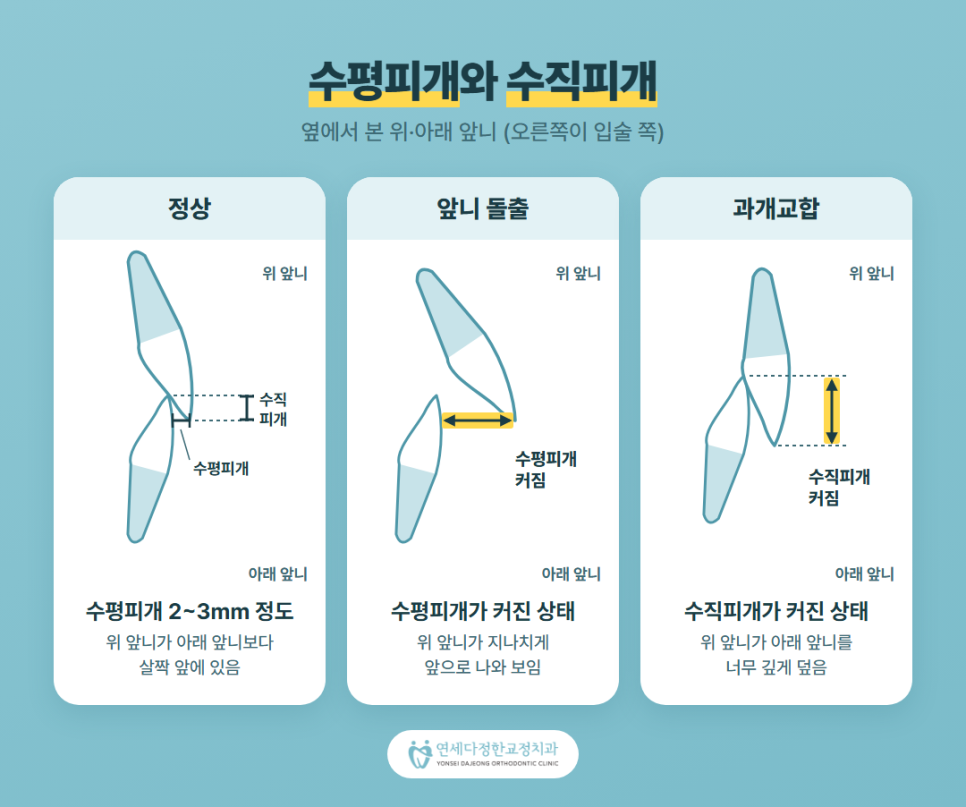
    The front-to-back gap between the upper and lower front teeth is called overjet.
    A normal range is generally when the upper front teeth sit about 2–3mm ahead of the lower front teeth.

    As this gap increases, the front teeth appear to stick out more.

    Protruding front teeth in children - image 2

    Jaw shape is strongly influenced by genetics, and oral habits such as thumb sucking, lip sucking, and mouth breathing can also negatively affect tooth alignment.

    There’s one more thing to note.
    A systematic review found that when overjet exceeds 3–3.5mm, the risk of front tooth injury roughly doubles, and beyond 6mm it can rise to about 3 times higher.
    (Kids really do fall a lot…)


    Is It Okay to Leave an Overbite in Children Untreated?

    If left untreated, a severe overbite can lead to gum damage or excessive tooth wear, so a proper diagnosis is needed.

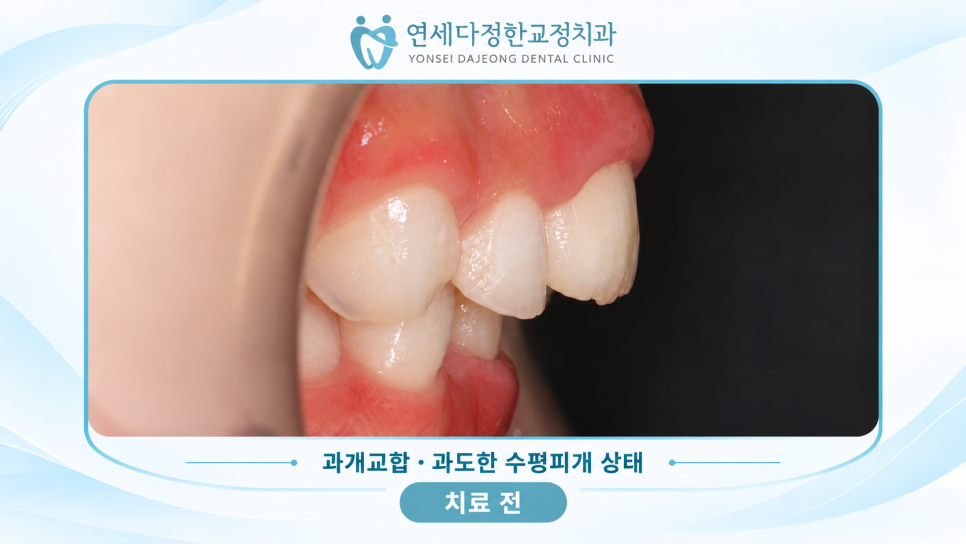
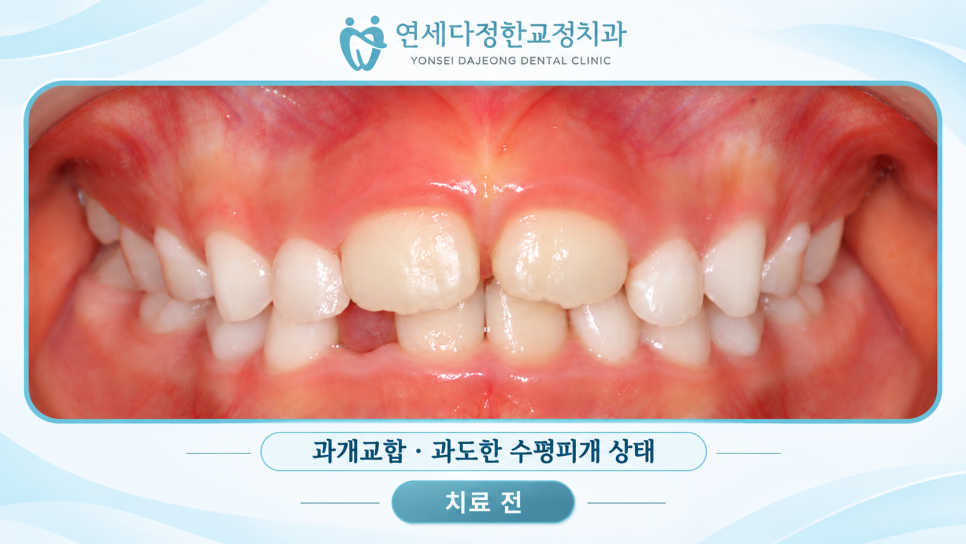
    An overbite (deep bite) refers to a condition where the upper front teeth overlap the lower front teeth so much that, when biting down on the back teeth, the lower front teeth are barely visible.
    It’s a common type of malocclusion that often appears together with protruding front teeth and a recessed chin.

    Protruding front teeth in children - image 3

    In severe cases, the lower front teeth can dig into the palate gum tissue or cause excessive tooth wear.

    Caution
    Many parents worry about a link to TMJ (jaw joint) disorders. While some reports note an association, there isn’t yet enough evidence to conclude that an overbite directly causes TMJ disorders. If there is jaw joint pain or clicking, we recommend a separate consultation with a specialist.

    When and How Should Growth Orthodontics Start?

    The honest answer is “it depends on the child,” which is exactly why getting an orthodontic checkup around age 7 matters.

    Starting treatment as early as possible isn’t automatically right, and neither is simply waiting.
    That’s why the timing of permanent front teeth eruption is used as a reference point.

    “See an orthodontist for a checkup at age 7”

    The Korean Association of Orthodontists is reportedly running a public awareness campaign with this message, recommending a first orthodontic checkup around age 7. The American Association of Orthodontists (AAO) similarly recommends a first checkup no later than age 7.

    An international systematic review (a Cochrane-affiliated study) found that the rate of new front tooth injury was 19% in the group that received first-phase treatment at ages 7–11, compared with 30% in the group treated only once during adolescence.
    However, there was no clear difference in final outcomes between the two groups once all treatment was complete.

    That’s why the principle is to diagnose first, and choose the appliance afterward.

    Item Details
    First orthodontic checkup Around age 7
    Checking for a recessed-chin tendency Typically during the late-elementary growth spurt, or earlier in severe cases
    Age range for Preortho use From about age 5–6 up to around age 12
    Preortho treatment duration Typically 6 months to 1 year
    Daily wear time Manufacturer recommendation: 1+ hour during the day plus 8+ hours at night (our clinic recommends 12+ hours)
    After all permanent teeth erupt Second-phase orthodontics if needed
    Checklist
    ✅ Has your child had an orthodontic checkup around age 7?
    ✅ Does your child have oral habits like thumb sucking or lip sucking?
    ✅ Do the front teeth look more protruded as the permanent ones come in?
    ✅ Do the upper teeth appear to cover the lower teeth significantly?

    What Actually Changed After Wearing Preortho?

    This is the case of an elementary school patient who came in concerned about protruding front teeth and difficulty closing the lips fully.

    Protruding front teeth in children - image 4

    Protruding front teeth in children - image 5

    The intraoral photos showed the upper front teeth positioned excessively ahead of the lower front teeth, with an overbite in which the upper teeth covered almost all of the lower teeth.
    The occlusal view also suggested limited space for the permanent teeth to erupt.

    Since the first molars and lateral incisors had not yet erupted, it was a bit early for a removable appliance or clear aligners (Invisalign First).
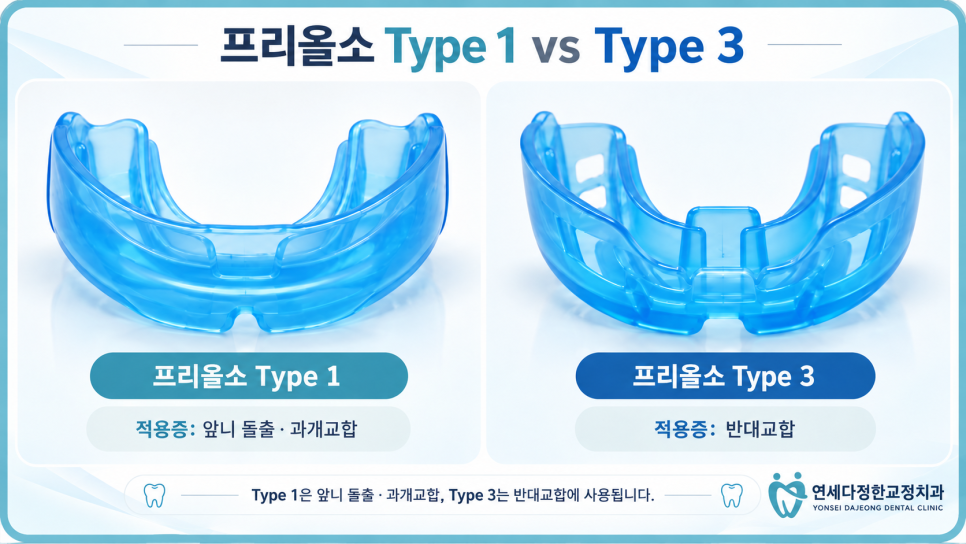
    So the appliance chosen was Preortho, a silicone mouthguard-type appliance.

    Preortho is broadly divided into Type1 and Type3.
    Type3 is used for underbite/crossbite cases, while Type1 is used for protruding front teeth and overbite.

    Protruding front teeth in children - image 6

    What Does Preortho Type1 Aim to Achieve?

    Type1 targets five goals.

    1. Reducing protruding front teeth
    2. Improving overbite
    3. Encouraging lower jaw growth
    4. Mild arch expansion
    5. Mild front teeth alignment

    For this patient, all five goals aligned with what was needed, so treatment began right away.

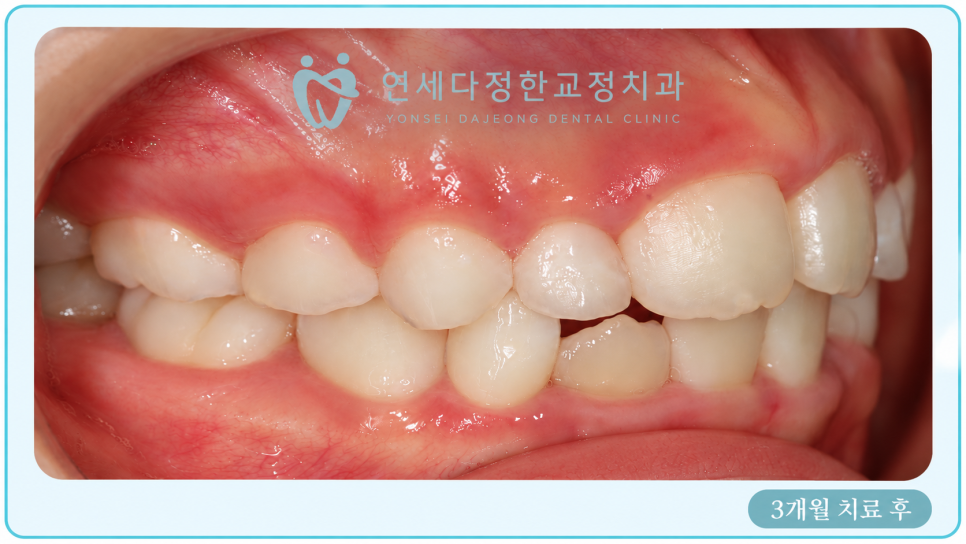
    By around the 3-month mark, the upper front teeth appeared to move inward, with overjet appearing to decrease and the overbite appearing to improve as well.

    Protruding front teeth in children - image 7

    Protruding front teeth in children - image 8

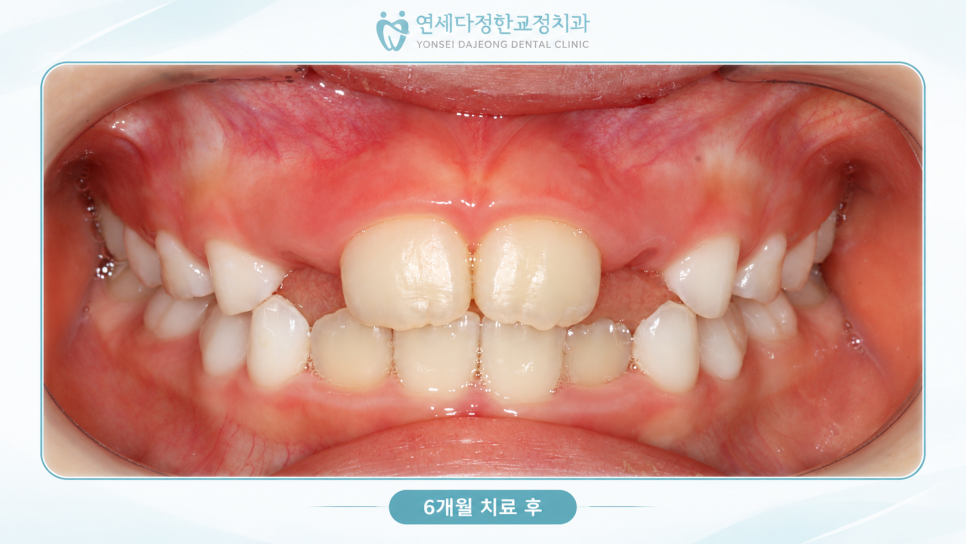
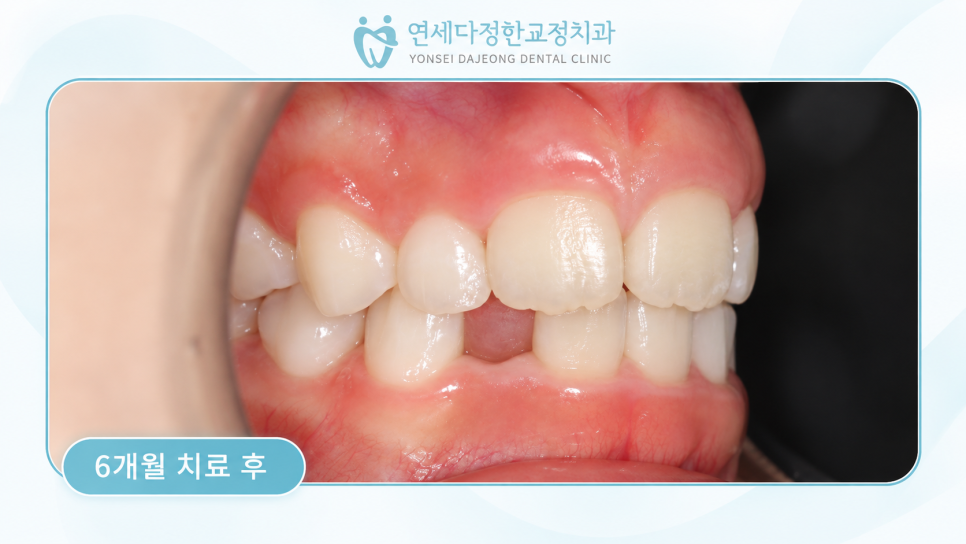
    Preortho wear was then completed at the 6-month mark.

    Protruding front teeth in children - image 9

    Protruding front teeth in children - image 10

    Result
    The lower front teeth, previously more than half hidden by the overbite, appeared to become more visible.
    The upper front teeth, which had been excessively advanced relative to the lower front teeth, were also observed to have moved inward.

    Protruding front teeth in children - image 11

    Protruding front teeth in children - image 12

    The occlusal view appeared to show that both the upper and lower arches had widened, and the previously spaced-out upper front teeth appeared more aligned.

    Protruding front teeth in children - image 13

    Protruding front teeth in children - image 14

    Growth-phase treatment is less about finishing orthodontics and more about guiding the direction of growth.
    Even in cases where extraction would be unavoidable for an adult, guiding growth in the right direction can sometimes achieve adequate results without extraction.
    However, once all permanent teeth have erupted, second-phase orthodontics for tooth alignment may still be needed.

    Protruding front teeth in children - image 15

    Cheongnyangni Yonsei Dajeonghan Orthodontic Clinic, located in Cheongnyangni, Dongdaemun-gu, Seoul, is an orthodontic specialty clinic where the director — board-certified in both orthodontics and integrated dentistry — personally handles everything from the initial consultation to appliance removal.


    Frequently Asked Questions

    1. At what age should a child with protruding front teeth get checked?
    We recommend an orthodontic checkup around age 7. A checkup doesn’t mean treatment starts immediately — the right timing varies by child.

    2. How many hours a day should Preortho be worn?
    The manufacturer recommends at least 1 hour during the day and 8+ hours while sleeping. Our clinic recommends at least 12 hours of wear per day.

    3. If a child does growth orthodontics, will they need braces later?
    Second-phase orthodontics for tooth alignment may still be needed once all permanent teeth have erupted.

    4. What happens if an overbite is left untreated in children?
    In severe cases, it can cause the lower front teeth to dig into the gums or lead to excessive tooth wear, so a proper diagnosis is important.


    References

    · Thiruvenkatachari B, et al., Cochrane-affiliated systematic review (early Class II treatment vs. front tooth injury rate, 19% vs. 30%), Evidence-Based Dentistry/PubMed, 2014. View source
    · Arraj GP, et al., “The association of overjet size and traumatic dental injuries: a systematic review and meta-analysis,” Dental Traumatology, 2019. View source
    · American Association of Orthodontists, “Child Orthodontics” (recommends a first checkup by age 7). View source
    · News coverage of the Korean Association of Orthodontists’ age-7 checkup campaign, Dental Today. View source


    This article is intended for general health information purposes only and cannot replace individual diagnosis or treatment. If you notice symptoms, please consult a specialist.