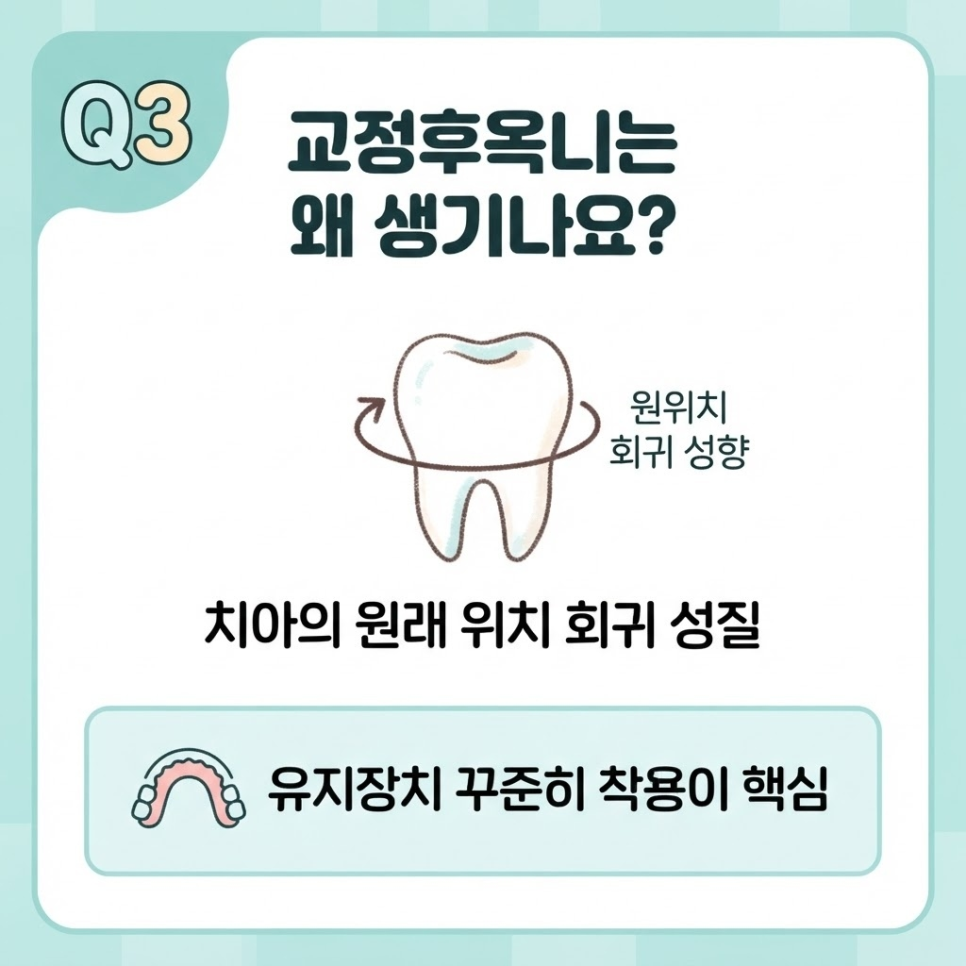
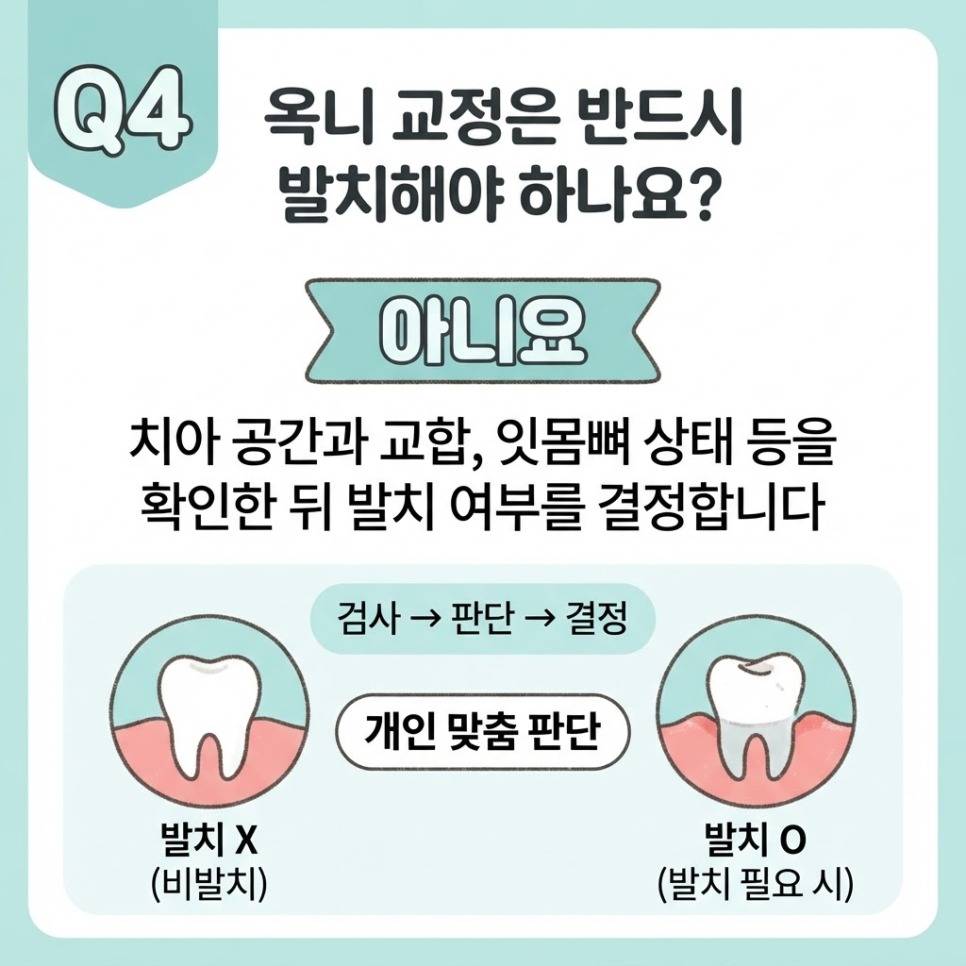
Tag: retainer

  • Diastema Causes: 6 Reasons for Gap Teeth and the 49% Relapse Risk

    Diastema Causes: 6 Reasons for Gap Teeth and the 49% Relapse Risk

    SummaryDiastema causes determine the entire treatment plan for closing a front teeth gap. From the 6 most common causes—gum disease, bite issues, and tooth size—to how it differs from resin bonding and veneers, and the retainer habits that help lower the 49% relapse rate, this Dongdaemun orthodontic clinic guide covers it all.

    Many people start researching diastema treatment for a gap between their front teeth, then hesitate.
    That’s often because of accounts describing the gap reopening even after braces closed it.

    But moving teeth to close a gap
    and addressing why the gap formed in the first place are two different problems.
    Depending on whether gum disease or a bite issue is the cause,
    the treatment order and outlook change completely.

    Key Takeaways
    The treatment order for diastema depends on its cause.
    If gum disease is the cause, gum treatment comes first; if a bite issue is the cause, moving the lower teeth as well may help reduce relapse.
    Some studies report a relapse rate as high as 49% after treatment, which is why retainer care matters so much.

    What Are the 6 Diastema Causes of a Front Teeth Gap?

    The short answer: there are six main diastema causes, so identifying the cause is always the starting point for treatment.
    A diastema is a gap between the two upper front teeth.
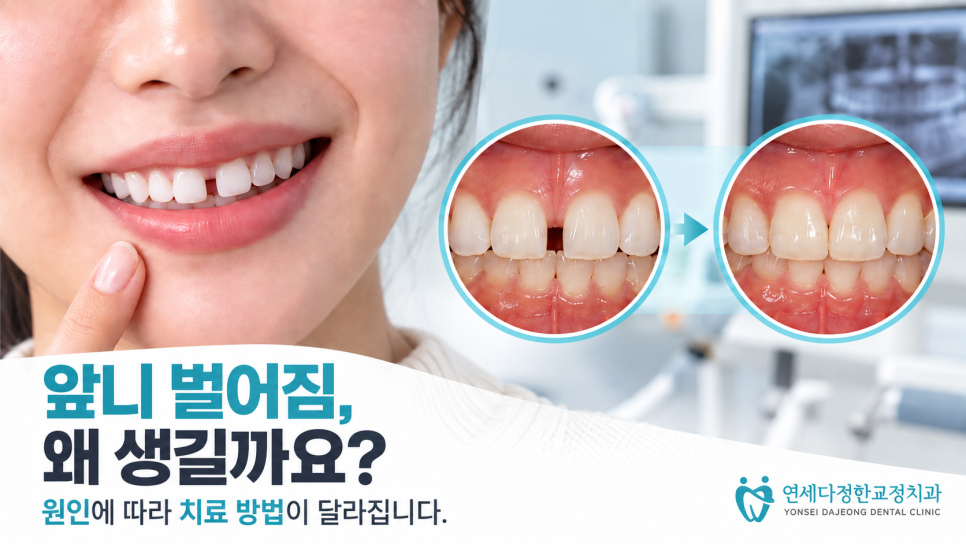
    diastema causes

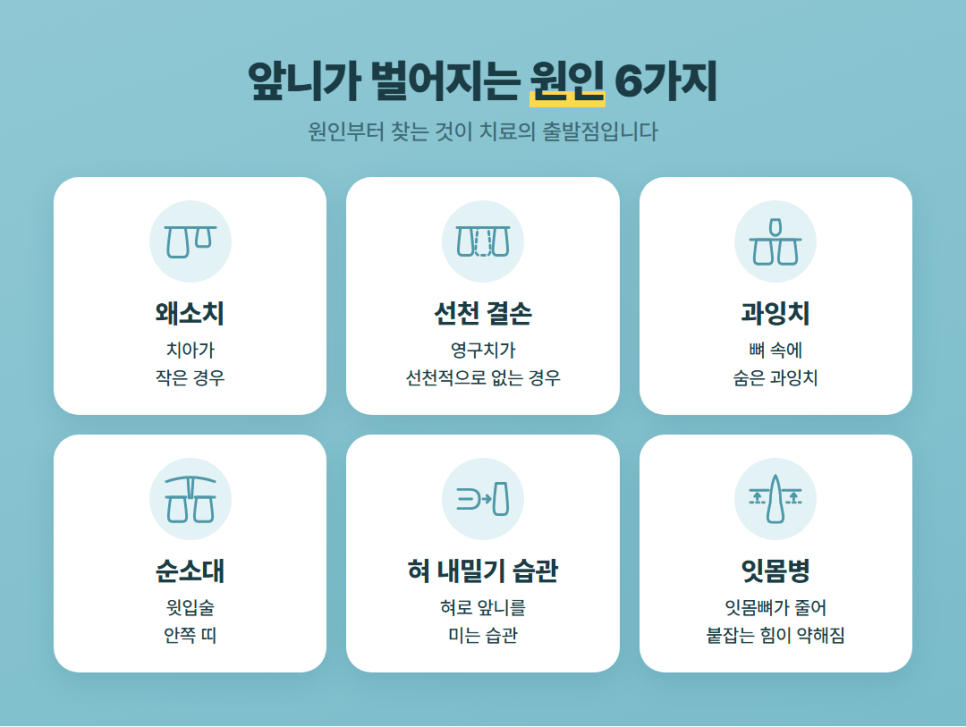
    The most common diastema causes are:

    1. Small teeth (microdontia)
    2. Congenitally missing permanent teeth
    3. A hidden extra tooth (supernumerary tooth) in the bone
    4. A thick labial frenum (the tissue band inside the upper lip)
    5. A tongue-thrusting habit against the front teeth
    6. Gum disease (periodontal disease)

    diastema causes illustration 2

    In adult patients, though,
    a bite (occlusion) problem is especially often the cause.

    If the lower teeth sit too far forward and keep pushing the upper front teeth outward,
    closing just the upper front teeth tends to let the gap reopen.
    In these cases, moving the lower teeth back as well may help the gap stay closed.


    If Gum Disease Is One of the Diastema Causes, How Does Treatment Work?

    If periodontal disease is the cause, gum treatment comes first and orthodontic treatment follows.
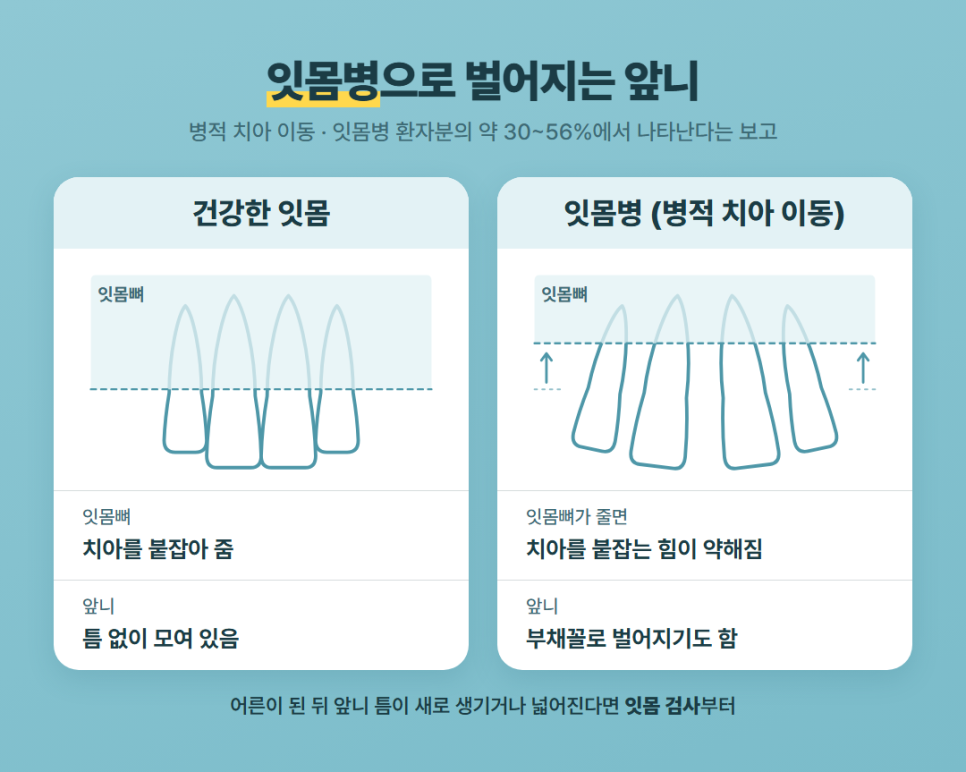
    Pathologic tooth migration is when weakened support from bone loss lets the front teeth fan outward.
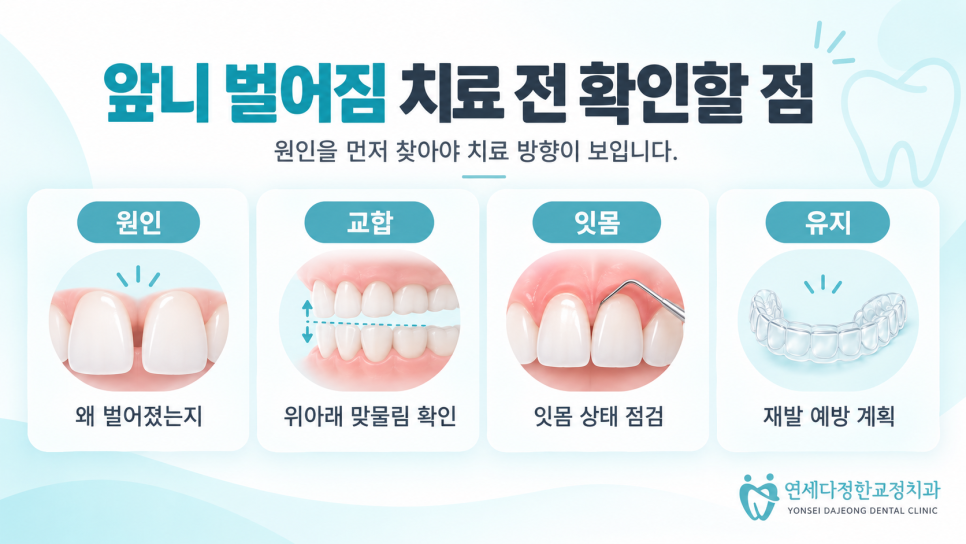
    diastema causes illustration 3

    Pathologic tooth migration becomes more common as periodontitis severity increases.
    One study observed it in about 51% of patients with severe periodontitis and about 50% of those with aggressive periodontitis.

    “Pathologic tooth migration is relatively common among patients with periodontal disease, and its frequency increases with disease severity.”

    This finding comes from a 2016 paper by Khorshidi and colleagues at Shiraz University, published in the Journal of International Society of Preventive and Community Dentistry.

    So if a gap between your front teeth appears or widens after adulthood,
    a gum exam should come before orthodontic treatment.
    diastema causes illustration 4

    Checklist · Signs You Need a Gum Exam First
    ✅ A front teeth gap appeared after adulthood
    ✅ The gap has been widening over time
    ✅ Gums bleed frequently while brushing
    ✅ Teeth feel loose
    Important Note
    Moving teeth while inflammation is still present can make gum disease worse.
    Teeth with reduced gum support bear more strain even under the same force, so inflammation needs to be brought under control first, and orthodontic movement should then proceed carefully with lighter force.

    Cheongnyangni Yonsei Dajeonghan Orthodontic Clinic has orthodontists, periodontists, and comprehensive dentistry specialists working together,
    so gum treatment and orthodontic care can continue seamlessly in one place.


    How Is Orthodontic Treatment Different from Resin Bonding or Veneers?

    The biggest difference is how the gap gets filled.
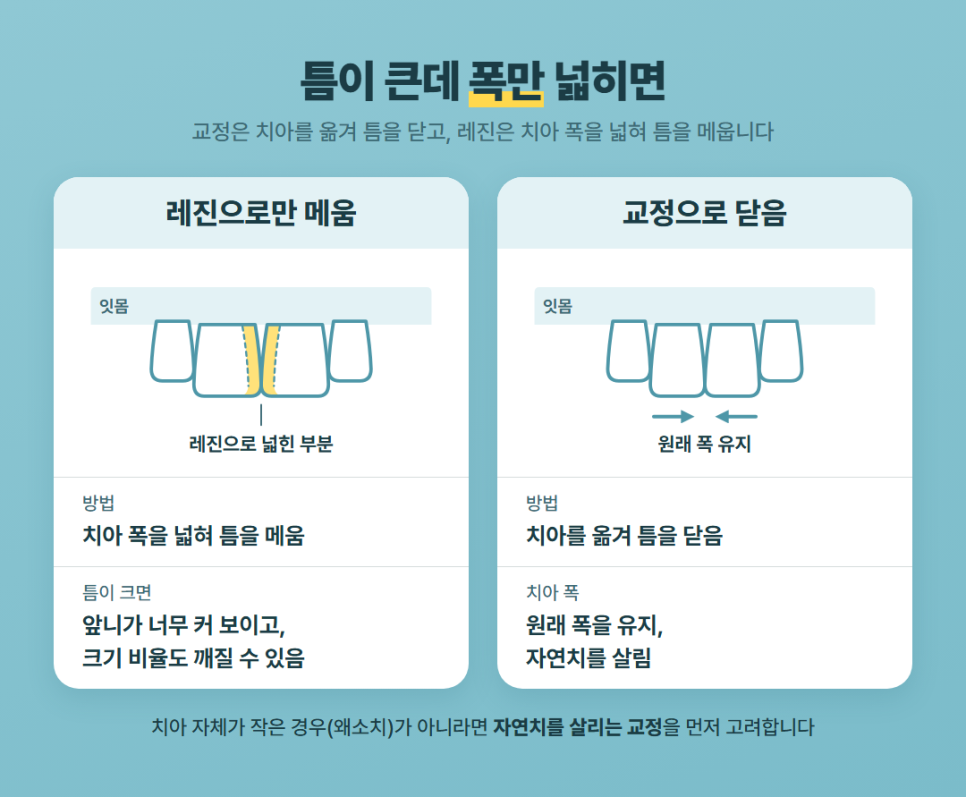
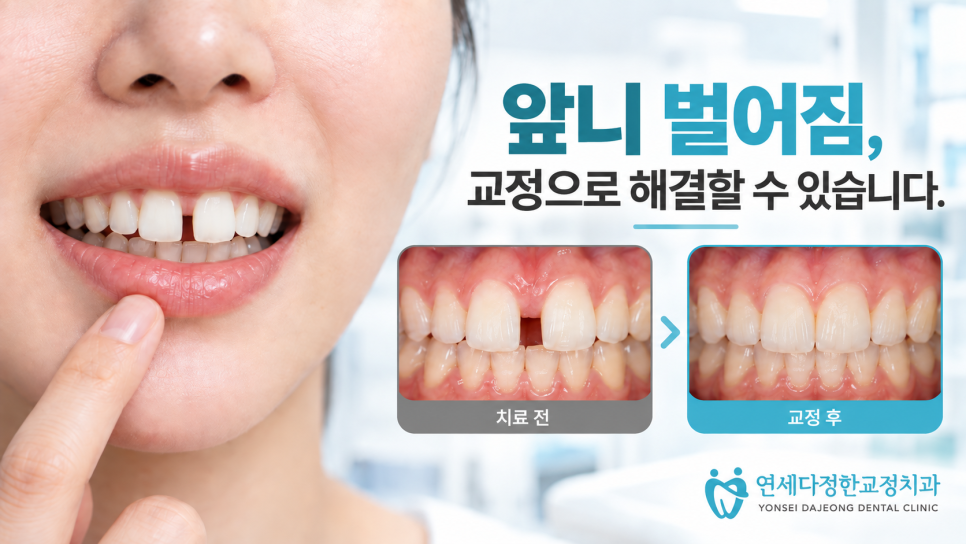
    Braces move the teeth to close the gap, while resin bonding and veneers widen the teeth to fill it.
    diastema causes illustration 5

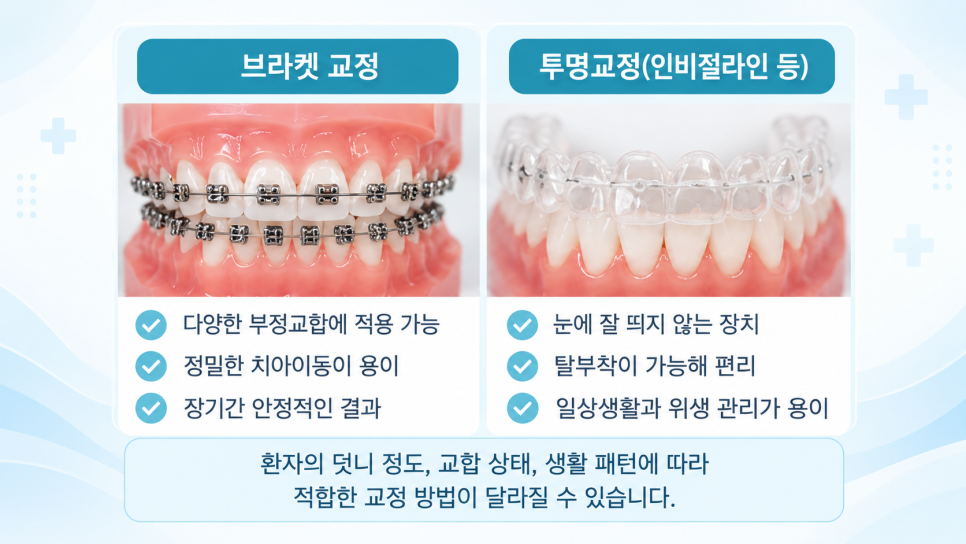
    Category Braces Resin Bonding Veneers
    Tooth Reduction None Minimal Thin layer removed from front surface
    Duration Varies by cause and extent Usually one visit Requires a fabrication process
    Things to Watch For Possible relapse (retainer required) Discoloration, surface roughening Chipping; higher risk with teeth grinding
    Typically Used For Large or multiple gaps, bite-related causes Gaps from small teeth Gaps from small teeth

    If the gap is large, though, simply widening the teeth can make the front teeth look unnaturally big
    and throw off the tooth size ratio (Bolton ratio).

    So unless the teeth themselves are genuinely small, as with microdontia,
    orthodontic treatment that preserves the natural teeth is generally considered first.

    Also, having a gap only in the upper front teeth doesn’t mean only the upper arch can be treated.
    If the lower front teeth are pushing from behind, moving the lower arch as well may help the gap stay closed.


    Can a Gap Closed by Braces Reopen?

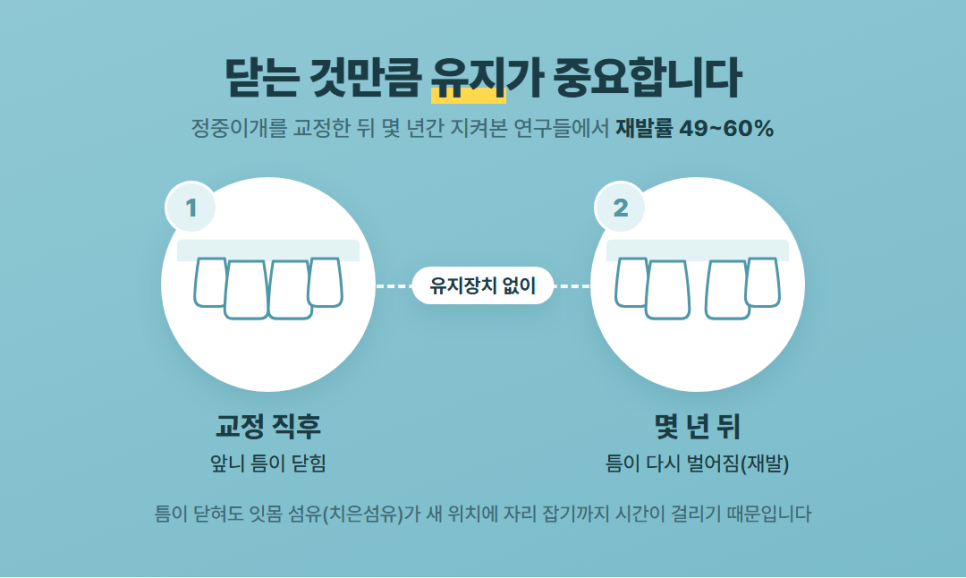
    Yes — a closed front teeth gap relapses relatively often, which is why retainer care matters.
    Relapse refers to a gap that was closed with braces reopening after treatment.

    In a study that followed patients for several years after diastema correction,
    the relapse rate was reported at 49% in one case.
    Even after the gap closes, the gum fibers (gingival fibers) take time to settle into their new position.
    diastema causes illustration 6

    Key Point · Two Types of Retainers
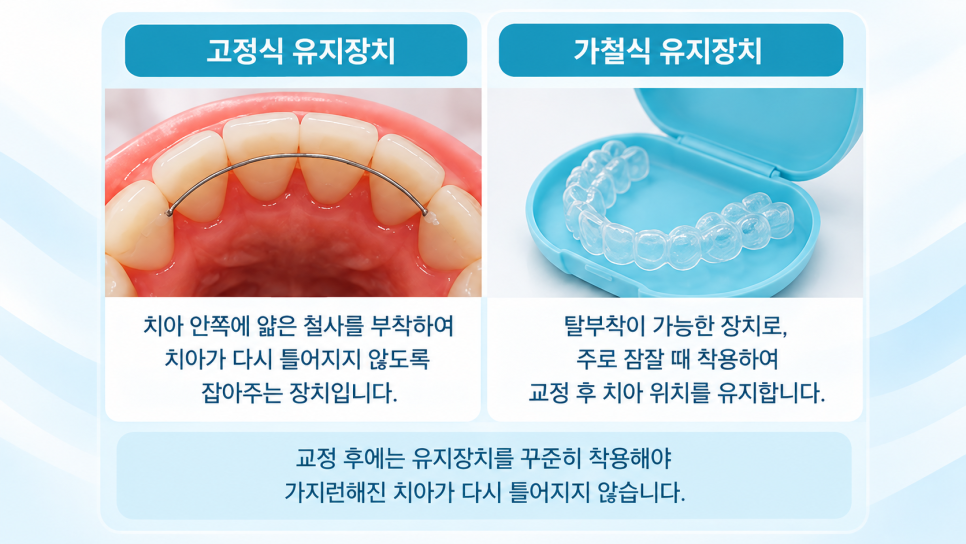
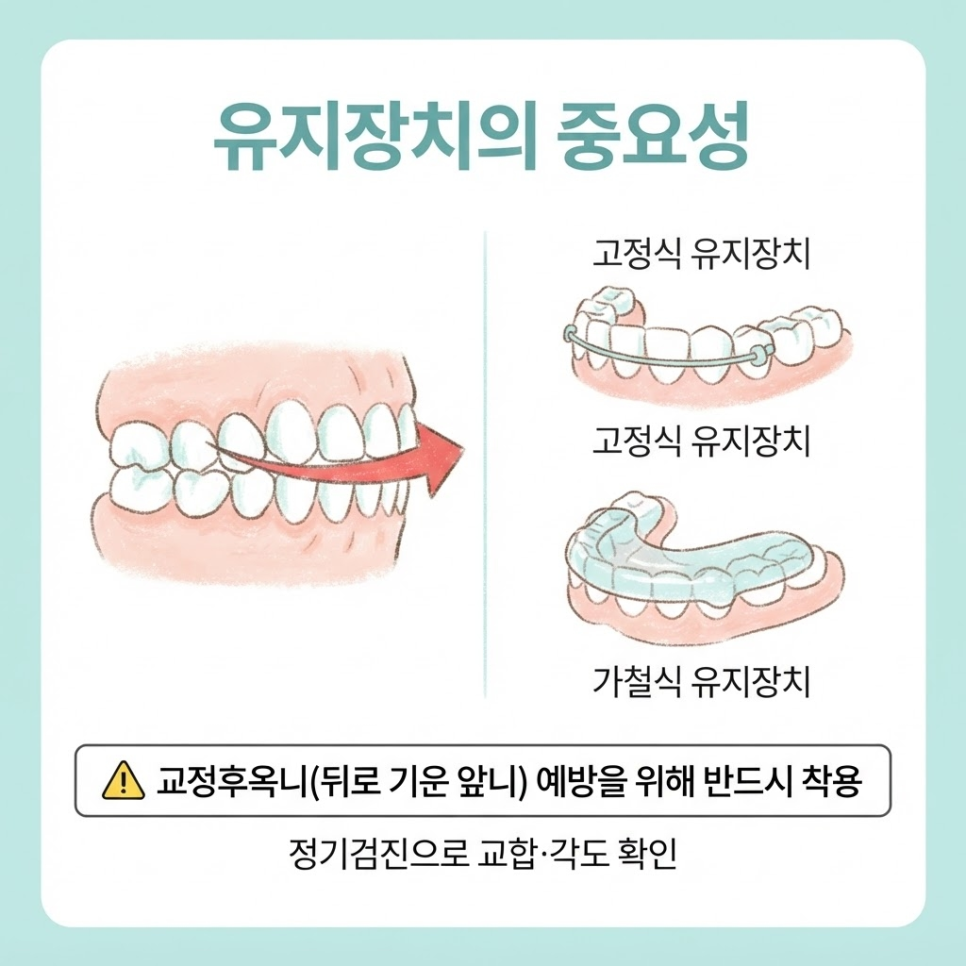
    Fixed (wire bonded behind the front teeth): stays attached 24/7 unless it comes loose
    Removable (clear/transparent type): wear time is self-managed; watch for loss or damage
    At Cheongnyangni Yonsei Dajeonghan Orthodontic Clinic, every patient
    receives both a fixed and a removable retainer.
    If your fixed retainer comes loose, please come in right away rather than waiting.

    A front teeth gap is a question of ‘why did it form’ before it’s a question of ‘how do I fill it.’

    Closing a front teeth gap is sometimes associated with greater comfort when smiling in social situations,
    though this is not a guaranteed outcome.
    Outcomes can vary depending on the cause and individual condition.
    diastema causes illustration 7

    If you’re considering diastema treatment in the Dongdaemun area,
    we recommend diagnosing the diastema causes before deciding on a treatment method.
    The clinic is a 5-minute walk from Exit 3 of Cheongnyangni Station, and also easily reached from Dapsimni and Jeonnong-dong.
    You can find detailed treatment information on the Cheongnyangni Yonsei Dajeonghan Orthodontic Clinic website.


    Frequently Asked Questions

    1. My child has a gap between their front teeth — do they need braces right away?
    In most cases, it’s fine to simply watch and wait. This is a common, often temporary stage around age 6; one survey found that the proportion of children with a front teeth gap dropped from about 65% at age 6 to about 14% by age 12, once the canine teeth come in. That said, an unusually large gap can sometimes signal a hidden extra tooth or a missing tooth, so an orthodontic checkup around age 7 is recommended.

    2. How long does gap teeth treatment take in the Dongdaemun area?
    It depends on the cause and extent of the gap. In some cases, closing the space alone took 9 months, with another 3-4 months for retention. Overall treatment time typically ranges from about 1 year on the shorter end to 2-3 years on the longer end.

    3. I was told I need an implant — can braces replace it?
    That’s a decision best made after a detailed diagnosis. Even when an implant is ultimately needed, closing the space with braces first may contribute to a better outcome in some cases. For patients who are still growing, implants are generally placed only after growth is complete, with timing typically determined through growth-plate analysis around the sophomore or junior year of high school.

    4. Can a front teeth gap be fixed with just resin bonding or veneers instead of braces?
    If the gap is simply due to naturally small teeth, that can work. But if the gap is large or caused by a bite issue, widening the teeth alone can leave the proportions looking off or leave a risk of relapse, so it’s safer to consider braces as well.

    References

    · Khorshidi H, Moaddeli MR, Golkari A, et al., 「The prevalence of pathologic tooth migration with respect to the severity of periodontitis」, Journal of International Society of Preventive and Community Dentistry, 2016. View source
    · Shashua D, Artun J, 「Relapse after orthodontic correction of maxillary median diastema: a follow-up evaluation of consecutive cases」, The Angle Orthodontist, 1999. View source
    · Liu JF, Hsu CL, Chen HL, 「Prevalence of developmental maxillary midline diastema in Taiwanese children」, Journal of Dental Sciences, 2013. View source

    This article is intended for general health information purposes only and is not a substitute for individual diagnosis or treatment.
    If you have symptoms, please consult a specialist.
  • Crooked Canine Tooth Correction: 3 Extraction Criteria and Non-Extraction Options in Cheongnyangni

    Crooked Canine Tooth Correction: 3 Extraction Criteria and Non-Extraction Options in Cheongnyangni

    SummaryWhether crooked canine tooth correction in Cheongnyangni needs extraction or not depends on how severe the misalignment is and whether the mouth protrudes. This guide covers why canine teeth get pushed out of place, three non-extraction methods, whether clear aligners can work, and typical treatment duration.

    There’s one question orthodontic consultations hear more than any other.
    Do I really need to have a tooth pulled?

    Consultations for crooked canine tooth correction in Cheongnyangni often start with this same question.
    But the answer isn’t as simple as it might seem.

    When the canine tooth is only mildly out of place, it can often be straightened without extraction. When it’s severely displaced or the mouth protrudes as well, a small premolar is often removed instead.

    Crooked canine tooth correction in Cheongnyangni

    Key Takeaways
    Whether treatment for a crooked canine tooth in Cheongnyangni involves extraction or not depends on the severity of the misalignment and whether the mouth protrudes.
    Mild cases can often be corrected with non-extraction methods such as arch expansion, interproximal reduction (IPR), or moving the molars back.
    Severe cases often involve removing four small premolars and using that space to align the teeth, with treatment typically taking 1 to 3 years.

    Why Do Canine Teeth Become Crooked?

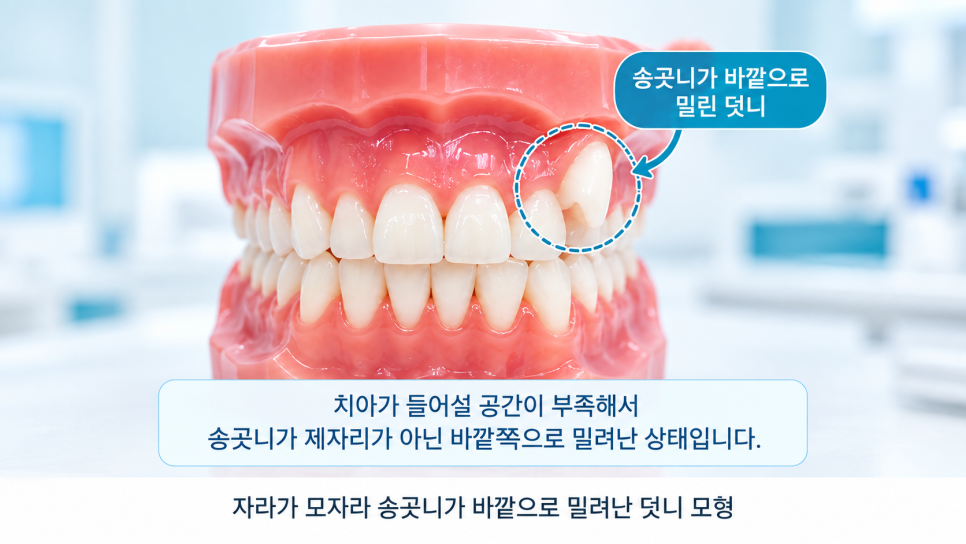
    To put it simply, a crooked canine tooth is a tooth that erupts out of alignment or outside its proper position because there isn’t enough space for it.
    It usually happens when there’s a mismatch between jaw size and tooth size.

    The reason this shows up at the canine teeth in particular also has to do with eruption order.
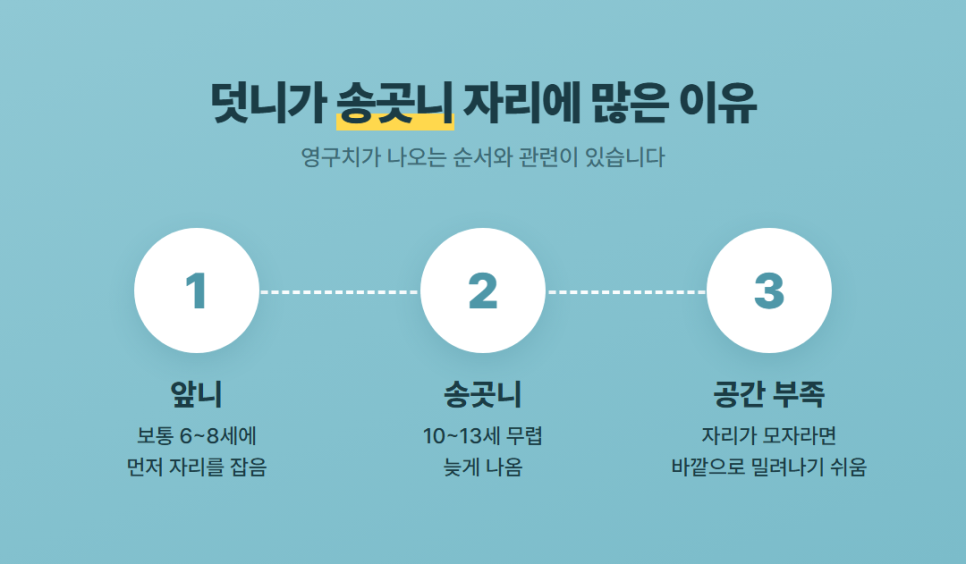
    Front teeth usually come in around ages 6 to 8, while canines erupt later, around ages 10 to 13.

    Since the front teeth settle into place first, canines that come in later tend to get pushed outward if there isn’t enough room left for them.

    Crooked canine tooth correction in Cheongnyangni - image 2

    For this reason, the Korean Association of Orthodontists (KAO) recommends that children have their first orthodontic checkup around age 7, when the front teeth are replaced by permanent teeth.

    The Korean Association of Orthodontists advises that children undergo their first orthodontic evaluation around age 7.

    This is guidance from the Korean Association of Orthodontists.
    This checkup isn’t meant to start treatment right away — it’s an early check to see whether the teeth are coming in in the right order.


    What Happens If a Crooked Canine Tooth Is Left Untreated?

    Crooked canine tooth correction in Cheongnyangni - image 3

    Left untreated, it can make cavities and gum disease more likely.
    That’s because a toothbrush can’t easily reach the spots where teeth overlap.

    Key Points
    · Bristles and floss have a harder time reaching between overlapping teeth, which raises the risk of cavities.
    · Correcting a crooked canine tooth may improve chewing efficiency.

    Wiping behind a crooked canine tooth with gauze can reveal more plaque buildup than in other areas of the mouth.

    Crooked canine tooth correction in Cheongnyangni - image 4

    If floss consistently catches or your toothbrush can’t reach a certain spot when you brush, it’s worth getting a checkup.


    Does Crooked Canine Tooth Correction in Cheongnyangni Always Require Extraction?

    Not necessarily.
    Whether extraction is needed is decided after evaluating the severity of the crooked tooth, whether the mouth protrudes, and the facial profile together.

    When the displacement is severe, four small premolars are typically removed, and that space is used to align the teeth.
    The gaps left behind are generally closed by the end of treatment.

    For mild cases, non-extraction methods that straighten teeth without removing any are usually considered first.

    Method How It Works Best For
    Arch expansion Widens the dental arch to create space Crowding caused by a narrow jaw
    Interproximal reduction (IPR) Shaves a thin layer of enamel between teeth to create space Mild crowding
    Molar distalization (moving molars back) Moves molars backward to free up space in front Cases with a slight space shortage in front
    Extraction orthodontics Uses space from removing 4 premolars Severe crowding or cases with mouth protrusion

    Crooked canine tooth correction in Cheongnyangni - image 5

    Key Points
    · There’s no official guideline confirming a single rule like “extraction is required once the space deficit exceeds a certain number of millimeters.”
    · The decision considers not just how much space is missing, but also mouth protrusion and facial profile.

    Can Clear Aligners Also Straighten a Crooked Canine Tooth?

    For mild crowding, clear aligners can be an option.
    However, they have limitations when the crowding is severe or when teeth need complex movement.

    A 2024 international systematic review compared treatment duration between clear aligners and fixed braces for mild-to-moderate crowding.
    Pooling 10 studies, it found no clear difference in treatment duration between the two appliance types.

    That said, in one of the included studies, clear aligners averaged 8.4 months versus 12.1 months for fixed braces — a difference of about 3.7 months.
    The overall certainty of evidence was rated as low.

    Crooked canine tooth correction in Cheongnyangni - image 6

    On the other hand, a 2016 paper in a Korean dental journal (Journal of the Korean Dental Association) noted that, due to their structural characteristics, clear aligners have limitations when it comes to root movement or complex movement of certain teeth.
    Because the studies differ in timing and population, the findings haven’t converged into a single consensus.

    Things to Keep in Mind
    · Clear aligners don’t work the same way for every crooked canine tooth.
    · A thorough diagnostic exam should guide the decision more than the choice of appliance itself.

    How Long Does Treatment Take and What Does It Cost?

    Orthodontic treatment typically takes about 1 to 3 years, though this varies significantly from person to person.
    It also depends on whether extraction is involved, so an exact timeline can only be given after a diagnosis.

    Crooked canine tooth correction in Cheongnyangni - image 7

    Because orthodontic treatment isn’t covered by national health insurance, costs vary between clinics.
    They also depend on the severity of the crowding and the type of appliance used, so the most accurate figure comes after an exam.

    Aftercare
    After treatment ends, teeth tend to drift back toward their original position.
    That’s why a retainer is typically worn for about a year to help reduce relapse.

    Crooked canine tooth correction in Cheongnyangni - image 8

    Things to Keep in Mind
    · During orthodontic treatment, side effects such as gum recession, root resorption, or decalcification (white spots on the tooth surface) can occur.
    · It’s best to discuss these possible side effects during the consultation before treatment begins.

    What Should You Check Before a Consultation in Cheongnyangni?

    Check whether the clinic explains the reasoning behind its extraction or non-extraction decision for crooked canine tooth correction based on a thorough exam.
    If you’re looking for an orthodontic clinic around Cheongnyangni, Dongdaemun, or Yongdu-dong/Jeonnong-dong, here are three things worth checking.

    Checklist
    ✅ Is the treatment provided by an orthodontic specialist? (You can verify this by region and name on the Korean Association of Orthodontists website)
    ✅ Does the clinic perform a thorough exam, including X-rays, facial photos, and a dental model (intraoral scan)?
    ✅ Does it explain the reasoning behind the extraction decision and appliance choice based on your specific tooth condition?

    Yonsei Dajeonghan Orthodontic Dental Clinic, near Cheongnyangni Station in Dongdaemun-gu, Seoul, has orthodontic and integrated dentistry specialists who diagnose using 3D CT and 3D scanners.
    If you need an orthodontic consultation, you can find more information at the Yonsei Dajeonghan Orthodontic Dental Clinic website.

    Crooked canine tooth correction in Cheongnyangni - image 9


    Frequently Asked Questions

    1. Can adults get treatment for a crooked canine tooth, too?
    Yes. There’s no age limit for orthodontic treatment.
    That said, tooth movement is slower in adults and relapse is more likely, so gum and cavity health are checked first.

    2. When should a child’s crooked canine tooth first be checked?
    The Korean Association of Orthodontists recommends an orthodontic consultation around age 7, when the front teeth are replaced by permanent ones.
    In growing children, teeth tend to move more easily, which lowers the risk of relapse.

    3. Can the first consultation for crooked canine teeth in Cheongnyangni tell you right away whether extraction is needed?
    The first consultation mainly determines whether treatment is needed at all.
    Whether extraction is required is decided based on a thorough exam — X-rays, photos, and dental models — and the diagnosis can sometimes take more than a week.

    4. Do teeth become loose when a crooked canine tooth is corrected without extraction?
    Non-extraction methods like arch expansion, interproximal reduction (IPR), and molar distalization are designed to create space only within the range the teeth and gums can tolerate.
    Still, whether this approach applies to you must be confirmed through a thorough exam.


    References

    · Korean Association of Orthodontists, “When to Start Orthodontic Treatment,” official KAO website. Link
    · Jiang Y, et al., “Duration of orthodontic treatment with clear aligners versus fixed appliances in crowding cases: a systematic review,” Clinical Oral Investigations, 2024. Link
    · Bae Gi-seon, “Clinical Limitations of Clear Aligners and Their Solutions,” Journal of the Korean Dental Association 54(7), 2016. Link

    This article is intended for general health information purposes only and is not a substitute for individual diagnosis or treatment. If you have symptoms, please consult a specialist.
  • Retroclined Teeth: 3 Ways to Help Prevent Relapse After Braces

    Retroclined Teeth: 3 Ways to Help Prevent Relapse After Braces

    SummaryDoes it bother you every time you look in the mirror and notice your front teeth curling inward? This guide covers what retroclined teeth are, why they happen, when correction may be needed, how the treatment process works, and how to care for your retainer to help prevent relapse after treatment.

    Do your front teeth look like they curl inward when you smile?

    If your mouth looks slightly sunken in the mirror and the angle of your teeth seems off, retroclined teeth could be the reason.

    What exactly are retroclined teeth, and why does this kind of tooth alignment happen in the first place?

    And why do some people notice their front teeth tilting inward again even after finishing orthodontic correction for retroclined teeth?

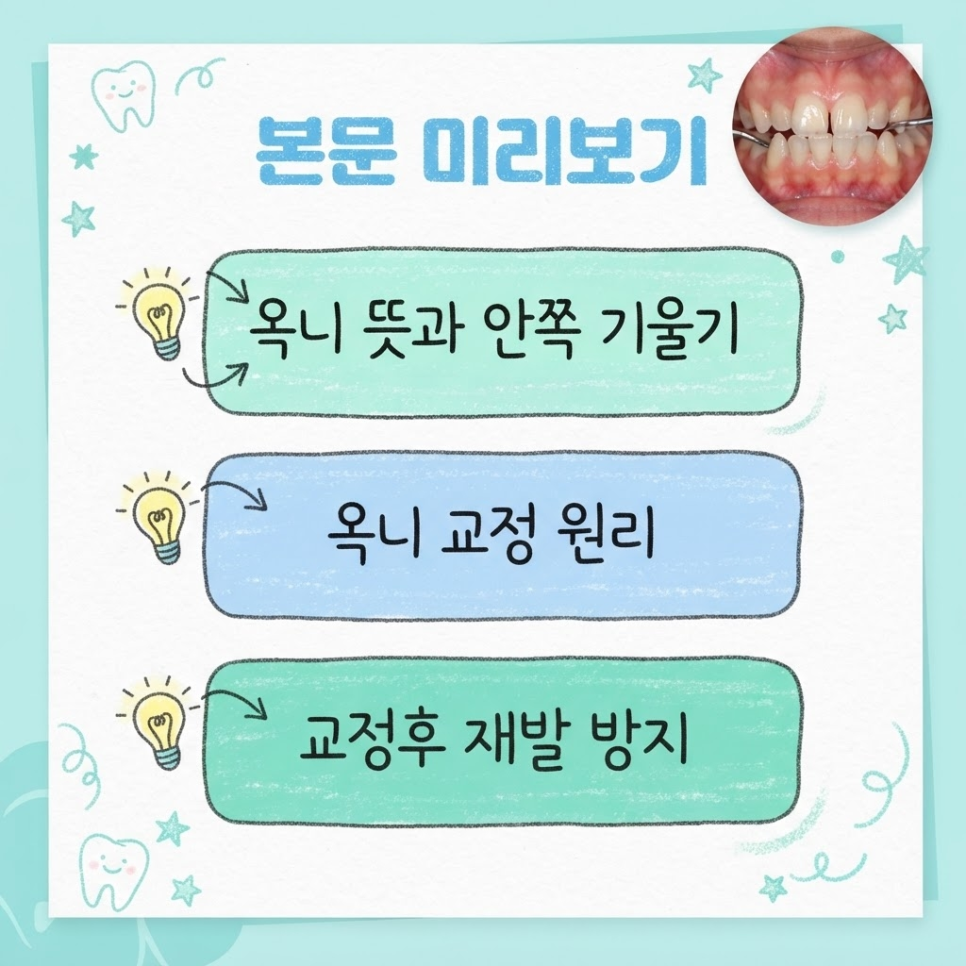
    💡 Quick preview
    Retroclined teeth are teeth angled further inward than a normal bite. Here’s what causes this and how it develops.
    You’ll also find the signs that suggest correction may be needed, what the treatment process actually looks like, and how proper retainer care can help prevent teeth from tilting inward again after treatment.

    retroclined teeth correction

    retroclined teeth correction image 2

    retroclined teeth correction image 3

    retroclined teeth correction image 4

    What exactly are retroclined teeth, and why do they happen?

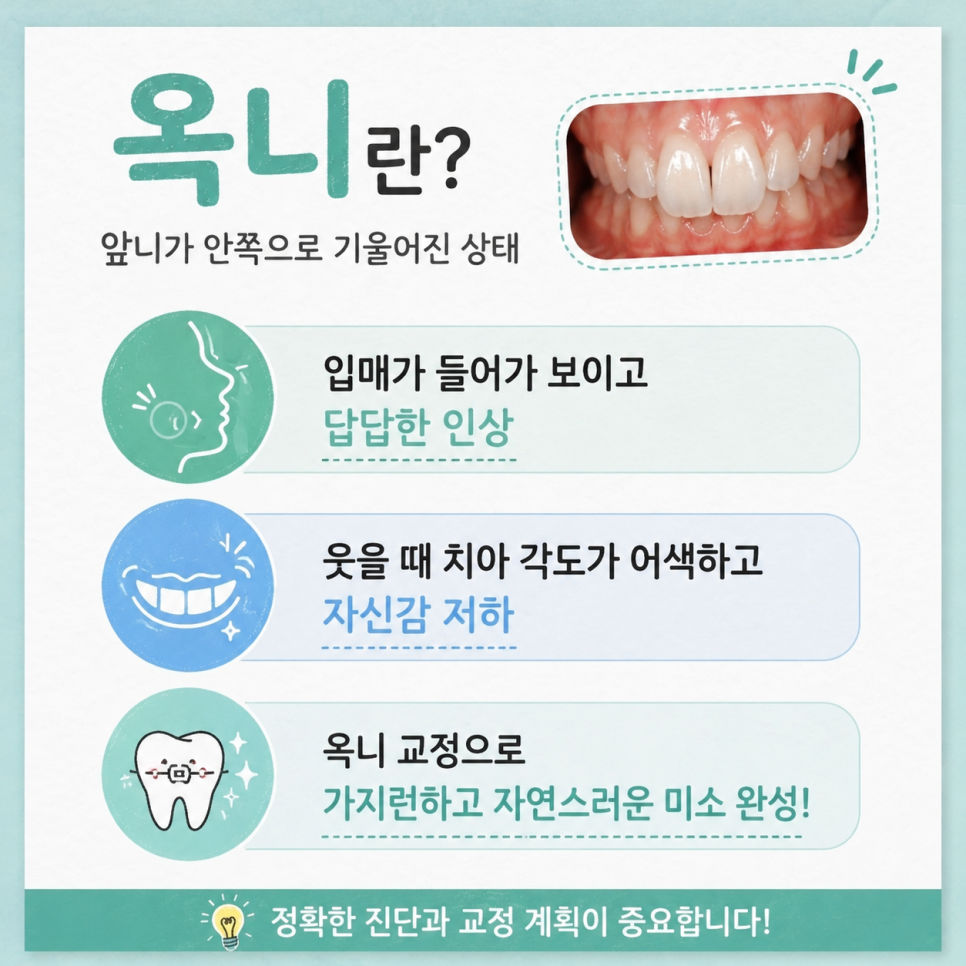
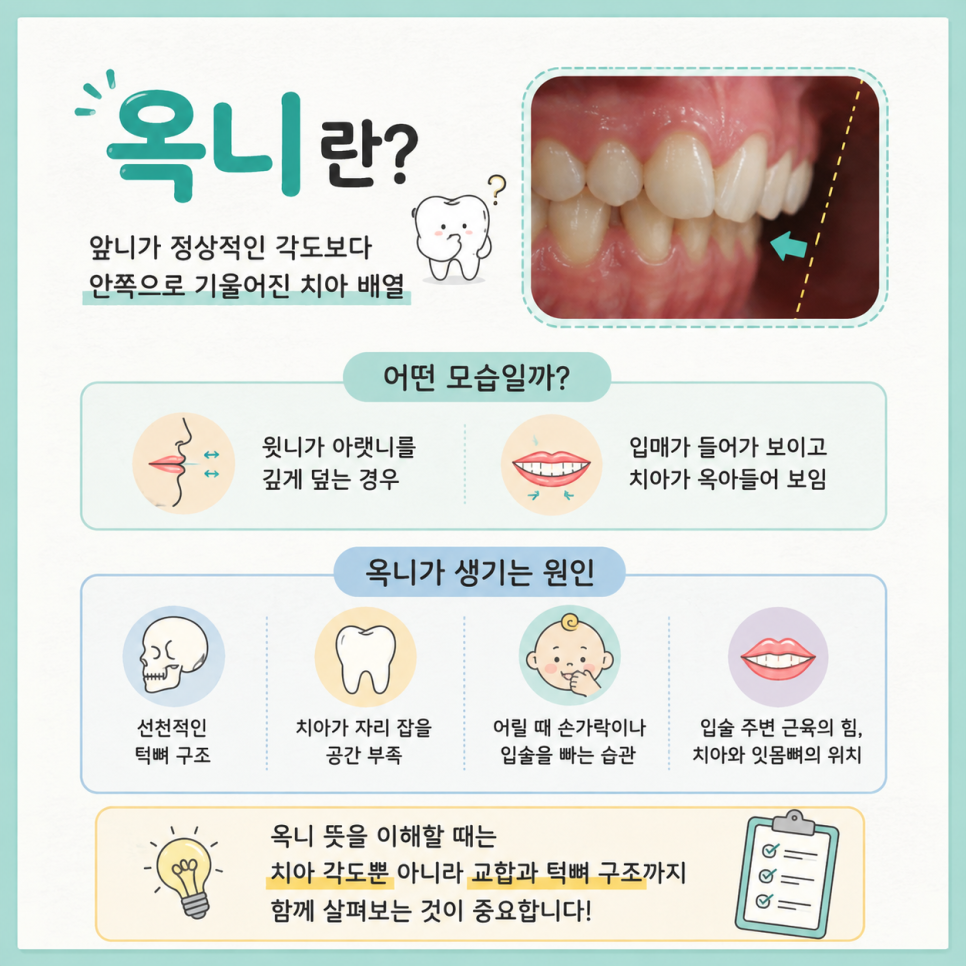
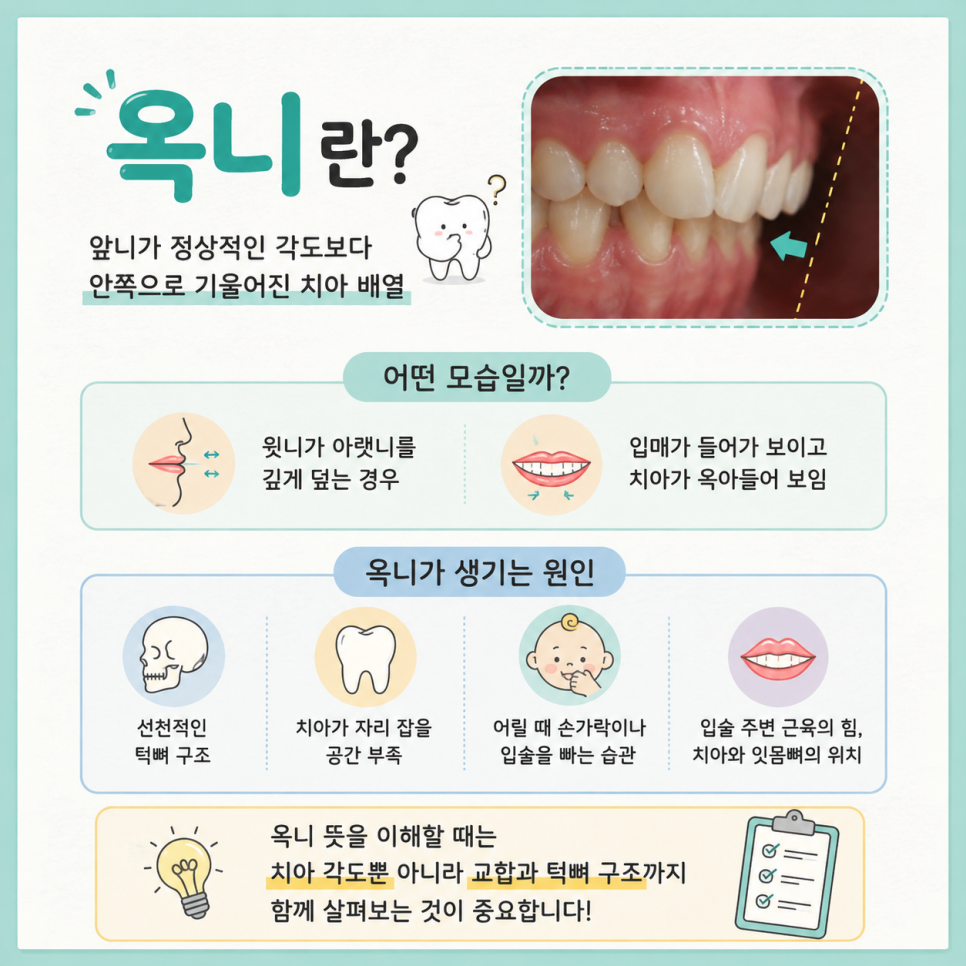
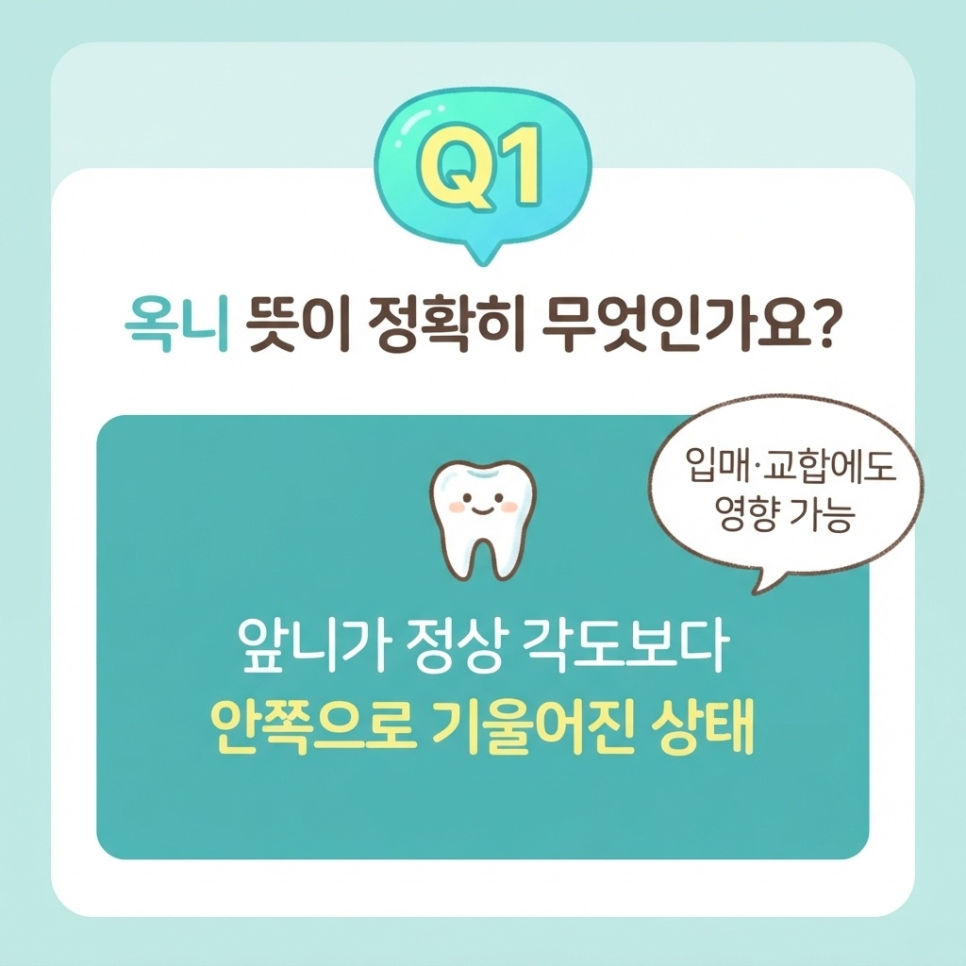
    Put simply, retroclined teeth are front teeth angled further into the mouth than a normal bite position.

    This can include cases where the upper teeth deeply overlap the lower teeth, or where the whole set of teeth appears tucked inward.

    The causes vary.
    Genetic jaw structure, limited space for teeth to settle into, and childhood habits like thumb-sucking or lip-sucking can all play a role.

    The strength of the muscles around the lips, along with the position of the teeth and jawbone, can also influence how far the front teeth tilt inward.

    So to really understand what retroclined teeth are, you need to look beyond just the angle of the teeth — the bite and jaw structure matter too.

    retroclined teeth correction image 5

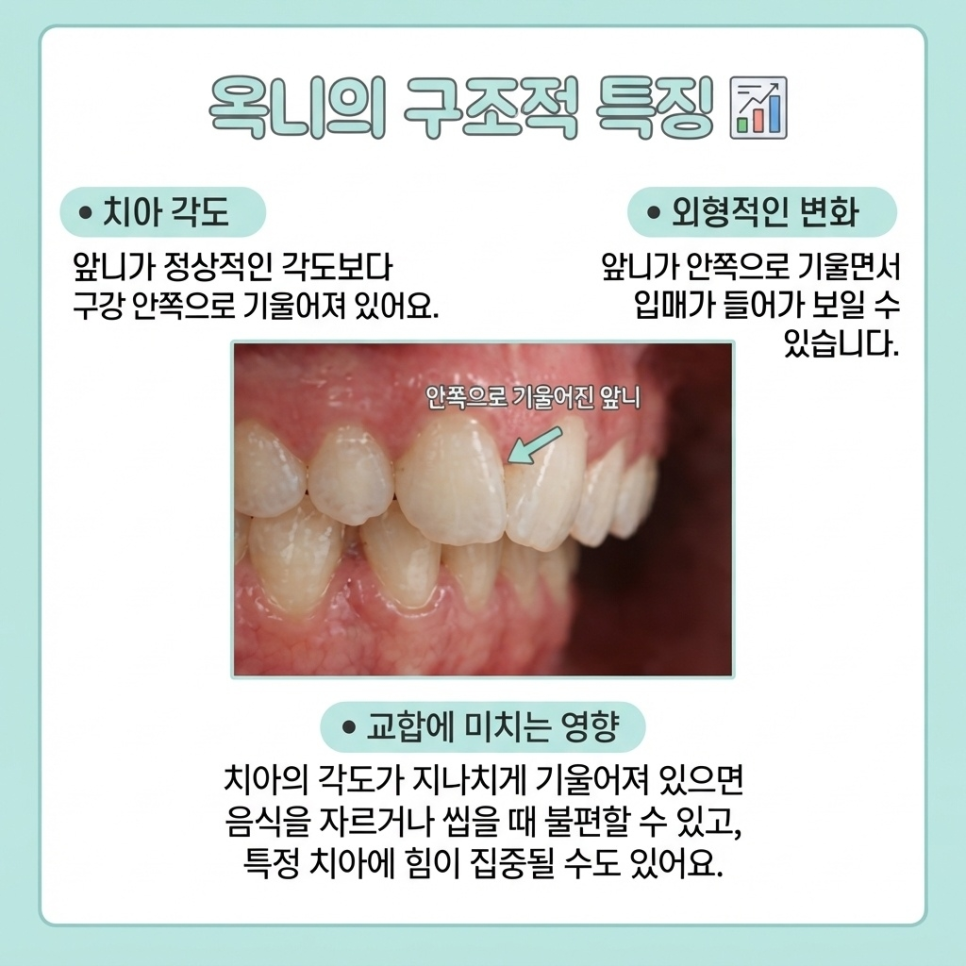
    📊 Key points — structural traits of retroclined teeth
    • Tooth angle: Front teeth tilt further into the mouth than a normal angle.
    • Appearance: The mouth area can look sunken, which may create a closed-off expression.
    • Bite impact: Force can concentrate on certain teeth when biting or chewing.

    retroclined teeth correction image 6


    How do you know if you need correction for retroclined teeth?

    Correction for retroclined teeth is a treatment that repositions inward-angled teeth to a healthier angle, improving both alignment and bite.

    When the front teeth are noticeably tilted inward, the mouth area can look sunken and create a closed-off appearance.

    A poor bite can also mean force concentrates on certain teeth while chewing, sometimes causing discomfort.

    That’s why treatment planning for retroclined teeth should take into account not just tooth angle, but bite alignment and overall facial profile as well.

    retroclined teeth correction image 7

    📋 Checklist — could you have retroclined teeth?
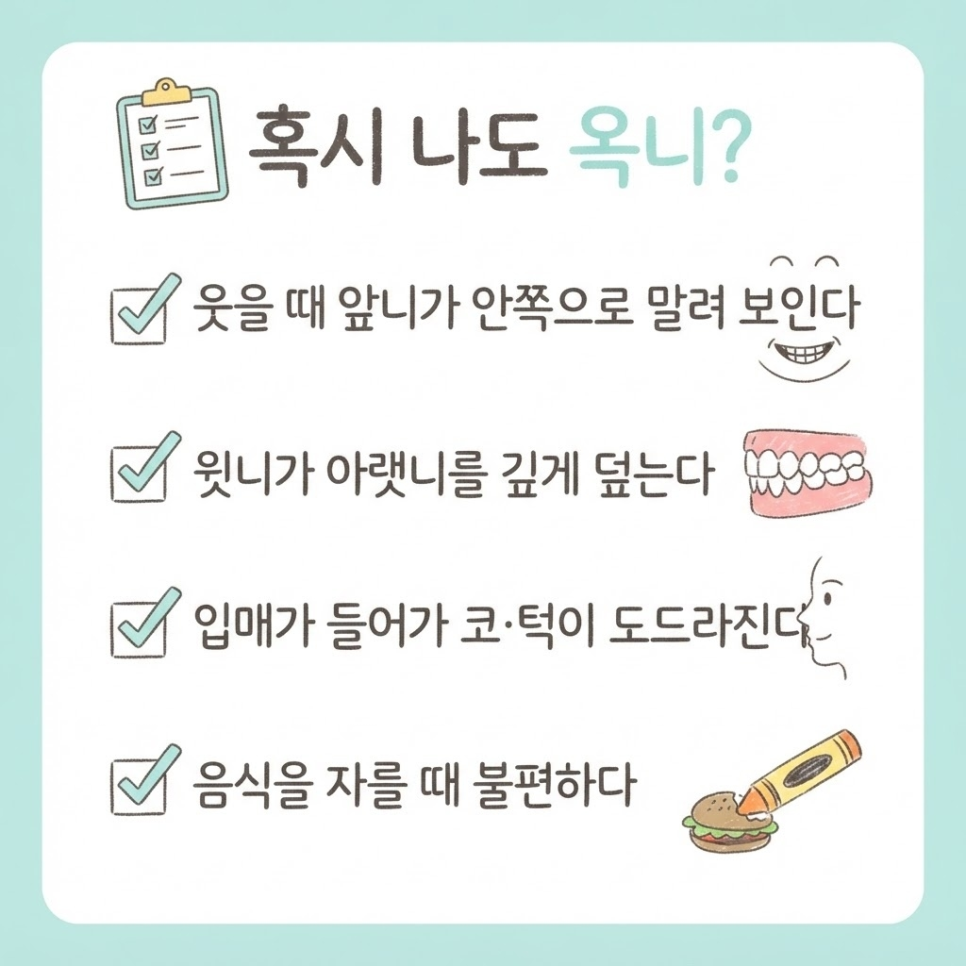
    ✅ Your front teeth look like they curl inward when you smile
    ✅ Your upper teeth deeply overlap your lower teeth, so the lower front teeth are barely visible
    ✅ Your mouth area looks sunken overall, making your nose or chin look more prominent
    ✅ Biting into food with your front teeth feels awkward or uncomfortable

    retroclined teeth correction image 8


    How does treatment for retroclined teeth work?

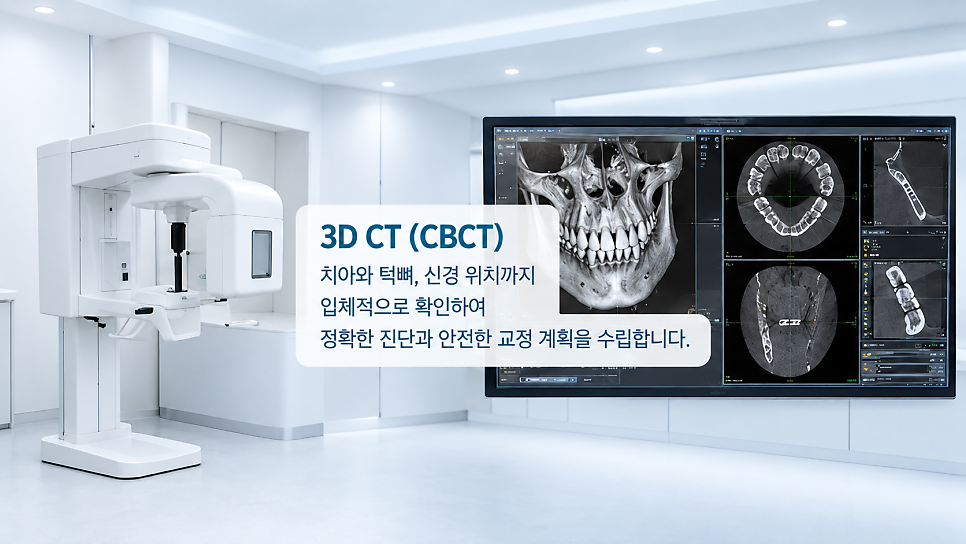
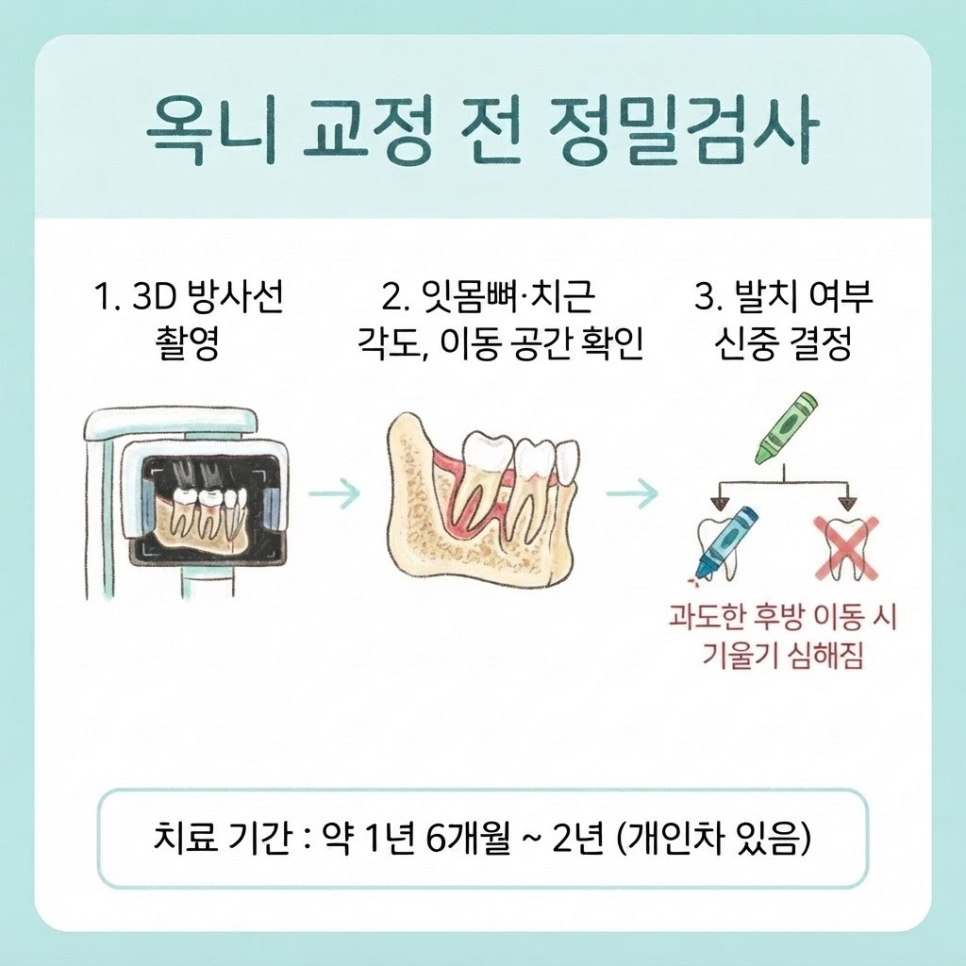
    Before treatment begins, 3D imaging is typically used to precisely check the position of the teeth and tooth roots.

    After reviewing jawbone condition, root angle, and available space for tooth movement, an individualized treatment plan is developed.

    With retroclined teeth in particular, the decision on whether to extract teeth needs careful consideration.
    Moving the front teeth too far back can actually make the inward tilt more pronounced.

    That’s why treatment for retroclined teeth focuses on adjusting the angle of both the tooth crown and root together.

    retroclined teeth correction image 9

    🚀 Treatment stages for retroclined teeth
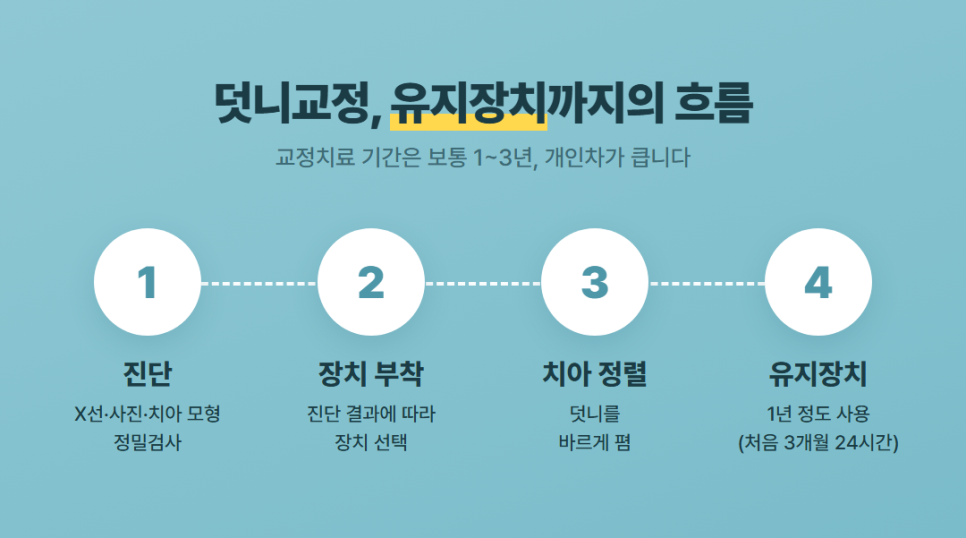
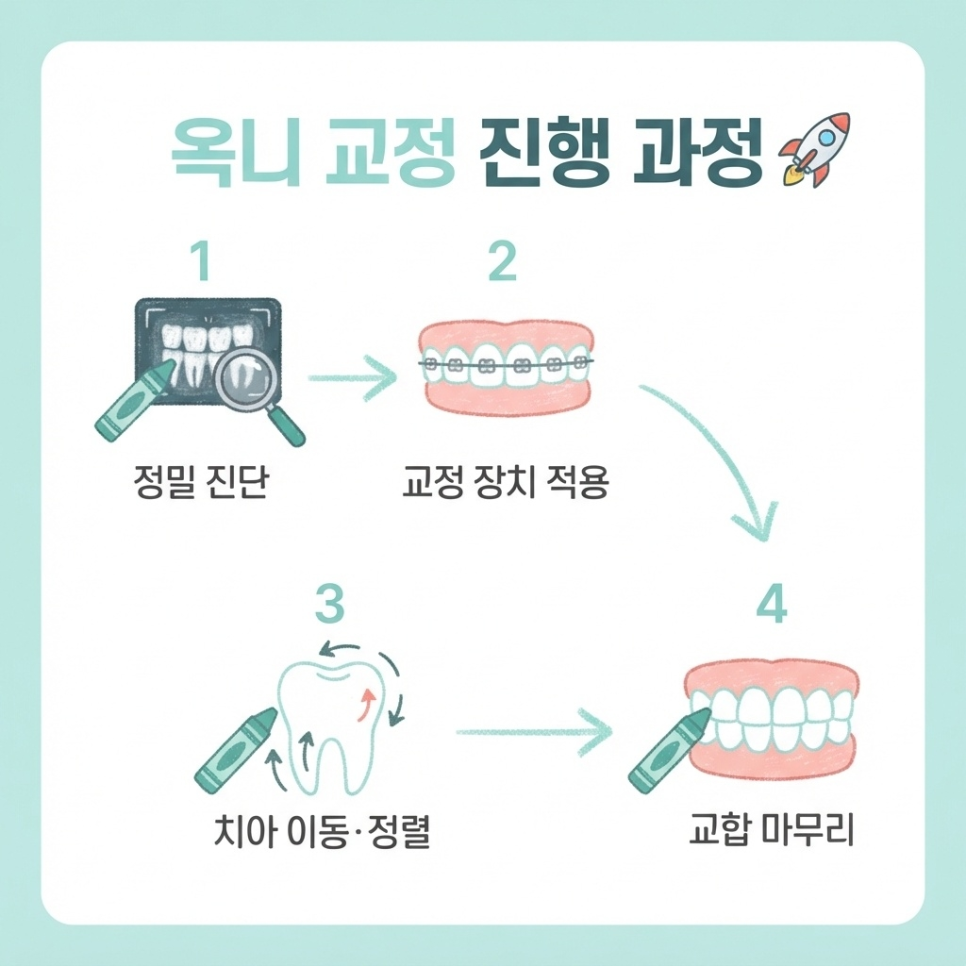
    1. Detailed diagnosis: Assess tooth and root angle, jawbone structure, and bite condition.
    2. Appliance placement: Fit an appliance suited to your case to begin adjusting the inward angle.
    3. Tooth movement and alignment: Gradually reposition the teeth, considering both crown and root together.
    4. Bite refinement: Fine-tune how the upper and lower teeth come together for a stable bite.

    Treatment time varies by individual, but it commonly takes around 18 months to 2 years.

    The exact duration can only be confirmed after a detailed exam, so it’s worth discussing your specific timeline with your provider during a consultation.

    Treatment length can also differ significantly depending on whether extraction is needed.

    retroclined teeth correction image 10

    For treatments like retroclined teeth correction, where tooth angle and bite need to be considered together, a detailed diagnosis is especially important.

    If you’d like to learn more about a treatment plan, you can check the care information at Cheongnyangni Yonsei Dajeonghan Orthodontic Clinic’s homepage.


    How should you care for your retainer to prevent relapse?

    Having your braces removed doesn’t mean orthodontic treatment is fully finished.

    Teeth naturally tend to drift back toward their original position, so movement can still occur after treatment ends.

    If the front teeth tilt inward again, it can look like the retroclined pattern has returned, which is why wearing your retainer consistently matters.

    A combination of a fixed retainer bonded behind the teeth and a removable retainer that can be taken in and out is a common approach to retention.

    Following the wear schedule your provider recommends can help lower the risk of relapse.

    Some research has reported an association between consistent retainer wear and a reduced risk of teeth shifting back, though the certainty of this evidence is still limited and results can vary by individual.

    retroclined teeth correction image 11

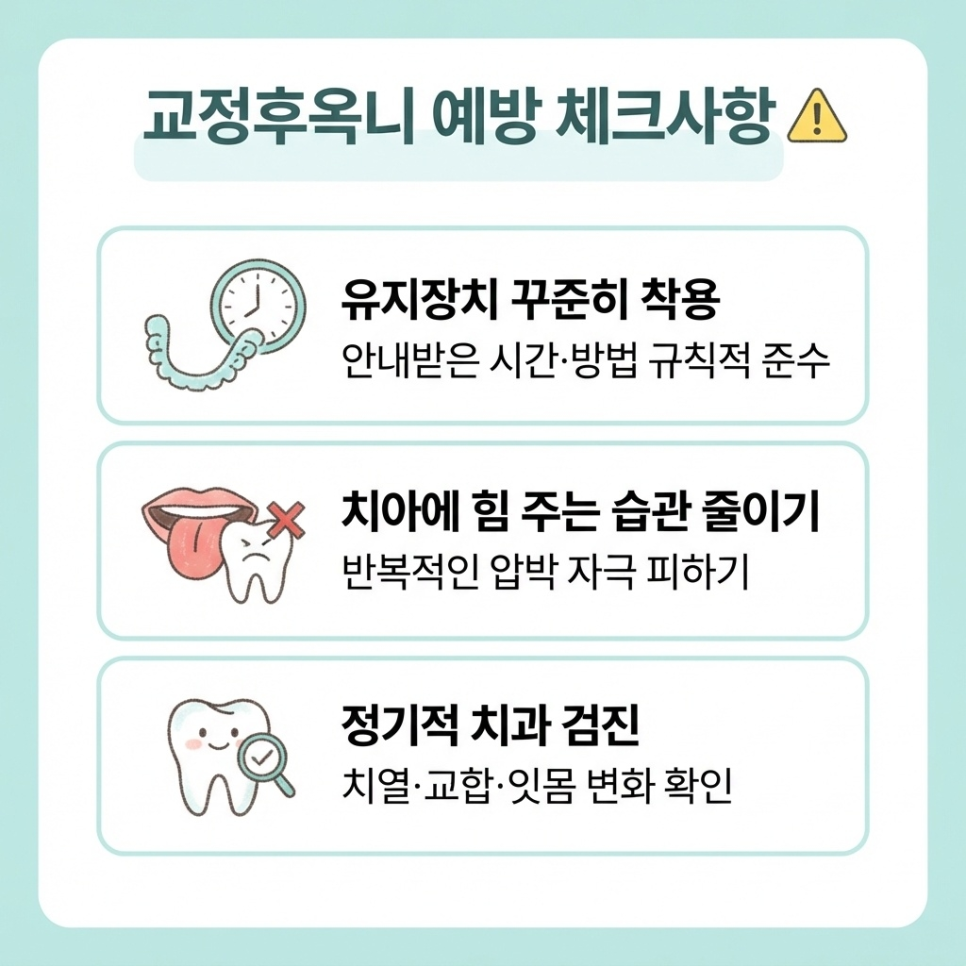
    ⚠️ Checklist for preventing relapse after correction
    • Wear your retainer consistently: Follow the recommended wear time and method as directed.
    • Reduce habits that put pressure on your teeth: Avoid repeatedly pushing on your teeth with your tongue or fingers.
    • Check in on your teeth regularly: Get routine dental checkups to monitor alignment and bite changes.

    retroclined teeth correction image 12


    Frequently Asked Questions

    retroclined teeth correction image 13

    1. What exactly does “retroclined teeth” mean?
    Retroclined teeth means the front teeth are angled further into the mouth than normal, which can also affect the shape of the mouth and the bite.

    retroclined teeth correction image 14

    2. Can adults get treatment for retroclined teeth?
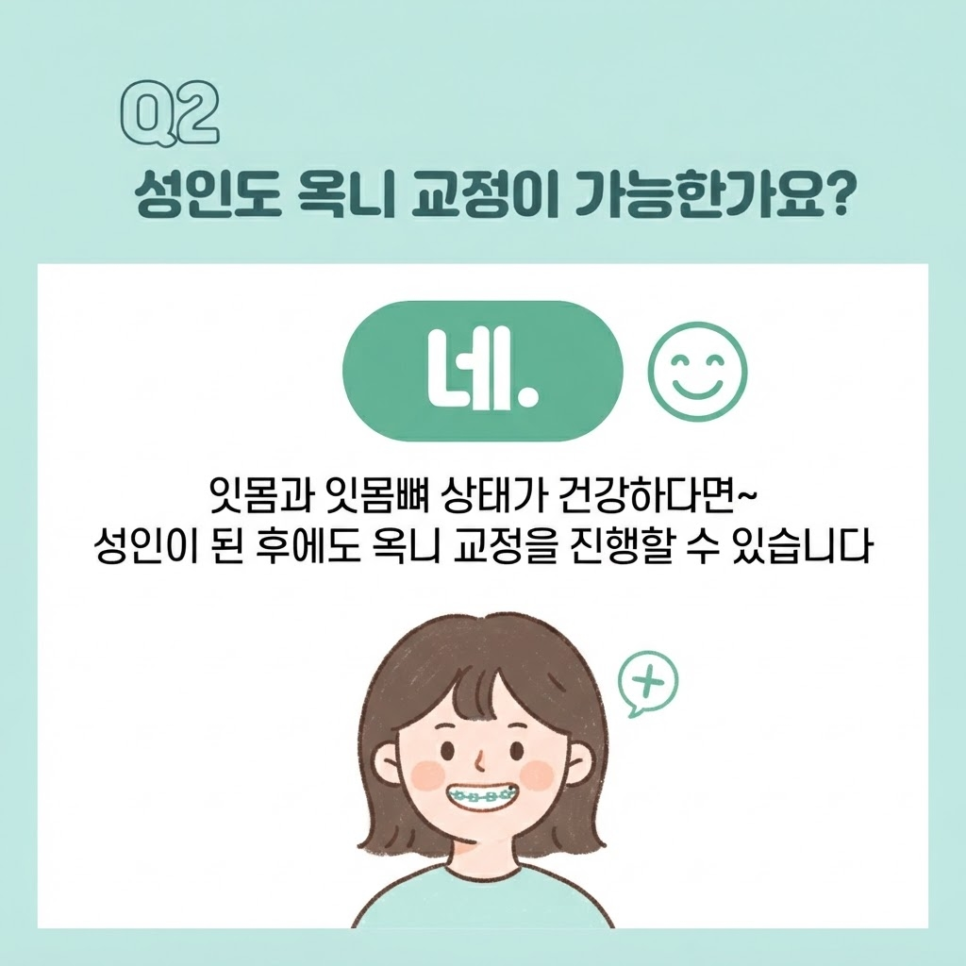
    Yes. As long as the gums and jawbone are healthy, correction can be carried out at any age, including adulthood.

    retroclined teeth correction image 15

    3. Why do teeth become retroclined again after treatment?
    It happens because teeth naturally tend to shift back toward their original position, which is why wearing your retainer consistently is important for prevention.

    retroclined teeth correction image 16

    4. Is extraction always necessary for correcting retroclined teeth?
    No. Whether extraction is needed depends on available tooth space, bite condition, and jawbone health, which are evaluated on a case-by-case basis.


    References

    · Martin, C. et al., “Retention procedures for stabilising tooth position after treatment with orthodontic braces,” Cochrane Database of Systematic Reviews, 2023. View source
    · Modoodoc Editorial Team, “What retroclined teeth mean, related symptoms, and considerations for re-treatment” (Korean), Modoodoc, 2025. View source
    · Medical Today, “Correcting inward-curling retroclined teeth” (Korean), Medical Today. View source

    This article is provided for general health information purposes only and is not a substitute for individual diagnosis or treatment. If you have symptoms, please consult a qualified dental professional.