Your coffee goes down just fine, but the second cold water hits a back tooth, it stings.
Does sensitivity like that mean you’re headed straight for a root canal?
Not necessarily.
How long the pain lingers after the stimulus is gone is one of the key factors that can help guide your treatment path.
Key takeaway
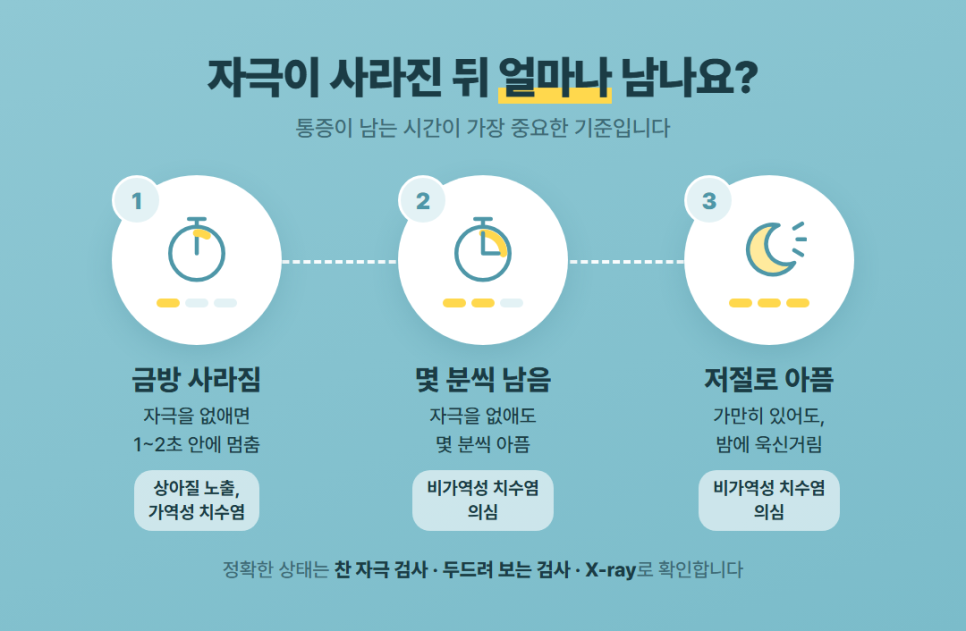
If the sensitivity fades within 1-2 seconds of removing the stimulus, the nerve is likely still alive — a sign of reversible pulpitis.
If pain lingers for several minutes or throbs at night, you should suspect irreversible pulpitis, which may require tooth sensitivity root canal treatment.
According to Korea’s national health information portal, dentin hypersensitivity affects an estimated 8-57% of adults, but simply timing how long the pain lasts can help you gauge how healthy the nerve is.

Why Do My Teeth Hurt When I Drink Something Cold?
The short answer is simple.
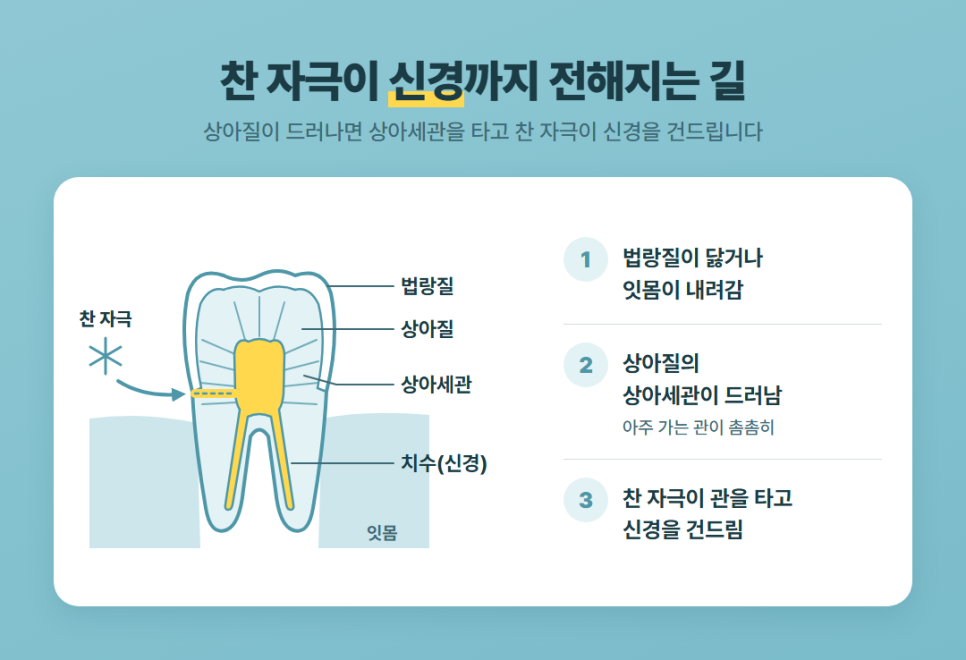
Once dentin becomes exposed, cold stimuli travel straight through to the nerve.
Dentin hypersensitivity is a condition in which external stimuli, carried through the dentinal tubules, excite the pulp nerve and trigger pain.
When enamel that once covered the dentin wears away or the gumline recedes, cold reaches the nerve almost instantly through those thin dentinal tubules.
A tooth is made up of enamel, dentin, cementum, and pulp. When dentin is exposed, it reacts sensitively to outside stimuli, producing sensitivity symptoms.
That’s how the Korea Disease Control and Prevention Agency’s National Health Information Portal describes ‘tooth sensitivity (dentin hypersensitivity)’ in its entry on the topic.
The most widely accepted explanation is the hydrodynamic theory, proposed by Brännström in 1964.
Fluid inside the dentinal tubules shifts rapidly in response to temperature and pressure changes, and that movement is what irritates the nerve.
One of the most common causes of tooth sensitivity is cervical abrasion.
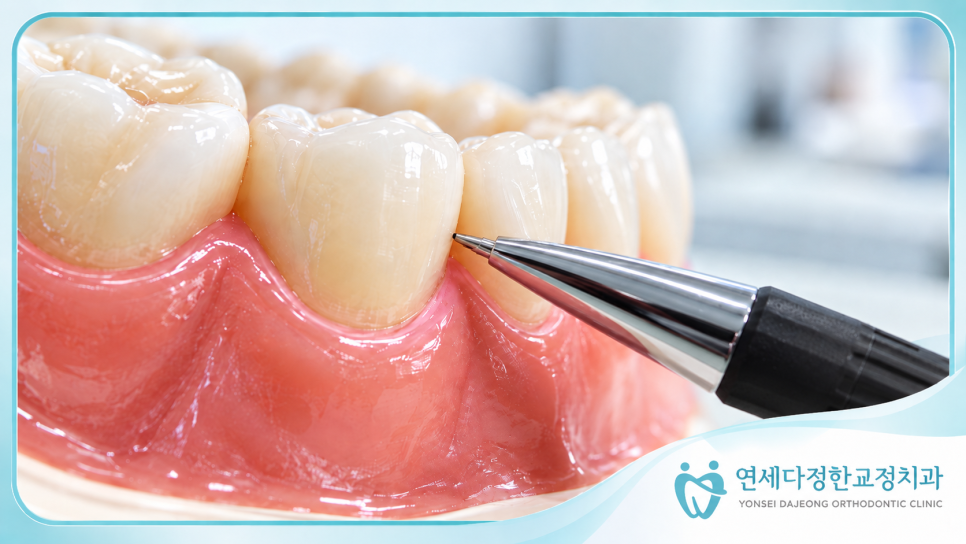
The cervical area, where the tooth meets the gum, has the thinnest enamel, so it’s usually the first spot to wear down from chewing force or teeth grinding.
Brushing side-to-side with heavy pressure is another common habit that speeds up this wear.
Cavities, cracked teeth, worn-out fillings, gum disease, and temporary sensitivity right after teeth whitening can all be contributing causes as well.
How Do I Tell Tooth Sensitivity Apart From a Toothache?
One of the most important factors is how long pain lingers after the stimulus is gone.
If the sting is brief and fades quickly, the nerve is often still healthy.
If pain lasts for several minutes, or if heat makes it worse, you should suspect a nerve-related problem.
| Pain Pattern | Likely Condition |
|---|---|
| Fades within 1-2 seconds after the stimulus is removed | Dentin exposure, reversible pulpitis |
| Lasts several minutes even after the stimulus is removed | Irreversible pulpitis |
| Throbs even at rest, worse at night | Irreversible pulpitis |
| Sharp, irregular pain when chewing | Cracked tooth |
| Tooth feels “raised,” gum swelling or pus | Apical (root-tip) abscess |
This table is only a rough reference to help you guess what might be going on.
An accurate diagnosis requires a cold test, percussion test, and X-ray at a dental clinic.
What Treatments Come Before a Root Canal?
If the nerve is still alive, treatment usually starts with sealing and protecting the sensitive area.
If only dentin is exposed, a desensitizing toothpaste or an in-office fluoride or sealant application can block the dentinal tubules.
If the cervical area has worn into a notch, dentists typically fill it with resin or GI (glass ionomer).
If a cavity has reached the dentin, the decay is removed and the space is filled with resin or an inlay in most cases.
✔ Dentin exposed → fluoride/sealant, desensitizing toothpaste
✔ Cervical wear or notching → resin or GI filling
✔ Decay reaching dentin → resin or inlay treatment
✔ Inflammation reaching the nerve → root canal treatment should be considered
When the cervical notch isn’t deep, a resin filling can often resolve the pain without further treatment.
When decay is caught early in the dentin, it can frequently be managed with an inlay or resin filling without needing a root canal.
Tooth Sensitivity Root Canal: When Is It Actually Necessary?
Once nerve inflammation reaches a stage where it’s unlikely to heal on its own, root canal treatment or extraction becomes necessary.
If any of the five signs below apply to you, it’s best to get checked out soon.
✅ Sensitivity lingers for several minutes
✅ Throbs even at rest, worse at night
✅ Sharp pain when chewing
✅ Gum swelling or visible pus
✅ Root-tip inflammation shows up on an X-ray (even without pain)
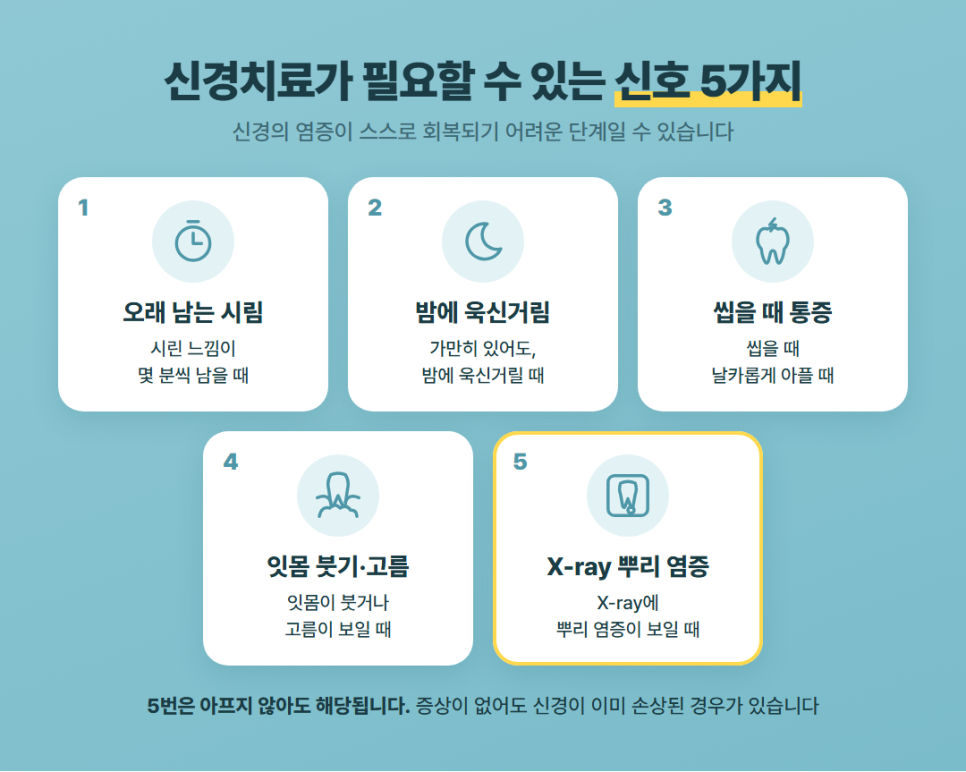
That fifth sign matters because it applies even without pain.
That’s because the nerve can already be damaged with no symptoms at all.
Root canal treatment removes the inflamed nerve tissue, disinfects the canal, and seals it, with the goal of saving your natural tooth.
If the Pain Suddenly Stops, Does That Mean It’s Healed?
No.
If severe pain suddenly disappears, it may mean the nerve has died and can no longer register pain.
The inflammation is often still active even after the pain is gone.
Left untreated, the infection can spread to the root tip, causing gum swelling and pus, and in more advanced cases it can spread into the jawbone, which can lead to tooth loss.

Painkillers or antibiotics only ease the pain temporarily — they don’t address the underlying problem.
The longer treatment is delayed, the more visits and more extensive treatment may be needed.
Why Do You Need a Crown After a Root Canal?
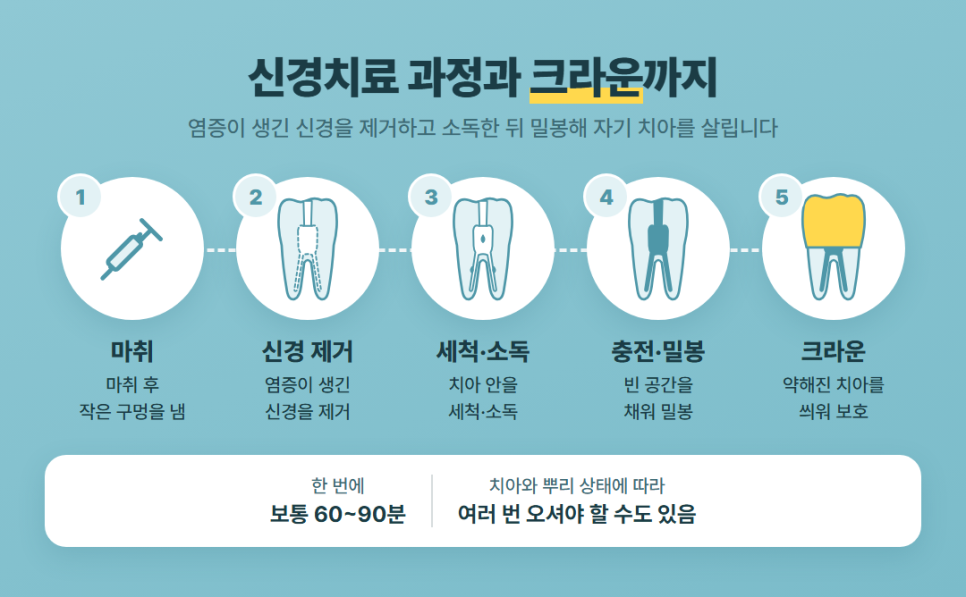
Because a tooth becomes structurally weaker after root canal treatment, it’s usually covered with a crown for protection in most cases.
Once the nerve and blood vessels are removed, the tooth gradually dries out, and since the procedure hollows out the center of the tooth, it becomes more prone to fracture.
Root canal treatment generally follows these steps:
- Administer anesthesia and create a small opening to access the inflamed nerve
- Remove the inflamed nerve tissue
- Clean and disinfect the inside of the tooth
- Fill and seal the empty space
- Fabricate a crown to protect the weakened tooth
Each session usually takes about 30 to 90 minutes, and depending on the tooth and root condition, treatment may be split across multiple visits.
The crown’s role matters even more for molars, which bear the brunt of chewing force.
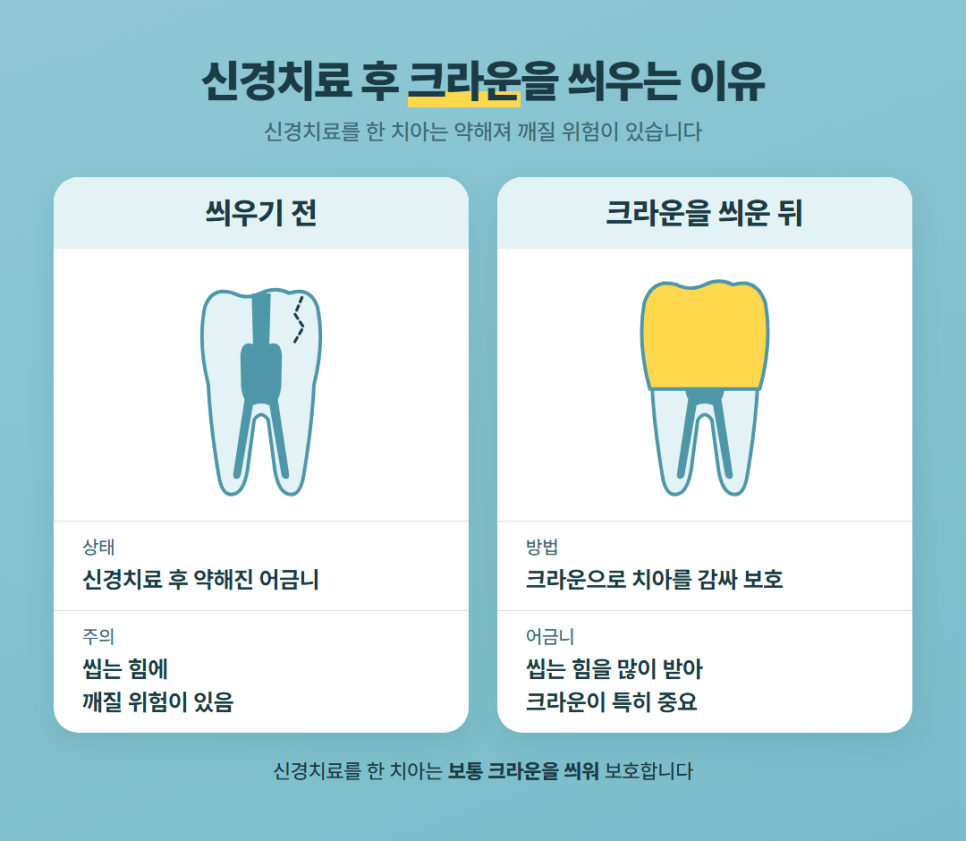
✔ Teeth can weaken after root canal treatment
✔ A crown helps prevent fracture
✔ Crowns matter more for molars
✔ Treatment typically takes 30-90 minutes per session
Yonsei Dajeonghan Orthodontics, located in Cheongnyangni, Dongdaemun-gu, Seoul, brings together specialists in orthodontics, periodontics, and comprehensive dentistry who collaborate on care ranging from orthodontic treatment to cavities and prosthodontics.
If you’d like to learn more about tooth sensitivity, you can review treatment information on the Yonsei Dajeonghan Orthodontics homepage in Cheongnyangni.
When cold sensitivity strikes, start by checking how long the pain lingers after the stimulus is gone.
Even if your symptoms are ambiguous, it’s safest to have a dentist confirm whether tooth sensitivity root canal treatment is actually needed.
Frequently Asked Questions
1. Is desensitizing toothpaste enough on its own?
If only dentin is exposed, it often helps. You can also dab a small amount on your finger and apply it directly to the sensitive spot. However, if the cause is a cavity or a cracked tooth, toothpaste alone won’t resolve it.
2. Do I need to see a dentist right away for cold sensitivity?
Sensitivity that fades quickly isn’t an emergency, but it still needs to be checked. If painkillers can’t control the pain, you should see a dentist as soon as possible.
3. I’m in braces and my teeth feel sensitive — is that normal?
There are reports that orthodontic force can temporarily increase sensitivity in the tissue around the teeth, and it usually settles once tooth movement stabilizes. That said, if the sensitivity lasts a long time or the tooth aches on its own, let your orthodontist know right away rather than waiting for your next scheduled visit.
4. Does a cervical notch always lead to a root canal?
Not necessarily. If it’s left unmanaged and decay deepens, it can eventually require a root canal, but if caught before it progresses, a resin filling is often enough.
5. Is a crown always necessary after a root canal?
For teeth that bear heavy chewing force, like molars, going without a crown raises the risk of fracture, so it’s recommended in most cases.
References
· Korea Disease Control and Prevention Agency, “Tooth Sensitivity (Dentin Hypersensitivity),” National Health Information Portal. Link
· Seoul National University Hospital, “Reversible Pulpitis,” SNUH Health Information. Link
· Wikipedia, “Dentin Hypersensitivity” (Brännström’s hydrodynamic theory, 1964). Link
This article is intended for general health information purposes only and is not a substitute for individual diagnosis or treatment. If you have symptoms, please consult a dental professional.