Did you assume the crown you got a few years ago would last a lifetime?
Dental crowns actually have a limited service life.
As a crown wears down or an issue develops in the tooth underneath, replacement may become necessary.
Today we’ll go over dental crown lifespan, how to judge the replacement timeline, and how costs differ by material.
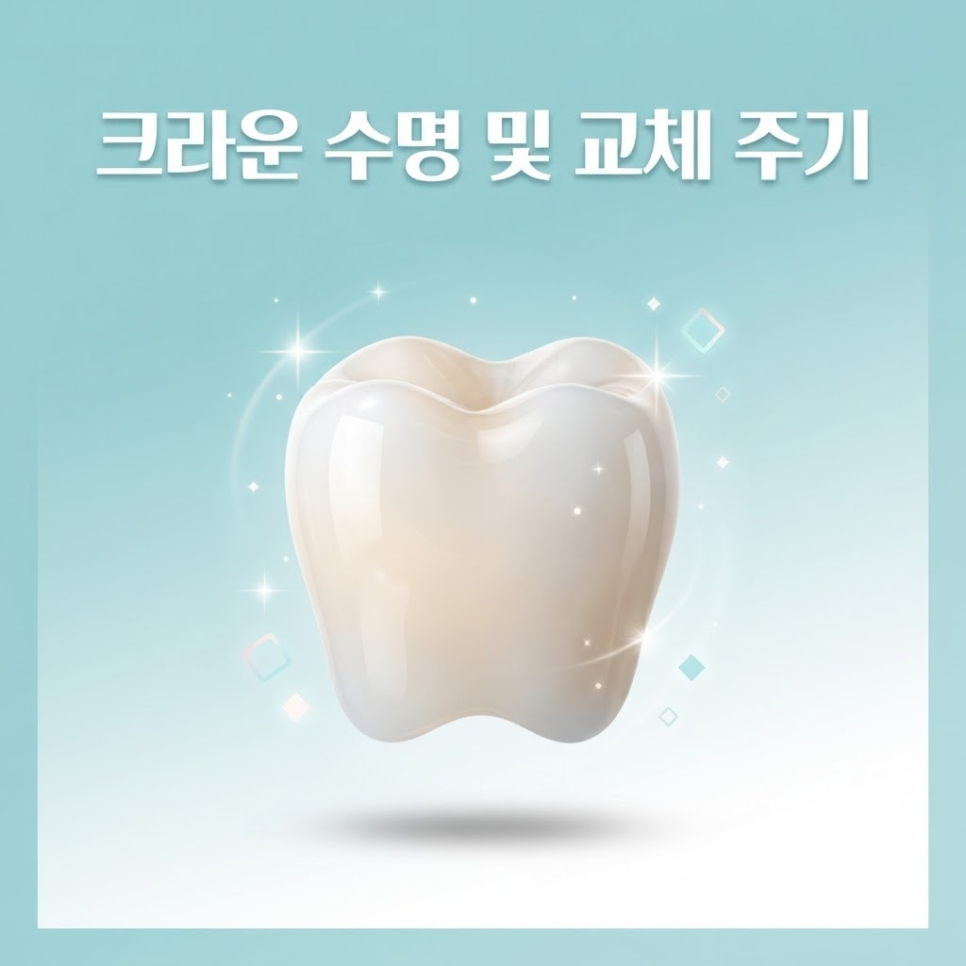
· Dental crown lifespan averages 7-10 years, but it varies from person to person.
· Crown cost differs depending on the material — gold, PFM, or zirconia.
· We’ll also cover the warning signs that a crown needs replacement and how to care for it long-term.
Many people assume that once a crown is placed after dental treatment, it will last forever.
In reality, crowns can wear down over time, or problems can develop in the tooth structure underneath.
That’s why regular checkups — and sometimes replacement — may be needed.
In this post, we’ll look at dental crown lifespan and replacement timing, along with the characteristics and cost differences of each crown material.

What Determines Dental Crown Lifespan and Replacement Timing?
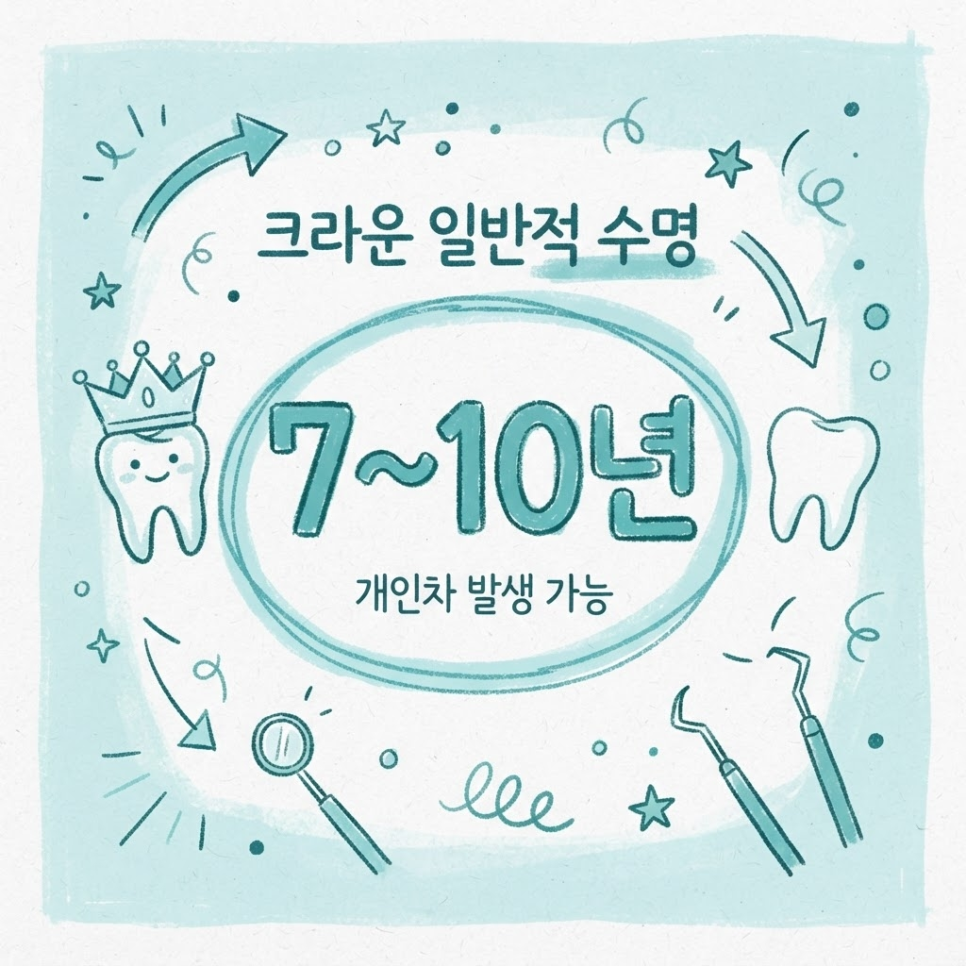
Dental crown lifespan averages around 7-10 years, but ongoing condition checks matter more than a fixed timeline.
Crown lifespan refers to the period during which a dental restoration continues to protect the tooth and function properly.
In general, crowns are often used for roughly 7-10 years.
However, that doesn’t mean every crown needs to be replaced on the same schedule.
Depending on oral hygiene, dietary habits, bite force, and the condition of the restoration,
some crowns last well beyond 10 years, while others may need to be checked sooner.
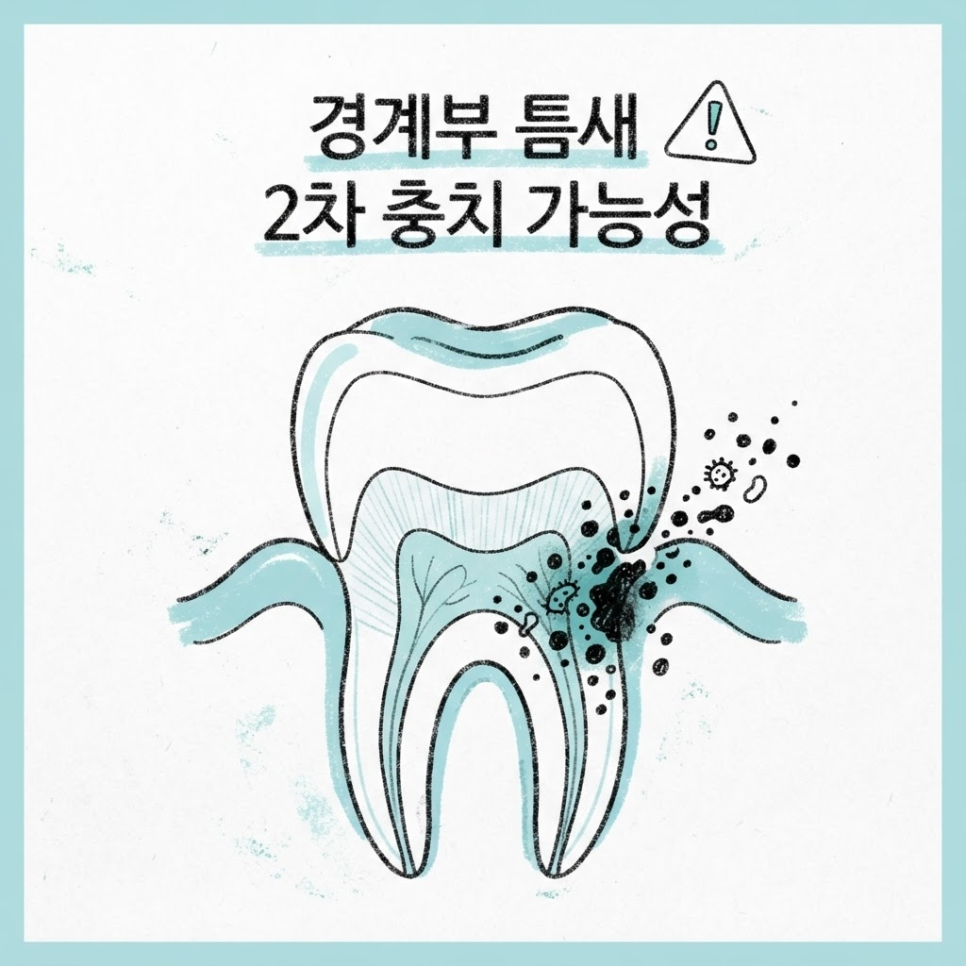
Even when a crown looks fine on the surface, a gap can form at the margin where it meets the tooth.
This can allow food particles and bacteria in, potentially leading to secondary decay.
For that reason, rather than relying only on a fixed timeline to decide on crown replacement,
it’s important to check the condition of both the restoration and the underlying tooth through regular dental checkups.
· Dental crown lifespan averages 7-10 years, but regular checkups are a more reliable guide.
· A gap at the crown margin can lead to secondary decay.
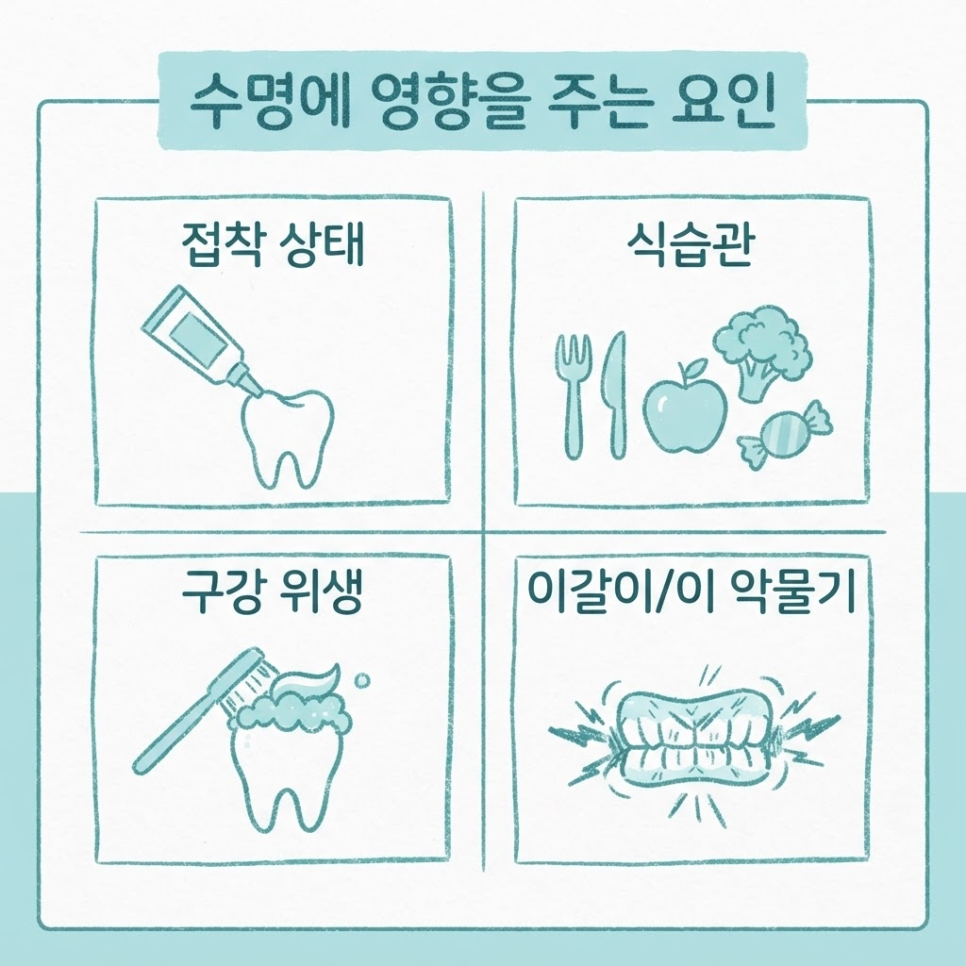
✅ The bonding condition between the crown and the tooth
✅ A diet that frequently includes hard or chewy foods
✅ Oral hygiene habits, including brushing and flossing
✅ Habits such as teeth grinding or clenching
How Much Does Crown Cost Differ by Material — Gold, PFM, and Zirconia?
Strength and appearance vary by material, and so does crown cost.
A zirconia crown is an all-ceramic restoration that mimics natural tooth color while offering high strength.
Crown cost can vary not only based on the tooth’s location and condition,
but also depending on which restorative material is chosen.
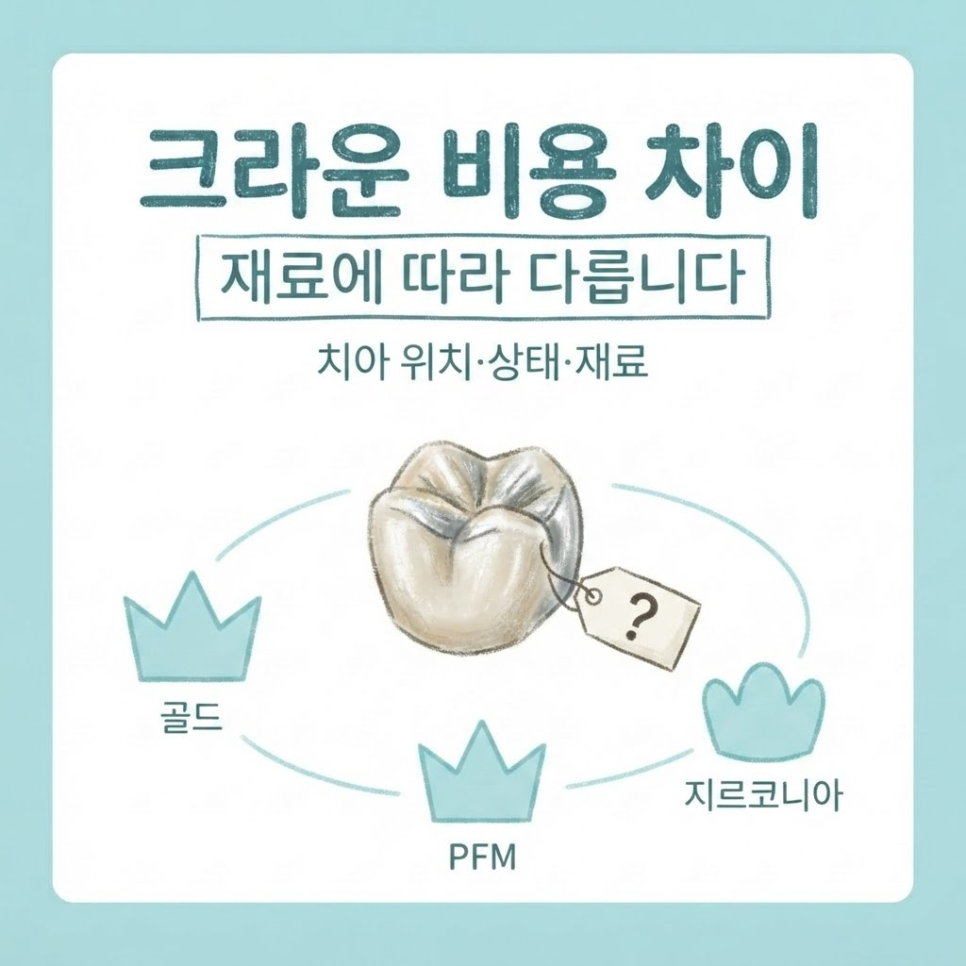
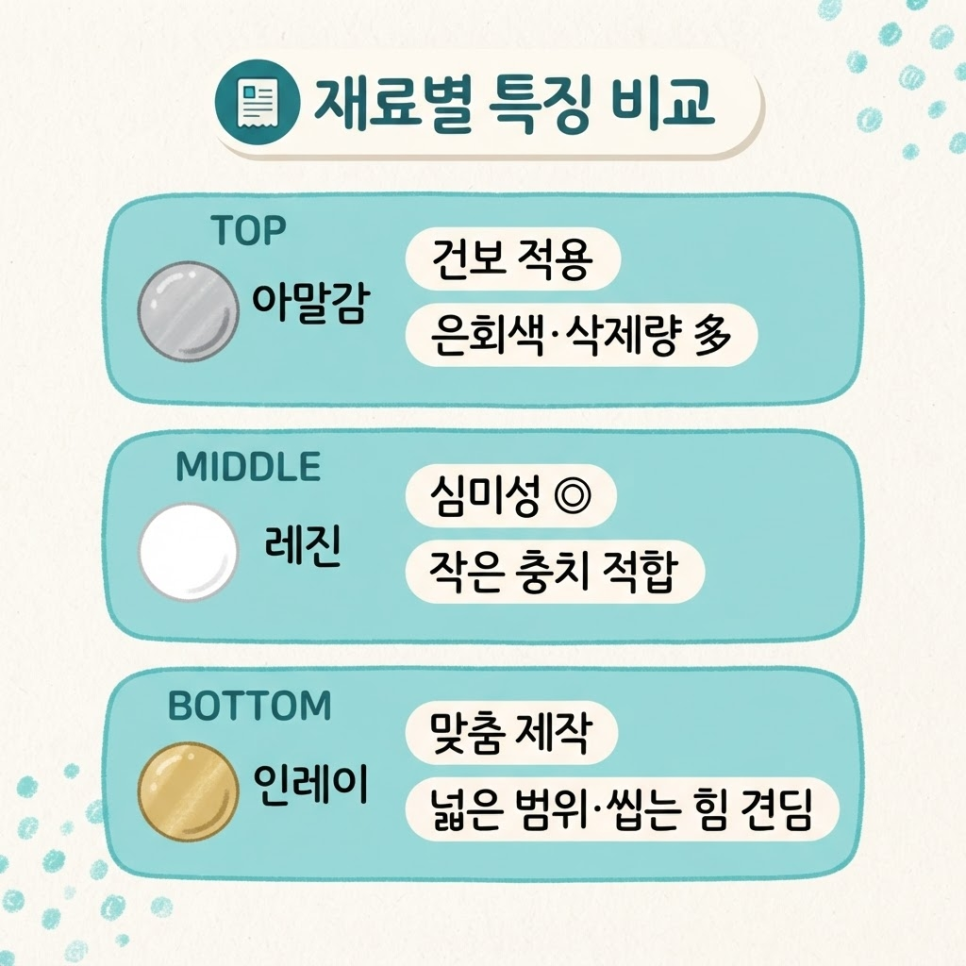
Common crown materials include gold, PFM (porcelain-fused-to-metal), and zirconia.
Gold crowns offer a close fit and hold up well against chewing force.
However, since the metal color remains visible, the appearance may be less natural.
PFM crowns consist of porcelain fused over a metal base.
Over time, a thin line of metal may become visible at the gumline.
Zirconia crowns replicate natural tooth color while offering relatively high strength,
so they can be used for both front and back teeth.

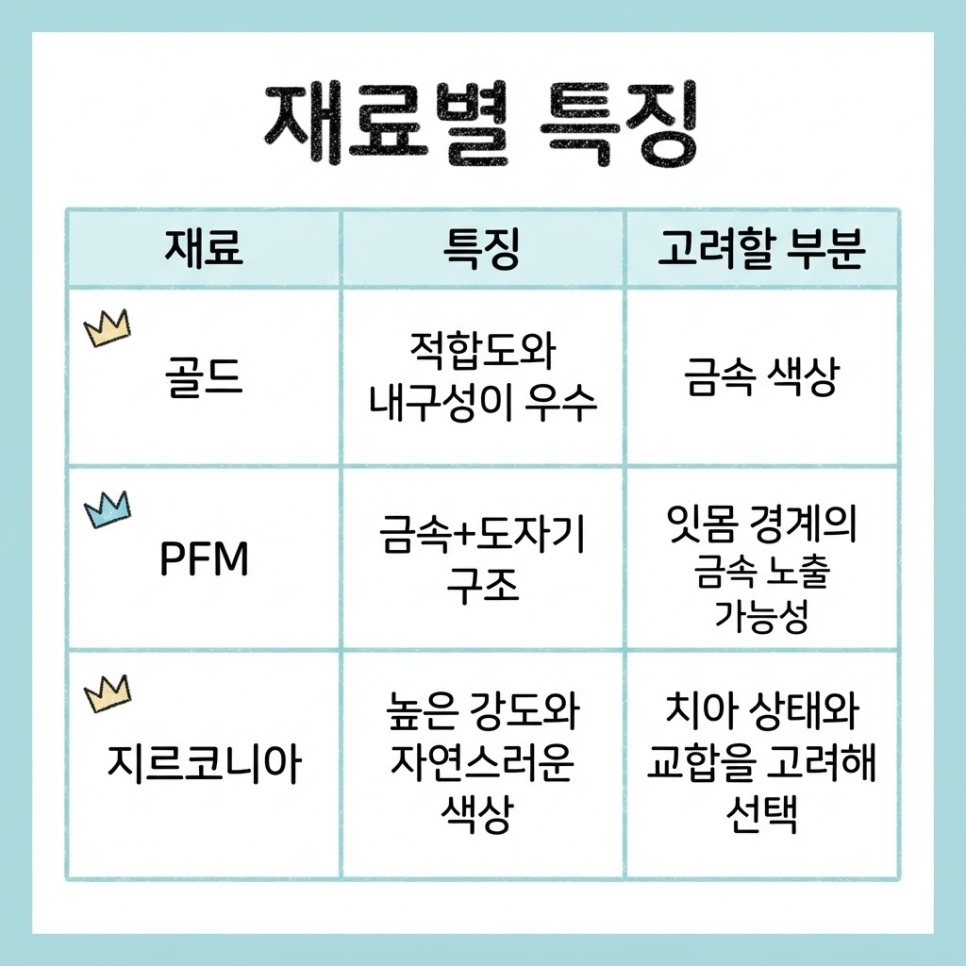
| Material | Characteristics | Considerations |
|---|---|---|
| Gold | Close fit and durability | Metal color is visible |
| PFM | Porcelain fused over a metal base | Possible metal show-through at the gumline |
| Zirconia | High strength with a natural tooth color | Selection depends on tooth condition and bite |
· For front teeth, appearance matters most, so zirconia is often considered.
· For back teeth, chewing force is the priority, so gold or zirconia may be considered.
· Rather than comparing crown cost alone, it’s best to also factor in tooth location and bite force.
What Are the Signs That a Crown Needs to Be Replaced?
Problems developing beneath a crown are often difficult to spot with the naked eye.
Crown detachment refers to when the bond between the crown and the tooth weakens, causing the restoration to feel loose or come off.
If you notice new discomfort that wasn’t there before, it’s worth having the crown checked,
regardless of how long it’s been in place.
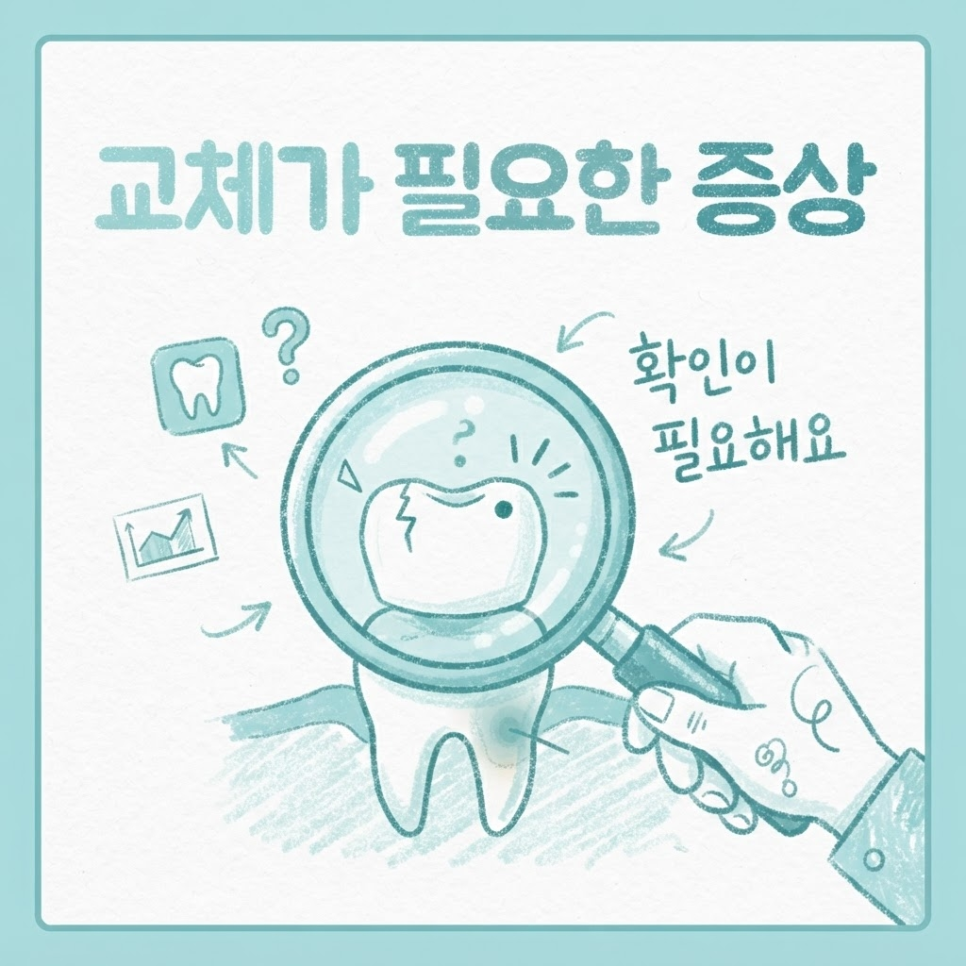
· Food frequently gets caught between the crown and gum
· Sensitivity to cold or hot foods
· A feeling that the crown moves when chewing
· Gums around the crown repeatedly swell or bleed
· Persistent odor around the crown
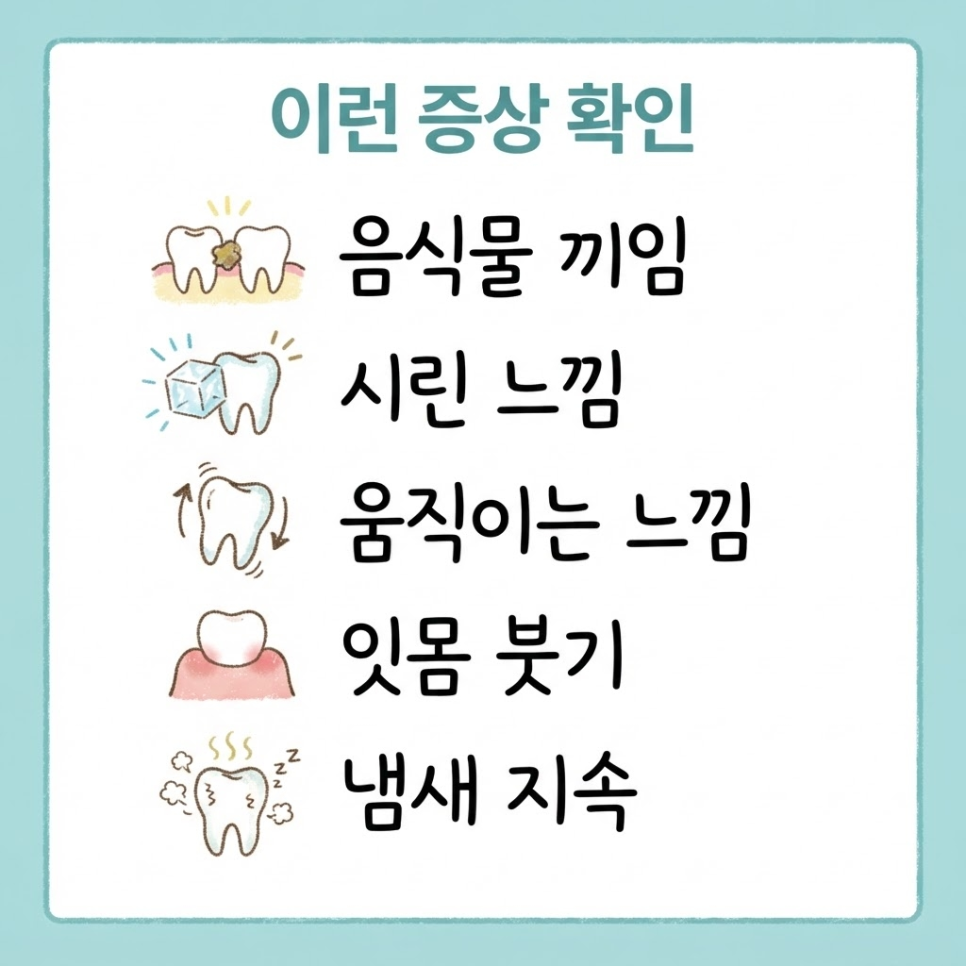
These symptoms can stem from several causes, including a gap in the restoration, gum inflammation, or decay underneath the crown.
If left unaddressed, the damage to the natural tooth may worsen over time.
If you notice any discomfort, it’s best to get a dental exam to identify the cause.
How Can You Help Your Crown Last Longer?
Caring for the margin area and keeping up with regular checkups are key to extending crown lifespan.
Crown care refers to the habit of keeping the margin — where the crown meets the gumline — clean.

Using floss or an interdental brush along with regular brushing can help remove food debris between teeth that a toothbrush alone can’t reach.
It’s best to avoid foods that put excessive force on a crown, such as ice or hard foods, whenever possible.
If you grind or clench your teeth, a protective night guard may be worth considering.
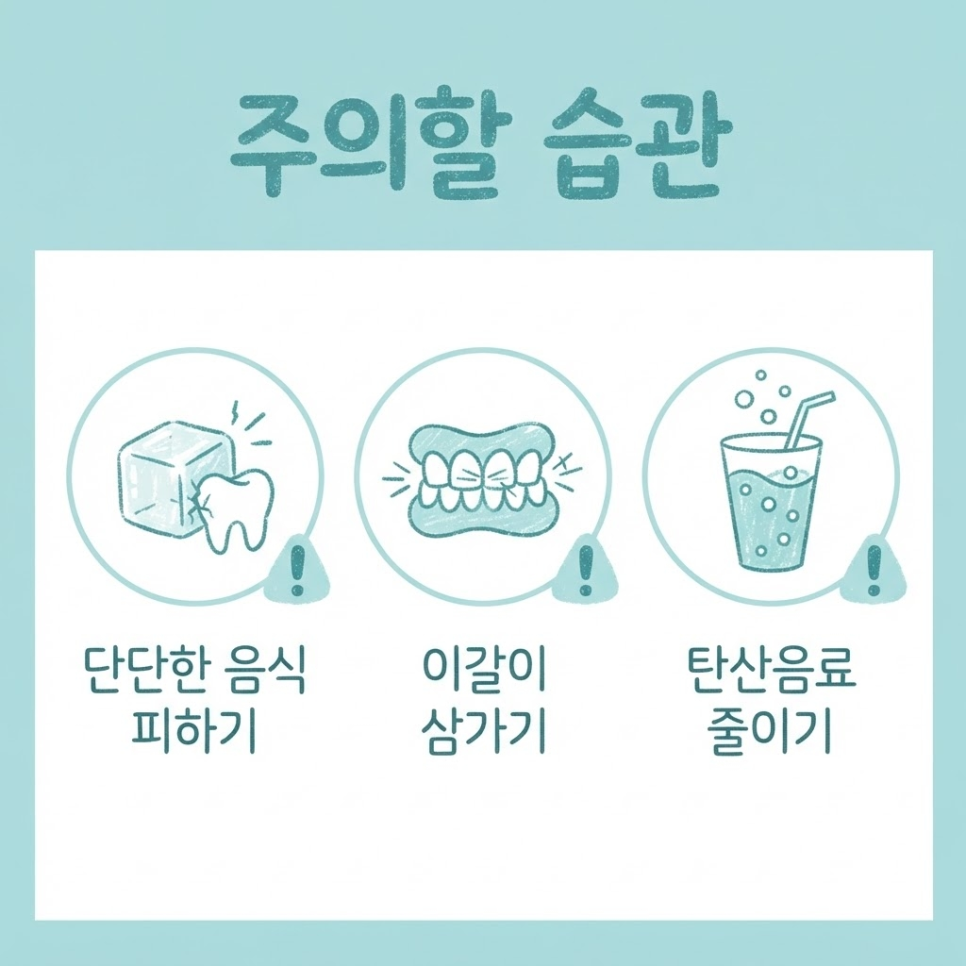
✅ Clean the margin area with floss or an interdental brush
✅ Avoid overly hard or chewy foods
✅ Keep up with regular checkups and cleanings
✅ Get evaluated if you grind or clench your teeth
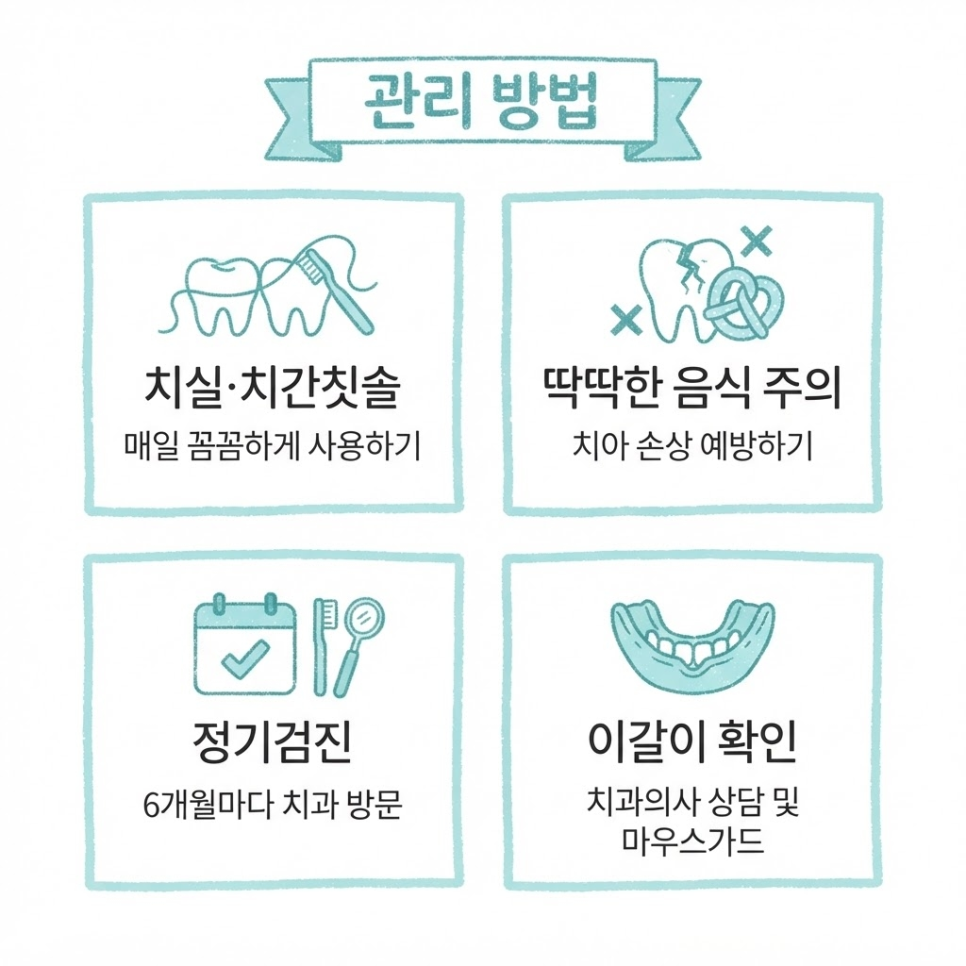
Even without noticeable symptoms, having your crown’s wear and margin checked at regular visits
can help you stay on top of your crown replacement timeline.

allows appropriate care to be provided when needed, which can support long-term oral health.
Since a crown involves both cost and treatment, getting the most out of it matters.
That said, keeping a crown as long as possible isn’t automatically the best approach.
Checking the condition of your restoration through regular visits
and receiving appropriate treatment when needed is what matters most.
If you need a checkup or consultation, visit the Yonsei Dajeonghan Orthodontic Clinic homepage in Cheongnyangni for treatment information.
Frequently Asked Questions
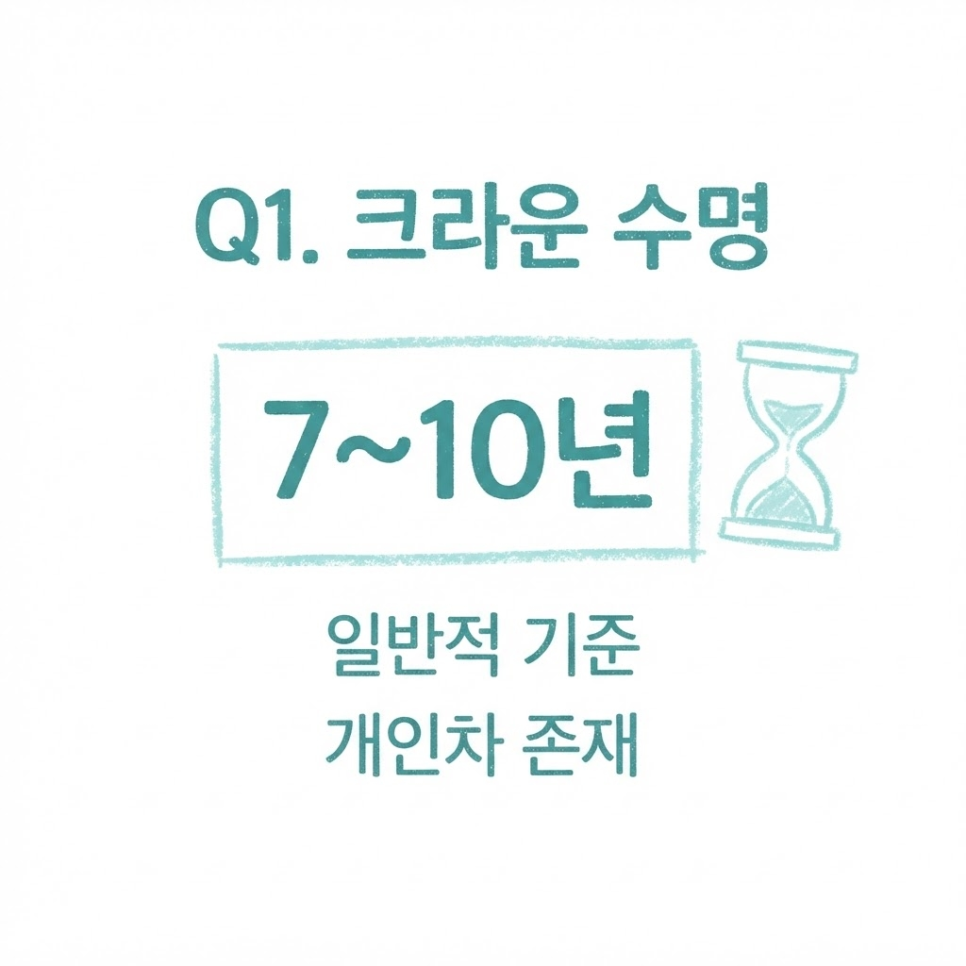
1. How long do dental crowns typically last?
A commonly cited range is about 7-10 years, but crown lifespan varies from person to person depending on oral hygiene, diet, and bite force.
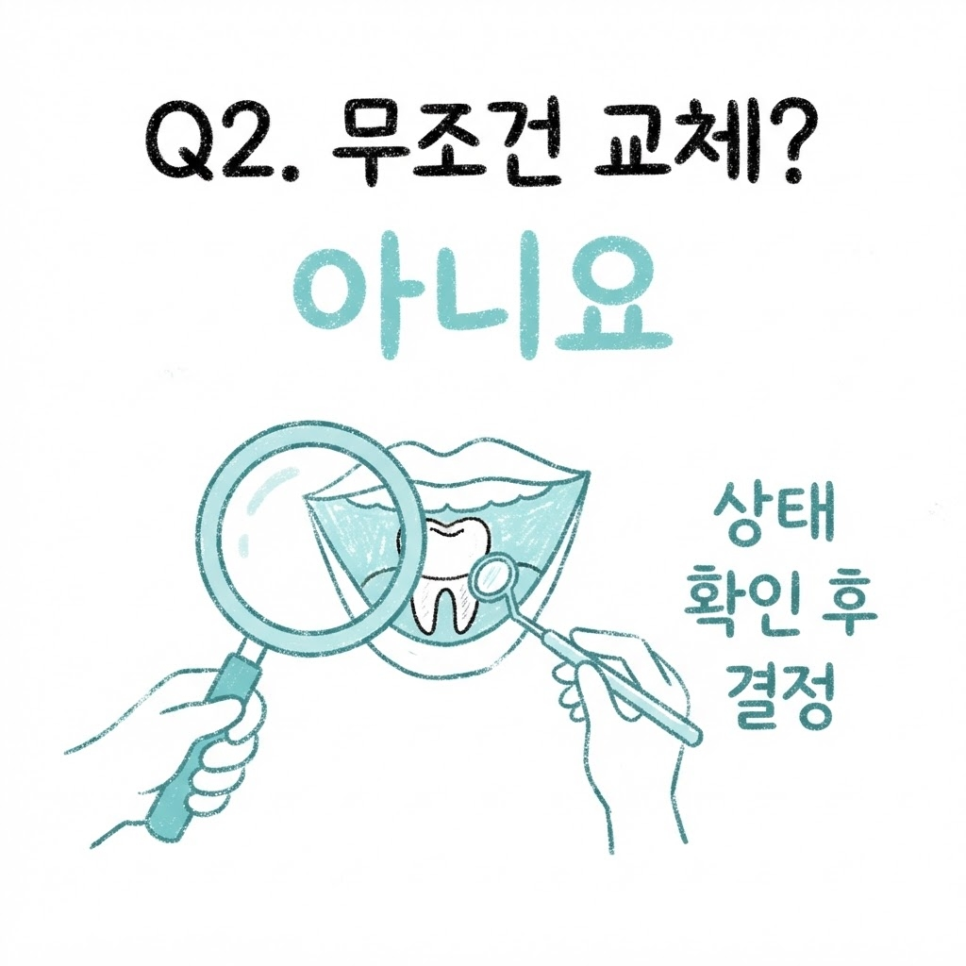
2. Do I have to replace my crown once it reaches the typical replacement timeline?
Not necessarily. Replacement isn’t required just because a certain amount of time has passed — it’s best to decide on crown replacement after checking the condition of the restoration and the tooth underneath.
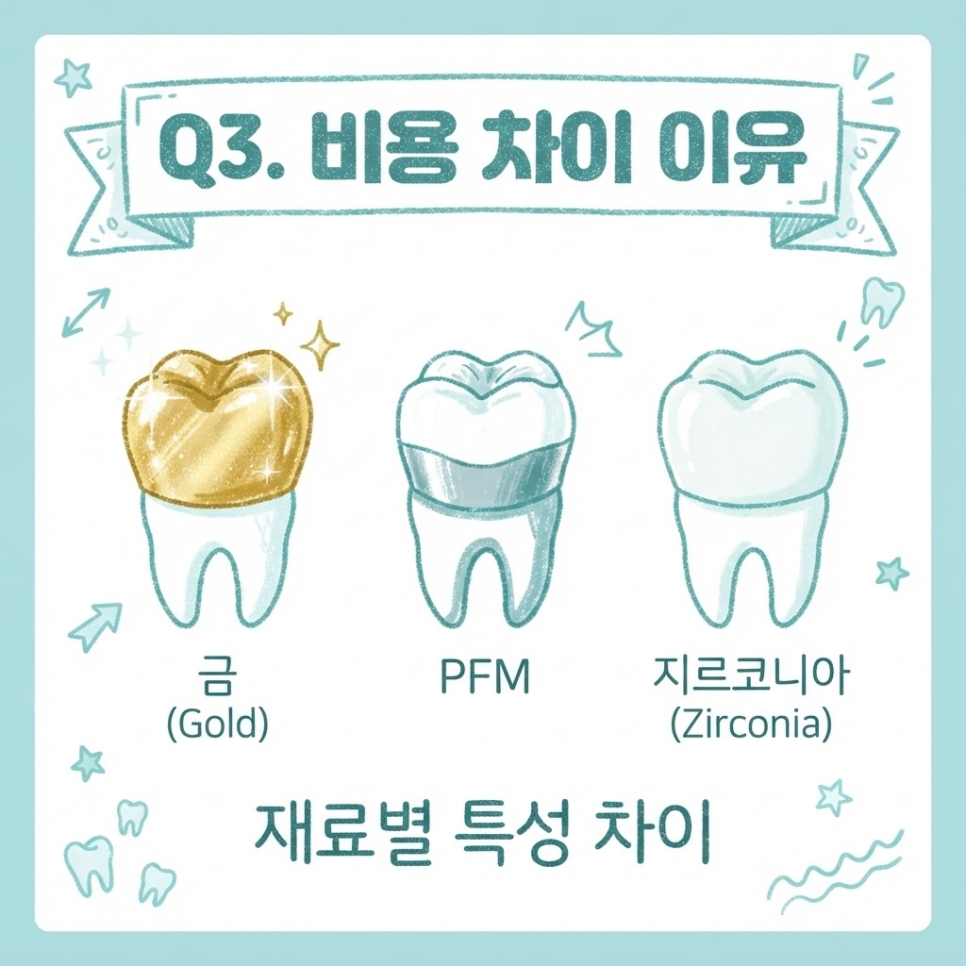
3. Why does crown cost vary by material?
Materials such as gold, PFM, and zirconia differ in strength, appearance, and fabrication method, which can lead to differences in crown cost.
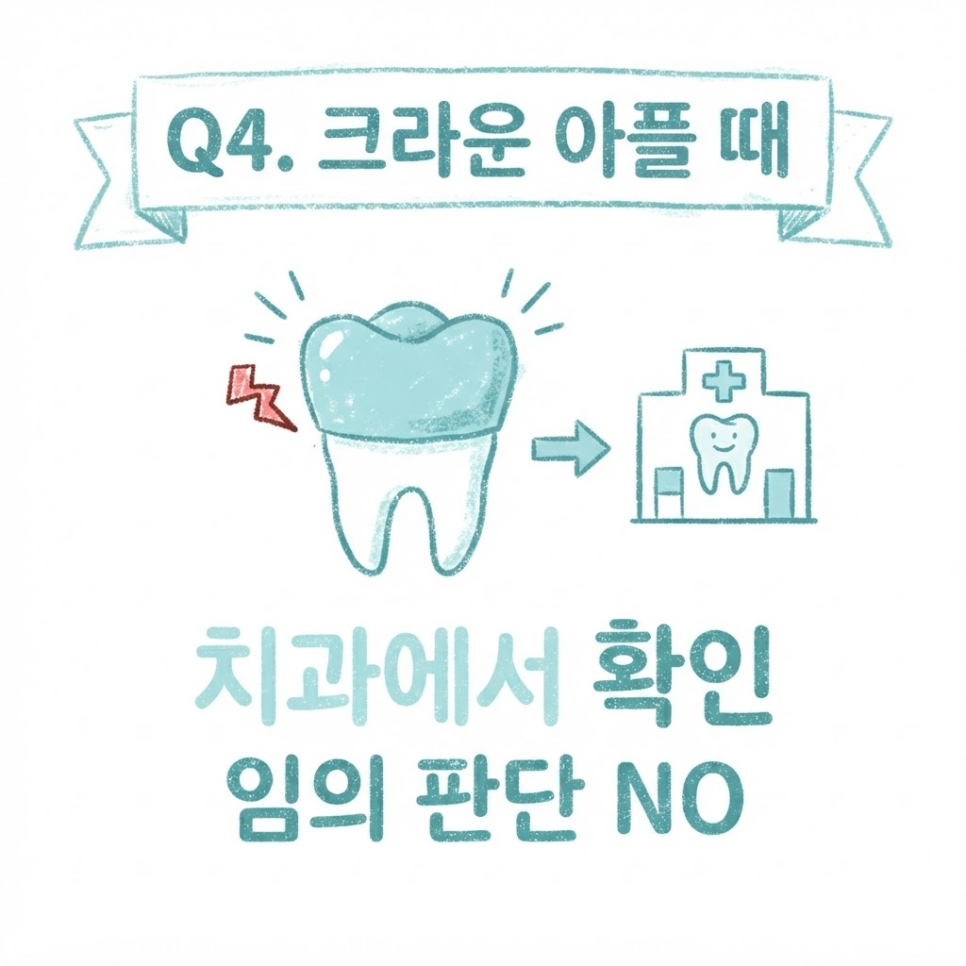
4. What should I do if a tooth with a crown starts to hurt?
Pain can have several causes, including decay underneath the crown, gum inflammation, or bite issues. Rather than guessing, it’s best to have a dentist check the condition of the crown and the tooth underneath.
References
· Analysis of Longevity and Success Rates of Fixed, Removable, and Implant Prostheses Treated in Korea, Journal of the Korean Academy of Prosthodontics. View source
· Yonsei University Dental Hospital, “Fixed Prosthodontic Treatment (Crowns, Bridges),” Treatment Information. View source
This article is intended to provide general health information and is not a substitute for individual diagnosis or treatment.
If you’re experiencing symptoms, please consult a dental professional.