Author: 연세다정한교정치과 편집팀

  • Clear Aligners vs Braces: How to Choose and 3 Rules for 22-Hour Wear

    Clear Aligners vs Braces: How to Choose and 3 Rules for 22-Hour Wear

    SummaryWhen comparing clear aligners vs braces, the real deciding factors are diagnosis and wear habits. In one study, only 36% of patients consistently met the 22-hour daily wear target, and both Korea’s MFDS and the U.S. FDA have warned against using clear aligners without a specialist’s diagnosis. A Cheongnyangni orthodontic specialist breaks down how to choose.

    Almost every patient who sits down in the consultation room asks the same question first.
    Whether clear aligners or braces would be the better choice.

    Clinical experience suggests the answer is a little different.
    What matters more than the type of appliance is your tooth condition and your wear habits.

    This article breaks down the criteria for a clear aligners vs braces comparison.
    We’ll walk through the differences in structure and pain, when clear aligners have the advantage, how to correct teeth that don’t move as planned, the daily wear-time standard, and how to verify an orthodontic specialist.

    Key takeaway
    A clear aligners vs braces comparison isn’t about which appliance is “better” — it comes down to diagnosis and wear habits.
    Clear aligners tend to work well for open bite, deep bite, re-treatment cases, and growing children, while more complex cases — such as crowding, extractions, or protruding teeth — call for a specialist consultation first.
    One study found that only 36% of patients consistently wore their aligners 22+ hours a day, making wear habits a key variable in treatment outcomes.

    Clear Aligners vs Braces: How Do They Differ in Structure and Pain?

    The two methods differ in where and how the force that moves your teeth is applied.
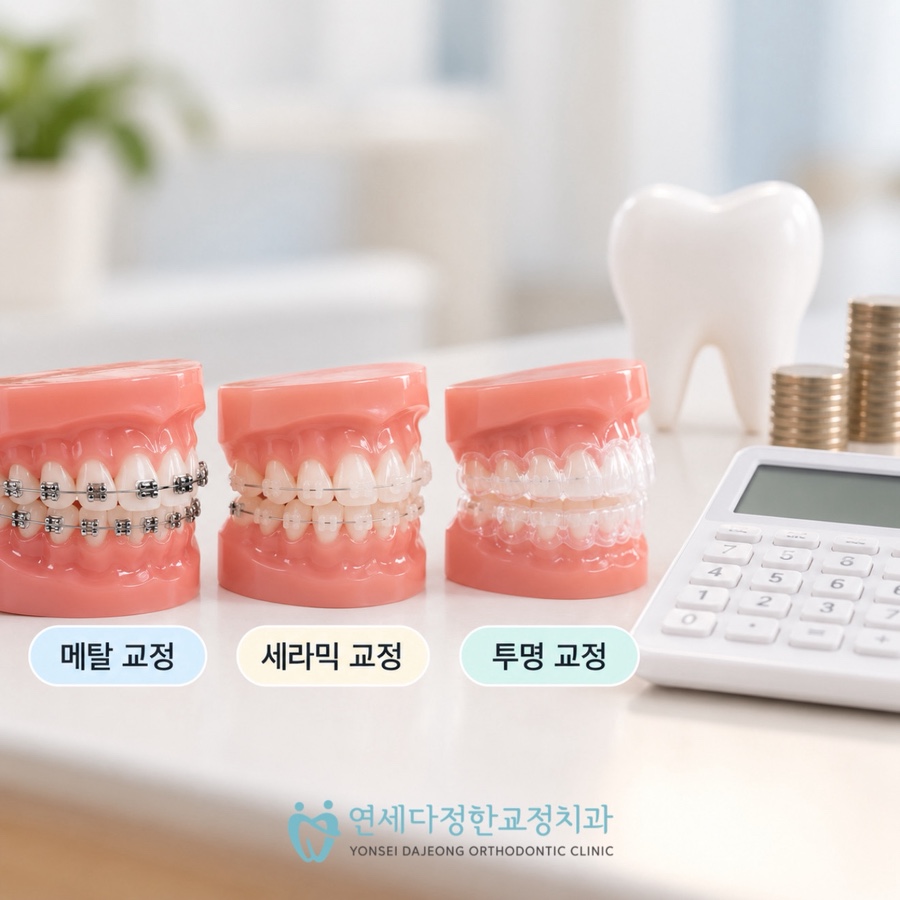
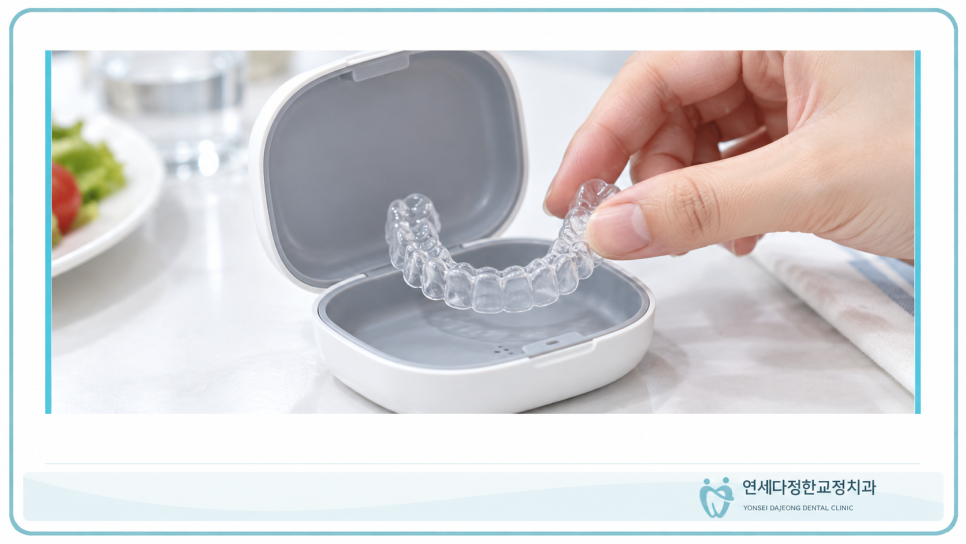
    Clear aligners are an orthodontic method that gradually moves teeth by switching through a series of clear plastic trays.
    Braces, by contrast, work by bonding brackets to the teeth and applying force through a wire.

    Invisalign is simply one brand of clear aligner.
    Just as many people use “Kleenex” to mean any tissue or “Band-Aid” for any adhesive bandage, the Invisalign name has become shorthand for clear aligners as a whole.
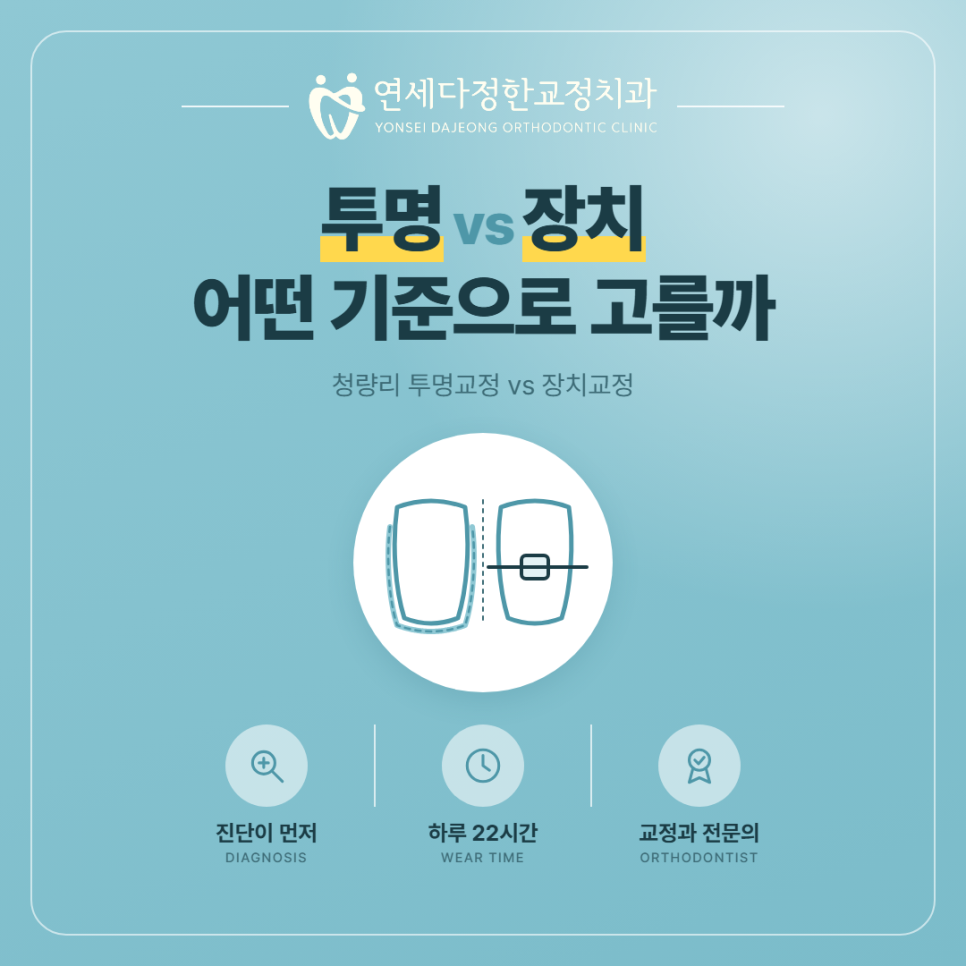
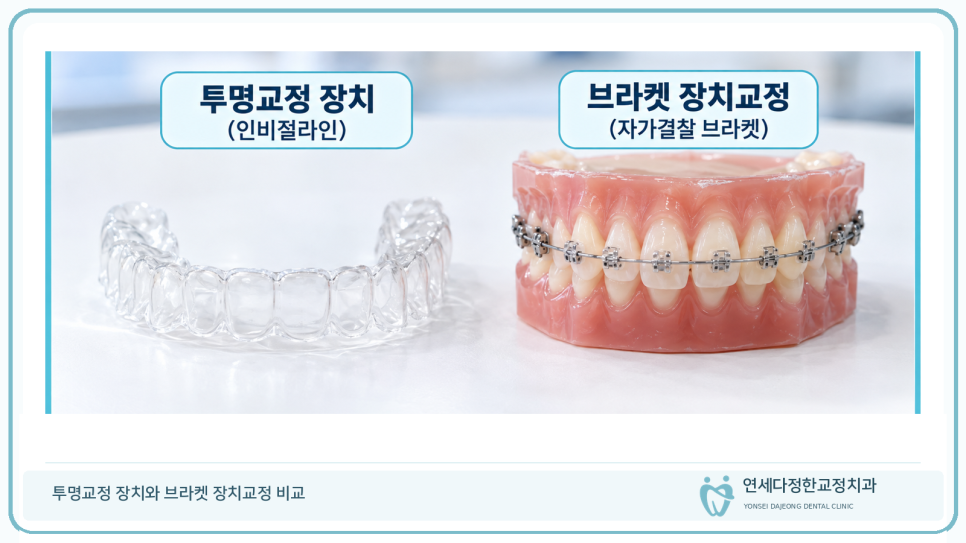
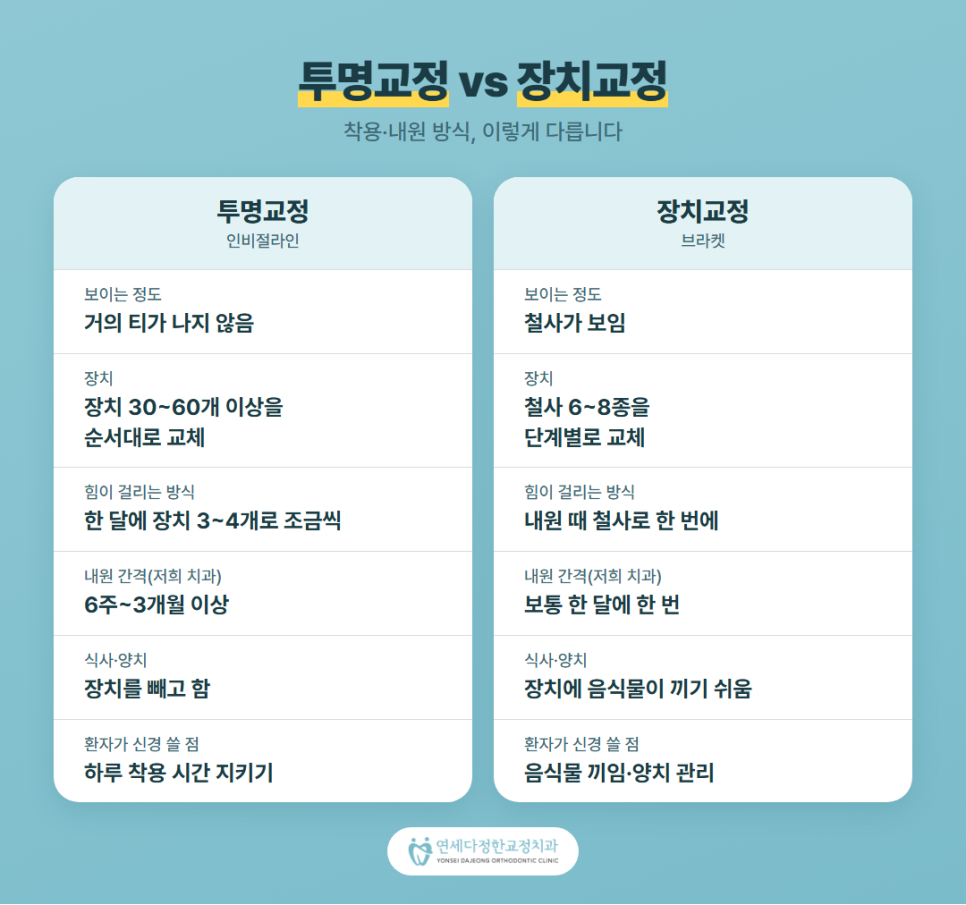
    Clear aligners vs braces comparison

    Clear aligners vs braces comparison image 2

    Category Clear Aligners Braces
    Appliance type Clear trays, changed every 1-2 weeks Brackets + wire
    Removable Removable for eating and brushing Not removable
    Visit frequency Every 6 weeks to 3 months Every 3-4 weeks
    Appearance Barely noticeable Visible appliance
    Pain pattern Mild discomfort spread over several occasions Sharper pain concentrated right after adjustments

    Clear aligners vs braces comparison image 3

    The way pain is experienced also differs.
    Traditional wire braces tend to cause a spike of discomfort right after each adjustment,
    while clear aligners tend to produce milder discomfort spread out over several weeks.


    When Are Clear Aligners Especially Advantageous?

    Even among patients with malocclusion, how much clear aligners help can vary.
    Malocclusion refers to a condition where the upper and lower teeth or jaw don’t align within a normal range.
    Clinically, clear aligners tend to work especially well in the following four situations.

    • Open bite — when the front teeth don’t meet when biting down
    • Deep bite — when the front teeth overlap excessively
    • Re-treatment — when teeth shift back out of alignment after previous orthodontic treatment
    • Orthodontic treatment for growing children

    On the other hand, more complex cases that require significant tooth movement — such as crowding, extraction cases, or protruding teeth — need careful evaluation to determine whether clear aligners alone are sufficient.
    The more complex the case, the more important it is to start with a detailed diagnostic consultation with a board-certified orthodontic specialist.

    For complex cases like an underbite where the lower jaw protrudes, some treatment approaches combine mini-screws with clear aligners to avoid extractions altogether.
    The guiding principle is always diagnosis first, with the choice of appliance coming second.
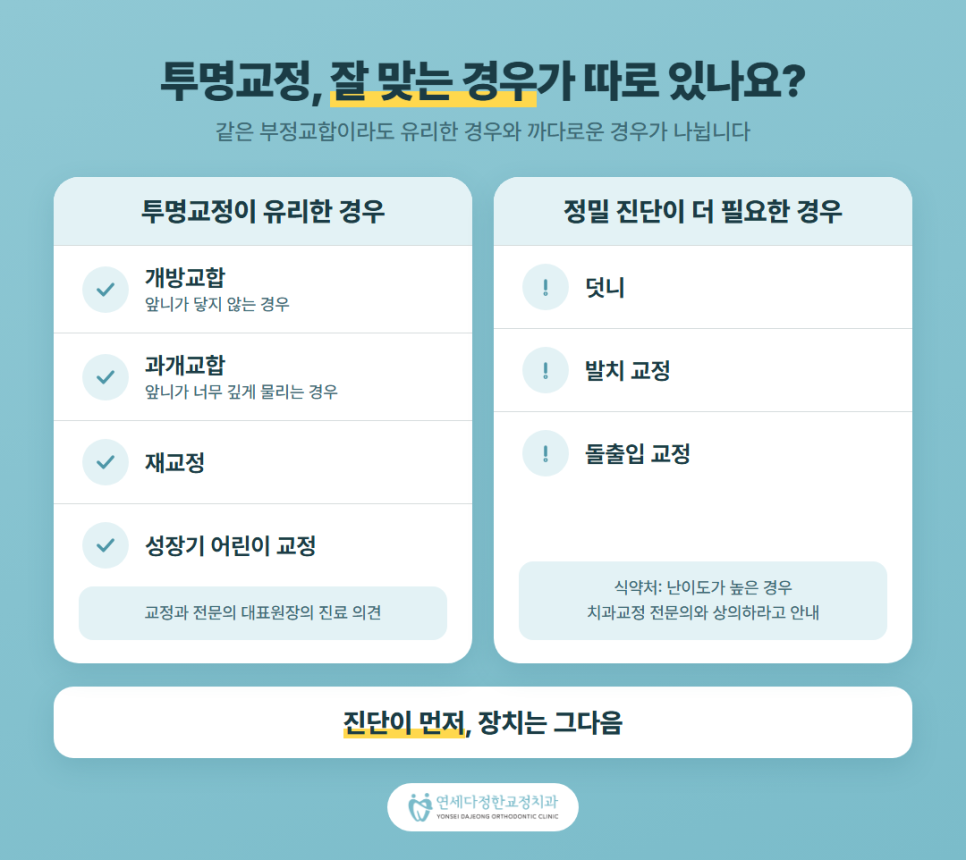
    Clear aligners vs braces comparison image 4


    What Happens When Teeth Don’t Move as Planned?

    In practice, teeth don’t always move exactly as planned with clear aligners.
    Studies report that the accuracy of rotational movement for canines — rotating the tooth into position — ranges from 35.8% to 64%, depending on the study.
    By contrast, intrusion of front teeth (moving them up to 2mm toward the gum line) has a much higher predictability, around 92%.

    That’s why treatment planning builds in safeguards from the start, with mid-course check-ins and additional trays to finish the job.
    Here are the four correction methods actually used in treatment planning.

    1. Attachments — small resin bumps bonded to teeth so the aligner can grip them more effectively
    2. Staging — breaking difficult tooth movements into smaller steps
    3. Mini-screws (orthodontic anchors) — small screws that anchor the back teeth so they don’t shift unintentionally
    4. Refinement trays — additional aligners made after a mid-treatment check to correct any teeth that haven’t moved as planned

    Clear aligners vs braces comparison image 5

    Invisalign plans tooth movement using a 3D simulation called ClinCheck.
    However, ClinCheck isn’t a system that creates the treatment plan on its own.
    It’s a tool that carries out the plan the dentist designs.
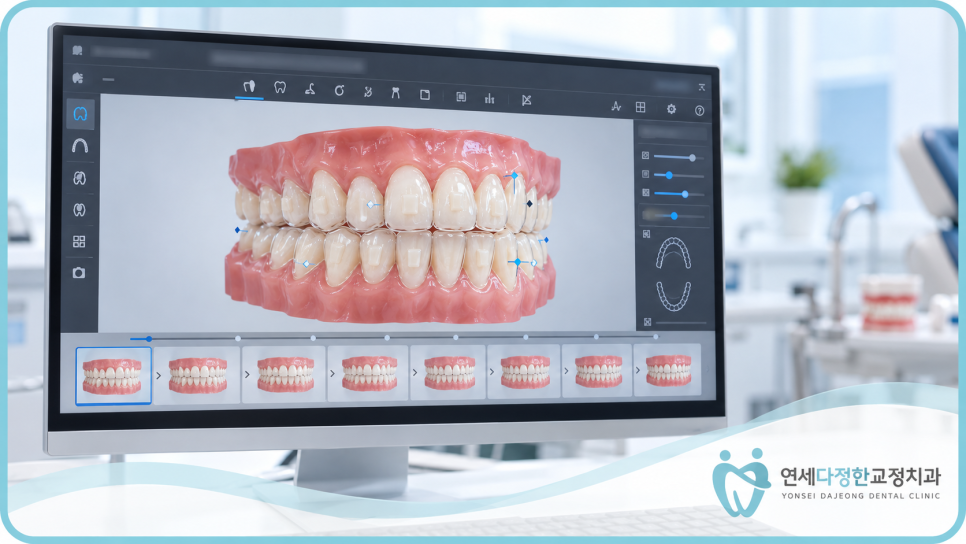
    Clear aligners vs braces comparison image 6


    How Many Hours a Day Should You Wear Clear Aligners?

    The basic rule is to wear your aligners nearly all day, removing them only to eat and brush.
    Research also considers 22+ hours a day to be the benchmark for adequate wear.

    Results
    In a study analyzing 2,644 clear aligner patients, only 36% (953 patients) were classified as “fully compliant,” meaning they consistently met this wear-time standard.
    The rest either fell short of the target or wore their aligners only intermittently.
    No matter how precisely an appliance is designed, treatment won’t progress as planned without enough wear time.
    Wear checklist
    ✅ Remove your aligners before eating
    ✅ Wash your hands with soap before putting them back in
    ✅ Switch to the next set in the correct order
    ✅ Confirm you’re wearing them more than 22 hours a day
    Caution
    If you experience discomfort, a damaged tray, a bite that feels off, or gum inflammation, stop wearing the aligner and contact your dentist right away rather than waiting for your next scheduled visit.
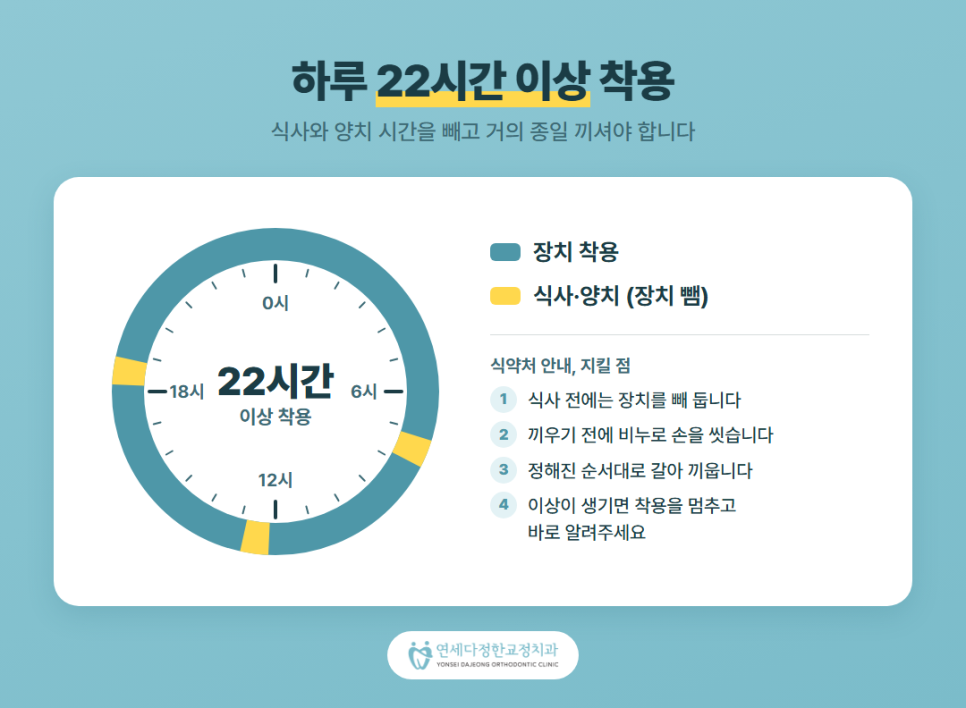
    Clear aligners vs braces comparison image 7

    Clear aligners vs braces comparison image 8


    How Do You Verify an Orthodontic Specialist?

    A board-certified orthodontist is a dentist who, after graduating from dental school, has completed a one-year internship and three-year residency, then passed the specialist qualifying exam administered by Korea’s Minister of Health and Welfare.
    Having “orthodontic training experience” or having “attended orthodontic conferences” is not the same as holding this specialist certification.

    • Directly confirm whether the doctor is a certified orthodontic specialist
    • Check whether the specialist director personally handles your case from the initial consultation through appliance removal
    • Check whether you receive a detailed diagnosis (such as X-rays) and a clear explanation of the treatment plan

    These days, clear aligners sold directly online have also become more common.
    However, regulators have actually caught cases where simple mouthguards with no real tooth-moving function were falsely advertised as clear aligners.

    “Clear dental aligners sold online through direct overseas purchase or purchasing-agent services have not been verified for safety or effectiveness, and consumers should never buy them.”

    Korea’s Ministry of Food and Drug Safety (MFDS) issued this warning in 2020 after catching 92 cases of false or exaggerated advertising for clear dental aligners sold online.

    In October 2026, the U.S. FDA also issued an official warning that it has never approved any clear aligner sold directly to consumers without dentist supervision.
    This came after reports of real complications, including tooth pain, jaw pain, and bite problems.
    Clear aligner treatment should always begin with an in-person diagnosis at a dental clinic.

    Clear aligners vs braces comparison image 9

    Located across from Cheongnyangni Station in Dongdaemun-gu, Seoul, Cheongnyangni Yonsei Dajeonghan Orthodontics is an orthodontic clinic where a director who is a board-certified specialist in orthodontics and integrated dentistry personally handles every patient from the initial consultation through appliance removal.


    Frequently Asked Questions

    1. Does Invisalign hurt?
    It’s not entirely painless. However, because the force is applied gradually over many small steps, the discomfort is often milder compared to traditional braces.

    2. How often do I need to visit the clinic for clear aligner treatment in Cheongnyangni?
    Check-ups are typically scheduled every 6 weeks, sometimes up to every 3 months or more.

    3. Is clear aligner treatment covered by national health insurance?
    General orthodontic treatment, including clear aligners, is not covered by national health insurance in Korea and is billed as an out-of-pocket procedure. Costs are provided after a detailed diagnosis.

    4. Should I choose clear aligners or braces?
    Rather than the type of appliance, the priority is a detailed diagnosis of your teeth and jaw, and whether you can realistically commit to wearing aligners 22+ hours a day for the full treatment.

    5. Are clear aligners sold online safe?
    Clear aligners sold without an in-person dental diagnosis are not recommended — both Korea’s MFDS and the U.S. FDA have warned that their safety has not been verified.


    References

    · Khosravi R, et al., “Factors Influencing Patient Compliance during Clear Aligner Therapy: A Retrospective Cohort Study,” PMC, 2021. View source
    · Korea Ministry of Food and Drug Safety (MFDS), “92 Cases of False and Exaggerated Advertising for Unauthorized Dental Aligners Caught,” Hit News, 2020. View source
    · ADA News, “FDA warns public about unauthorized direct-to-consumer clear aligners,” American Dental Association, 2026. View source
    · Ministry of Health and Welfare, “Regulations on Specialist Training and Qualification Recognition,” Korea Law Information Center, 2025. View source
    · “Accuracy of Invisalign aligners in adult patients: a retrospective study of angular tooth movements,” PMC, 2024. View source


    This article is intended for general health information purposes only and is not a substitute for individual diagnosis or treatment. If you have symptoms, please consult a specialist.
  • Overbite in Children: A Real 6-Month Preortho Growth Treatment Case

    Overbite in Children: A Real 6-Month Preortho Growth Treatment Case

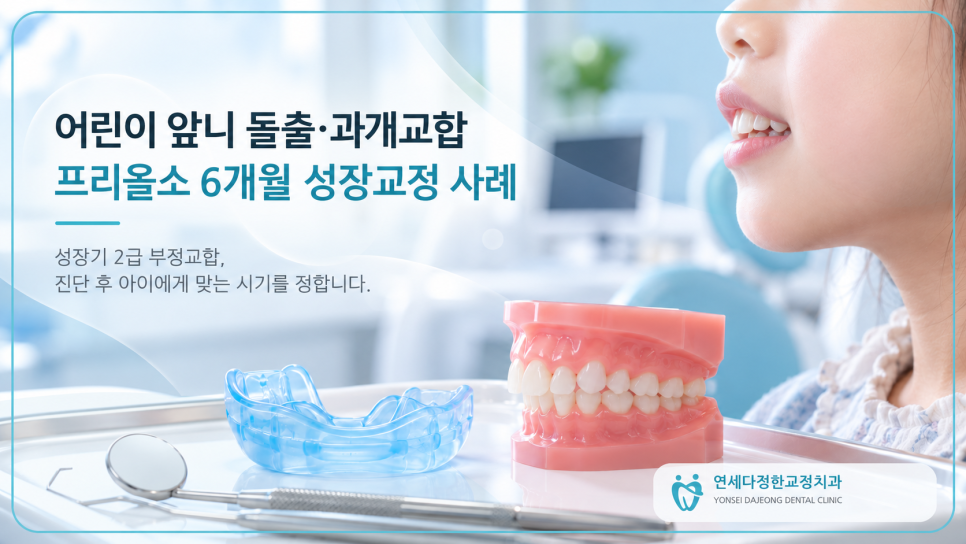
    SummaryWhat causes protruding front teeth and overbite in children, and when should orthodontic treatment start? This article covers a real case of an elementary school student whose growth orthodontics changed in 6 months with Preortho, along with the right age for a first checkup, daily wear time, and what to watch for after treatment. Helpful for parents of growing children.

    Upper front teeth that stand out whenever a child smiles
    are often dismissed as “just genetics,” but that’s not always the whole story.

    Protruding front teeth in children have been linked to up to a 3-fold higher risk of front tooth injury compared with children who don’t have this trait, according to research.

    In this article, we’ll look at a case where protruding front teeth and overbite occurred together, and walk through how 6 months of growth orthodontics with Preortho played out.

    Key Points
    Key Summary
    Protruding front teeth in children are often a form of Class II malocclusion caused by slower lower jaw growth, and may appear alongside an overbite.
    Both the Korean Association of Orthodontists and the American Association of Orthodontists (AAO) recommend a first orthodontic checkup around age 6–7, and related research reports a lower rate of new front tooth injury in early-treatment groups compared with delayed-treatment groups (19% vs. 30%).
    This article covers a case in which overjet and overbite were observed to improve over 6 months using a Preortho Type1 appliance.

    Protruding front teeth in a child

    Why Do Children Get Protruding Front Teeth?

    Protruding front teeth in children are reported to result more often from slower lower jaw growth than from an oversized upper jaw.

    In orthodontics, this condition is called Class II malocclusion.
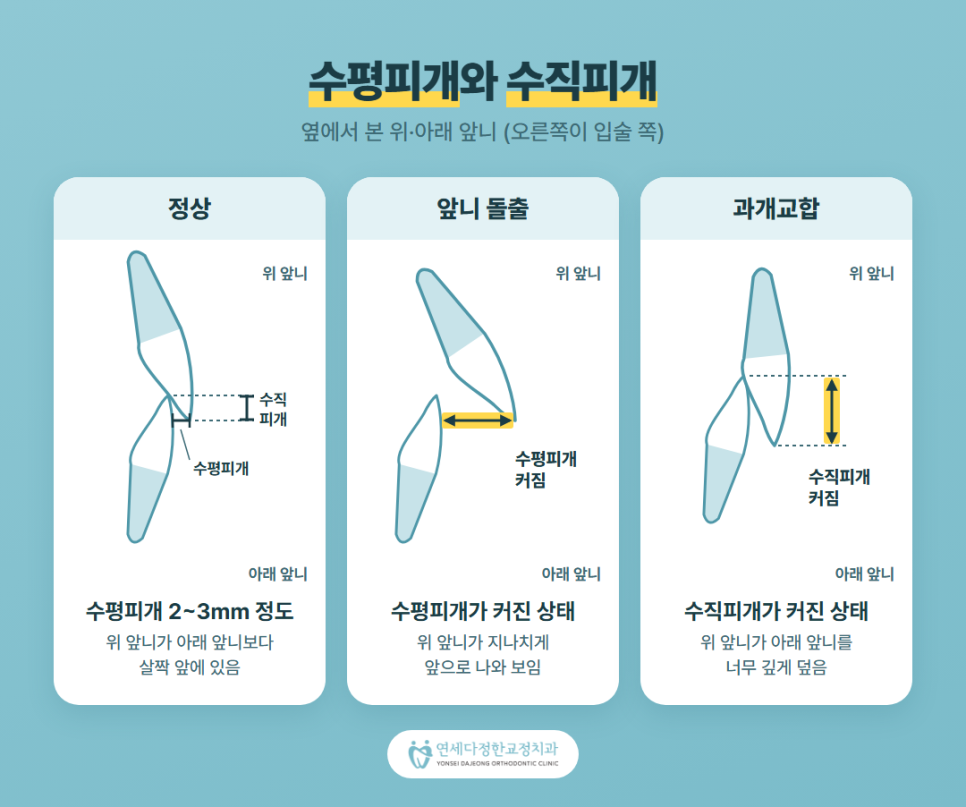
    The front-to-back gap between the upper and lower front teeth is called overjet.
    A normal range is generally when the upper front teeth sit about 2–3mm ahead of the lower front teeth.

    As this gap increases, the front teeth appear to stick out more.

    Protruding front teeth in children - image 2

    Jaw shape is strongly influenced by genetics, and oral habits such as thumb sucking, lip sucking, and mouth breathing can also negatively affect tooth alignment.

    There’s one more thing to note.
    A systematic review found that when overjet exceeds 3–3.5mm, the risk of front tooth injury roughly doubles, and beyond 6mm it can rise to about 3 times higher.
    (Kids really do fall a lot…)


    Is It Okay to Leave an Overbite in Children Untreated?

    If left untreated, a severe overbite can lead to gum damage or excessive tooth wear, so a proper diagnosis is needed.

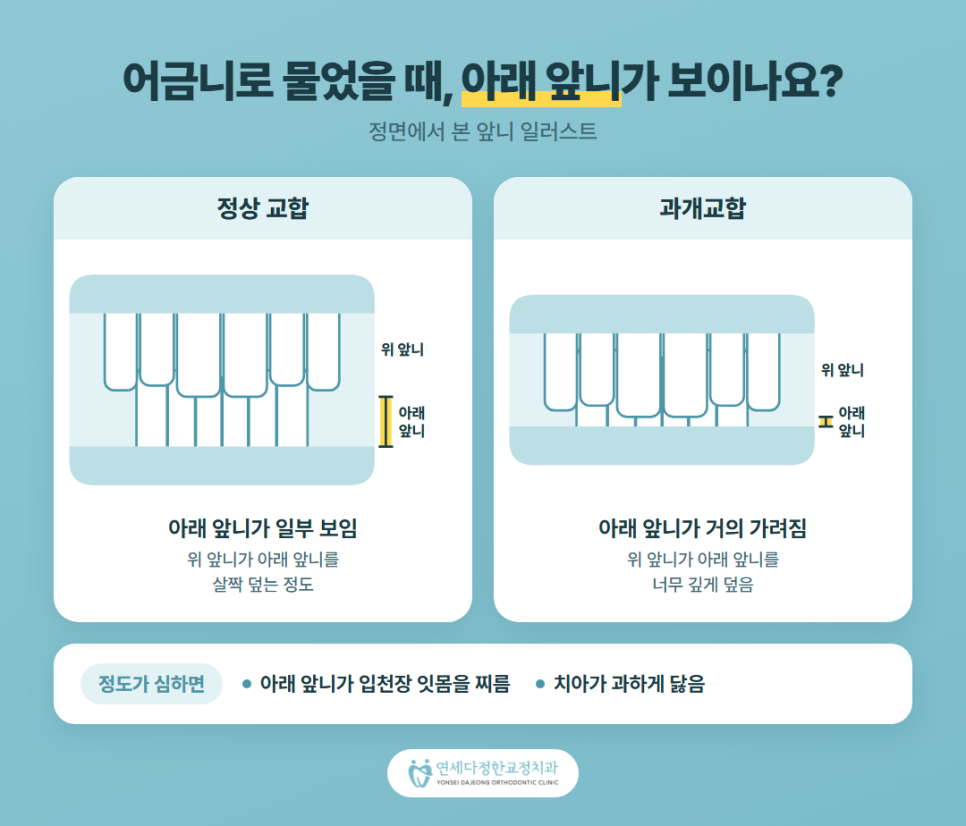
    An overbite (deep bite) refers to a condition where the upper front teeth overlap the lower front teeth so much that, when biting down on the back teeth, the lower front teeth are barely visible.
    It’s a common type of malocclusion that often appears together with protruding front teeth and a recessed chin.

    Protruding front teeth in children - image 3

    In severe cases, the lower front teeth can dig into the palate gum tissue or cause excessive tooth wear.

    Caution
    Many parents worry about a link to TMJ (jaw joint) disorders. While some reports note an association, there isn’t yet enough evidence to conclude that an overbite directly causes TMJ disorders. If there is jaw joint pain or clicking, we recommend a separate consultation with a specialist.

    When and How Should Growth Orthodontics Start?

    The honest answer is “it depends on the child,” which is exactly why getting an orthodontic checkup around age 7 matters.

    Starting treatment as early as possible isn’t automatically right, and neither is simply waiting.
    That’s why the timing of permanent front teeth eruption is used as a reference point.

    “See an orthodontist for a checkup at age 7”

    The Korean Association of Orthodontists is reportedly running a public awareness campaign with this message, recommending a first orthodontic checkup around age 7. The American Association of Orthodontists (AAO) similarly recommends a first checkup no later than age 7.

    An international systematic review (a Cochrane-affiliated study) found that the rate of new front tooth injury was 19% in the group that received first-phase treatment at ages 7–11, compared with 30% in the group treated only once during adolescence.
    However, there was no clear difference in final outcomes between the two groups once all treatment was complete.

    That’s why the principle is to diagnose first, and choose the appliance afterward.

    Item Details
    First orthodontic checkup Around age 7
    Checking for a recessed-chin tendency Typically during the late-elementary growth spurt, or earlier in severe cases
    Age range for Preortho use From about age 5–6 up to around age 12
    Preortho treatment duration Typically 6 months to 1 year
    Daily wear time Manufacturer recommendation: 1+ hour during the day plus 8+ hours at night (our clinic recommends 12+ hours)
    After all permanent teeth erupt Second-phase orthodontics if needed
    Checklist
    ✅ Has your child had an orthodontic checkup around age 7?
    ✅ Does your child have oral habits like thumb sucking or lip sucking?
    ✅ Do the front teeth look more protruded as the permanent ones come in?
    ✅ Do the upper teeth appear to cover the lower teeth significantly?

    What Actually Changed After Wearing Preortho?

    This is the case of an elementary school patient who came in concerned about protruding front teeth and difficulty closing the lips fully.

    Protruding front teeth in children - image 4

    Protruding front teeth in children - image 5

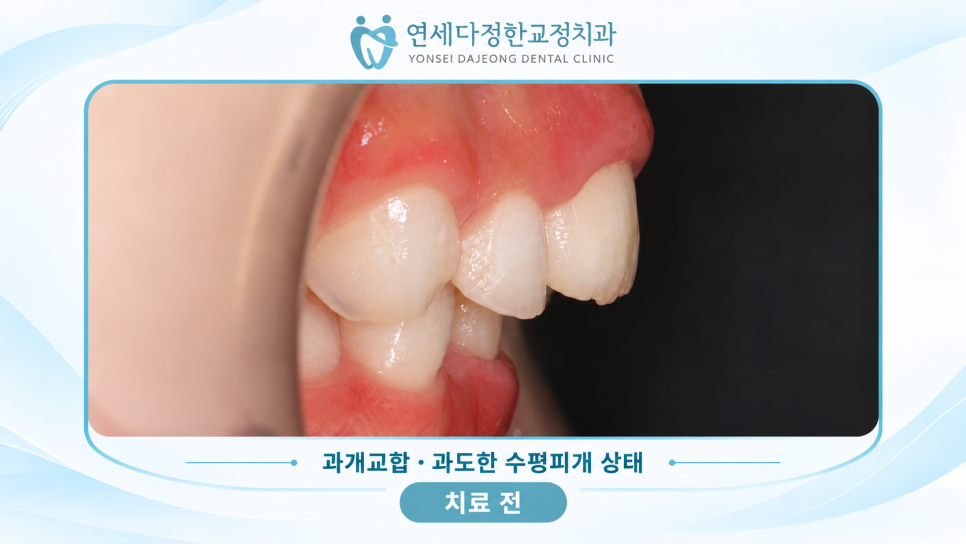
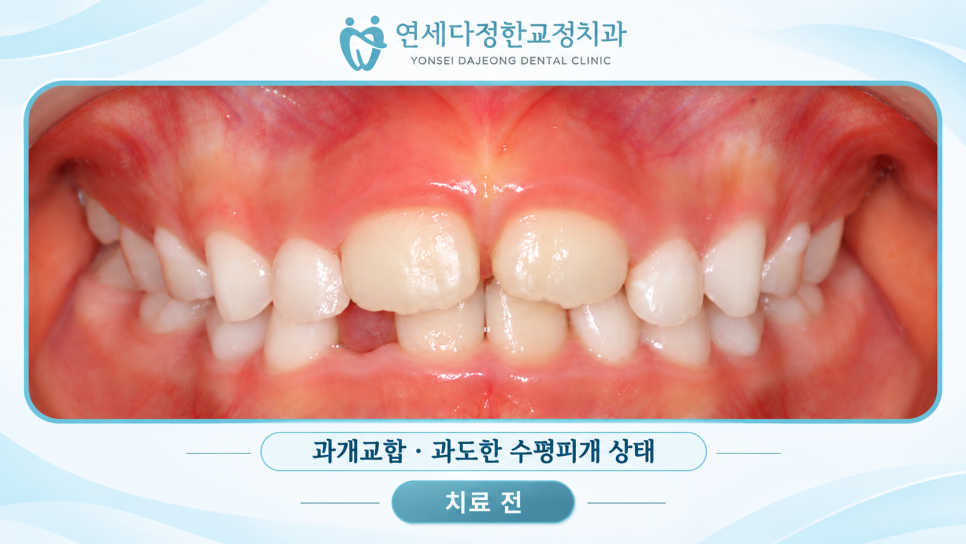
    The intraoral photos showed the upper front teeth positioned excessively ahead of the lower front teeth, with an overbite in which the upper teeth covered almost all of the lower teeth.
    The occlusal view also suggested limited space for the permanent teeth to erupt.

    Since the first molars and lateral incisors had not yet erupted, it was a bit early for a removable appliance or clear aligners (Invisalign First).
    So the appliance chosen was Preortho, a silicone mouthguard-type appliance.

    Preortho is broadly divided into Type1 and Type3.
    Type3 is used for underbite/crossbite cases, while Type1 is used for protruding front teeth and overbite.

    Protruding front teeth in children - image 6

    What Does Preortho Type1 Aim to Achieve?

    Type1 targets five goals.

    1. Reducing protruding front teeth
    2. Improving overbite
    3. Encouraging lower jaw growth
    4. Mild arch expansion
    5. Mild front teeth alignment

    For this patient, all five goals aligned with what was needed, so treatment began right away.

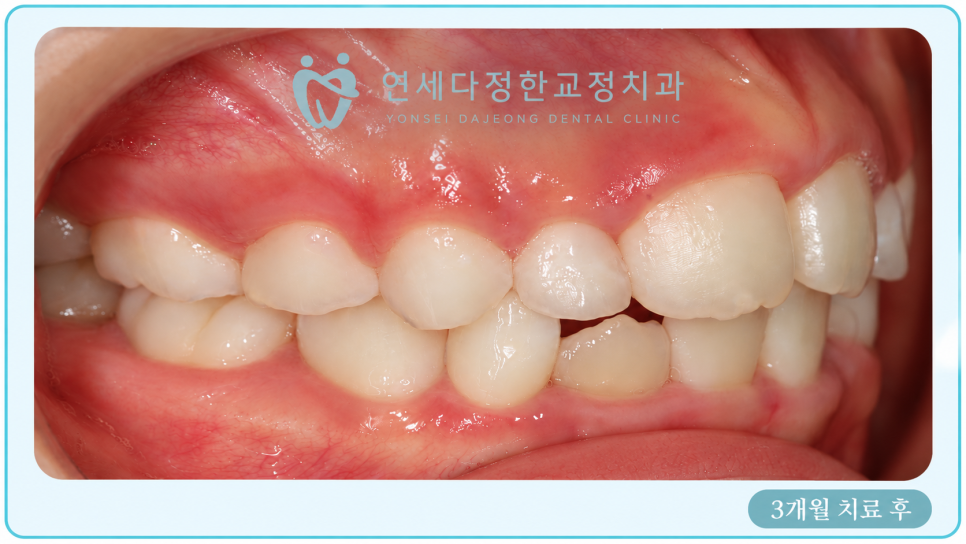
    By around the 3-month mark, the upper front teeth appeared to move inward, with overjet appearing to decrease and the overbite appearing to improve as well.

    Protruding front teeth in children - image 7

    Protruding front teeth in children - image 8

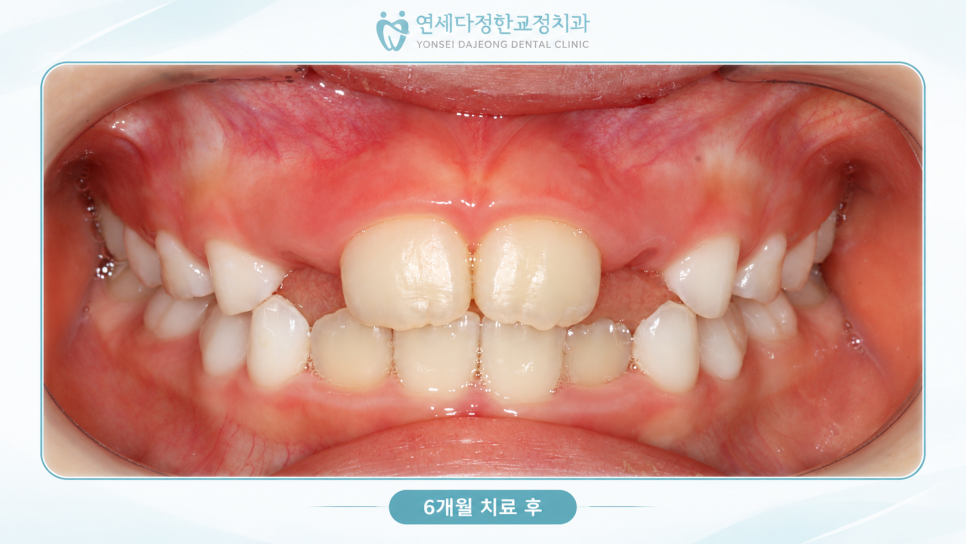
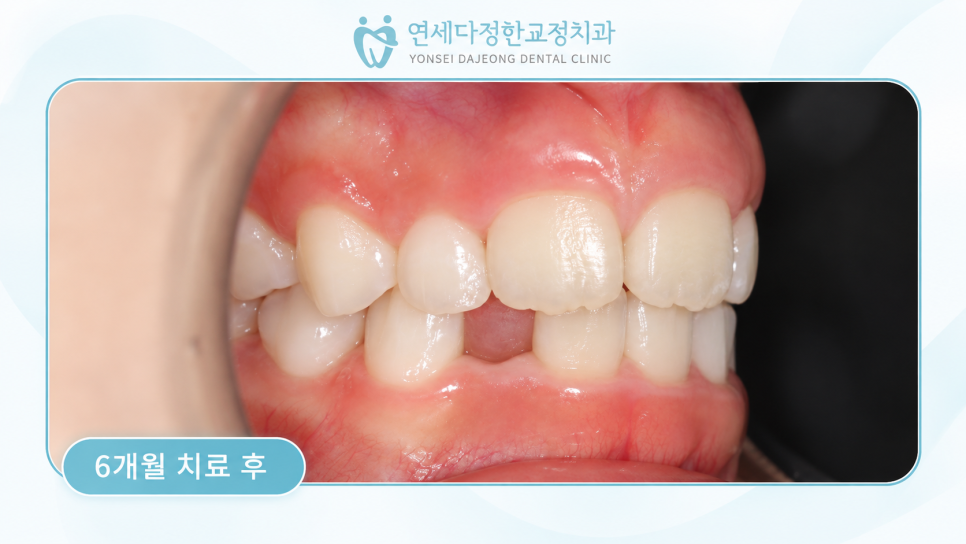
    Preortho wear was then completed at the 6-month mark.

    Protruding front teeth in children - image 9

    Protruding front teeth in children - image 10

    Result
    The lower front teeth, previously more than half hidden by the overbite, appeared to become more visible.
    The upper front teeth, which had been excessively advanced relative to the lower front teeth, were also observed to have moved inward.

    Protruding front teeth in children - image 11

    Protruding front teeth in children - image 12

    The occlusal view appeared to show that both the upper and lower arches had widened, and the previously spaced-out upper front teeth appeared more aligned.

    Protruding front teeth in children - image 13

    Protruding front teeth in children - image 14

    Growth-phase treatment is less about finishing orthodontics and more about guiding the direction of growth.
    Even in cases where extraction would be unavoidable for an adult, guiding growth in the right direction can sometimes achieve adequate results without extraction.
    However, once all permanent teeth have erupted, second-phase orthodontics for tooth alignment may still be needed.

    Protruding front teeth in children - image 15

    Cheongnyangni Yonsei Dajeonghan Orthodontic Clinic, located in Cheongnyangni, Dongdaemun-gu, Seoul, is an orthodontic specialty clinic where the director — board-certified in both orthodontics and integrated dentistry — personally handles everything from the initial consultation to appliance removal.


    Frequently Asked Questions

    1. At what age should a child with protruding front teeth get checked?
    We recommend an orthodontic checkup around age 7. A checkup doesn’t mean treatment starts immediately — the right timing varies by child.

    2. How many hours a day should Preortho be worn?
    The manufacturer recommends at least 1 hour during the day and 8+ hours while sleeping. Our clinic recommends at least 12 hours of wear per day.

    3. If a child does growth orthodontics, will they need braces later?
    Second-phase orthodontics for tooth alignment may still be needed once all permanent teeth have erupted.

    4. What happens if an overbite is left untreated in children?
    In severe cases, it can cause the lower front teeth to dig into the gums or lead to excessive tooth wear, so a proper diagnosis is important.


    References

    · Thiruvenkatachari B, et al., Cochrane-affiliated systematic review (early Class II treatment vs. front tooth injury rate, 19% vs. 30%), Evidence-Based Dentistry/PubMed, 2014. View source
    · Arraj GP, et al., “The association of overjet size and traumatic dental injuries: a systematic review and meta-analysis,” Dental Traumatology, 2019. View source
    · American Association of Orthodontists, “Child Orthodontics” (recommends a first checkup by age 7). View source
    · News coverage of the Korean Association of Orthodontists’ age-7 checkup campaign, Dental Today. View source


    This article is intended for general health information purposes only and cannot replace individual diagnosis or treatment. If you notice symptoms, please consult a specialist.

  • Tooth Sensitivity Root Canal: 5 Signs You Need Treatment

    Tooth Sensitivity Root Canal: 5 Signs You Need Treatment

    SummaryNot every case of cold-sensitive teeth ends in a root canal. This guide breaks down tooth sensitivity root canal warning signs by looking at how long pain lingers after a stimulus fades, plus the treatment steps from cervical abrasion to crowns. Check with a dental clinic in Cheongnyangni to find out where you stand.

    Your coffee goes down just fine, but the second cold water hits a back tooth, it stings.
    Does sensitivity like that mean you’re headed straight for a root canal?

    Not necessarily.
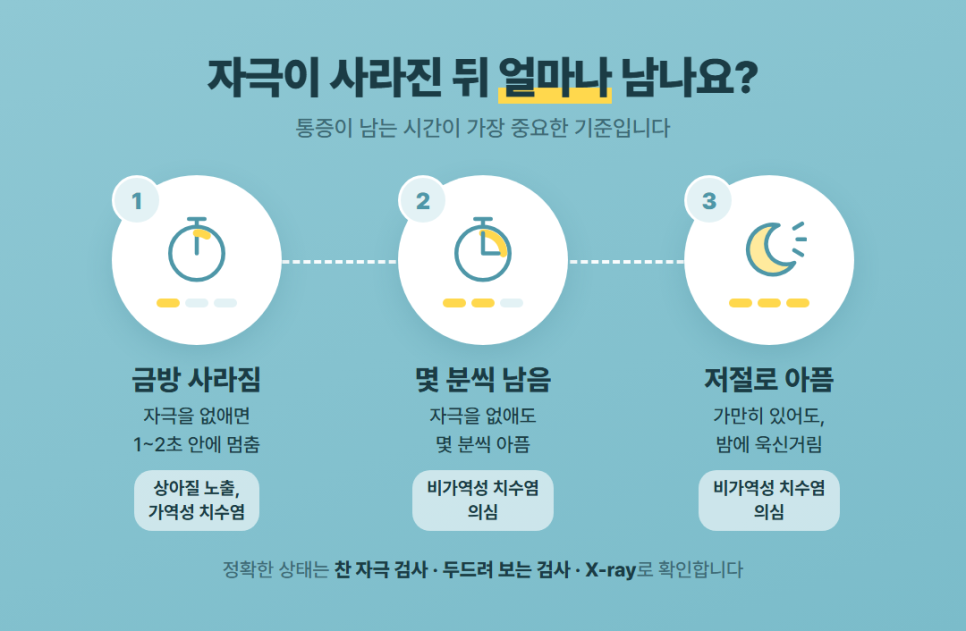
    How long the pain lingers after the stimulus is gone is one of the key factors that can help guide your treatment path.

    Key takeaway
    If the sensitivity fades within 1-2 seconds of removing the stimulus, the nerve is likely still alive — a sign of reversible pulpitis.
    If pain lingers for several minutes or throbs at night, you should suspect irreversible pulpitis, which may require tooth sensitivity root canal treatment.
    According to Korea’s national health information portal, dentin hypersensitivity affects an estimated 8-57% of adults, but simply timing how long the pain lasts can help you gauge how healthy the nerve is.

    tooth sensitivity root canal

    Why Do My Teeth Hurt When I Drink Something Cold?

    The short answer is simple.
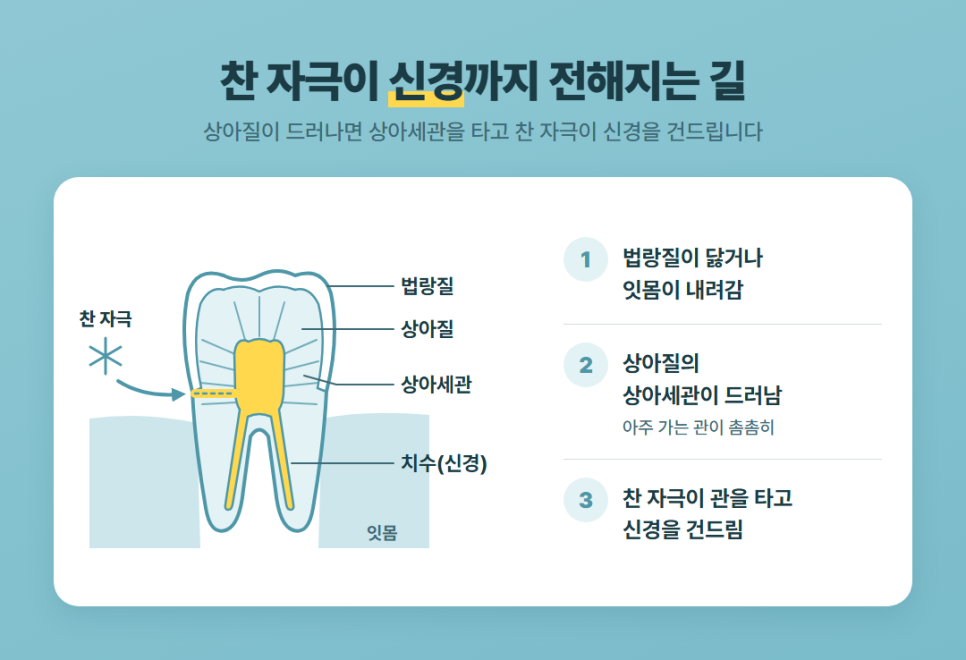
    Once dentin becomes exposed, cold stimuli travel straight through to the nerve.

    Dentin hypersensitivity is a condition in which external stimuli, carried through the dentinal tubules, excite the pulp nerve and trigger pain.
    When enamel that once covered the dentin wears away or the gumline recedes, cold reaches the nerve almost instantly through those thin dentinal tubules.

    A tooth is made up of enamel, dentin, cementum, and pulp. When dentin is exposed, it reacts sensitively to outside stimuli, producing sensitivity symptoms.

    That’s how the Korea Disease Control and Prevention Agency’s National Health Information Portal describes ‘tooth sensitivity (dentin hypersensitivity)’ in its entry on the topic.

    The most widely accepted explanation is the hydrodynamic theory, proposed by Brännström in 1964.
    Fluid inside the dentinal tubules shifts rapidly in response to temperature and pressure changes, and that movement is what irritates the nerve.

    tooth sensitivity root canal illustration 2

    One of the most common causes of tooth sensitivity is cervical abrasion.
    The cervical area, where the tooth meets the gum, has the thinnest enamel, so it’s usually the first spot to wear down from chewing force or teeth grinding.

    Brushing side-to-side with heavy pressure is another common habit that speeds up this wear.
    Cavities, cracked teeth, worn-out fillings, gum disease, and temporary sensitivity right after teeth whitening can all be contributing causes as well.

    tooth sensitivity root canal illustration 3


    How Do I Tell Tooth Sensitivity Apart From a Toothache?

    One of the most important factors is how long pain lingers after the stimulus is gone.
    If the sting is brief and fades quickly, the nerve is often still healthy.

    If pain lasts for several minutes, or if heat makes it worse, you should suspect a nerve-related problem.

    Pain Pattern Likely Condition
    Fades within 1-2 seconds after the stimulus is removed Dentin exposure, reversible pulpitis
    Lasts several minutes even after the stimulus is removed Irreversible pulpitis
    Throbs even at rest, worse at night Irreversible pulpitis
    Sharp, irregular pain when chewing Cracked tooth
    Tooth feels “raised,” gum swelling or pus Apical (root-tip) abscess

    tooth sensitivity root canal illustration 4

    Caution
    This table is only a rough reference to help you guess what might be going on.
    An accurate diagnosis requires a cold test, percussion test, and X-ray at a dental clinic.

    What Treatments Come Before a Root Canal?

    If the nerve is still alive, treatment usually starts with sealing and protecting the sensitive area.

    If only dentin is exposed, a desensitizing toothpaste or an in-office fluoride or sealant application can block the dentinal tubules.
    If the cervical area has worn into a notch, dentists typically fill it with resin or GI (glass ionomer).

    If a cavity has reached the dentin, the decay is removed and the space is filled with resin or an inlay in most cases.

    Key points
    ✔ Dentin exposed → fluoride/sealant, desensitizing toothpaste
    ✔ Cervical wear or notching → resin or GI filling
    ✔ Decay reaching dentin → resin or inlay treatment
    ✔ Inflammation reaching the nerve → root canal treatment should be considered
    Typical outcome
    When the cervical notch isn’t deep, a resin filling can often resolve the pain without further treatment.
    When decay is caught early in the dentin, it can frequently be managed with an inlay or resin filling without needing a root canal.

    Tooth Sensitivity Root Canal: When Is It Actually Necessary?

    Once nerve inflammation reaches a stage where it’s unlikely to heal on its own, root canal treatment or extraction becomes necessary.
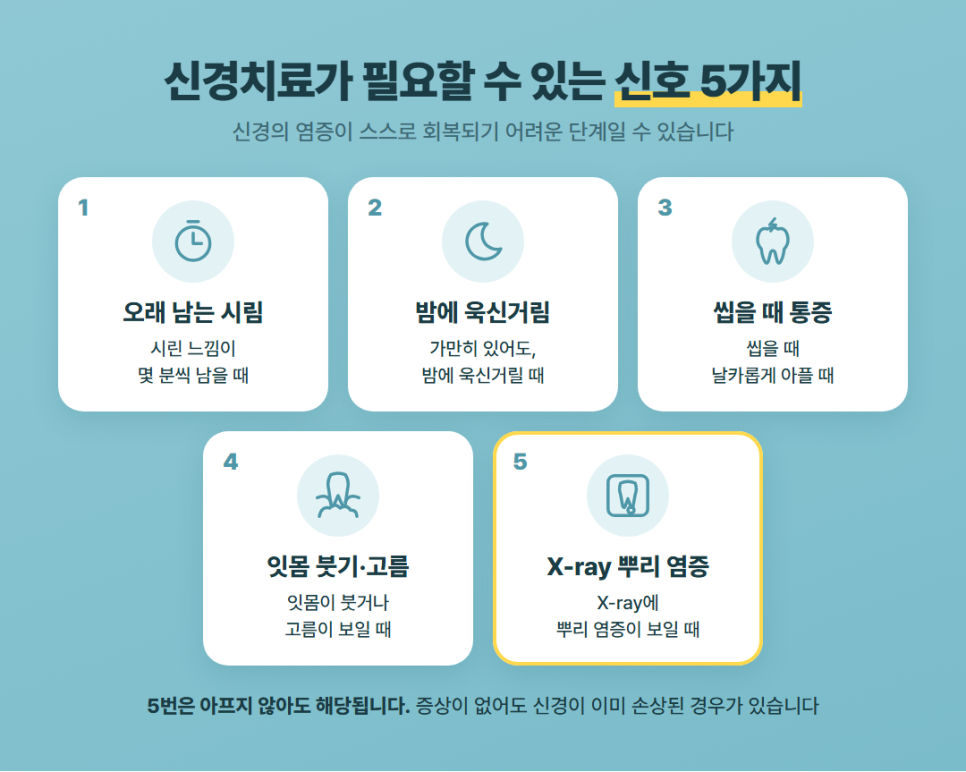
    If any of the five signs below apply to you, it’s best to get checked out soon.

    Checklist
    ✅ Sensitivity lingers for several minutes
    ✅ Throbs even at rest, worse at night
    ✅ Sharp pain when chewing
    ✅ Gum swelling or visible pus
    ✅ Root-tip inflammation shows up on an X-ray (even without pain)

    tooth sensitivity root canal illustration 5

    That fifth sign matters because it applies even without pain.
    That’s because the nerve can already be damaged with no symptoms at all.

    Root canal treatment removes the inflamed nerve tissue, disinfects the canal, and seals it, with the goal of saving your natural tooth.

    If the Pain Suddenly Stops, Does That Mean It’s Healed?

    No.
    If severe pain suddenly disappears, it may mean the nerve has died and can no longer register pain.

    The inflammation is often still active even after the pain is gone.
    Left untreated, the infection can spread to the root tip, causing gum swelling and pus, and in more advanced cases it can spread into the jawbone, which can lead to tooth loss.

    tooth sensitivity root canal illustration 6

    Caution
    Painkillers or antibiotics only ease the pain temporarily — they don’t address the underlying problem.
    The longer treatment is delayed, the more visits and more extensive treatment may be needed.

    Why Do You Need a Crown After a Root Canal?

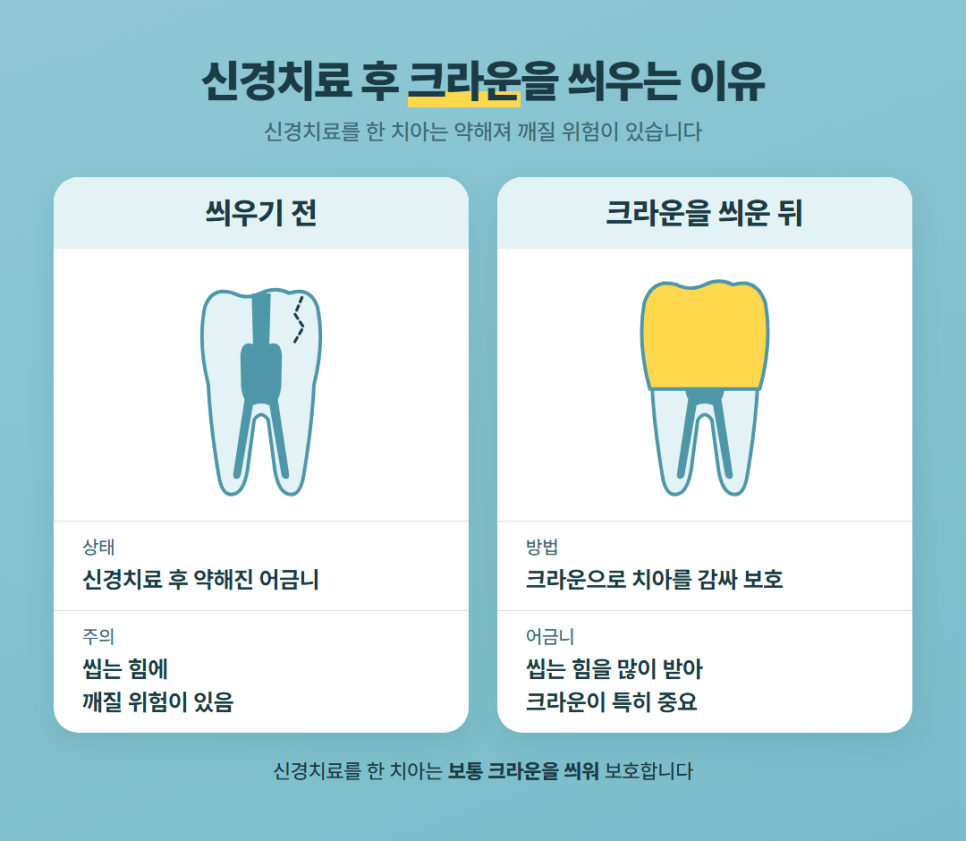
    Because a tooth becomes structurally weaker after root canal treatment, it’s usually covered with a crown for protection in most cases.

    Once the nerve and blood vessels are removed, the tooth gradually dries out, and since the procedure hollows out the center of the tooth, it becomes more prone to fracture.

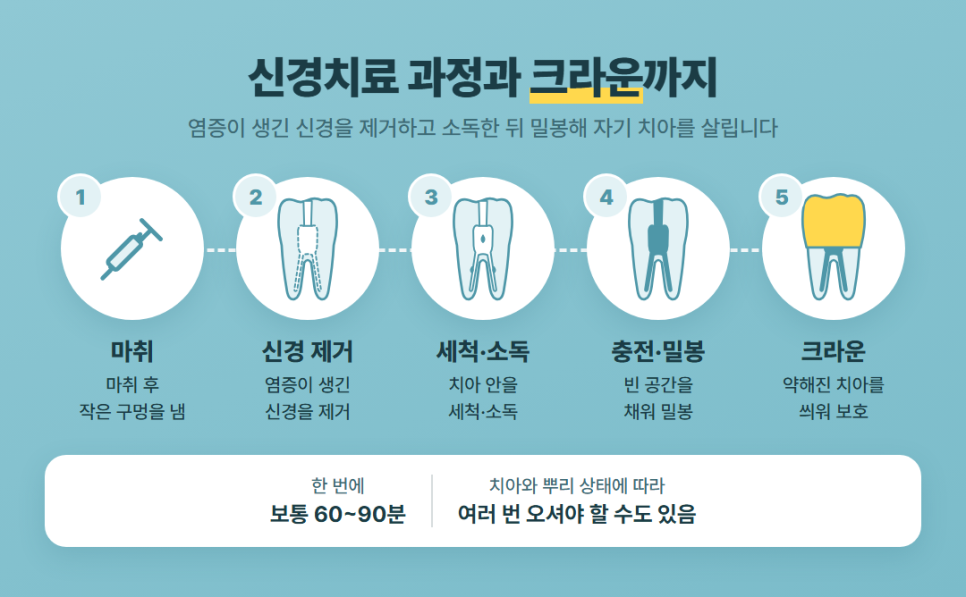
    Root canal treatment generally follows these steps:

    1. Administer anesthesia and create a small opening to access the inflamed nerve
    2. Remove the inflamed nerve tissue
    3. Clean and disinfect the inside of the tooth
    4. Fill and seal the empty space
    5. Fabricate a crown to protect the weakened tooth

    Each session usually takes about 30 to 90 minutes, and depending on the tooth and root condition, treatment may be split across multiple visits.
    The crown’s role matters even more for molars, which bear the brunt of chewing force.

    tooth sensitivity root canal illustration 7

    tooth sensitivity root canal illustration 8

    Key points
    ✔ Teeth can weaken after root canal treatment
    ✔ A crown helps prevent fracture
    ✔ Crowns matter more for molars
    ✔ Treatment typically takes 30-90 minutes per session

    Yonsei Dajeonghan Orthodontics, located in Cheongnyangni, Dongdaemun-gu, Seoul, brings together specialists in orthodontics, periodontics, and comprehensive dentistry who collaborate on care ranging from orthodontic treatment to cavities and prosthodontics.
    If you’d like to learn more about tooth sensitivity, you can review treatment information on the Yonsei Dajeonghan Orthodontics homepage in Cheongnyangni.

    When cold sensitivity strikes, start by checking how long the pain lingers after the stimulus is gone.
    Even if your symptoms are ambiguous, it’s safest to have a dentist confirm whether tooth sensitivity root canal treatment is actually needed.


    Frequently Asked Questions

    1. Is desensitizing toothpaste enough on its own?
    If only dentin is exposed, it often helps. You can also dab a small amount on your finger and apply it directly to the sensitive spot. However, if the cause is a cavity or a cracked tooth, toothpaste alone won’t resolve it.

    2. Do I need to see a dentist right away for cold sensitivity?
    Sensitivity that fades quickly isn’t an emergency, but it still needs to be checked. If painkillers can’t control the pain, you should see a dentist as soon as possible.

    3. I’m in braces and my teeth feel sensitive — is that normal?
    There are reports that orthodontic force can temporarily increase sensitivity in the tissue around the teeth, and it usually settles once tooth movement stabilizes. That said, if the sensitivity lasts a long time or the tooth aches on its own, let your orthodontist know right away rather than waiting for your next scheduled visit.

    4. Does a cervical notch always lead to a root canal?
    Not necessarily. If it’s left unmanaged and decay deepens, it can eventually require a root canal, but if caught before it progresses, a resin filling is often enough.

    5. Is a crown always necessary after a root canal?
    For teeth that bear heavy chewing force, like molars, going without a crown raises the risk of fracture, so it’s recommended in most cases.


    References

    · Korea Disease Control and Prevention Agency, “Tooth Sensitivity (Dentin Hypersensitivity),” National Health Information Portal. Link
    · Seoul National University Hospital, “Reversible Pulpitis,” SNUH Health Information. Link
    · Wikipedia, “Dentin Hypersensitivity” (Brännström’s hydrodynamic theory, 1964). Link


    This article is intended for general health information purposes only and is not a substitute for individual diagnosis or treatment. If you have symptoms, please consult a dental professional.

  • Diastema Causes: 6 Reasons for Gap Teeth and the 49% Relapse Risk

    Diastema Causes: 6 Reasons for Gap Teeth and the 49% Relapse Risk

    SummaryDiastema causes determine the entire treatment plan for closing a front teeth gap. From the 6 most common causes—gum disease, bite issues, and tooth size—to how it differs from resin bonding and veneers, and the retainer habits that help lower the 49% relapse rate, this Dongdaemun orthodontic clinic guide covers it all.

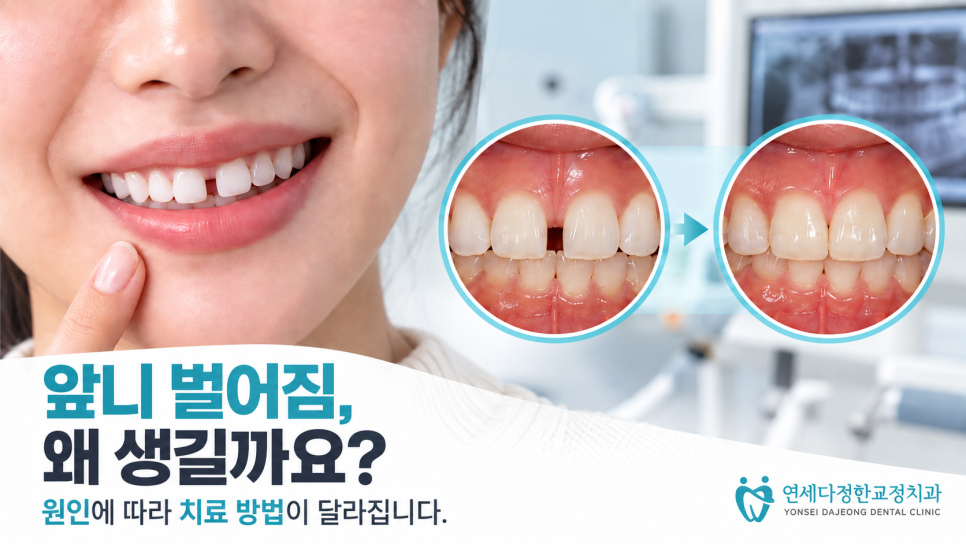
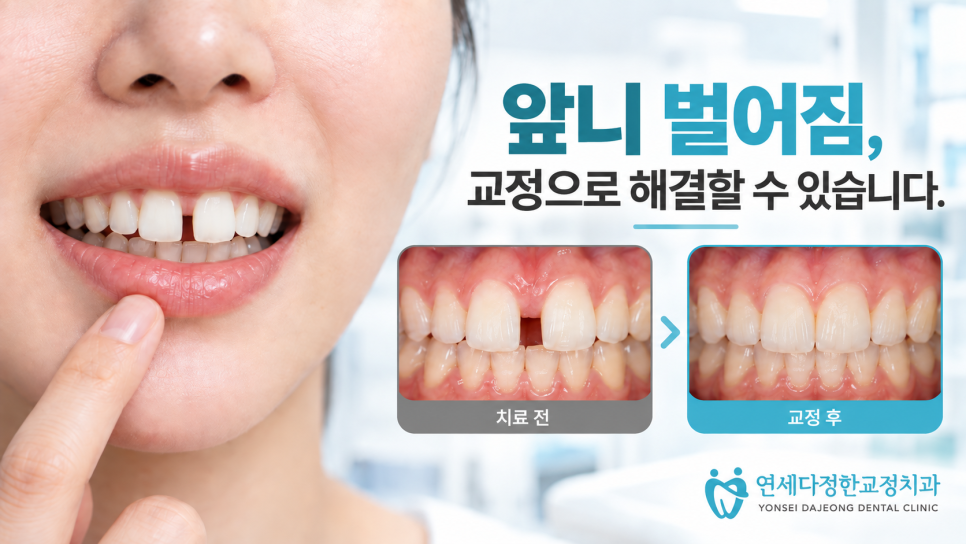
    Many people start researching diastema treatment for a gap between their front teeth, then hesitate.
    That’s often because of accounts describing the gap reopening even after braces closed it.

    But moving teeth to close a gap
    and addressing why the gap formed in the first place are two different problems.
    Depending on whether gum disease or a bite issue is the cause,
    the treatment order and outlook change completely.

    Key Takeaways
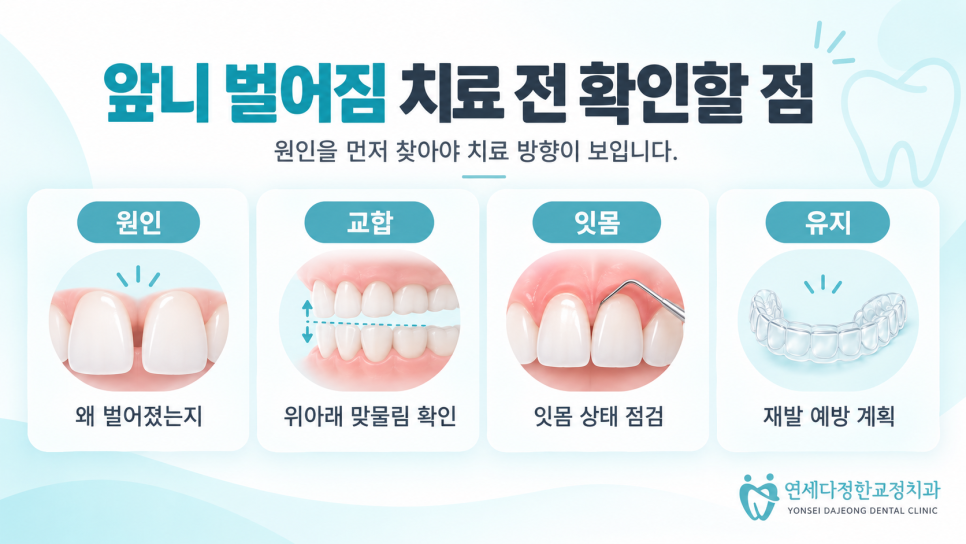
    The treatment order for diastema depends on its cause.
    If gum disease is the cause, gum treatment comes first; if a bite issue is the cause, moving the lower teeth as well may help reduce relapse.
    Some studies report a relapse rate as high as 49% after treatment, which is why retainer care matters so much.

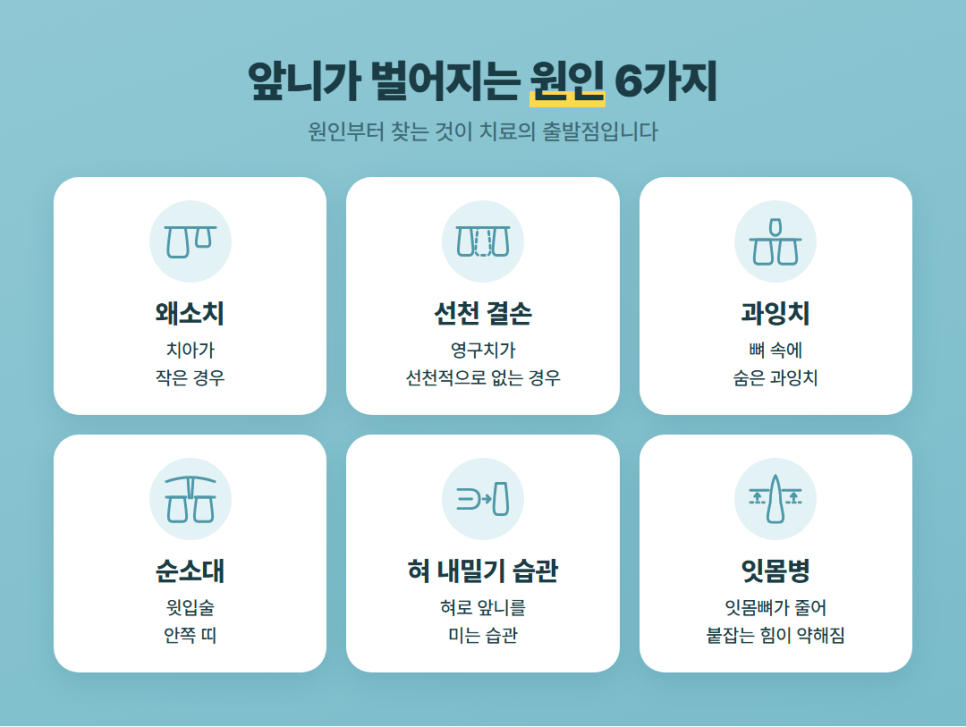
    What Are the 6 Diastema Causes of a Front Teeth Gap?

    The short answer: there are six main diastema causes, so identifying the cause is always the starting point for treatment.
    A diastema is a gap between the two upper front teeth.

    diastema causes

    The most common diastema causes are:

    1. Small teeth (microdontia)
    2. Congenitally missing permanent teeth
    3. A hidden extra tooth (supernumerary tooth) in the bone
    4. A thick labial frenum (the tissue band inside the upper lip)
    5. A tongue-thrusting habit against the front teeth
    6. Gum disease (periodontal disease)

    diastema causes illustration 2

    In adult patients, though,
    a bite (occlusion) problem is especially often the cause.

    If the lower teeth sit too far forward and keep pushing the upper front teeth outward,
    closing just the upper front teeth tends to let the gap reopen.
    In these cases, moving the lower teeth back as well may help the gap stay closed.


    If Gum Disease Is One of the Diastema Causes, How Does Treatment Work?

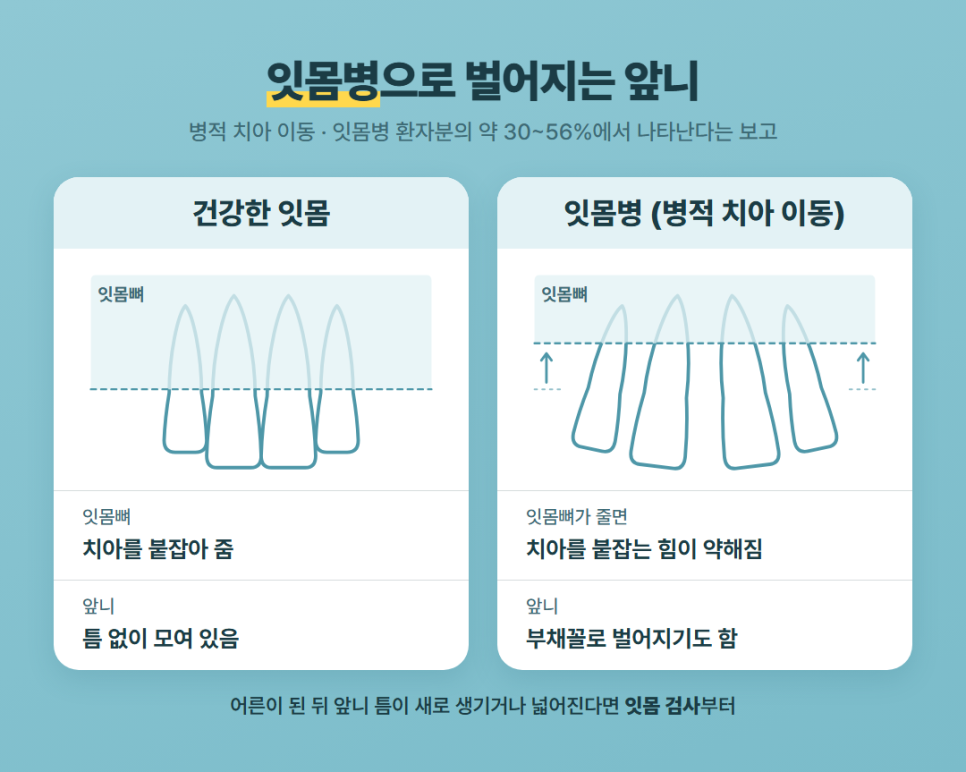
    If periodontal disease is the cause, gum treatment comes first and orthodontic treatment follows.
    Pathologic tooth migration is when weakened support from bone loss lets the front teeth fan outward.

    diastema causes illustration 3

    Pathologic tooth migration becomes more common as periodontitis severity increases.
    One study observed it in about 51% of patients with severe periodontitis and about 50% of those with aggressive periodontitis.

    “Pathologic tooth migration is relatively common among patients with periodontal disease, and its frequency increases with disease severity.”

    This finding comes from a 2016 paper by Khorshidi and colleagues at Shiraz University, published in the Journal of International Society of Preventive and Community Dentistry.

    So if a gap between your front teeth appears or widens after adulthood,
    a gum exam should come before orthodontic treatment.

    diastema causes illustration 4

    Checklist · Signs You Need a Gum Exam First
    ✅ A front teeth gap appeared after adulthood
    ✅ The gap has been widening over time
    ✅ Gums bleed frequently while brushing
    ✅ Teeth feel loose
    Important Note
    Moving teeth while inflammation is still present can make gum disease worse.
    Teeth with reduced gum support bear more strain even under the same force, so inflammation needs to be brought under control first, and orthodontic movement should then proceed carefully with lighter force.

    Cheongnyangni Yonsei Dajeonghan Orthodontic Clinic has orthodontists, periodontists, and comprehensive dentistry specialists working together,
    so gum treatment and orthodontic care can continue seamlessly in one place.


    How Is Orthodontic Treatment Different from Resin Bonding or Veneers?

    The biggest difference is how the gap gets filled.
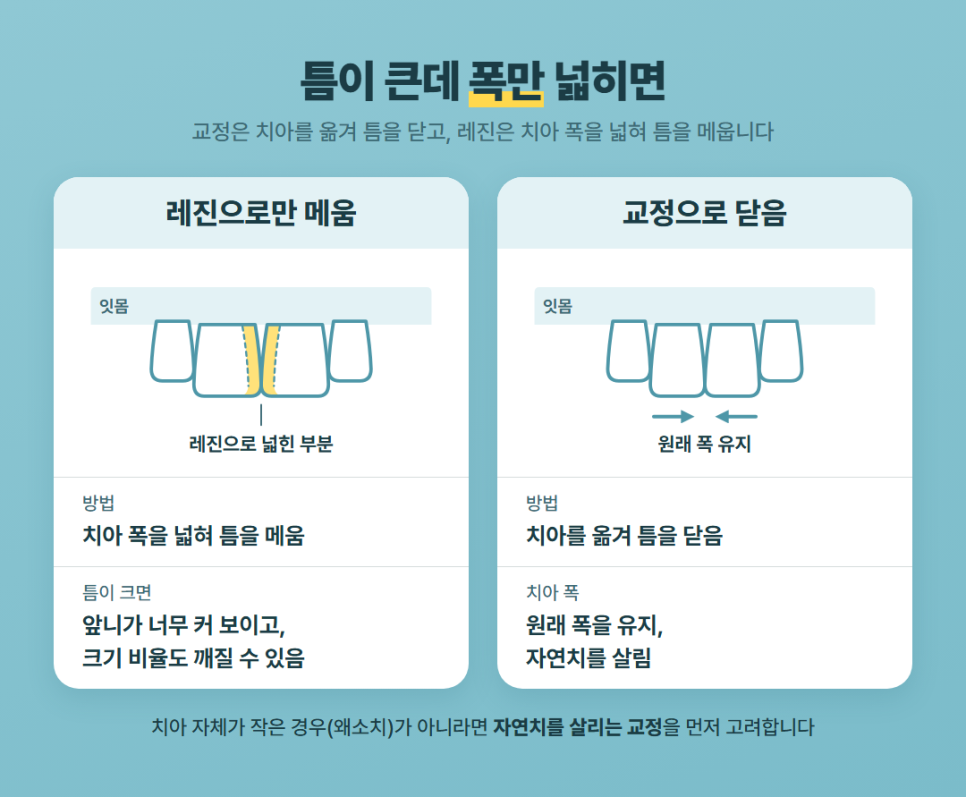
    Braces move the teeth to close the gap, while resin bonding and veneers widen the teeth to fill it.

    diastema causes illustration 5

    Category Braces Resin Bonding Veneers
    Tooth Reduction None Minimal Thin layer removed from front surface
    Duration Varies by cause and extent Usually one visit Requires a fabrication process
    Things to Watch For Possible relapse (retainer required) Discoloration, surface roughening Chipping; higher risk with teeth grinding
    Typically Used For Large or multiple gaps, bite-related causes Gaps from small teeth Gaps from small teeth

    If the gap is large, though, simply widening the teeth can make the front teeth look unnaturally big
    and throw off the tooth size ratio (Bolton ratio).

    So unless the teeth themselves are genuinely small, as with microdontia,
    orthodontic treatment that preserves the natural teeth is generally considered first.

    Also, having a gap only in the upper front teeth doesn’t mean only the upper arch can be treated.
    If the lower front teeth are pushing from behind, moving the lower arch as well may help the gap stay closed.


    Can a Gap Closed by Braces Reopen?

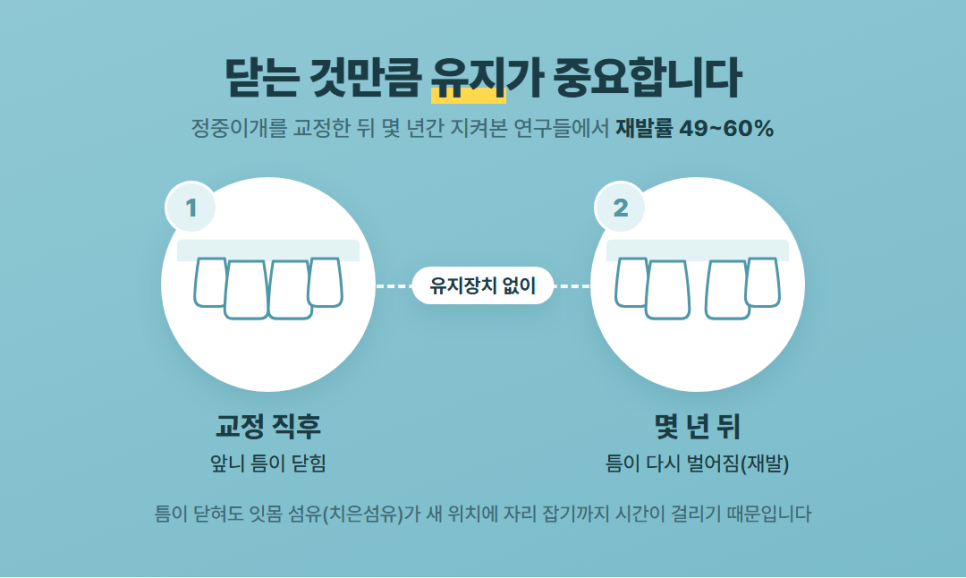
    Yes — a closed front teeth gap relapses relatively often, which is why retainer care matters.
    Relapse refers to a gap that was closed with braces reopening after treatment.

    In a study that followed patients for several years after diastema correction,
    the relapse rate was reported at 49% in one case.
    Even after the gap closes, the gum fibers (gingival fibers) take time to settle into their new position.

    diastema causes illustration 6

    Key Point · Two Types of Retainers
    Fixed (wire bonded behind the front teeth): stays attached 24/7 unless it comes loose
    Removable (clear/transparent type): wear time is self-managed; watch for loss or damage
    At Cheongnyangni Yonsei Dajeonghan Orthodontic Clinic, every patient
    receives both a fixed and a removable retainer.
    If your fixed retainer comes loose, please come in right away rather than waiting.

    A front teeth gap is a question of ‘why did it form’ before it’s a question of ‘how do I fill it.’

    Closing a front teeth gap is sometimes associated with greater comfort when smiling in social situations,
    though this is not a guaranteed outcome.
    Outcomes can vary depending on the cause and individual condition.

    diastema causes illustration 7

    If you’re considering diastema treatment in the Dongdaemun area,
    we recommend diagnosing the diastema causes before deciding on a treatment method.
    The clinic is a 5-minute walk from Exit 3 of Cheongnyangni Station, and also easily reached from Dapsimni and Jeonnong-dong.
    You can find detailed treatment information on the Cheongnyangni Yonsei Dajeonghan Orthodontic Clinic website.


    Frequently Asked Questions

    1. My child has a gap between their front teeth — do they need braces right away?
    In most cases, it’s fine to simply watch and wait. This is a common, often temporary stage around age 6; one survey found that the proportion of children with a front teeth gap dropped from about 65% at age 6 to about 14% by age 12, once the canine teeth come in. That said, an unusually large gap can sometimes signal a hidden extra tooth or a missing tooth, so an orthodontic checkup around age 7 is recommended.

    2. How long does gap teeth treatment take in the Dongdaemun area?
    It depends on the cause and extent of the gap. In some cases, closing the space alone took 9 months, with another 3-4 months for retention. Overall treatment time typically ranges from about 1 year on the shorter end to 2-3 years on the longer end.

    3. I was told I need an implant — can braces replace it?
    That’s a decision best made after a detailed diagnosis. Even when an implant is ultimately needed, closing the space with braces first may contribute to a better outcome in some cases. For patients who are still growing, implants are generally placed only after growth is complete, with timing typically determined through growth-plate analysis around the sophomore or junior year of high school.

    4. Can a front teeth gap be fixed with just resin bonding or veneers instead of braces?
    If the gap is simply due to naturally small teeth, that can work. But if the gap is large or caused by a bite issue, widening the teeth alone can leave the proportions looking off or leave a risk of relapse, so it’s safer to consider braces as well.

    References

    · Khorshidi H, Moaddeli MR, Golkari A, et al., 「The prevalence of pathologic tooth migration with respect to the severity of periodontitis」, Journal of International Society of Preventive and Community Dentistry, 2016. View source
    · Shashua D, Artun J, 「Relapse after orthodontic correction of maxillary median diastema: a follow-up evaluation of consecutive cases」, The Angle Orthodontist, 1999. View source
    · Liu JF, Hsu CL, Chen HL, 「Prevalence of developmental maxillary midline diastema in Taiwanese children」, Journal of Dental Sciences, 2013. View source

    This article is intended for general health information purposes only and is not a substitute for individual diagnosis or treatment.
    If you have symptoms, please consult a specialist.
  • Crooked Canine Tooth Correction: 3 Extraction Criteria and Non-Extraction Options in Cheongnyangni

    Crooked Canine Tooth Correction: 3 Extraction Criteria and Non-Extraction Options in Cheongnyangni

    SummaryWhether crooked canine tooth correction in Cheongnyangni needs extraction or not depends on how severe the misalignment is and whether the mouth protrudes. This guide covers why canine teeth get pushed out of place, three non-extraction methods, whether clear aligners can work, and typical treatment duration.

    There’s one question orthodontic consultations hear more than any other.
    Do I really need to have a tooth pulled?

    Consultations for crooked canine tooth correction in Cheongnyangni often start with this same question.
    But the answer isn’t as simple as it might seem.

    When the canine tooth is only mildly out of place, it can often be straightened without extraction. When it’s severely displaced or the mouth protrudes as well, a small premolar is often removed instead.

    Crooked canine tooth correction in Cheongnyangni

    Key Takeaways
    Whether treatment for a crooked canine tooth in Cheongnyangni involves extraction or not depends on the severity of the misalignment and whether the mouth protrudes.
    Mild cases can often be corrected with non-extraction methods such as arch expansion, interproximal reduction (IPR), or moving the molars back.
    Severe cases often involve removing four small premolars and using that space to align the teeth, with treatment typically taking 1 to 3 years.

    Why Do Canine Teeth Become Crooked?

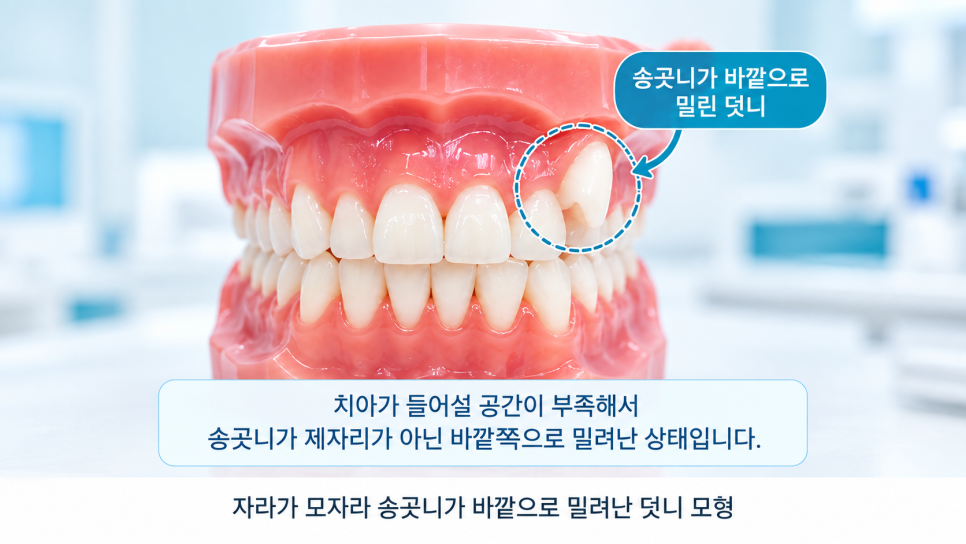
    To put it simply, a crooked canine tooth is a tooth that erupts out of alignment or outside its proper position because there isn’t enough space for it.
    It usually happens when there’s a mismatch between jaw size and tooth size.

    The reason this shows up at the canine teeth in particular also has to do with eruption order.
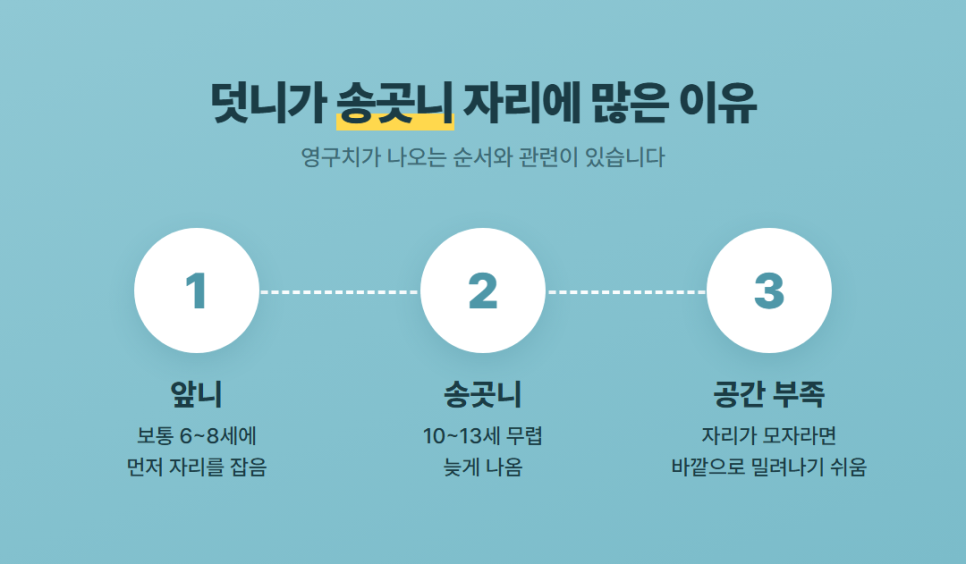
    Front teeth usually come in around ages 6 to 8, while canines erupt later, around ages 10 to 13.

    Since the front teeth settle into place first, canines that come in later tend to get pushed outward if there isn’t enough room left for them.

    Crooked canine tooth correction in Cheongnyangni - image 2

    For this reason, the Korean Association of Orthodontists (KAO) recommends that children have their first orthodontic checkup around age 7, when the front teeth are replaced by permanent teeth.

    The Korean Association of Orthodontists advises that children undergo their first orthodontic evaluation around age 7.

    This is guidance from the Korean Association of Orthodontists.
    This checkup isn’t meant to start treatment right away — it’s an early check to see whether the teeth are coming in in the right order.


    What Happens If a Crooked Canine Tooth Is Left Untreated?

    Crooked canine tooth correction in Cheongnyangni - image 3

    Left untreated, it can make cavities and gum disease more likely.
    That’s because a toothbrush can’t easily reach the spots where teeth overlap.

    Key Points
    · Bristles and floss have a harder time reaching between overlapping teeth, which raises the risk of cavities.
    · Correcting a crooked canine tooth may improve chewing efficiency.

    Wiping behind a crooked canine tooth with gauze can reveal more plaque buildup than in other areas of the mouth.

    Crooked canine tooth correction in Cheongnyangni - image 4

    If floss consistently catches or your toothbrush can’t reach a certain spot when you brush, it’s worth getting a checkup.


    Does Crooked Canine Tooth Correction in Cheongnyangni Always Require Extraction?

    Not necessarily.
    Whether extraction is needed is decided after evaluating the severity of the crooked tooth, whether the mouth protrudes, and the facial profile together.

    When the displacement is severe, four small premolars are typically removed, and that space is used to align the teeth.
    The gaps left behind are generally closed by the end of treatment.

    For mild cases, non-extraction methods that straighten teeth without removing any are usually considered first.

    Method How It Works Best For
    Arch expansion Widens the dental arch to create space Crowding caused by a narrow jaw
    Interproximal reduction (IPR) Shaves a thin layer of enamel between teeth to create space Mild crowding
    Molar distalization (moving molars back) Moves molars backward to free up space in front Cases with a slight space shortage in front
    Extraction orthodontics Uses space from removing 4 premolars Severe crowding or cases with mouth protrusion

    Crooked canine tooth correction in Cheongnyangni - image 5

    Key Points
    · There’s no official guideline confirming a single rule like “extraction is required once the space deficit exceeds a certain number of millimeters.”
    · The decision considers not just how much space is missing, but also mouth protrusion and facial profile.

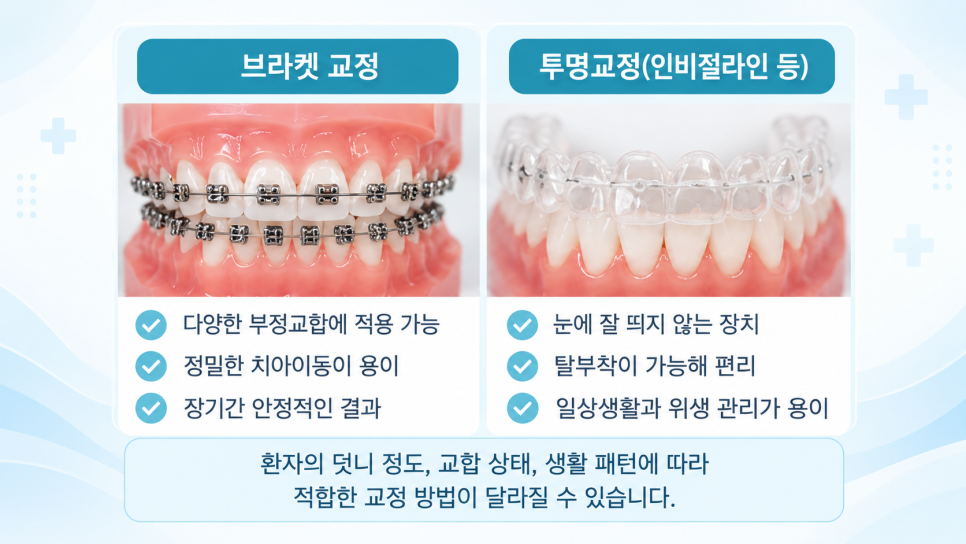
    Can Clear Aligners Also Straighten a Crooked Canine Tooth?

    For mild crowding, clear aligners can be an option.
    However, they have limitations when the crowding is severe or when teeth need complex movement.

    A 2024 international systematic review compared treatment duration between clear aligners and fixed braces for mild-to-moderate crowding.
    Pooling 10 studies, it found no clear difference in treatment duration between the two appliance types.

    That said, in one of the included studies, clear aligners averaged 8.4 months versus 12.1 months for fixed braces — a difference of about 3.7 months.
    The overall certainty of evidence was rated as low.

    Crooked canine tooth correction in Cheongnyangni - image 6

    On the other hand, a 2016 paper in a Korean dental journal (Journal of the Korean Dental Association) noted that, due to their structural characteristics, clear aligners have limitations when it comes to root movement or complex movement of certain teeth.
    Because the studies differ in timing and population, the findings haven’t converged into a single consensus.

    Things to Keep in Mind
    · Clear aligners don’t work the same way for every crooked canine tooth.
    · A thorough diagnostic exam should guide the decision more than the choice of appliance itself.

    How Long Does Treatment Take and What Does It Cost?

    Orthodontic treatment typically takes about 1 to 3 years, though this varies significantly from person to person.
    It also depends on whether extraction is involved, so an exact timeline can only be given after a diagnosis.

    Crooked canine tooth correction in Cheongnyangni - image 7

    Because orthodontic treatment isn’t covered by national health insurance, costs vary between clinics.
    They also depend on the severity of the crowding and the type of appliance used, so the most accurate figure comes after an exam.

    Aftercare
    After treatment ends, teeth tend to drift back toward their original position.
    That’s why a retainer is typically worn for about a year to help reduce relapse.

    Crooked canine tooth correction in Cheongnyangni - image 8

    Things to Keep in Mind
    · During orthodontic treatment, side effects such as gum recession, root resorption, or decalcification (white spots on the tooth surface) can occur.
    · It’s best to discuss these possible side effects during the consultation before treatment begins.

    What Should You Check Before a Consultation in Cheongnyangni?

    Check whether the clinic explains the reasoning behind its extraction or non-extraction decision for crooked canine tooth correction based on a thorough exam.
    If you’re looking for an orthodontic clinic around Cheongnyangni, Dongdaemun, or Yongdu-dong/Jeonnong-dong, here are three things worth checking.

    Checklist
    ✅ Is the treatment provided by an orthodontic specialist? (You can verify this by region and name on the Korean Association of Orthodontists website)
    ✅ Does the clinic perform a thorough exam, including X-rays, facial photos, and a dental model (intraoral scan)?
    ✅ Does it explain the reasoning behind the extraction decision and appliance choice based on your specific tooth condition?

    Yonsei Dajeonghan Orthodontic Dental Clinic, near Cheongnyangni Station in Dongdaemun-gu, Seoul, has orthodontic and integrated dentistry specialists who diagnose using 3D CT and 3D scanners.
    If you need an orthodontic consultation, you can find more information at the Yonsei Dajeonghan Orthodontic Dental Clinic website.

    Crooked canine tooth correction in Cheongnyangni - image 9


    Frequently Asked Questions

    1. Can adults get treatment for a crooked canine tooth, too?
    Yes. There’s no age limit for orthodontic treatment.
    That said, tooth movement is slower in adults and relapse is more likely, so gum and cavity health are checked first.

    2. When should a child’s crooked canine tooth first be checked?
    The Korean Association of Orthodontists recommends an orthodontic consultation around age 7, when the front teeth are replaced by permanent ones.
    In growing children, teeth tend to move more easily, which lowers the risk of relapse.

    3. Can the first consultation for crooked canine teeth in Cheongnyangni tell you right away whether extraction is needed?
    The first consultation mainly determines whether treatment is needed at all.
    Whether extraction is required is decided based on a thorough exam — X-rays, photos, and dental models — and the diagnosis can sometimes take more than a week.

    4. Do teeth become loose when a crooked canine tooth is corrected without extraction?
    Non-extraction methods like arch expansion, interproximal reduction (IPR), and molar distalization are designed to create space only within the range the teeth and gums can tolerate.
    Still, whether this approach applies to you must be confirmed through a thorough exam.


    References

    · Korean Association of Orthodontists, “When to Start Orthodontic Treatment,” official KAO website. Link
    · Jiang Y, et al., “Duration of orthodontic treatment with clear aligners versus fixed appliances in crowding cases: a systematic review,” Clinical Oral Investigations, 2024. Link
    · Bae Gi-seon, “Clinical Limitations of Clear Aligners and Their Solutions,” Journal of the Korean Dental Association 54(7), 2016. Link

    This article is intended for general health information purposes only and is not a substitute for individual diagnosis or treatment. If you have symptoms, please consult a specialist.
  • Non-Surgical Underbite Correction: 3 Criteria You Need to Know

    Non-Surgical Underbite Correction: 3 Criteria You Need to Know

    SummaryA protruding lower jaw doesn’t automatically mean you need surgery. This guide covers the skeletal criteria for non-surgical underbite correction, how to tell a pseudo (dental) underbite apart, typical treatment timelines, and what to check when reading non-surgical underbite correction reviews.

    When you notice your lower jaw standing out in profile, it’s easy to assume jaw surgery is the only option.
    However, if the difference in jaw bone size is minor and the main issue is how the teeth are arranged, non-surgical underbite correction alone may be able to correct the bite.

    Even so, many people look into surgery first without knowing these criteria.
    With a thorough consultation and diagnosis, some cases are reported to improve with orthodontic treatment alone, without surgery.

    Key Takeaways
    If your back teeth bite normally but only your front teeth meet in reverse — a pattern known as a pseudo (dental) underbite — non-surgical underbite correction may help improve the bite.
    Treatment typically takes about 18 to 30 months, and the first step is always an accurate 3D CT scan to measure any skeletal discrepancy.
    Below, we outline the specific criteria for non-surgical correction and what to watch for when reading treatment reviews.

    What Causes an Underbite, and What Types Are There?

    non-surgical underbite correction

    To put it simply, underbites fall into two categories — skeletal and dental — and the more dental the cause, the better the odds for non-surgical correction.
    An underbite refers to a condition in which the lower jaw protrudes forward relative to the upper jaw or grows excessively.

    Asan Medical Center classifies an underbite as a type of malocclusion.
    Below is the definition published by the hospital.

    An underbite (mandibular protrusion, mandibular prognathism) occurs when the lower jaw is abnormally large relative to the upper jaw, resulting in malocclusion.

    According to Asan Medical Center’s health information, this is how it’s explained.
    An underbite is classified as Class III malocclusion.

    Causes include not only genetic jaw growth patterns but also habits such as tongue-thrusting or mouth breathing.
    Viewed from the front, it’s often accompanied by facial asymmetry, and from the side, the lower third of the face tends to look elongated.

    non-surgical underbite correction illustration 7

    Key Point
    Not every underbite requires surgery.
    If the difference in jaw bone size is minor and tooth position is the main issue, bite adjustment alone may bring improvement.
    A detailed diagnostic exam is the first step toward understanding exactly where you stand.

    What Are the Criteria for Non-Surgical Underbite Correction?

    non-surgical underbite correction illustration 8

    In short, this approach is an option when the size difference between the upper and lower jaw bones is minor and the back teeth already bite normally.
    Non-surgical underbite correction is a treatment that aims to improve a reverse bite through tooth movement and bite adjustment alone, without jaw surgery.

    This approach is reported to be particularly effective for a pseudo (dental) underbite, where the back teeth bite correctly but only the front teeth meet in reverse.
    In these cases, moving the teeth backward or adjusting their angle can help create a normal bite.

    Category Non-Surgical Correction Possible Surgery Required
    Jaw bone size difference Minor Clearly significant
    Molar (back teeth) bite Normal bite Misaligned
    Main cause Tooth position/angle (pseudo underbite) Excessive skeletal growth itself
    Treatment method Adjustment with orthodontic appliances alone Orthodontics combined with jaw surgery

    non-surgical underbite correction illustration 9

    Changes You May Expect
    ✅ Moving the lower dental arch backward can help the upper and lower teeth meet more normally.
    ✅ Correcting the angle of front teeth that previously met in reverse may help improve the reverse bite.
    ✅ Chewing may feel more comfortable, and the lip line may look more natural as a result.

    Treatment length varies from person to person, but non-surgical correction generally takes about 18 to 30 months.
    Cases like a pseudo underbite, where only tooth alignment needs adjusting, can sometimes finish sooner.

    Timing also matters for growing children — the Korean Association of Orthodontists recommends starting treatment around ages 7 to 9 if a skeletal reverse bite is suspected.
    This recommendation applies specifically to children who are still growing; whether non-surgical correction is possible for an adult needs to be determined through a separate diagnosis.


    Reading Non-Surgical Underbite Correction Reviews: What to Look For

    non-surgical underbite correction illustration 10

    A review is only meaningful if you look past subjective impressions and focus on bite measurements and the treatment process.
    A trustworthy review is one that includes before-and-after bite data from a case with a jaw structure similar to your own.

    You need to objectively assess how much improvement in appearance and function is realistic through tooth movement alone, within the limits of the jaw bone itself.
    Rather than taking someone else’s success story at face value, check first whether the treatment plan actually fits your own oral structure.

    non-surgical underbite correction illustration 11

    Checklist
    ✅ Was the degree of skeletal discrepancy accurately measured with a 3D CT scan?
    ✅ Was it confirmed that the upper and lower teeth bite evenly after treatment?
    ✅ Was the treatment plan based on a range of clinical cases?

    Because outcomes for underbite correction vary depending on each person’s individual jaw structure, a detailed diagnostic exam is essential.


    How Do You Care for Your Orthodontic Appliance Safely?

    non-surgical underbite correction illustration 12

    The key to safe management is keeping up with regular visits and thorough at-home care.
    How finely the force from the appliance is adjusted directly affects how the teeth move and how the bite ultimately turns out.

    Food tends to get trapped around the appliance easily, so it’s important to make active use of oral hygiene tools.

    non-surgical underbite correction illustration 13

    Precautions
    Chewy or hard foods can dislodge the appliance or put excess strain on tooth movement, so it’s best to avoid them.
    Skipping regular checkups can cause the bite to end up not aligning as planned.

    Following your provider’s guidance for thorough home care alongside regular checkups can help support a well-balanced result.
    If you’re wondering whether your own case meets the criteria for non-surgical correction, consult an orthodontic specialist first.
    For more details on treatment options, visit the Yonsei Dajeonghan Orthodontics Cheongnyangni homepage.


    Frequently Asked Questions

    non-surgical underbite correction illustration 14

    1. Can every underbite be corrected with orthodontics alone, without surgery?
    If the skeletal discrepancy is very severe, orthodontic treatment combined with surgery may be necessary, so a detailed diagnosis should always come first.

    non-surgical underbite correction illustration 15

    2. How long does non-surgical underbite correction usually take?
    It varies depending on the speed of tooth movement and the severity of the malocclusion, but it generally takes about 18 to 30 months.
    Cases involving only tooth alignment, like a pseudo underbite, may finish sooner.

    non-surgical underbite correction illustration 16

    3. What should I watch out for most when reading reviews?
    Rather than relying on someone else’s subjective impressions, it’s important to check whether the case involves a jaw structure similar to your own.

    non-surgical underbite correction illustration 17

    4. Why is it essential to wear a retainer after orthodontic treatment?
    Teeth naturally tend to shift back toward their original position, so a retainer is essential for keeping the bite stable over the long term.


    References

    non-surgical underbite correction illustration 18

    · Asan Medical Center, “Underbite (Class III Malocclusion),” Asan Medical Center Health Information. View source
    · Korean Association of Orthodontists, “Underbite: Treatment Should Start Around Ages 7–9 to Correct It Properly,” Korean Association of Orthodontists. View source
    · Pharm News, “Adult Reverse Bite Improved Through Non-Surgical Underbite Correction,” Pharm News. View source


    This article is intended for general health information purposes only and is not a substitute for individual diagnosis or treatment. If you have symptoms, please consult a specialist.
  • Facial Asymmetry Orthodontic Treatment: 4 Key Diagnostic Steps

    Facial Asymmetry Orthodontic Treatment: 4 Key Diagnostic Steps

    SummaryThis article looks at how facial asymmetry orthodontic treatment works at Dongdaemun Orthodontics. From bite diagnosis and 3D CT imaging to jaw joint and muscle evaluation and tips for maintaining facial balance, here’s everything worth knowing before your visit.

    Have you ever noticed that one side of your face looks noticeably larger every time you check the mirror?

    In fact, this appearance is far more often caused by a misaligned bite between the upper and lower teeth than by a truly severe skeletal asymmetry.

    That’s exactly why Dongdaemun Orthodontics pays such close attention to the left-right balance of the chewing muscles as part of every evaluation.

    Key Takeaways
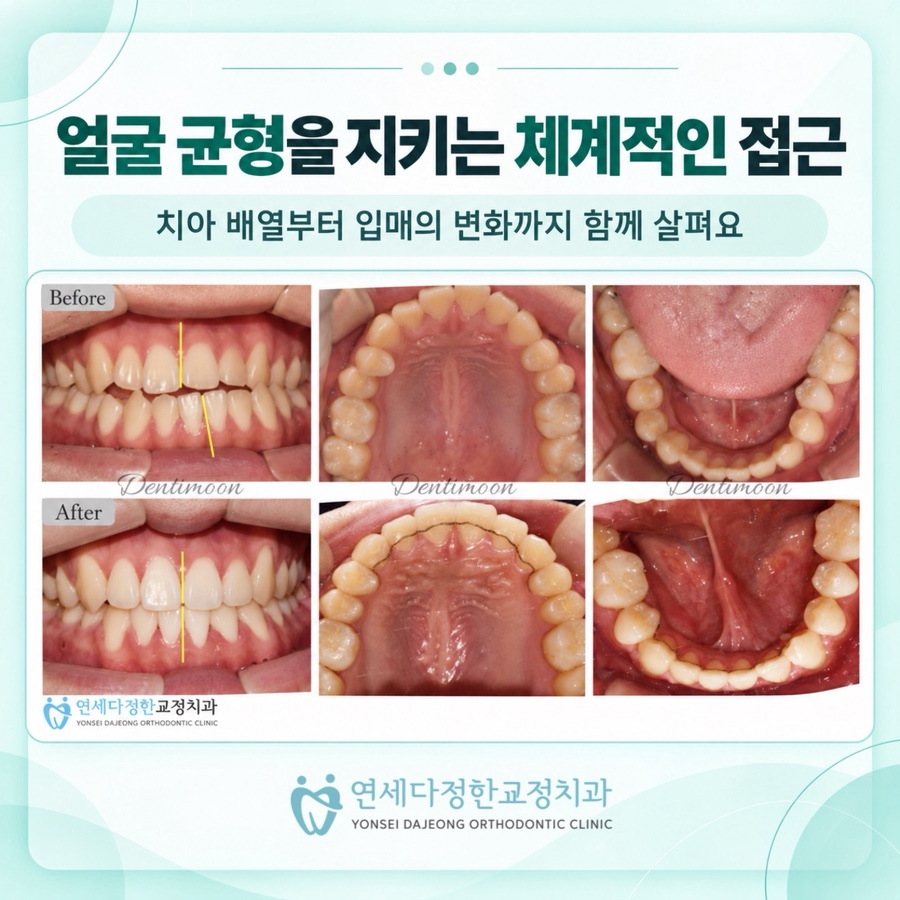
    Dongdaemun Orthodontics evaluates both tooth alignment and how the upper and lower jaws come together, which may help the appearance associated with facial asymmetry improve naturally over the course of facial asymmetry orthodontic treatment.
    The process relies on 3D CT imaging and facial analysis equipment to map the relationship between the skeleton and the teeth, then plans tooth movement around the center line of the face.
    A significant share of Korean adults live with some degree of malocclusion, which is why identifying the underlying cause through precise diagnosis is such an important first step.

    Dongdaemun Orthodontics

    If crooked teeth have you considering orthodontic treatment,
    it helps to look beyond simply straightening the teeth
    and also consider how the teeth show when smiling and the overall shape of the mouth.

    Because the cause of crooked teeth differs from person to person,
    what needs to be checked also depends on whether the issue is limited to tooth alignment or also involves the position of the upper and lower jaws.

    Dongdaemun Orthodontics related image 2

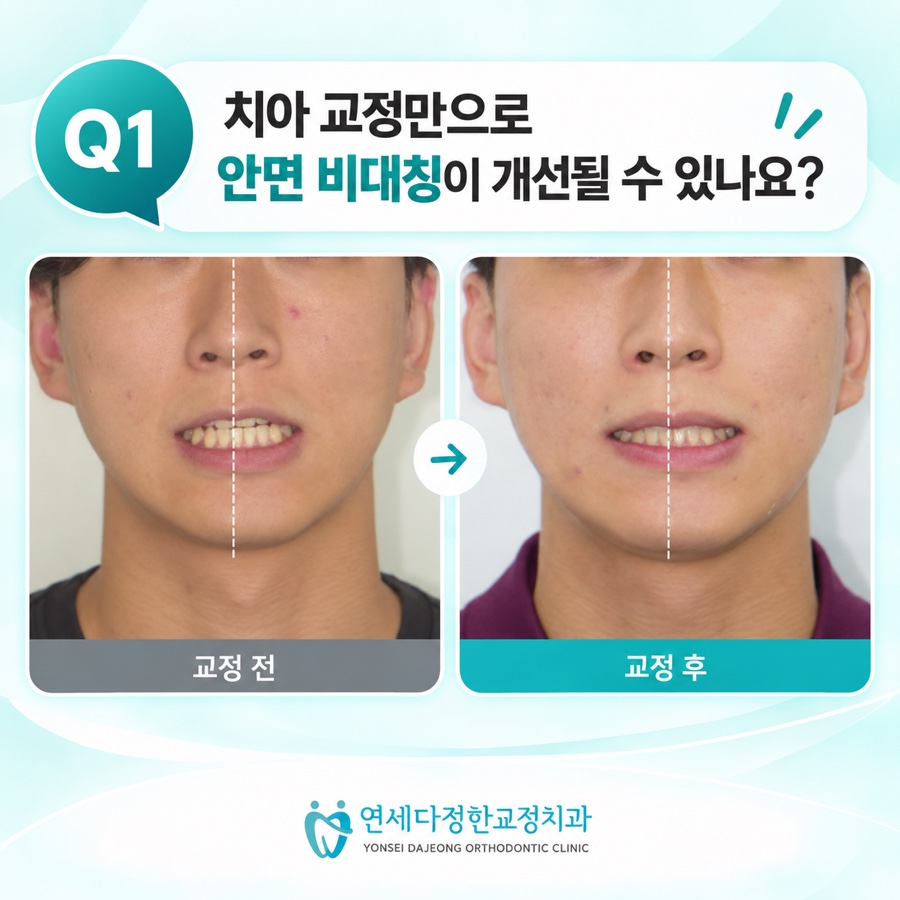
    Can Orthodontic Treatment Alone Improve Facial Asymmetry?

    Dongdaemun Orthodontics related image 3

    When the skeleton itself isn’t severely asymmetrical,
    orthodontic treatment alone may help improve the appearance of facial asymmetry.

    Facial asymmetry refers to a condition where, relative to the center line of the face, the eyes, cheekbones, or corners of the mouth appear uneven in height or size from left to right.

    There are broadly two causes:
    skeletal asymmetry, where the bone itself grew unevenly,
    and functional asymmetry, where a misaligned bite causes the chewing muscles to develop unevenly on one side.

    Dongdaemun Orthodontics related image 4

    Seoul National University Hospital describes malocclusion as follows.

    Malocclusion refers to a condition in which the upper and lower jaws do not come together normally, or the teeth are uneven and crooked.

    Dongdaemun Orthodontics related image 5

    Type Main Cause Effect of Orthodontic Treatment
    Functional asymmetry Misaligned bite position, one-sided chewing habits May improve with orthodontic treatment alone
    Skeletal asymmetry Uneven growth of the jawbone itself Treatment direction must be determined after precise diagnosis

    According to a report by Edaily, surveys indicate that more than one in two Korean adults experiences some degree of malocclusion,
    so this is a common concern rather than a rare one.

    Key Point
    Simply straightening the teeth into a line doesn’t address an underlying skeletal imbalance, and an unnatural look can remain.
    Analyzing the face’s center line together with the horizontal bite relationship is what allows both function and appearance to be addressed at the same time.

    Dongdaemun Orthodontics related image 6


    How Does Dongdaemun Orthodontics Perform a Precision Diagnosis?

    Dongdaemun Orthodontics related image 7

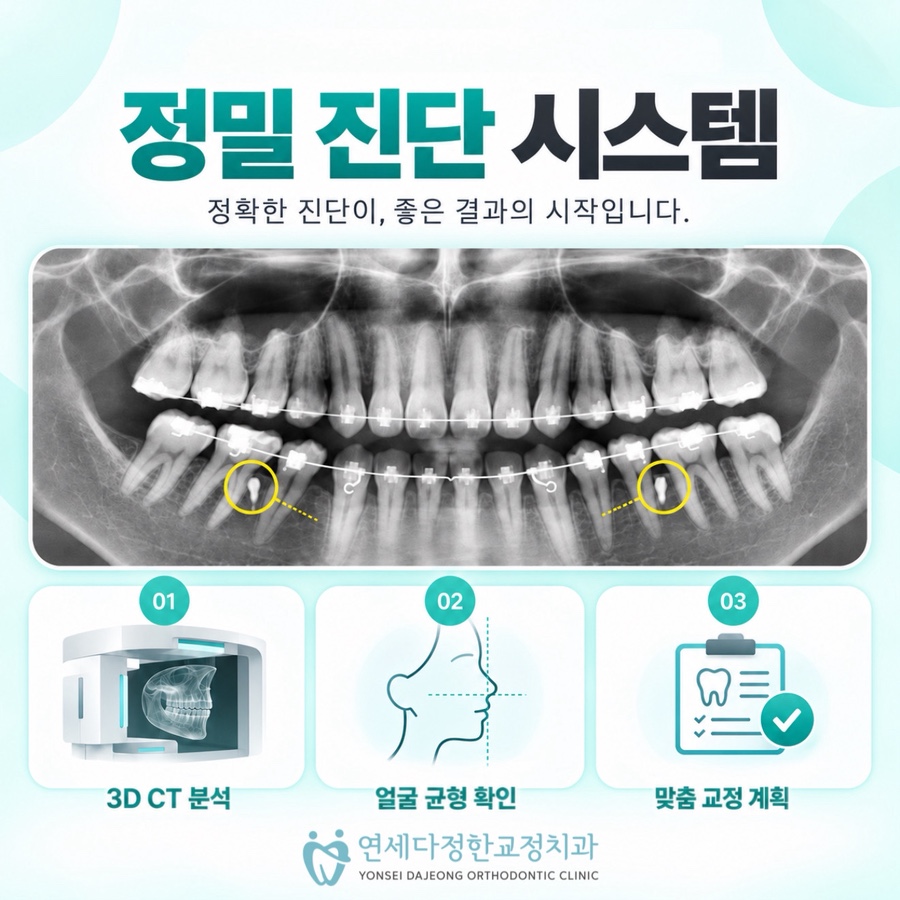
    A precise diagnosis at Dongdaemun Orthodontics begins with combining 3D CT imaging and facial analysis equipment.

    Rather than simply photographing the inside of the mouth,
    examining the three-dimensional structure of the skull and jawbone is what makes an accurate treatment plan possible.

    It’s especially important that the plan also factors in details such as how much gum shows when smiling and lip thickness.

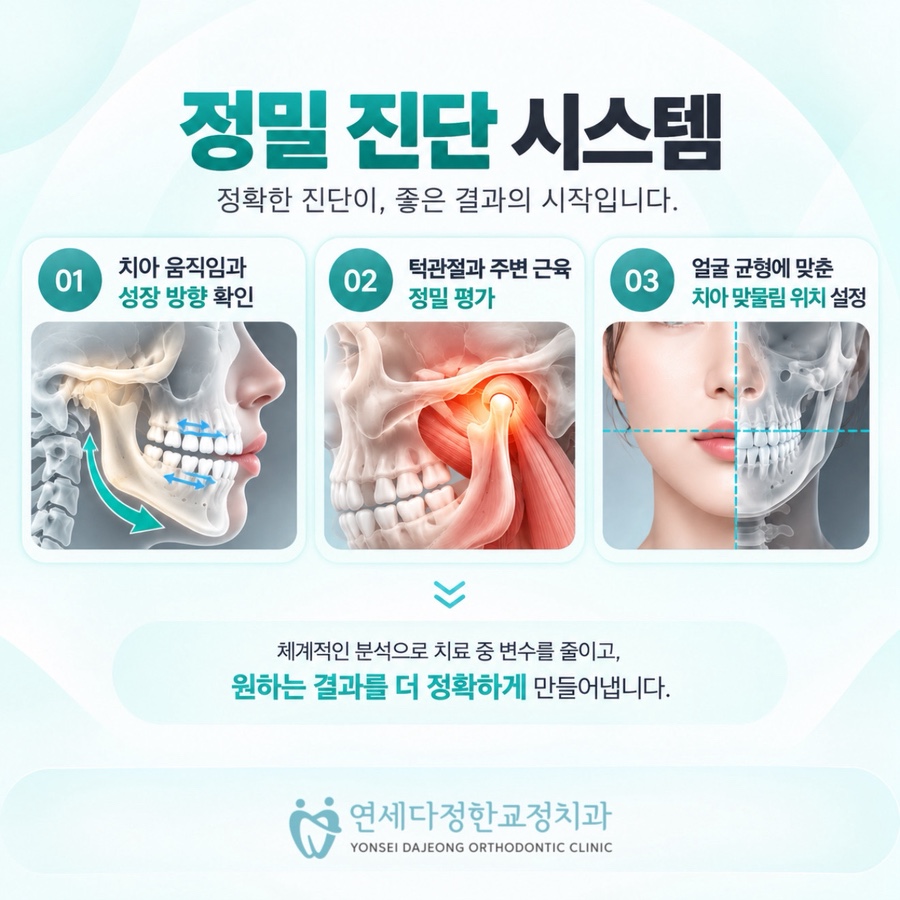
    1. Simulating in advance the direction the teeth will move and how the bone is likely to develop
    2. Thoroughly evaluating the condition of the jaw joints and the tension in the surrounding muscles
    3. Setting the bite position in line with the overall balance of the face

    Dongdaemun Orthodontics related image 8

    Key Point
    3D CT analysis examines the jawbone and surrounding muscles in three dimensions, not just the teeth, which can help reduce variables during treatment and improve predictability.

    In recent years, the number of orthodontic patients aged 40 and older has been steadily rising.

    According to a Korean Association of Orthodontists survey reported by Dental Times (Daily Dental) in 2018, the share of orthodontic patients aged 40 and older grew from 4.9% in 2010 to 6.1% in 2017,
    while the proportion of new patients in their 40s starting treatment climbed from just 1.2% in 2000 to 9.3% in 2017.

    This is exactly why precise diagnosis to pinpoint the exact cause matters even more for adults whose growth is already complete.


    How Can You Maintain Facial Balance During Orthodontic Treatment?

    Dongdaemun Orthodontics related image 9

    Treatment at Dongdaemun Orthodontics tracks not just how quickly the teeth move,
    but also changes in the surrounding soft tissue, such as the lips and cheeks.

    As the teeth shift and the profile of the mouth changes, fine adjustments are made so the angle between the nose and chin stays in harmony,
    and progressing gradually in stages — rather than forcing rapid change — tends to produce a more natural-looking result.

    Checklist
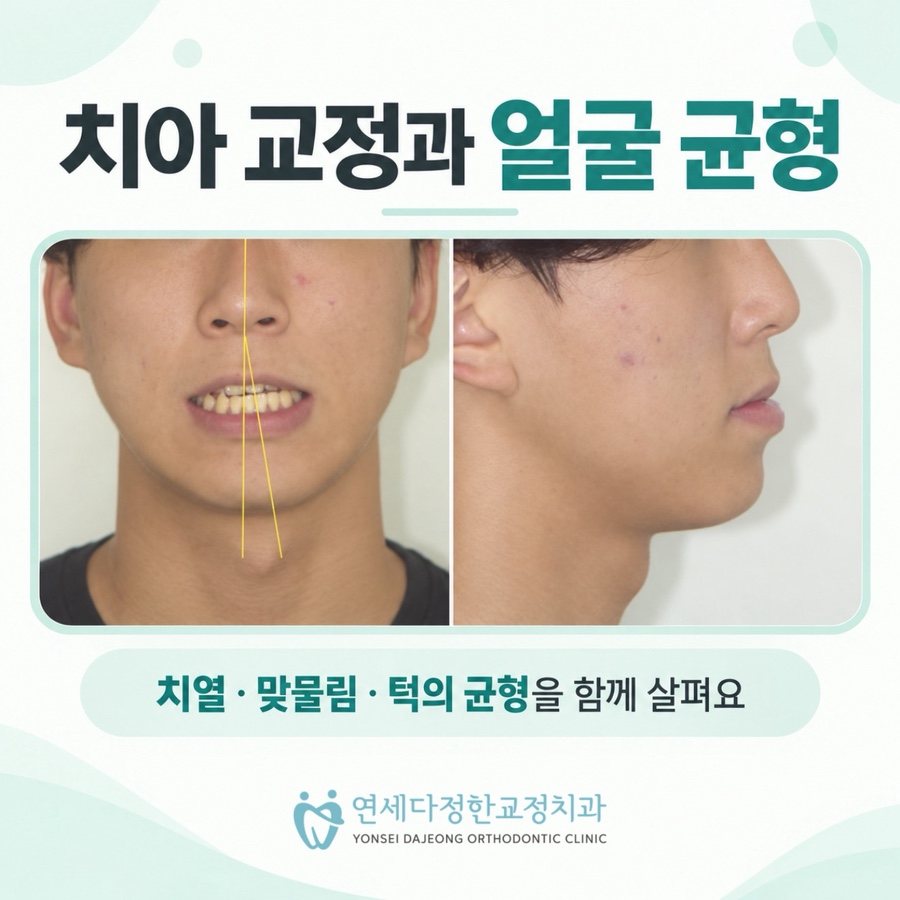
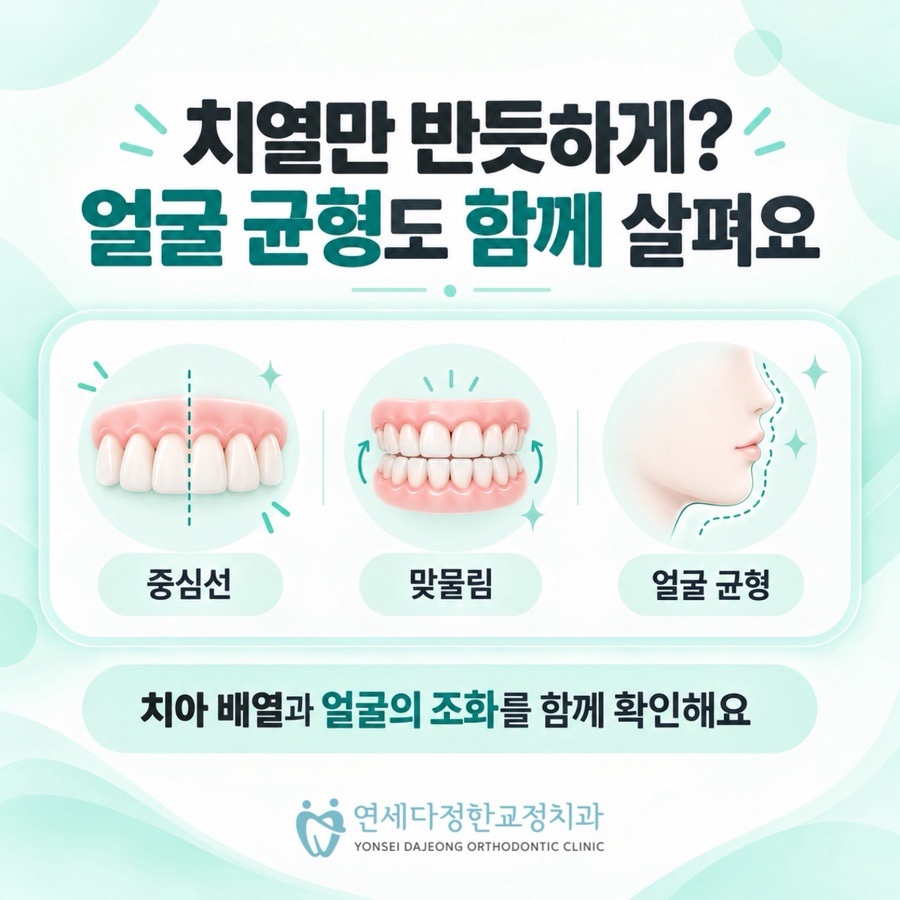
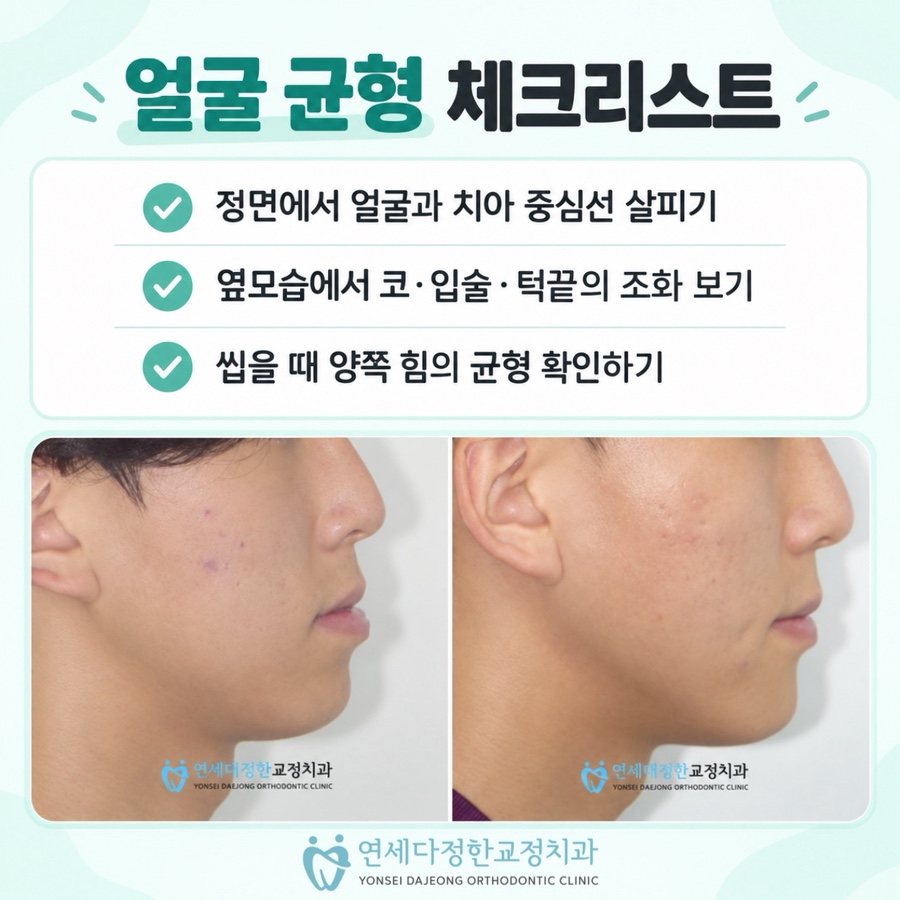
    ✅ From the front, check whether the center line of the face lines up with the center line of the teeth
    ✅ From the side, check whether the nose, lips, and chin form a balanced profile
    ✅ Check whether chewing force is distributed evenly rather than concentrated on one side

    Dongdaemun Orthodontics related image 10

    Adjusting the appliance to the individual based on thorough bone analysis may help support left-right symmetry over the course of treatment.

    The goal isn’t simply straightening the teeth —
    it’s completing the balance of the whole face alongside that.


    What Kind of Care Is Needed During Treatment?

    Dongdaemun Orthodontics related image 11

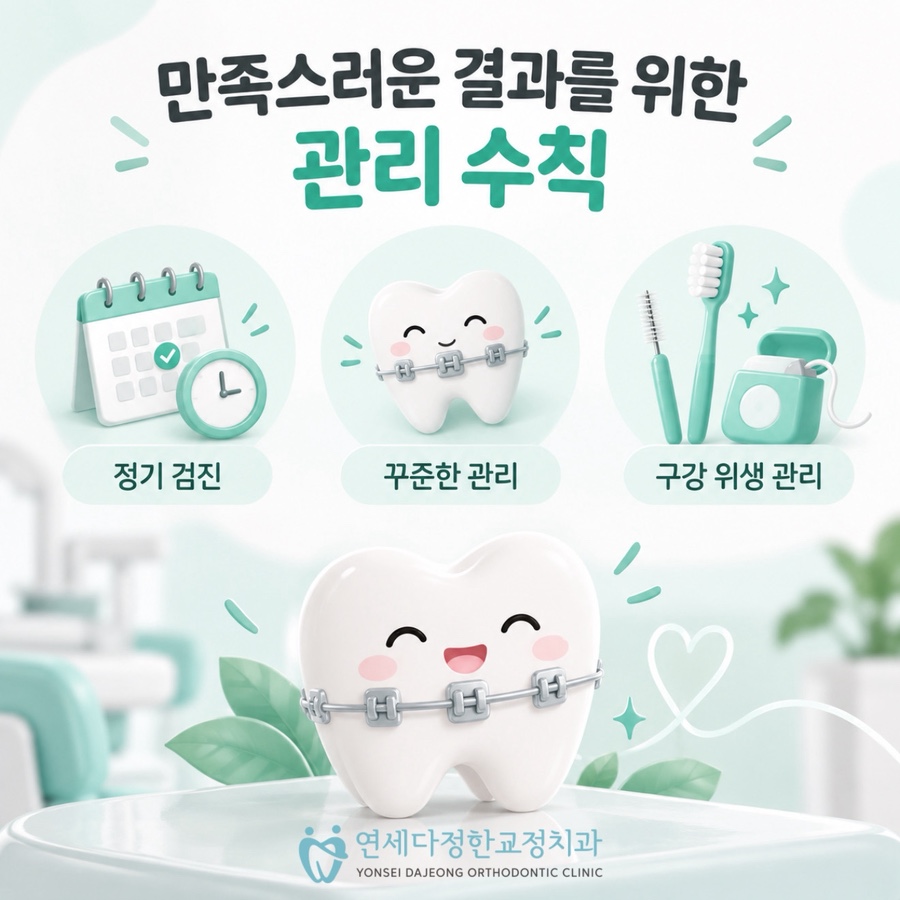
    Once the appliance is attached, it’s important to keep strictly to a schedule of regular dental visits.

    That’s because the fine adjustments made to the force applied to the teeth have a major effect on overall bone alignment and facial balance.

    Food also tends to get caught around the appliance easily,
    so it’s important to actively use oral hygiene tools such as interdental brushes and floss to keep the area clean at all times.

    Caution
    Chewy or hard foods can dislodge orthodontic appliances or place unnecessary strain on tooth movement, so it’s best to get in the habit of avoiding them where possible.

    Dongdaemun Orthodontics related image 12

    What You Can Expect
    With thorough at-home care and regular checkups following your provider’s guidance, not just the alignment of the teeth but a more balanced overall appearance can gradually take shape.

    If you’re researching orthodontic clinics in the Dongdaemun area,
    checking treatment information first on the Cheongnyangni Yonsei Dajeonghan Orthodontics website is one way to get started.


    Dongdaemun Orthodontics related image 13

    Frequently Asked Questions

    1. Can orthodontic treatment alone improve facial asymmetry?
    If the asymmetry isn’t caused by a severe skeletal issue but rather by a misaligned bite that makes the face look uneven, orthodontic treatment may help bring about improvement.

    2. How is a precision diagnosis carried out?
    It combines 3D CT imaging, an intraoral scan, and detailed facial measurements to analyze the relationship between the skeleton and the teeth in three dimensions.

    Dongdaemun Orthodontics related image 14

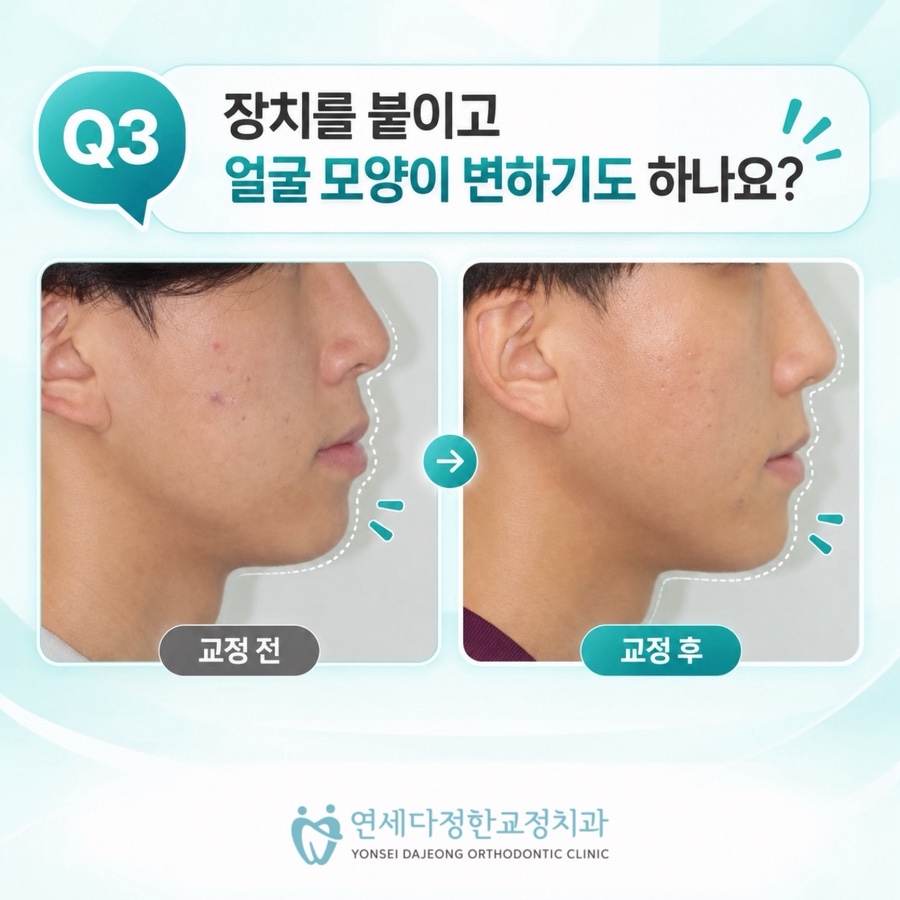
    3. Does attaching an appliance also change the shape of the face?
    As the protrusion of the mouth area decreases or the jawline becomes more defined, changes in overall appearance can occur. That said, the degree of change varies from person to person.

    4. Is there anything to be especially careful about during treatment?
    To avoid damaging the appliance, steer clear of sticky or hard foods, and brush thoroughly to help prevent cavities.

    Dongdaemun Orthodontics related image 15

    5. Can adults get facial asymmetry orthodontic treatment at Dongdaemun Orthodontics too?
    Yes — adults whose growth has finished can proceed with treatment once the cause is identified through precise diagnosis, and the proportion of patients aged 40 and older has in fact been rising steadily.

    Dongdaemun Orthodontics related image 16

    References

    · Seoul National University Hospital, “Malocclusion,” Medical Information, Seoul National University Hospital. View source
    · Dental Times (Daily Dental), “Orthodontic Patients Under 10 and Over 40 on the Rise,” Nov. 23, 2018. View source
    · Edaily, “More Than Half of Koreans Have Malocclusion… What’s the Best Time for Adult Orthodontic Treatment?” View source
    · Korean Association of Orthodontists (KAO), Official Website. View source


    This article is intended for general health information purposes and is not a substitute for individual diagnosis or treatment. If you have symptoms, please consult a qualified specialist.

  • Custom Night Guard for Teeth Grinding: 3 Reasons to Get One Made by Your Dentist

    Custom Night Guard for Teeth Grinding: 3 Reasons to Get One Made by Your Dentist

    SummaryA night guard is an oral appliance that protects your teeth and jaw joint from the effects of grinding or clenching during sleep. This guide covers why custom dental night guards differ from over-the-counter versions, TMJ disorder statistics, how night guards work, and how to care for one safely.

    Do you wake up with a stiff, sore jaw,
    or notice your teeth looking shorter than they used to?

    It’s easy to write this off as simple fatigue,
    but it may actually be caused by repeated teeth grinding during sleep.

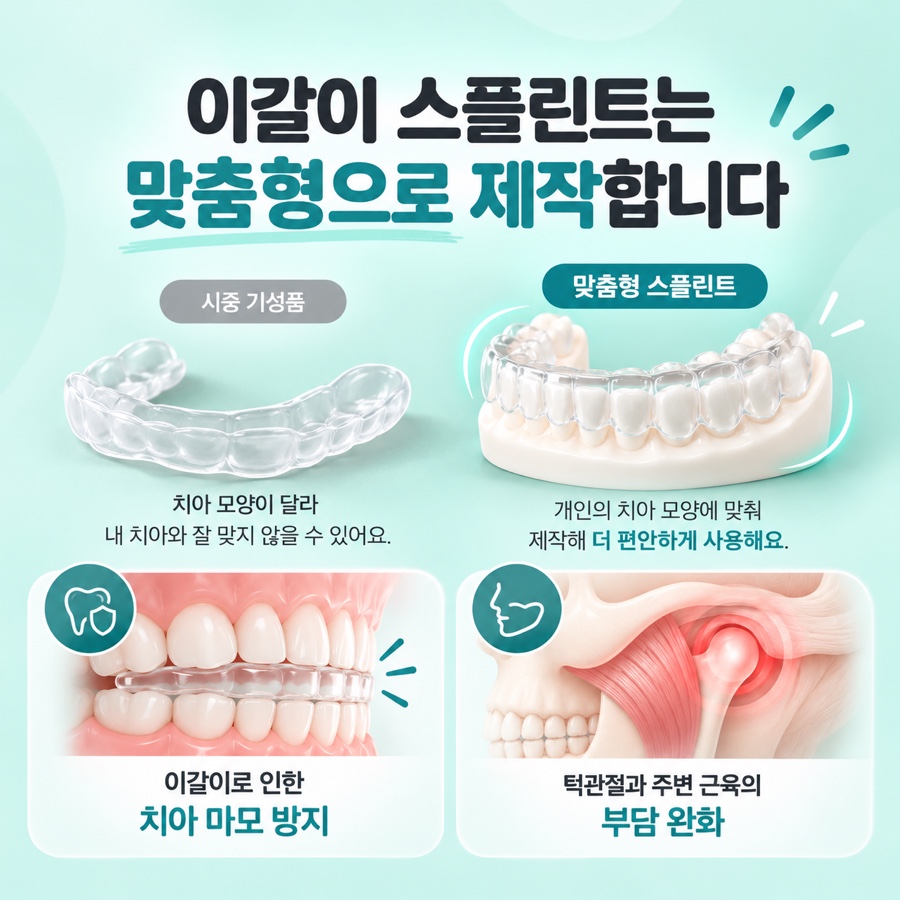
    Did you know that store-bought, one-size-fits-all mouth guards
    often can’t manage this habit effectively?

    night guard for teeth grinding

    Key Takeaway
    A night guard is an oral appliance that may help reduce tooth wear and jaw joint strain during sleep.
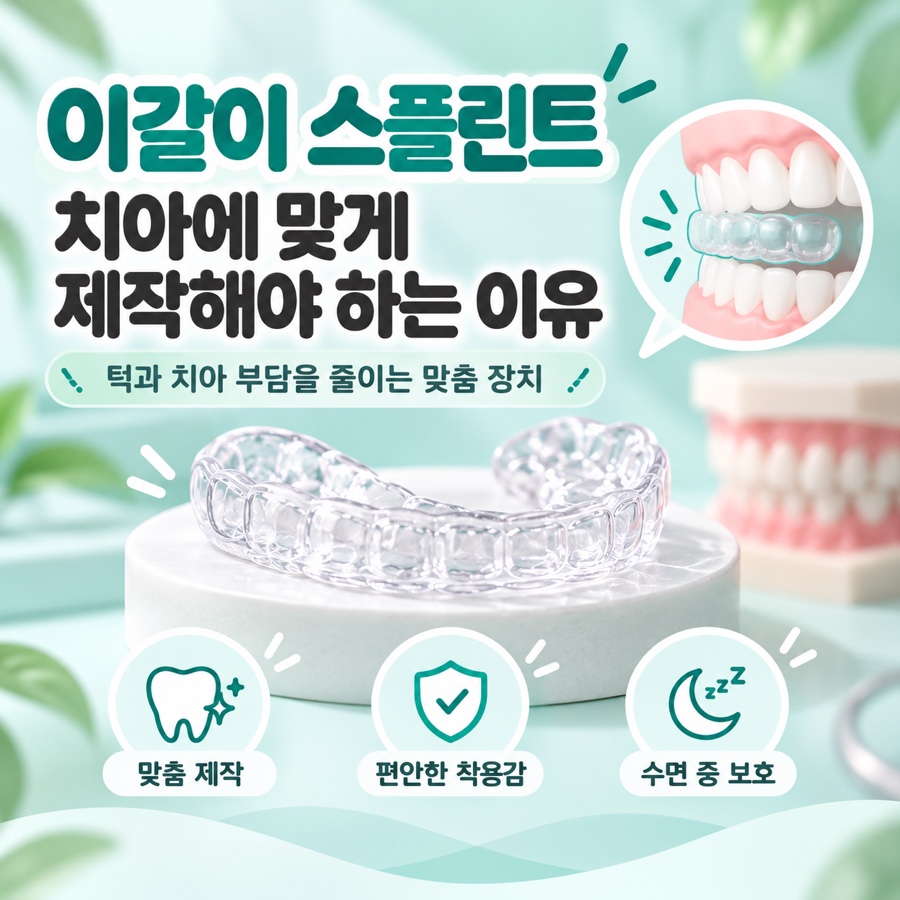
    However, it needs to be custom-made to match your tooth shape, bite, and jaw movement in order to work well.
    Over-the-counter versions can’t account for individual differences and may end up causing more discomfort.

    This article walks through how teeth grinding affects your teeth and jaw joint,
    how a night guard works,
    why a custom dental fit matters more than an over-the-counter option,
    and how to wear and care for one safely.

    night guard for teeth grinding - image 2

    What Happens to Your Jaw If You Ignore Teeth Grinding?

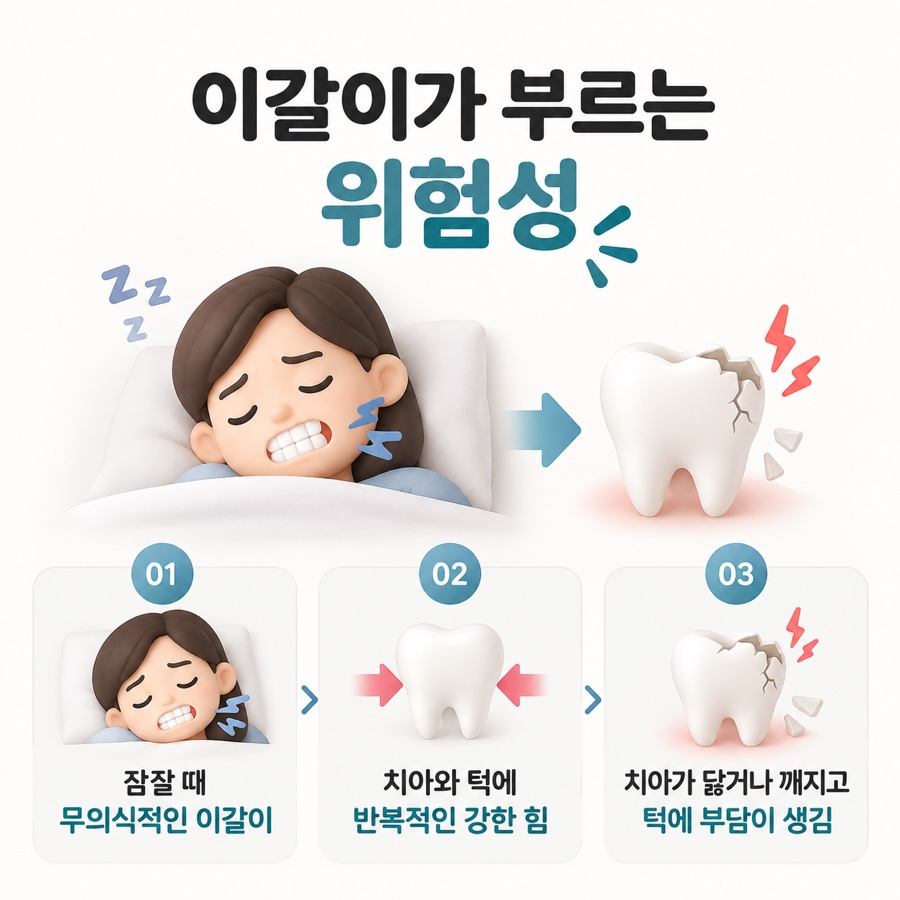
    Teeth grinding (bruxism) is the unconscious habit of grinding or clenching your teeth forcefully while you sleep.
    It places far more force on your teeth and jaw joint, repeatedly,
    than ordinary chewing ever does.

    When this habit continues over time,
    it can gradually wear down or chip your teeth,
    and may also lead to tooth sensitivity or a stiff, sore jaw.

    Key Point
    According to Korea’s National Health Insurance Service, the number of patients treated for TMJ disorder rose from 353,000 in 2015 to 414,000 in 2019 — a 17.1% increase over five years.
    Patients in their 20s made up the largest share, at 114,000 (27.7%) of all age groups.
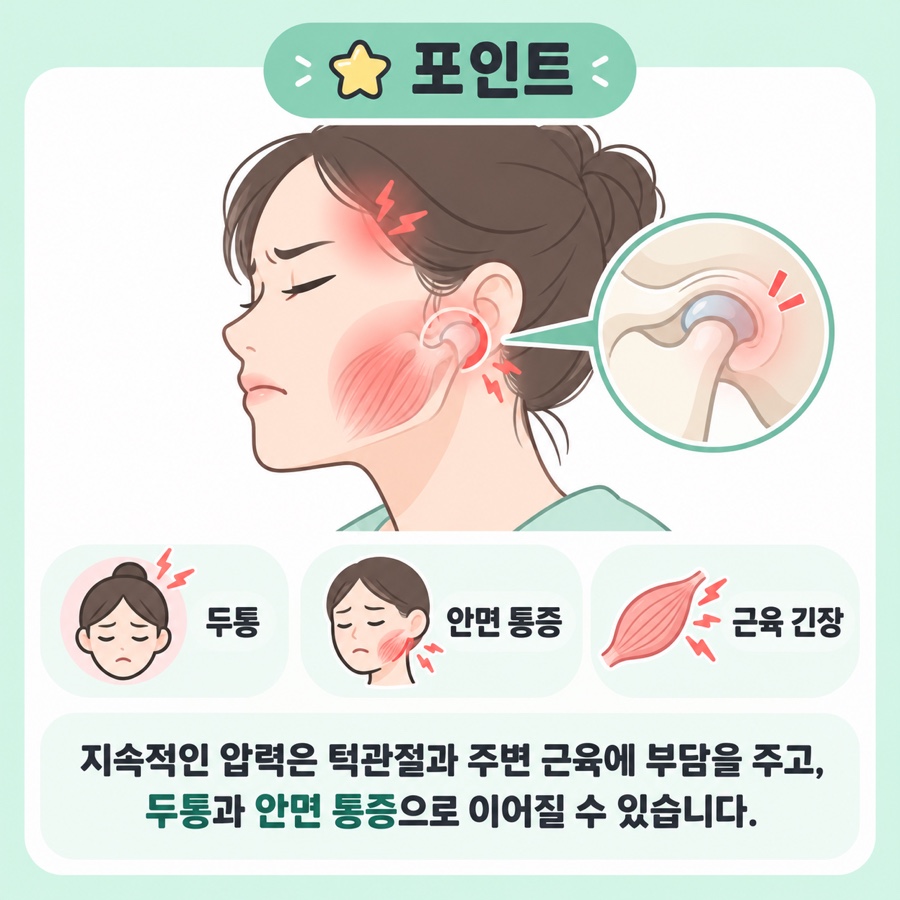
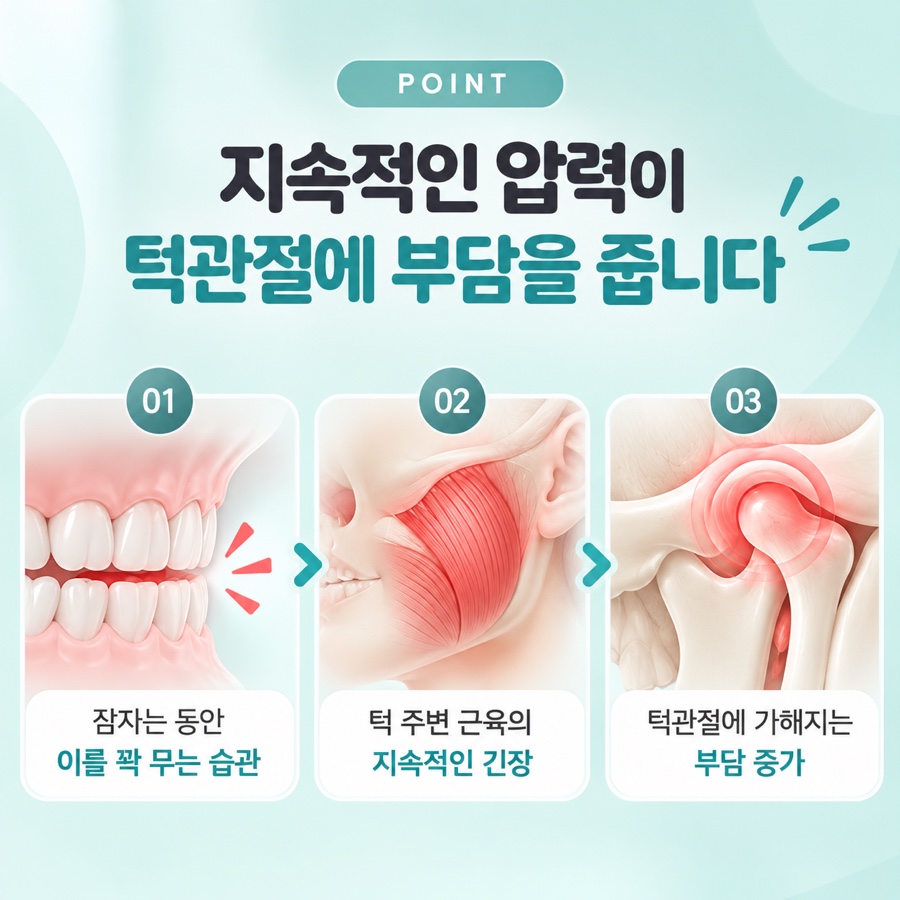
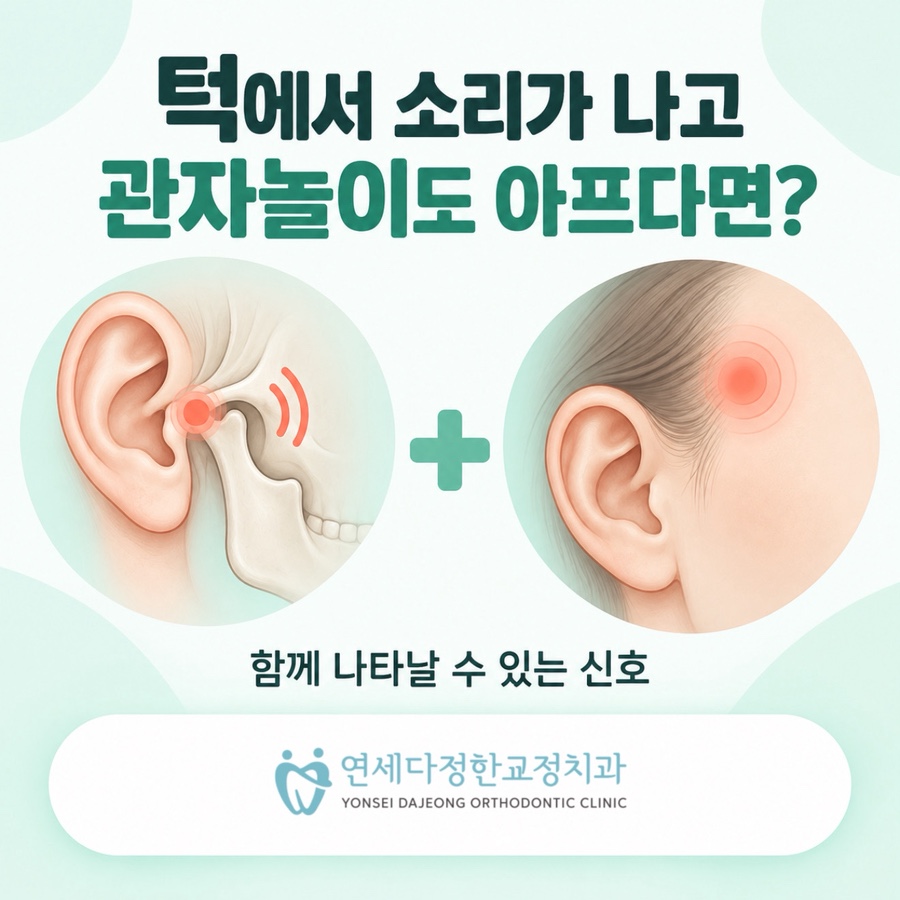
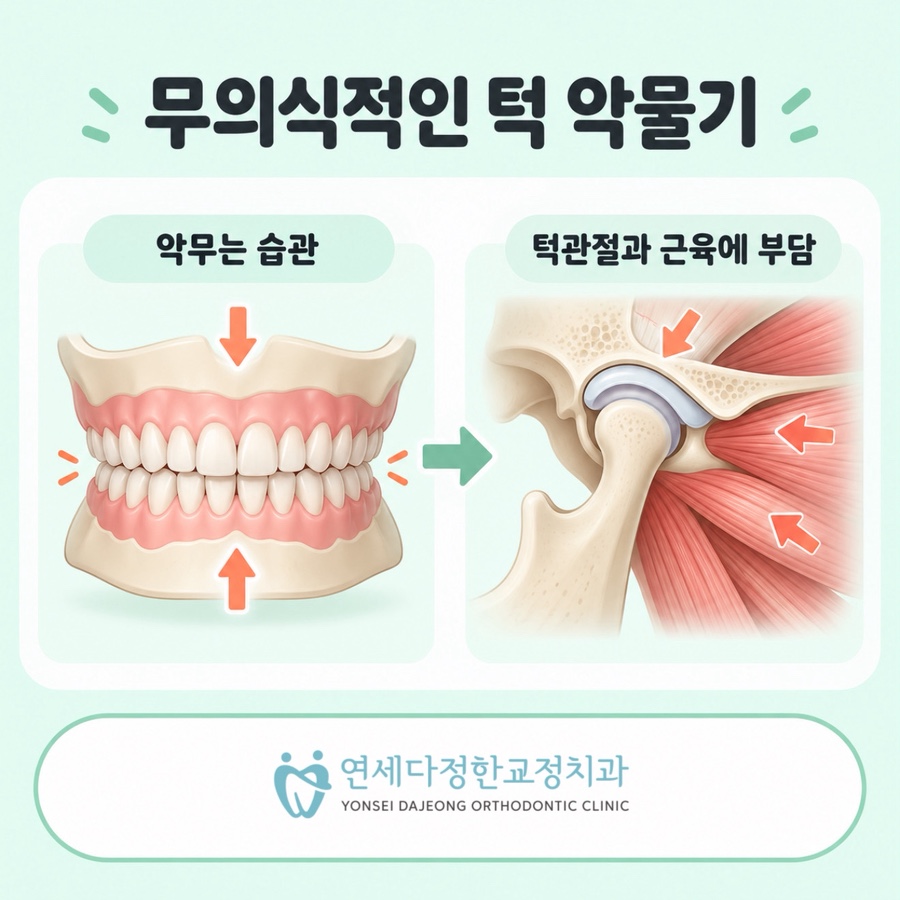
    Sustained pressure on the jaw can wear down the TMJ disc and tighten the surrounding muscles, which may lead to chronic headaches and facial pain.

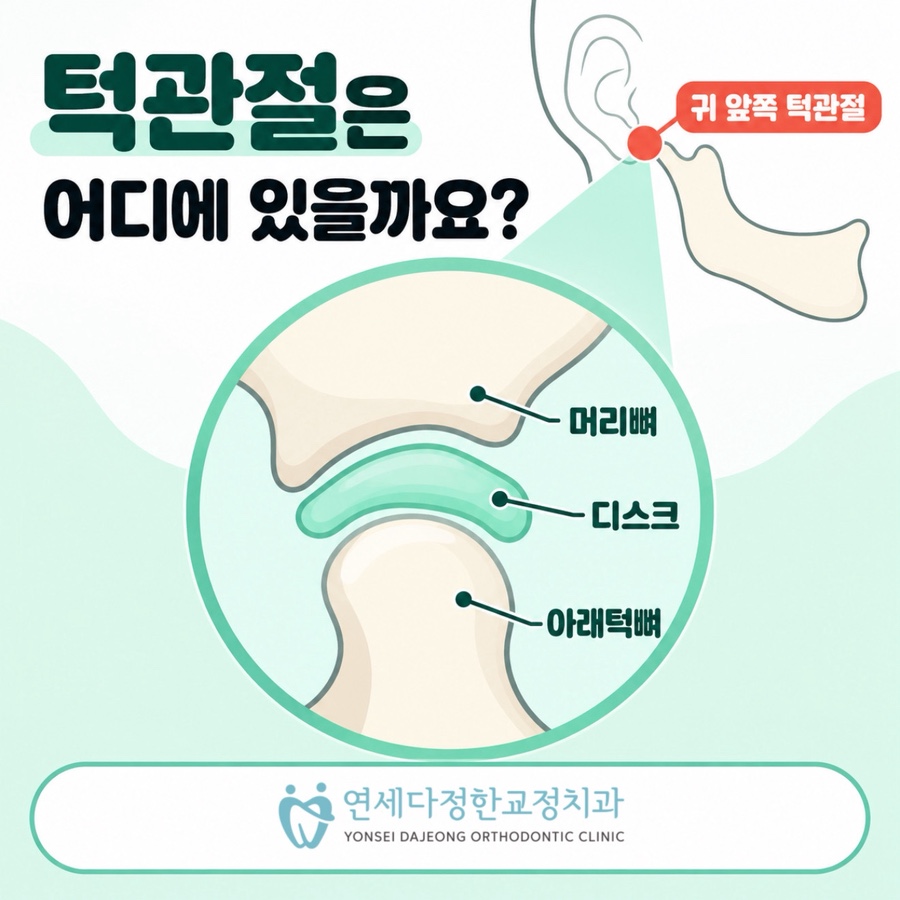
    TMJ disorder refers to a problem affecting the jaw joint located just in front of the ear. It was traditionally viewed as a single syndrome, but is now understood as a complex of interrelated disorders affecting the chewing system.

    That’s how Korea’s Disease Control and Prevention Agency describes TMJ disorder on its National Health Information Portal.

    night guard for teeth grinding - image 3

    night guard for teeth grinding - image 6

    night guard for teeth grinding - image 7

    night guard for teeth grinding - image 8

    Many people brush off teeth grinding
    and only see a dentist once significant tooth wear has already set in.

    It’s best to have a dentist check your current condition
    before symptoms become more serious.


    How Does a Night Guard Work?

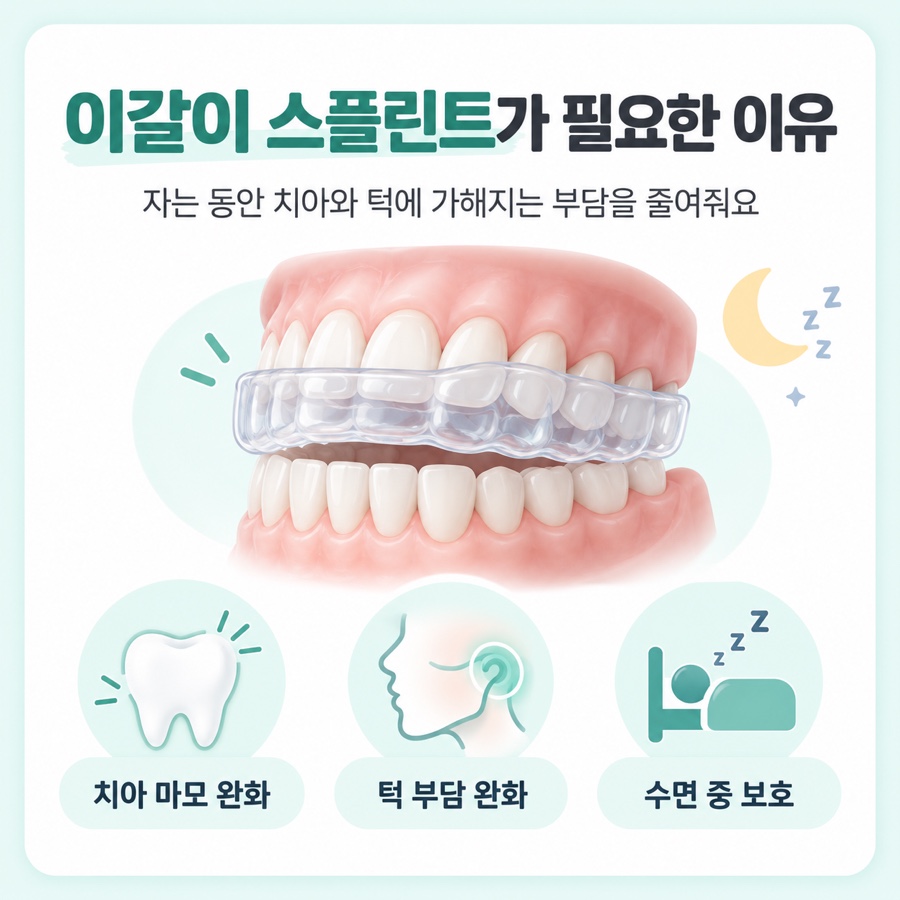
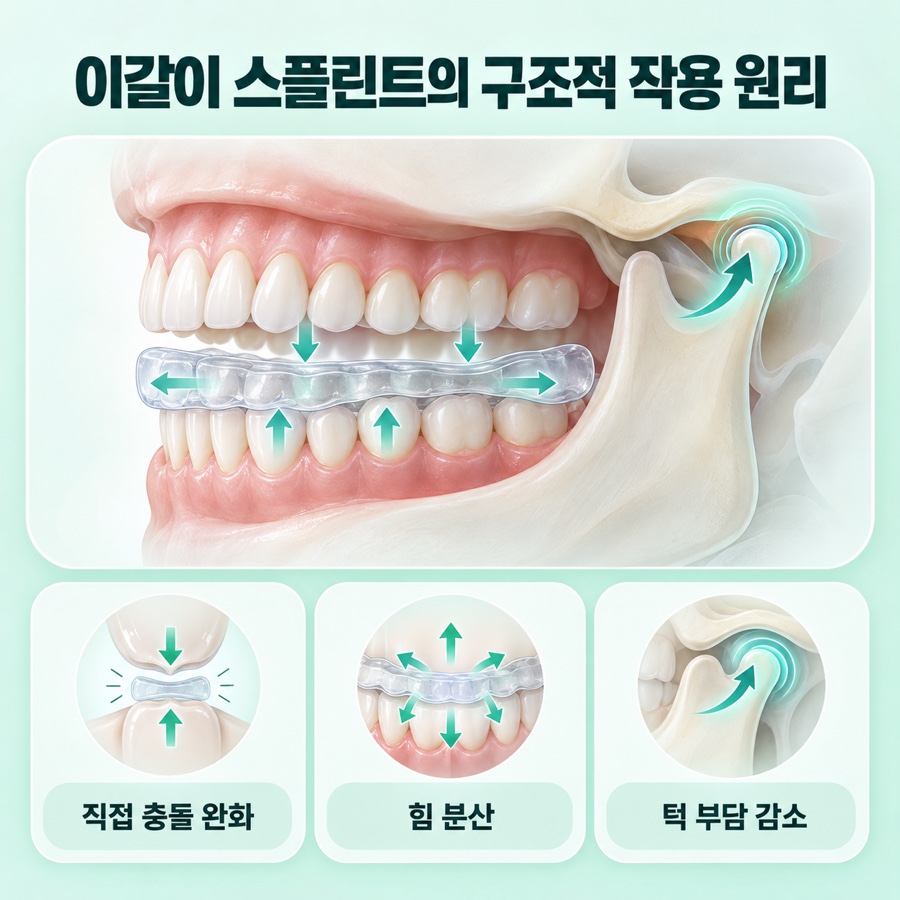
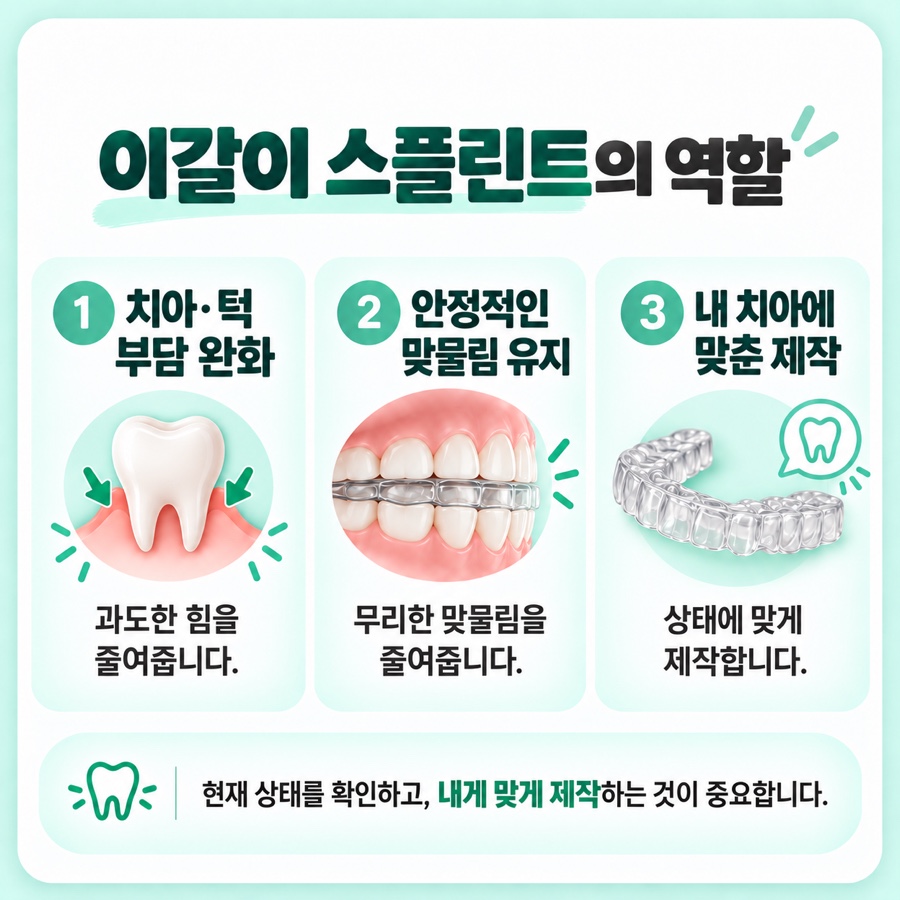
    A night guard is an oral appliance that keeps your upper and lower teeth from making direct contact during sleep, which can help distribute force on your teeth and jaw joint more evenly.

    Wearing a night guard can
    reduce forceful contact between your teeth
    and ease excessive tension in the muscles around your jaw.

    • May help reduce the force placed on your jaw during sleep
    • May help prevent teeth from wearing down or chipping by blocking direct contact
    • May help ease the strain placed on your jaw joint
    Key Point
    In a study by Yonsei University Dental Hospital involving 30 patients with sleep bruxism, wearing an occlusal stabilization splint for one month significantly improved the balance of bite force between the left and right sides.
    That benefit, however, depends heavily on how precisely the appliance fits the teeth.

    That said, a night guard isn’t something
    you can simply pop in and expect to work.

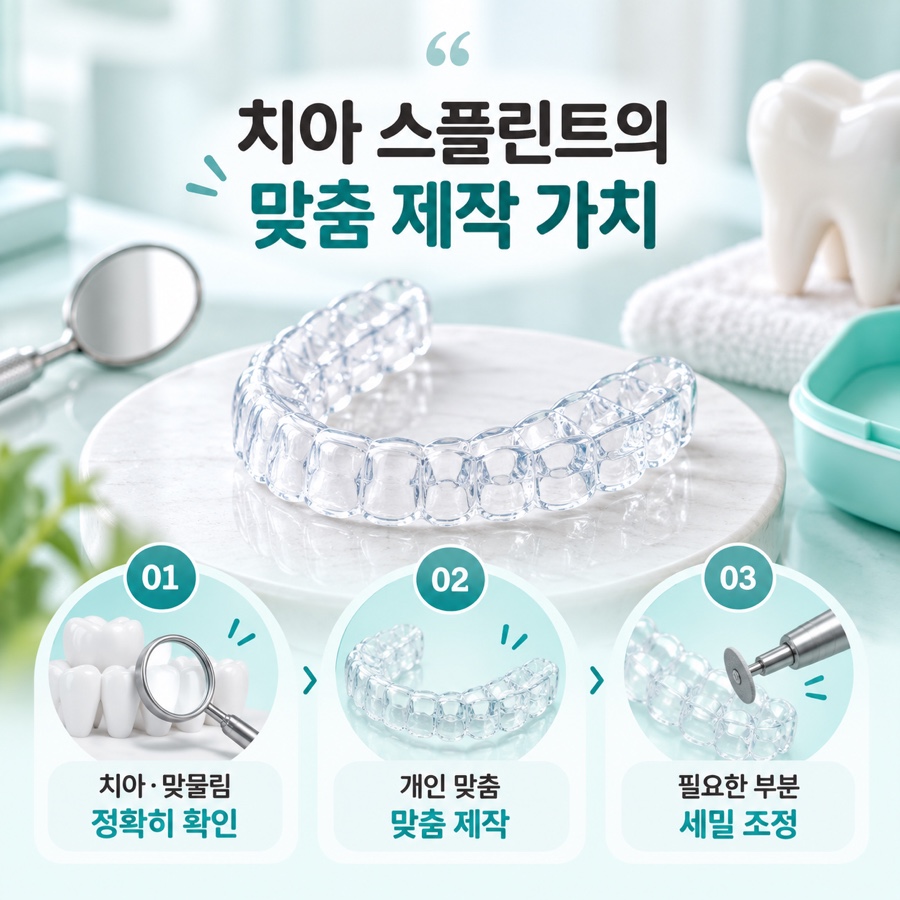
    Because everyone’s tooth shape, bite, and jaw movement are different,
    having the appliance made and adjusted to your specific condition is essential.

    night guard for teeth grinding - image 9


    Custom Night Guards vs. Over-the-Counter Mouth Guards: What’s the Difference?

    A custom dental night guard is made after your dentist examines your individual tooth shape and bite, then fabricates and adjusts the appliance specifically for you.

    Using a generic, off-the-shelf guard as-is
    can result in a poor fit or discomfort.

    If a night guard doesn’t fit your teeth properly,
    it can end up placing unnecessary strain on your jaw.

    Category Over-the-Counter Mouth Guard Custom Dental Night Guard
    Fabrication Standardized, one-size shape Made from an impression of your own teeth
    Fit Often loose or doesn’t sit flush Fits snugly against teeth and gums
    Force Distribution Can concentrate on specific spots Distributed evenly overall
    Adjustability Not possible Fine-tuned at regular checkups

    night guard for teeth grinding - image 11

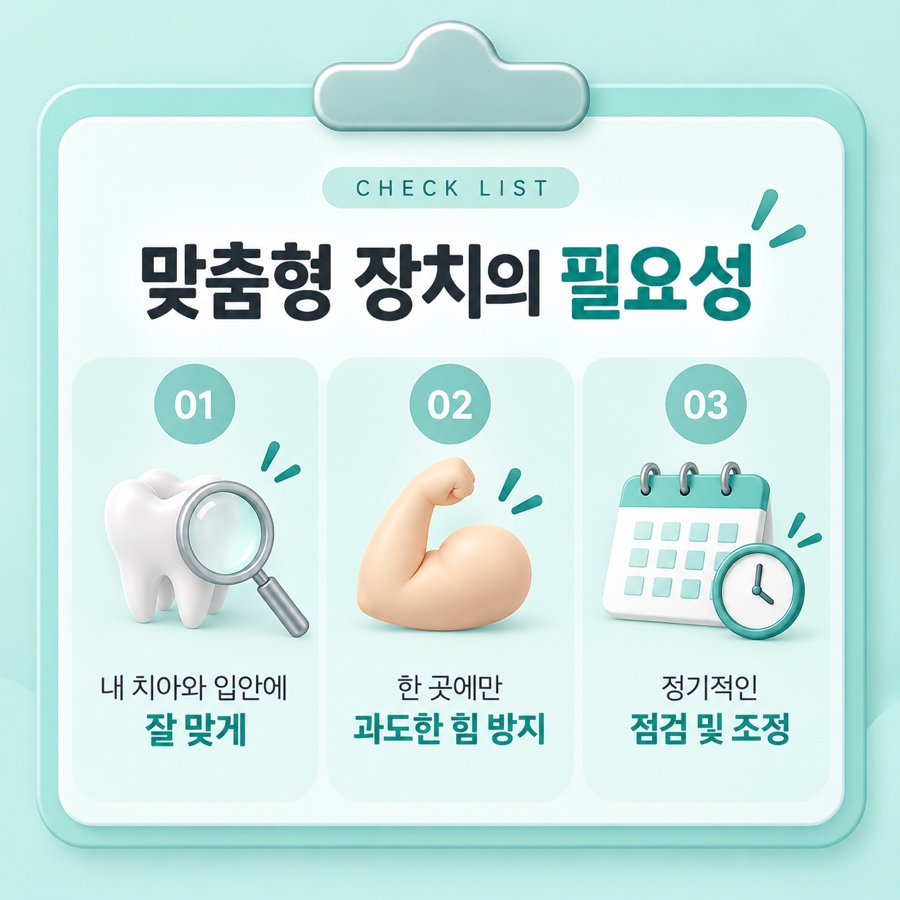
    Checklist
    ✅ Check that it fits snugly against your teeth and gums without discomfort
    ✅ Make sure force is distributed evenly rather than concentrated in one spot
    ✅ Have it checked regularly and adjusted if needed

    night guard for teeth grinding - image 12

    The process of thoroughly diagnosing your teeth and jaw before fitting an appliance
    can vary from one dental office to another.

    Consulting a dentist near you can help you get an accurate assessment, and
    you can also find related information on the Yonsei Dajeonghan Orthodontic Dental Clinic in Cheongnyangni website.

    night guard for teeth grinding - image 13


    How Do You Care for a Night Guard Safely?

    A night guard needs to be cleaned properly and checked regularly to stay safe and last as long as possible.

    1. Clean the appliance properly after each use and store it in its dedicated case
    2. Have your dentist check it if it feels uncomfortable or no longer fits well
    3. Get your teeth and jaw checked together on a regular basis

    night guard for teeth grinding - image 14

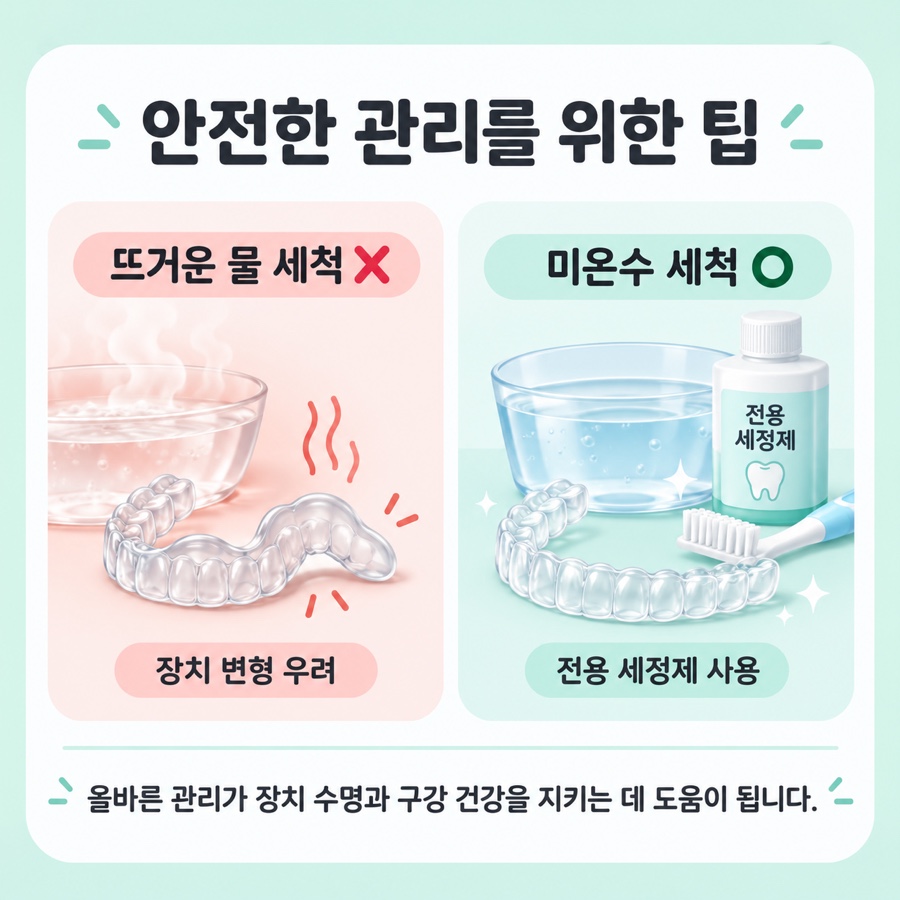
    Caution
    Cleaning the appliance with hot water can cause it to warp.
    It’s best to get in the habit of using lukewarm water or a dedicated cleaning solution.

    night guard for teeth grinding - image 15

    Outcome
    Combining proper care with regular checkups
    can help steadily reduce tooth wear and strain on the jaw joint over time.

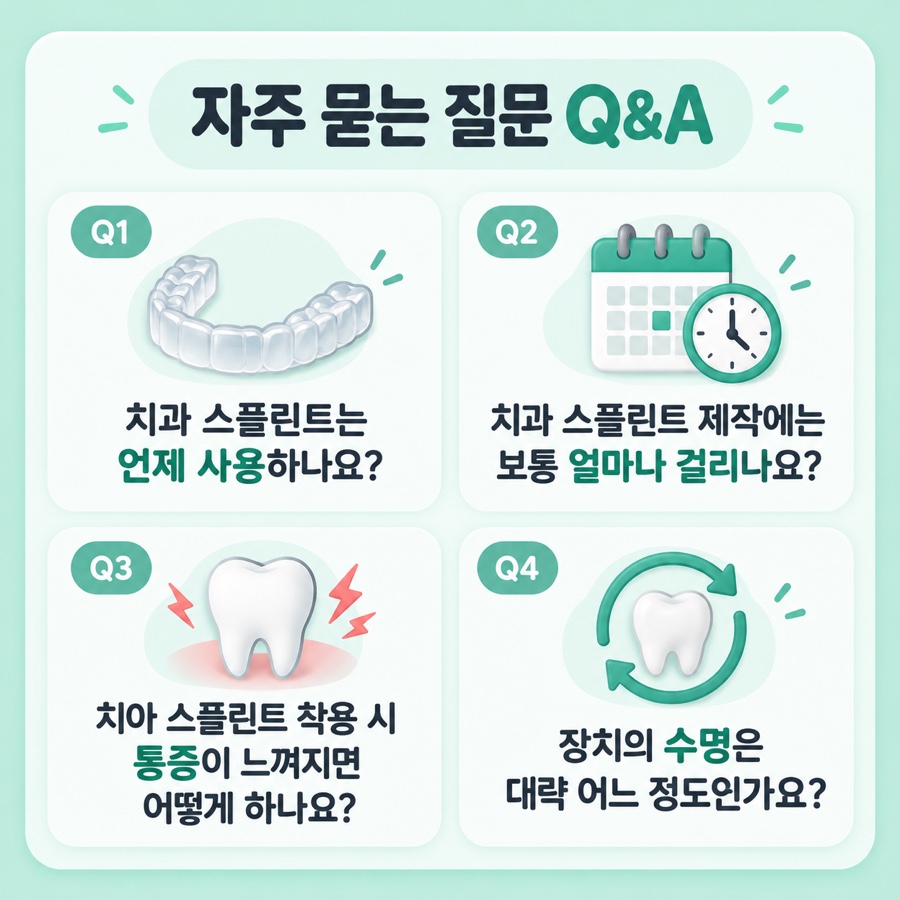
    Frequently Asked Questions

    night guard for teeth grinding - image 16

    1. Is it okay to just use an over-the-counter mouth guard?
    Store-bought guards can’t fully account for each person’s unique tooth shape and bite. A poorly fitting appliance can actually put more strain on your teeth and jaw, so it’s best to consult a dentist before using one.

    2. How long does it typically take to get a custom night guard made?
    Because it involves examining your tooth shape and bite before fabricating an appliance tailored to you, timelines vary by dental office. It usually takes anywhere from a few days to one or two weeks, so check with your dentist for an exact timeframe.

    3. What should I do if wearing the night guard causes pain?
    Mild discomfort during the initial adjustment period is common. If pain persists or gets worse the longer you wear it, don’t force yourself to keep using it — have a dentist check the fit instead.

    4. About how long does a night guard last?
    Its lifespan depends on how severe your grinding is, your usage habits, and how well you maintain it. If it becomes significantly worn or warped, have it checked regularly and replace it when needed.


    References

    · Ministry of Health and Welfare & National Health Insurance Service, “Clicking Jaws: TMJ Disorder Most Common Among Women in Their 20s,” press release. View source
    · Korea Disease Control and Prevention Agency, “TMJ Disorder,” National Health Information Portal. View source
    · “Occlusal Force and Functional Occlusal Analysis After Using an Occlusal Stabilization Splint in Sleep Bruxism Patients: A Pilot Study,” KCI (Korea Citation Index). View source

    This article is provided for general health information purposes only and is not a substitute for individual diagnosis or treatment. If you’re experiencing symptoms, please consult a dental professional.

  • TMJ Headache Causes: 3 Warning Signs You Shouldn’t Ignore in Cheongnyangni

    TMJ Headache Causes: 3 Warning Signs You Shouldn’t Ignore in Cheongnyangni

    SummaryHere’s a breakdown of common TMJ headache causes and the symptoms that often go with them. If jaw pain and migraines are showing up together, read on for the nerve connection between your chewing muscles and head pain, a self-check list, daily habits that help, and when it’s worth getting checked at a Cheongnyangni orthodontic clinic.

    What if your headache only eases for a moment after taking painkillers, then comes right back?

    According to news reports citing National Health Insurance Service (NHIS) statistics, about 414,000 patients visited a hospital for TMJ (temporomandibular joint) disorder in 2019 alone.

    Did you know a large share of them also report headaches?

    TMJ headache

    Key takeaway: TMJ headaches are a well-documented TMJ headache cause, occurring when tension in the jaw muscles and facial nerves travels to the head’s sensory nerves through the trigeminal nerve. In fact, 40-60% of patients with temporomandibular disorder (TMD) also experience headaches, and Seoul National University Dental Hospital reports that 67% of TMJ disorder patients experienced headaches and 50% experienced insomnia. This article breaks down why jaw pain and headaches show up together and what to know before visiting a Cheongnyangni orthodontic clinic.

    TMJ headache illustration 2

    TMJ headache illustration 3

    If you wake up feeling like you never really rested, with your temples throbbing more days than not,
    it’s worth considering whether jaw clicking or popping could be behind it.

    That stiffness in your head and jaw you’ve been chalking up to fatigue may actually be a sign of an underlying imbalance in your body.

    TMJ headache illustration 4

    Chronic headaches and facial pain are more closely linked than most people realize.
    When the chewing muscles that move your jaw and the nerves connecting to your head tense up together, both types of pain can strike at once.

    Here’s an easy-to-follow breakdown of how jaw pain and headaches are connected.

    TMJ headache illustration 5

    TMJ headache illustration 6

    Why Does TMJ Disorder Happen?

    TMJ disorder occurs when the disc or ligaments between the lower jawbone and skull develop problems, causing pain and dysfunction.
    This area is a critical junction where the nerves and muscles supporting the head and neck intersect.

    TMJ headache illustration 7

    Self-Check
    ✅ Your jaw makes a sound when you open your mouth
    ✅ Your jaw feels stiff and sore
    ✅ In severe cases, your mouth doesn’t open all the way

    If you unconsciously clench your jaw or grind your teeth, your TMJ stays under constant pressure.
    As a result, the surrounding muscles tire out quickly.

    Left unaddressed, this can progress to facial asymmetry or neck and shoulder pain, which is why early management matters.

    TMJ headache illustration 8

    Key Point
    Unconsciously clenching your jaw or grinding your teeth places continuous pressure on the joint, quickly fatiguing the surrounding muscles.

    TMJ headache illustration 9


    Jaw Clicking or Popping: Is It Safe to Ignore?

    The short answer: a clicking or popping sound in the jaw can be an early sign that the disc has shifted out of place.
    Even without pain, it’s safer to get it checked early.

    Chewing on one side of the mouth out of habit wears down the TMJ faster over time.
    Common warning signs include the following.

    • A sharp sensation or a grinding, sandy sound in front of the ear
    • The jaw shifts side to side when opening the mouth
    • Significant stiffness around the jaw upon waking
    • A feeling of fullness in the ear or pressure behind the eyes

    TMJ headache illustration 10

    TMJ headache illustration 11


    Why Do TMJ Headache Causes Overlap With Migraines?

    TMJ headaches happen when tension in the chewing muscles and temple muscles spreads to head pain through the trigeminal nerve.
    This occurs because the nerves responsible for facial and head sensation run close together.

    Indeed, 40-60% of patients with temporomandibular disorder also experience headaches, according to published reports.
    In a case series described by Seoul National University Dental Hospital, of 308 patients with TMJ disorder, 67% reported headaches and 50% reported insomnia.

    This pattern also shows up in news coverage citing National Health Insurance Service statistics.
    Among patients treated for TMJ disorder in 2019, 245,987 were women — about 1.5 times more than men.

    The condition was most common among women in their 20s.

    The number of patients treated for TMJ disorder grew from 353,000 in 2015 to 414,000 in 2019, a 17.1% increase over five years.

    The related news coverage cited these treatment statistics from the National Health Insurance Service.

    When the TMJ stiffens, the chewing muscles and temple muscles tend to tighten in a chain reaction.
    A throbbing headache often follows.

    If painkillers only bring temporary relief and the pain keeps returning, it may be worth checking the root cause around the jaw rather than treating the head alone.

    Category Typical Tension Headache TMJ Headache
    Pain location Whole head / back of neck Mainly temples / in front of the ears
    Accompanying symptoms Shoulder tightness Jaw clicking / jaw stiffness
    When it worsens Stress / fatigue While chewing or talking

    TMJ headache illustration 12

    Self-Check
    ✅ You clench your jaw without realizing it when stressed
    ✅ Pressing on your temples or jaw muscles feels sore
    ✅ A migraine tends to follow whenever your jaw clicks

    How Can You Manage TMJ Health Day to Day?

    The key to managing TMJ health is cutting back on harmful habits and easing muscle tension.
    Hard, chewy foods and habits like resting your chin on your hand put a lot of strain on the joint.

    TMJ headache illustration 13

    1. Avoid tough, chewy foods such as squid, gum, or chewy noodles when possible
    2. Use warm compresses regularly to relax tight muscles
    3. Get into the habit of keeping a slight gap between your upper and lower teeth
    4. Keep your tongue resting lightly against the roof of your mouth
    Caution
    If your jaw already makes noise or headaches are already occurring, home care alone may not be enough.

    TMJ headache illustration 14

    TMJ headache illustration 15

    The TMJ is closely tied to how your teeth come together (your bite), so symptoms tend to get worse the longer they’re left unaddressed.

    Many cases of TMJ disorder stem from bite misalignment or an imbalance in jaw position.
    It’s a good idea to get an accurate assessment at a clinic that can evaluate both your teeth and skeletal structure together.

    You can find more information at Yonsei Dajeonghan Orthodontic Clinic, Cheongnyangni.

    Outcome
    Accurately identifying and managing the underlying cause of TMJ issues may also help improve related symptoms such as headaches and insomnia.

    Frequently Asked Questions

    TMJ headache illustration 16

    1. My jaw only makes noise with no pain — do I still need treatment?
    Even without pain, a clicking sound can be an early sign that the TMJ disc has shifted slightly. Getting it checked early is recommended.

    2. Why does my head hurt when the problem is in my jaw?
    The facial nerves that move your jaw and the sensory nerves in your head run close together. Tension signals from the jaw muscles can travel easily to the head, contributing to migraines or temple pain.

    3. Do orthodontic clinics treat TMJ disorder too?
    Yes. Since many cases of TMJ disorder stem from bite misalignment or jaw position imbalance, an evaluation from an orthodontic specialist can be helpful.

    4. Are there dietary habits I should watch out for?
    Tough, hard foods like squid, gum, or chewy noodles put strain on the jaw muscles. If pain keeps recurring, don’t put it off — get it checked at a dental clinic.


    References

    · Health Insurance Review & Assessment Service / National Health Insurance Service statistics (as cited by Gyeonggi Medinews), “TMJ Disorder Treatment Statistics,” 2020. Read more
    · Seoul National University Dental Hospital, “Persistent Headaches and Indigestion — TMJ Disorder May Be the Hidden Cause,” SNU Dental Hospital News, 2023. Read more
    · Kim et al., “Increased Risk of Migraine in Patients with Temporomandibular Disorder: A Longitudinal Follow-Up Study Using a National Health Screening Cohort,” PMC (PubMed Central), 2020. Read more
    · Korea Disease Control and Prevention Agency, “TMJ Disorder,” National Health Information Portal. Read more


    This article is intended for general health information purposes only and is not a substitute for individual diagnosis or treatment. If you’re experiencing symptoms, please consult a specialist.
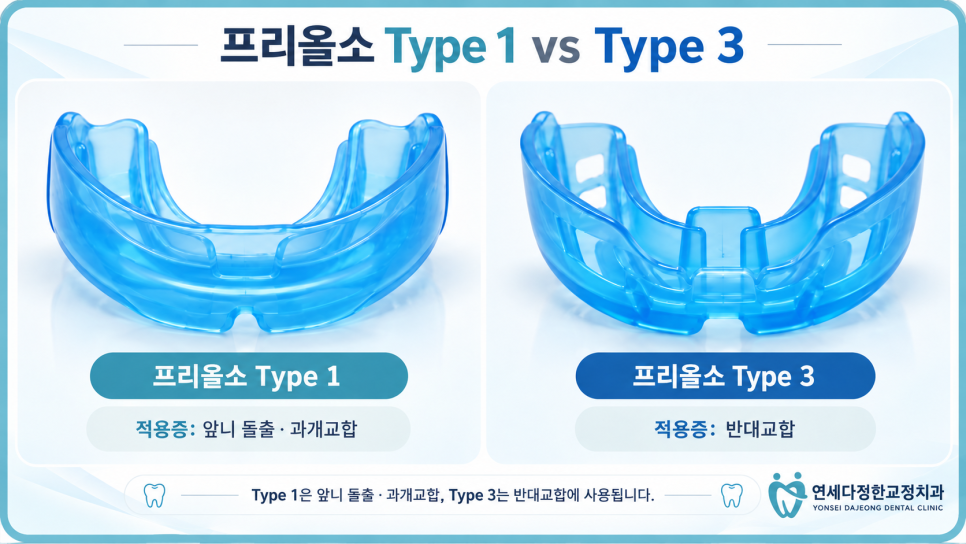
  • Malocclusion Braces Cost: 3 Reasons Price and Duration Vary

    Malocclusion Braces Cost: 3 Reasons Price and Duration Vary

    SummaryMalocclusion braces cost varies from clinic to clinic. This article explains why price and treatment duration differ based on whether the issue is skeletal or dental, whether extraction is needed, and the type of appliance used — plus how to make use of payment plans.

    Have you ever felt discomfort while eating because your back teeth didn’t line up right?

    Many people also feel self-conscious about smiling freely because of crooked teeth in the mirror.

    Once you actually go in for a consultation, malocclusion braces cost can vary widely from clinic to clinic, which only deepens the worry.

    In fact, this difference often starts with a single diagnostic distinction: whether the problem is skeletal or purely dental.

    malocclusion braces cost

    malocclusion braces cost illustration 2

    This article walks through how malocclusion braces cost is determined, the diagnostic process, the appliance and difficulty factors that create price differences, and how payment plans and treatment scheduling can help ease the financial burden.

    malocclusion braces cost illustration 3

    malocclusion braces cost illustration 4

    How Is Malocclusion Diagnosed and Classified?

    To put it simply, malocclusion is a condition in which the upper and lower teeth don’t bite together properly.

    Whether the issue is purely dental (crooked teeth) or skeletal (misaligned jawbones) makes a major difference in treatment difficulty.

    It isn’t just about teeth looking crowded — it can also affect chewing function, speech, and TMJ (jaw joint) health.

    malocclusion braces cost illustration 5

    malocclusion braces cost illustration 6

    Presentations vary widely — protruding or reversed front teeth, back teeth that don’t meet, and more.

    This is why it’s difficult to accurately estimate malocclusion braces cost before a detailed diagnostic workup.

    Key Points
    ✔ When both the jawbone and tooth structure are affected, realigning the teeth alone may not be enough.
    ✔ Treatment to guide jaw growth may also be needed, which makes a detailed diagnosis especially important.

    malocclusion braces cost illustration 7

    malocclusion braces cost illustration 8

    Leaving this condition untreated can lead to worsening gum health, speech issues, and other discomfort over time.

    So if you notice these symptoms, it’s a good idea to see a specialist for a diagnosis rather than putting it off.


    What Determines Malocclusion Braces Cost?

    Malocclusion braces cost varies significantly depending on oral condition, the degree of bone imbalance, and whether extraction is needed.

    Unlike simple spacing or mild crowding, cases where the jawbone position is significantly misaligned require moving teeth over a wider range, which calls for more advanced technique.

    malocclusion braces cost illustration 9

    In practice, extraction orthodontics tends to cost more and take longer than non-extraction orthodontics, and cases that also involve skeletal issues tend to increase both further.

    The type of appliance used also affects the total cost.
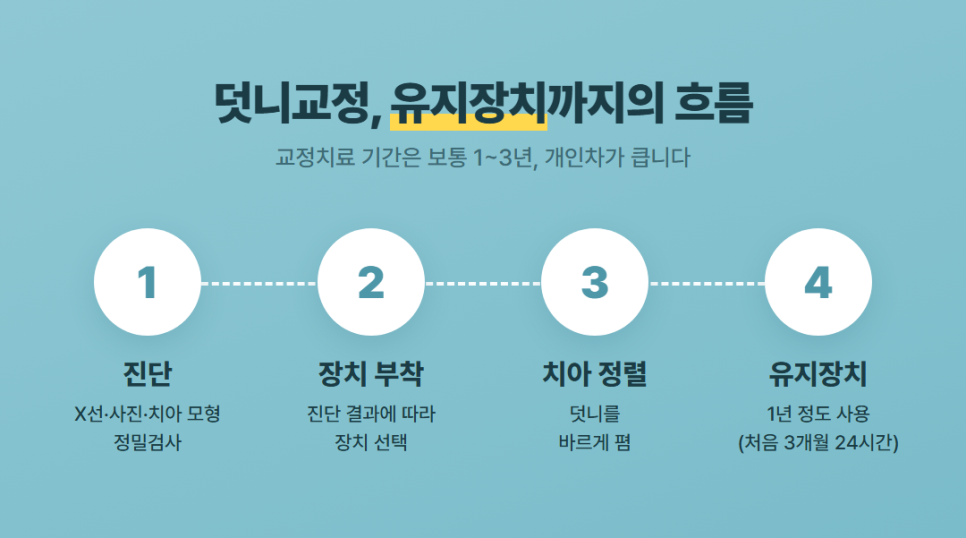
    Type Characteristics Cost Tendency
    Metal braces The most basic fixed appliance Relatively lower
    Ceramic braces Tooth-colored and less noticeable Mid-range
    Clear aligners Removable, often paired with digital diagnostics Relatively higher
    Key Points
    ✔ Whether extraction is needed and whether skeletal issues are involved both affect cost and duration.
    ✔ The appliance type (metal, ceramic, or clear) and the use of digital diagnostic equipment are also reflected in the total cost.
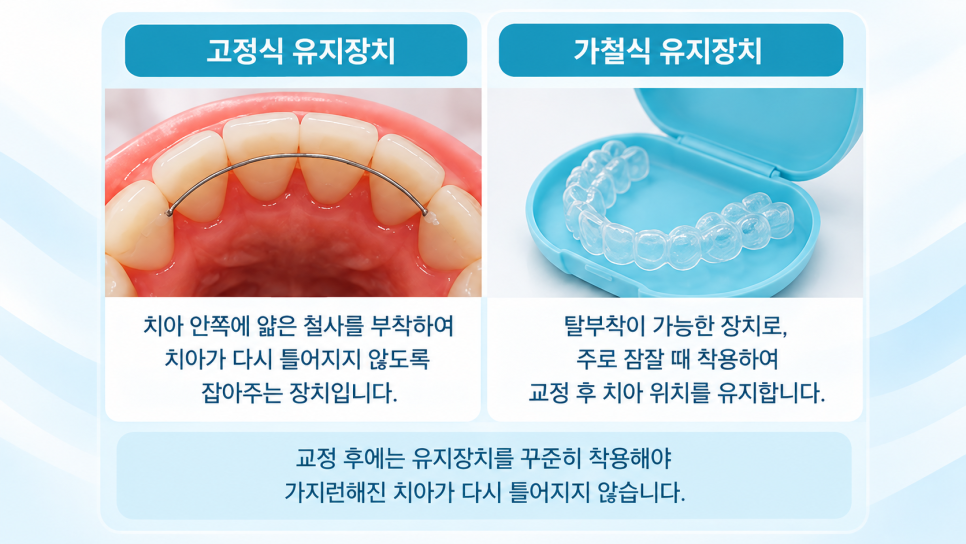
    malocclusion braces cost illustration 10

    In other words, a thorough diagnosis and treatment plan tailored to each person’s structure should come before any one-size-fits-all price standard.
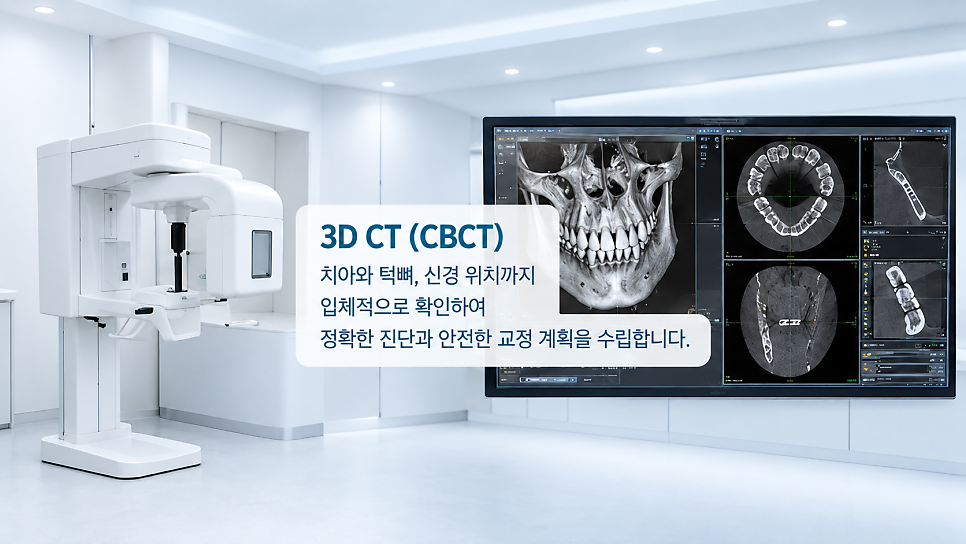

    What Factors Affect Treatment Duration and Price?

    In short, treatment duration depends on how well the patient follows instructions and how quickly the teeth and bone respond.

    Tooth movement speed differs from person to person, and broken appliances or missed appointments can extend the overall timeline.

    malocclusion braces cost illustration 11

    Depending on the clinic, non-extraction orthodontics is often estimated at around 1 to 1.5 years, and extraction cases at roughly 1.5 to 2 years — though the exact duration can vary based on each patient’s diagnosis.

    If skeletal issues are involved, treatment may also include mini-screw-assisted movement or a combined surgical approach, which can extend the timeline further.

    Checklist: What to Confirm During Diagnosis
    ✅ Did you receive a detailed diagnosis distinguishing skeletal from dental issues?
    ✅ Were you given an estimated treatment duration and a step-by-step movement plan?
    ✅ Were any potential additional costs explained transparently?

    malocclusion braces cost illustration 12

    malocclusion braces cost illustration 13

    Rather than chasing the lowest price alone, it’s wise to also weigh the clinical team’s experience and the aftercare system.

    It’s important to approach treatment in a way that addresses both safety and quality of outcome.


    How Can You Use Payment Plans and Manage Treatment?

    Using a payment plan can help reduce the upfront financial burden while continuing long-term treatment.

    Orthodontic treatment is a long journey that can last from several months to several years, so it’s a good idea to plan your finances ahead of time.

    malocclusion braces cost illustration 14

    Caution
    Neglecting oral hygiene during treatment can lead to cavities or gum disease, which may extend the treatment period.
    Keep to your scheduled visits, and contact your clinic right away if an appliance becomes deformed or breaks.

    malocclusion braces cost illustration 15

    If you have questions, consider visiting the Yonsei Dajeonghan Orthodontic Clinic in Cheongnyangni homepage for a diagnostic consultation to check your malocclusion type, estimated cost, and expected duration first.
    In Summary
    · Malocclusion braces cost is shaped by whether the issue is skeletal or dental, whether extraction is needed, and the type of appliance used.
    · Treatment duration depends on patient compliance and response speed, and is often estimated at around 1 to 2 years on average.
    · Payment plans and good oral care may help reduce both cost burden and treatment delays.

    Frequently Asked Questions

    malocclusion braces cost illustration 16

    1. How long does malocclusion treatment usually take?
    It varies depending on jaw condition and case difficulty, but treatment is often estimated at around 1.5 to 2 years. Cases involving extraction tend to take longer.

    malocclusion braces cost illustration 17

    2. Do I have to pay the full malocclusion braces cost upfront?
    Most clinics offer installment payment systems tied to treatment stages, which can help reduce the initial financial burden.

    malocclusion braces cost illustration 18

    3. Is it safe to choose the cheapest option?
    Rather than automatically going with the lowest price, it’s best to carefully weigh factors like diagnostic equipment quality and the clinical team’s experience and skill.

    malocclusion braces cost illustration 19

    4. Can orthodontic treatment still help after adulthood?
    Even after growth has finished, tooth movement itself is possible regardless of age, and functional and aesthetic improvement may be possible.

    5. Is malocclusion treatment covered by health insurance?
    General cosmetic malocclusion treatment is not covered by national health insurance. Partial coverage may apply only for specific diagnoses, such as cleft lip and palate.


    References

    · Seoul National University Hospital, “Malocclusion,” Seoul National University Hospital Medical Information. View Source
    · DBpia, “Changes in Dental and Facial Features Before and After Orthodontic Treatment With and Without Extraction in Class I Malocclusion Patients,” academic journal article. View Source
    · National Health Insurance Service, “Guide to Insurance Coverage for Orthodontic and Orthopedic Treatment of Cleft Lip and Palate.” View Source


    This article is intended for general health information purposes only and does not replace individual diagnosis or treatment. If you have symptoms, please consult a specialist.