Tag: Dental Facts

  • Facial Asymmetry Orthodontic Treatment: 4 Key Diagnostic Steps

    Facial Asymmetry Orthodontic Treatment: 4 Key Diagnostic Steps

    SummaryThis article looks at how facial asymmetry orthodontic treatment works at Dongdaemun Orthodontics. From bite diagnosis and 3D CT imaging to jaw joint and muscle evaluation and tips for maintaining facial balance, here’s everything worth knowing before your visit.

    Have you ever noticed that one side of your face looks noticeably larger every time you check the mirror?

    In fact, this appearance is far more often caused by a misaligned bite between the upper and lower teeth than by a truly severe skeletal asymmetry.

    That’s exactly why Dongdaemun Orthodontics pays such close attention to the left-right balance of the chewing muscles as part of every evaluation.

    Key Takeaways
    Dongdaemun Orthodontics evaluates both tooth alignment and how the upper and lower jaws come together, which may help the appearance associated with facial asymmetry improve naturally over the course of facial asymmetry orthodontic treatment.
    The process relies on 3D CT imaging and facial analysis equipment to map the relationship between the skeleton and the teeth, then plans tooth movement around the center line of the face.
    A significant share of Korean adults live with some degree of malocclusion, which is why identifying the underlying cause through precise diagnosis is such an important first step.
    Dongdaemun Orthodontics

    If crooked teeth have you considering orthodontic treatment,
    it helps to look beyond simply straightening the teeth
    and also consider how the teeth show when smiling and the overall shape of the mouth.

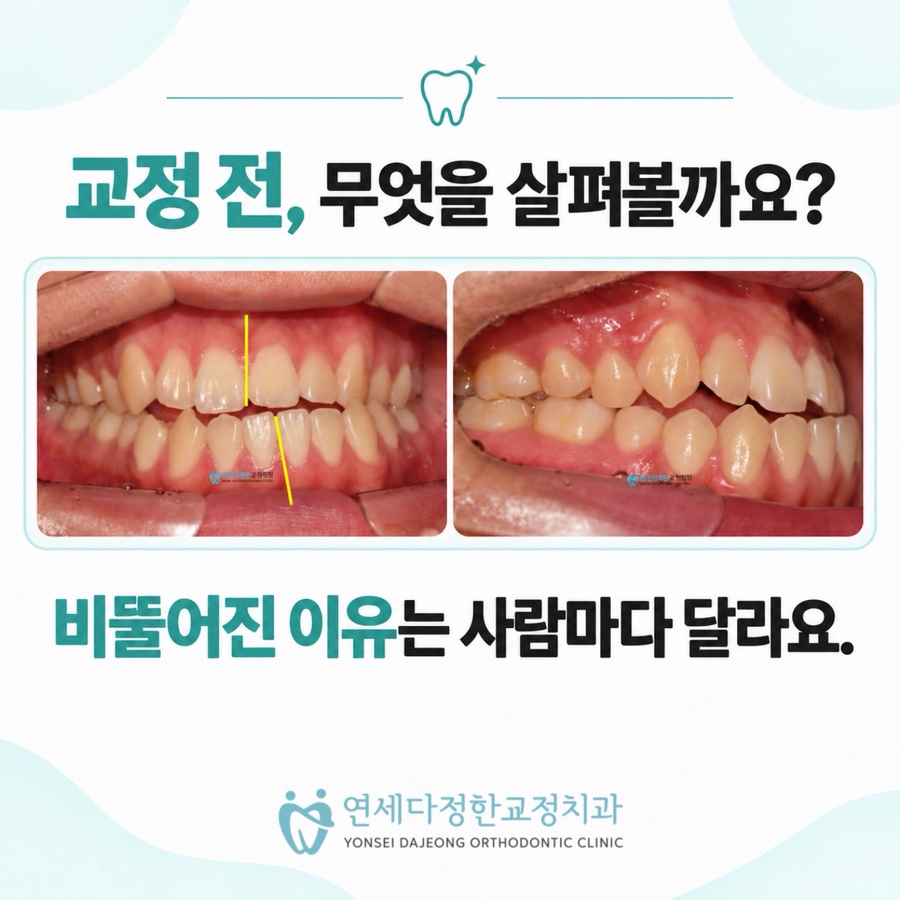
    Because the cause of crooked teeth differs from person to person,
    what needs to be checked also depends on whether the issue is limited to tooth alignment or also involves the position of the upper and lower jaws.
    Dongdaemun Orthodontics related image 2

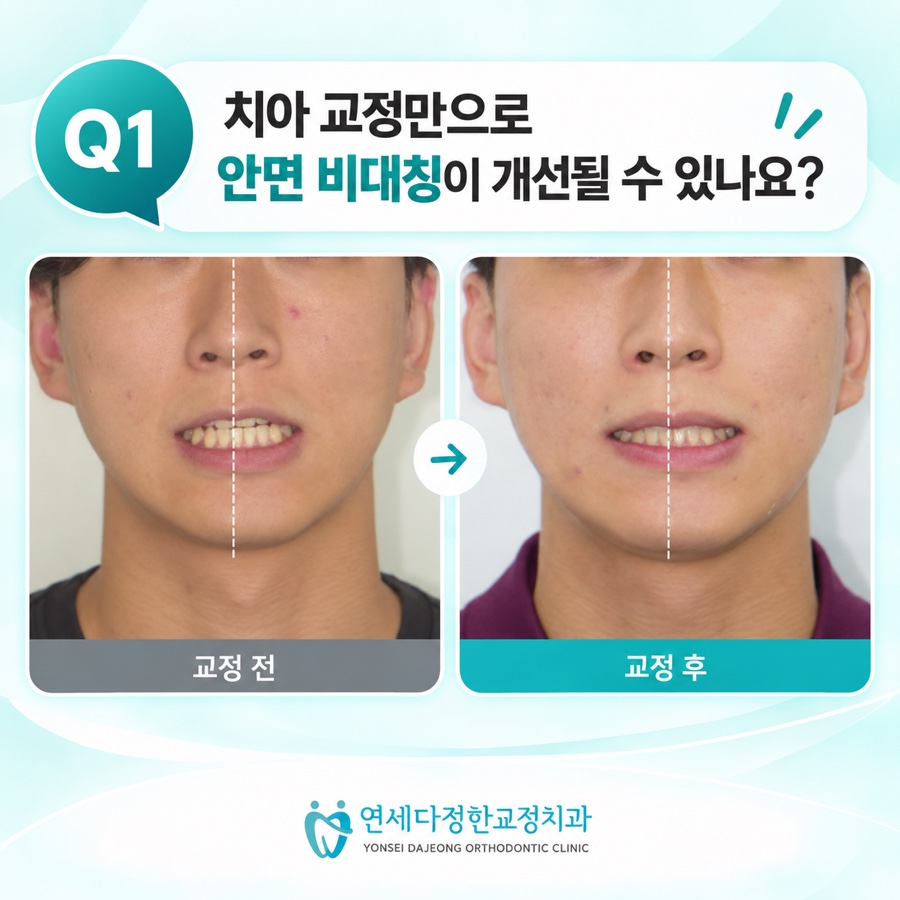
    Can Orthodontic Treatment Alone Improve Facial Asymmetry?
    Dongdaemun Orthodontics related image 3

    When the skeleton itself isn’t severely asymmetrical,
    orthodontic treatment alone may help improve the appearance of facial asymmetry.

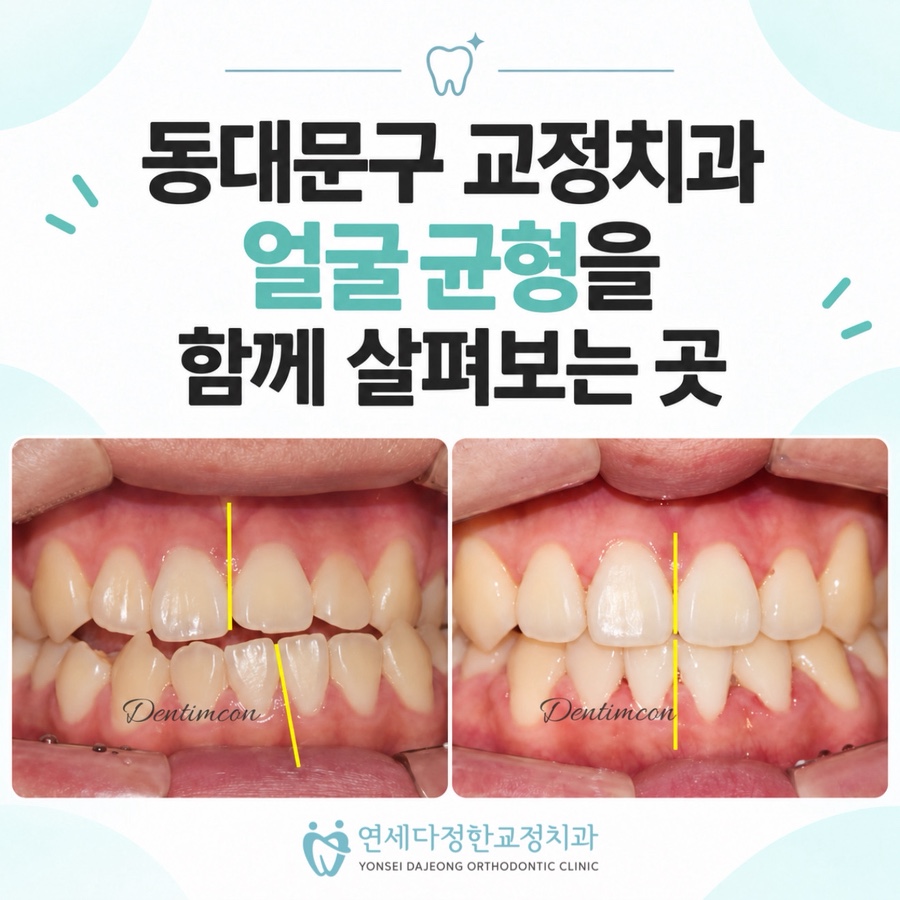
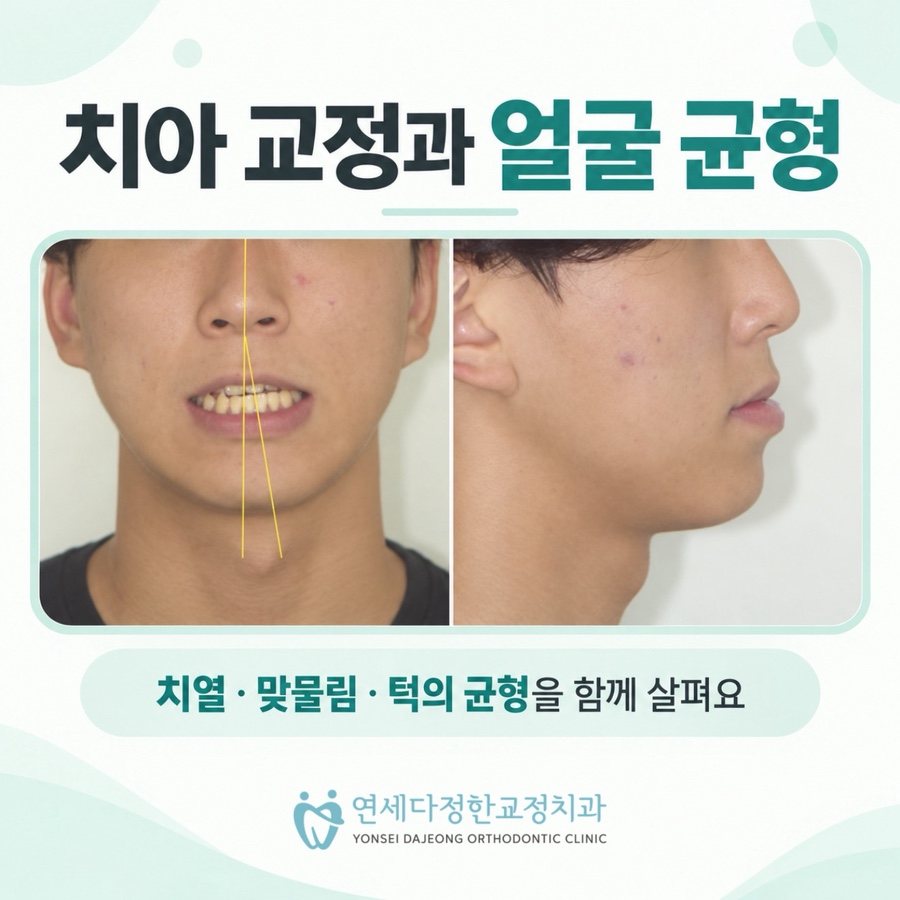
    Facial asymmetry refers to a condition where, relative to the center line of the face, the eyes, cheekbones, or corners of the mouth appear uneven in height or size from left to right.

    There are broadly two causes:
    skeletal asymmetry, where the bone itself grew unevenly,
    and functional asymmetry, where a misaligned bite causes the chewing muscles to develop unevenly on one side.

    Dongdaemun Orthodontics related image 4

    Seoul National University Hospital describes malocclusion as follows.

    Malocclusion refers to a condition in which the upper and lower jaws do not come together normally, or the teeth are uneven and crooked.
    Dongdaemun Orthodontics related image 5

    Type Main Cause Effect of Orthodontic Treatment
    Functional asymmetry Misaligned bite position, one-sided chewing habits May improve with orthodontic treatment alone
    Skeletal asymmetry Uneven growth of the jawbone itself Treatment direction must be determined after precise diagnosis

    According to a report by Edaily, surveys indicate that more than one in two Korean adults experiences some degree of malocclusion,
    so this is a common concern rather than a rare one.

    Key Point
    Simply straightening the teeth into a line doesn’t address an underlying skeletal imbalance, and an unnatural look can remain.
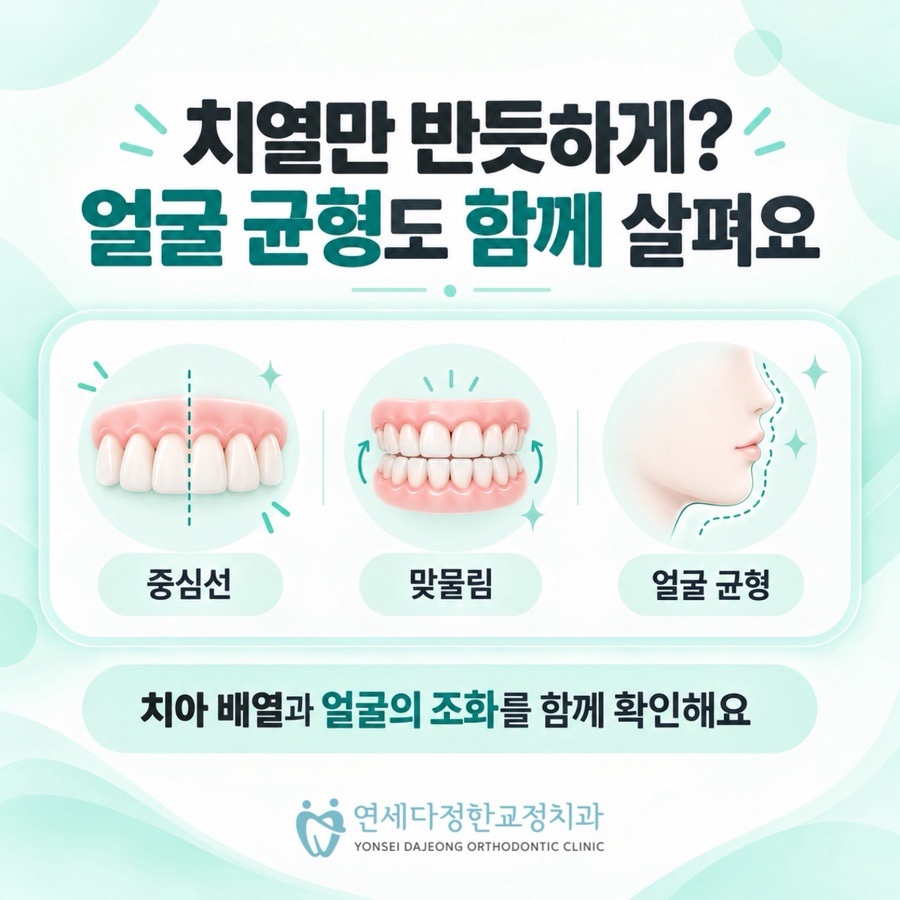
    Analyzing the face’s center line together with the horizontal bite relationship is what allows both function and appearance to be addressed at the same time.
    Dongdaemun Orthodontics related image 6


    How Does Dongdaemun Orthodontics Perform a Precision Diagnosis?
    Dongdaemun Orthodontics related image 7

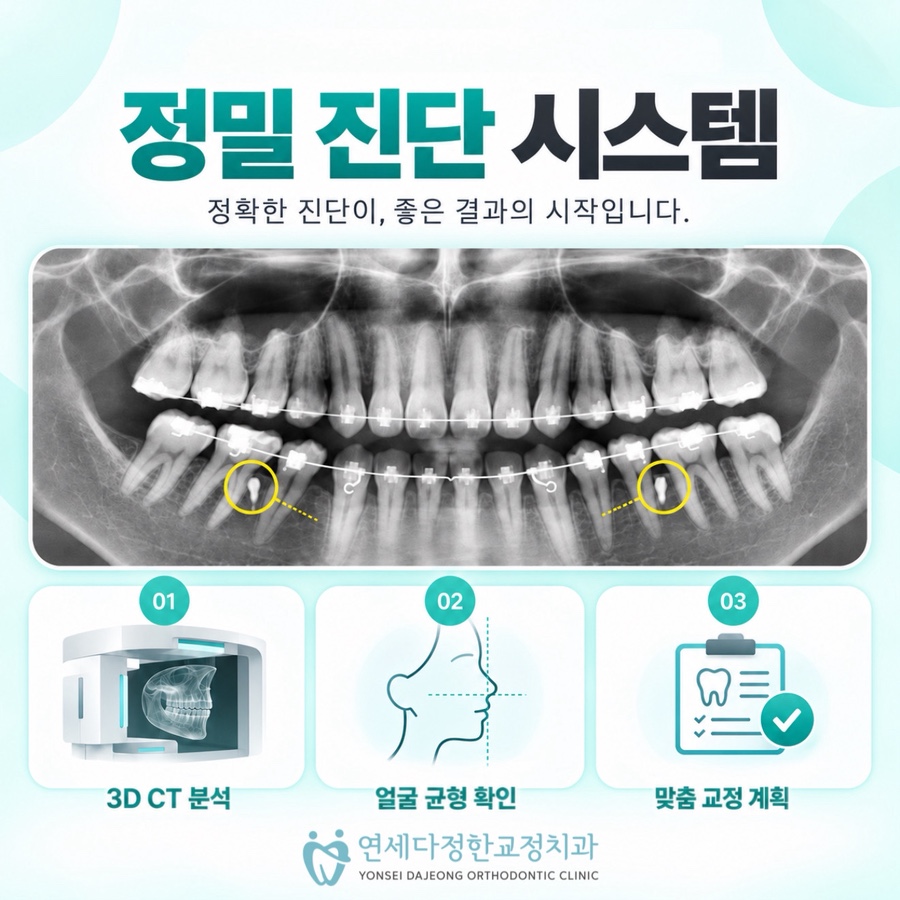
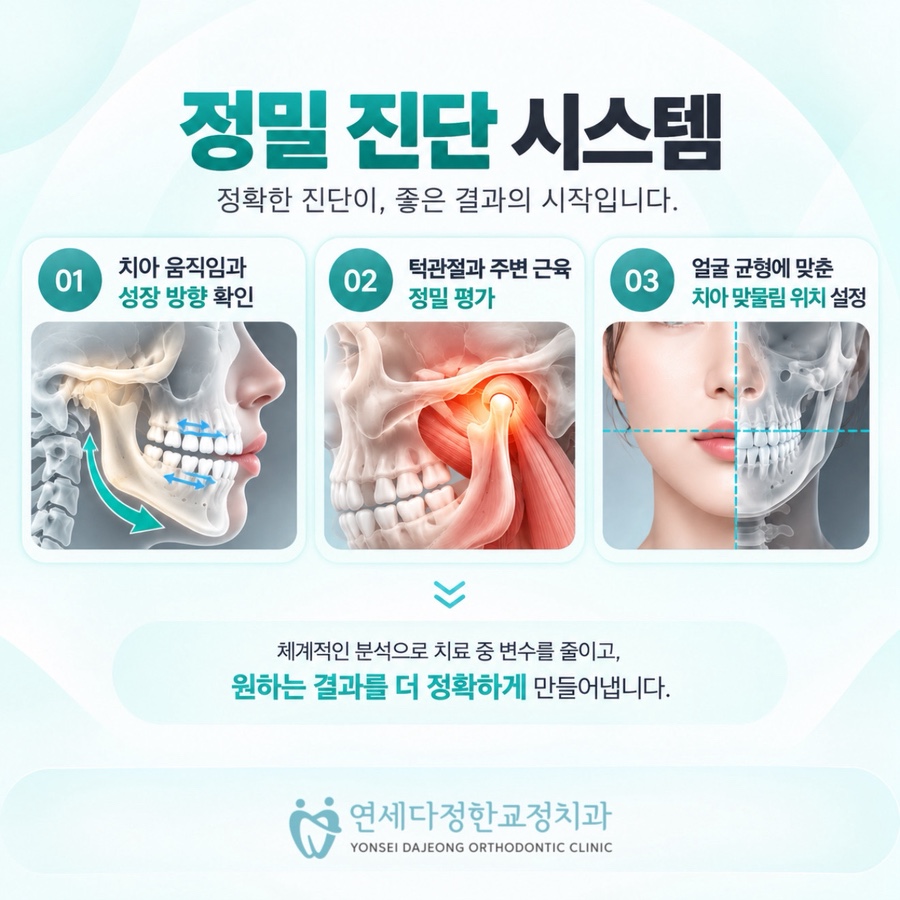
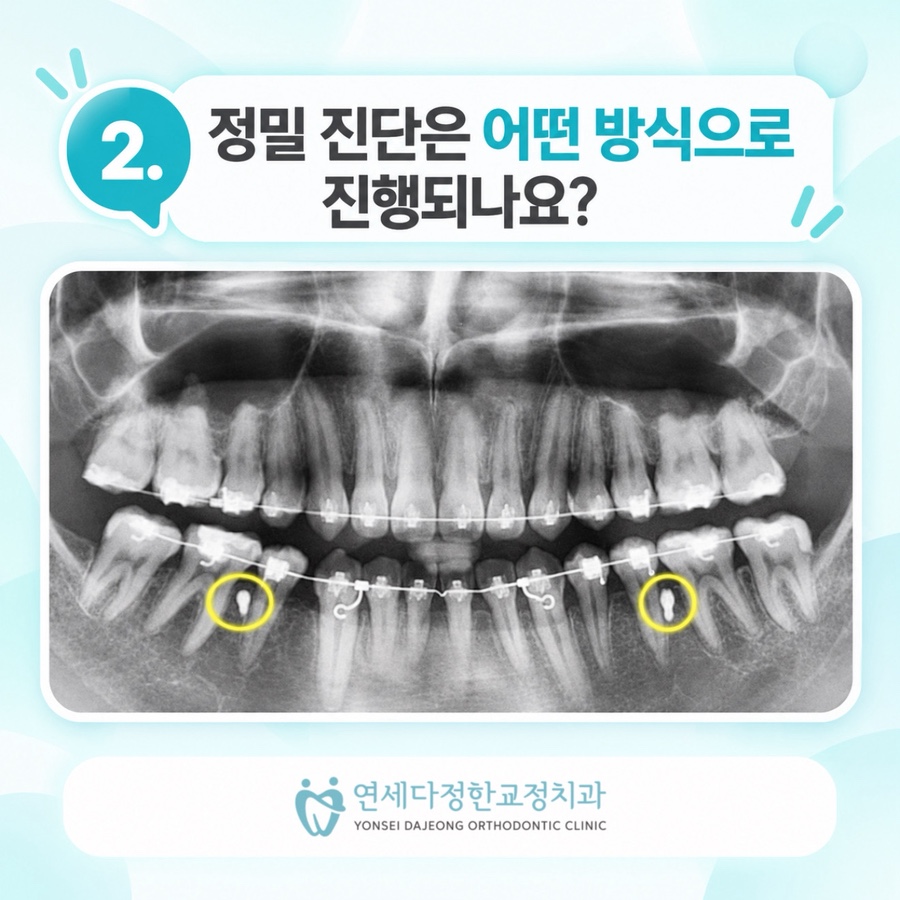
    A precise diagnosis at Dongdaemun Orthodontics begins with combining 3D CT imaging and facial analysis equipment.

    Rather than simply photographing the inside of the mouth,
    examining the three-dimensional structure of the skull and jawbone is what makes an accurate treatment plan possible.

    It’s especially important that the plan also factors in details such as how much gum shows when smiling and lip thickness.

    1. Simulating in advance the direction the teeth will move and how the bone is likely to develop
    2. Thoroughly evaluating the condition of the jaw joints and the tension in the surrounding muscles
    3. Setting the bite position in line with the overall balance of the face
    Dongdaemun Orthodontics related image 8

    Key Point
    3D CT analysis examines the jawbone and surrounding muscles in three dimensions, not just the teeth, which can help reduce variables during treatment and improve predictability.

    In recent years, the number of orthodontic patients aged 40 and older has been steadily rising.

    According to a Korean Association of Orthodontists survey reported by Dental Times (Daily Dental) in 2018, the share of orthodontic patients aged 40 and older grew from 4.9% in 2010 to 6.1% in 2017,
    while the proportion of new patients in their 40s starting treatment climbed from just 1.2% in 2000 to 9.3% in 2017.

    This is exactly why precise diagnosis to pinpoint the exact cause matters even more for adults whose growth is already complete.


    How Can You Maintain Facial Balance During Orthodontic Treatment?
    Dongdaemun Orthodontics related image 9

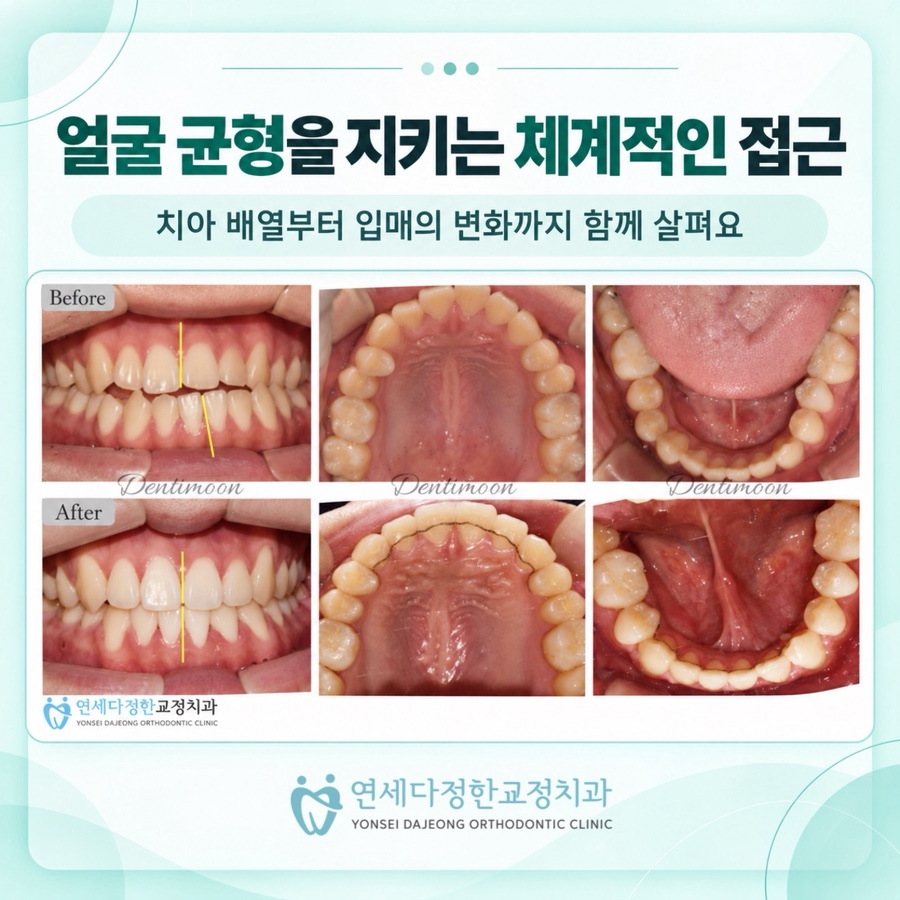
    Treatment at Dongdaemun Orthodontics tracks not just how quickly the teeth move,
    but also changes in the surrounding soft tissue, such as the lips and cheeks.

    As the teeth shift and the profile of the mouth changes, fine adjustments are made so the angle between the nose and chin stays in harmony,
    and progressing gradually in stages — rather than forcing rapid change — tends to produce a more natural-looking result.

    Checklist
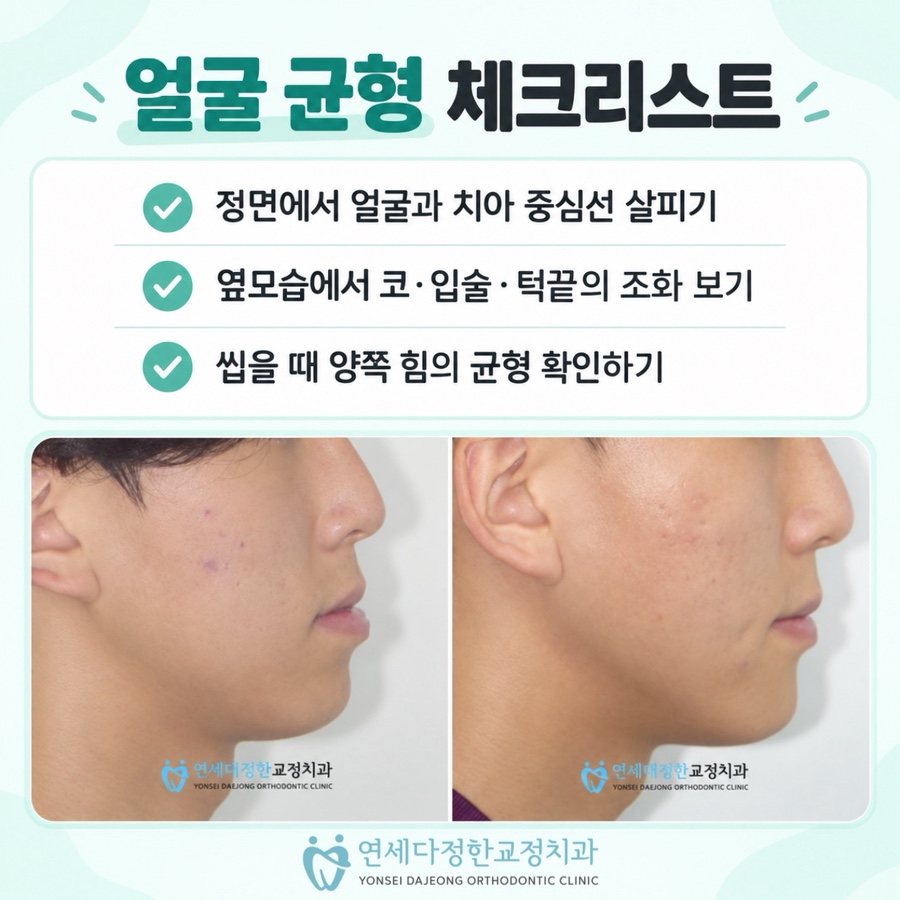
    ✅ From the front, check whether the center line of the face lines up with the center line of the teeth
    ✅ From the side, check whether the nose, lips, and chin form a balanced profile
    ✅ Check whether chewing force is distributed evenly rather than concentrated on one side
    Dongdaemun Orthodontics related image 10

    Adjusting the appliance to the individual based on thorough bone analysis may help support left-right symmetry over the course of treatment.

    The goal isn’t simply straightening the teeth —
    it’s completing the balance of the whole face alongside that.


    What Kind of Care Is Needed During Treatment?
    Dongdaemun Orthodontics related image 11

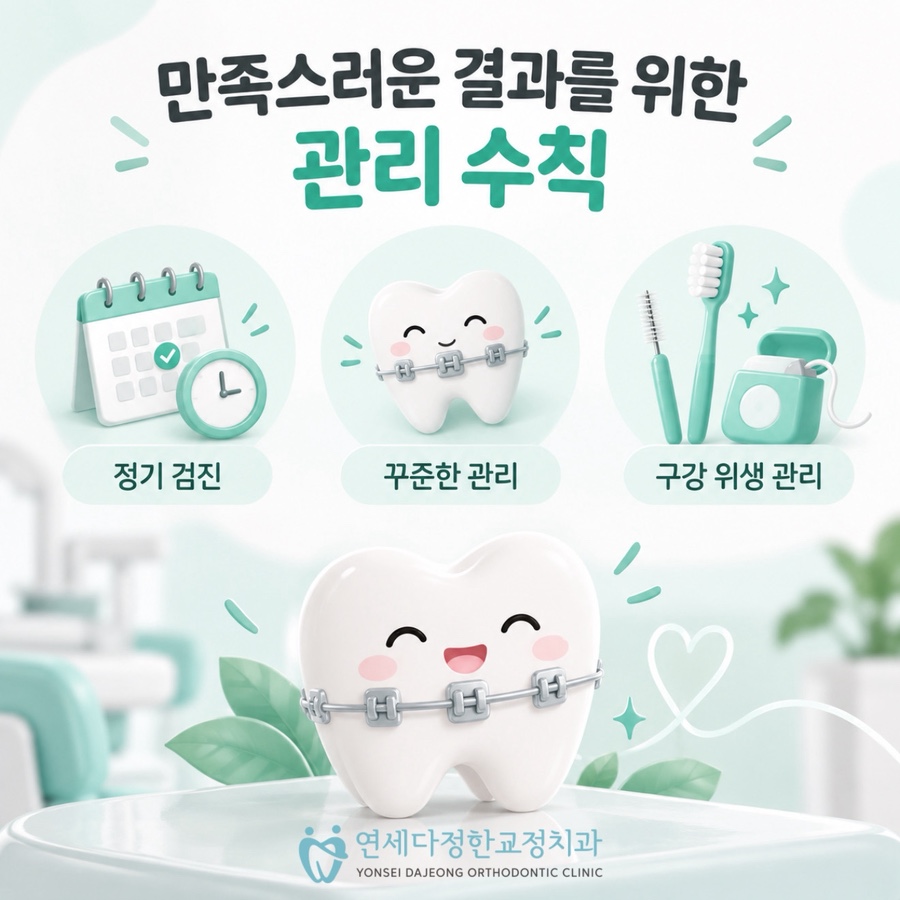
    Once the appliance is attached, it’s important to keep strictly to a schedule of regular dental visits.

    That’s because the fine adjustments made to the force applied to the teeth have a major effect on overall bone alignment and facial balance.

    Food also tends to get caught around the appliance easily,
    so it’s important to actively use oral hygiene tools such as interdental brushes and floss to keep the area clean at all times.

    Caution
    Chewy or hard foods can dislodge orthodontic appliances or place unnecessary strain on tooth movement, so it’s best to get in the habit of avoiding them where possible.

    Dongdaemun Orthodontics related image 12

    What You Can Expect
    With thorough at-home care and regular checkups following your provider’s guidance, not just the alignment of the teeth but a more balanced overall appearance can gradually take shape.

    If you’re researching orthodontic clinics in the Dongdaemun area,
    checking treatment information first on the Cheongnyangni Yonsei Dajeonghan Orthodontics website is one way to get started.

    Dongdaemun Orthodontics related image 13

    Frequently Asked Questions

    1. Can orthodontic treatment alone improve facial asymmetry?
    If the asymmetry isn’t caused by a severe skeletal issue but rather by a misaligned bite that makes the face look uneven, orthodontic treatment may help bring about improvement.

    2. How is a precision diagnosis carried out?
    It combines 3D CT imaging, an intraoral scan, and detailed facial measurements to analyze the relationship between the skeleton and the teeth in three dimensions.
    Dongdaemun Orthodontics related image 14

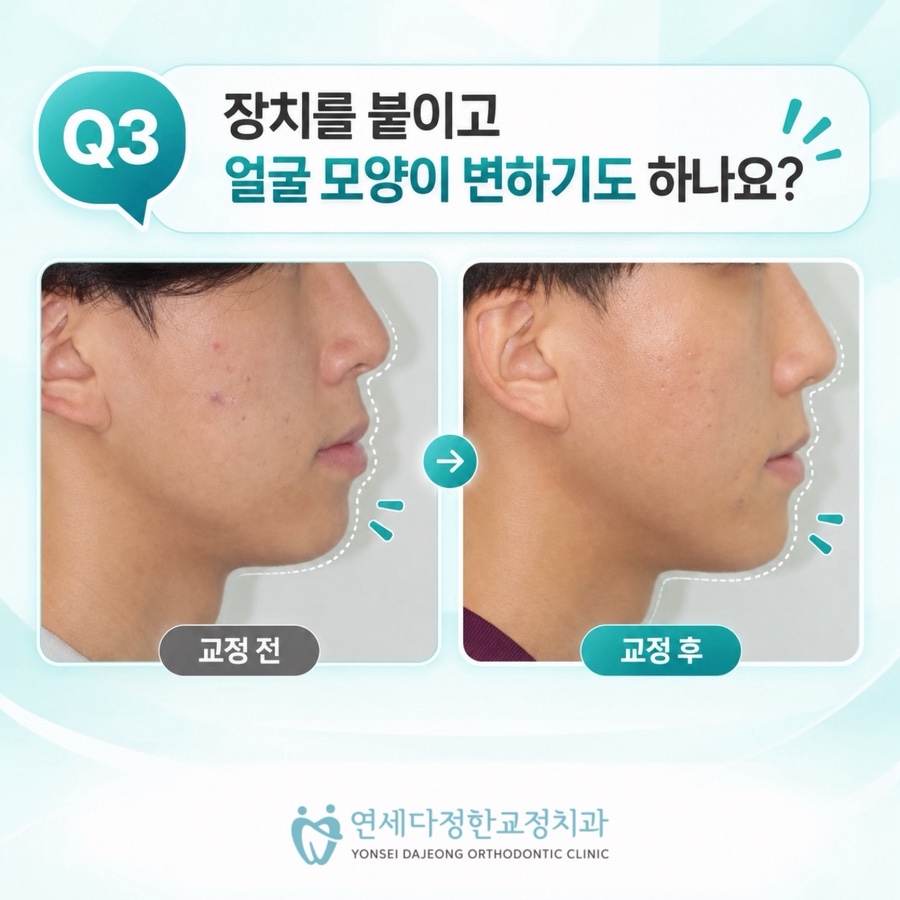
    3. Does attaching an appliance also change the shape of the face?
    As the protrusion of the mouth area decreases or the jawline becomes more defined, changes in overall appearance can occur. That said, the degree of change varies from person to person.

    4. Is there anything to be especially careful about during treatment?
    To avoid damaging the appliance, steer clear of sticky or hard foods, and brush thoroughly to help prevent cavities.
    Dongdaemun Orthodontics related image 15

    5. Can adults get facial asymmetry orthodontic treatment at Dongdaemun Orthodontics too?
    Yes — adults whose growth has finished can proceed with treatment once the cause is identified through precise diagnosis, and the proportion of patients aged 40 and older has in fact been rising steadily.

    Dongdaemun Orthodontics related image 16

    References

    · Seoul National University Hospital, “Malocclusion,” Medical Information, Seoul National University Hospital. View source
    · Dental Times (Daily Dental), “Orthodontic Patients Under 10 and Over 40 on the Rise,” Nov. 23, 2018. View source
    · Edaily, “More Than Half of Koreans Have Malocclusion… What’s the Best Time for Adult Orthodontic Treatment?” View source
    · Korean Association of Orthodontists (KAO), Official Website. View source


    This article is intended for general health information purposes and is not a substitute for individual diagnosis or treatment. If you have symptoms, please consult a qualified specialist.
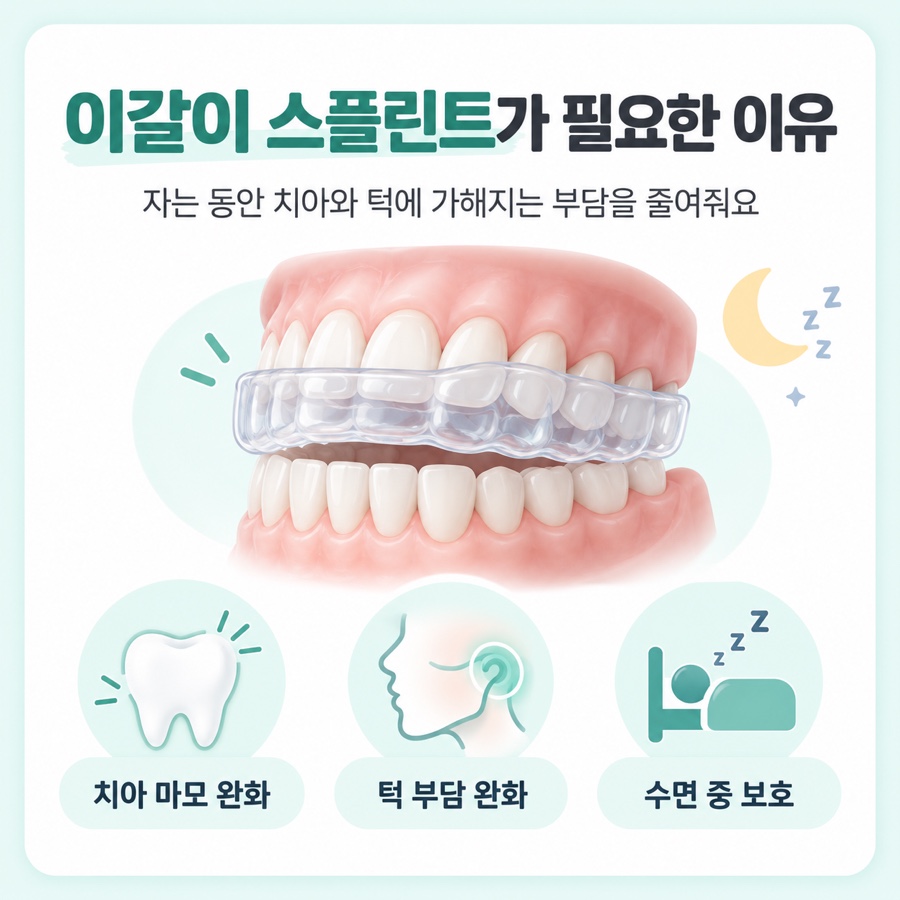
  • Custom Night Guard for Teeth Grinding: 3 Reasons to Get One Made by Your Dentist

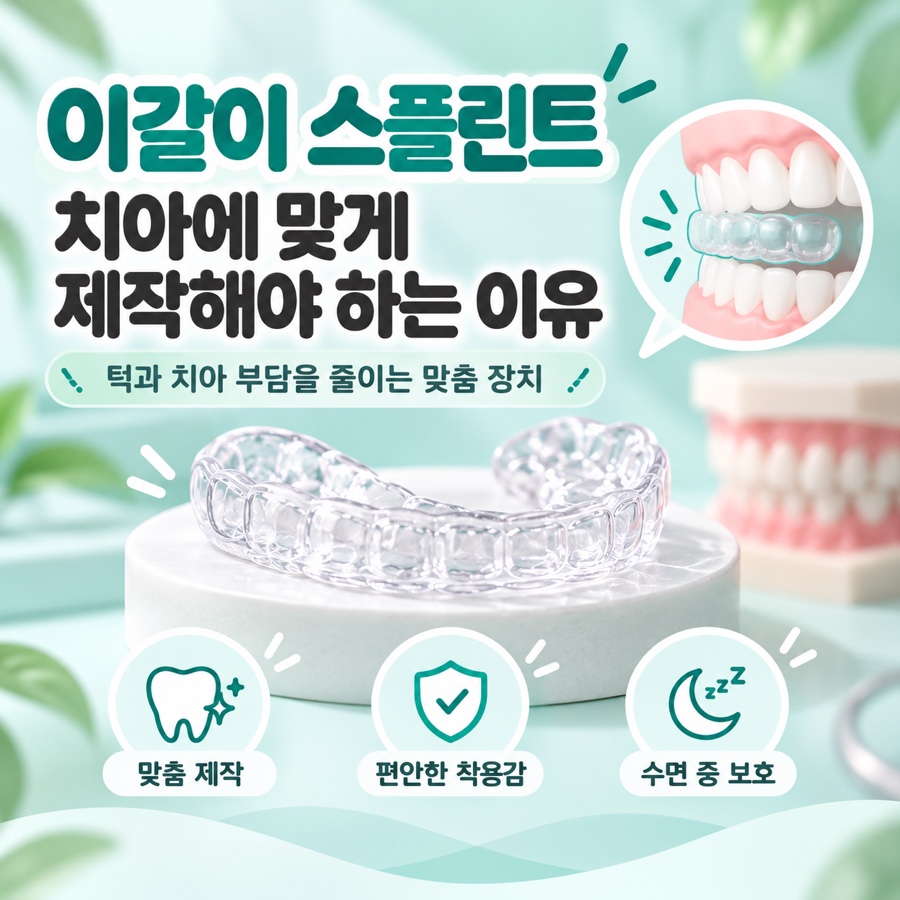
    Custom Night Guard for Teeth Grinding: 3 Reasons to Get One Made by Your Dentist

    SummaryA night guard is an oral appliance that protects your teeth and jaw joint from the effects of grinding or clenching during sleep. This guide covers why custom dental night guards differ from over-the-counter versions, TMJ disorder statistics, how night guards work, and how to care for one safely.

    Do you wake up with a stiff, sore jaw,
    or notice your teeth looking shorter than they used to?

    It’s easy to write this off as simple fatigue,
    but it may actually be caused by repeated teeth grinding during sleep.

    Did you know that store-bought, one-size-fits-all mouth guards
    often can’t manage this habit effectively?

    night guard for teeth grinding

    Key Takeaway
    A night guard is an oral appliance that may help reduce tooth wear and jaw joint strain during sleep.
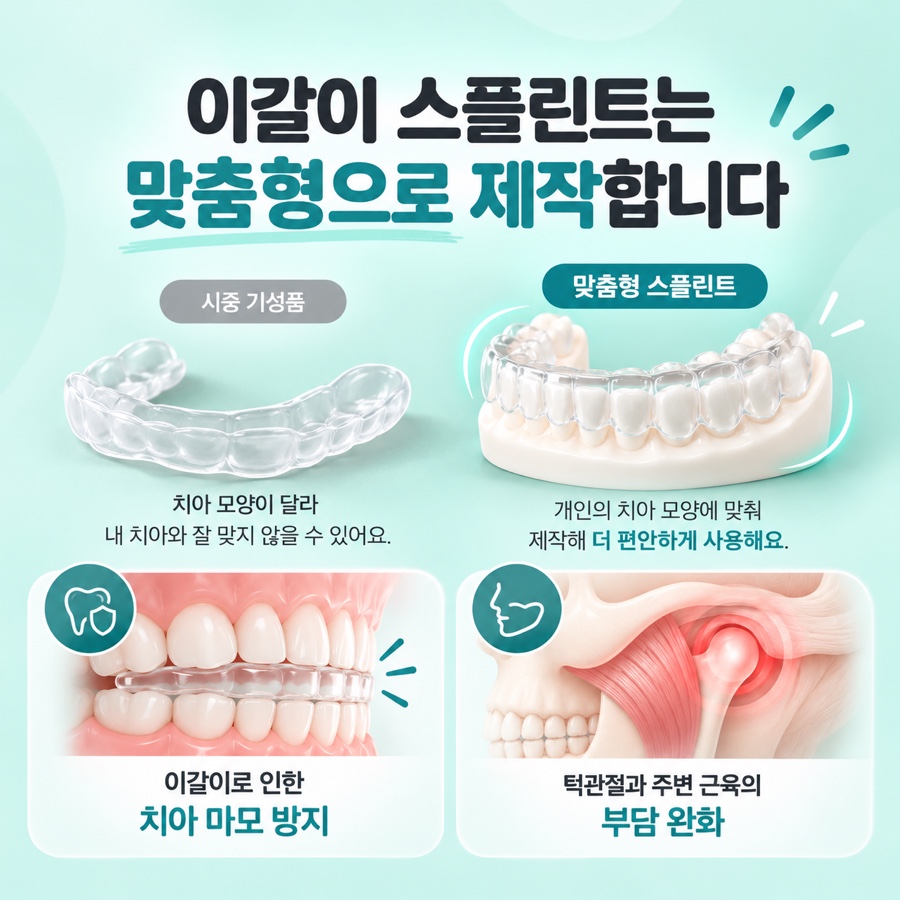
    However, it needs to be custom-made to match your tooth shape, bite, and jaw movement in order to work well.
    Over-the-counter versions can’t account for individual differences and may end up causing more discomfort.

    This article walks through how teeth grinding affects your teeth and jaw joint,
    how a night guard works,
    why a custom dental fit matters more than an over-the-counter option,
    and how to wear and care for one safely.

    night guard for teeth grinding - image 2

    What Happens to Your Jaw If You Ignore Teeth Grinding?

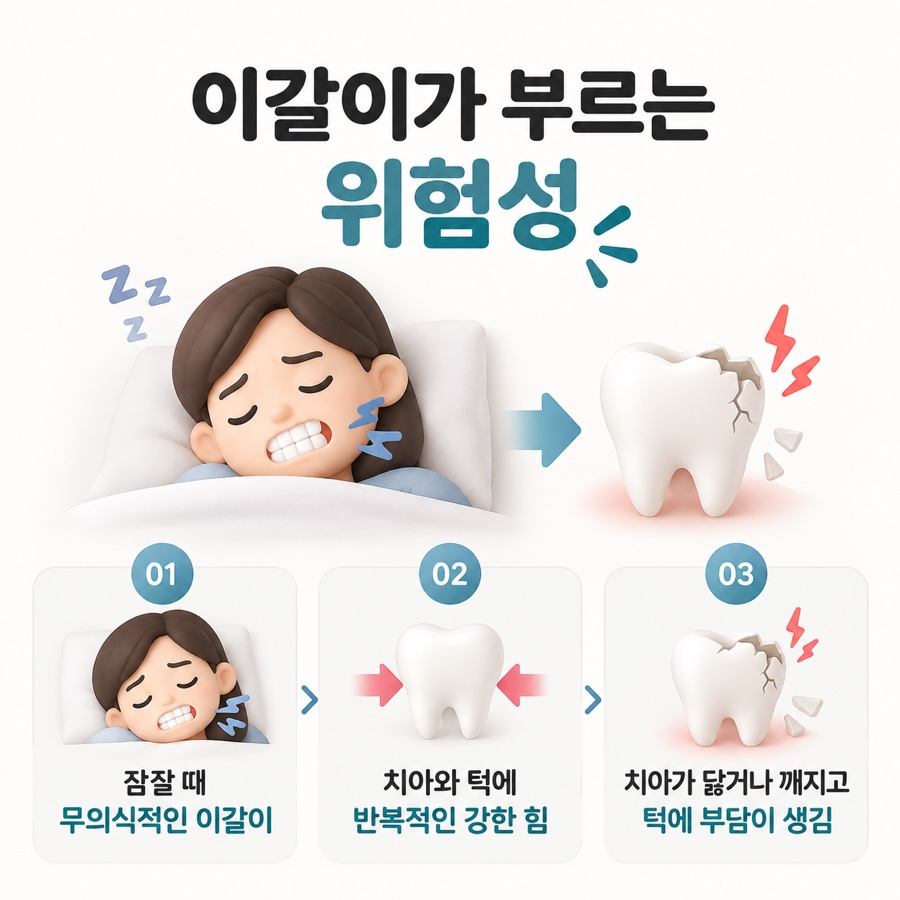
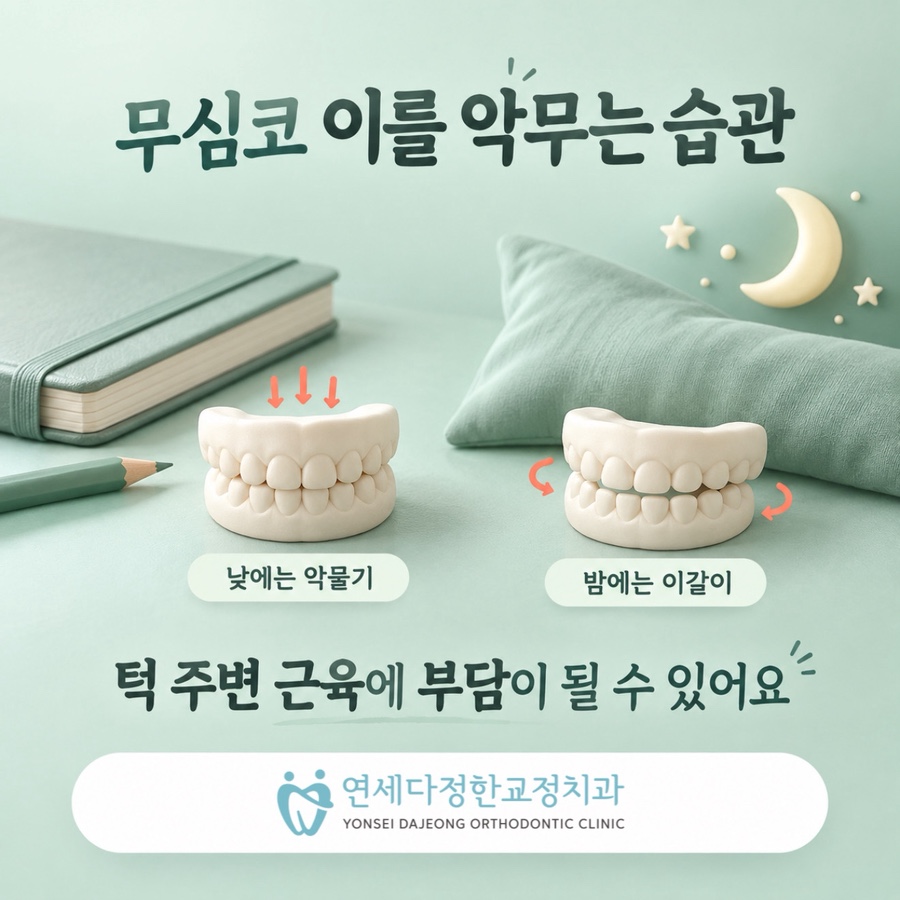
    Teeth grinding (bruxism) is the unconscious habit of grinding or clenching your teeth forcefully while you sleep.
    It places far more force on your teeth and jaw joint, repeatedly,
    than ordinary chewing ever does.

    When this habit continues over time,
    it can gradually wear down or chip your teeth,
    and may also lead to tooth sensitivity or a stiff, sore jaw.

    Key Point
    According to Korea’s National Health Insurance Service, the number of patients treated for TMJ disorder rose from 353,000 in 2015 to 414,000 in 2019 — a 17.1% increase over five years.
    Patients in their 20s made up the largest share, at 114,000 (27.7%) of all age groups.
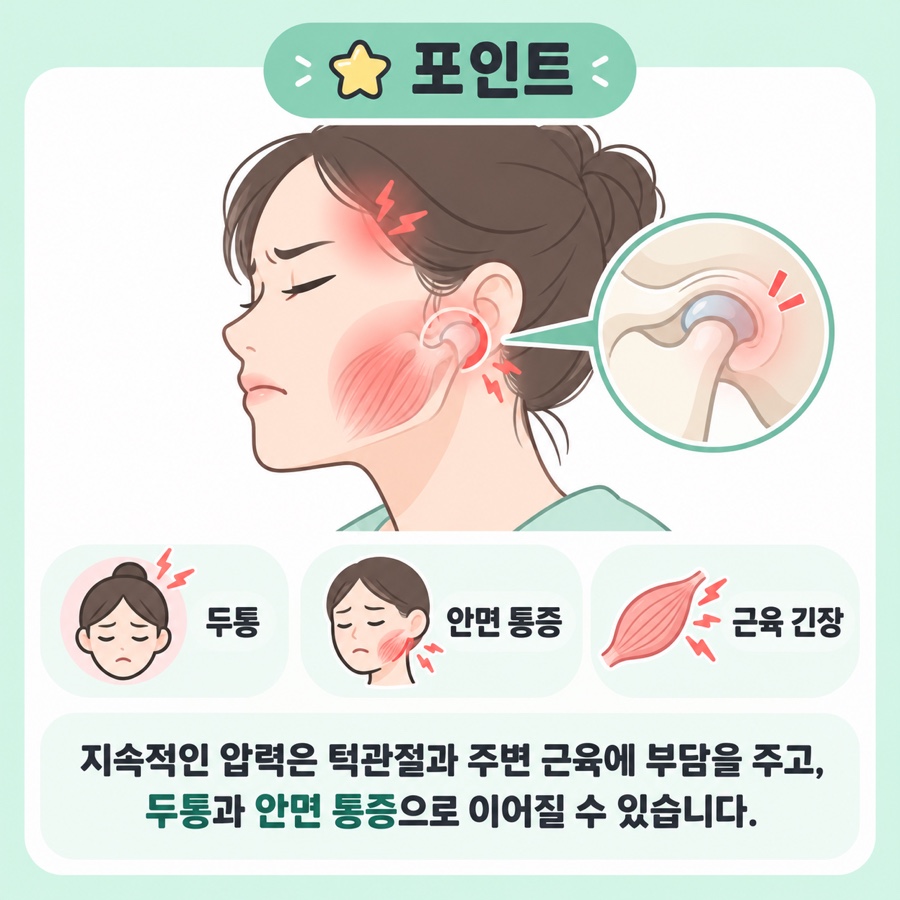
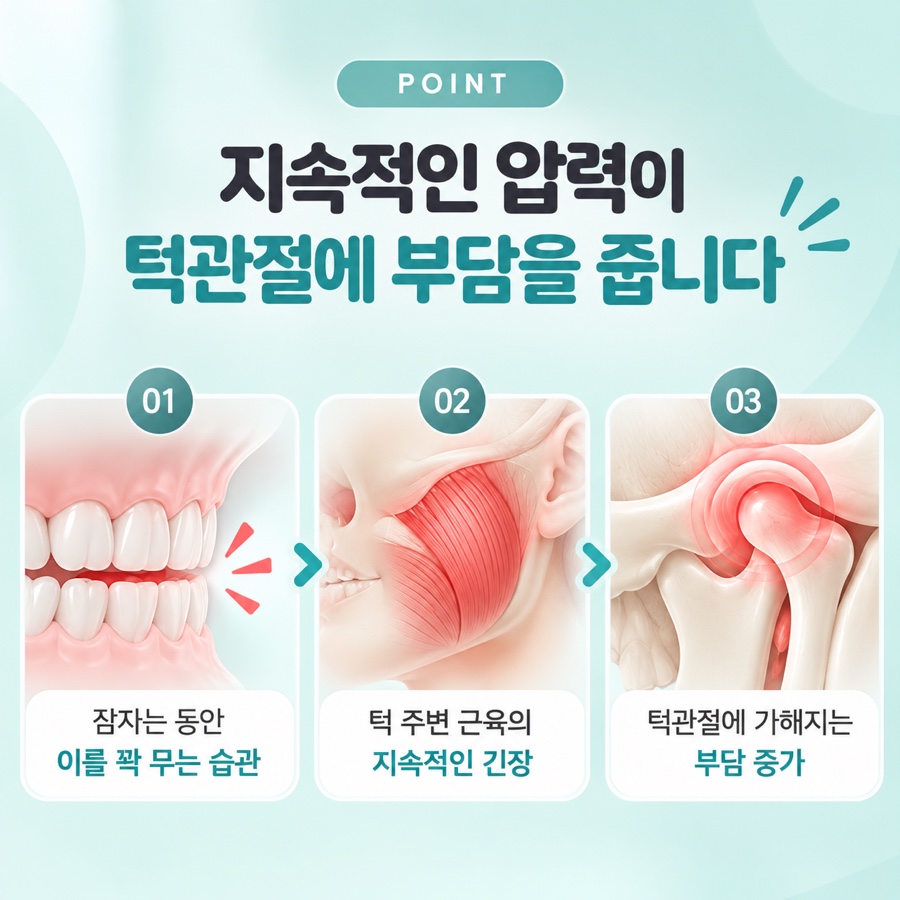
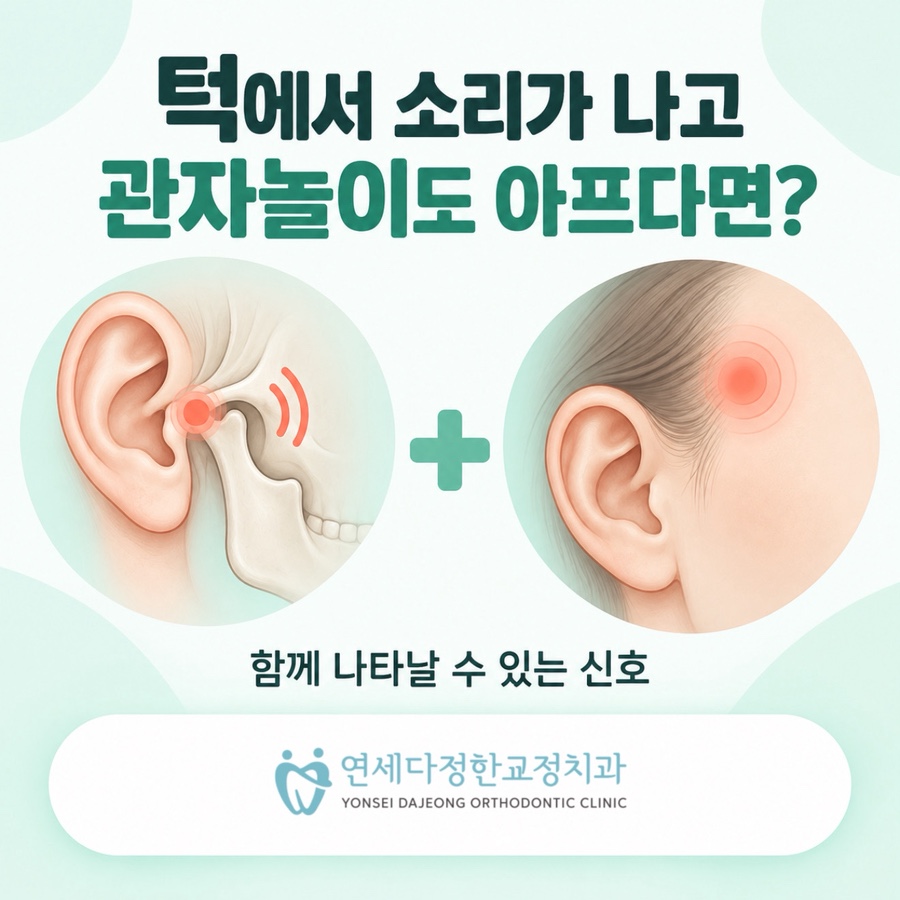
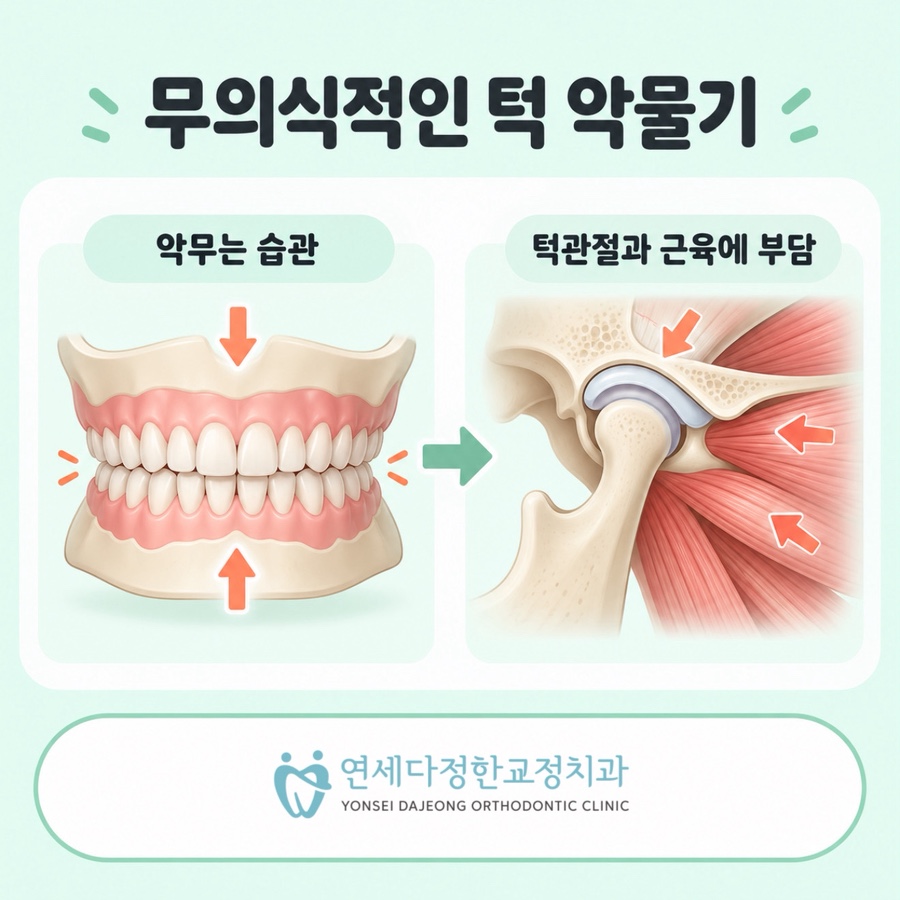
    Sustained pressure on the jaw can wear down the TMJ disc and tighten the surrounding muscles, which may lead to chronic headaches and facial pain.

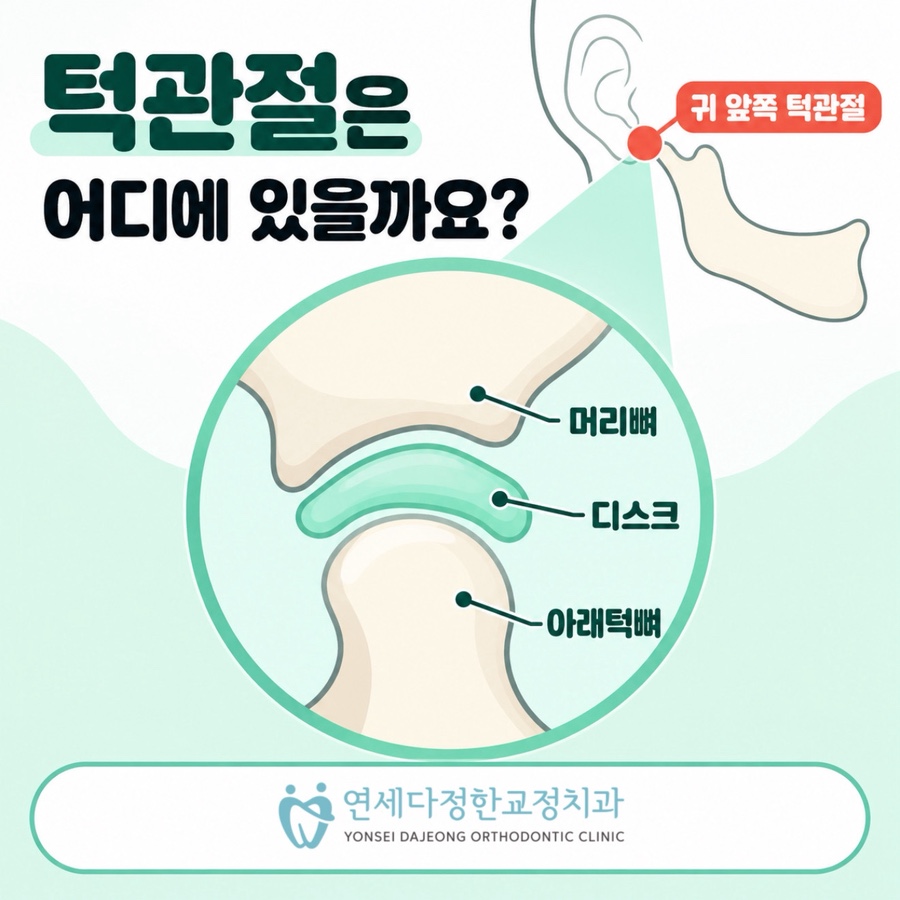
    TMJ disorder refers to a problem affecting the jaw joint located just in front of the ear. It was traditionally viewed as a single syndrome, but is now understood as a complex of interrelated disorders affecting the chewing system.

    That’s how Korea’s Disease Control and Prevention Agency describes TMJ disorder on its National Health Information Portal.

    night guard for teeth grinding - image 3

    night guard for teeth grinding - image 6

    night guard for teeth grinding - image 7

    night guard for teeth grinding - image 8

    Many people brush off teeth grinding
    and only see a dentist once significant tooth wear has already set in.

    It’s best to have a dentist check your current condition
    before symptoms become more serious.


    How Does a Night Guard Work?

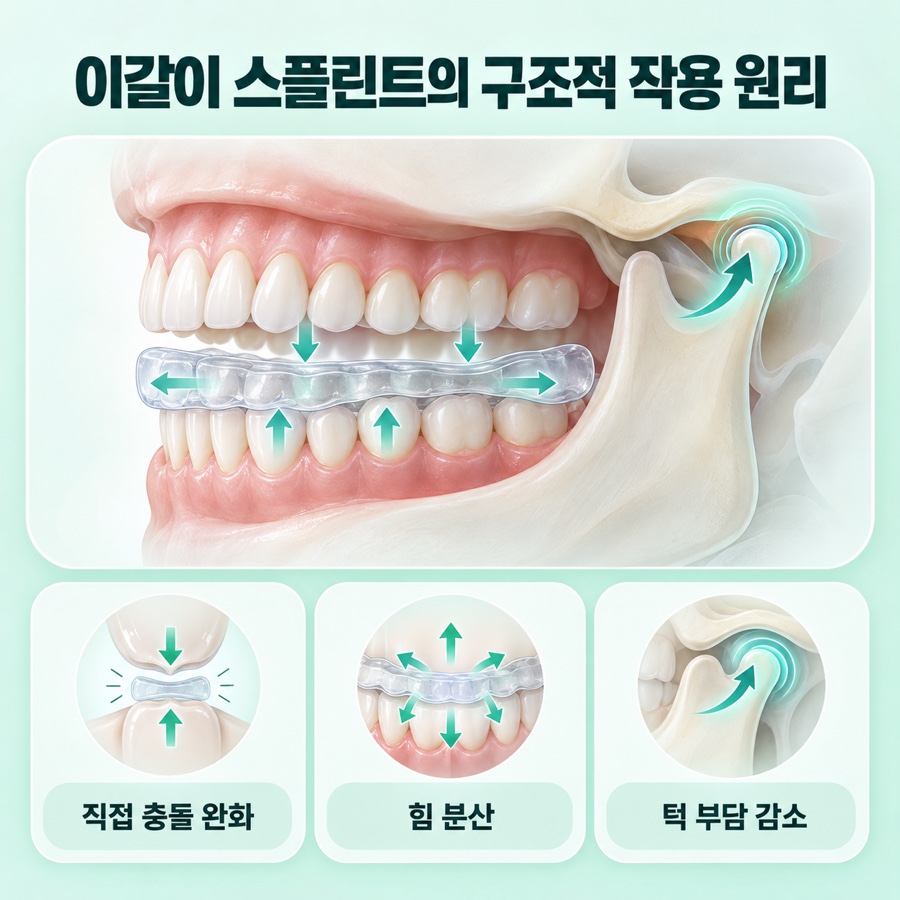
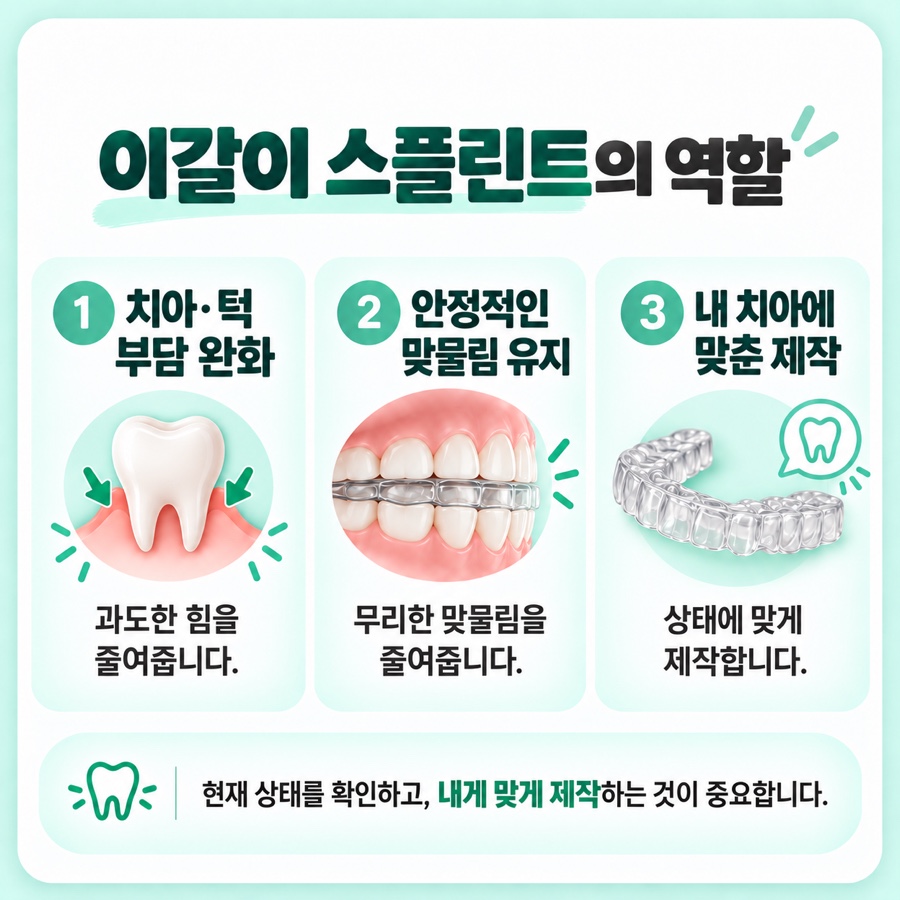
    A night guard is an oral appliance that keeps your upper and lower teeth from making direct contact during sleep, which can help distribute force on your teeth and jaw joint more evenly.

    Wearing a night guard can
    reduce forceful contact between your teeth
    and ease excessive tension in the muscles around your jaw.

    • May help reduce the force placed on your jaw during sleep
    • May help prevent teeth from wearing down or chipping by blocking direct contact
    • May help ease the strain placed on your jaw joint
    Key Point
    In a study by Yonsei University Dental Hospital involving 30 patients with sleep bruxism, wearing an occlusal stabilization splint for one month significantly improved the balance of bite force between the left and right sides.
    That benefit, however, depends heavily on how precisely the appliance fits the teeth.

    That said, a night guard isn’t something
    you can simply pop in and expect to work.

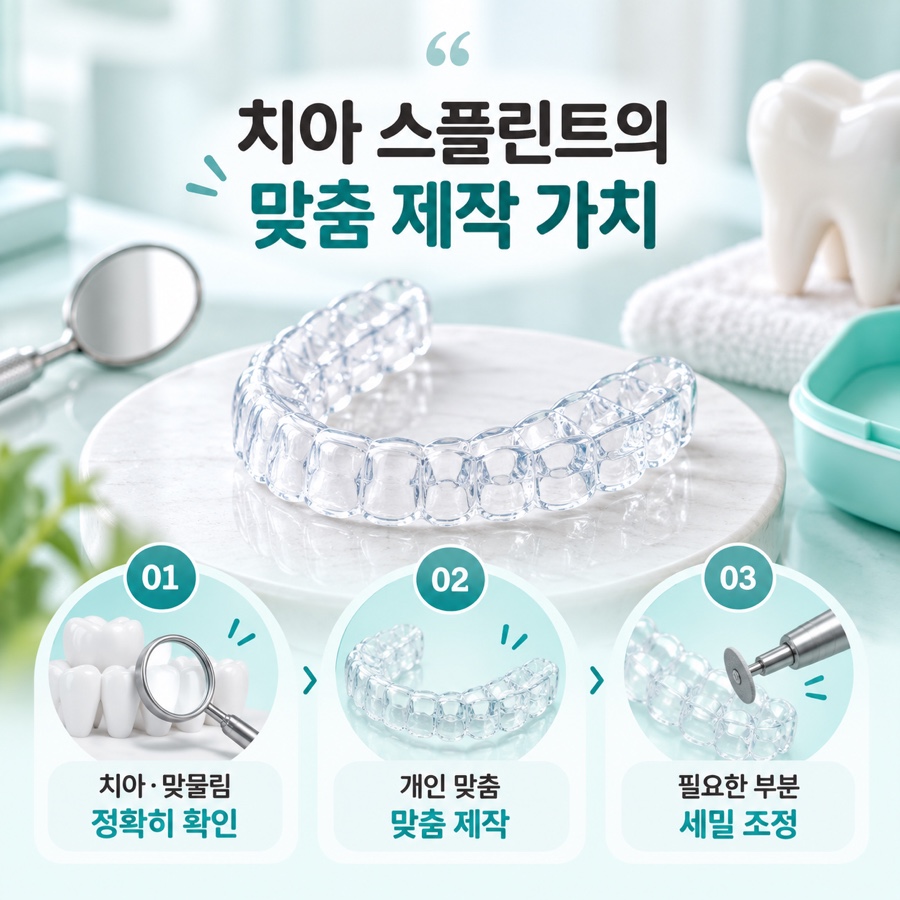
    Because everyone’s tooth shape, bite, and jaw movement are different,
    having the appliance made and adjusted to your specific condition is essential.

    night guard for teeth grinding - image 9


    Custom Night Guards vs. Over-the-Counter Mouth Guards: What’s the Difference?

    A custom dental night guard is made after your dentist examines your individual tooth shape and bite, then fabricates and adjusts the appliance specifically for you.

    Using a generic, off-the-shelf guard as-is
    can result in a poor fit or discomfort.

    If a night guard doesn’t fit your teeth properly,
    it can end up placing unnecessary strain on your jaw.

    Category Over-the-Counter Mouth Guard Custom Dental Night Guard
    Fabrication Standardized, one-size shape Made from an impression of your own teeth
    Fit Often loose or doesn’t sit flush Fits snugly against teeth and gums
    Force Distribution Can concentrate on specific spots Distributed evenly overall
    Adjustability Not possible Fine-tuned at regular checkups

    night guard for teeth grinding - image 11

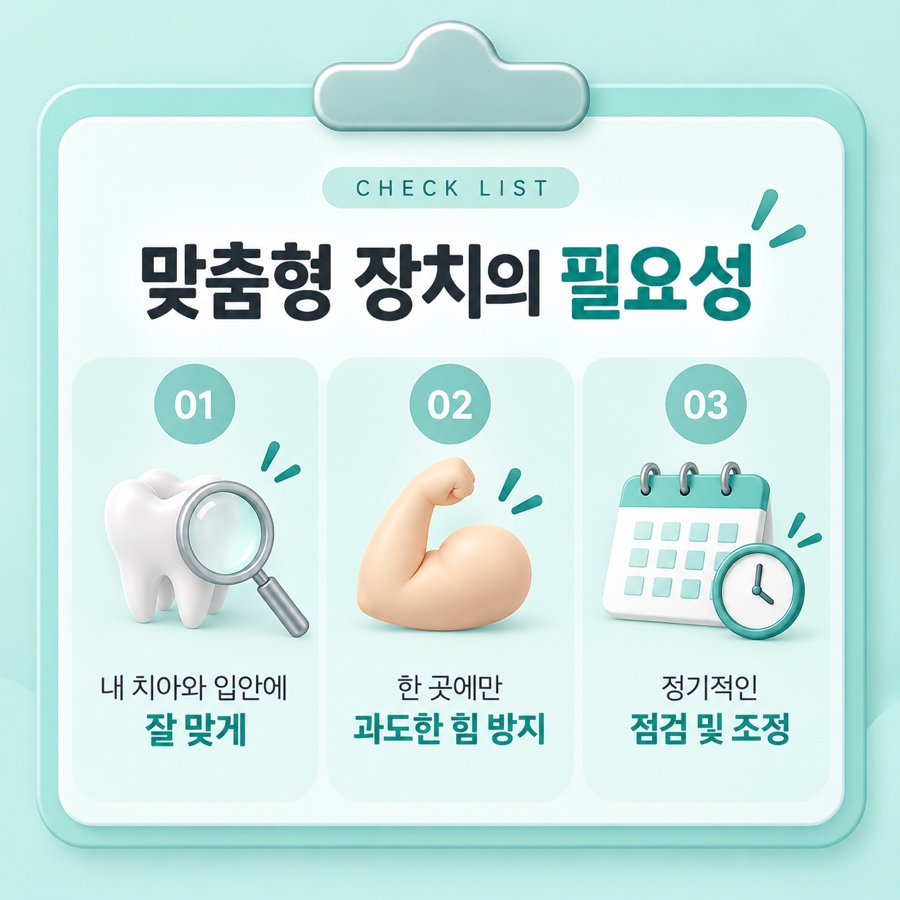
    Checklist
    ✅ Check that it fits snugly against your teeth and gums without discomfort
    ✅ Make sure force is distributed evenly rather than concentrated in one spot
    ✅ Have it checked regularly and adjusted if needed

    night guard for teeth grinding - image 12

    The process of thoroughly diagnosing your teeth and jaw before fitting an appliance
    can vary from one dental office to another.

    Consulting a dentist near you can help you get an accurate assessment, and
    you can also find related information on the Yonsei Dajeonghan Orthodontic Dental Clinic in Cheongnyangni website.

    night guard for teeth grinding - image 13


    How Do You Care for a Night Guard Safely?

    A night guard needs to be cleaned properly and checked regularly to stay safe and last as long as possible.

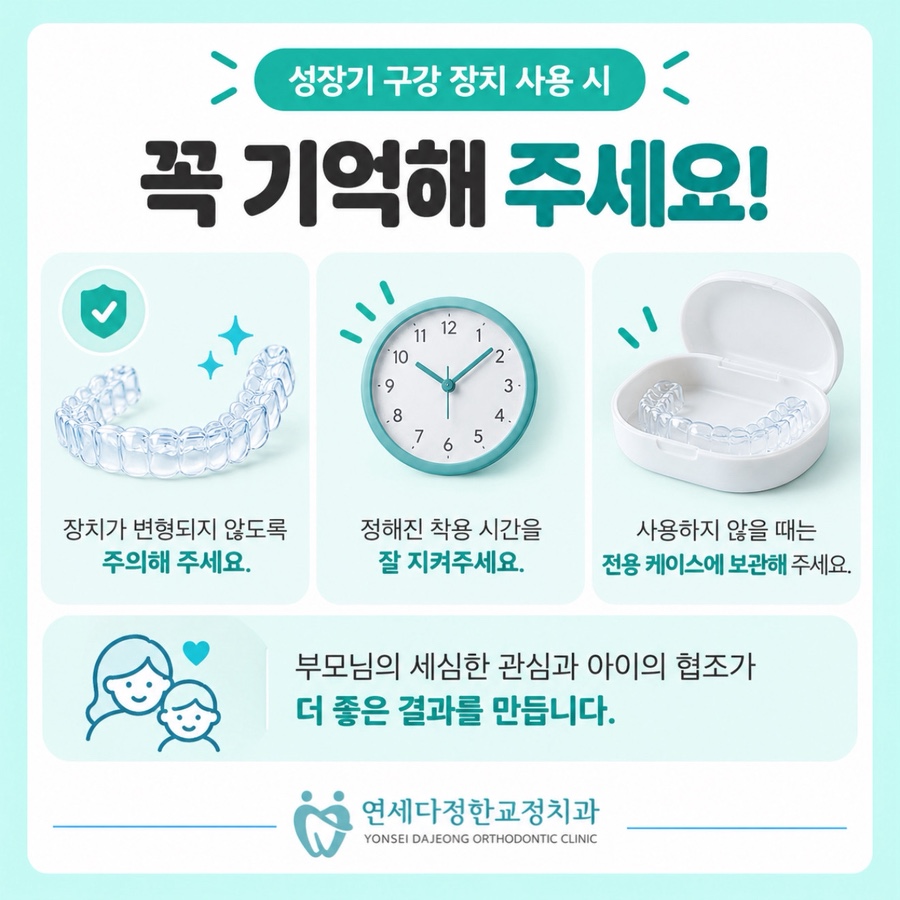
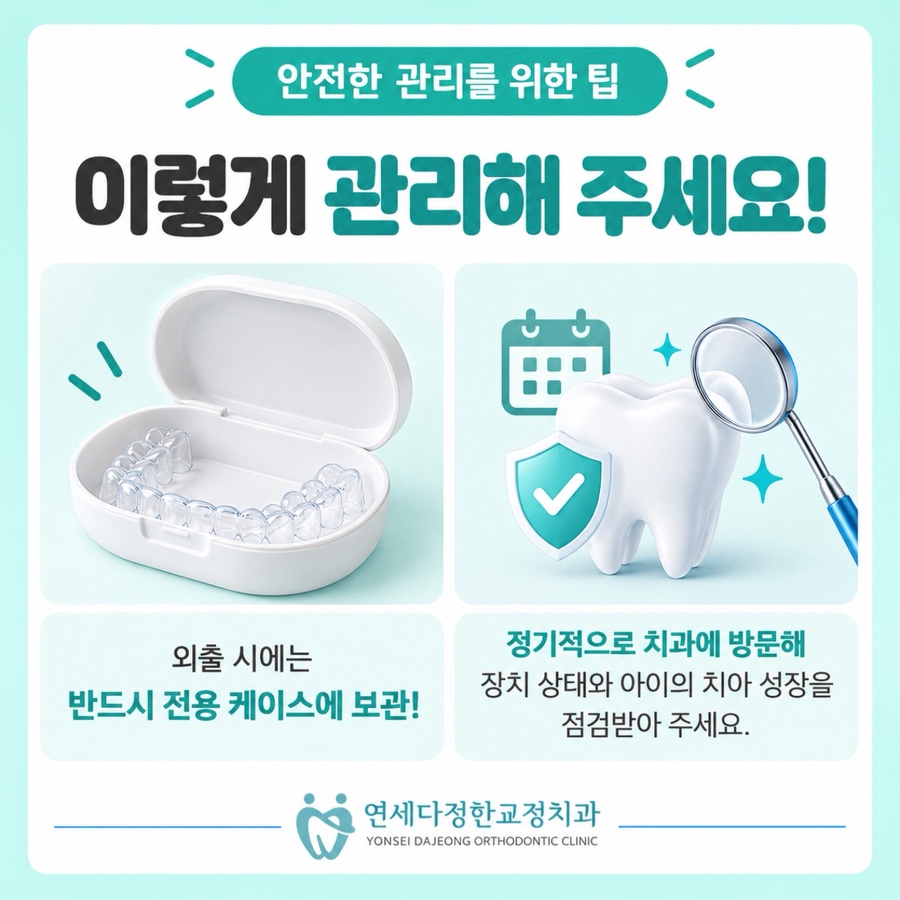
    1. Clean the appliance properly after each use and store it in its dedicated case
    2. Have your dentist check it if it feels uncomfortable or no longer fits well
    3. Get your teeth and jaw checked together on a regular basis

    night guard for teeth grinding - image 14

    Caution
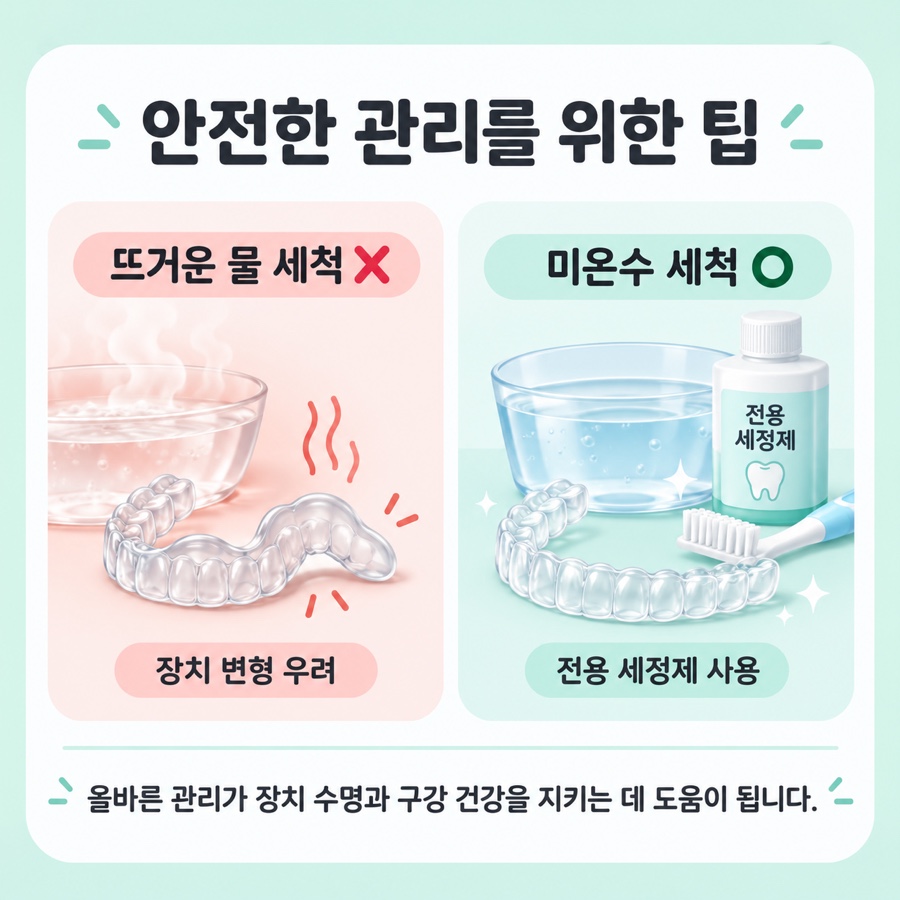
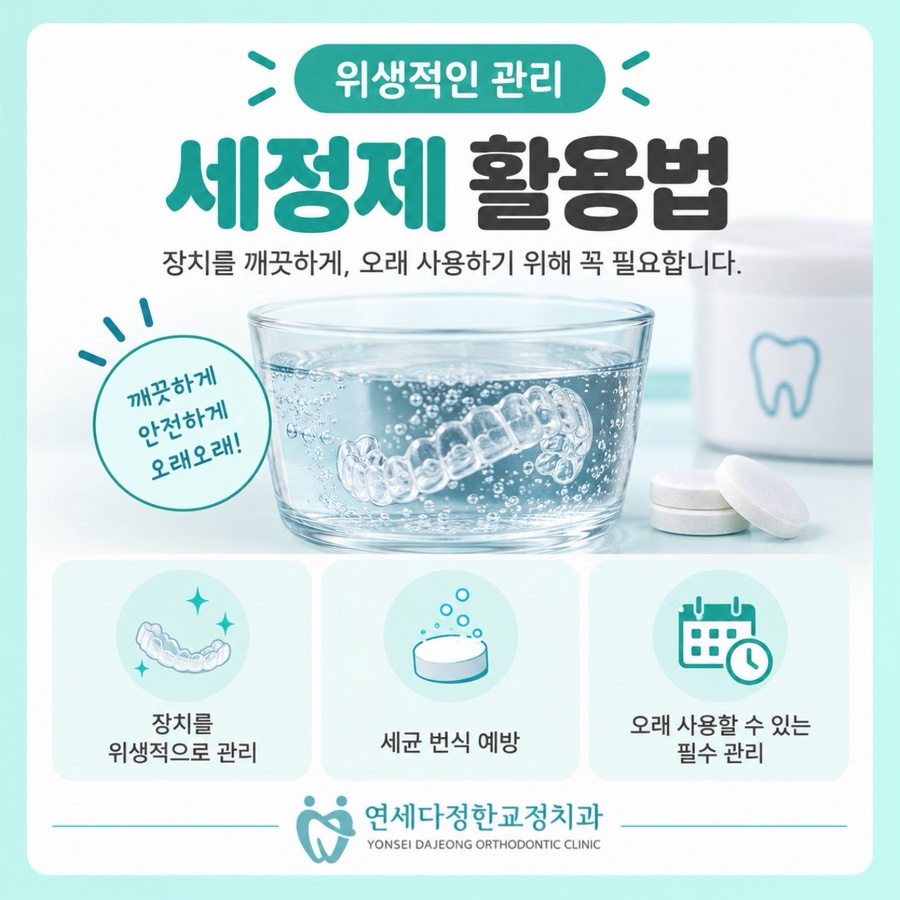
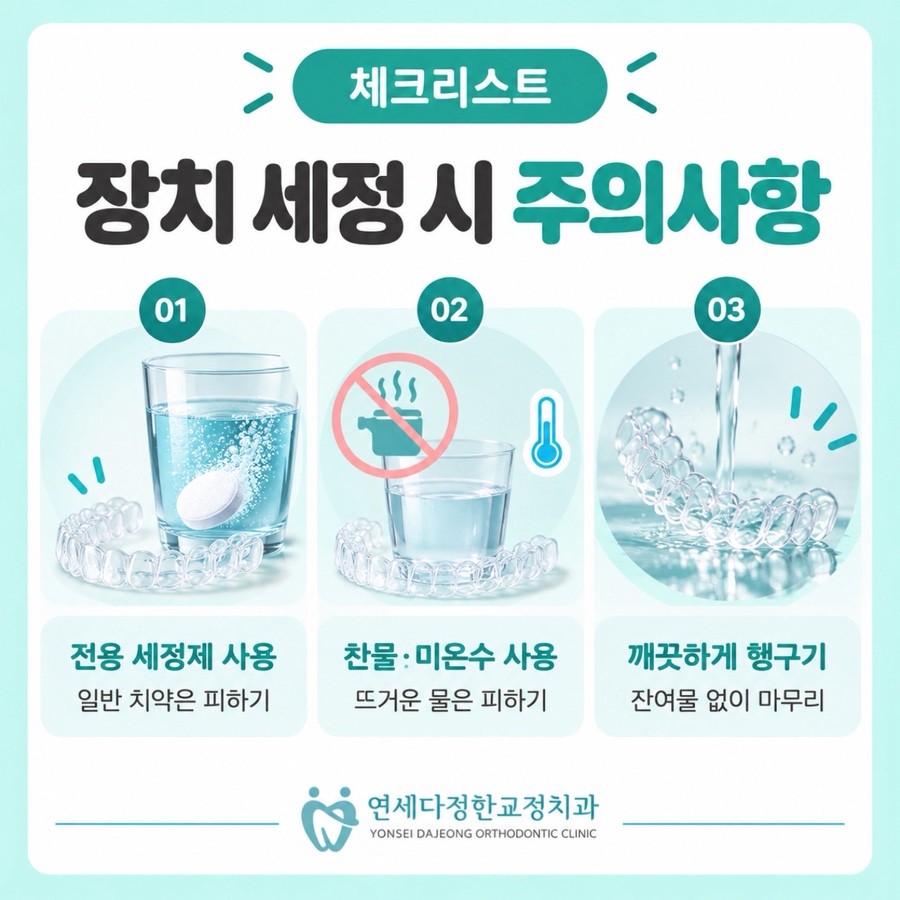
    Cleaning the appliance with hot water can cause it to warp.
    It’s best to get in the habit of using lukewarm water or a dedicated cleaning solution.

    night guard for teeth grinding - image 15

    Outcome
    Combining proper care with regular checkups
    can help steadily reduce tooth wear and strain on the jaw joint over time.

    Frequently Asked Questions

    night guard for teeth grinding - image 16

    1. Is it okay to just use an over-the-counter mouth guard?
    Store-bought guards can’t fully account for each person’s unique tooth shape and bite. A poorly fitting appliance can actually put more strain on your teeth and jaw, so it’s best to consult a dentist before using one.

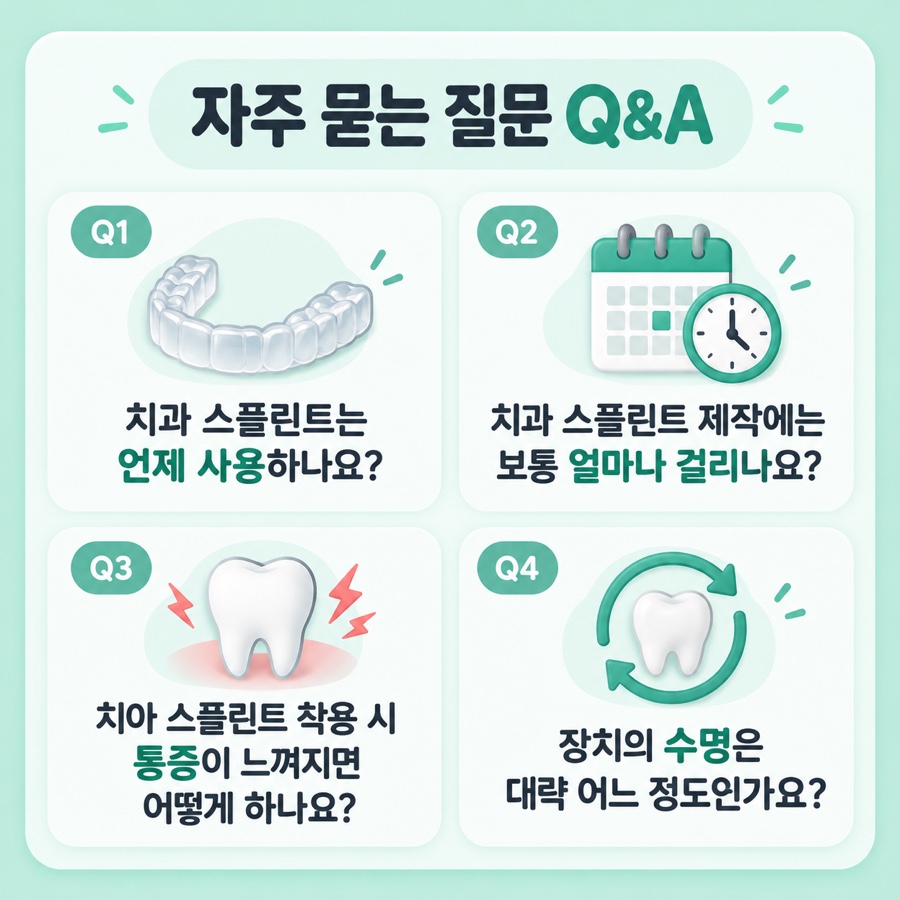
    2. How long does it typically take to get a custom night guard made?
    Because it involves examining your tooth shape and bite before fabricating an appliance tailored to you, timelines vary by dental office. It usually takes anywhere from a few days to one or two weeks, so check with your dentist for an exact timeframe.

    3. What should I do if wearing the night guard causes pain?
    Mild discomfort during the initial adjustment period is common. If pain persists or gets worse the longer you wear it, don’t force yourself to keep using it — have a dentist check the fit instead.

    4. About how long does a night guard last?
    Its lifespan depends on how severe your grinding is, your usage habits, and how well you maintain it. If it becomes significantly worn or warped, have it checked regularly and replace it when needed.


    References

    · Ministry of Health and Welfare & National Health Insurance Service, “Clicking Jaws: TMJ Disorder Most Common Among Women in Their 20s,” press release. View source
    · Korea Disease Control and Prevention Agency, “TMJ Disorder,” National Health Information Portal. View source
    · “Occlusal Force and Functional Occlusal Analysis After Using an Occlusal Stabilization Splint in Sleep Bruxism Patients: A Pilot Study,” KCI (Korea Citation Index). View source

    This article is provided for general health information purposes only and is not a substitute for individual diagnosis or treatment. If you’re experiencing symptoms, please consult a dental professional.

  • TMJ Headache Causes: 3 Warning Signs You Shouldn’t Ignore in Cheongnyangni

    TMJ Headache Causes: 3 Warning Signs You Shouldn’t Ignore in Cheongnyangni

    SummaryHere’s a breakdown of common TMJ headache causes and the symptoms that often go with them. If jaw pain and migraines are showing up together, read on for the nerve connection between your chewing muscles and head pain, a self-check list, daily habits that help, and when it’s worth getting checked at a Cheongnyangni orthodontic clinic.

    What if your headache only eases for a moment after taking painkillers, then comes right back?

    According to news reports citing National Health Insurance Service (NHIS) statistics, about 414,000 patients visited a hospital for TMJ (temporomandibular joint) disorder in 2019 alone.

    Did you know a large share of them also report headaches?

    TMJ headache

    Key takeaway: TMJ headaches are a well-documented TMJ headache cause, occurring when tension in the jaw muscles and facial nerves travels to the head’s sensory nerves through the trigeminal nerve. In fact, 40-60% of patients with temporomandibular disorder (TMD) also experience headaches, and Seoul National University Dental Hospital reports that 67% of TMJ disorder patients experienced headaches and 50% experienced insomnia. This article breaks down why jaw pain and headaches show up together and what to know before visiting a Cheongnyangni orthodontic clinic.

    TMJ headache illustration 2

    TMJ headache illustration 3

    If you wake up feeling like you never really rested, with your temples throbbing more days than not,
    it’s worth considering whether jaw clicking or popping could be behind it.

    That stiffness in your head and jaw you’ve been chalking up to fatigue may actually be a sign of an underlying imbalance in your body.

    TMJ headache illustration 4

    Chronic headaches and facial pain are more closely linked than most people realize.
    When the chewing muscles that move your jaw and the nerves connecting to your head tense up together, both types of pain can strike at once.

    Here’s an easy-to-follow breakdown of how jaw pain and headaches are connected.

    TMJ headache illustration 5

    TMJ headache illustration 6

    Why Does TMJ Disorder Happen?

    TMJ disorder occurs when the disc or ligaments between the lower jawbone and skull develop problems, causing pain and dysfunction.
    This area is a critical junction where the nerves and muscles supporting the head and neck intersect.

    TMJ headache illustration 7

    Self-Check
    ✅ Your jaw makes a sound when you open your mouth
    ✅ Your jaw feels stiff and sore
    ✅ In severe cases, your mouth doesn’t open all the way

    If you unconsciously clench your jaw or grind your teeth, your TMJ stays under constant pressure.
    As a result, the surrounding muscles tire out quickly.

    Left unaddressed, this can progress to facial asymmetry or neck and shoulder pain, which is why early management matters.

    TMJ headache illustration 8

    Key Point
    Unconsciously clenching your jaw or grinding your teeth places continuous pressure on the joint, quickly fatiguing the surrounding muscles.

    TMJ headache illustration 9


    Jaw Clicking or Popping: Is It Safe to Ignore?

    The short answer: a clicking or popping sound in the jaw can be an early sign that the disc has shifted out of place.
    Even without pain, it’s safer to get it checked early.

    Chewing on one side of the mouth out of habit wears down the TMJ faster over time.
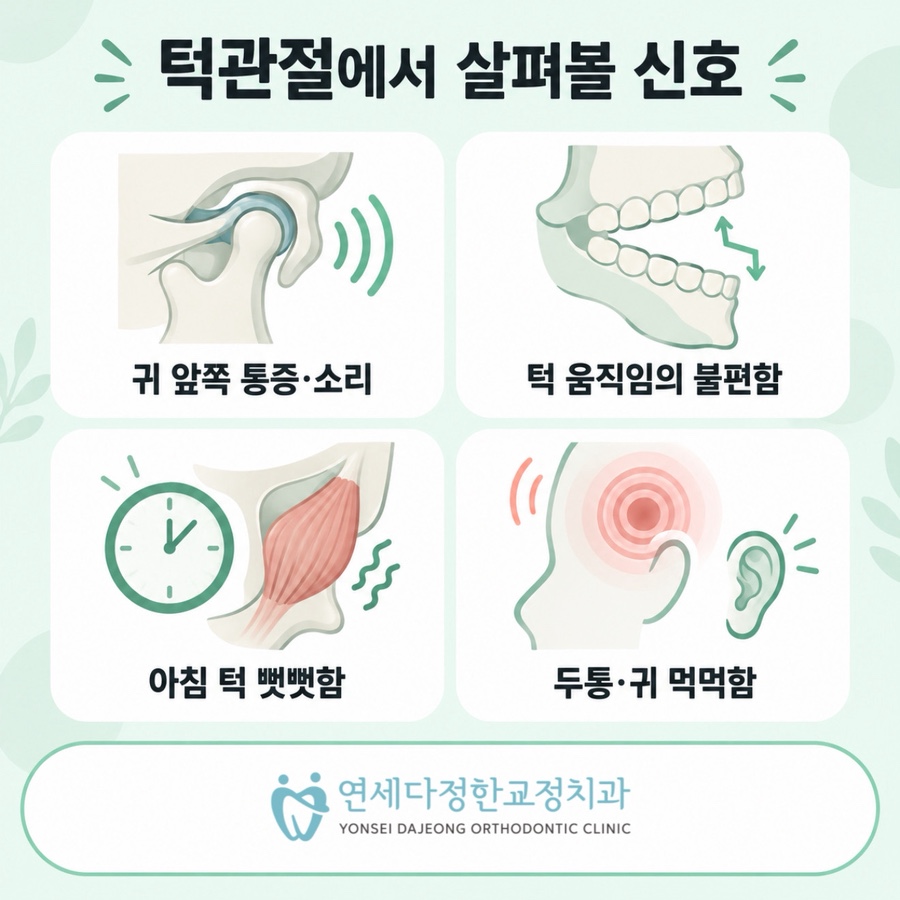
    Common warning signs include the following.

    • A sharp sensation or a grinding, sandy sound in front of the ear
    • The jaw shifts side to side when opening the mouth
    • Significant stiffness around the jaw upon waking
    • A feeling of fullness in the ear or pressure behind the eyes

    TMJ headache illustration 10

    TMJ headache illustration 11


    Why Do TMJ Headache Causes Overlap With Migraines?

    TMJ headaches happen when tension in the chewing muscles and temple muscles spreads to head pain through the trigeminal nerve.
    This occurs because the nerves responsible for facial and head sensation run close together.

    Indeed, 40-60% of patients with temporomandibular disorder also experience headaches, according to published reports.
    In a case series described by Seoul National University Dental Hospital, of 308 patients with TMJ disorder, 67% reported headaches and 50% reported insomnia.

    This pattern also shows up in news coverage citing National Health Insurance Service statistics.
    Among patients treated for TMJ disorder in 2019, 245,987 were women — about 1.5 times more than men.

    The condition was most common among women in their 20s.

    The number of patients treated for TMJ disorder grew from 353,000 in 2015 to 414,000 in 2019, a 17.1% increase over five years.

    The related news coverage cited these treatment statistics from the National Health Insurance Service.

    When the TMJ stiffens, the chewing muscles and temple muscles tend to tighten in a chain reaction.
    A throbbing headache often follows.

    If painkillers only bring temporary relief and the pain keeps returning, it may be worth checking the root cause around the jaw rather than treating the head alone.

    Category Typical Tension Headache TMJ Headache
    Pain location Whole head / back of neck Mainly temples / in front of the ears
    Accompanying symptoms Shoulder tightness Jaw clicking / jaw stiffness
    When it worsens Stress / fatigue While chewing or talking

    TMJ headache illustration 12

    Self-Check
    ✅ You clench your jaw without realizing it when stressed
    ✅ Pressing on your temples or jaw muscles feels sore
    ✅ A migraine tends to follow whenever your jaw clicks

    How Can You Manage TMJ Health Day to Day?

    The key to managing TMJ health is cutting back on harmful habits and easing muscle tension.
    Hard, chewy foods and habits like resting your chin on your hand put a lot of strain on the joint.

    TMJ headache illustration 13

    1. Avoid tough, chewy foods such as squid, gum, or chewy noodles when possible
    2. Use warm compresses regularly to relax tight muscles
    3. Get into the habit of keeping a slight gap between your upper and lower teeth
    4. Keep your tongue resting lightly against the roof of your mouth
    Caution
    If your jaw already makes noise or headaches are already occurring, home care alone may not be enough.

    TMJ headache illustration 14

    TMJ headache illustration 15

    The TMJ is closely tied to how your teeth come together (your bite), so symptoms tend to get worse the longer they’re left unaddressed.

    Many cases of TMJ disorder stem from bite misalignment or an imbalance in jaw position.
    It’s a good idea to get an accurate assessment at a clinic that can evaluate both your teeth and skeletal structure together.

    You can find more information at Yonsei Dajeonghan Orthodontic Clinic, Cheongnyangni.

    Outcome
    Accurately identifying and managing the underlying cause of TMJ issues may also help improve related symptoms such as headaches and insomnia.

    Frequently Asked Questions

    TMJ headache illustration 16

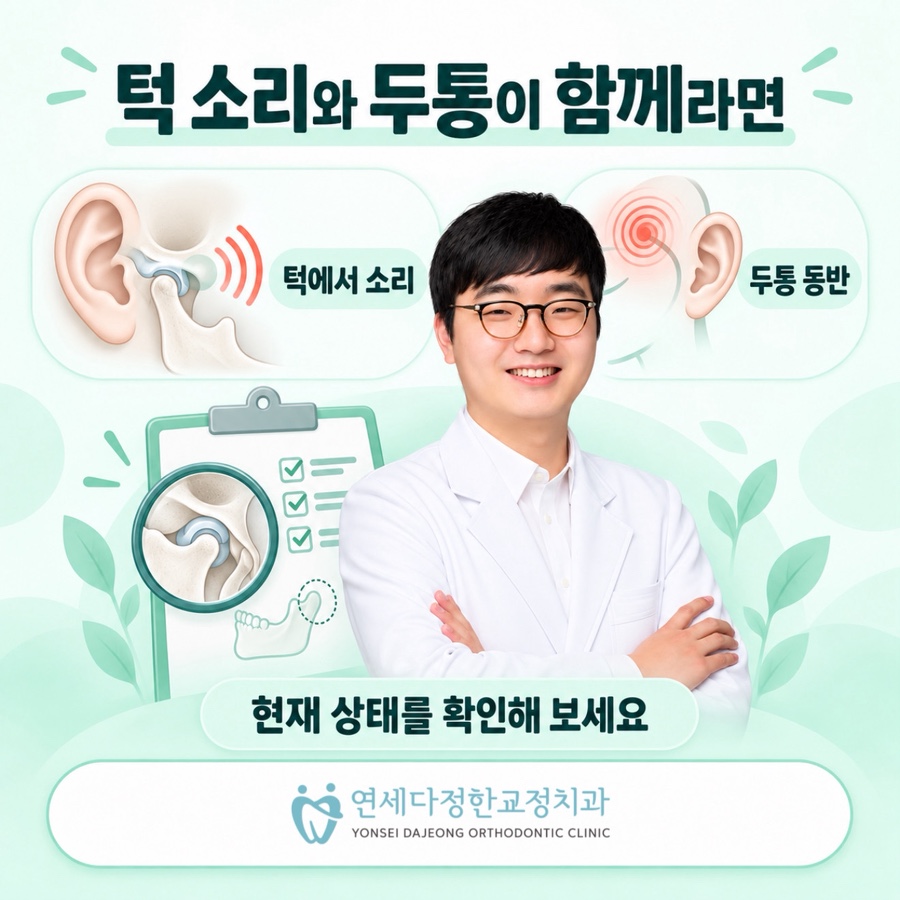
    1. My jaw only makes noise with no pain — do I still need treatment?
    Even without pain, a clicking sound can be an early sign that the TMJ disc has shifted slightly. Getting it checked early is recommended.

    2. Why does my head hurt when the problem is in my jaw?
    The facial nerves that move your jaw and the sensory nerves in your head run close together. Tension signals from the jaw muscles can travel easily to the head, contributing to migraines or temple pain.

    3. Do orthodontic clinics treat TMJ disorder too?
    Yes. Since many cases of TMJ disorder stem from bite misalignment or jaw position imbalance, an evaluation from an orthodontic specialist can be helpful.

    4. Are there dietary habits I should watch out for?
    Tough, hard foods like squid, gum, or chewy noodles put strain on the jaw muscles. If pain keeps recurring, don’t put it off — get it checked at a dental clinic.


    References

    · Health Insurance Review & Assessment Service / National Health Insurance Service statistics (as cited by Gyeonggi Medinews), “TMJ Disorder Treatment Statistics,” 2020. Read more
    · Seoul National University Dental Hospital, “Persistent Headaches and Indigestion — TMJ Disorder May Be the Hidden Cause,” SNU Dental Hospital News, 2023. Read more
    · Kim et al., “Increased Risk of Migraine in Patients with Temporomandibular Disorder: A Longitudinal Follow-Up Study Using a National Health Screening Cohort,” PMC (PubMed Central), 2020. Read more
    · Korea Disease Control and Prevention Agency, “TMJ Disorder,” National Health Information Portal. Read more


    This article is intended for general health information purposes only and is not a substitute for individual diagnosis or treatment. If you’re experiencing symptoms, please consult a specialist.
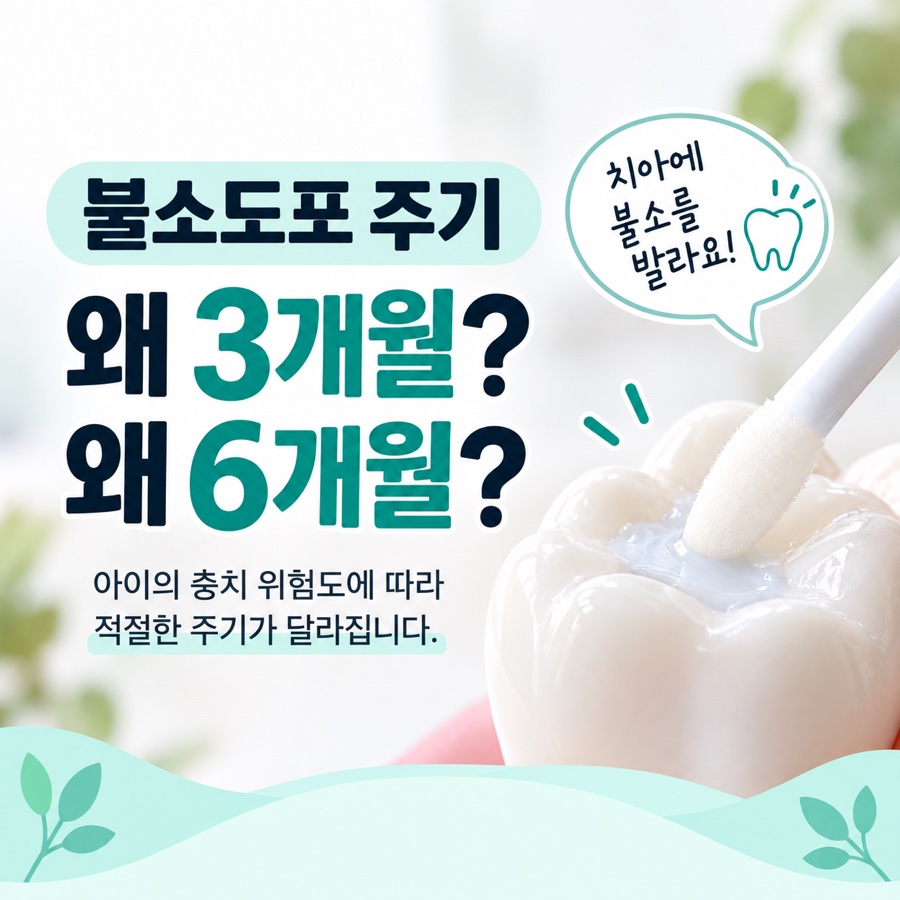
  • Fluoride Treatment for Kids: 3–6 Month Schedule, Cost by Age & Precautions

    Fluoride Treatment for Kids: 3–6 Month Schedule, Cost by Age & Precautions

    SummaryFluoride treatment for kids is typically recommended every 3 to 6 months, depending on a child’s cavity risk and stage of tooth development. Here’s what to know before your visit — from aftercare precautions right after the procedure to how non-covered pricing is typically determined by age.

    Have you ever noticed that different dental offices recommend different intervals for the same fluoride treatment? It can seem a bit odd.

    The truth is, there isn’t just one correct answer when it comes to fluoride treatment frequency.
    The ideal interval can vary depending on a child’s cavity risk and stage of tooth development.

    Today, we’ll walk through everything from the precautions to follow right after treatment to how non-covered (out-of-pocket) pricing for fluoride treatment for kids is typically determined.

    In this article, you’ll find the key factors behind fluoride treatment frequency, how fluoride helps support cavity prevention, what to watch for before and after the procedure, and how pricing is typically determined by age — all in one place.

    Fluoride treatment frequency for kids

    What Is Fluoride Treatment and Why Might Kids Need It?

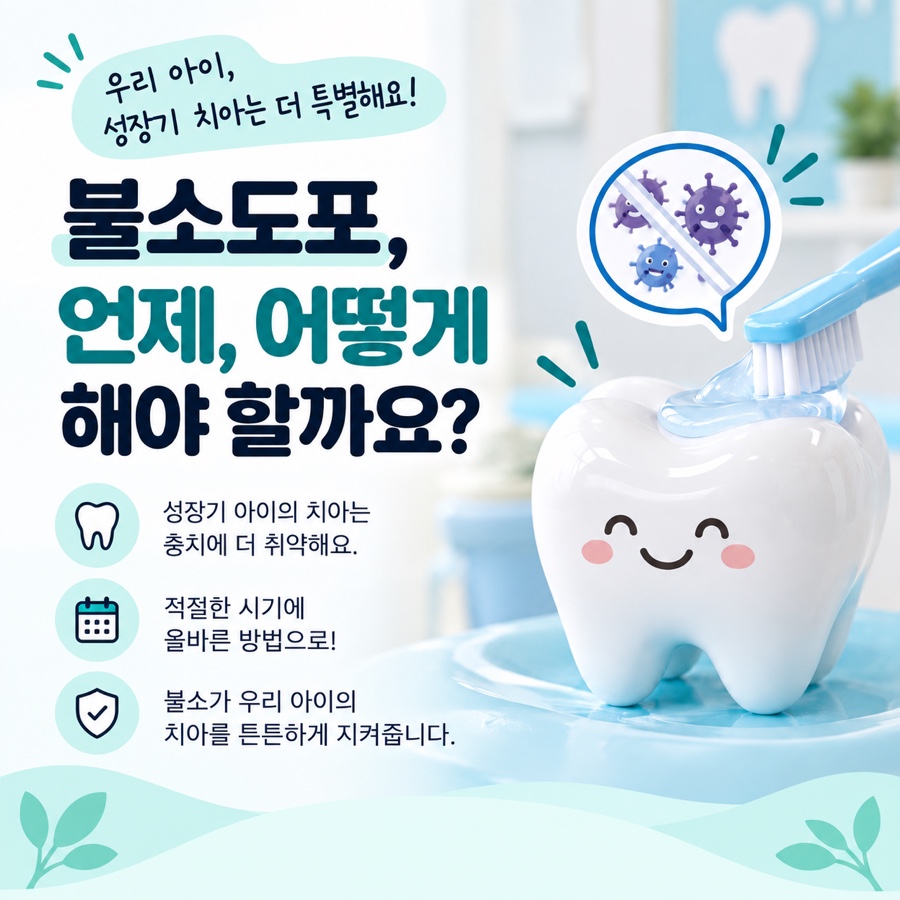
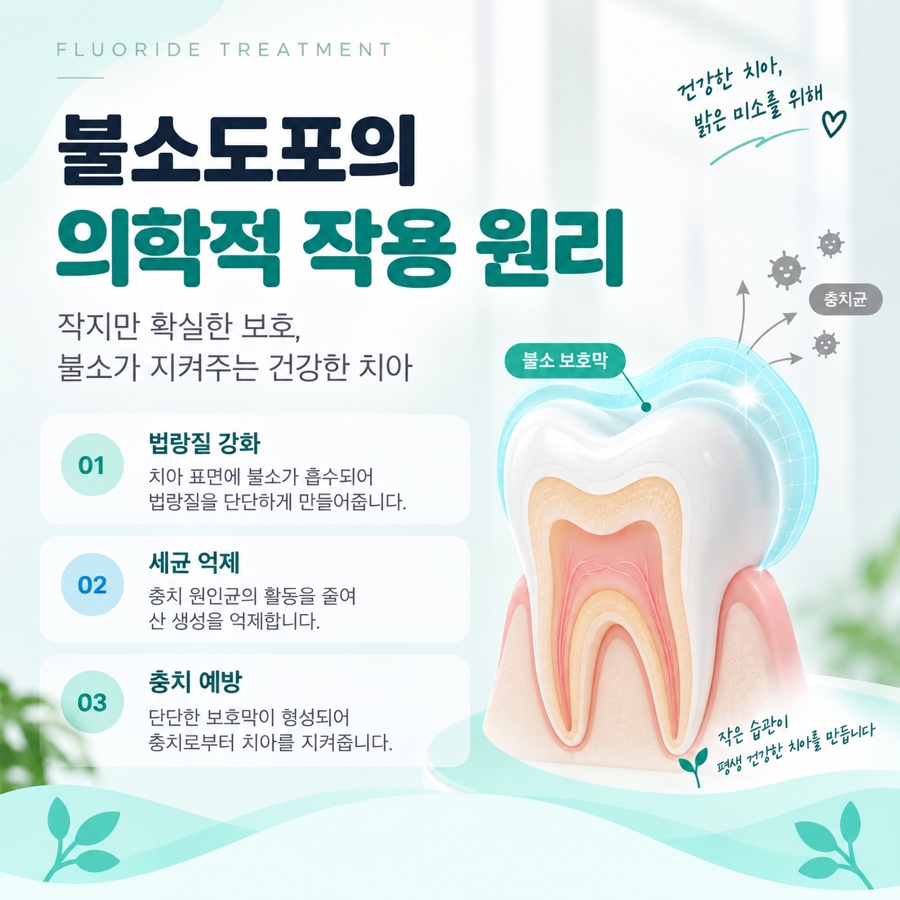
    Fluoride treatment is a preventive procedure in which a high concentration of fluoride is applied to the tooth surface to help strengthen enamel and increase resistance to the acids produced by bacteria.

    Every parent hopes their child’s teeth will grow in strong and healthy.
    But it’s common to feel unsure about exactly where to start with cavity prevention.

    Fluoride treatment for kids illustration 2

    Teeth are especially vulnerable to cavities right after baby teeth and permanent teeth first erupt, since the enamel hasn’t fully hardened yet.
    At this stage, fluoride can bind with calcium in the tooth to help form a protective layer.

    This may help protect teeth against the bacteria that cause cavities.

    Fluoride treatment for kids illustration 3

    Key Points
    ✔ Fluoride treatment is a preventive measure that helps build a protective barrier before cavities form.
    ✔ It may also help slow the progression of early-stage cavities.
    ✔ Regular treatment timed to a child’s stage of tooth development plays a big role in how effective it is.

    For these reasons, it’s best to have your child’s oral condition properly evaluated first, then schedule treatment at the appropriate time.


    Fluoride treatment for kids illustration 4

    How Often Should Fluoride Treatment for Kids Be Scheduled?

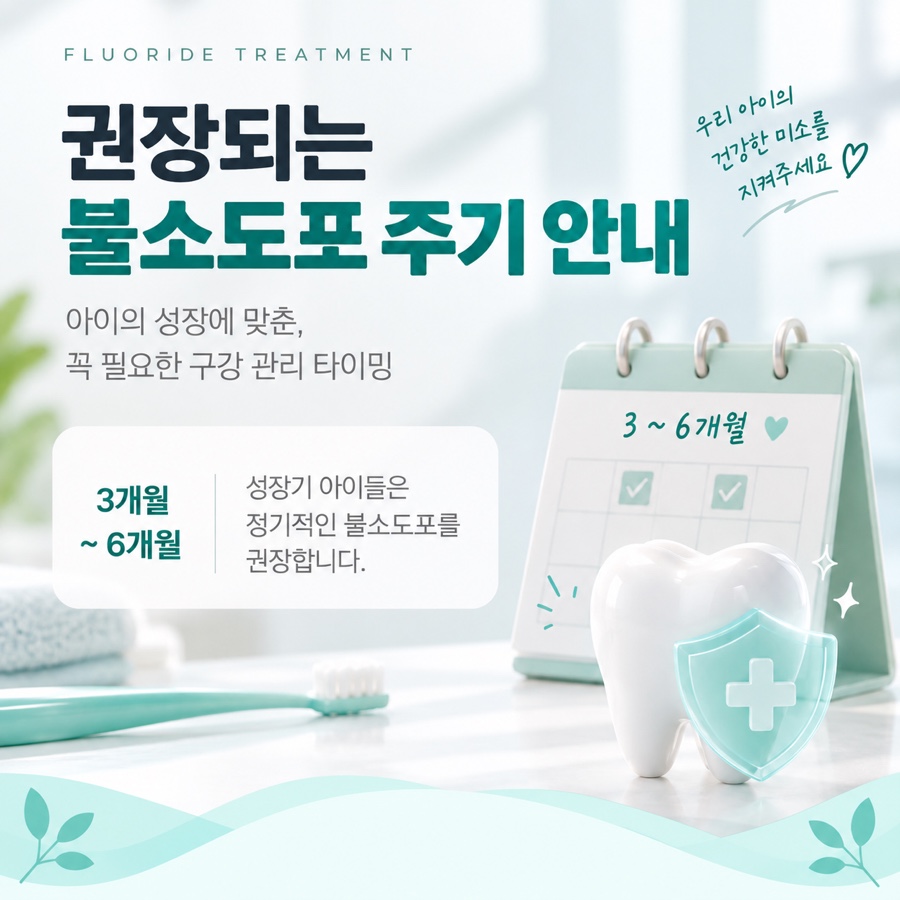
    Fluoride treatment frequency is typically adjusted to every 3 to 6 months based on a child’s age, cavity risk, and the timing of permanent tooth eruption.

    Children who are more prone to cavities during growth spurts may benefit from shorter intervals, while children with generally healthy oral conditions can often be managed on a somewhat longer schedule.

    Fluoride treatment for kids illustration 5

    Category Recommended Frequency Who It Applies To
    High cavity risk Every 3 months Children with a history of cavities or inconsistent brushing habits
    Standard risk Every 6 months Children with typical oral health
    Permanent tooth eruption period Applied right after eruption When the first or second permanent molars are coming in

    Fluoride treatment for kids illustration 6

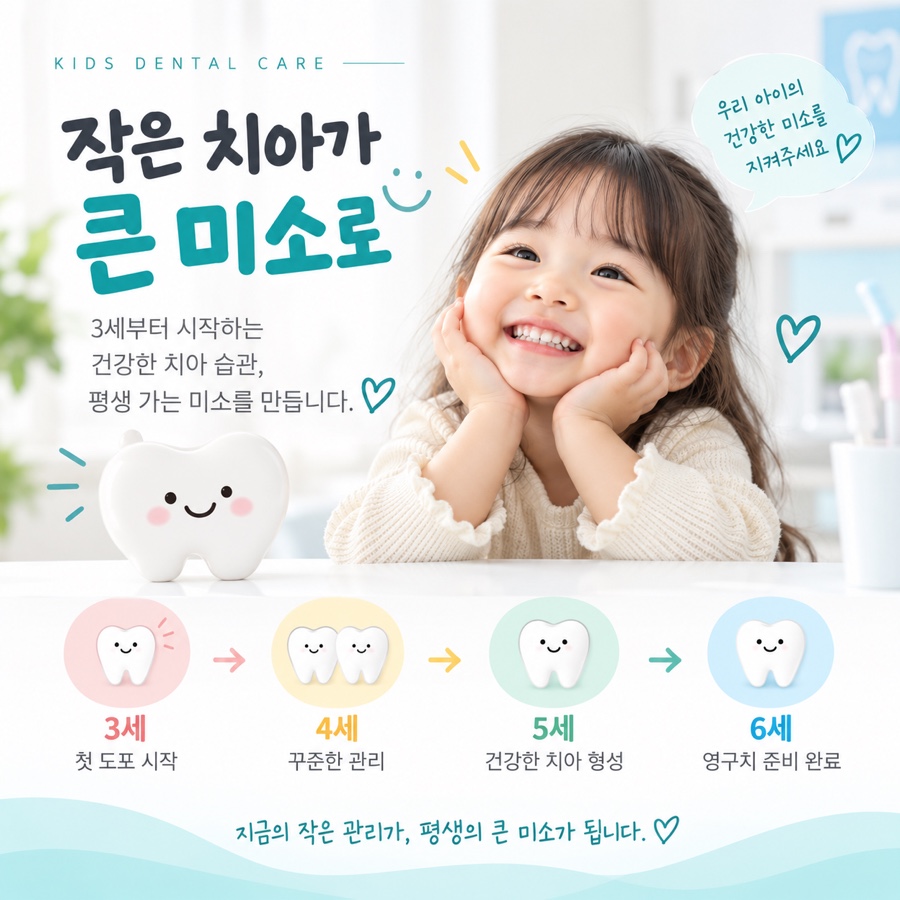
    Starting around age 3, once most baby teeth have come in, is a common time to begin fluoride treatment, continuing consistently through adolescence until the permanent teeth are fully in.

    That said, every child’s brushing habits and oral condition are different, so the right interval for your child may vary somewhat.
    Consulting with a dental professional to determine the appropriate schedule is the sensible approach.

    Key Points
    ✔ Starting fluoride treatment around age 3 is a typical starting point.
    ✔ Intervals are often shortened when new permanent molars are erupting.
    ✔ The exact frequency should be adjusted based on your child’s dental checkup results.

    Fluoride treatment for kids illustration 7

    What Should You Know Before and After the Procedure?

    After fluoride treatment, limiting eating and brushing for a period of time can help the fluoride absorb more fully.

    It takes time for fluoride to fully absorb into the tooth surface.
    That’s why hard or hot foods should be avoided right after treatment.

    Fluoride treatment for kids illustration 8

    Precautions
    ⚠ On the day of treatment, hold off on brushing or flossing for the period your dentist recommends, and follow their instructions.
    ⚠ Avoid hard or hot foods until the fluoride layer has had time to set.

    Fluoride treatment for kids illustration 9

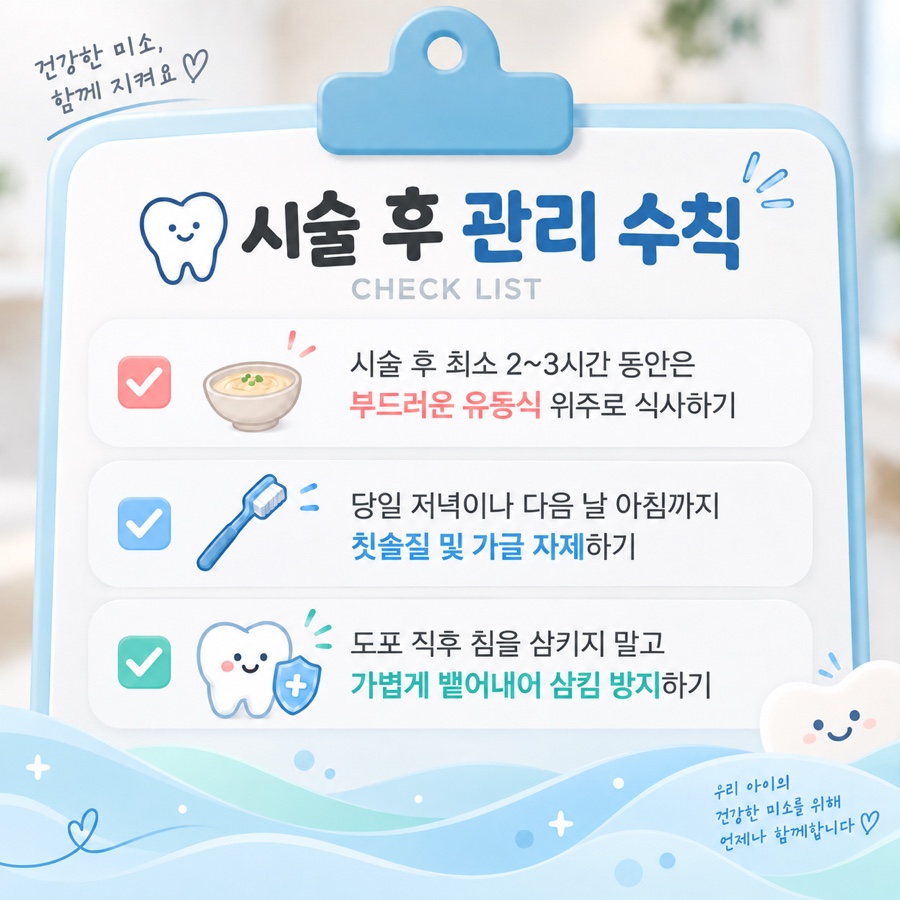
    Checklist: Aftercare Guidelines
    ✅ Stick to soft, liquid-based foods for at least 2–3 hours after treatment
    ✅ Avoid brushing and rinsing until that evening or the next morning
    ✅ Gently spit out saliva rather than swallowing it right after treatment

    Following these precautions carefully can help make the most of the fluoride treatment.

    A parent’s attention and consistent follow-through go a long way in supporting a child’s dental health.


    How Is Fluoride Treatment Priced by Age?

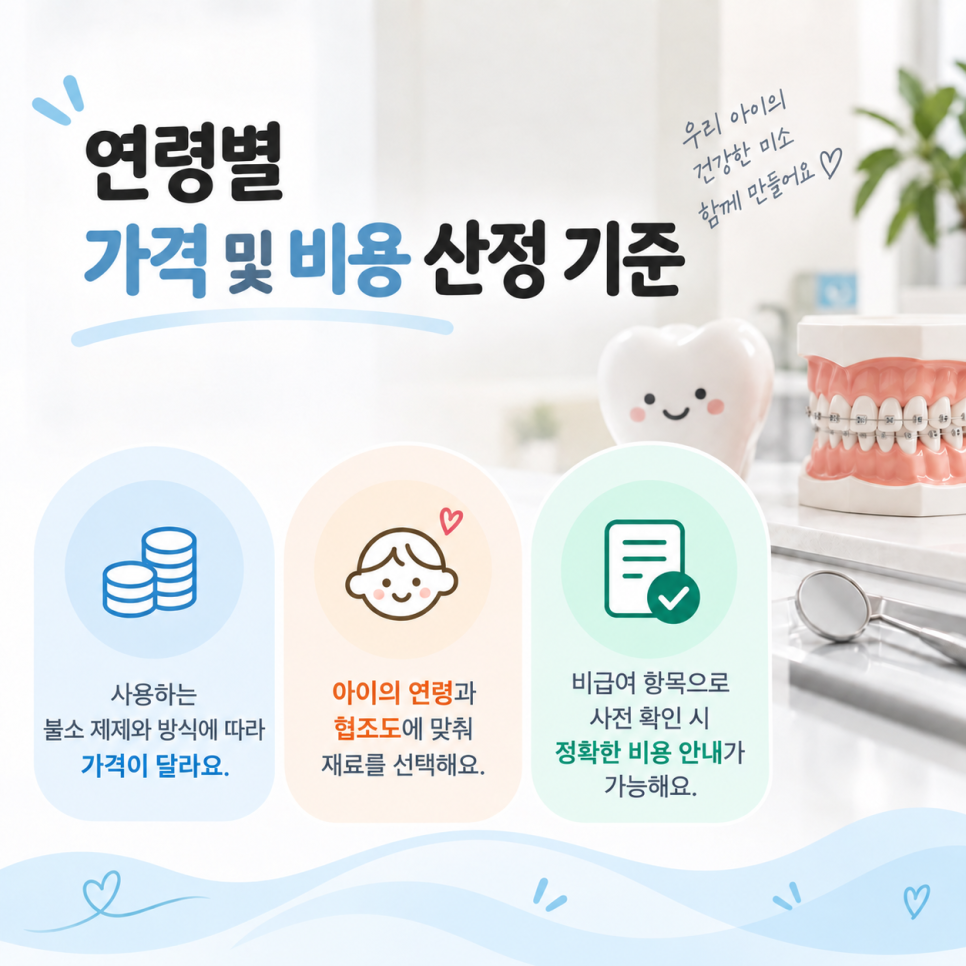
    Fluoride treatment pricing depends on the type of fluoride product used, how cooperative the child is during the procedure, and each dental practice’s non-covered fee schedule.

    Since this is a non-covered (out-of-pocket) treatment, prices can vary between practices.
    That’s why it helps to check the fee structure clearly before your visit.

    Fluoride treatment for kids illustration 10

    Typically, either a gel or varnish form is chosen based on the child’s age and how well they’re able to cooperate during the procedure.

    Age Group Cooperation Level Preferred Form
    Ages 3–5 May be difficult to cooperate Varnish, due to shorter application time
    Ages 6–12 Generally good cooperation Wider choice between gel and varnish
    Ages 13–18 High cooperation Focused care on permanent molars

    Fluoride treatment for kids illustration 11

    Tips for Safe Care
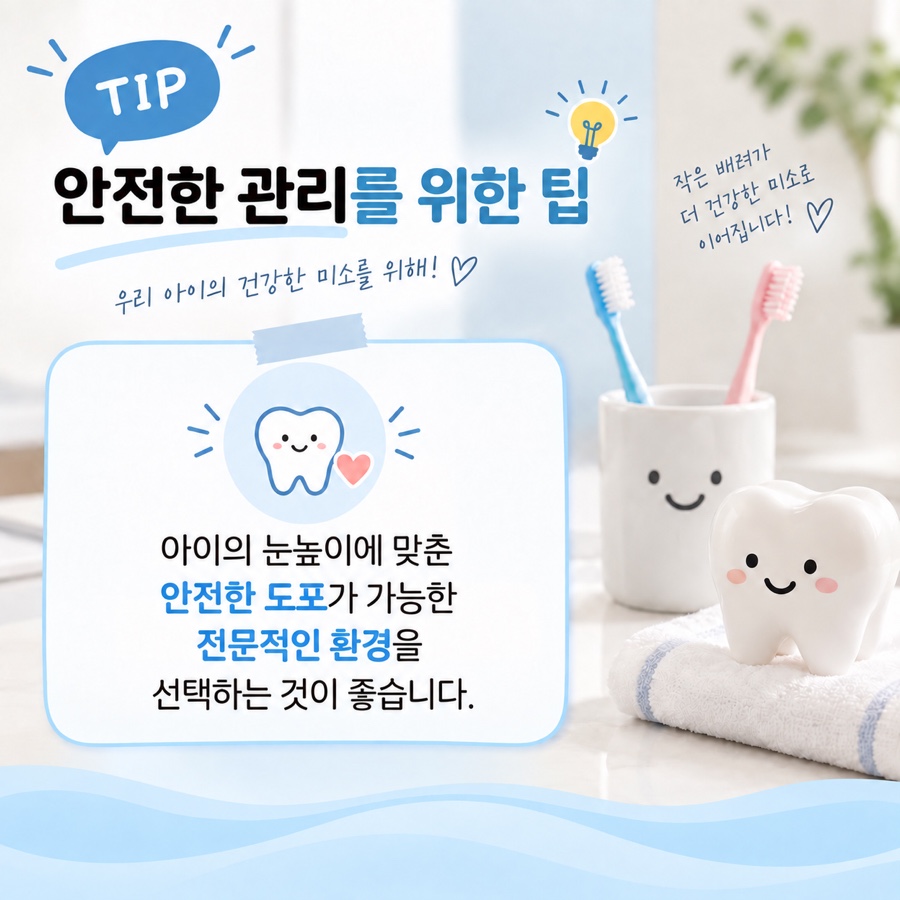
    ⚠ Rather than focusing only on the lowest price, it’s worth carefully checking whether the practice offers a professional environment suited to your child’s comfort and safety during treatment.

    Fluoride treatment for kids illustration 12

    What You Can Expect
    Keeping up with regular preventive treatment at a reasonable price may help reduce oral health costs over the long term.

    The most reliable way to find out non-covered pricing is to ask during a consultation.
    You can also find related treatment information on the Cheongnyangni Yonsei Dajeonghan Orthodontic Dental Clinic website.


    Fluoride treatment for kids illustration 13

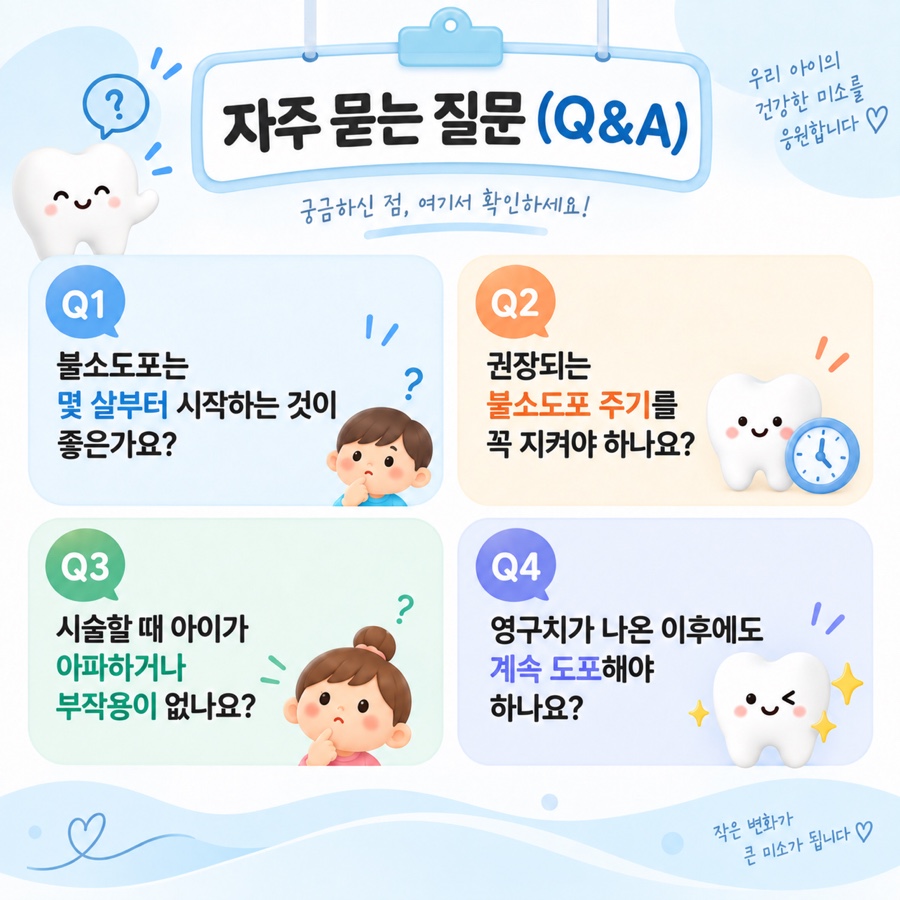
    Frequently Asked Questions

    1. What age is best to start fluoride treatment?
    It’s generally recommended to start around age 3, once most baby teeth have come in and the child is able to communicate and control swallowing.

    2. Is it important to stick to the recommended fluoride treatment schedule?
    Since fluoride’s protective layer gradually wears down over time, keeping to the recommended interval helps maintain its cavity-prevention benefit.

    3. Does the procedure hurt, or are there side effects?
    As a topical preventive treatment, it’s generally associated with minimal discomfort, and it’s considered relatively safe as long as care is taken to avoid swallowing after application.

    4. Should treatment continue after permanent teeth come in?
    Since permanent teeth need to last a lifetime, it’s advisable to continue regular care through adolescence, when cavity risk remains higher.

    5. Can fluoride treatment alone fully prevent cavities?
    Fluoride treatment is a supportive preventive measure that helps lower cavity risk; it should be combined with proper brushing and regular checkups to maintain its effect.


    Fluoride treatment for kids illustration 14

    References

    · Korea Disease Control and Prevention Agency, “Fluoride Application,” National Health Information Portal, 2026. Link
    · American Academy of Pediatrics, “Fluoride Use in Caries Prevention in the Primary Care Setting,” Pediatrics, 2014. Link

    Fluoride treatment for kids illustration 15

    This article is provided for general health information purposes only and is not a substitute for individual diagnosis or treatment. Please consult a dental professional if you have any symptoms or concerns.

  • Early Orthodontic Treatment Timing: 3 Reasons to See a Board-Certified Orthodontist

    Early Orthodontic Treatment Timing: 3 Reasons to See a Board-Certified Orthodontist

    SummaryMissing the ideal early orthodontic treatment timing can mean losing the golden window for correcting jaw growth without surgery. Here’s what to know about growth-stage development and why care should come from a board-certified orthodontist.

    Has your child mentioned jaw discomfort while eating, yet you keep putting off that dental appointment?

    Meanwhile, your child’s jawbone is growing right now, in this very moment.
    During the growth years, there’s a golden window when skeletal issues can often be corrected without surgery.

    To avoid missing this window,
    you first need to understand the criteria for judging the right early orthodontic treatment timing.

    This article outlines the growth-stage checkpoints for catching the right early orthodontic treatment timing, along with the medical reasons treatment should be provided by a board-certified orthodontist.
    We’ll walk through everything from the principles of jaw growth to the guidelines for safely caring for orthodontic appliances.

    early orthodontic treatment timing

    early orthodontic treatment timing illustration 2

    When Is the Right Time for Early Orthodontic Treatment?

    To answer directly: the ideal time for a first checkup is around age 6 to 7, when permanent teeth begin coming in.

    Growth-stage oral development refers to the process in which baby teeth fall out and permanent teeth emerge, while the upper and lower jawbones grow together.

    If skeletal imbalances go unaddressed during this stage, they can lead to facial asymmetry or severe malocclusion.

    That’s why careful, early observation to catch warning signs is so important.

    early orthodontic treatment timing illustration 3

    early orthodontic treatment timing illustration 4

    early orthodontic treatment timing illustration 5

    Key Point
    Because a child’s jaw growth can sometimes be guided to correct skeletal imbalances without surgery, it’s important not to miss the right early orthodontic treatment timing — the golden window.
    Genetic factors and habits like thumb-sucking or mouth breathing are also major contributors that can interfere with normal growth.

    early orthodontic treatment timing illustration 6

    early orthodontic treatment timing illustration 7

    early orthodontic treatment timing illustration 8


    How Does Early Orthodontic Treatment Manage Jaw and Teeth Growth?

    Early orthodontic treatment is less about moving teeth with appliances and more like orthopedic treatment that guides the direction of jaw growth.

    Early (pediatric) orthodontic treatment refers to guiding or restraining jaw growth during the growth years to balance the upper and lower jaws while also correcting related muscle function.

    Here’s what this approach can help achieve:

    1. Creating space for permanent teeth to erupt correctly
    2. Guiding harmonious growth of the upper and lower jawbones
    3. Helping prevent malocclusion by correcting oral habits

    early orthodontic treatment timing illustration 9

    Category Growth-Stage (Pediatric) Orthodontics Adult Orthodontics
    Treatment Goal Guiding/restraining jaw growth Focused on aligning teeth
    Main Methods Orthopedic appliances, growth-guidance appliances Brackets, clear aligners, etc.
    Possible Benefit May reduce the likelihood of extraction or surgery Proceeds based on an already-formed skeletal structure

    Because every child’s growth rate and skeletal pattern differs,
    a one-size-fits-all approach should be avoided.

    Building an individualized treatment plan based on an accurate diagnosis is what matters most.

    early orthodontic treatment timing illustration 10

    early orthodontic treatment timing illustration 11


    Why Should Early Orthodontic Treatment Be Done by a Board-Certified Orthodontist?

    A board-certified orthodontist is a dentist who completed one year of internship and three years of residency training exclusively in orthodontics at an institution recognized by Korea’s Ministry of Health and Welfare, and who has passed the national specialist licensing exam.

    Growth-stage orthodontic care is a complex discipline that must consider not only a child’s current tooth alignment but also how the facial bones will develop into adulthood.

    That’s why it demands the ability to anticipate skeletal growth patterns and judge long-term prognosis.

    early orthodontic treatment timing illustration 12

    early orthodontic treatment timing illustration 13

    Checklist: What to Consider When Choosing a Provider
    ✅ Confirm the provider holds a Ministry of Health and Welfare–certified orthodontic specialist qualification
    ✅ Look for experience across a range of growth-stage cases and a precise diagnostic system
    ✅ Confirm they offer systematic, long-term prognosis management

    You can also verify specialist credentials on the Korean Association of Orthodontists (KAO) website.

    This expertise may help reduce variables that can arise during treatment and support overall safety.
    If you’re considering early orthodontic treatment in the Cheongnyangni area, visit the Cheongnyangni Yonsei Dajeonghan Orthodontics homepage to check whether care is provided by a board-certified orthodontist.

    early orthodontic treatment timing illustration 14

    early orthodontic treatment timing illustration 15


    How Do You Safely Care for Pediatric Orthodontic Appliances?

    During early orthodontic treatment, appliance hygiene and regular follow-up visits matter most.

    Neglecting to brush after meals can make cavities and gum disease more likely, so attentive guidance from parents or guardians is essential.

    Caution
    If an appliance becomes bent or damaged, do not try to adjust it yourself — see your dental provider right away for an inspection.

    early orthodontic treatment timing illustration 16

    Ongoing Care
    Regular checkups to track tooth movement and jaw growth, combined with following your orthodontist’s guidance on appliance wear, can support consistent care and systematic progress monitoring.

    early orthodontic treatment timing illustration 17


    Frequently Asked Questions

    1. When should my child have their first orthodontic checkup?
    It’s recommended to have a first checkup around age 6 to 7, when permanent teeth begin coming in, to assess skeletal development.

    2. If my child gets early orthodontic treatment, will they avoid needing treatment again as an adult?
    Correcting skeletal imbalances early, during the growth years, may help reduce the difficulty of future adult orthodontic treatment and the likelihood of extraction — though it does not guarantee that no further treatment will be needed.

    3. How is a board-certified orthodontist’s care different from general dental care?
    Board-certified orthodontists draw on specialized knowledge of jawbone tendencies and overall facial skeletal harmony, not just tooth alignment, to build a precise treatment plan.

    4. Will wearing an appliance get in the way of daily life?
    There may be some initial discomfort or a sense of foreign material in the mouth, but children often adjust within a few days and return to their normal routine.

    early orthodontic treatment timing illustration 18


    References

    · American Association of Orthodontists, “Monitoring Jaw Growth: Why the AAO Recommends an Age 7 Checkup,” AAO, 2023. View source
    · Korean Association of Orthodontists, “Find a Society Member and Board-Certified Orthodontist,” Korean Association of Orthodontists (KAO). View source

    early orthodontic treatment timing illustration 19


    This article is intended for general health information purposes only and is not a substitute for individual diagnosis or treatment.
    If your child has symptoms, please consult a specialist.
  • Kids Orthodontic Appliance Cleaner: 3 Tips to Protect PreOrtho Effectiveness

    Kids Orthodontic Appliance Cleaner: 3 Tips to Protect PreOrtho Effectiveness

    SummaryChoosing the right kids orthodontic appliance cleaner is key to preserving PreOrtho effectiveness. This guide covers hygienic ways to care for kids’ silicone orthodontic appliances without toothpaste, precautions for use during the growth phase, and a handy checklist — routines even first-time parents can follow right away.

    Have you ever noticed a silicone orthodontic appliance turn cloudy after cleaning it with toothpaste?
    That’s because the abrasive particles in toothpaste leave tiny, invisible scratches on the surface — and bacteria multiply easily in those grooves.

    The PreOrtho effect, used to support oral myofunctional development in growing children, depends as much on proper cleaning habits as on the appliance itself.
    Let’s go over how to choose the right cleaner and care for the appliance correctly.

    PreOrtho effect

    This article covers the PreOrtho effect and how it works, how to choose the right cleaner for a silicone appliance, and what to watch for when a growing child wears it.
    Choosing the right cleaner can make a big difference in the appliance’s lifespan and hygiene, so we recommend reading through to the end.

    PreOrtho effect illustration 2

    What Kind of Kids’ Orthodontic Appliance Is PreOrtho?

    PreOrtho effect illustration 3

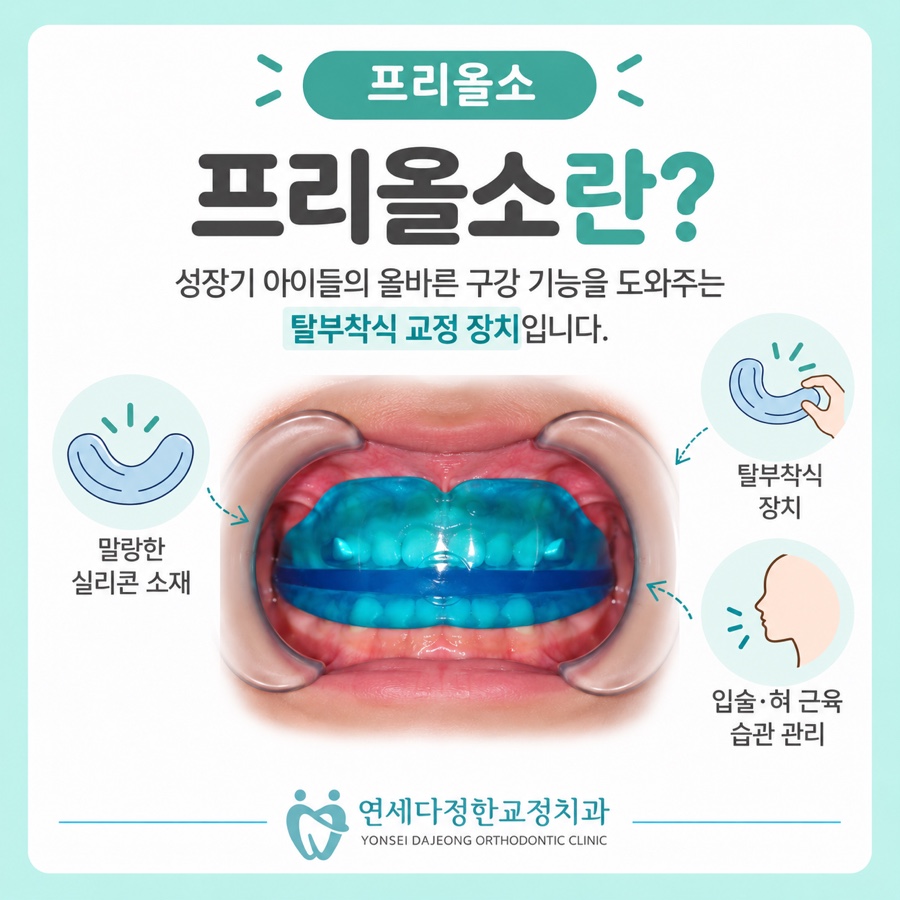
    PreOrtho isn’t a device that forces teeth into position — it’s a functional appliance designed to help balance the muscles inside the mouth.

    PreOrtho is a removable silicone appliance that supports oral myofunctional development in growing children and can help teeth find their proper position.
    Because it’s made of soft silicone, it causes little discomfort, and children can insert and remove it themselves as part of their daily routine.

    By helping correct poor tongue and lip muscle habits, it can contribute to creating the space the jawbone and teeth need to grow naturally.

    PreOrtho effect illustration 4

    Key Point
    Rather than pushing teeth directly, PreOrtho is a functional appliance that helps a child’s facial bones grow naturally by balancing the muscles inside the mouth.

    PreOrtho effect illustration 5

    This approach makes use of a growing child’s natural jaw growth to help the facial bones and teeth develop in harmony.
    It may also help lower the likelihood of needing more complex orthodontic treatment later on.

    That’s why it’s important not to miss the window when a child’s bones are growing most actively, and to start at the right time.

    PreOrtho effect illustration 6

    PreOrtho effect illustration 7


    What PreOrtho Effects Can You Actually Expect?

    PreOrtho effect illustration 8

    The PreOrtho effect varies depending on how consistently a child wears the appliance and how well poor oral habits are corrected.

    It helps guide the tongue into its proper resting position and encourages nasal breathing instead of mouth breathing, which can help relax tension in the jaw joint and surrounding muscles.
    Through this, the following changes can be expected.

    PreOrtho effect illustration 9

    • Correction of poor oral habits and improved muscle function
    • Creating space for teeth to erupt properly
    • Guiding teeth toward a more even alignment
    • Easing skeletal imbalance during the growth period

    PreOrtho effect illustration 10

    Expected Results
    Building a foundation for a healthy oral environment through consistent wear is an important part of the process.
    That said, results can vary somewhat depending on a child’s growth rate and dental condition.

    PreOrtho effect illustration 11


    How Should You Choose a Kids Orthodontic Appliance Cleaner?

    PreOrtho effect illustration 12

    Choosing the right cleaner is essential for keeping the appliance hygienic and usable for longer.
    A dedicated appliance cleaner is a product that cleans the silicone surface thoroughly without any abrasive ingredients.

    Because of the nature of silicone, cleaning it with regular toothpaste can leave invisible micro-scratches caused by the abrasive particles in the toothpaste.
    Bacteria can multiply easily within those scratches, so it’s safer to always use a cleaner made specifically for the appliance.

    Category Regular Toothpaste Dedicated Appliance Cleaner
    Abrasive ingredients Yes No
    Risk of surface scratches High Low
    Risk of bacterial growth Present Minimal

    PreOrtho effect illustration 13

    Checklist
    ✅ Use a dedicated appliance cleaner instead of regular toothpaste
    ✅ Rinse with lukewarm or cold water instead of hot water
    ✅ Rinse thoroughly after cleaning so no residue remains
    ✅ Regularly check the appliance surface for warping or tears

    PreOrtho effect illustration 14

    Caution
    Silicone is sensitive to heat, so it can warp easily if left in hot water or inside a car during summer.
    After cleaning, always store the appliance in its dedicated case.

    What Should You Watch Out for When a Growing Child Uses the Appliance?

    PreOrtho effect illustration 15

    To support the PreOrtho effect, it’s essential to keep the appliance from warping and to follow the recommended wear time.

    Because silicone is sensitive to heat, it can warp if left somewhere hot, so it’s important to build the habit of always storing it in its dedicated case.
    Good results are more likely when attentive parenting is combined with the child’s cooperation.

    It’s a good idea to visit the dentist regularly to have both the appliance and the child’s dental growth checked together.
    If you’d like a more detailed consultation, please visit the Yonsei Dajeonghan Orthodontics Cheongnyangni website.

    Tips for Safe Care
    When heading out, always keep the appliance in its dedicated case so it doesn’t get lost.
    Thorough hygiene care combined with proper wear habits together help build a healthy oral environment for your child.

    PreOrtho effect illustration 16


    Frequently Asked Questions

    PreOrtho effect illustration 17

    1. How many hours a day should the appliance be worn?
    Typically, wear time combines nighttime sleep hours with periods after school, adding up to the recommended daily total.

    2. Can I use regular soap instead of a cleaner?
    Soaps with strong cleaning agents can leave residue in the mouth, so it’s best to use a kids orthodontic appliance cleaner made specifically for the appliance whenever possible.

    3. When does the PreOrtho effect start to show?
    This varies with a child’s growth rate and wear habits, but changes generally appear gradually after several months or more of consistent use.

    4. What should I do if the appliance breaks?
    Don’t try to adjust it yourself — be sure to visit the dental clinic for a checkup.

    5. Where can I buy a dedicated cleaner?
    Most are available through your dentist’s recommendation or at oral care product retailers.


    References

    · Asan Medical Center Children’s Hospital, \”Prevention of Oral Myofunctional Disorders,\” Pediatric Disease Information, Asan Medical Center. View source
    · \”Comparison of Maximum Tongue, Lip, and Cheek Pressure in Patients Undergoing Myofunctional Training and Appliance Therapy,\” Journal of the Korean Academy of Pediatric Dentistry, Korea Citation Index (KCI). View source

    PreOrtho effect illustration 18

    This article is intended for general health information purposes only and is not a substitute for individual diagnosis or treatment.
    If you have symptoms, please consult a specialist.
  • Tongue Coating Causes: 4 Reasons for White Tongue & How to Use a Tongue Scraper

    Tongue Coating Causes: 4 Reasons for White Tongue & How to Use a Tongue Scraper

    SummaryTongue coating causes can vary depending on lifestyle factors such as dry mouth, mouth breathing, smoking, and drinking. Read on for a gentle tongue scraper technique and important precautions to keep in mind.

    Have you ever brushed your teeth, then stuck your tongue out in front of the mirror without really thinking about it?
    You brushed thoroughly, yet a white film is still sitting on your tongue, and you might even notice a faint odor in your mouth.

    Actually, this issue often has more to do with the surface of the tongue than with the teeth themselves.
    Understanding the causes of tongue coating is the first step toward managing bad breath as well.

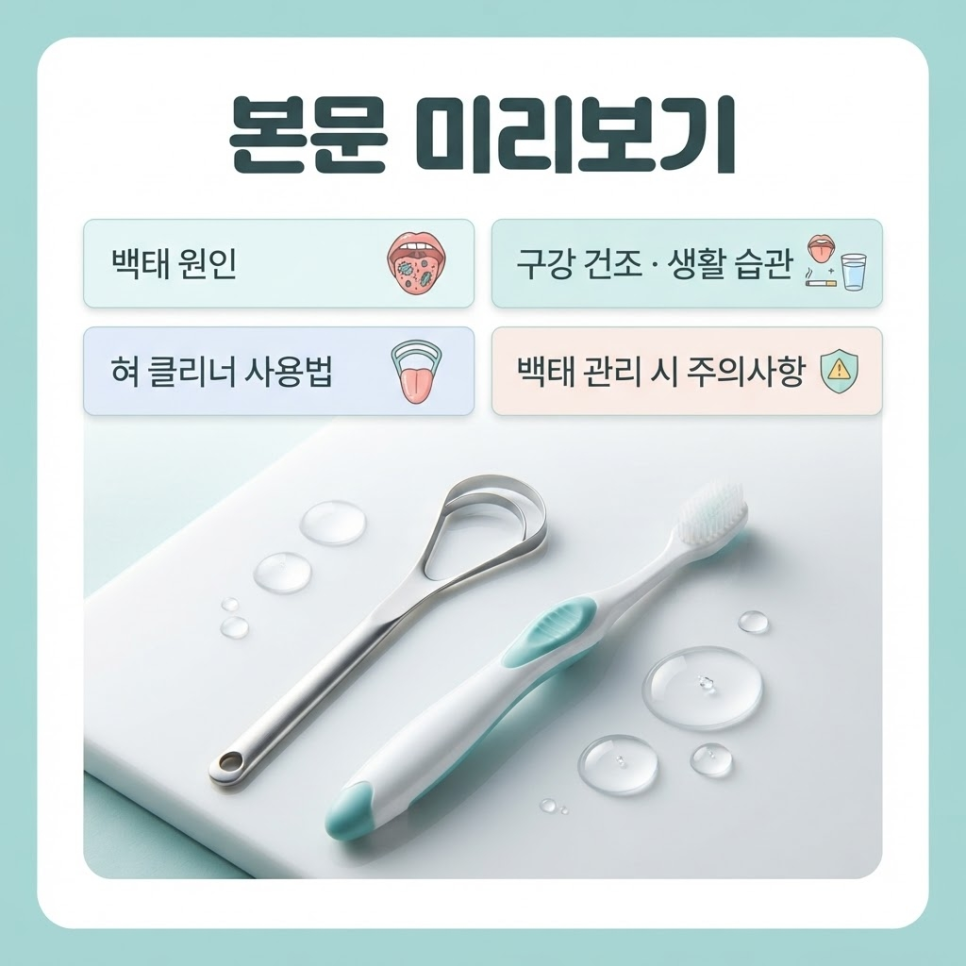
    In this article, we’ll walk through the most common tongue coating causes and how dry mouth and everyday habits contribute to it, followed by a gentle tongue scraper technique and the precautions to keep in mind while using one.

    tongue coating causes

    tongue coating causes - image 2

    If your mouth still feels coated or you notice an odor even after a thorough brushing,
    it’s worth looking at the surface of the tongue as well as the teeth.

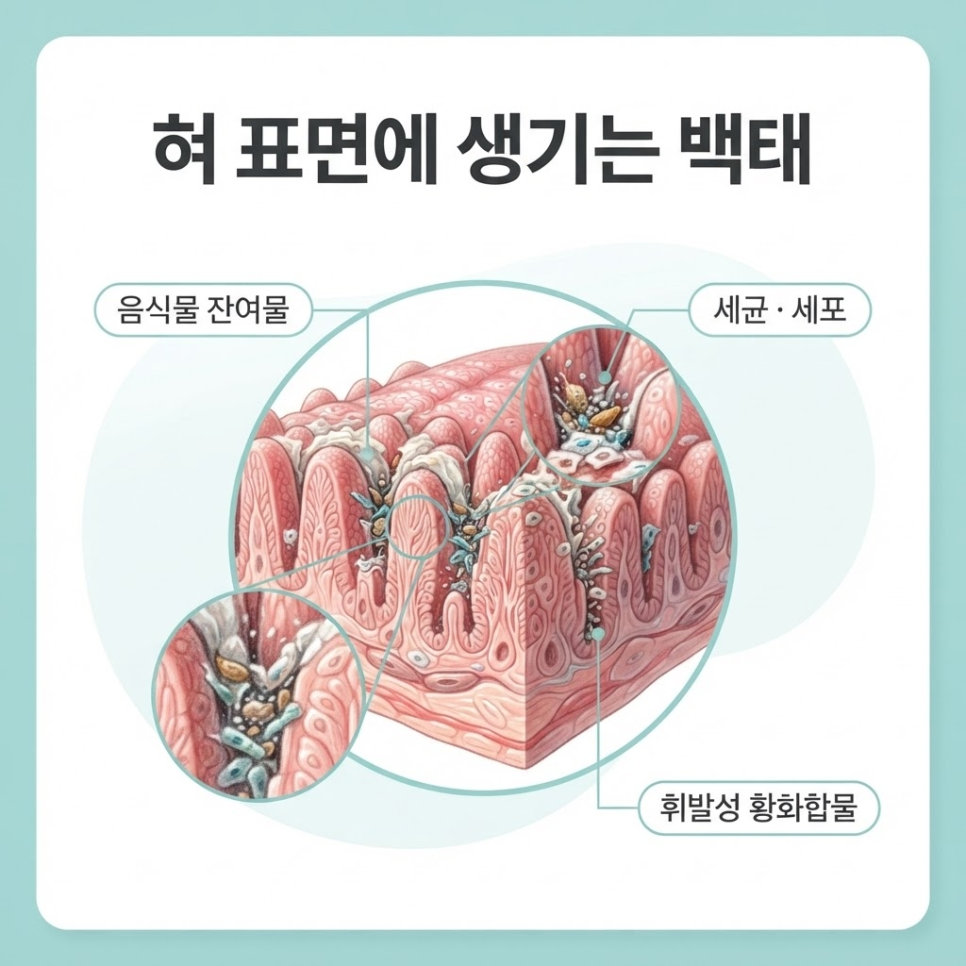
    Food debris, bacteria, and shed epithelial cells can build up between the tiny papillae on the tongue and give it a whitish appearance.
    Let’s go through the causes of tongue coating and how to manage it gently, step by step.

    tongue coating causes - image 3

    Tongue Coating Causes: What Makes the Tongue Turn White?

    tongue coating causes - image 5

    Put simply, tongue coating usually isn’t a specific condition — it’s often a natural buildup of waste material on the tongue’s surface.
    Tongue coating refers to a whitish appearance caused by food debris, bacteria, and shed epithelial cells collecting between the tiny papillae on the tongue.

    The surface of the tongue has many grooves and ridges, which makes it an easy place for waste material to settle.
    Bacteria that accumulate there can produce volatile sulfur compounds, which may contribute to bad breath.

    Key Point
    Bacteria on the tongue’s surface can produce volatile sulfur compounds such as hydrogen sulfide and methyl mercaptan, which have been reported as one of the main contributors to bad breath.
    When saliva flow is sufficient, this waste is naturally rinsed away — but when saliva production drops, tongue coating can become noticeably thicker.

    tongue coating causes - image 6

    One of the most common tongue coating causes is dry mouth.
    Saliva helps keep the mouth moist while washing away food particles and bacteria.
    When you’re dehydrated or saliva production decreases, waste material is more likely to stay on the tongue’s surface.

    tongue coating causes - image 7

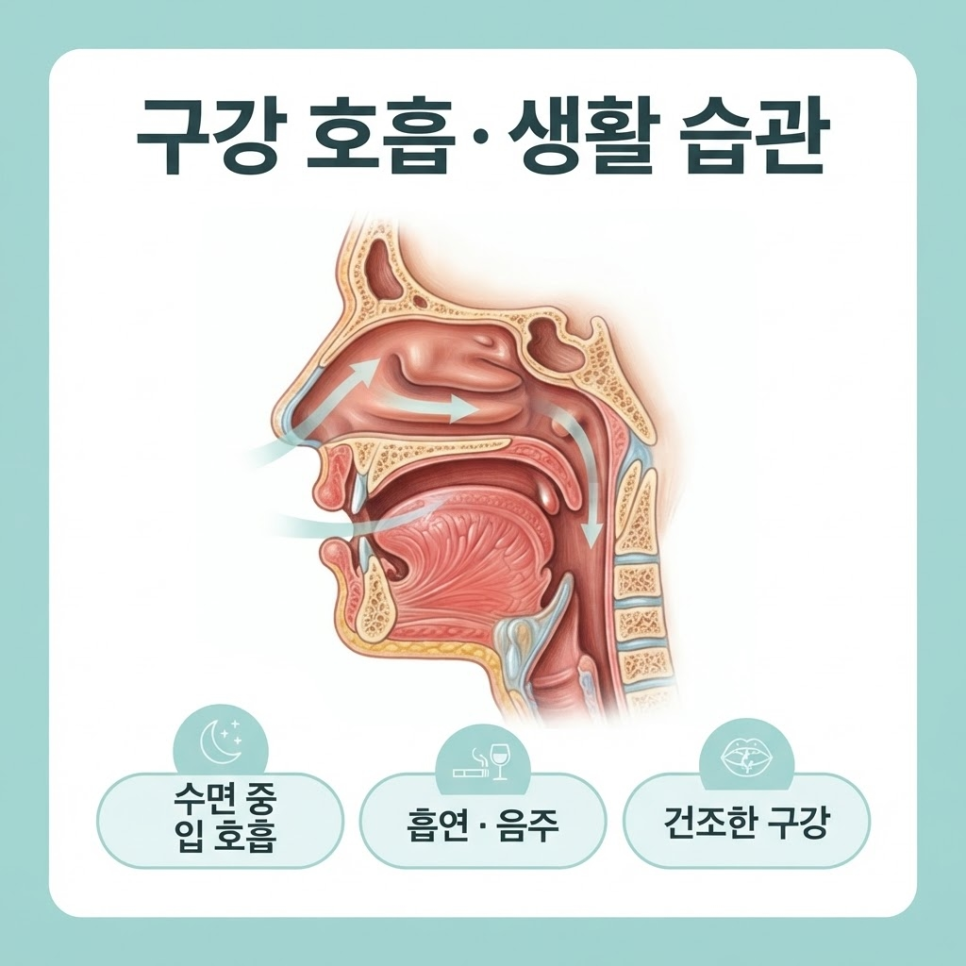
    Another common cause is mouth breathing during sleep.
    When the tongue’s surface stays dry for long stretches, waste material can stick to it more easily.

    Habits that dry out the mouth, such as smoking or frequent alcohol use, can also make tongue coating worse.

    Checklist
    ✅ Your mouth tends to feel dry often
    ✅ You have a habit of breathing through your mouth while sleeping
    ✅ Your daily water intake is usually low
    ✅ You smoke or drink alcohol frequently
    ✅ You don’t usually clean your tongue separately

    tongue coating causes - image 8


    What’s the Right Way to Use a Tongue Scraper to Reduce Bad Breath?

    tongue coating causes - image 9

    In short, a tongue scraper isn’t a tool for forcing tongue coating off — it’s better understood as an aid that gently clears the tongue’s surface.
    A tongue scraper is an oral care tool used to remove the bacterial film and waste material on the tongue’s surface with light pressure.

    What matters most isn’t trying to eliminate every trace of tongue coating by scraping hard, but rather using just enough pressure that the tongue isn’t strained.

    Key Point
    A tongue scraper isn’t a tool that works better the harder you press.
    Too much pressure can leave tiny scratches on the tongue’s surface, so it’s more important to use light pressure and sweep from back to front.
    tongue coating causes - image 10

    The basic tongue scraper routine is to rinse your mouth after brushing, then gently sweep the scraper from the back of the tongue toward the front.
    Inserting the tool too far back can trigger a gag reflex, so it’s best to start within a range that feels comfortable.

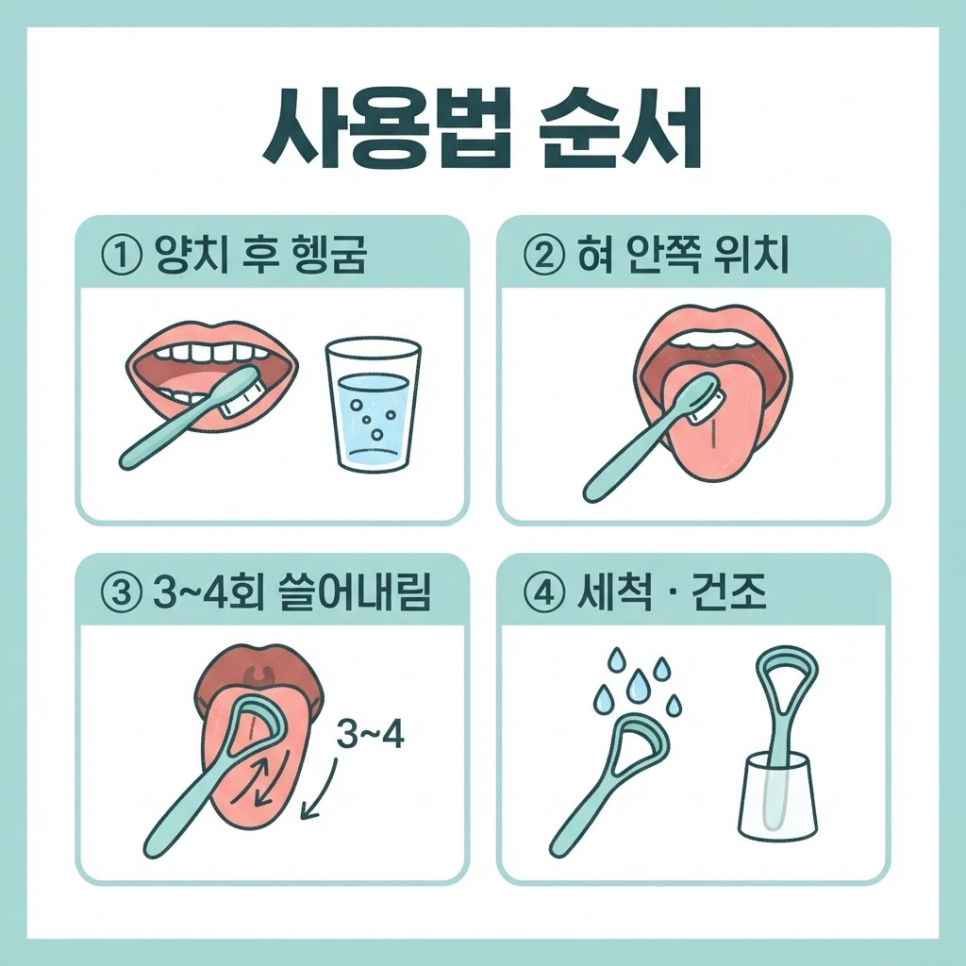
    1. Rinse your mouth thoroughly with water after brushing.
    2. Stick your tongue out slightly and place the scraper gently near the back of the tongue.
    3. Sweep gently from back to front about 3-4 times.
    4. Rinse the scraper under running water and let it dry fully before storing it.

    tongue coating causes - image 11

    Research Finding
    According to a Cochrane systematic review, using a tongue scraper may help reduce volatile sulfur compound levels more than brushing alone in the short term.
    The same review also noted that sustaining this benefit requires consistent daily oral hygiene.

    What Should You Watch Out for When Removing Tongue Coating?

    tongue coating causes - image 12

    In short, scraping harder doesn’t make tongue coating better — it can actually harm the health of your tongue.
    Scrubbing hard enough to cause stinging or bleeding can create tiny wounds that may lead to pain or inflammation.

    That, in turn, can make oral care even harder overall.
    Using the scraper more often isn’t better either — a light routine of about 1-2 times a day, adjusted to your own tongue’s condition, is generally enough.

    Caution
    If a thick white coating keeps coming back, or if you notice pain, bleeding, or other unusual symptoms in your mouth, don’t try to scrape it off — have it checked at a dental or medical office instead.
    Some tongue coating causes aren’t simply waste buildup; they can be related to an underlying oral condition or infection.

    tongue coating causes - image 13

    Along with cleaning the tongue, it’s also important to keep the mouth from getting too dry.
    Drinking enough water and cutting back on habits that dry out the mouth can go a long way toward managing many of the causes of tongue coating.

    tongue coating causes - image 14


    Tongue Coating and Bad Breath: How Should You Manage Them Day to Day?

    In short, managing tongue coating starts with pairing a tongue-cleaning habit with overall oral health care.
    Drinking water often and rinsing your mouth lightly after meals can make a real difference.

    That said, if tongue coating persists for a long time or you can’t pin down the cause on your own, it may help to have your overall oral condition checked at a dental clinic.
    A regular checkup can help confirm whether there are other factors contributing to your bad breath or tongue coating.

    If you’d like to learn more about oral care or schedule a checkup, you can find visit information at the Cheongnyangni Yonsei Dajeonghan Orthodontic Clinic homepage.


    Frequently Asked Questions

    tongue coating causes - image 15

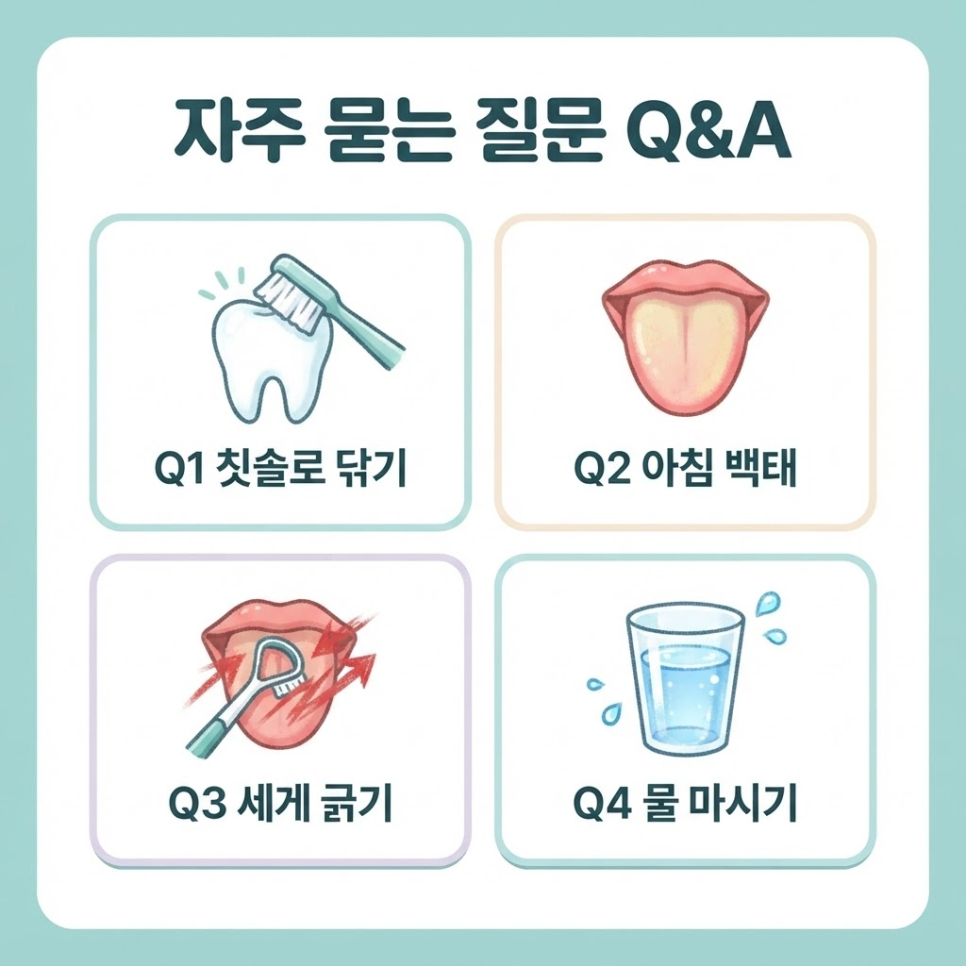
    1. Is it okay to clean my tongue with a regular toothbrush?
    You can use a toothbrush, but scrubbing too hard may irritate the tongue. If you use a dedicated tongue scraper, it’s best to sweep gently rather than press hard.

    2. Is it a problem that my tongue looks especially white in the morning?
    Saliva production decreases during sleep, so the tongue’s surface may temporarily look whiter. If a thick coating remains even after brushing and cleaning your tongue, it’s worth checking whether another cause is involved.

    3. Does scraping the tongue harder remove tongue coating more effectively?
    No. Scraping too hard can actually injure the tongue’s surface, so it’s important to stick to proper tongue scraper technique — light strokes from back to front.

    4. Does drinking water often help manage tongue coating?
    Yes, it can help. Dry mouth is one of the most common tongue coating causes, so drinking water regularly to keep your mouth moist can support both tongue coating and bad breath management.

    5. How many times a day should I use a tongue scraper?
    It depends on your individual tongue condition, but generally 1-2 times a day with light pressure is recommended. Using it more often doesn’t necessarily make it more effective.


    References

    · Lee CH et al., “The relationship between volatile sulfur compounds and major halitosis-inducing factors,” Journal of Periodontology, 2003. View source
    · Outhouse TL et al., “Tongue scraping for treating halitosis,” Cochrane Database of Systematic Reviews, 2006. View source


    This article is intended for general health information purposes only and is not a substitute for professional diagnosis or treatment. If you have symptoms, please consult a healthcare professional.