Tag: Dongdaemun Dentist

  • Tooth Sensitivity Root Canal: 5 Signs You Need Treatment

    Tooth Sensitivity Root Canal: 5 Signs You Need Treatment

    SummaryNot every case of cold-sensitive teeth ends in a root canal. This guide breaks down tooth sensitivity root canal warning signs by looking at how long pain lingers after a stimulus fades, plus the treatment steps from cervical abrasion to crowns. Check with a dental clinic in Cheongnyangni to find out where you stand.

    Your coffee goes down just fine, but the second cold water hits a back tooth, it stings.
    Does sensitivity like that mean you’re headed straight for a root canal?

    Not necessarily.
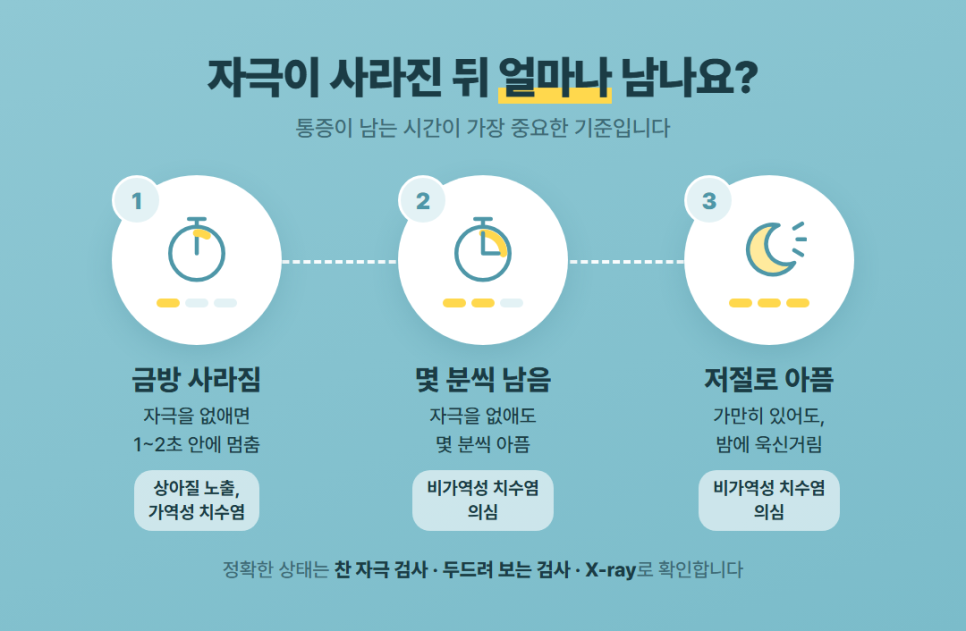
    How long the pain lingers after the stimulus is gone is one of the key factors that can help guide your treatment path.

    Key takeaway
    If the sensitivity fades within 1-2 seconds of removing the stimulus, the nerve is likely still alive — a sign of reversible pulpitis.
    If pain lingers for several minutes or throbs at night, you should suspect irreversible pulpitis, which may require tooth sensitivity root canal treatment.
    According to Korea’s national health information portal, dentin hypersensitivity affects an estimated 8-57% of adults, but simply timing how long the pain lasts can help you gauge how healthy the nerve is.

    tooth sensitivity root canal

    Why Do My Teeth Hurt When I Drink Something Cold?

    The short answer is simple.
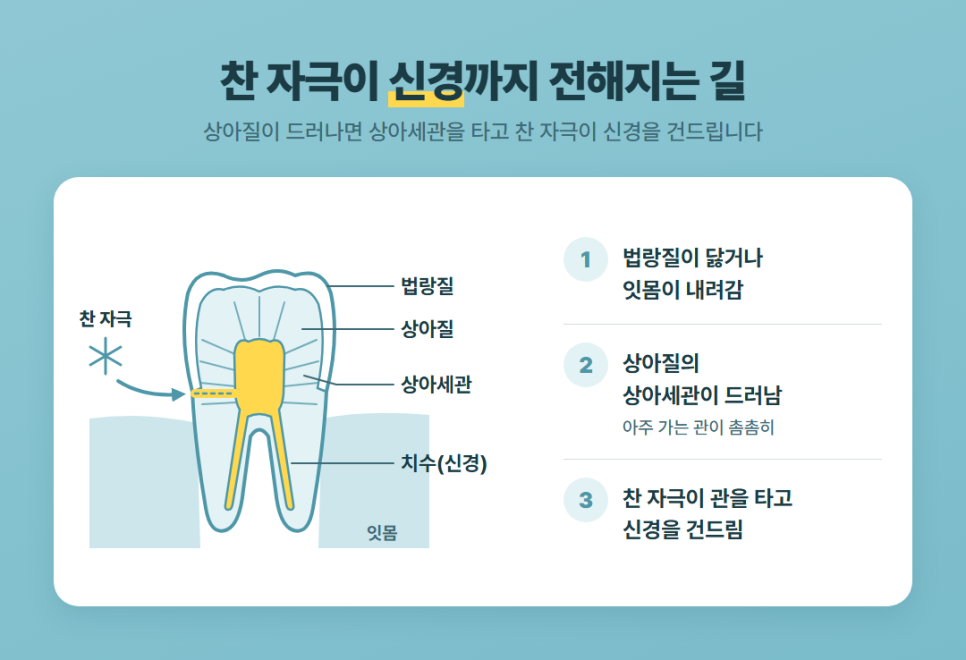
    Once dentin becomes exposed, cold stimuli travel straight through to the nerve.

    Dentin hypersensitivity is a condition in which external stimuli, carried through the dentinal tubules, excite the pulp nerve and trigger pain.
    When enamel that once covered the dentin wears away or the gumline recedes, cold reaches the nerve almost instantly through those thin dentinal tubules.

    A tooth is made up of enamel, dentin, cementum, and pulp. When dentin is exposed, it reacts sensitively to outside stimuli, producing sensitivity symptoms.

    That’s how the Korea Disease Control and Prevention Agency’s National Health Information Portal describes ‘tooth sensitivity (dentin hypersensitivity)’ in its entry on the topic.

    The most widely accepted explanation is the hydrodynamic theory, proposed by Brännström in 1964.
    Fluid inside the dentinal tubules shifts rapidly in response to temperature and pressure changes, and that movement is what irritates the nerve.
    tooth sensitivity root canal illustration 2

    One of the most common causes of tooth sensitivity is cervical abrasion.
    The cervical area, where the tooth meets the gum, has the thinnest enamel, so it’s usually the first spot to wear down from chewing force or teeth grinding.

    Brushing side-to-side with heavy pressure is another common habit that speeds up this wear.
    Cavities, cracked teeth, worn-out fillings, gum disease, and temporary sensitivity right after teeth whitening can all be contributing causes as well.
    tooth sensitivity root canal illustration 3


    How Do I Tell Tooth Sensitivity Apart From a Toothache?

    One of the most important factors is how long pain lingers after the stimulus is gone.
    If the sting is brief and fades quickly, the nerve is often still healthy.

    If pain lasts for several minutes, or if heat makes it worse, you should suspect a nerve-related problem.

    Pain Pattern Likely Condition
    Fades within 1-2 seconds after the stimulus is removed Dentin exposure, reversible pulpitis
    Lasts several minutes even after the stimulus is removed Irreversible pulpitis
    Throbs even at rest, worse at night Irreversible pulpitis
    Sharp, irregular pain when chewing Cracked tooth
    Tooth feels “raised,” gum swelling or pus Apical (root-tip) abscess

    tooth sensitivity root canal illustration 4

    Caution
    This table is only a rough reference to help you guess what might be going on.
    An accurate diagnosis requires a cold test, percussion test, and X-ray at a dental clinic.

    What Treatments Come Before a Root Canal?

    If the nerve is still alive, treatment usually starts with sealing and protecting the sensitive area.

    If only dentin is exposed, a desensitizing toothpaste or an in-office fluoride or sealant application can block the dentinal tubules.
    If the cervical area has worn into a notch, dentists typically fill it with resin or GI (glass ionomer).

    If a cavity has reached the dentin, the decay is removed and the space is filled with resin or an inlay in most cases.

    Key points
    ✔ Dentin exposed → fluoride/sealant, desensitizing toothpaste
    ✔ Cervical wear or notching → resin or GI filling
    ✔ Decay reaching dentin → resin or inlay treatment
    ✔ Inflammation reaching the nerve → root canal treatment should be considered
    Typical outcome
    When the cervical notch isn’t deep, a resin filling can often resolve the pain without further treatment.
    When decay is caught early in the dentin, it can frequently be managed with an inlay or resin filling without needing a root canal.

    Tooth Sensitivity Root Canal: When Is It Actually Necessary?

    Once nerve inflammation reaches a stage where it’s unlikely to heal on its own, root canal treatment or extraction becomes necessary.
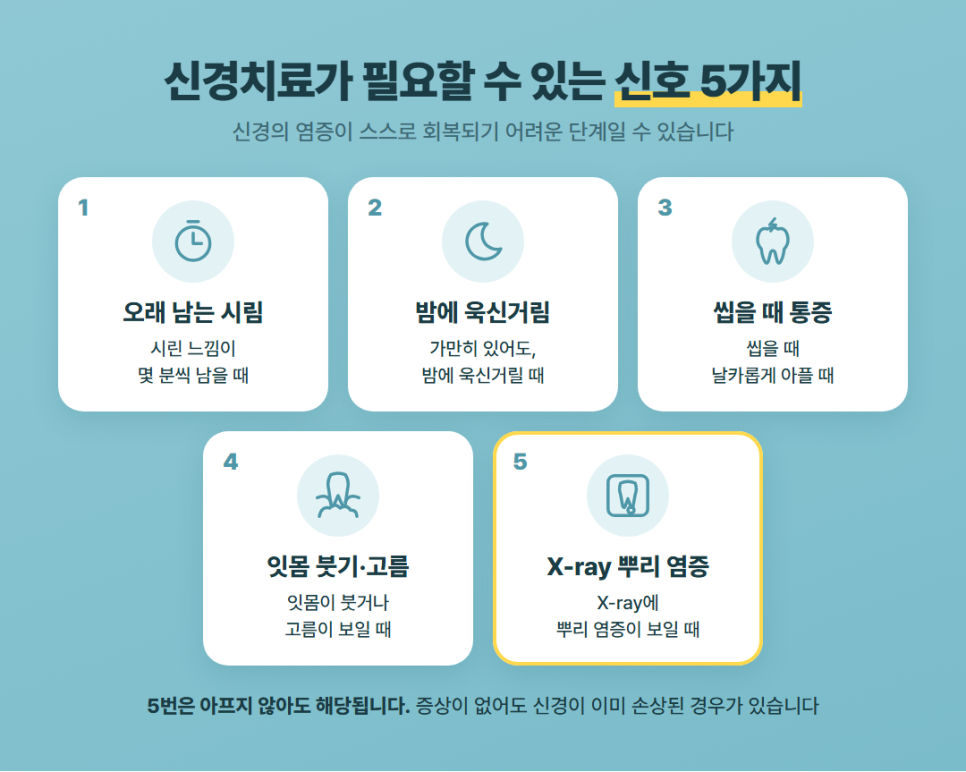
    If any of the five signs below apply to you, it’s best to get checked out soon.

    Checklist
    ✅ Sensitivity lingers for several minutes
    ✅ Throbs even at rest, worse at night
    ✅ Sharp pain when chewing
    ✅ Gum swelling or visible pus
    ✅ Root-tip inflammation shows up on an X-ray (even without pain)
    tooth sensitivity root canal illustration 5

    That fifth sign matters because it applies even without pain.
    That’s because the nerve can already be damaged with no symptoms at all.

    Root canal treatment removes the inflamed nerve tissue, disinfects the canal, and seals it, with the goal of saving your natural tooth.

    If the Pain Suddenly Stops, Does That Mean It’s Healed?

    No.
    If severe pain suddenly disappears, it may mean the nerve has died and can no longer register pain.

    The inflammation is often still active even after the pain is gone.
    Left untreated, the infection can spread to the root tip, causing gum swelling and pus, and in more advanced cases it can spread into the jawbone, which can lead to tooth loss.

    tooth sensitivity root canal illustration 6

    Caution
    Painkillers or antibiotics only ease the pain temporarily — they don’t address the underlying problem.
    The longer treatment is delayed, the more visits and more extensive treatment may be needed.

    Why Do You Need a Crown After a Root Canal?

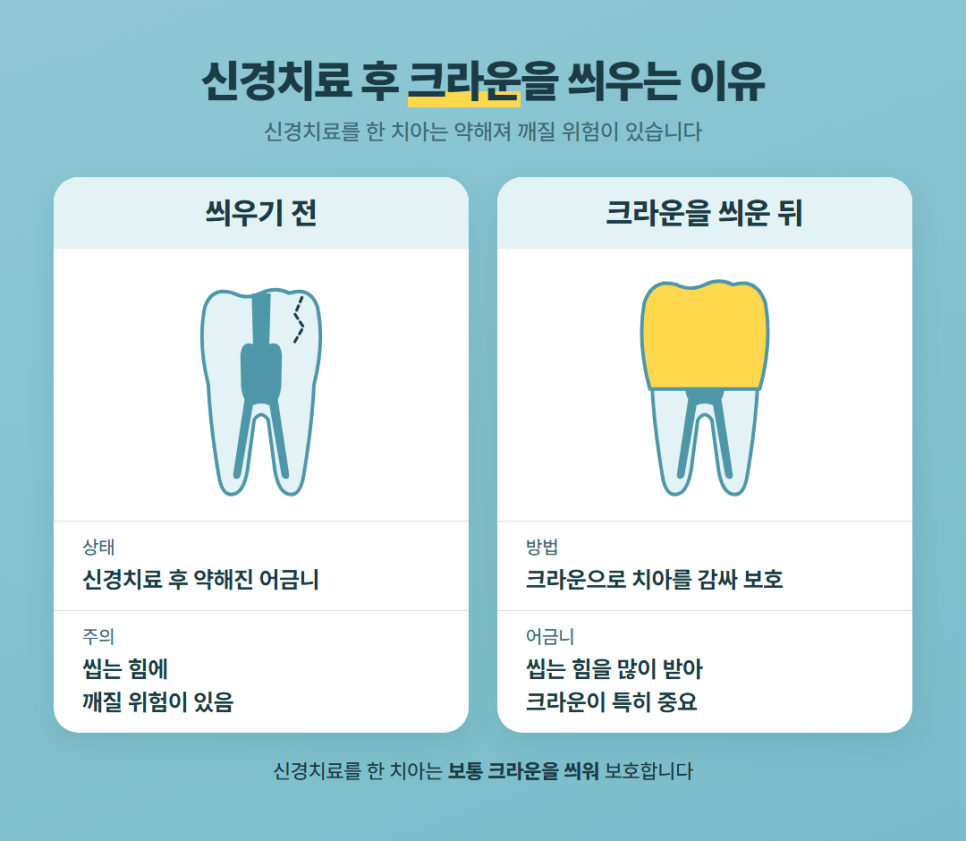
    Because a tooth becomes structurally weaker after root canal treatment, it’s usually covered with a crown for protection in most cases.

    Once the nerve and blood vessels are removed, the tooth gradually dries out, and since the procedure hollows out the center of the tooth, it becomes more prone to fracture.

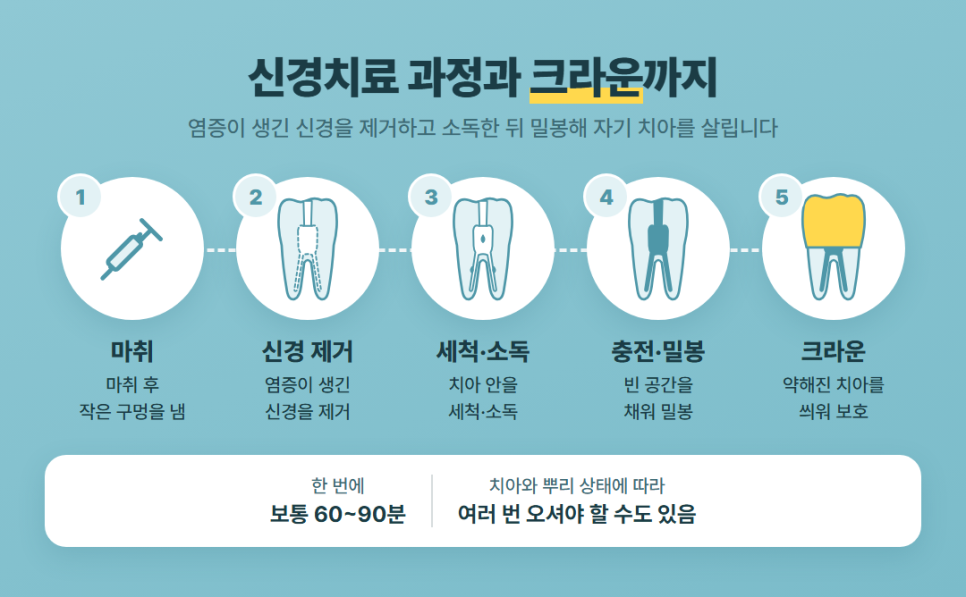
    Root canal treatment generally follows these steps:

    1. Administer anesthesia and create a small opening to access the inflamed nerve
    2. Remove the inflamed nerve tissue
    3. Clean and disinfect the inside of the tooth
    4. Fill and seal the empty space
    5. Fabricate a crown to protect the weakened tooth

    Each session usually takes about 30 to 90 minutes, and depending on the tooth and root condition, treatment may be split across multiple visits.
    The crown’s role matters even more for molars, which bear the brunt of chewing force.
    tooth sensitivity root canal illustration 7

    tooth sensitivity root canal illustration 8

    Key points
    ✔ Teeth can weaken after root canal treatment
    ✔ A crown helps prevent fracture
    ✔ Crowns matter more for molars
    ✔ Treatment typically takes 30-90 minutes per session

    Yonsei Dajeonghan Orthodontics, located in Cheongnyangni, Dongdaemun-gu, Seoul, brings together specialists in orthodontics, periodontics, and comprehensive dentistry who collaborate on care ranging from orthodontic treatment to cavities and prosthodontics.
    If you’d like to learn more about tooth sensitivity, you can review treatment information on the Yonsei Dajeonghan Orthodontics homepage in Cheongnyangni.

    When cold sensitivity strikes, start by checking how long the pain lingers after the stimulus is gone.
    Even if your symptoms are ambiguous, it’s safest to have a dentist confirm whether tooth sensitivity root canal treatment is actually needed.


    Frequently Asked Questions

    1. Is desensitizing toothpaste enough on its own?
    If only dentin is exposed, it often helps. You can also dab a small amount on your finger and apply it directly to the sensitive spot. However, if the cause is a cavity or a cracked tooth, toothpaste alone won’t resolve it.

    2. Do I need to see a dentist right away for cold sensitivity?
    Sensitivity that fades quickly isn’t an emergency, but it still needs to be checked. If painkillers can’t control the pain, you should see a dentist as soon as possible.

    3. I’m in braces and my teeth feel sensitive — is that normal?
    There are reports that orthodontic force can temporarily increase sensitivity in the tissue around the teeth, and it usually settles once tooth movement stabilizes. That said, if the sensitivity lasts a long time or the tooth aches on its own, let your orthodontist know right away rather than waiting for your next scheduled visit.

    4. Does a cervical notch always lead to a root canal?
    Not necessarily. If it’s left unmanaged and decay deepens, it can eventually require a root canal, but if caught before it progresses, a resin filling is often enough.

    5. Is a crown always necessary after a root canal?
    For teeth that bear heavy chewing force, like molars, going without a crown raises the risk of fracture, so it’s recommended in most cases.


    References

    · Korea Disease Control and Prevention Agency, “Tooth Sensitivity (Dentin Hypersensitivity),” National Health Information Portal. Link
    · Seoul National University Hospital, “Reversible Pulpitis,” SNUH Health Information. Link
    · Wikipedia, “Dentin Hypersensitivity” (Brännström’s hydrodynamic theory, 1964). Link


    This article is intended for general health information purposes only and is not a substitute for individual diagnosis or treatment. If you have symptoms, please consult a dental professional.

  • Early Orthodontic Treatment Timing: 3 Reasons to See a Board-Certified Orthodontist

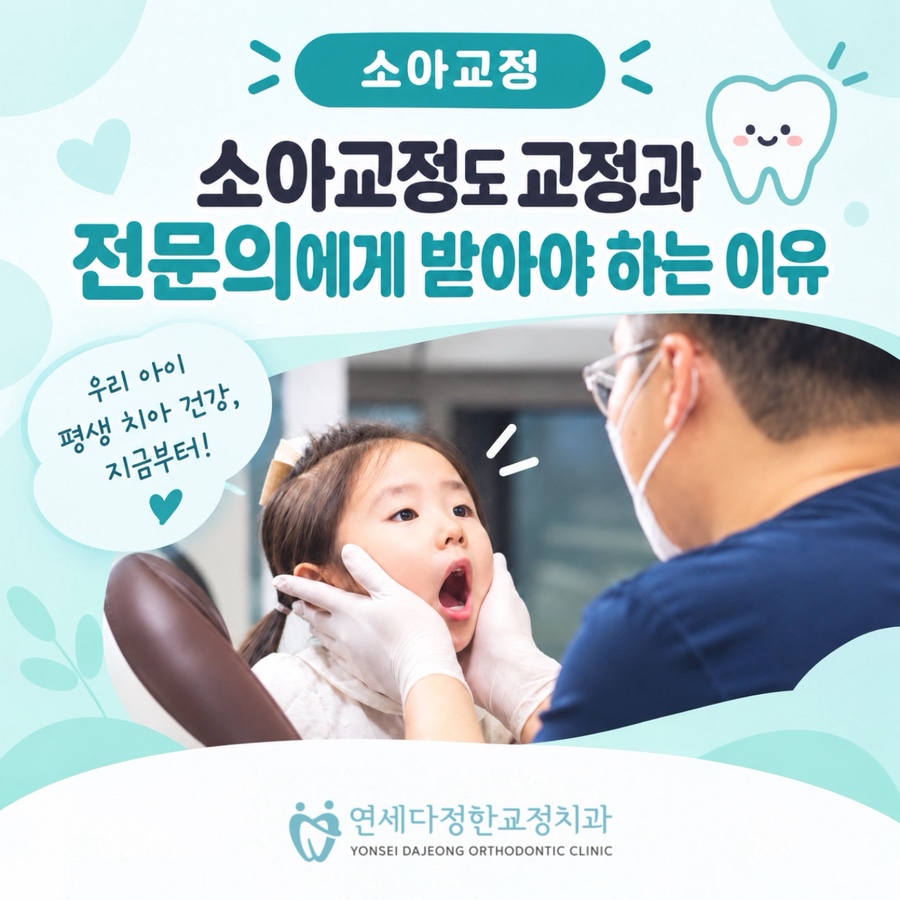
    Early Orthodontic Treatment Timing: 3 Reasons to See a Board-Certified Orthodontist

    SummaryMissing the ideal early orthodontic treatment timing can mean losing the golden window for correcting jaw growth without surgery. Here’s what to know about growth-stage development and why care should come from a board-certified orthodontist.

    Has your child mentioned jaw discomfort while eating, yet you keep putting off that dental appointment?

    Meanwhile, your child’s jawbone is growing right now, in this very moment.
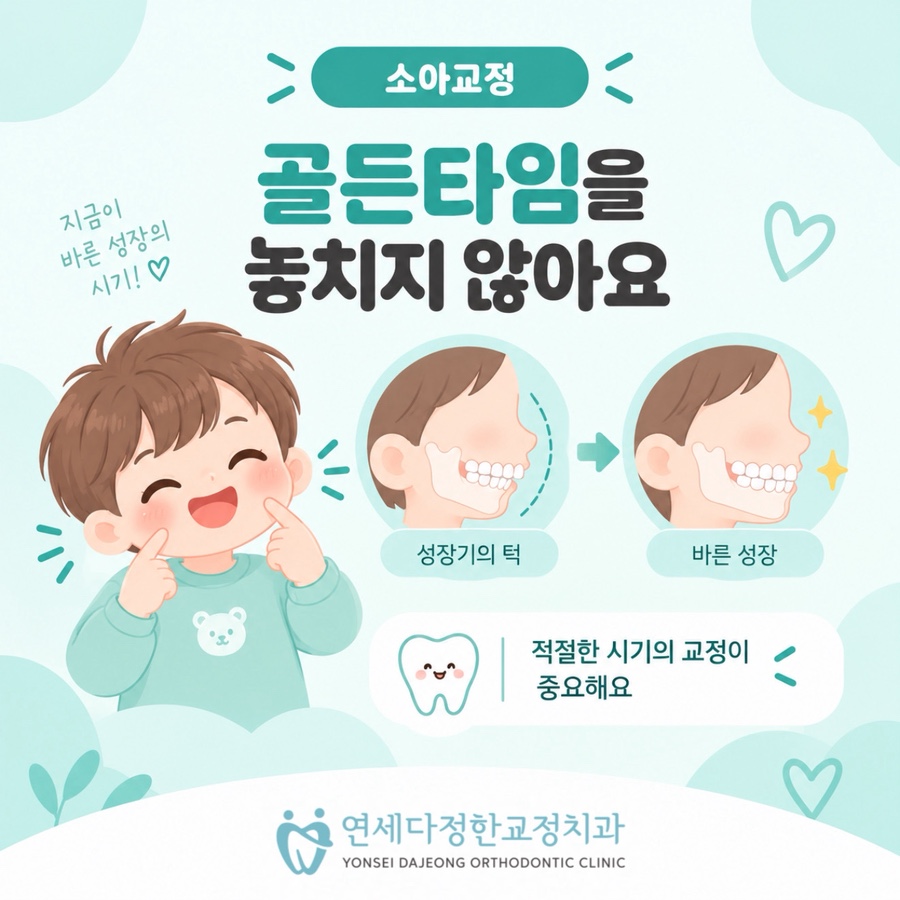
    During the growth years, there’s a golden window when skeletal issues can often be corrected without surgery.

    To avoid missing this window,
    you first need to understand the criteria for judging the right early orthodontic treatment timing.

    This article outlines the growth-stage checkpoints for catching the right early orthodontic treatment timing, along with the medical reasons treatment should be provided by a board-certified orthodontist.
    We’ll walk through everything from the principles of jaw growth to the guidelines for safely caring for orthodontic appliances.

    early orthodontic treatment timing

    early orthodontic treatment timing illustration 2

    When Is the Right Time for Early Orthodontic Treatment?

    To answer directly: the ideal time for a first checkup is around age 6 to 7, when permanent teeth begin coming in.

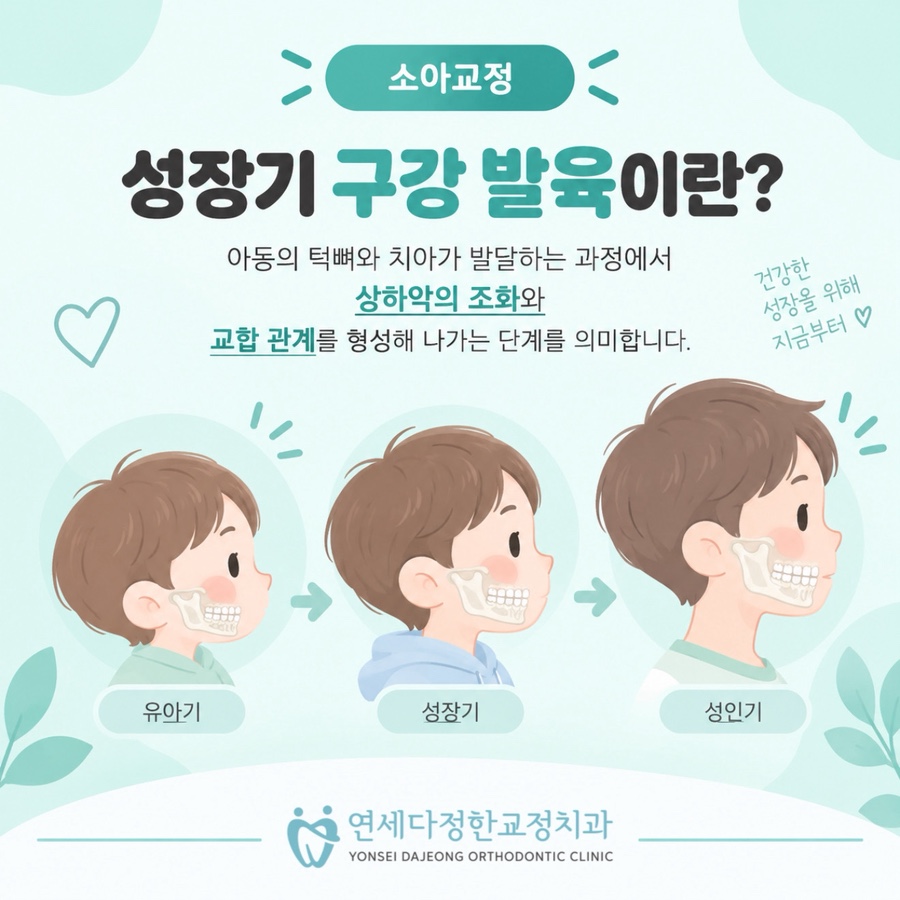
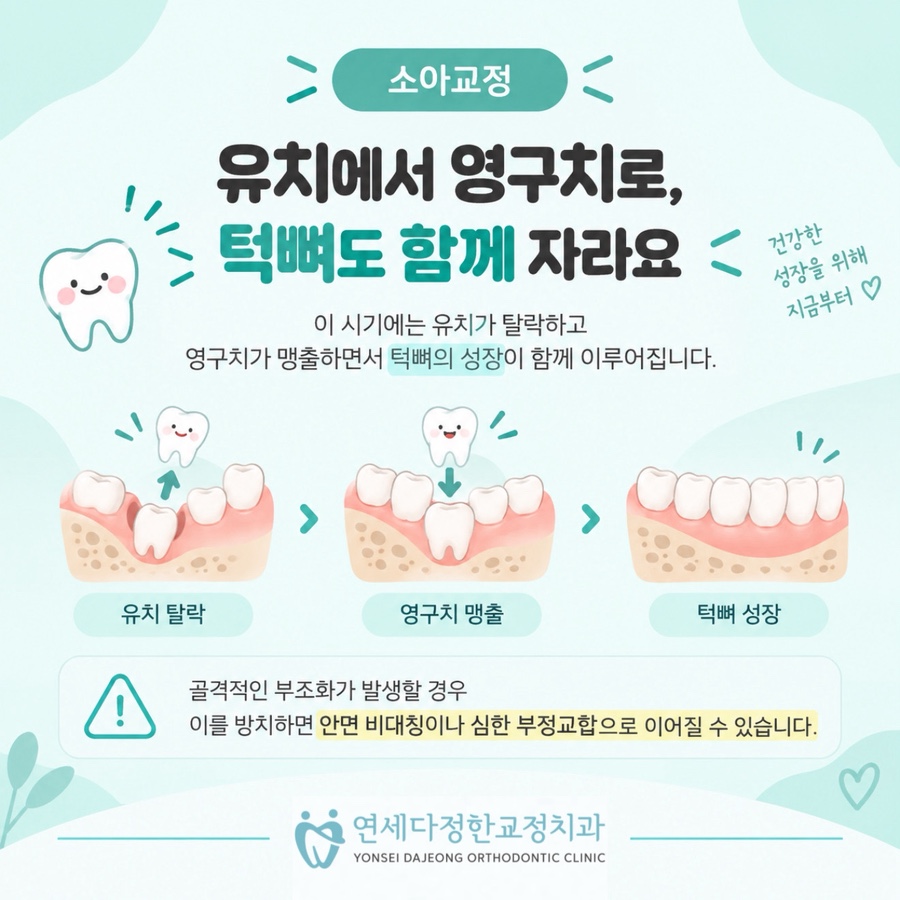
    Growth-stage oral development refers to the process in which baby teeth fall out and permanent teeth emerge, while the upper and lower jawbones grow together.

    If skeletal imbalances go unaddressed during this stage, they can lead to facial asymmetry or severe malocclusion.

    That’s why careful, early observation to catch warning signs is so important.

    early orthodontic treatment timing illustration 3

    early orthodontic treatment timing illustration 4

    early orthodontic treatment timing illustration 5

    Key Point
    Because a child’s jaw growth can sometimes be guided to correct skeletal imbalances without surgery, it’s important not to miss the right early orthodontic treatment timing — the golden window.
    Genetic factors and habits like thumb-sucking or mouth breathing are also major contributors that can interfere with normal growth.

    early orthodontic treatment timing illustration 6

    early orthodontic treatment timing illustration 7

    early orthodontic treatment timing illustration 8


    How Does Early Orthodontic Treatment Manage Jaw and Teeth Growth?

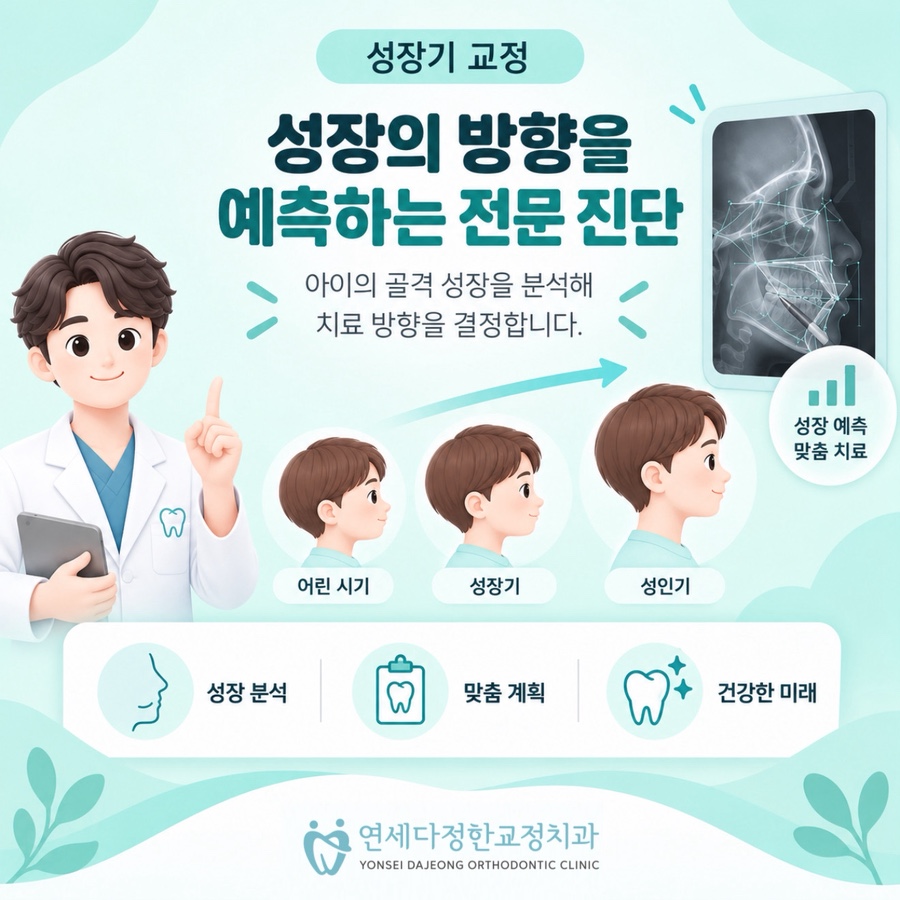
    Early orthodontic treatment is less about moving teeth with appliances and more like orthopedic treatment that guides the direction of jaw growth.

    Early (pediatric) orthodontic treatment refers to guiding or restraining jaw growth during the growth years to balance the upper and lower jaws while also correcting related muscle function.

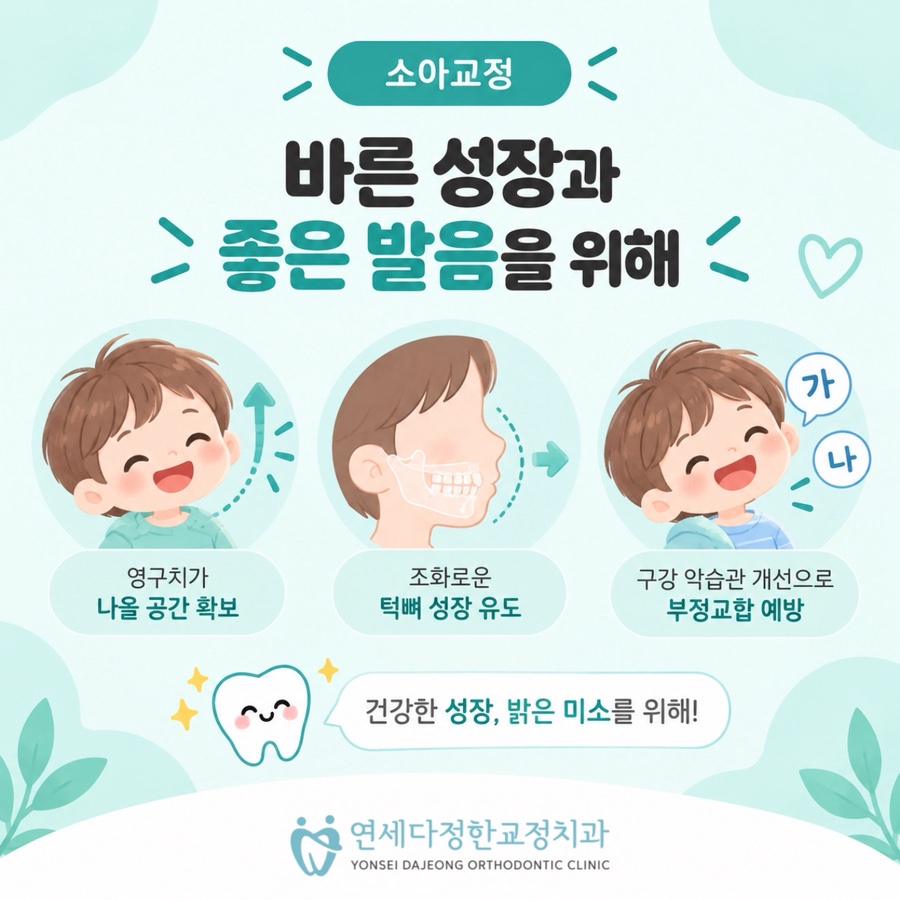
    Here’s what this approach can help achieve:

    1. Creating space for permanent teeth to erupt correctly
    2. Guiding harmonious growth of the upper and lower jawbones
    3. Helping prevent malocclusion by correcting oral habits

    early orthodontic treatment timing illustration 9

    Category Growth-Stage (Pediatric) Orthodontics Adult Orthodontics
    Treatment Goal Guiding/restraining jaw growth Focused on aligning teeth
    Main Methods Orthopedic appliances, growth-guidance appliances Brackets, clear aligners, etc.
    Possible Benefit May reduce the likelihood of extraction or surgery Proceeds based on an already-formed skeletal structure

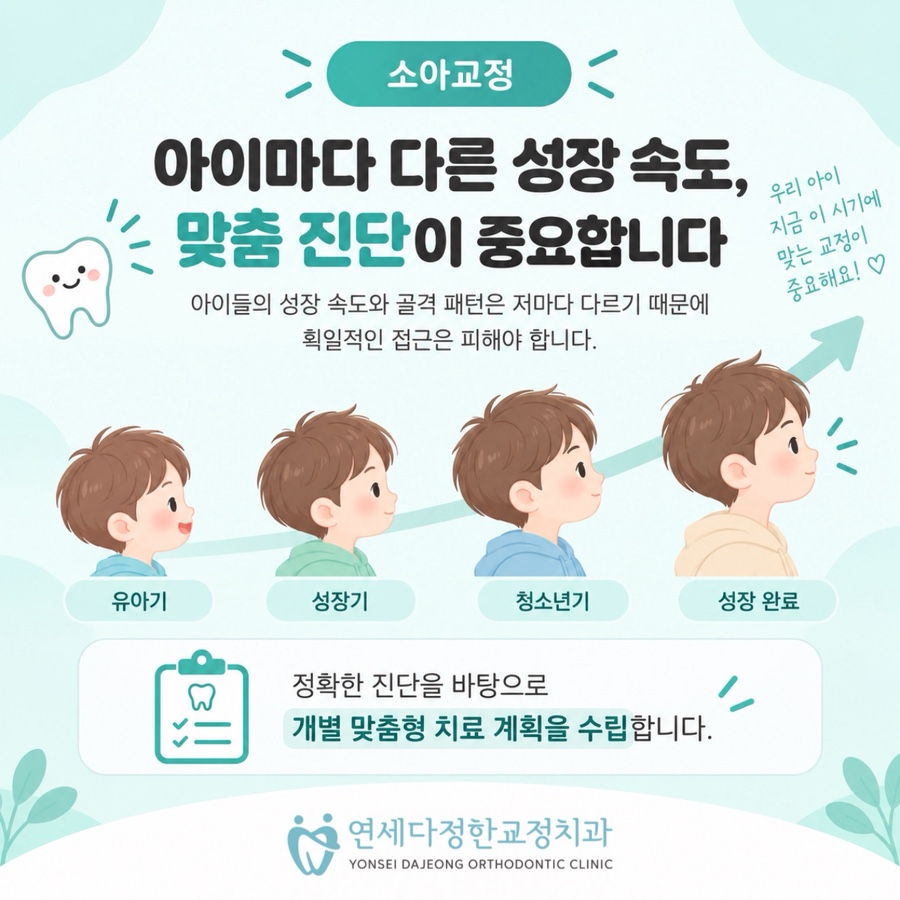
    Because every child’s growth rate and skeletal pattern differs,
    a one-size-fits-all approach should be avoided.

    Building an individualized treatment plan based on an accurate diagnosis is what matters most.

    early orthodontic treatment timing illustration 10

    early orthodontic treatment timing illustration 11


    Why Should Early Orthodontic Treatment Be Done by a Board-Certified Orthodontist?

    A board-certified orthodontist is a dentist who completed one year of internship and three years of residency training exclusively in orthodontics at an institution recognized by Korea’s Ministry of Health and Welfare, and who has passed the national specialist licensing exam.

    Growth-stage orthodontic care is a complex discipline that must consider not only a child’s current tooth alignment but also how the facial bones will develop into adulthood.

    That’s why it demands the ability to anticipate skeletal growth patterns and judge long-term prognosis.

    early orthodontic treatment timing illustration 12

    early orthodontic treatment timing illustration 13

    Checklist: What to Consider When Choosing a Provider
    ✅ Confirm the provider holds a Ministry of Health and Welfare–certified orthodontic specialist qualification
    ✅ Look for experience across a range of growth-stage cases and a precise diagnostic system
    ✅ Confirm they offer systematic, long-term prognosis management

    You can also verify specialist credentials on the Korean Association of Orthodontists (KAO) website.

    This expertise may help reduce variables that can arise during treatment and support overall safety.
    If you’re considering early orthodontic treatment in the Cheongnyangni area, visit the Cheongnyangni Yonsei Dajeonghan Orthodontics homepage to check whether care is provided by a board-certified orthodontist.

    early orthodontic treatment timing illustration 14

    early orthodontic treatment timing illustration 15


    How Do You Safely Care for Pediatric Orthodontic Appliances?

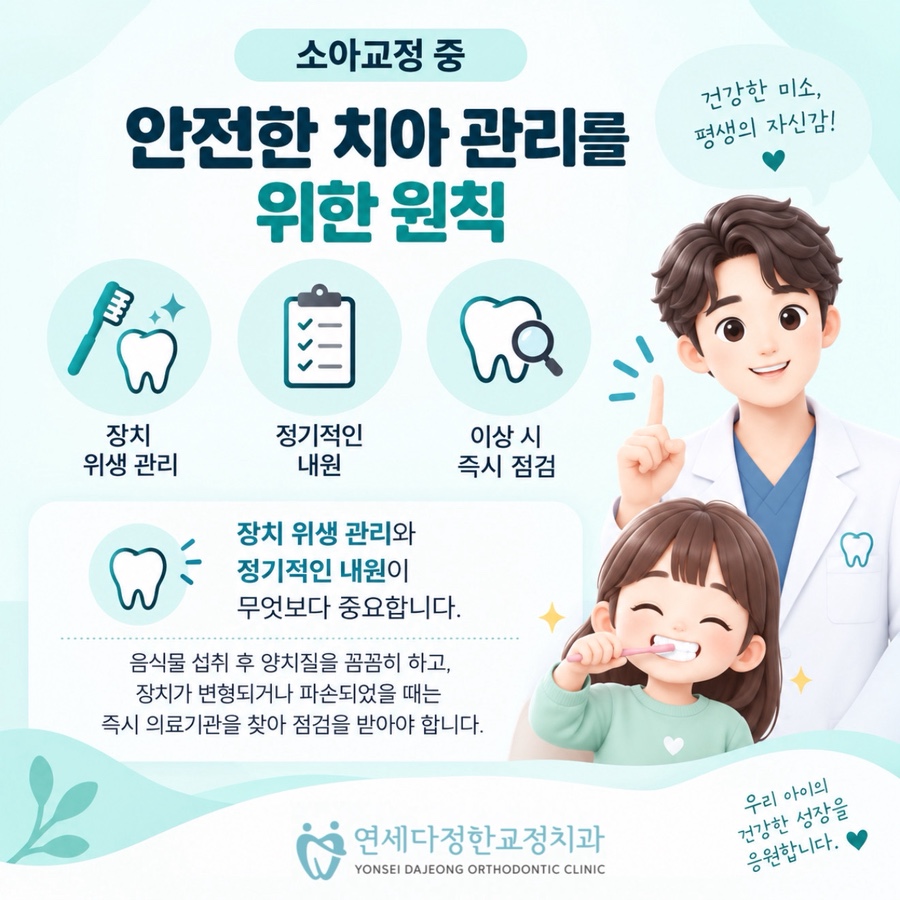
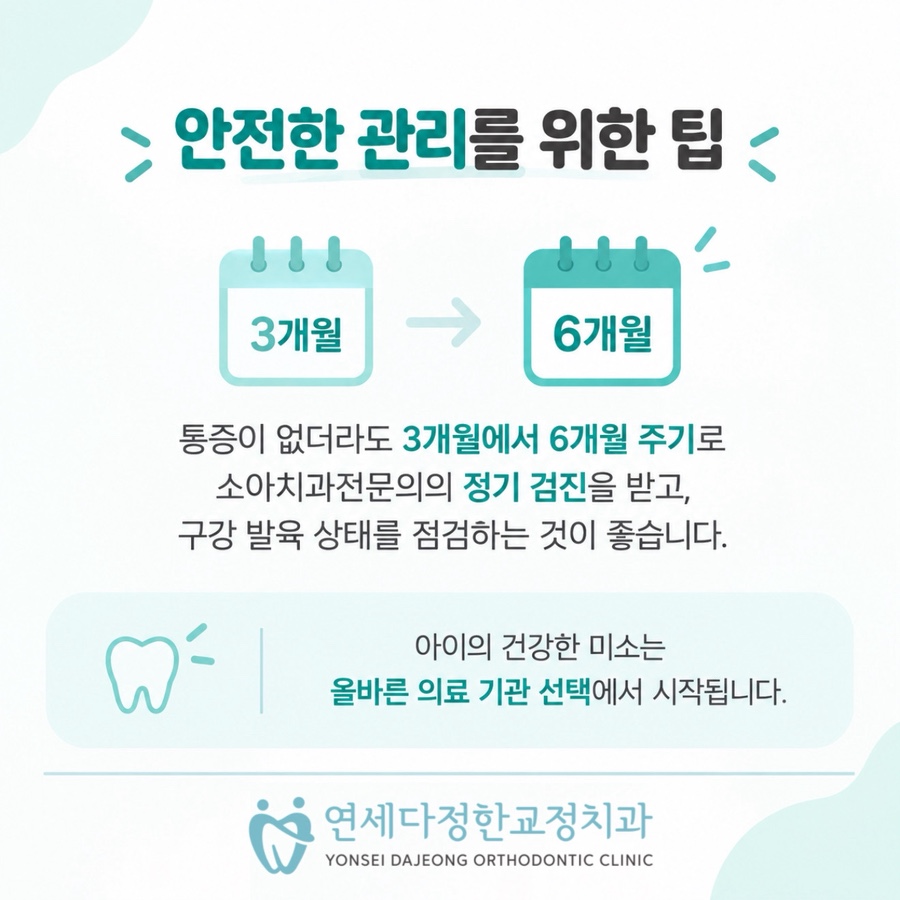
    During early orthodontic treatment, appliance hygiene and regular follow-up visits matter most.

    Neglecting to brush after meals can make cavities and gum disease more likely, so attentive guidance from parents or guardians is essential.
    Caution
    If an appliance becomes bent or damaged, do not try to adjust it yourself — see your dental provider right away for an inspection.

    early orthodontic treatment timing illustration 16

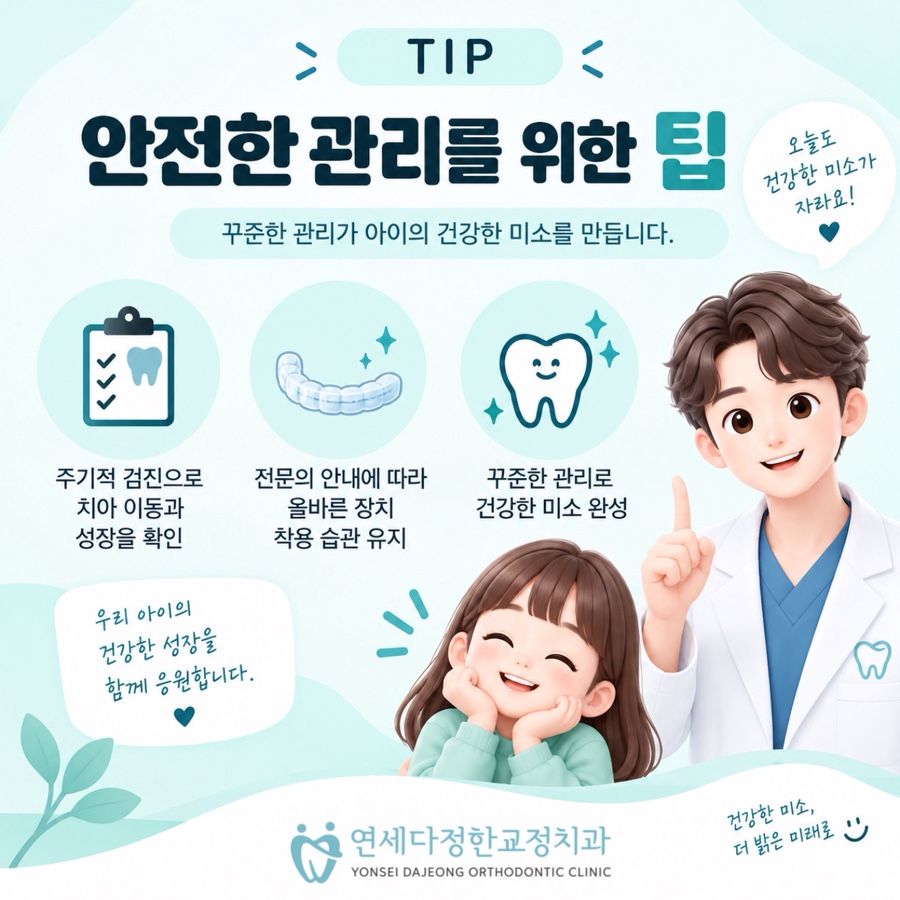
    Ongoing Care
    Regular checkups to track tooth movement and jaw growth, combined with following your orthodontist’s guidance on appliance wear, can support consistent care and systematic progress monitoring.

    early orthodontic treatment timing illustration 17


    Frequently Asked Questions

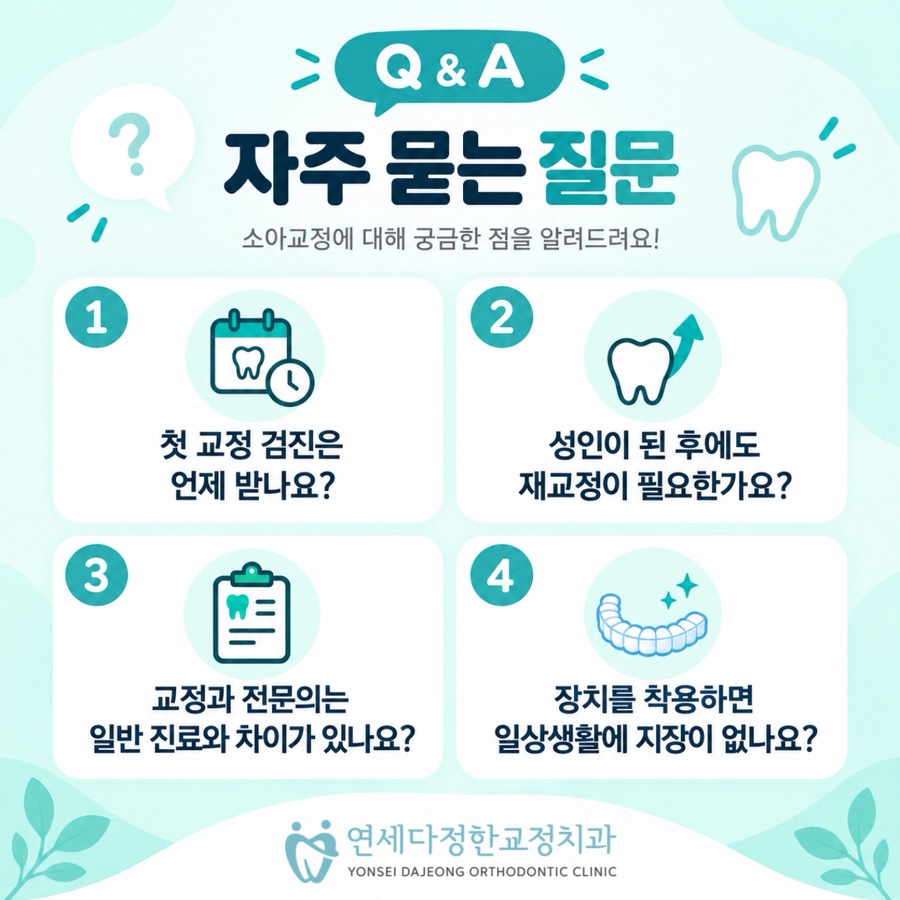
    1. When should my child have their first orthodontic checkup?
    It’s recommended to have a first checkup around age 6 to 7, when permanent teeth begin coming in, to assess skeletal development.

    2. If my child gets early orthodontic treatment, will they avoid needing treatment again as an adult?
    Correcting skeletal imbalances early, during the growth years, may help reduce the difficulty of future adult orthodontic treatment and the likelihood of extraction — though it does not guarantee that no further treatment will be needed.

    3. How is a board-certified orthodontist’s care different from general dental care?
    Board-certified orthodontists draw on specialized knowledge of jawbone tendencies and overall facial skeletal harmony, not just tooth alignment, to build a precise treatment plan.

    4. Will wearing an appliance get in the way of daily life?
    There may be some initial discomfort or a sense of foreign material in the mouth, but children often adjust within a few days and return to their normal routine.

    early orthodontic treatment timing illustration 18


    References

    · American Association of Orthodontists, “Monitoring Jaw Growth: Why the AAO Recommends an Age 7 Checkup,” AAO, 2023. View source
    · Korean Association of Orthodontists, “Find a Society Member and Board-Certified Orthodontist,” Korean Association of Orthodontists (KAO). View source

    early orthodontic treatment timing illustration 19


    This article is intended for general health information purposes only and is not a substitute for individual diagnosis or treatment.
    If your child has symptoms, please consult a specialist.
  • Pediatric Dentist in Seoul: 3 Tips to Choose the Right Clinic

    Pediatric Dentist in Seoul: 3 Tips to Choose the Right Clinic

    SummaryHere’s why care from a board-certified pediatric dentist matters when choosing a pediatric dentist in Seoul, along with selection checkpoints, baby tooth care, and permanent tooth eruption timing — all in one place. You’ll also find approaches that help ease dental anxiety in kids.

    Have you ever broken into a sweat because your child bursts into tears the moment you reach the dental office door?
    In reality, this reaction usually isn’t about your child’s personality —
    it’s often shaped by the clinic environment and approach.

    Dental fear experienced in childhood
    may carry over into adulthood.

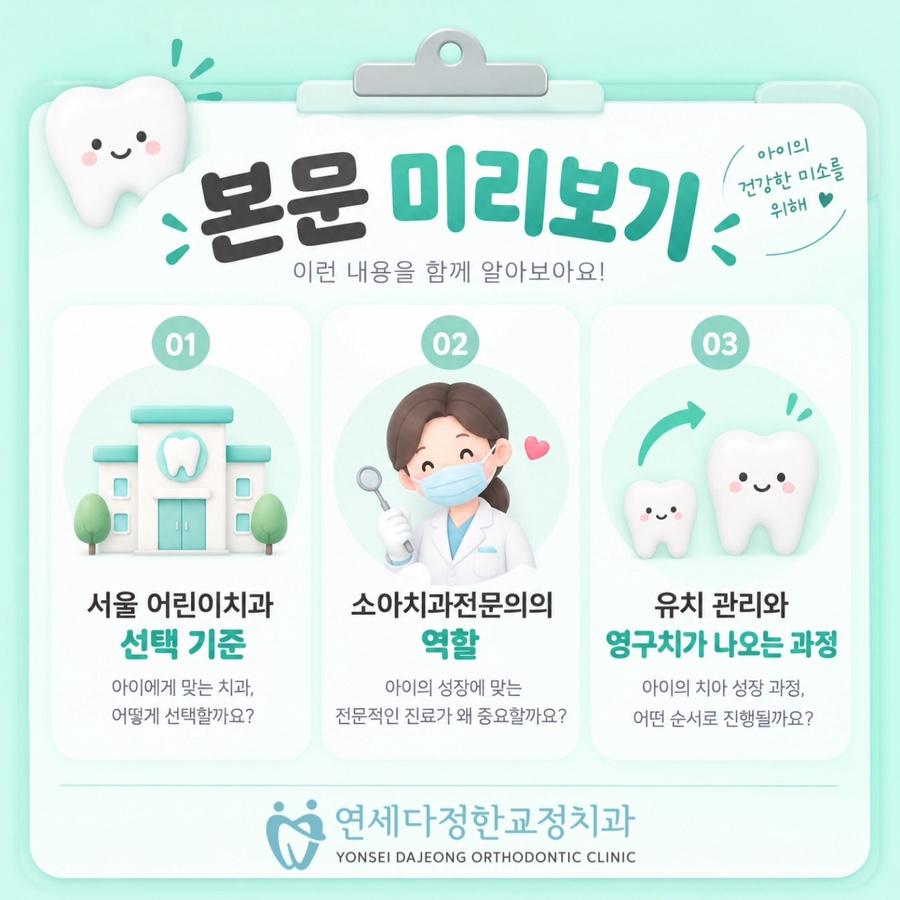
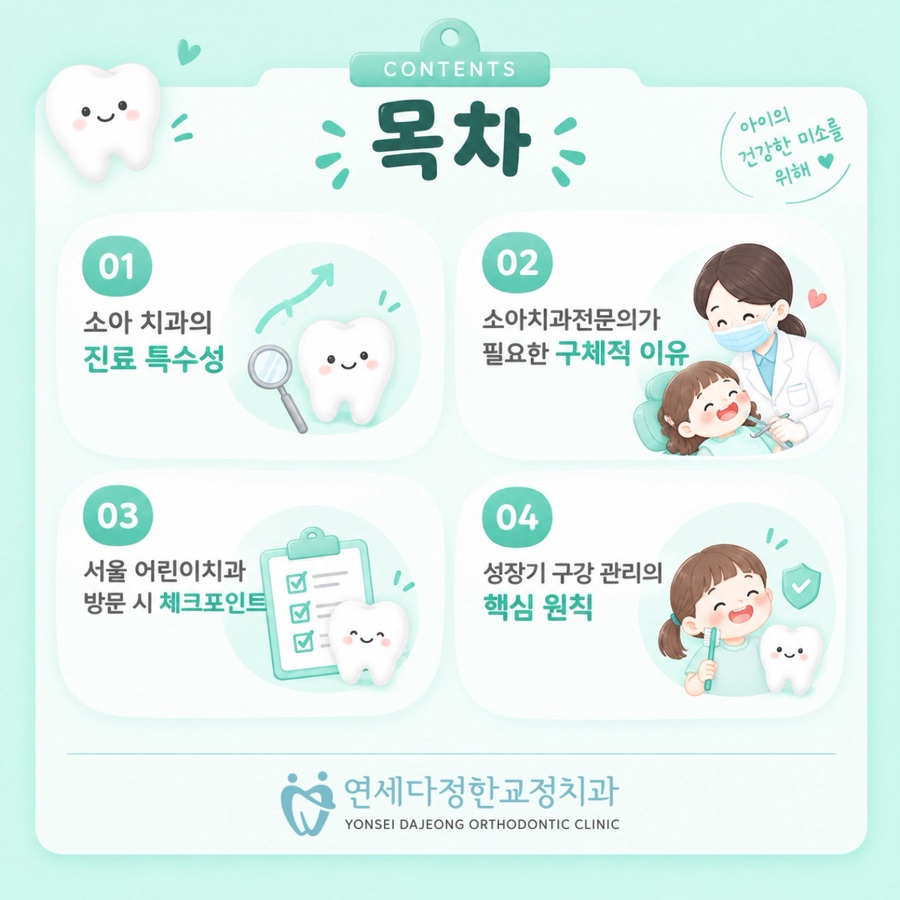
    This article explains why care from a board-certified pediatric dentist matters when choosing a pediatric dentist in Seoul,
    along with what makes pediatric care unique and key checkpoints for your decision.

    You’ll also find the core principles of managing a growing child’s oral health — from baby tooth care to making room for permanent teeth.

    pediatric dentist in Seoul

    pediatric dentist in Seoul - image 2

    pediatric dentist in Seoul - image 3

    pediatric dentist in Seoul - image 4

    pediatric dentist in Seoul - image 5

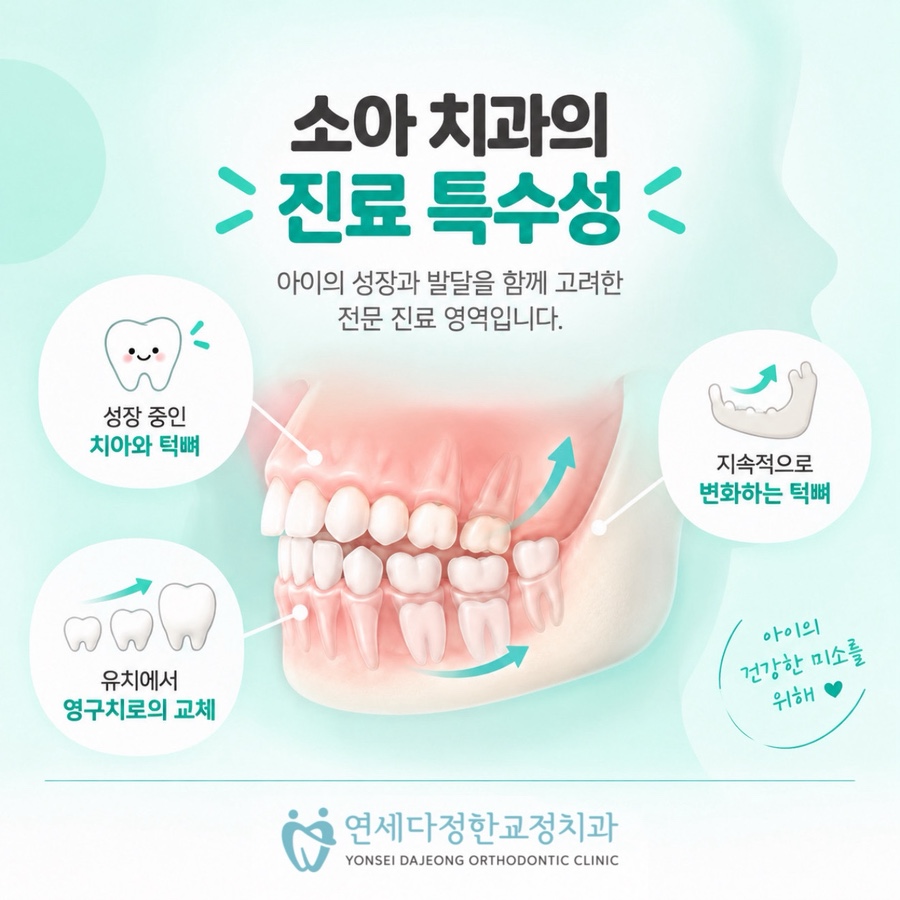
    What Makes Pediatric Dentistry Different From General Dentistry?

    In short, pediatric dentistry goes beyond treating cavities —
    it’s a specialized field that also monitors jawbone growth and tooth development.

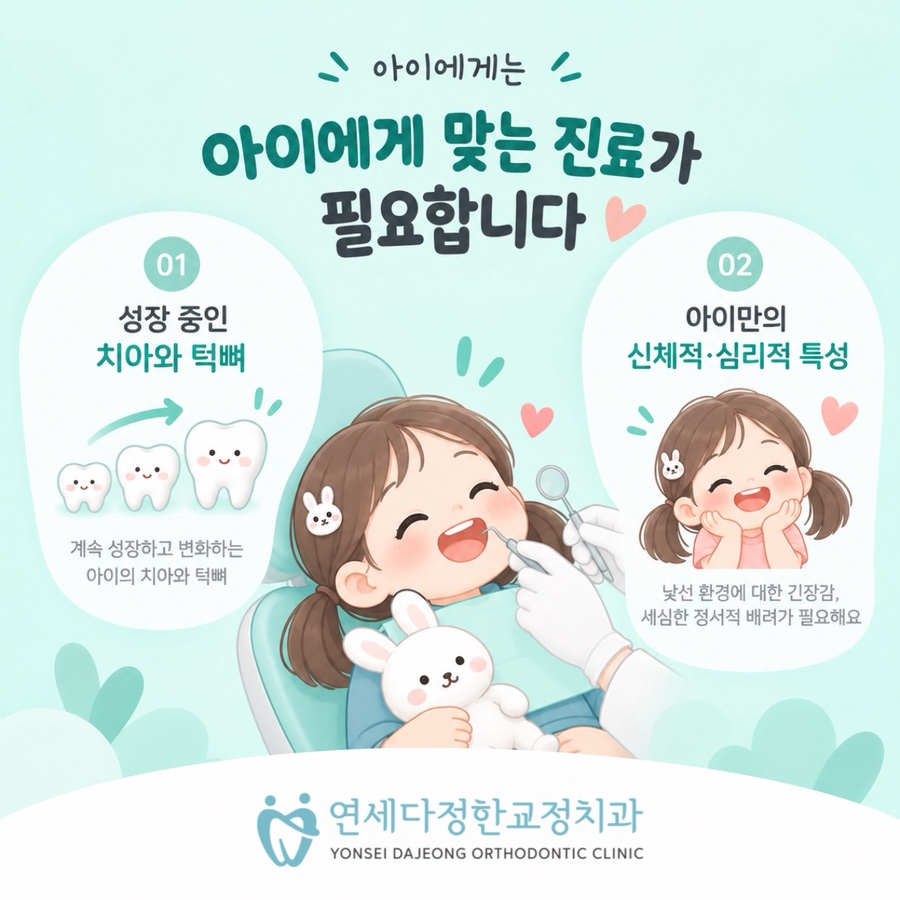
    Pediatric dentistry is the branch of dental care that comprehensively manages tooth and jawbone development at each stage of a child’s growth.

    Baby teeth have thinner enamel and nerves that sit closer to the surface than adult teeth,
    so cavities can progress very quickly once they start.

    On top of that, young children often can’t clearly describe
    where it hurts or what feels uncomfortable.

    That’s why attentive care that catches even small changes is essential.
    Key Point
    A growing child’s tooth alignment and jaw development can influence facial structure and chewing function later on, so it’s best to pair early treatment with careful, thorough diagnosis from the start.

    pediatric dentist in Seoul - image 6

    pediatric dentist in Seoul - image 7

    pediatric dentist in Seoul - image 8

    pediatric dentist in Seoul - image 9


    Why Is a Board-Certified Pediatric Dentist Essential?

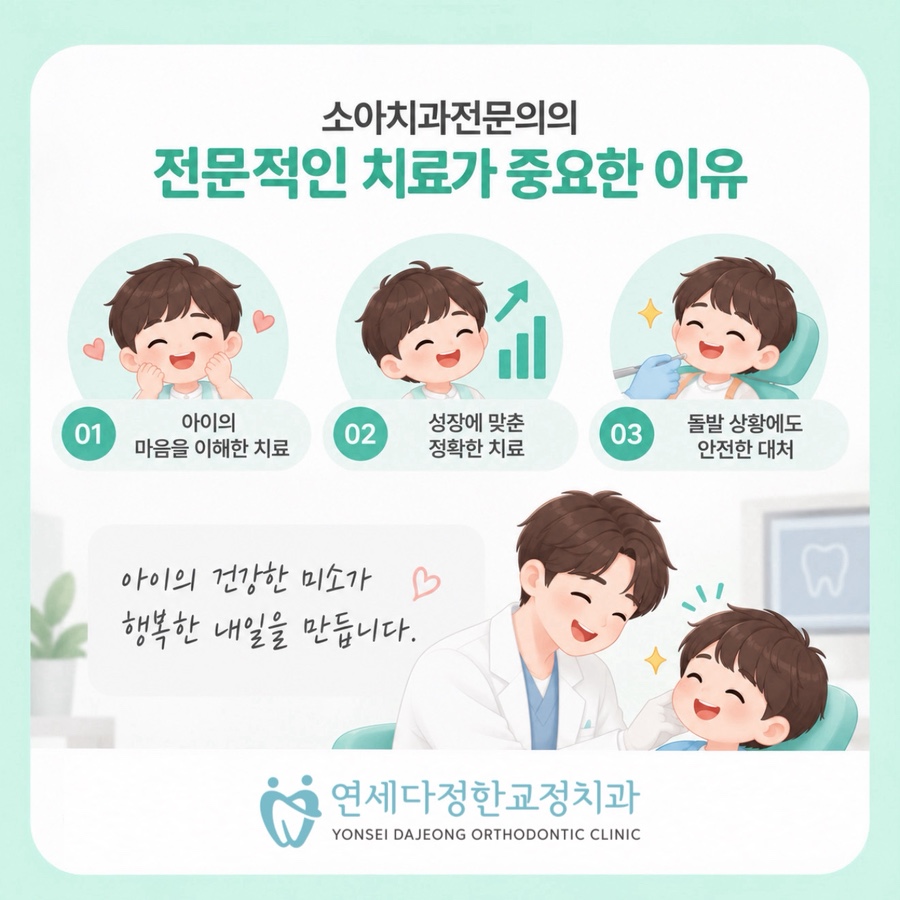
    In short, a board-certified pediatric dentist is essential because they’ve completed specialized training in children’s behavior and development.

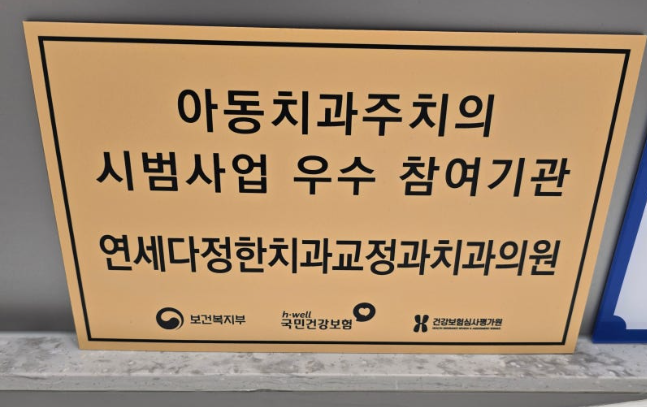
    A board-certified pediatric dentist is a dentist who has completed a specialty training program recognized by South Korea’s Ministry of Health and Welfare, with an in-depth understanding of children’s psychology and developmental characteristics.

    Unlike general dental visits, communicating at a child’s level
    can help reduce fear of the dentist.

    Pushing treatment on a child who is severely afraid
    may leave dental trauma that lasts into adulthood.

    Category General Dentist Board-Certified Pediatric Dentist
    Patient age range All ages Focused on infants through teens
    Behavior management Limited Systematic behavior-management expertise
    Growth assessment Focused on cavities Comprehensive care including jaw and bite development

    Key competencies of a board-certified pediatric dentist include:

    1. Behavior-management techniques that consider a child’s emotional state
    2. Precise preventive care tailored to age-specific skeletal growth
    3. Clinical experience handling unexpected situations during treatment

    This kind of specialized approach can help ease stress
    not only for the child, but for parents as well.

    pediatric dentist in Seoul - image 10

    pediatric dentist in Seoul - image 11

    pediatric dentist in Seoul - image 12

    pediatric dentist in Seoul - image 13


    What Should You Check When Choosing a Pediatric Dentist in Seoul?

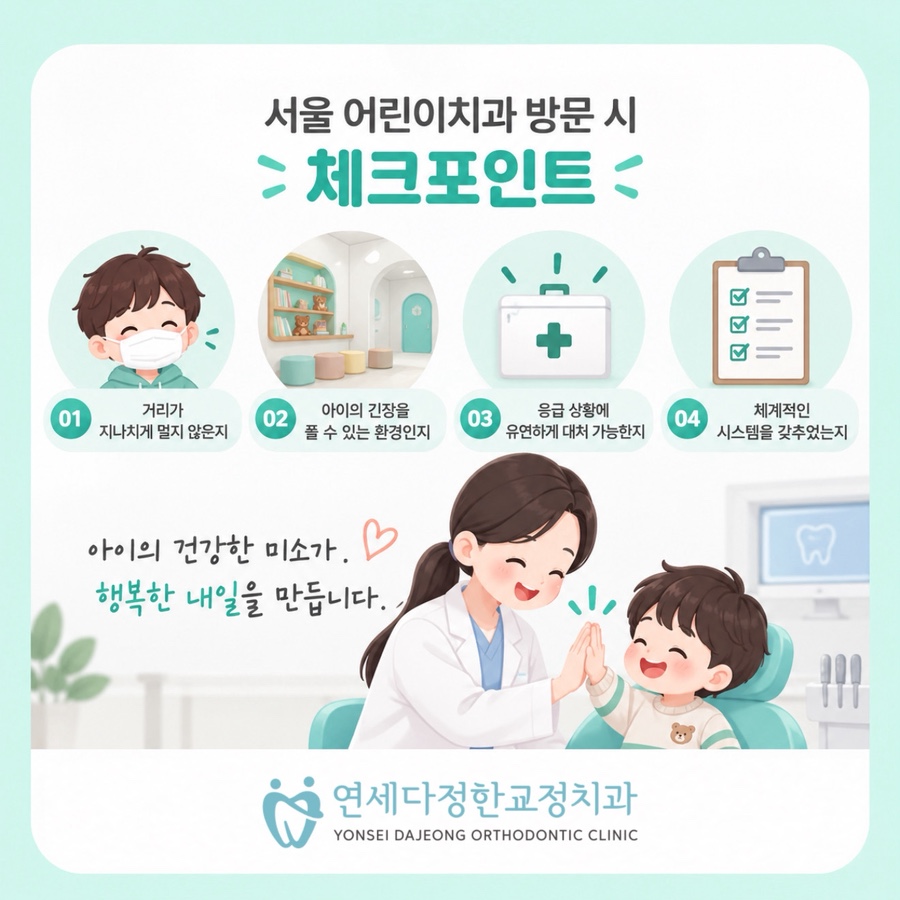
    The key is to look at the clinic’s environment and systems before considering distance.

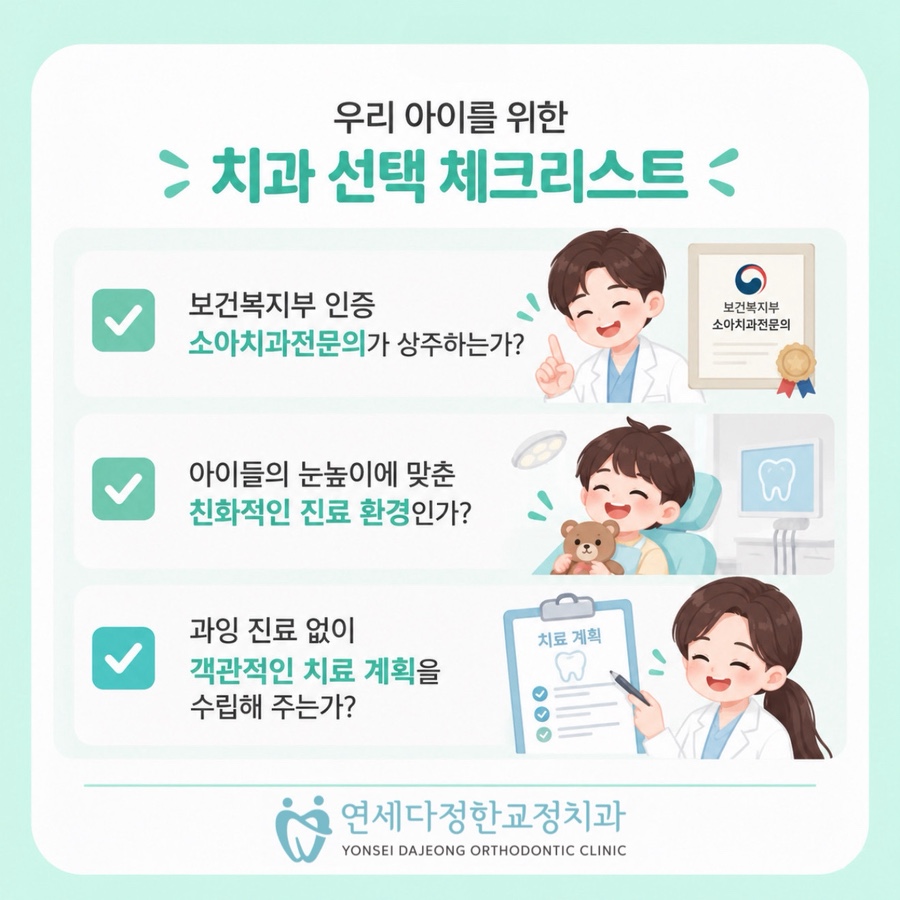
    The criteria for choosing a pediatric dentist in Seoul come down to three things: whether a board-certified specialist is on staff, a child-friendly environment, and an objective treatment plan.

    It’s worth checking whether the clinic has a welcoming interior and a dedicated waiting area to help ease a child’s nerves,
    as well as a system in place to respond flexibly to emergencies.

    Checklist
    ✅ Is a Ministry of Health and Welfare-certified pediatric dentist on staff?
    ✅ Is the treatment environment friendly and geared toward a child’s comfort?
    ✅ Does the clinic offer an objective treatment plan without overtreatment?

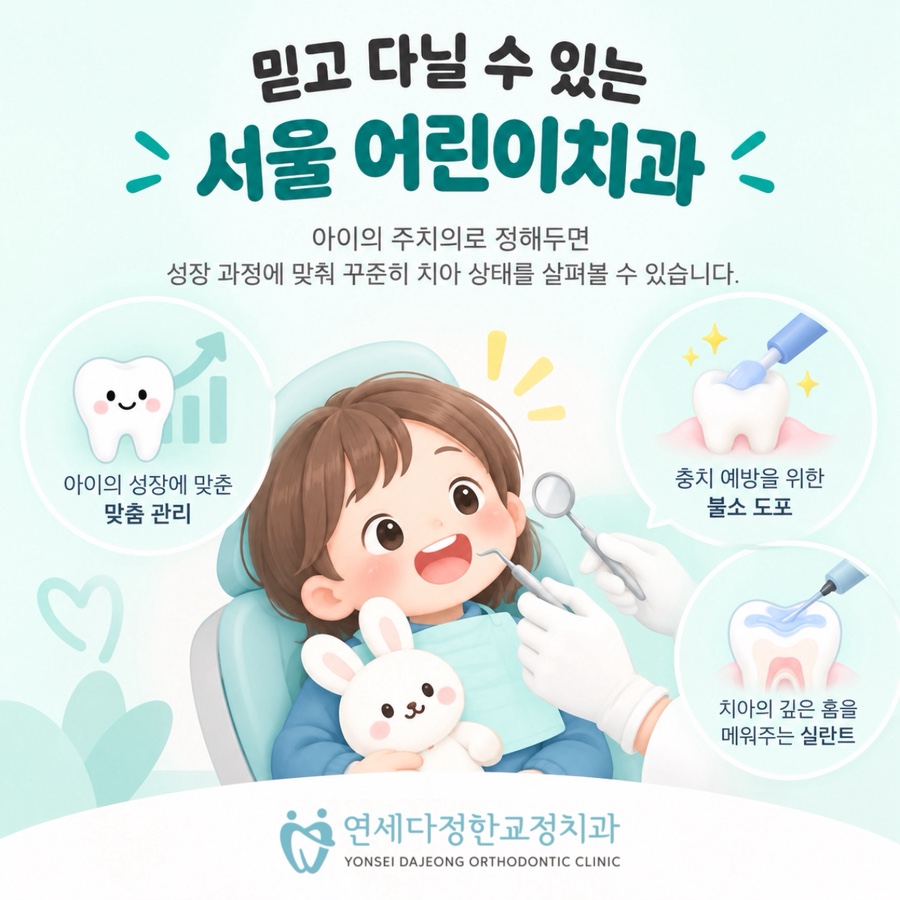
    Establishing a trusted pediatric dentist in Seoul as your child’s regular dental home
    can make it easier to track tooth development consistently as they grow.

    Preventive measures such as fluoride treatment
    and sealants to protect the grooves of the teeth
    should also be applied based on each child’s individual needs.

    What You Can Expect
    Keeping up with regular specialist visits can help with early cavity detection and preventive care that preserves space for incoming permanent teeth.

    pediatric dentist in Seoul - image 14

    pediatric dentist in Seoul - image 15

    pediatric dentist in Seoul - image 16


    How Should You Manage Oral Care for a Growing Child?

    The conclusion is simple: combine regular checkups with good brushing habits.

    Oral care during childhood growth means prevention-focused management that combines early cavity detection with healthy habit-building.

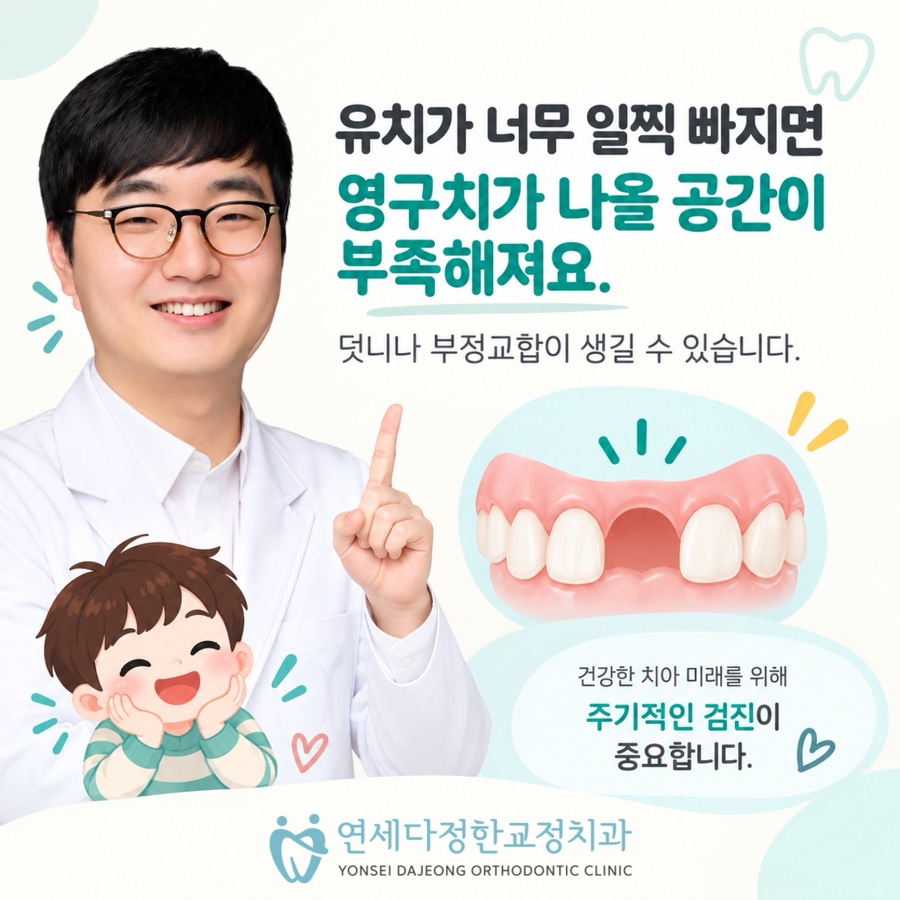
    If a baby tooth falls out too early, there may not be enough room left for the permanent tooth,
    which raises the likelihood of crowding or malocclusion.

    To help prevent this,
    it’s advisable to schedule regular checkups
    at a pediatric dentist in Seoul.

    Parents should also learn how to guide their child
    toward managing their own oral hygiene.

    Neglecting baby tooth care can end up affecting the health of permanent teeth as well,
    so careful attention matters.

    Important Note
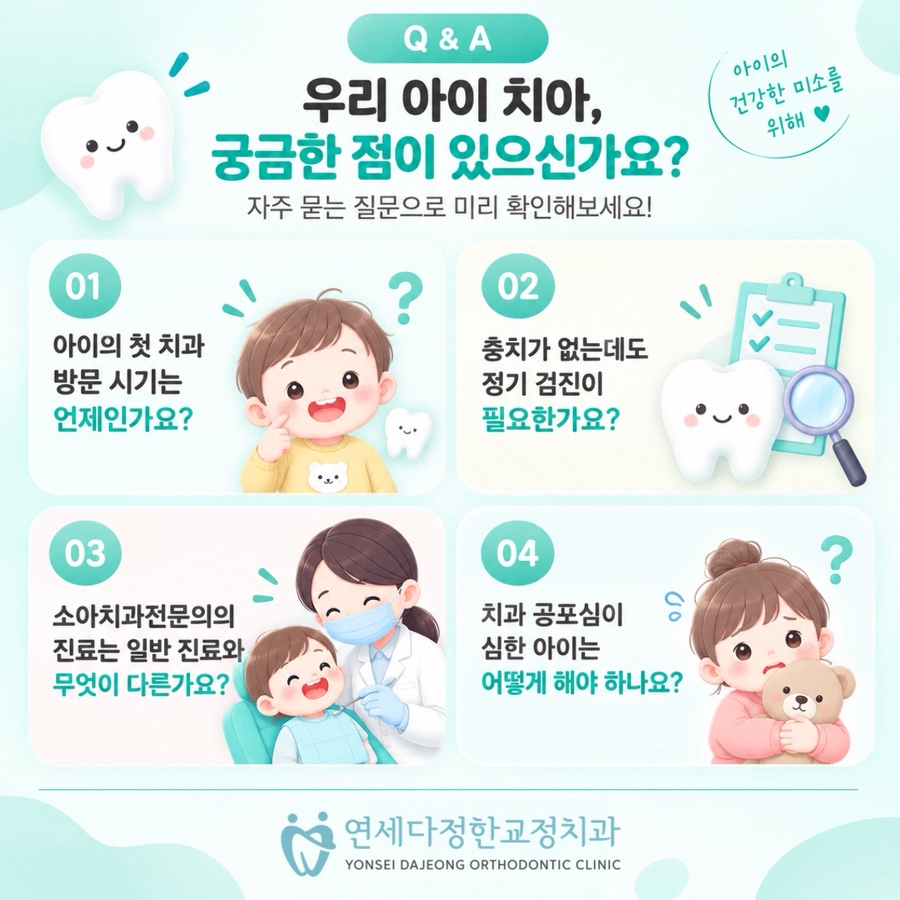
    Even without pain, it’s a good idea to see a specialist for a checkup every 3 to 6 months to monitor oral development.

    Protecting your child’s healthy smile ultimately starts
    with choosing the right dental clinic
    for their needs.

    If you’d like more information on orthodontic treatment,
    you can learn more at the Cheongnyangni Yonsei Dajeonghan Orthodontic Clinic homepage.

    pediatric dentist in Seoul - image 17

    pediatric dentist in Seoul - image 18


    Frequently Asked Questions

    1. When should my child have their first dental visit?
    It’s recommended to schedule a first checkup when the first tooth starts to erupt, or between 6 and 12 months of age.

    2. Are regular checkups necessary even without cavities?
    Yes. Regular checkups are essential for confirming that the jawbone is developing properly and that there’s enough space for permanent teeth to come in.

    3. How is specialist care different from general dental care?
    A pediatric dentist has an in-depth understanding of a child’s physical and psychological needs and works to provide gentle, safe care that helps reduce fear.

    4. What should I do if my child has severe dental anxiety?
    Rather than restraining the child, it can help to find a pediatric dentist in Seoul with a well-developed behavior-management program that gently and gradually helps them adjust to the treatment environment.

    5. Are sealants and fluoride treatment mandatory?
    They’re not required for every child, but for tooth grooves at higher risk of cavities, they’re often applied preventively after a consultation with a specialist.

    pediatric dentist in Seoul - image 19


    References

    · Korean Academy of Pediatric Dentistry, “Introduction to Pediatric Dentistry and First Visit Guide,” Korean Academy of Pediatric Dentistry. View source
    · Health Kyunghyang, “How Can Permanent Teeth Come In Properly? Baby Tooth Care Is Key,” Health Kyunghyang. View source
    · MSD Manual Consumer Version, “Malocclusion,” Merck & Co. View source

    pediatric dentist in Seoul - image 20

    This article is intended for general health information purposes only and is not a substitute for individual diagnosis or treatment.
    If you have symptoms, please consult a specialist.