Have you ever broken into a sweat because your child bursts into tears the moment you reach the dental office door?
In reality, this reaction usually isn’t about your child’s personality —
it’s often shaped by the clinic environment and approach.
Dental fear experienced in childhood
may carry over into adulthood.
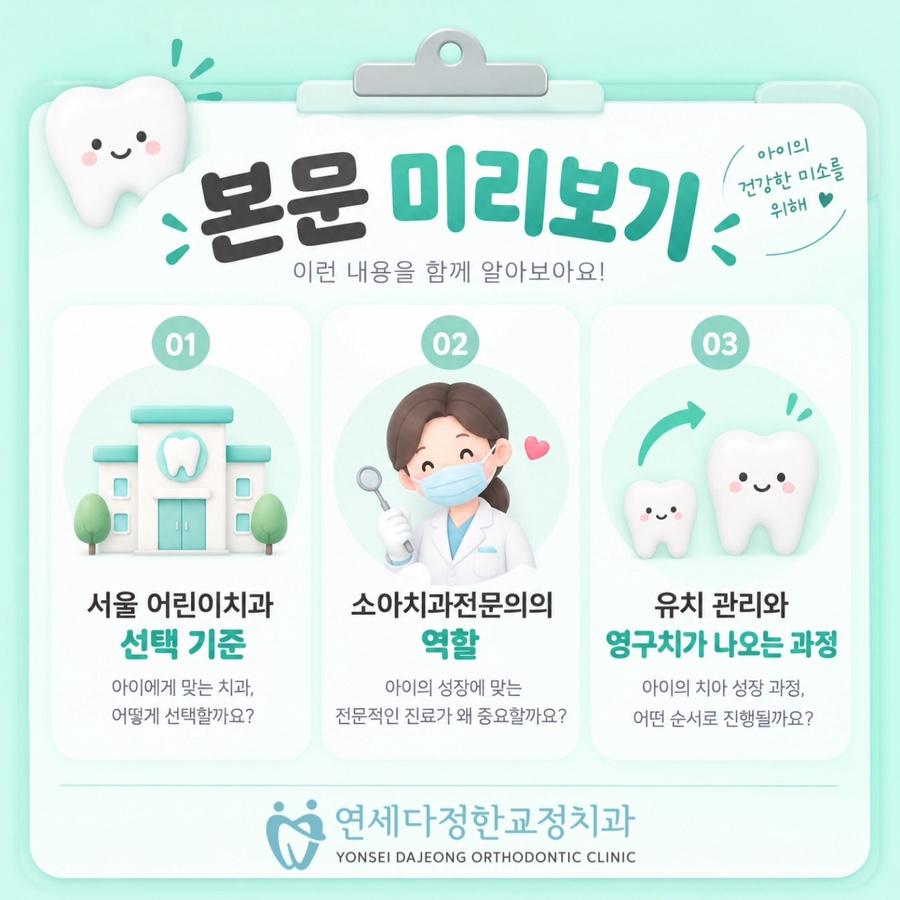
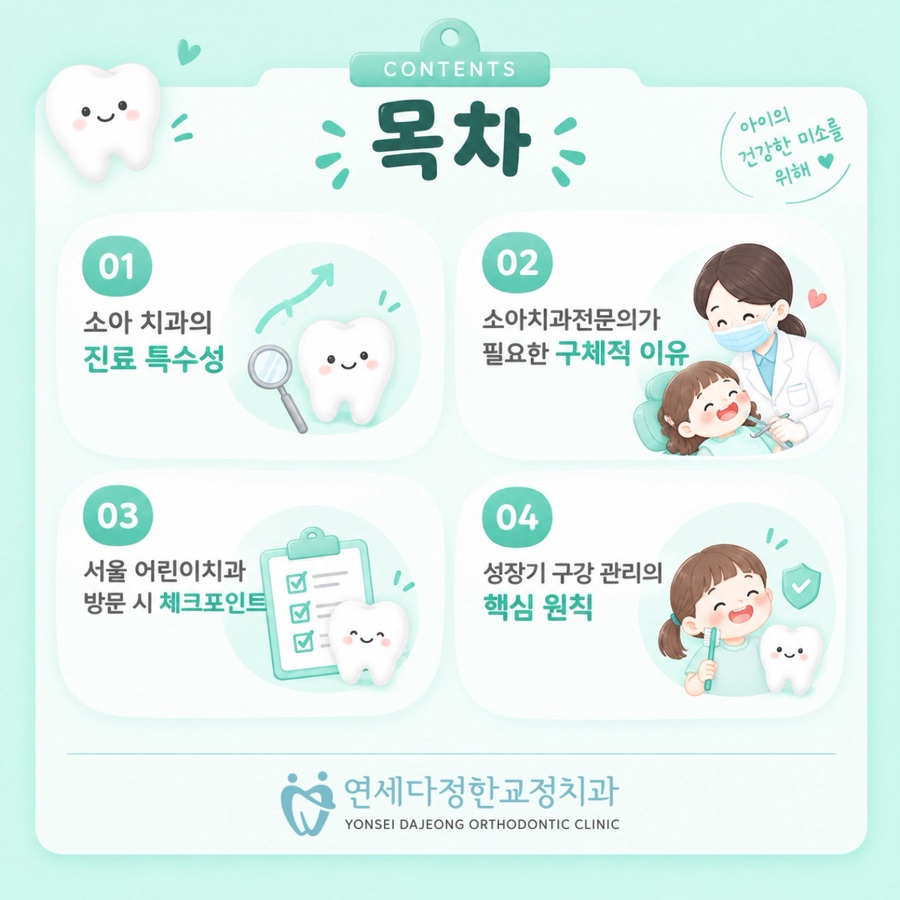
This article explains why care from a board-certified pediatric dentist matters when choosing a pediatric dentist in Seoul,
along with what makes pediatric care unique and key checkpoints for your decision.
You’ll also find the core principles of managing a growing child’s oral health — from baby tooth care to making room for permanent teeth.
What Makes Pediatric Dentistry Different From General Dentistry?
In short, pediatric dentistry goes beyond treating cavities —
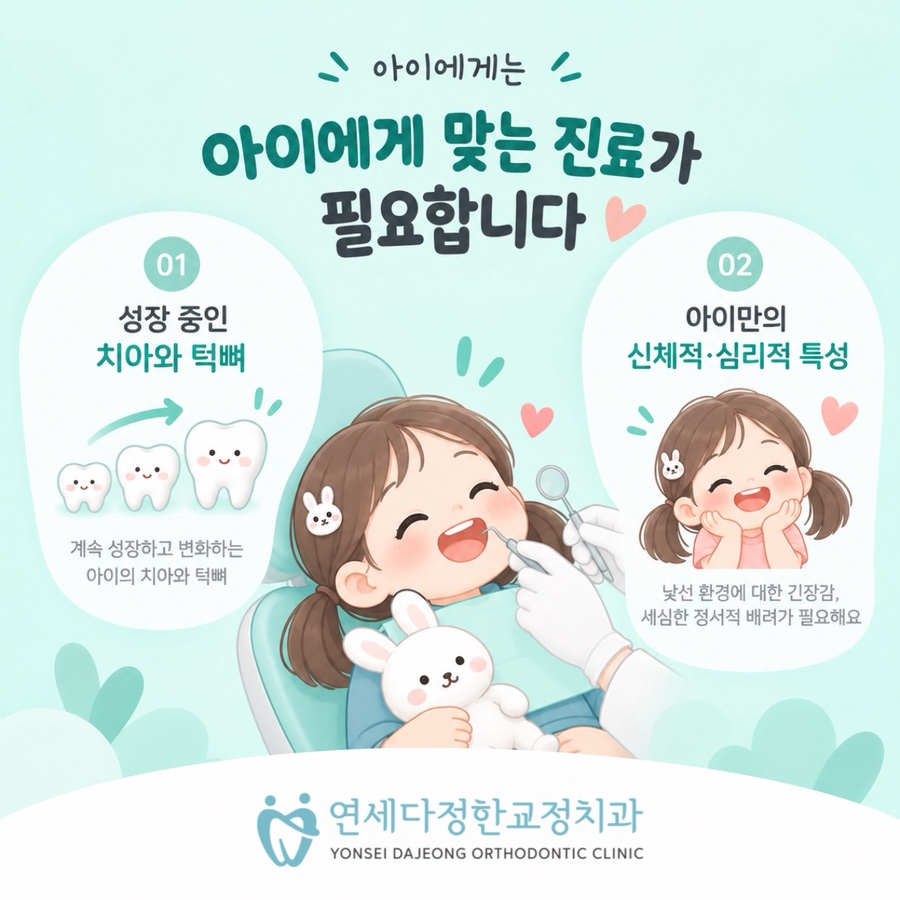
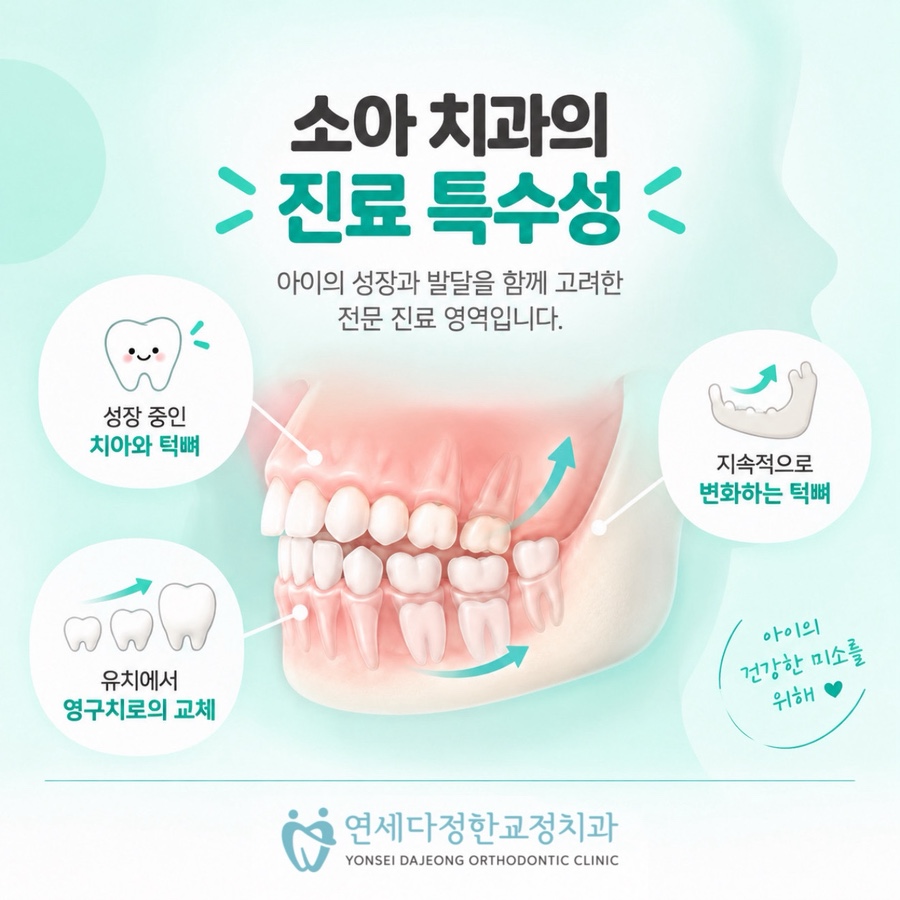
it’s a specialized field that also monitors jawbone growth and tooth development.
Pediatric dentistry is the branch of dental care that comprehensively manages tooth and jawbone development at each stage of a child’s growth.
Baby teeth have thinner enamel and nerves that sit closer to the surface than adult teeth,
so cavities can progress very quickly once they start.
On top of that, young children often can’t clearly describe
where it hurts or what feels uncomfortable.
That’s why attentive care that catches even small changes is essential.
A growing child’s tooth alignment and jaw development can influence facial structure and chewing function later on, so it’s best to pair early treatment with careful, thorough diagnosis from the start.


Why Is a Board-Certified Pediatric Dentist Essential?
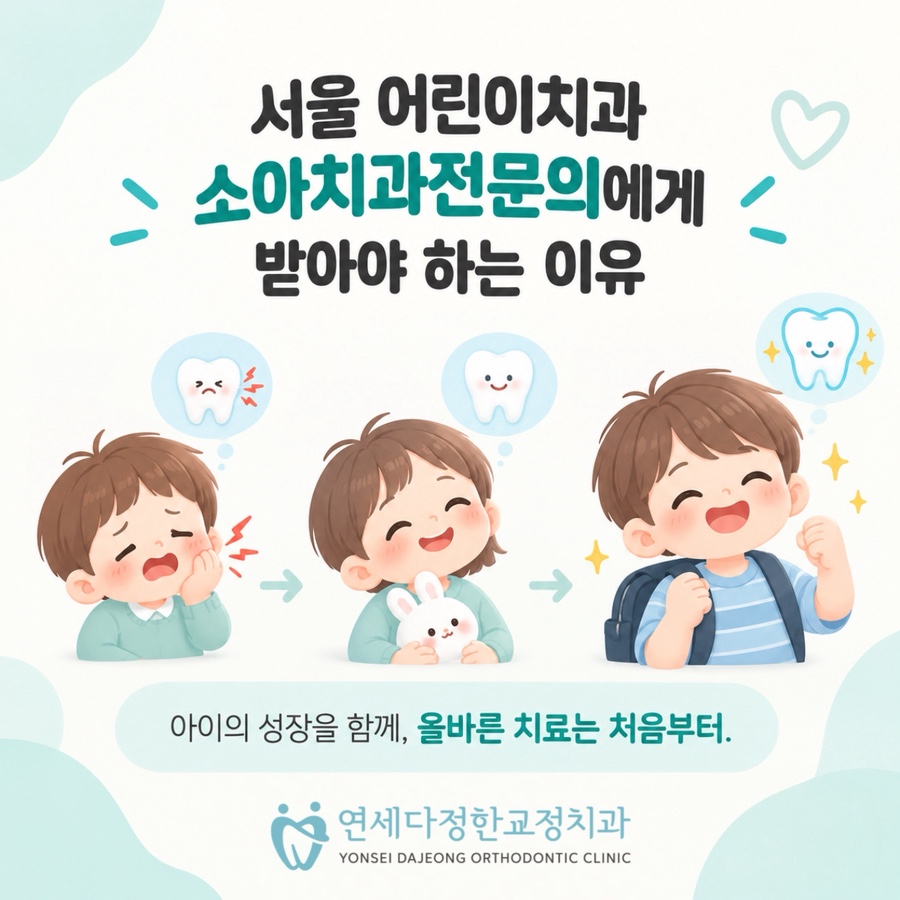
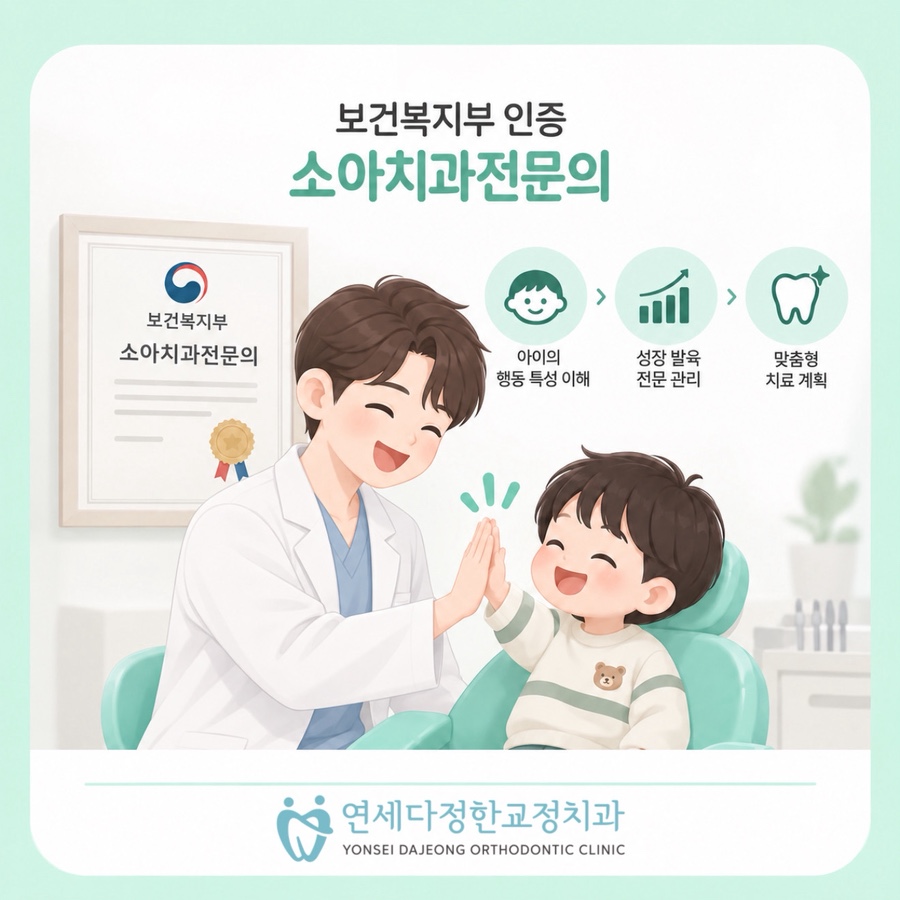
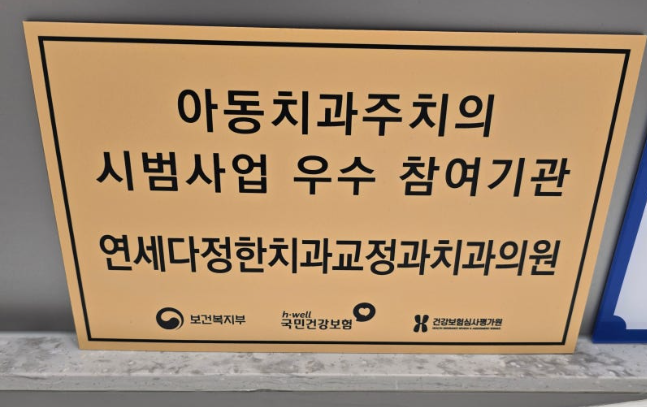
In short, a board-certified pediatric dentist is essential because they’ve completed specialized training in children’s behavior and development.
A board-certified pediatric dentist is a dentist who has completed a specialty training program recognized by South Korea’s Ministry of Health and Welfare, with an in-depth understanding of children’s psychology and developmental characteristics.
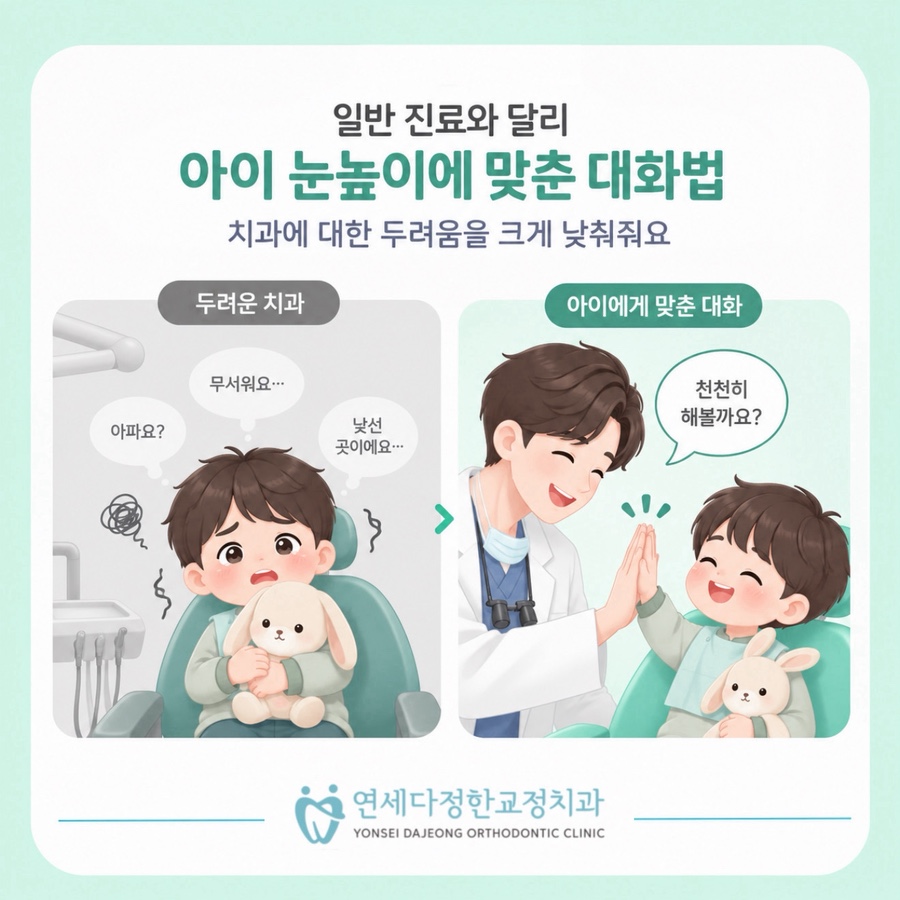
Unlike general dental visits, communicating at a child’s level
can help reduce fear of the dentist.
Pushing treatment on a child who is severely afraid
may leave dental trauma that lasts into adulthood.
| Category | General Dentist | Board-Certified Pediatric Dentist |
|---|---|---|
| Patient age range | All ages | Focused on infants through teens |
| Behavior management | Limited | Systematic behavior-management expertise |
| Growth assessment | Focused on cavities | Comprehensive care including jaw and bite development |
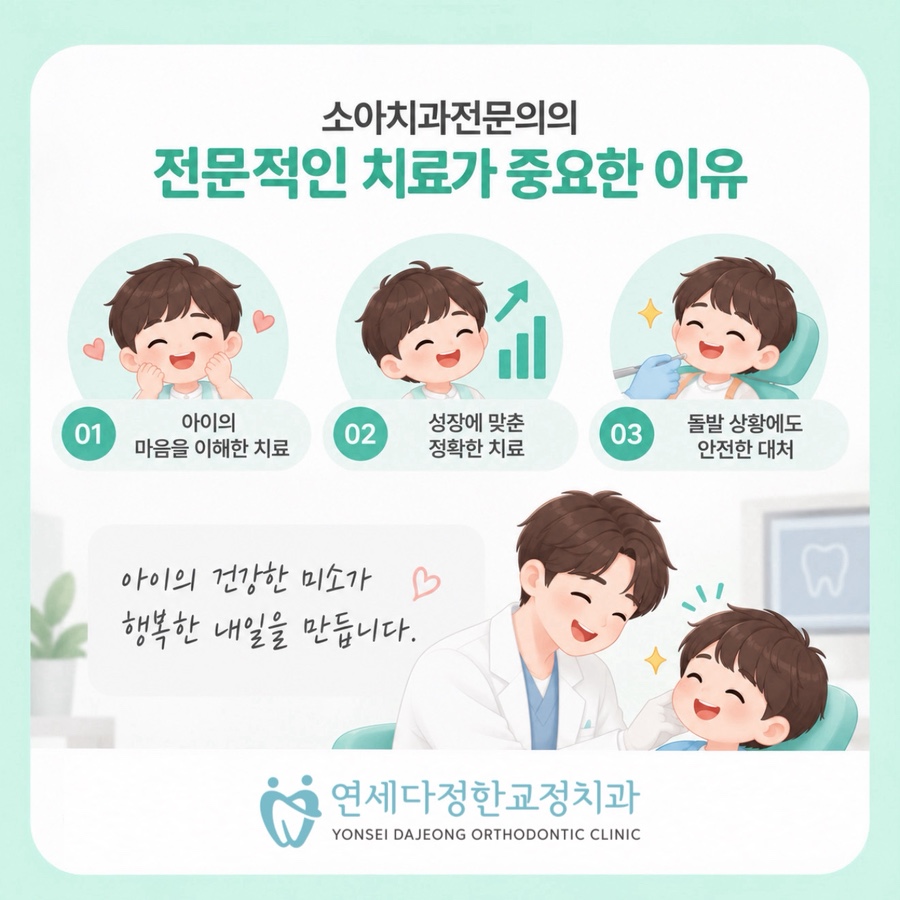
Key competencies of a board-certified pediatric dentist include:
- Behavior-management techniques that consider a child’s emotional state
- Precise preventive care tailored to age-specific skeletal growth
- Clinical experience handling unexpected situations during treatment
This kind of specialized approach can help ease stress
not only for the child, but for parents as well.
What Should You Check When Choosing a Pediatric Dentist in Seoul?
The key is to look at the clinic’s environment and systems before considering distance.
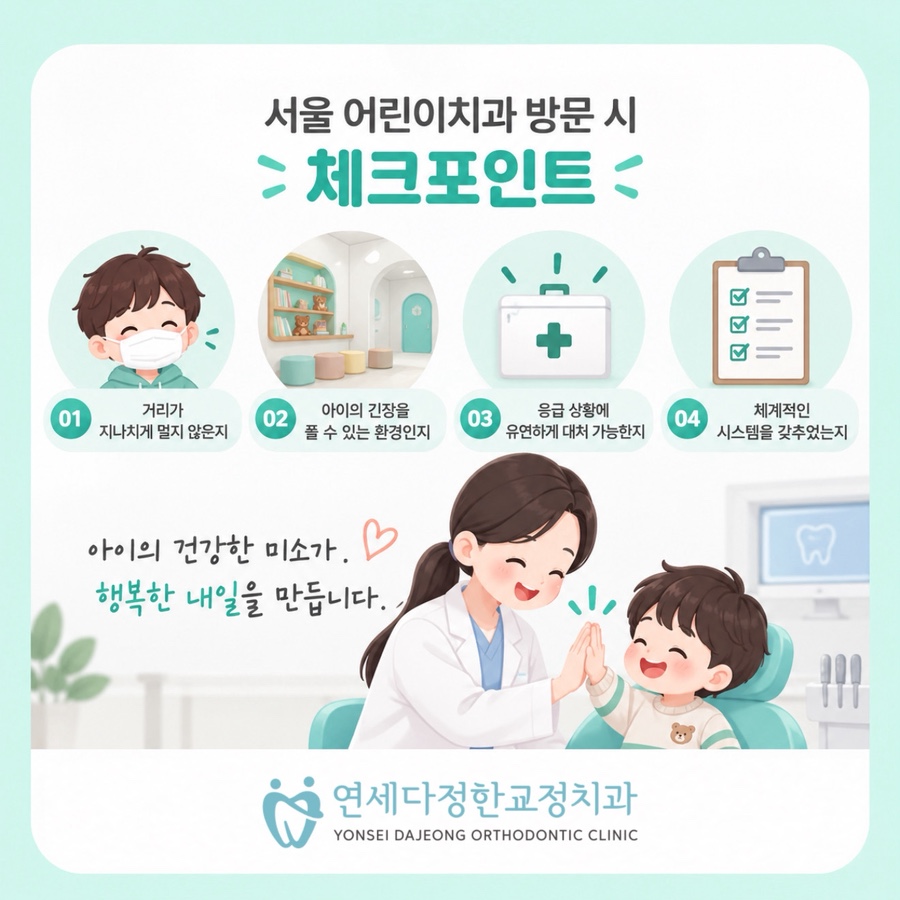
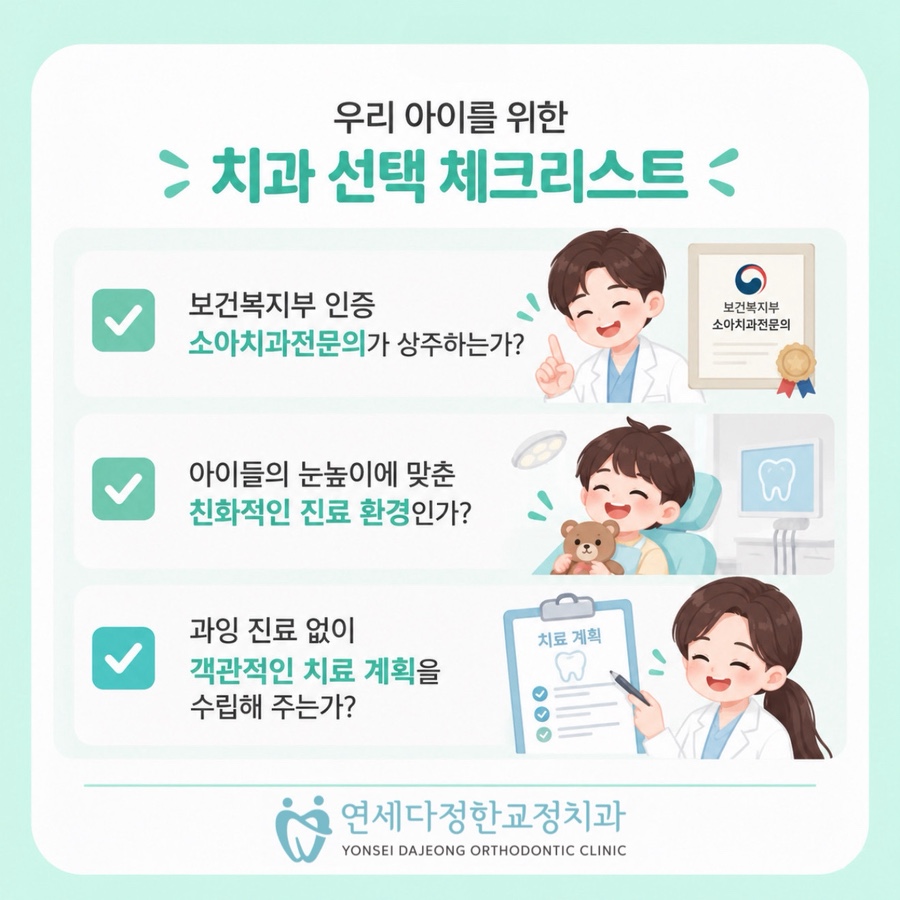
The criteria for choosing a pediatric dentist in Seoul come down to three things: whether a board-certified specialist is on staff, a child-friendly environment, and an objective treatment plan.
It’s worth checking whether the clinic has a welcoming interior and a dedicated waiting area to help ease a child’s nerves,
as well as a system in place to respond flexibly to emergencies.
✅ Is a Ministry of Health and Welfare-certified pediatric dentist on staff?
✅ Is the treatment environment friendly and geared toward a child’s comfort?
✅ Does the clinic offer an objective treatment plan without overtreatment?
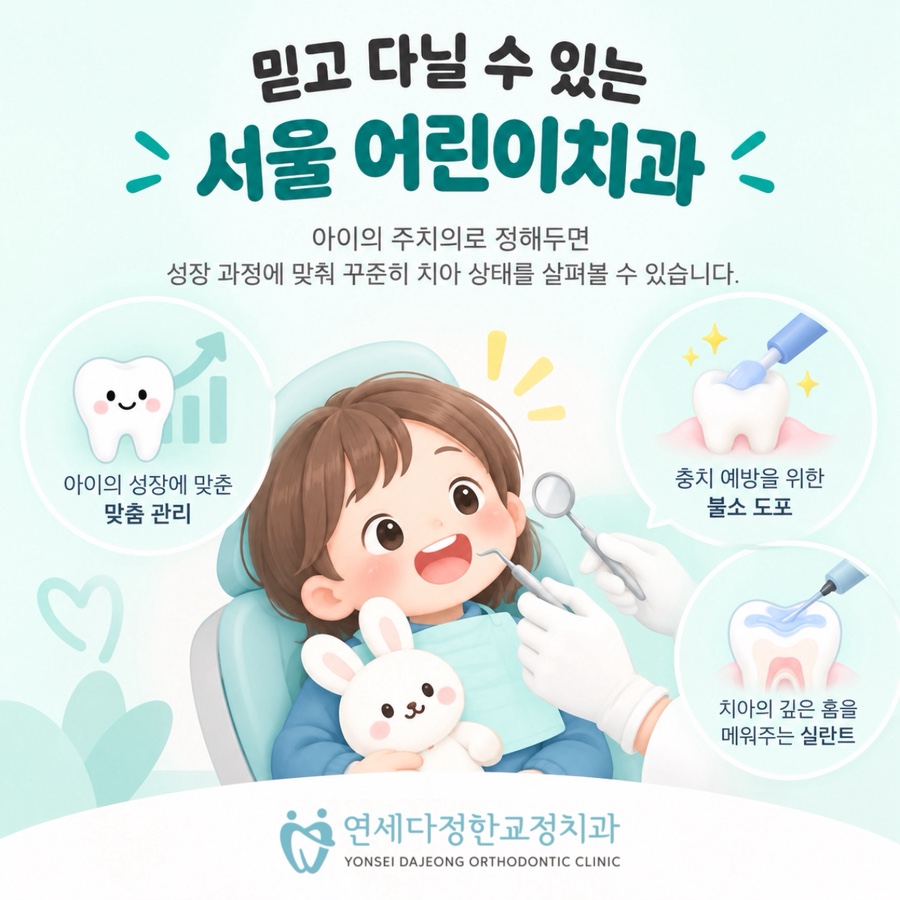
Establishing a trusted pediatric dentist in Seoul as your child’s regular dental home
can make it easier to track tooth development consistently as they grow.
Preventive measures such as fluoride treatment
and sealants to protect the grooves of the teeth
should also be applied based on each child’s individual needs.
Keeping up with regular specialist visits can help with early cavity detection and preventive care that preserves space for incoming permanent teeth.
How Should You Manage Oral Care for a Growing Child?
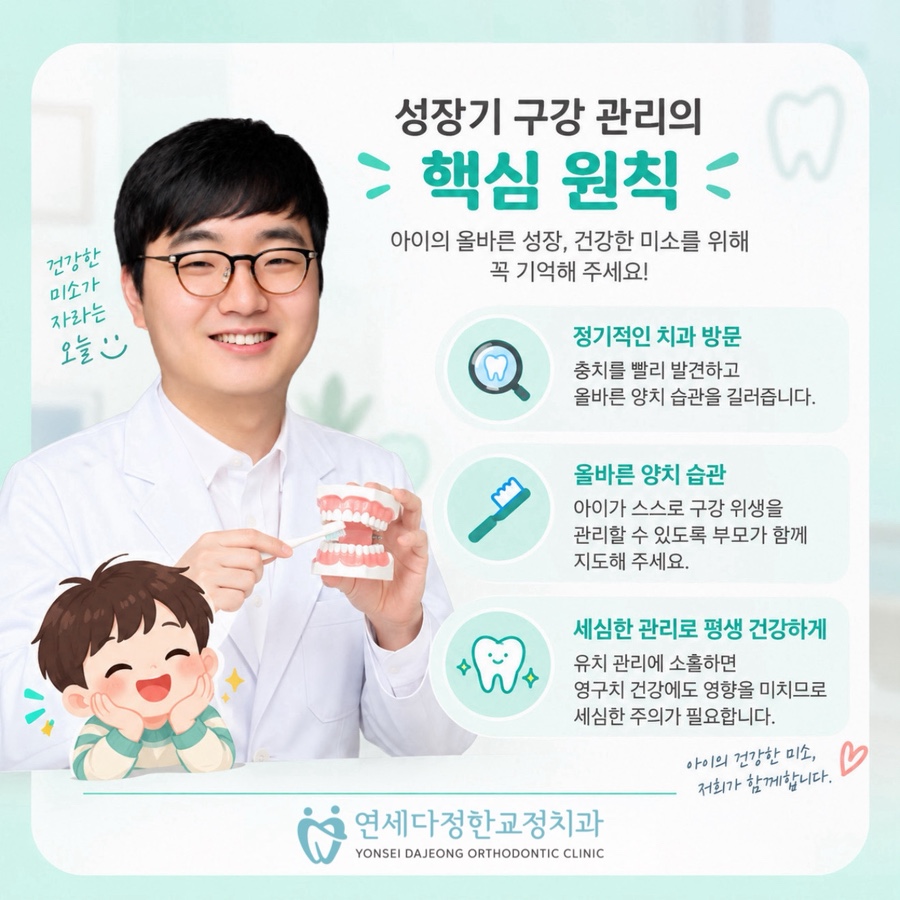
The conclusion is simple: combine regular checkups with good brushing habits.
Oral care during childhood growth means prevention-focused management that combines early cavity detection with healthy habit-building.
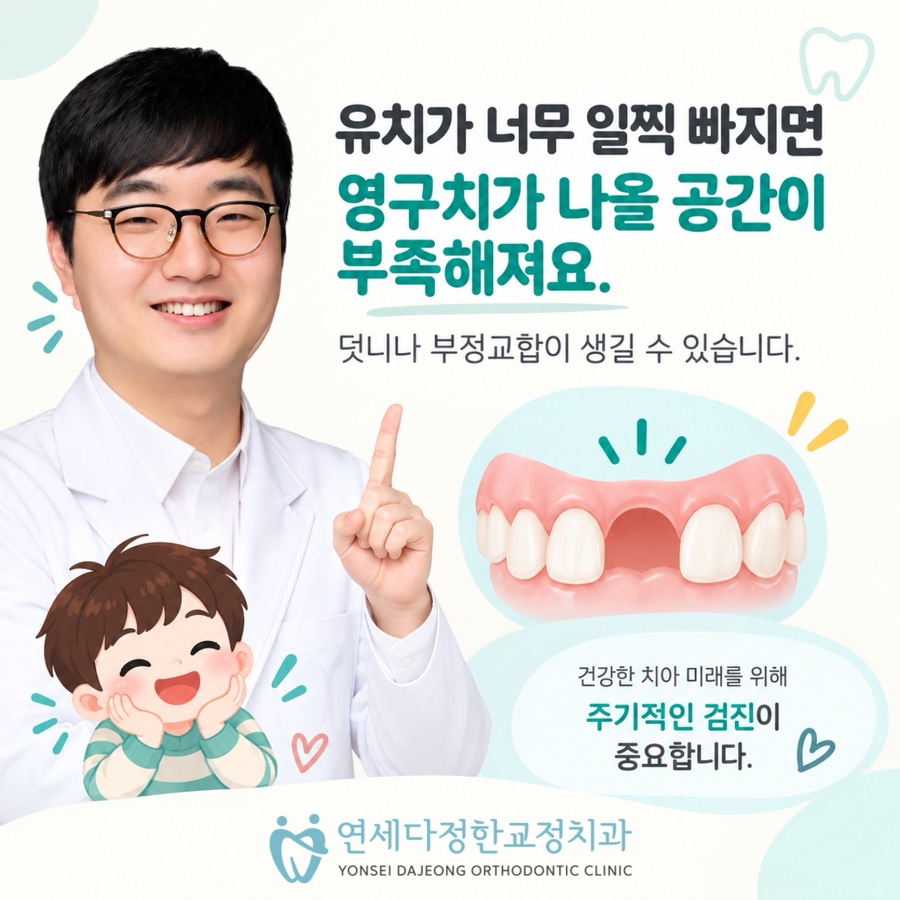
If a baby tooth falls out too early, there may not be enough room left for the permanent tooth,
which raises the likelihood of crowding or malocclusion.
To help prevent this,
it’s advisable to schedule regular checkups
at a pediatric dentist in Seoul.
Parents should also learn how to guide their child
toward managing their own oral hygiene.
Neglecting baby tooth care can end up affecting the health of permanent teeth as well,
so careful attention matters.
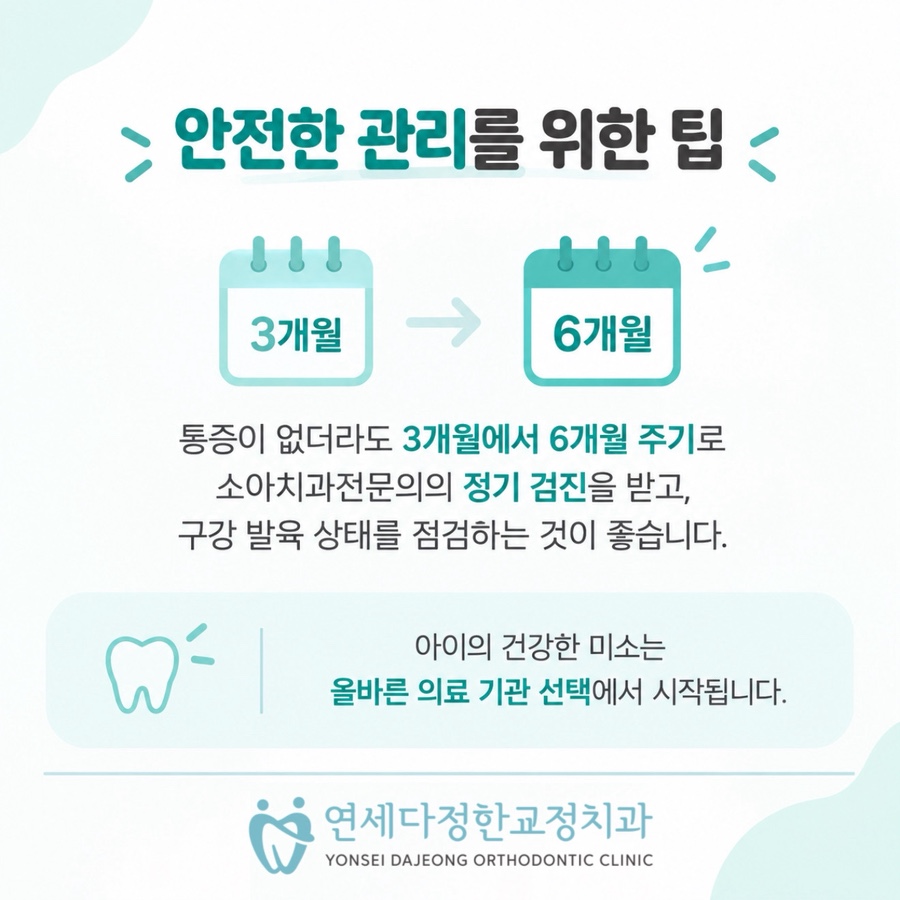
Even without pain, it’s a good idea to see a specialist for a checkup every 3 to 6 months to monitor oral development.
Protecting your child’s healthy smile ultimately starts
with choosing the right dental clinic
for their needs.
If you’d like more information on orthodontic treatment,
you can learn more at the Cheongnyangni Yonsei Dajeonghan Orthodontic Clinic homepage.
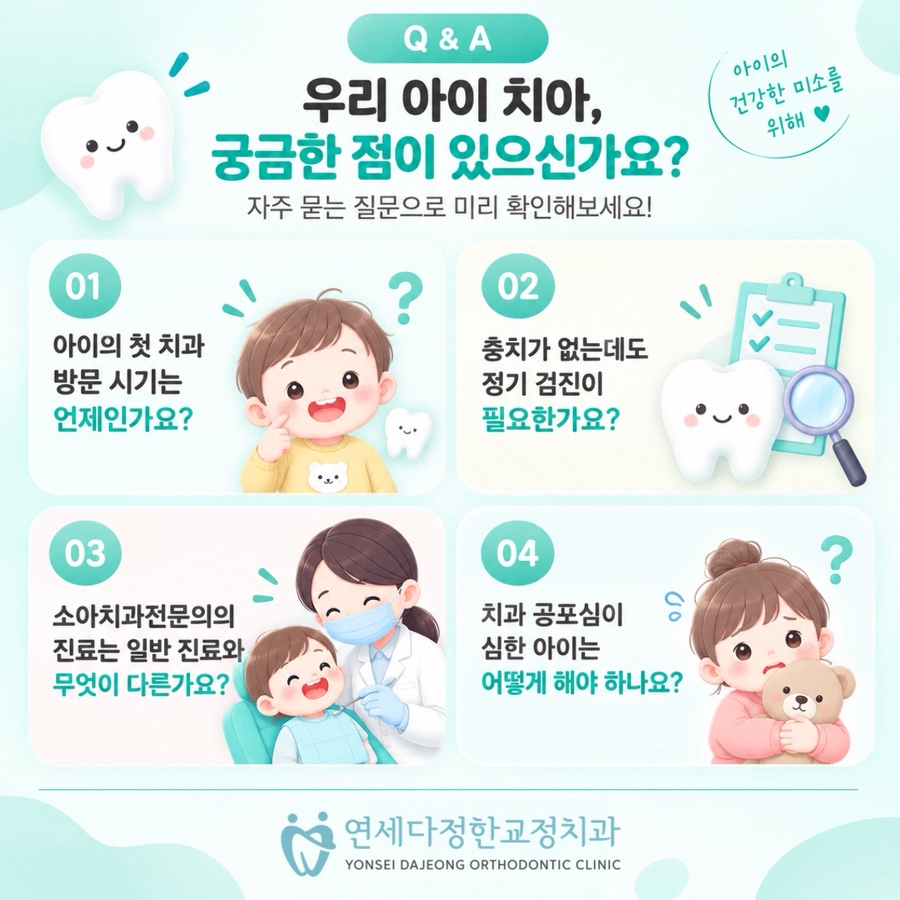
Frequently Asked Questions
1. When should my child have their first dental visit?
It’s recommended to schedule a first checkup when the first tooth starts to erupt, or between 6 and 12 months of age.
2. Are regular checkups necessary even without cavities?
Yes. Regular checkups are essential for confirming that the jawbone is developing properly and that there’s enough space for permanent teeth to come in.
3. How is specialist care different from general dental care?
A pediatric dentist has an in-depth understanding of a child’s physical and psychological needs and works to provide gentle, safe care that helps reduce fear.
4. What should I do if my child has severe dental anxiety?
Rather than restraining the child, it can help to find a pediatric dentist in Seoul with a well-developed behavior-management program that gently and gradually helps them adjust to the treatment environment.
5. Are sealants and fluoride treatment mandatory?
They’re not required for every child, but for tooth grooves at higher risk of cavities, they’re often applied preventively after a consultation with a specialist.
References
· Korean Academy of Pediatric Dentistry, “Introduction to Pediatric Dentistry and First Visit Guide,” Korean Academy of Pediatric Dentistry. View source
· Health Kyunghyang, “How Can Permanent Teeth Come In Properly? Baby Tooth Care Is Key,” Health Kyunghyang. View source
· MSD Manual Consumer Version, “Malocclusion,” Merck & Co. View source

This article is intended for general health information purposes only and is not a substitute for individual diagnosis or treatment.
If you have symptoms, please consult a specialist.
Leave a Reply