Tag: Pediatric Orthodontics

  • Overbite in Children: A Real 6-Month Preortho Growth Treatment Case

    Overbite in Children: A Real 6-Month Preortho Growth Treatment Case

    SummaryWhat causes protruding front teeth and overbite in children, and when should orthodontic treatment start? This article covers a real case of an elementary school student whose growth orthodontics changed in 6 months with Preortho, along with the right age for a first checkup, daily wear time, and what to watch for after treatment. Helpful for parents of growing children.

    Upper front teeth that stand out whenever a child smiles
    are often dismissed as “just genetics,” but that’s not always the whole story.

    Protruding front teeth in children have been linked to up to a 3-fold higher risk of front tooth injury compared with children who don’t have this trait, according to research.

    In this article, we’ll look at a case where protruding front teeth and overbite occurred together, and walk through how 6 months of growth orthodontics with Preortho played out.

    Key Points
    Key Summary
    Protruding front teeth in children are often a form of Class II malocclusion caused by slower lower jaw growth, and may appear alongside an overbite.
    Both the Korean Association of Orthodontists and the American Association of Orthodontists (AAO) recommend a first orthodontic checkup around age 6–7, and related research reports a lower rate of new front tooth injury in early-treatment groups compared with delayed-treatment groups (19% vs. 30%).
    This article covers a case in which overjet and overbite were observed to improve over 6 months using a Preortho Type1 appliance.
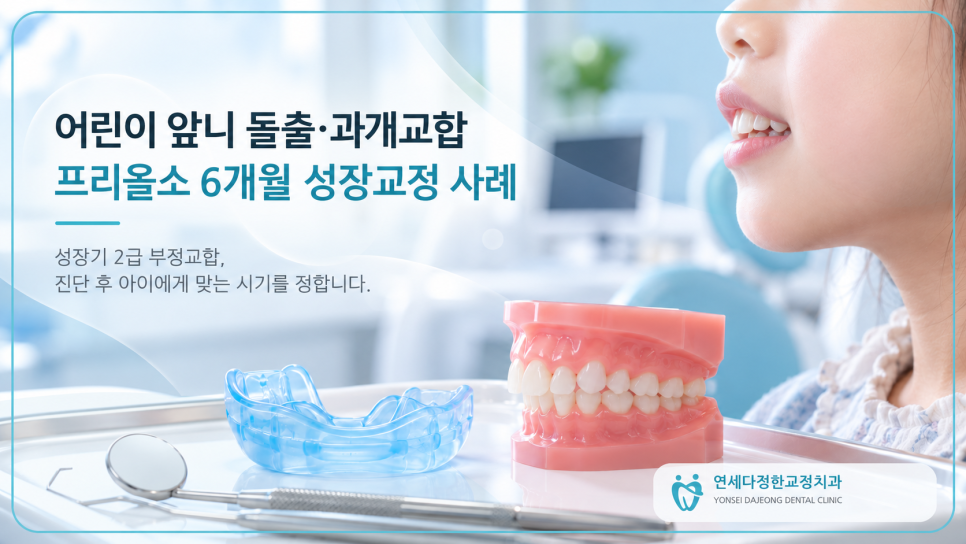
    Protruding front teeth in a child

    Why Do Children Get Protruding Front Teeth?

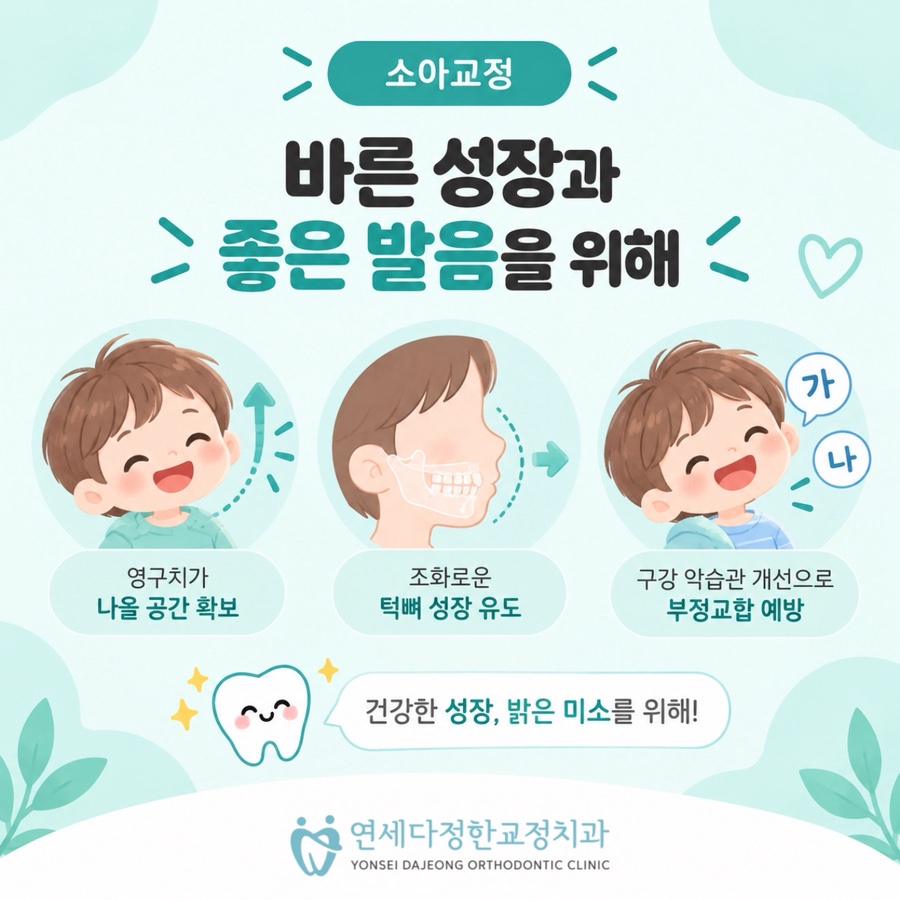
    Protruding front teeth in children are reported to result more often from slower lower jaw growth than from an oversized upper jaw.

    In orthodontics, this condition is called Class II malocclusion.
    The front-to-back gap between the upper and lower front teeth is called overjet.
    A normal range is generally when the upper front teeth sit about 2–3mm ahead of the lower front teeth.

    As this gap increases, the front teeth appear to stick out more.
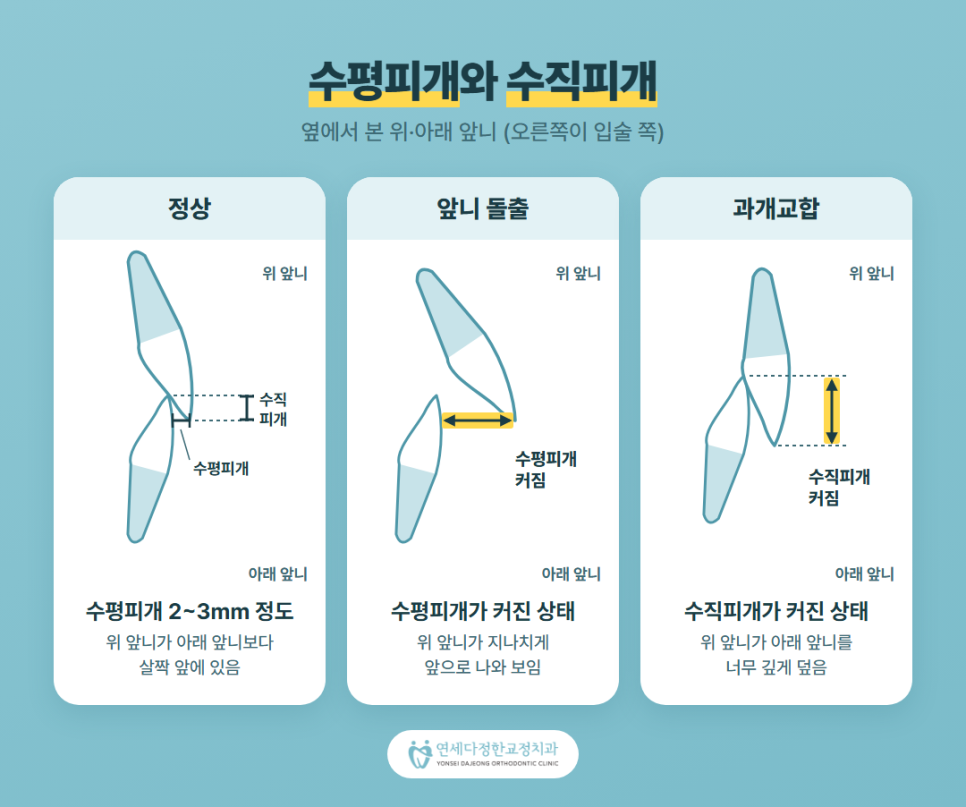
    Protruding front teeth in children - image 2

    Jaw shape is strongly influenced by genetics, and oral habits such as thumb sucking, lip sucking, and mouth breathing can also negatively affect tooth alignment.

    There’s one more thing to note.
    A systematic review found that when overjet exceeds 3–3.5mm, the risk of front tooth injury roughly doubles, and beyond 6mm it can rise to about 3 times higher.
    (Kids really do fall a lot…)


    Is It Okay to Leave an Overbite in Children Untreated?

    If left untreated, a severe overbite can lead to gum damage or excessive tooth wear, so a proper diagnosis is needed.

    An overbite (deep bite) refers to a condition where the upper front teeth overlap the lower front teeth so much that, when biting down on the back teeth, the lower front teeth are barely visible.
    It’s a common type of malocclusion that often appears together with protruding front teeth and a recessed chin.
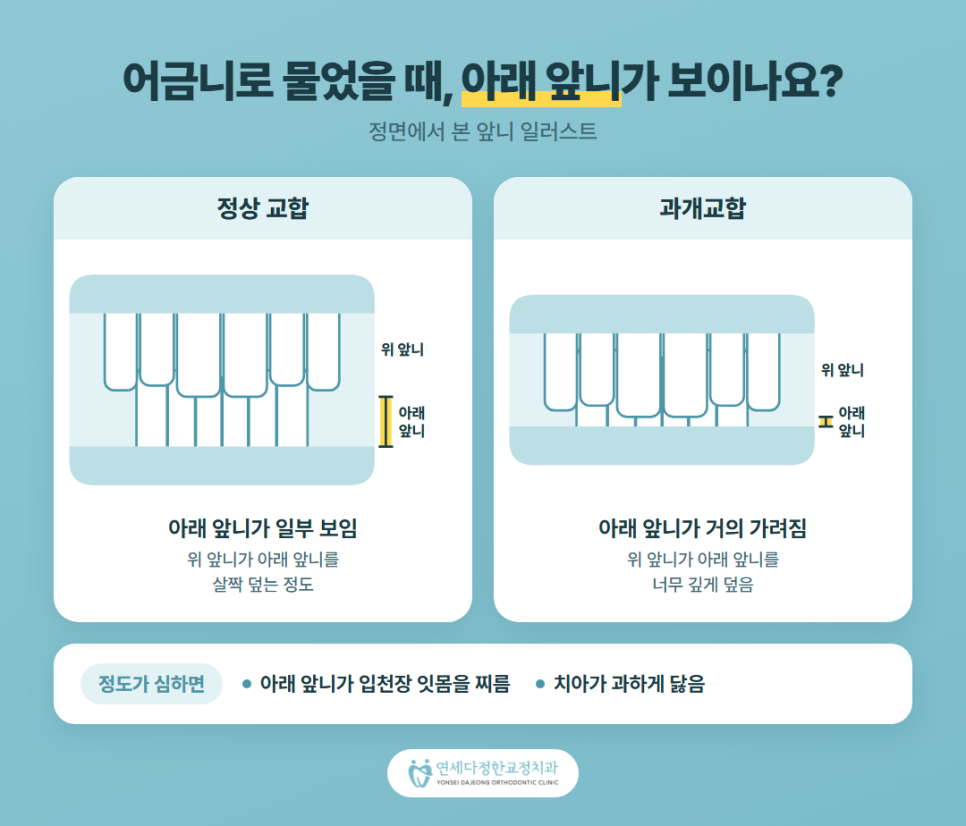
    Protruding front teeth in children - image 3

    In severe cases, the lower front teeth can dig into the palate gum tissue or cause excessive tooth wear.

    Caution
    Many parents worry about a link to TMJ (jaw joint) disorders. While some reports note an association, there isn’t yet enough evidence to conclude that an overbite directly causes TMJ disorders. If there is jaw joint pain or clicking, we recommend a separate consultation with a specialist.

    When and How Should Growth Orthodontics Start?

    The honest answer is “it depends on the child,” which is exactly why getting an orthodontic checkup around age 7 matters.

    Starting treatment as early as possible isn’t automatically right, and neither is simply waiting.
    That’s why the timing of permanent front teeth eruption is used as a reference point.

    “See an orthodontist for a checkup at age 7”

    The Korean Association of Orthodontists is reportedly running a public awareness campaign with this message, recommending a first orthodontic checkup around age 7. The American Association of Orthodontists (AAO) similarly recommends a first checkup no later than age 7.

    An international systematic review (a Cochrane-affiliated study) found that the rate of new front tooth injury was 19% in the group that received first-phase treatment at ages 7–11, compared with 30% in the group treated only once during adolescence.
    However, there was no clear difference in final outcomes between the two groups once all treatment was complete.

    That’s why the principle is to diagnose first, and choose the appliance afterward.

    Item Details
    First orthodontic checkup Around age 7
    Checking for a recessed-chin tendency Typically during the late-elementary growth spurt, or earlier in severe cases
    Age range for Preortho use From about age 5–6 up to around age 12
    Preortho treatment duration Typically 6 months to 1 year
    Daily wear time Manufacturer recommendation: 1+ hour during the day plus 8+ hours at night (our clinic recommends 12+ hours)
    After all permanent teeth erupt Second-phase orthodontics if needed
    Checklist
    ✅ Has your child had an orthodontic checkup around age 7?
    ✅ Does your child have oral habits like thumb sucking or lip sucking?
    ✅ Do the front teeth look more protruded as the permanent ones come in?
    ✅ Do the upper teeth appear to cover the lower teeth significantly?

    What Actually Changed After Wearing Preortho?

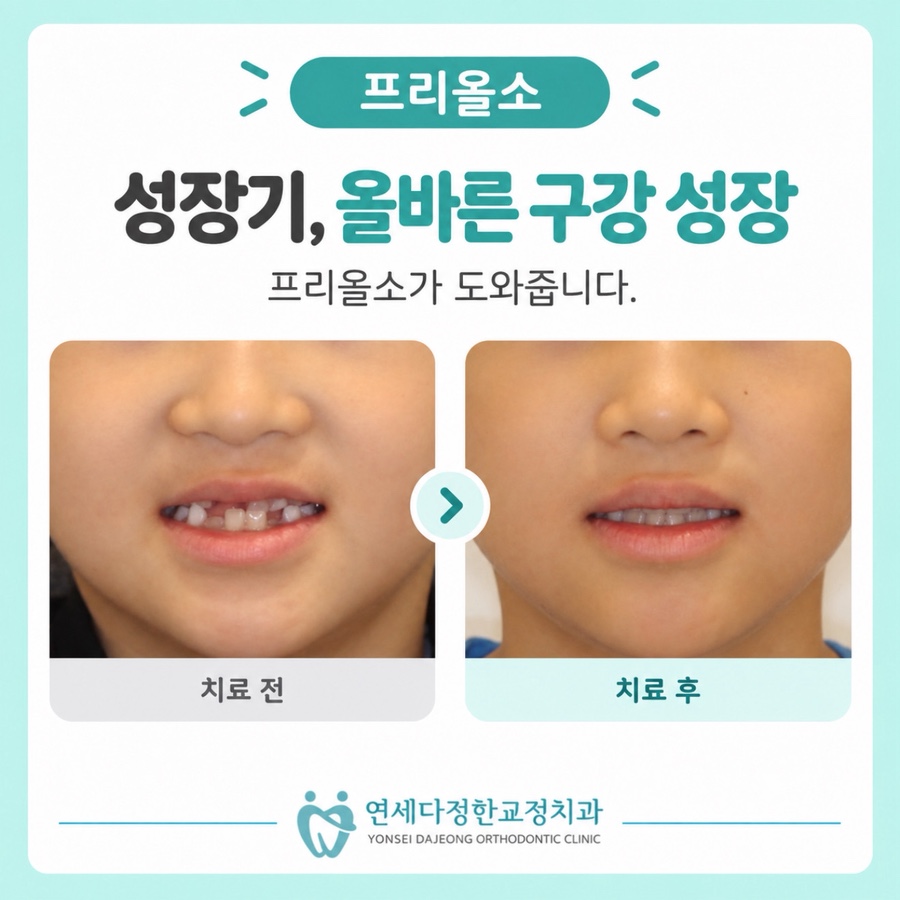
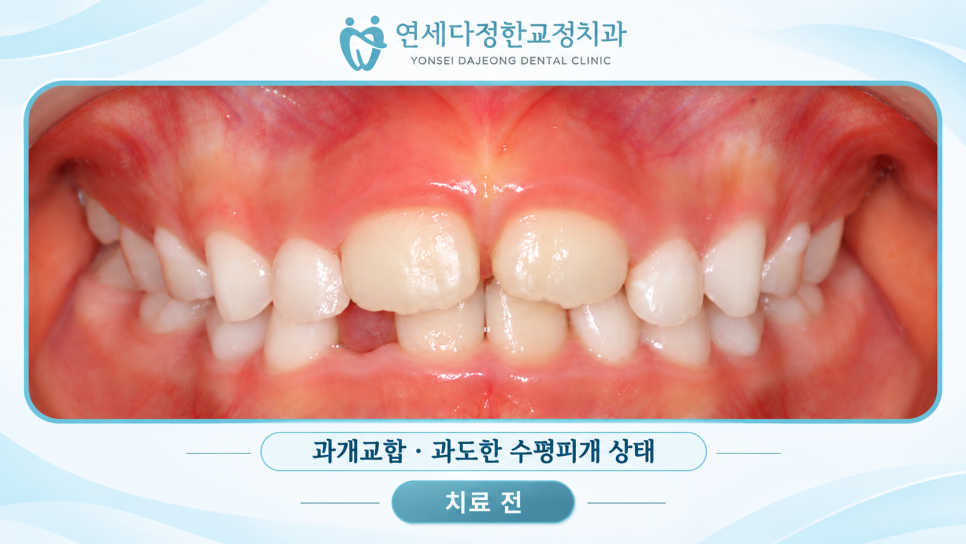
    This is the case of an elementary school patient who came in concerned about protruding front teeth and difficulty closing the lips fully.
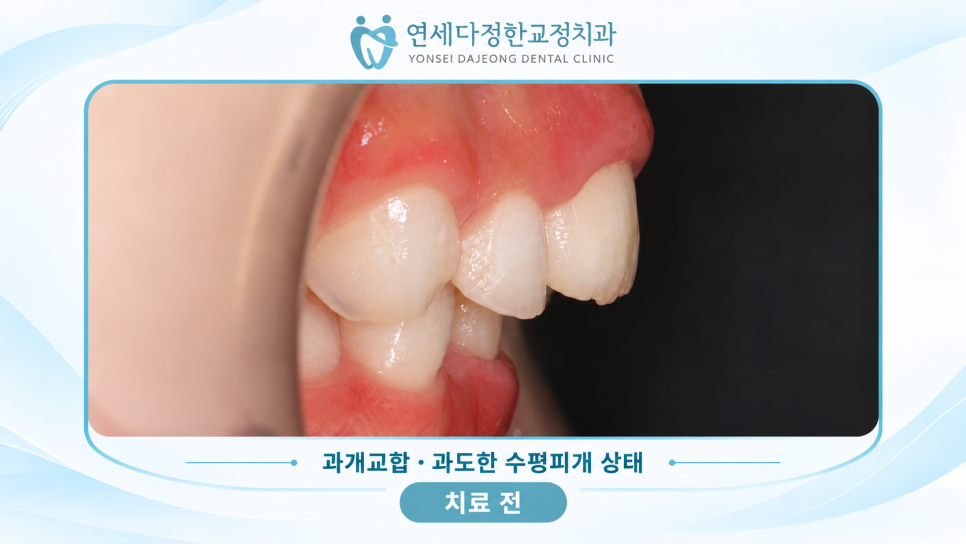
    Protruding front teeth in children - image 4

    Protruding front teeth in children - image 5

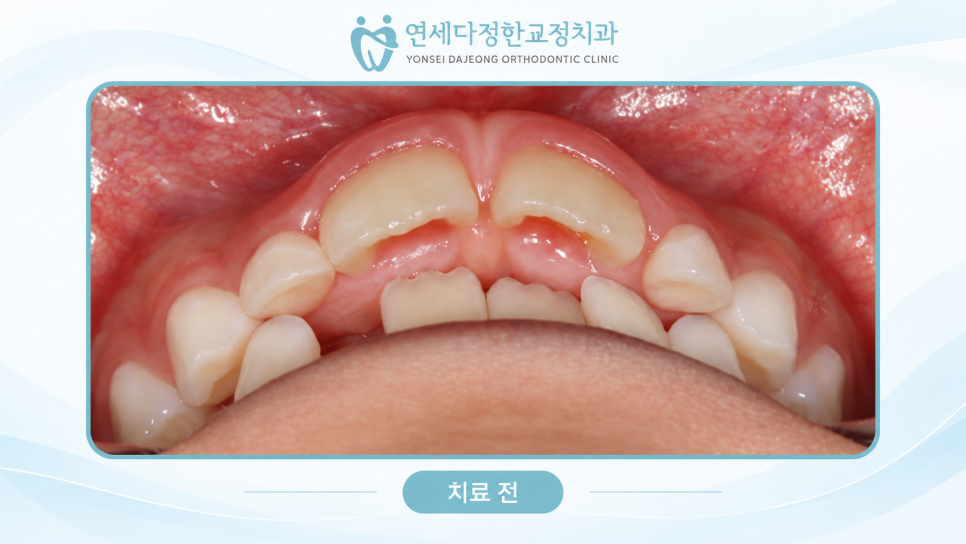
    The intraoral photos showed the upper front teeth positioned excessively ahead of the lower front teeth, with an overbite in which the upper teeth covered almost all of the lower teeth.
    The occlusal view also suggested limited space for the permanent teeth to erupt.

    Since the first molars and lateral incisors had not yet erupted, it was a bit early for a removable appliance or clear aligners (Invisalign First).
    So the appliance chosen was Preortho, a silicone mouthguard-type appliance.

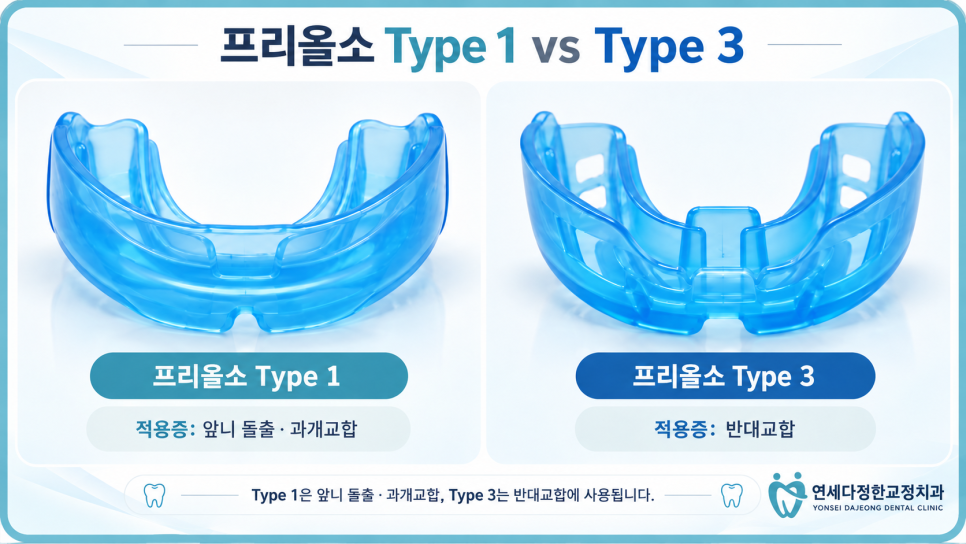
    Preortho is broadly divided into Type1 and Type3.
    Type3 is used for underbite/crossbite cases, while Type1 is used for protruding front teeth and overbite.
    Protruding front teeth in children - image 6

    What Does Preortho Type1 Aim to Achieve?

    Type1 targets five goals.

    1. Reducing protruding front teeth
    2. Improving overbite
    3. Encouraging lower jaw growth
    4. Mild arch expansion
    5. Mild front teeth alignment

    For this patient, all five goals aligned with what was needed, so treatment began right away.

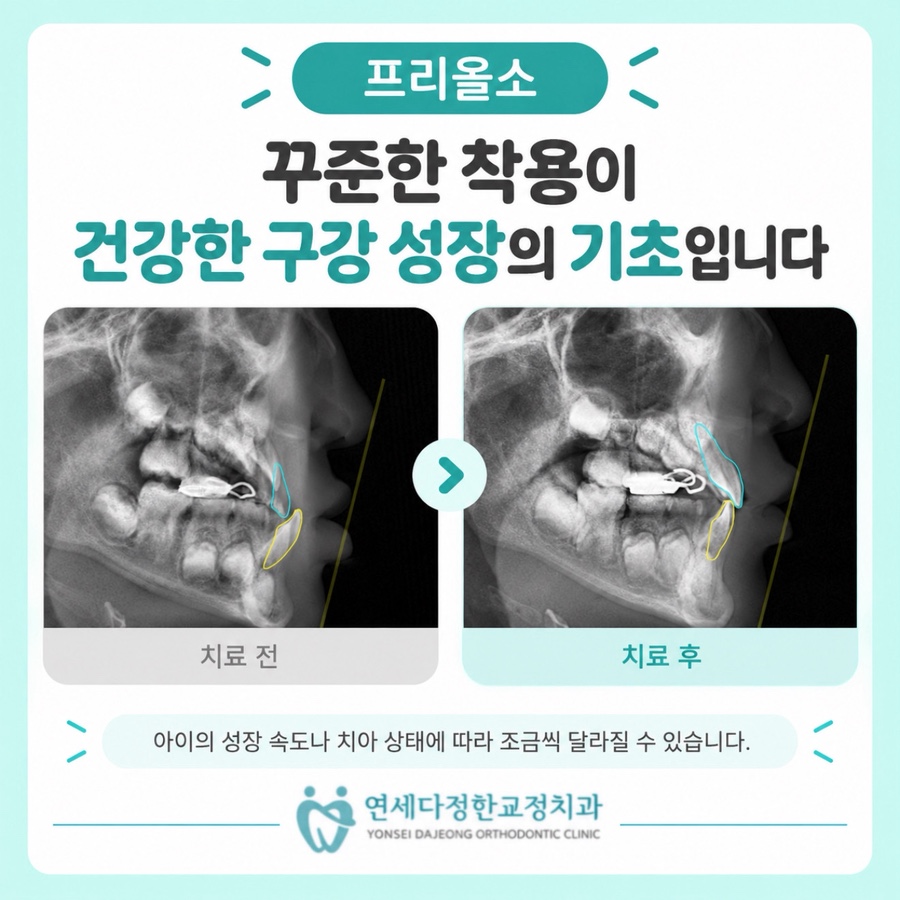
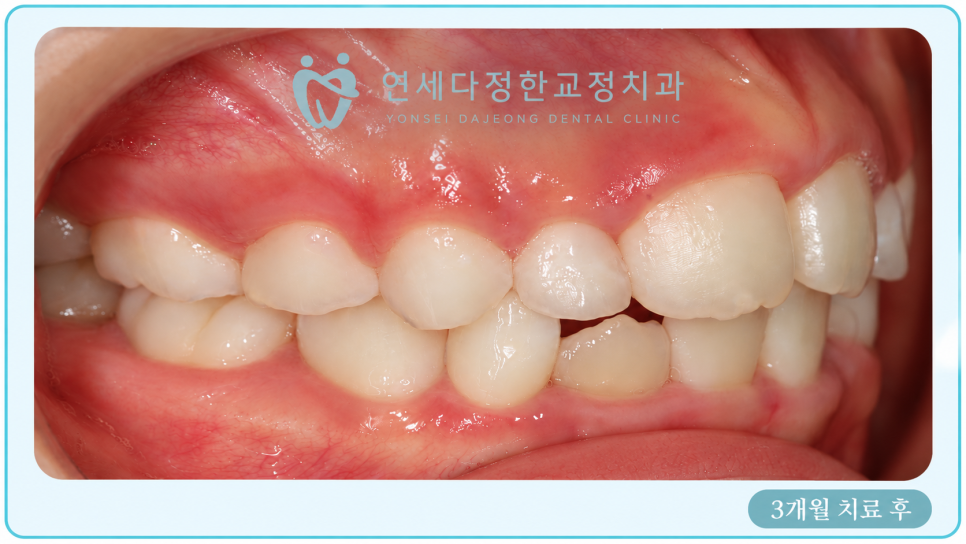
    By around the 3-month mark, the upper front teeth appeared to move inward, with overjet appearing to decrease and the overbite appearing to improve as well.
    Protruding front teeth in children - image 7

    Protruding front teeth in children - image 8

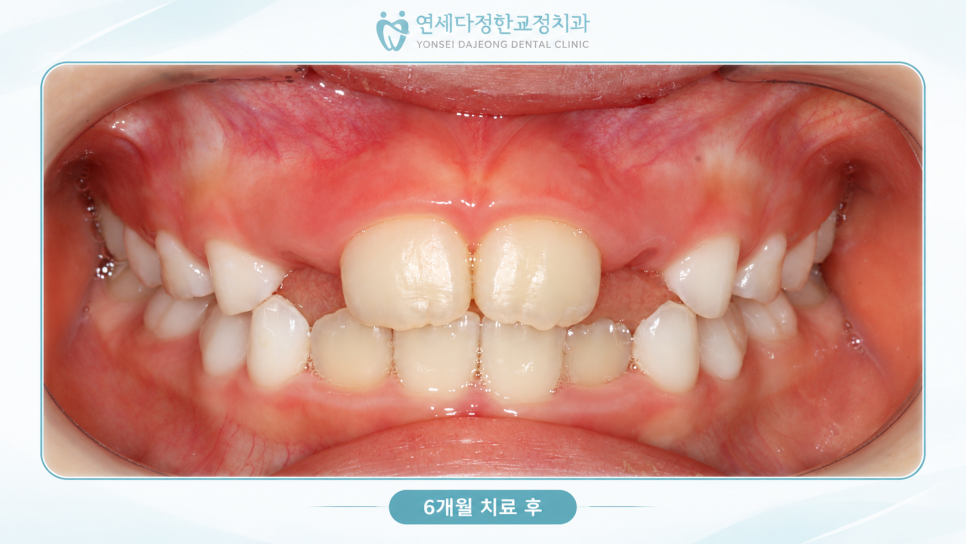
    Preortho wear was then completed at the 6-month mark.
    Protruding front teeth in children - image 9

    Protruding front teeth in children - image 10

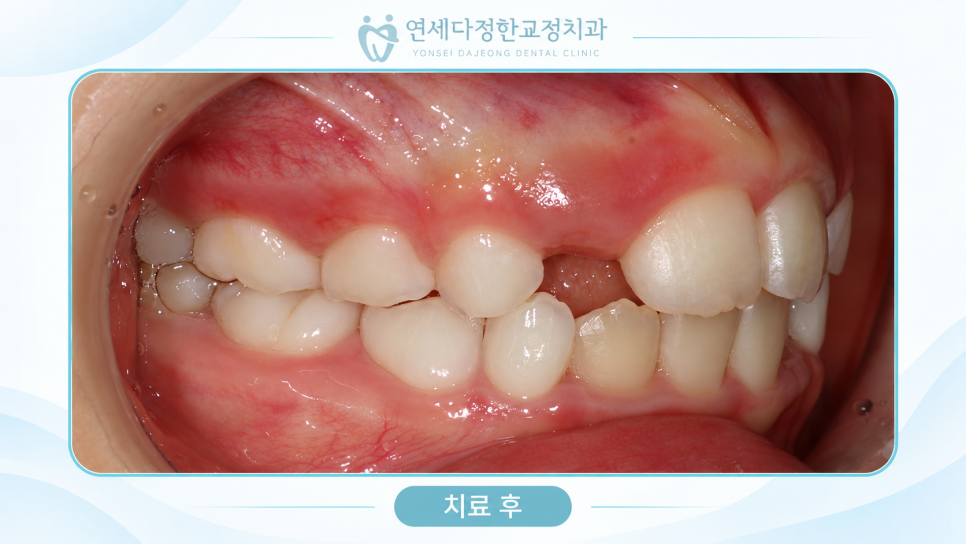
    Result
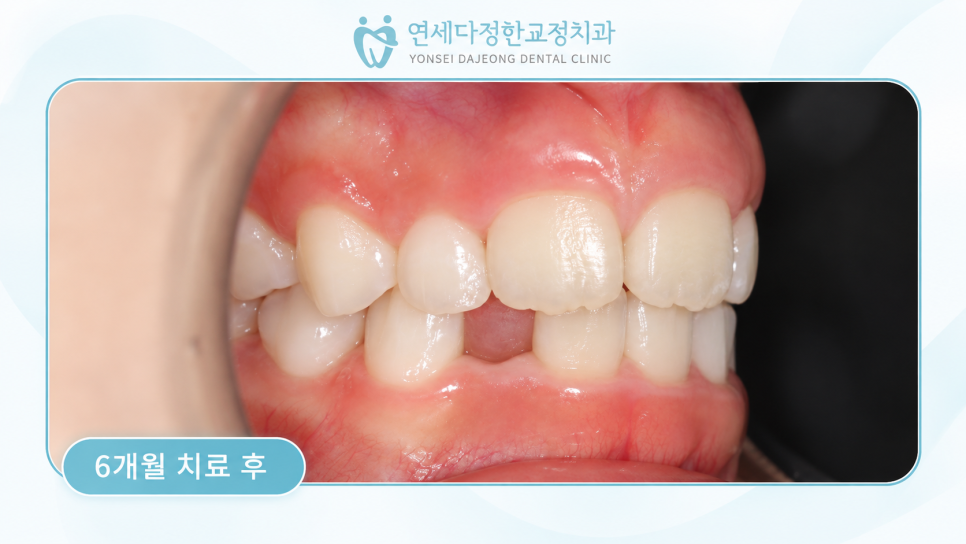
    The lower front teeth, previously more than half hidden by the overbite, appeared to become more visible.
    The upper front teeth, which had been excessively advanced relative to the lower front teeth, were also observed to have moved inward.

    Protruding front teeth in children - image 11

    Protruding front teeth in children - image 12

    The occlusal view appeared to show that both the upper and lower arches had widened, and the previously spaced-out upper front teeth appeared more aligned.
    Protruding front teeth in children - image 13

    Protruding front teeth in children - image 14

    Growth-phase treatment is less about finishing orthodontics and more about guiding the direction of growth.
    Even in cases where extraction would be unavoidable for an adult, guiding growth in the right direction can sometimes achieve adequate results without extraction.
    However, once all permanent teeth have erupted, second-phase orthodontics for tooth alignment may still be needed.

    Protruding front teeth in children - image 15

    Cheongnyangni Yonsei Dajeonghan Orthodontic Clinic, located in Cheongnyangni, Dongdaemun-gu, Seoul, is an orthodontic specialty clinic where the director — board-certified in both orthodontics and integrated dentistry — personally handles everything from the initial consultation to appliance removal.


    Frequently Asked Questions

    1. At what age should a child with protruding front teeth get checked?
    We recommend an orthodontic checkup around age 7. A checkup doesn’t mean treatment starts immediately — the right timing varies by child.

    2. How many hours a day should Preortho be worn?
    The manufacturer recommends at least 1 hour during the day and 8+ hours while sleeping. Our clinic recommends at least 12 hours of wear per day.

    3. If a child does growth orthodontics, will they need braces later?
    Second-phase orthodontics for tooth alignment may still be needed once all permanent teeth have erupted.

    4. What happens if an overbite is left untreated in children?
    In severe cases, it can cause the lower front teeth to dig into the gums or lead to excessive tooth wear, so a proper diagnosis is important.


    References

    · Thiruvenkatachari B, et al., Cochrane-affiliated systematic review (early Class II treatment vs. front tooth injury rate, 19% vs. 30%), Evidence-Based Dentistry/PubMed, 2014. View source
    · Arraj GP, et al., “The association of overjet size and traumatic dental injuries: a systematic review and meta-analysis,” Dental Traumatology, 2019. View source
    · American Association of Orthodontists, “Child Orthodontics” (recommends a first checkup by age 7). View source
    · News coverage of the Korean Association of Orthodontists’ age-7 checkup campaign, Dental Today. View source


    This article is intended for general health information purposes only and cannot replace individual diagnosis or treatment. If you notice symptoms, please consult a specialist.
  • Crooked Canine Tooth Correction: 3 Extraction Criteria and Non-Extraction Options in Cheongnyangni

    Crooked Canine Tooth Correction: 3 Extraction Criteria and Non-Extraction Options in Cheongnyangni

    SummaryWhether crooked canine tooth correction in Cheongnyangni needs extraction or not depends on how severe the misalignment is and whether the mouth protrudes. This guide covers why canine teeth get pushed out of place, three non-extraction methods, whether clear aligners can work, and typical treatment duration.

    There’s one question orthodontic consultations hear more than any other.
    Do I really need to have a tooth pulled?

    Consultations for crooked canine tooth correction in Cheongnyangni often start with this same question.
    But the answer isn’t as simple as it might seem.

    When the canine tooth is only mildly out of place, it can often be straightened without extraction. When it’s severely displaced or the mouth protrudes as well, a small premolar is often removed instead.

    Crooked canine tooth correction in Cheongnyangni

    Key Takeaways
    Whether treatment for a crooked canine tooth in Cheongnyangni involves extraction or not depends on the severity of the misalignment and whether the mouth protrudes.
    Mild cases can often be corrected with non-extraction methods such as arch expansion, interproximal reduction (IPR), or moving the molars back.
    Severe cases often involve removing four small premolars and using that space to align the teeth, with treatment typically taking 1 to 3 years.

    Why Do Canine Teeth Become Crooked?

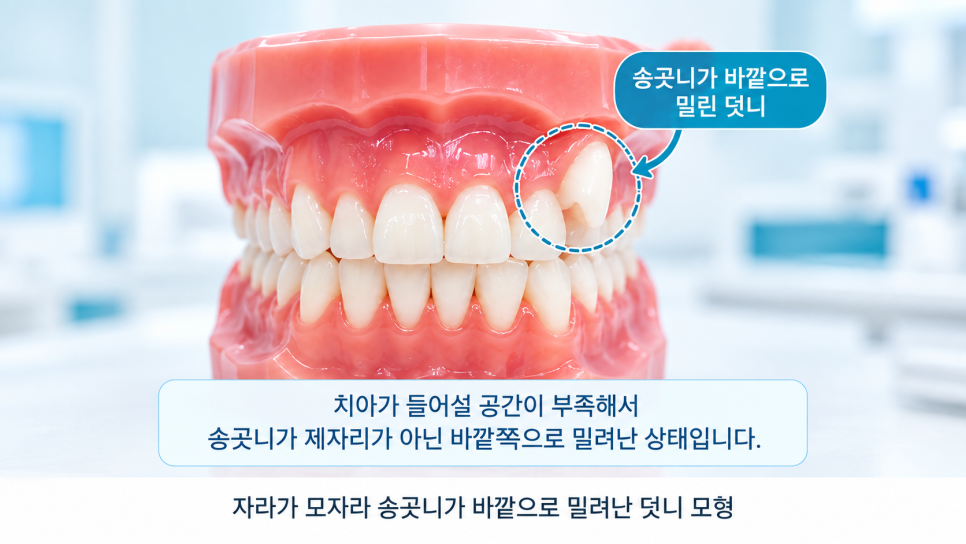
    To put it simply, a crooked canine tooth is a tooth that erupts out of alignment or outside its proper position because there isn’t enough space for it.
    It usually happens when there’s a mismatch between jaw size and tooth size.

    The reason this shows up at the canine teeth in particular also has to do with eruption order.
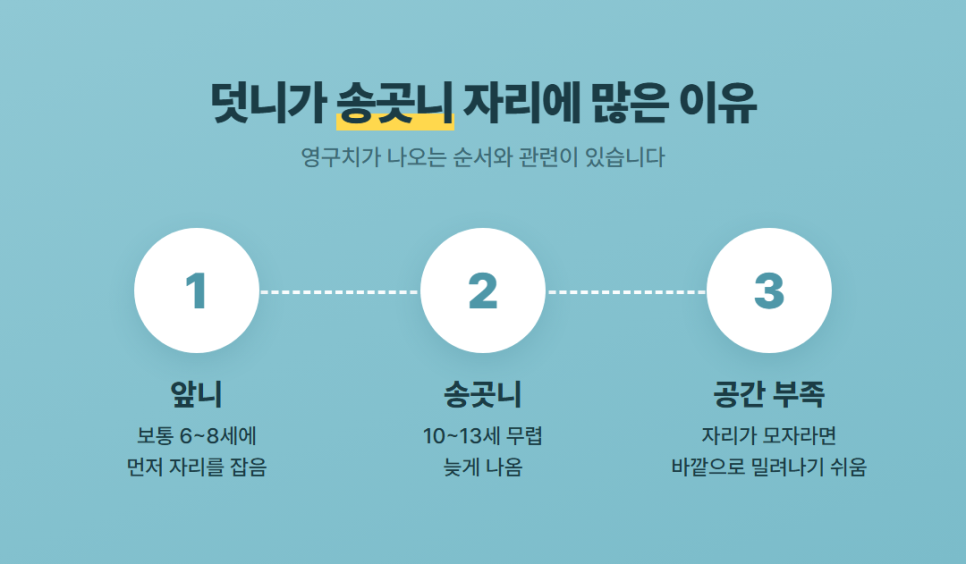
    Front teeth usually come in around ages 6 to 8, while canines erupt later, around ages 10 to 13.

    Since the front teeth settle into place first, canines that come in later tend to get pushed outward if there isn’t enough room left for them.

    Crooked canine tooth correction in Cheongnyangni - image 2

    For this reason, the Korean Association of Orthodontists (KAO) recommends that children have their first orthodontic checkup around age 7, when the front teeth are replaced by permanent teeth.

    The Korean Association of Orthodontists advises that children undergo their first orthodontic evaluation around age 7.

    This is guidance from the Korean Association of Orthodontists.
    This checkup isn’t meant to start treatment right away — it’s an early check to see whether the teeth are coming in in the right order.


    What Happens If a Crooked Canine Tooth Is Left Untreated?

    Crooked canine tooth correction in Cheongnyangni - image 3

    Left untreated, it can make cavities and gum disease more likely.
    That’s because a toothbrush can’t easily reach the spots where teeth overlap.

    Key Points
    · Bristles and floss have a harder time reaching between overlapping teeth, which raises the risk of cavities.
    · Correcting a crooked canine tooth may improve chewing efficiency.

    Wiping behind a crooked canine tooth with gauze can reveal more plaque buildup than in other areas of the mouth.

    Crooked canine tooth correction in Cheongnyangni - image 4

    If floss consistently catches or your toothbrush can’t reach a certain spot when you brush, it’s worth getting a checkup.


    Does Crooked Canine Tooth Correction in Cheongnyangni Always Require Extraction?

    Not necessarily.
    Whether extraction is needed is decided after evaluating the severity of the crooked tooth, whether the mouth protrudes, and the facial profile together.

    When the displacement is severe, four small premolars are typically removed, and that space is used to align the teeth.
    The gaps left behind are generally closed by the end of treatment.

    For mild cases, non-extraction methods that straighten teeth without removing any are usually considered first.

    Method How It Works Best For
    Arch expansion Widens the dental arch to create space Crowding caused by a narrow jaw
    Interproximal reduction (IPR) Shaves a thin layer of enamel between teeth to create space Mild crowding
    Molar distalization (moving molars back) Moves molars backward to free up space in front Cases with a slight space shortage in front
    Extraction orthodontics Uses space from removing 4 premolars Severe crowding or cases with mouth protrusion

    Crooked canine tooth correction in Cheongnyangni - image 5

    Key Points
    · There’s no official guideline confirming a single rule like “extraction is required once the space deficit exceeds a certain number of millimeters.”
    · The decision considers not just how much space is missing, but also mouth protrusion and facial profile.

    Can Clear Aligners Also Straighten a Crooked Canine Tooth?

    For mild crowding, clear aligners can be an option.
    However, they have limitations when the crowding is severe or when teeth need complex movement.

    A 2024 international systematic review compared treatment duration between clear aligners and fixed braces for mild-to-moderate crowding.
    Pooling 10 studies, it found no clear difference in treatment duration between the two appliance types.

    That said, in one of the included studies, clear aligners averaged 8.4 months versus 12.1 months for fixed braces — a difference of about 3.7 months.
    The overall certainty of evidence was rated as low.

    Crooked canine tooth correction in Cheongnyangni - image 6

    On the other hand, a 2016 paper in a Korean dental journal (Journal of the Korean Dental Association) noted that, due to their structural characteristics, clear aligners have limitations when it comes to root movement or complex movement of certain teeth.
    Because the studies differ in timing and population, the findings haven’t converged into a single consensus.

    Things to Keep in Mind
    · Clear aligners don’t work the same way for every crooked canine tooth.
    · A thorough diagnostic exam should guide the decision more than the choice of appliance itself.

    How Long Does Treatment Take and What Does It Cost?

    Orthodontic treatment typically takes about 1 to 3 years, though this varies significantly from person to person.
    It also depends on whether extraction is involved, so an exact timeline can only be given after a diagnosis.

    Crooked canine tooth correction in Cheongnyangni - image 7

    Because orthodontic treatment isn’t covered by national health insurance, costs vary between clinics.
    They also depend on the severity of the crowding and the type of appliance used, so the most accurate figure comes after an exam.

    Aftercare
    After treatment ends, teeth tend to drift back toward their original position.
    That’s why a retainer is typically worn for about a year to help reduce relapse.

    Crooked canine tooth correction in Cheongnyangni - image 8

    Things to Keep in Mind
    · During orthodontic treatment, side effects such as gum recession, root resorption, or decalcification (white spots on the tooth surface) can occur.
    · It’s best to discuss these possible side effects during the consultation before treatment begins.

    What Should You Check Before a Consultation in Cheongnyangni?

    Check whether the clinic explains the reasoning behind its extraction or non-extraction decision for crooked canine tooth correction based on a thorough exam.
    If you’re looking for an orthodontic clinic around Cheongnyangni, Dongdaemun, or Yongdu-dong/Jeonnong-dong, here are three things worth checking.

    Checklist
    ✅ Is the treatment provided by an orthodontic specialist? (You can verify this by region and name on the Korean Association of Orthodontists website)
    ✅ Does the clinic perform a thorough exam, including X-rays, facial photos, and a dental model (intraoral scan)?
    ✅ Does it explain the reasoning behind the extraction decision and appliance choice based on your specific tooth condition?

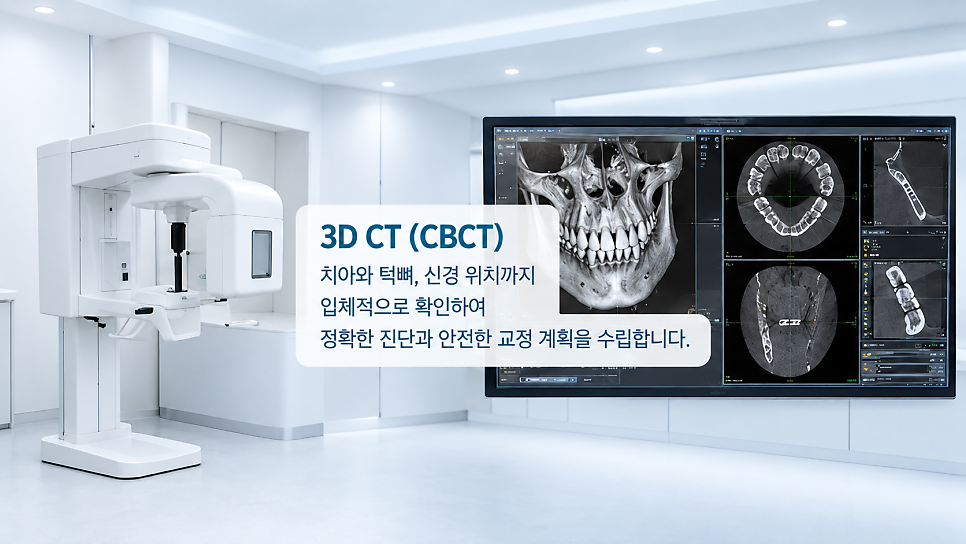
    Yonsei Dajeonghan Orthodontic Dental Clinic, near Cheongnyangni Station in Dongdaemun-gu, Seoul, has orthodontic and integrated dentistry specialists who diagnose using 3D CT and 3D scanners.
    If you need an orthodontic consultation, you can find more information at the Yonsei Dajeonghan Orthodontic Dental Clinic website.

    Crooked canine tooth correction in Cheongnyangni - image 9


    Frequently Asked Questions

    1. Can adults get treatment for a crooked canine tooth, too?
    Yes. There’s no age limit for orthodontic treatment.
    That said, tooth movement is slower in adults and relapse is more likely, so gum and cavity health are checked first.

    2. When should a child’s crooked canine tooth first be checked?
    The Korean Association of Orthodontists recommends an orthodontic consultation around age 7, when the front teeth are replaced by permanent ones.
    In growing children, teeth tend to move more easily, which lowers the risk of relapse.

    3. Can the first consultation for crooked canine teeth in Cheongnyangni tell you right away whether extraction is needed?
    The first consultation mainly determines whether treatment is needed at all.
    Whether extraction is required is decided based on a thorough exam — X-rays, photos, and dental models — and the diagnosis can sometimes take more than a week.

    4. Do teeth become loose when a crooked canine tooth is corrected without extraction?
    Non-extraction methods like arch expansion, interproximal reduction (IPR), and molar distalization are designed to create space only within the range the teeth and gums can tolerate.
    Still, whether this approach applies to you must be confirmed through a thorough exam.


    References

    · Korean Association of Orthodontists, “When to Start Orthodontic Treatment,” official KAO website. Link
    · Jiang Y, et al., “Duration of orthodontic treatment with clear aligners versus fixed appliances in crowding cases: a systematic review,” Clinical Oral Investigations, 2024. Link
    · Bae Gi-seon, “Clinical Limitations of Clear Aligners and Their Solutions,” Journal of the Korean Dental Association 54(7), 2016. Link

    This article is intended for general health information purposes only and is not a substitute for individual diagnosis or treatment. If you have symptoms, please consult a specialist.
  • Early Orthodontic Treatment Timing: 3 Reasons to See a Board-Certified Orthodontist

    Early Orthodontic Treatment Timing: 3 Reasons to See a Board-Certified Orthodontist

    SummaryMissing the ideal early orthodontic treatment timing can mean losing the golden window for correcting jaw growth without surgery. Here’s what to know about growth-stage development and why care should come from a board-certified orthodontist.

    Has your child mentioned jaw discomfort while eating, yet you keep putting off that dental appointment?

    Meanwhile, your child’s jawbone is growing right now, in this very moment.
    During the growth years, there’s a golden window when skeletal issues can often be corrected without surgery.

    To avoid missing this window,
    you first need to understand the criteria for judging the right early orthodontic treatment timing.

    This article outlines the growth-stage checkpoints for catching the right early orthodontic treatment timing, along with the medical reasons treatment should be provided by a board-certified orthodontist.
    We’ll walk through everything from the principles of jaw growth to the guidelines for safely caring for orthodontic appliances.

    early orthodontic treatment timing

    early orthodontic treatment timing illustration 2

    When Is the Right Time for Early Orthodontic Treatment?

    To answer directly: the ideal time for a first checkup is around age 6 to 7, when permanent teeth begin coming in.

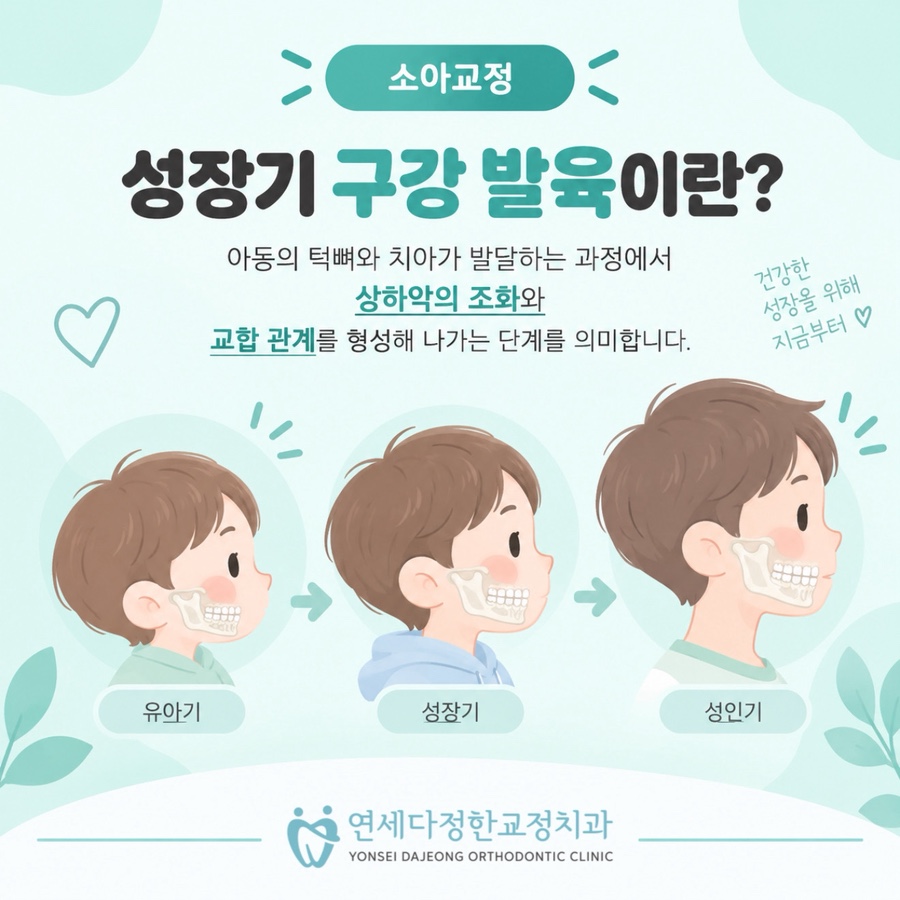
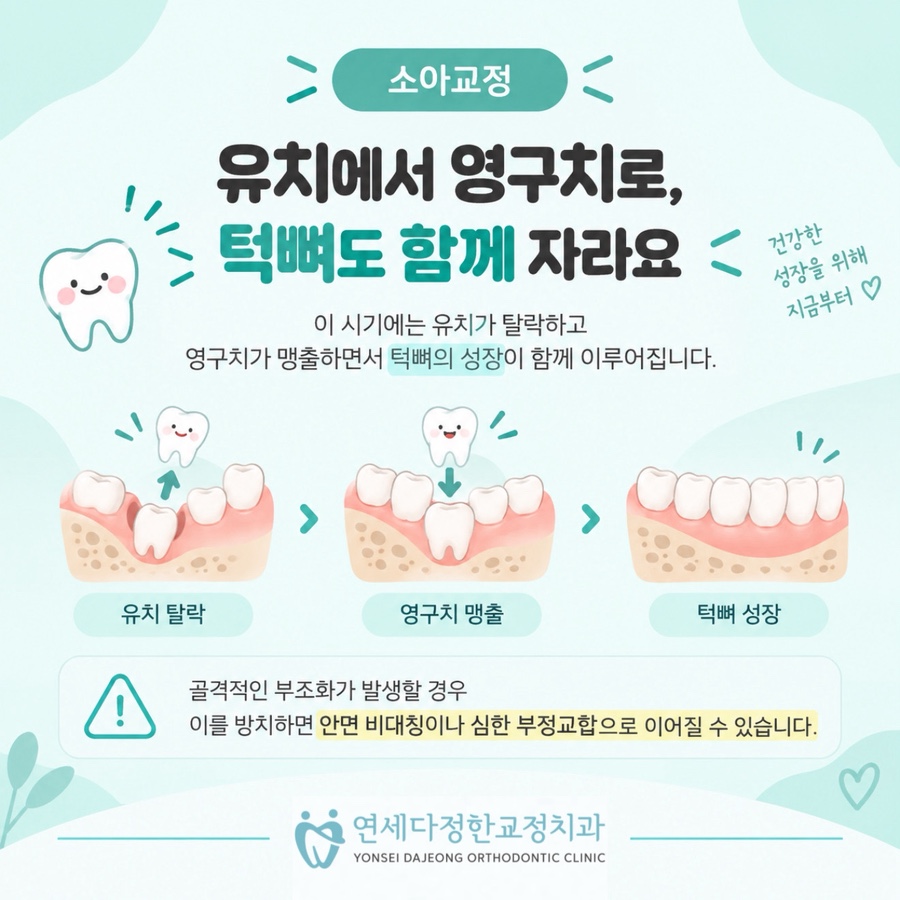
    Growth-stage oral development refers to the process in which baby teeth fall out and permanent teeth emerge, while the upper and lower jawbones grow together.

    If skeletal imbalances go unaddressed during this stage, they can lead to facial asymmetry or severe malocclusion.

    That’s why careful, early observation to catch warning signs is so important.

    early orthodontic treatment timing illustration 3

    early orthodontic treatment timing illustration 4

    early orthodontic treatment timing illustration 5

    Key Point
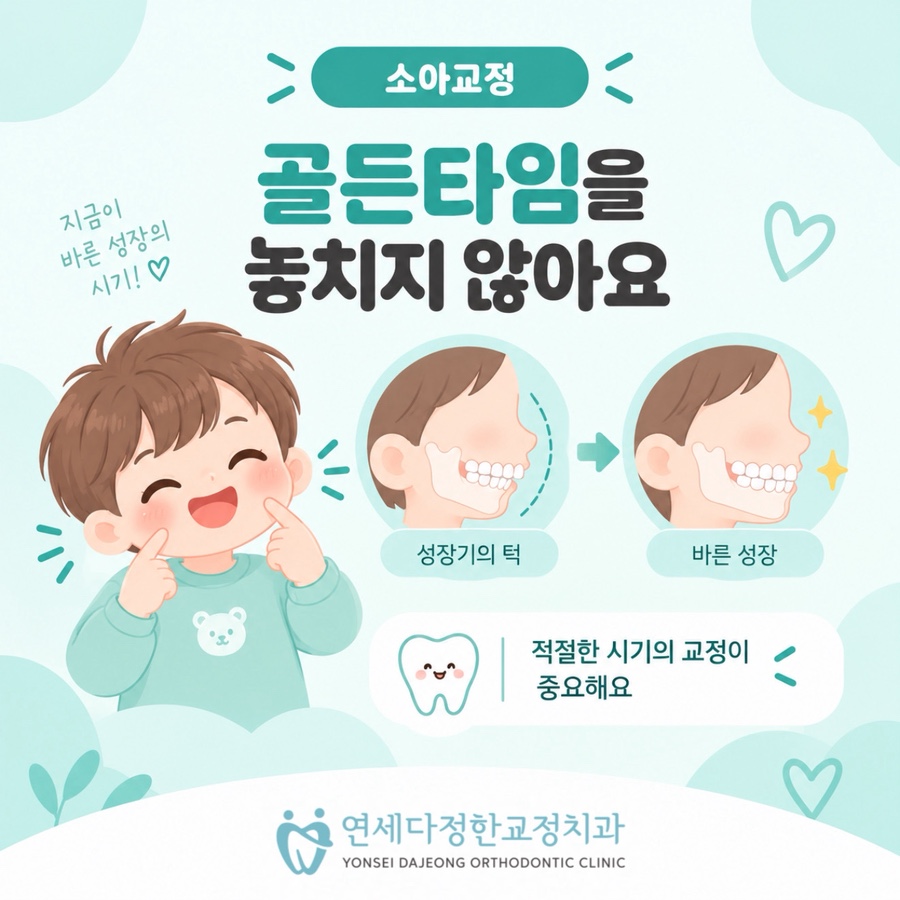
    Because a child’s jaw growth can sometimes be guided to correct skeletal imbalances without surgery, it’s important not to miss the right early orthodontic treatment timing — the golden window.
    Genetic factors and habits like thumb-sucking or mouth breathing are also major contributors that can interfere with normal growth.

    early orthodontic treatment timing illustration 6

    early orthodontic treatment timing illustration 7

    early orthodontic treatment timing illustration 8


    How Does Early Orthodontic Treatment Manage Jaw and Teeth Growth?

    Early orthodontic treatment is less about moving teeth with appliances and more like orthopedic treatment that guides the direction of jaw growth.

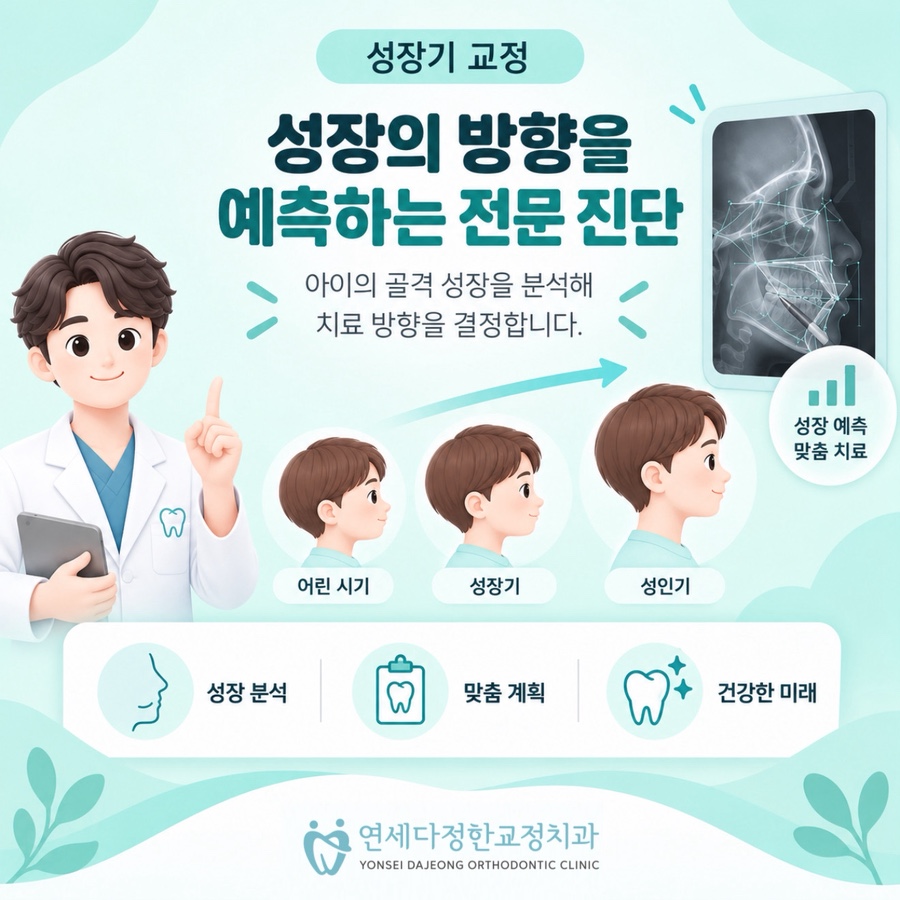
    Early (pediatric) orthodontic treatment refers to guiding or restraining jaw growth during the growth years to balance the upper and lower jaws while also correcting related muscle function.

    Here’s what this approach can help achieve:

    1. Creating space for permanent teeth to erupt correctly
    2. Guiding harmonious growth of the upper and lower jawbones
    3. Helping prevent malocclusion by correcting oral habits

    early orthodontic treatment timing illustration 9

    Category Growth-Stage (Pediatric) Orthodontics Adult Orthodontics
    Treatment Goal Guiding/restraining jaw growth Focused on aligning teeth
    Main Methods Orthopedic appliances, growth-guidance appliances Brackets, clear aligners, etc.
    Possible Benefit May reduce the likelihood of extraction or surgery Proceeds based on an already-formed skeletal structure

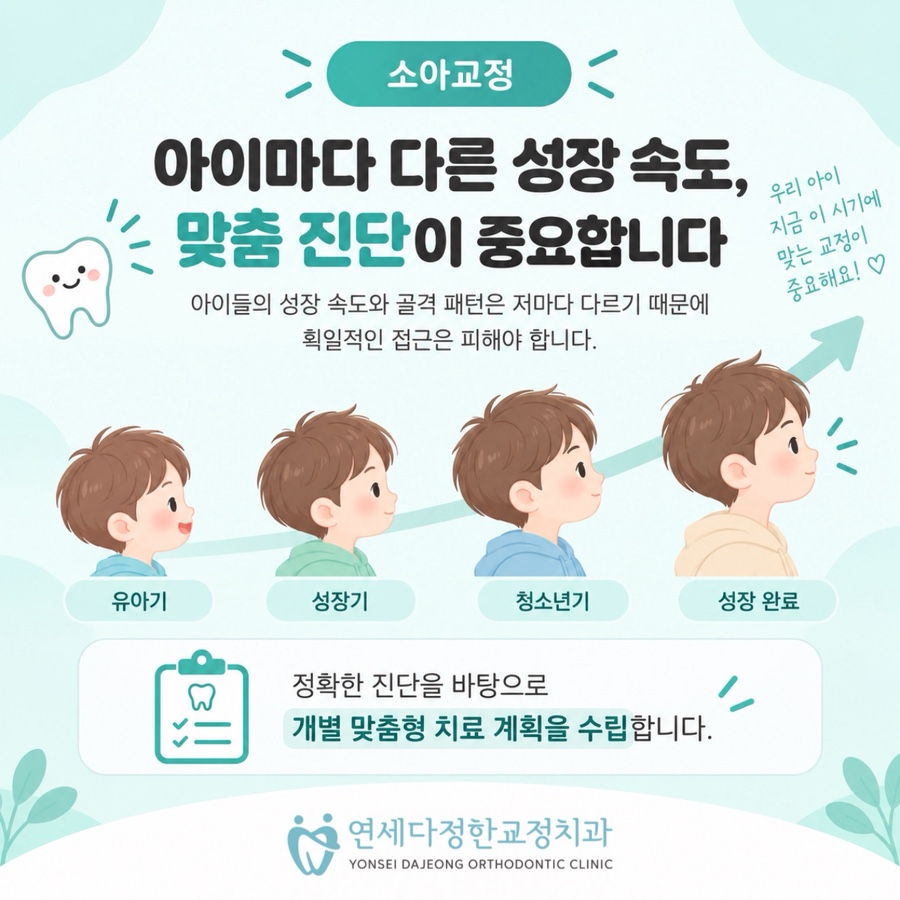
    Because every child’s growth rate and skeletal pattern differs,
    a one-size-fits-all approach should be avoided.

    Building an individualized treatment plan based on an accurate diagnosis is what matters most.

    early orthodontic treatment timing illustration 10

    early orthodontic treatment timing illustration 11


    Why Should Early Orthodontic Treatment Be Done by a Board-Certified Orthodontist?

    A board-certified orthodontist is a dentist who completed one year of internship and three years of residency training exclusively in orthodontics at an institution recognized by Korea’s Ministry of Health and Welfare, and who has passed the national specialist licensing exam.

    Growth-stage orthodontic care is a complex discipline that must consider not only a child’s current tooth alignment but also how the facial bones will develop into adulthood.

    That’s why it demands the ability to anticipate skeletal growth patterns and judge long-term prognosis.

    early orthodontic treatment timing illustration 12

    early orthodontic treatment timing illustration 13

    Checklist: What to Consider When Choosing a Provider
    ✅ Confirm the provider holds a Ministry of Health and Welfare–certified orthodontic specialist qualification
    ✅ Look for experience across a range of growth-stage cases and a precise diagnostic system
    ✅ Confirm they offer systematic, long-term prognosis management

    You can also verify specialist credentials on the Korean Association of Orthodontists (KAO) website.

    This expertise may help reduce variables that can arise during treatment and support overall safety.
    If you’re considering early orthodontic treatment in the Cheongnyangni area, visit the Cheongnyangni Yonsei Dajeonghan Orthodontics homepage to check whether care is provided by a board-certified orthodontist.

    early orthodontic treatment timing illustration 14

    early orthodontic treatment timing illustration 15


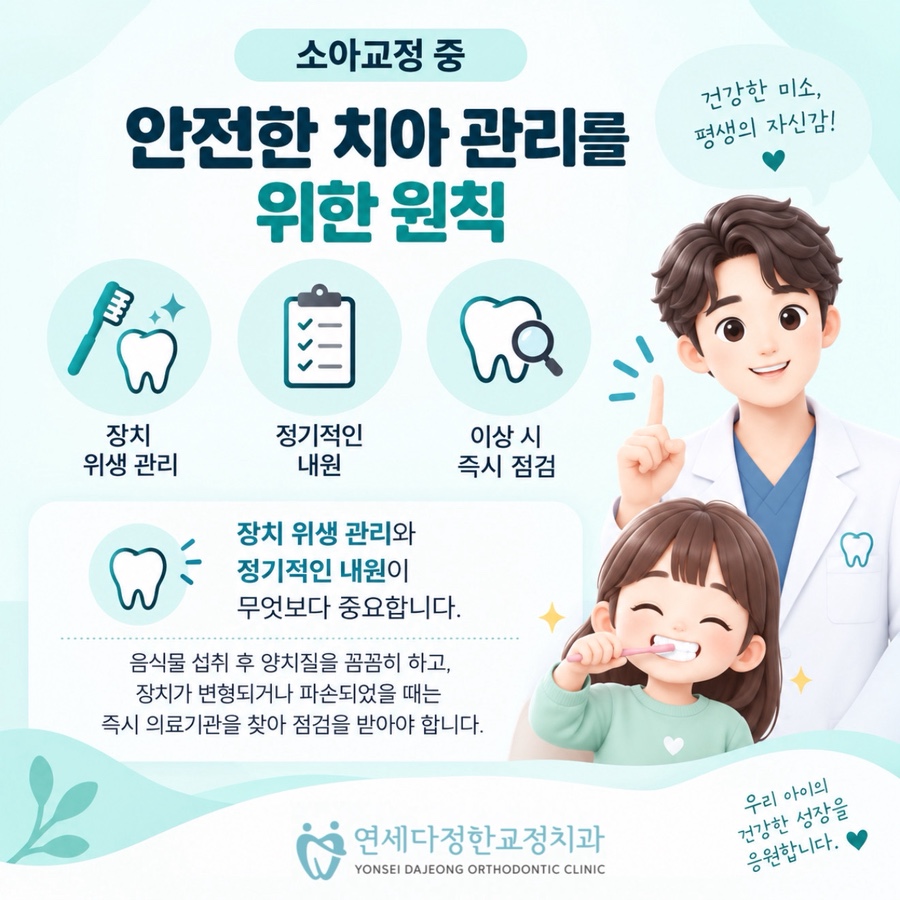
    How Do You Safely Care for Pediatric Orthodontic Appliances?

    During early orthodontic treatment, appliance hygiene and regular follow-up visits matter most.

    Neglecting to brush after meals can make cavities and gum disease more likely, so attentive guidance from parents or guardians is essential.

    Caution
    If an appliance becomes bent or damaged, do not try to adjust it yourself — see your dental provider right away for an inspection.

    early orthodontic treatment timing illustration 16

    Ongoing Care
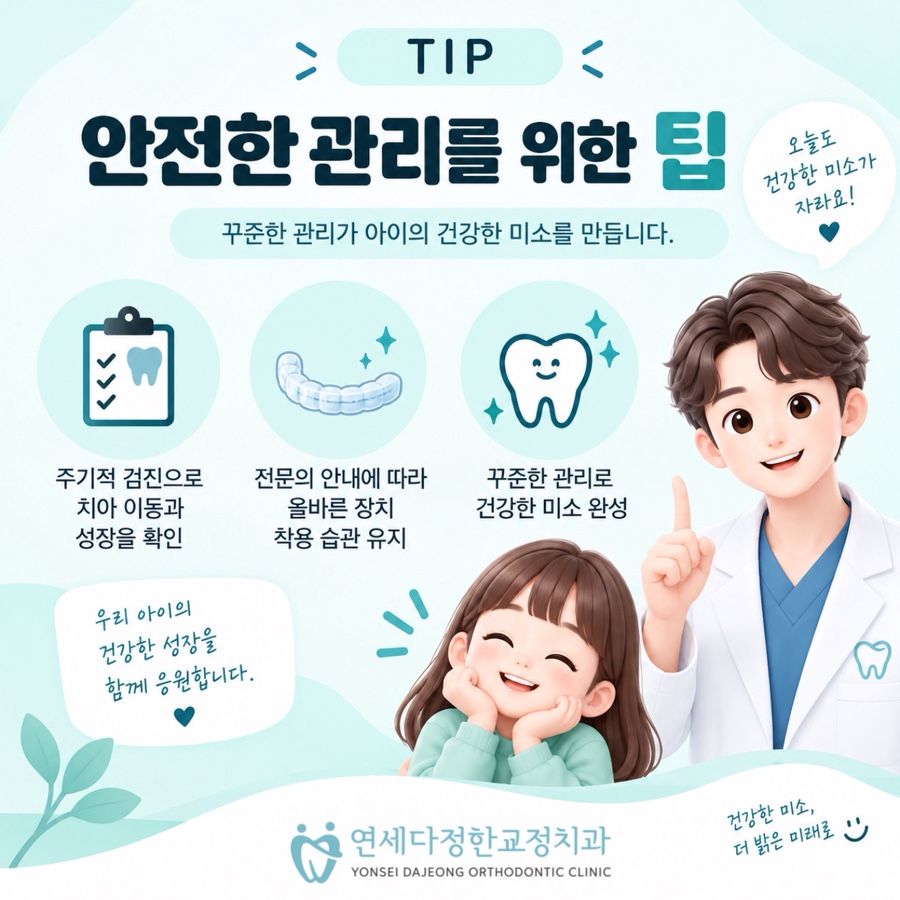
    Regular checkups to track tooth movement and jaw growth, combined with following your orthodontist’s guidance on appliance wear, can support consistent care and systematic progress monitoring.

    early orthodontic treatment timing illustration 17


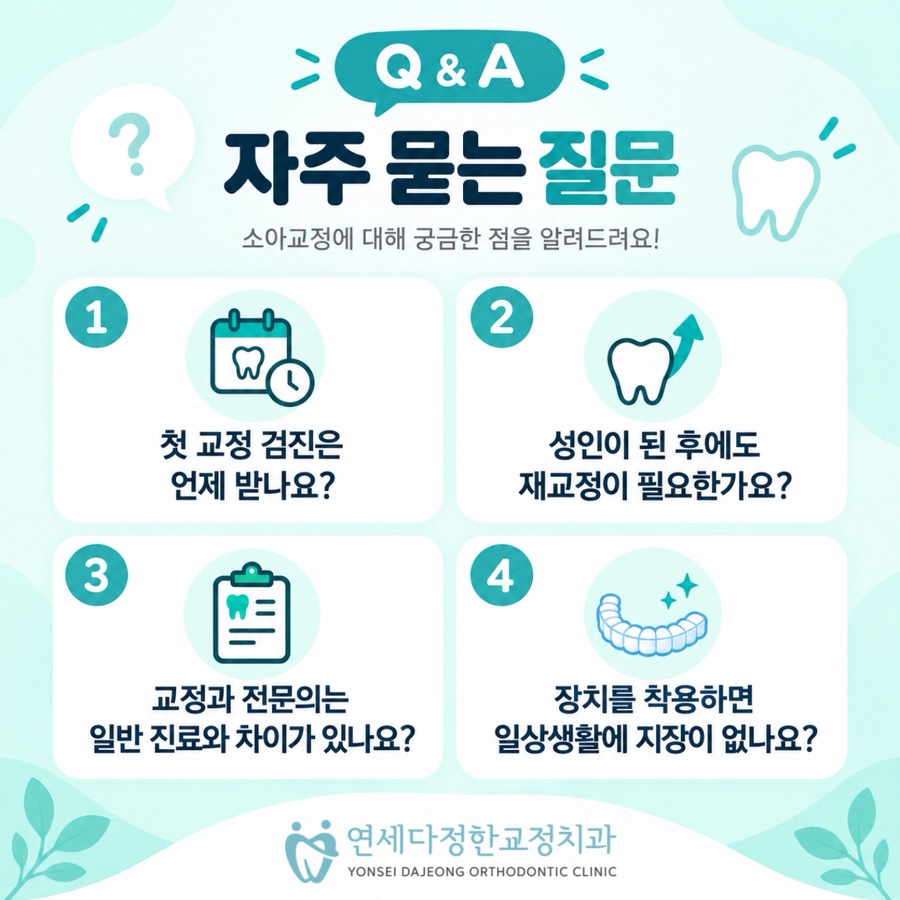
    Frequently Asked Questions

    1. When should my child have their first orthodontic checkup?
    It’s recommended to have a first checkup around age 6 to 7, when permanent teeth begin coming in, to assess skeletal development.

    2. If my child gets early orthodontic treatment, will they avoid needing treatment again as an adult?
    Correcting skeletal imbalances early, during the growth years, may help reduce the difficulty of future adult orthodontic treatment and the likelihood of extraction — though it does not guarantee that no further treatment will be needed.

    3. How is a board-certified orthodontist’s care different from general dental care?
    Board-certified orthodontists draw on specialized knowledge of jawbone tendencies and overall facial skeletal harmony, not just tooth alignment, to build a precise treatment plan.

    4. Will wearing an appliance get in the way of daily life?
    There may be some initial discomfort or a sense of foreign material in the mouth, but children often adjust within a few days and return to their normal routine.

    early orthodontic treatment timing illustration 18


    References

    · American Association of Orthodontists, “Monitoring Jaw Growth: Why the AAO Recommends an Age 7 Checkup,” AAO, 2023. View source
    · Korean Association of Orthodontists, “Find a Society Member and Board-Certified Orthodontist,” Korean Association of Orthodontists (KAO). View source

    early orthodontic treatment timing illustration 19


    This article is intended for general health information purposes only and is not a substitute for individual diagnosis or treatment.
    If your child has symptoms, please consult a specialist.
  • Pediatric Dentist in Seoul: 3 Tips to Choose the Right Clinic

    Pediatric Dentist in Seoul: 3 Tips to Choose the Right Clinic

    SummaryHere’s why care from a board-certified pediatric dentist matters when choosing a pediatric dentist in Seoul, along with selection checkpoints, baby tooth care, and permanent tooth eruption timing — all in one place. You’ll also find approaches that help ease dental anxiety in kids.

    Have you ever broken into a sweat because your child bursts into tears the moment you reach the dental office door?
    In reality, this reaction usually isn’t about your child’s personality —
    it’s often shaped by the clinic environment and approach.

    Dental fear experienced in childhood
    may carry over into adulthood.

    This article explains why care from a board-certified pediatric dentist matters when choosing a pediatric dentist in Seoul,
    along with what makes pediatric care unique and key checkpoints for your decision.

    You’ll also find the core principles of managing a growing child’s oral health — from baby tooth care to making room for permanent teeth.

    pediatric dentist in Seoul

    pediatric dentist in Seoul - image 2

    pediatric dentist in Seoul - image 3

    pediatric dentist in Seoul - image 4

    pediatric dentist in Seoul - image 5

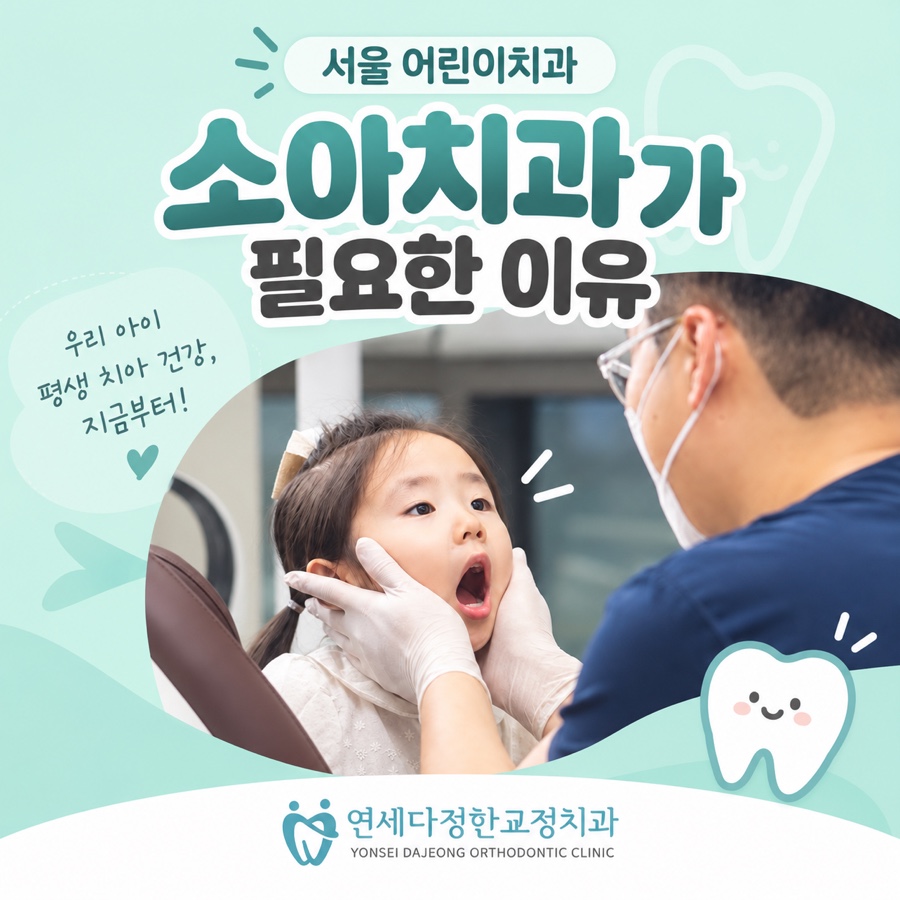
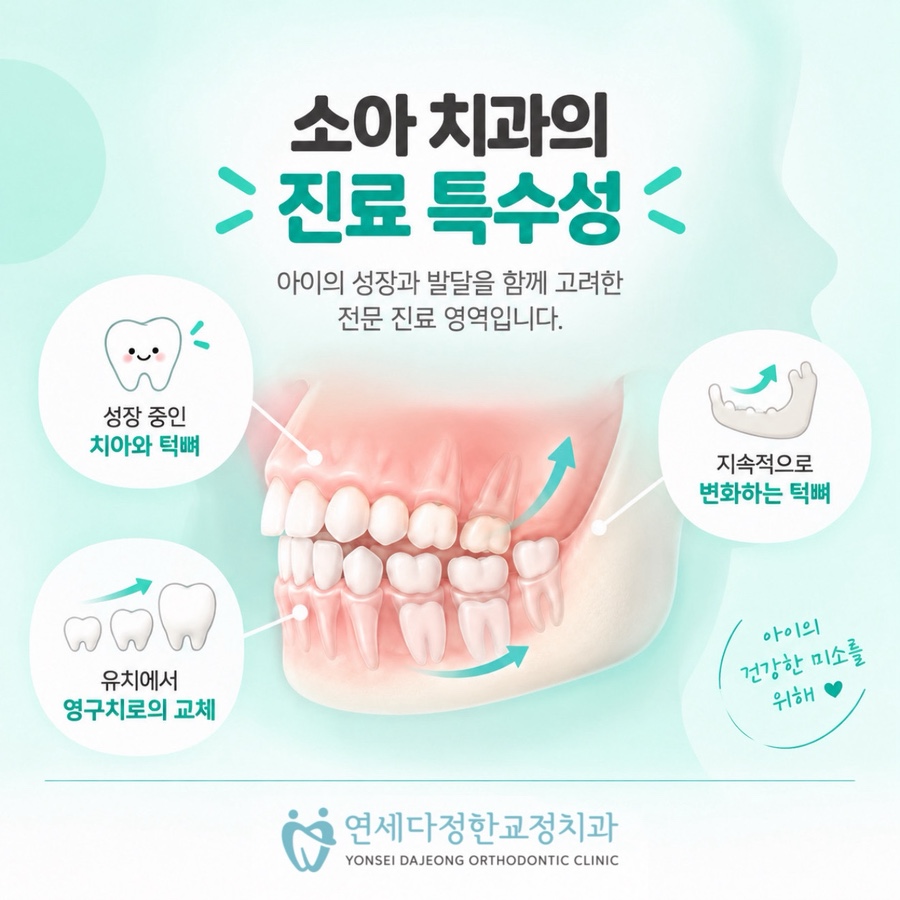
    What Makes Pediatric Dentistry Different From General Dentistry?

    In short, pediatric dentistry goes beyond treating cavities —
    it’s a specialized field that also monitors jawbone growth and tooth development.

    Pediatric dentistry is the branch of dental care that comprehensively manages tooth and jawbone development at each stage of a child’s growth.

    Baby teeth have thinner enamel and nerves that sit closer to the surface than adult teeth,
    so cavities can progress very quickly once they start.

    On top of that, young children often can’t clearly describe
    where it hurts or what feels uncomfortable.

    That’s why attentive care that catches even small changes is essential.

    Key Point
    A growing child’s tooth alignment and jaw development can influence facial structure and chewing function later on, so it’s best to pair early treatment with careful, thorough diagnosis from the start.

    pediatric dentist in Seoul - image 6

    pediatric dentist in Seoul - image 7

    pediatric dentist in Seoul - image 8

    pediatric dentist in Seoul - image 9


    Why Is a Board-Certified Pediatric Dentist Essential?

    In short, a board-certified pediatric dentist is essential because they’ve completed specialized training in children’s behavior and development.

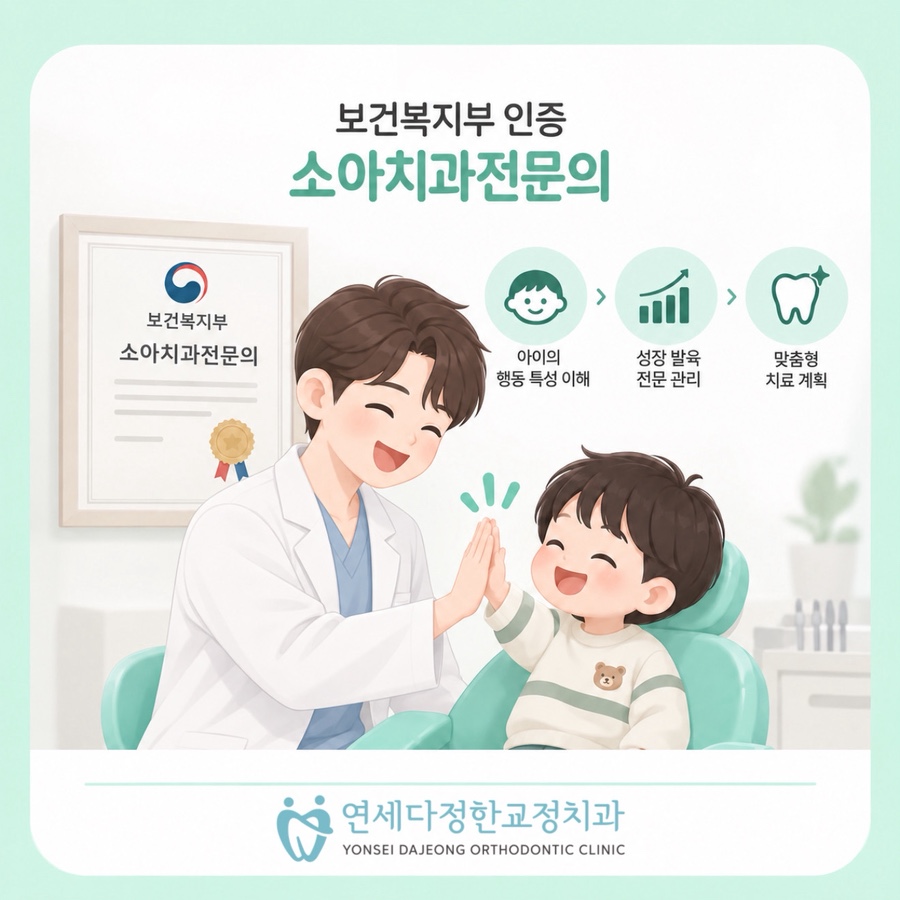
    A board-certified pediatric dentist is a dentist who has completed a specialty training program recognized by South Korea’s Ministry of Health and Welfare, with an in-depth understanding of children’s psychology and developmental characteristics.

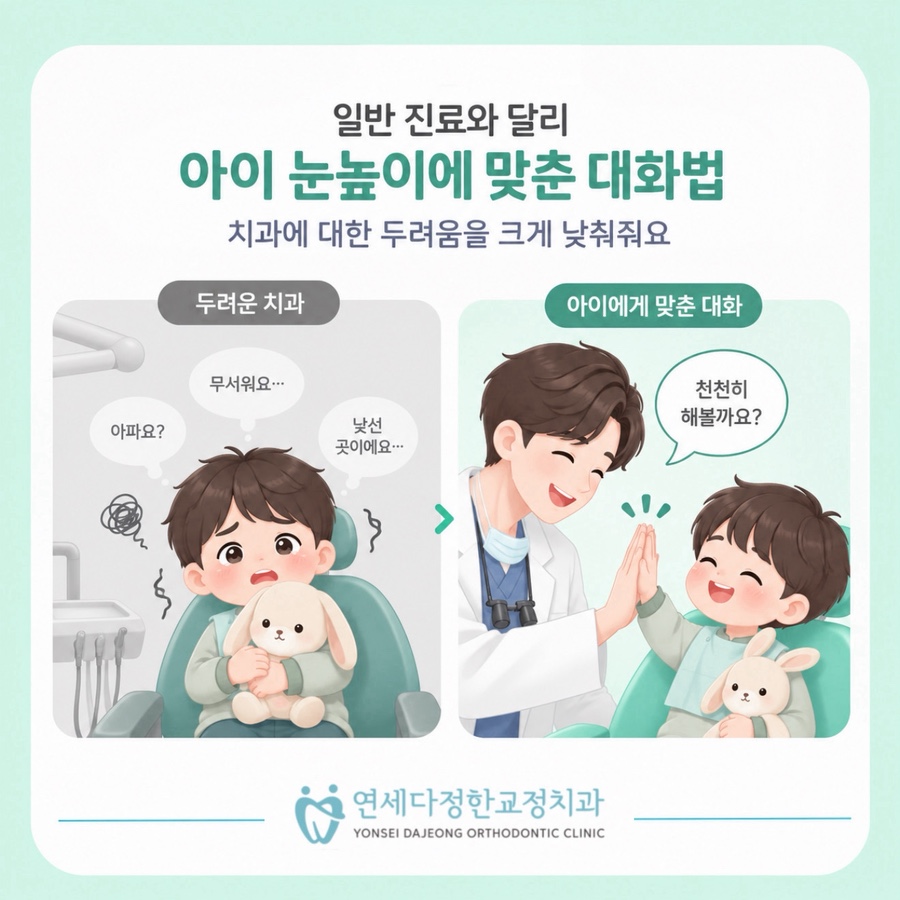
    Unlike general dental visits, communicating at a child’s level
    can help reduce fear of the dentist.

    Pushing treatment on a child who is severely afraid
    may leave dental trauma that lasts into adulthood.

    Category General Dentist Board-Certified Pediatric Dentist
    Patient age range All ages Focused on infants through teens
    Behavior management Limited Systematic behavior-management expertise
    Growth assessment Focused on cavities Comprehensive care including jaw and bite development

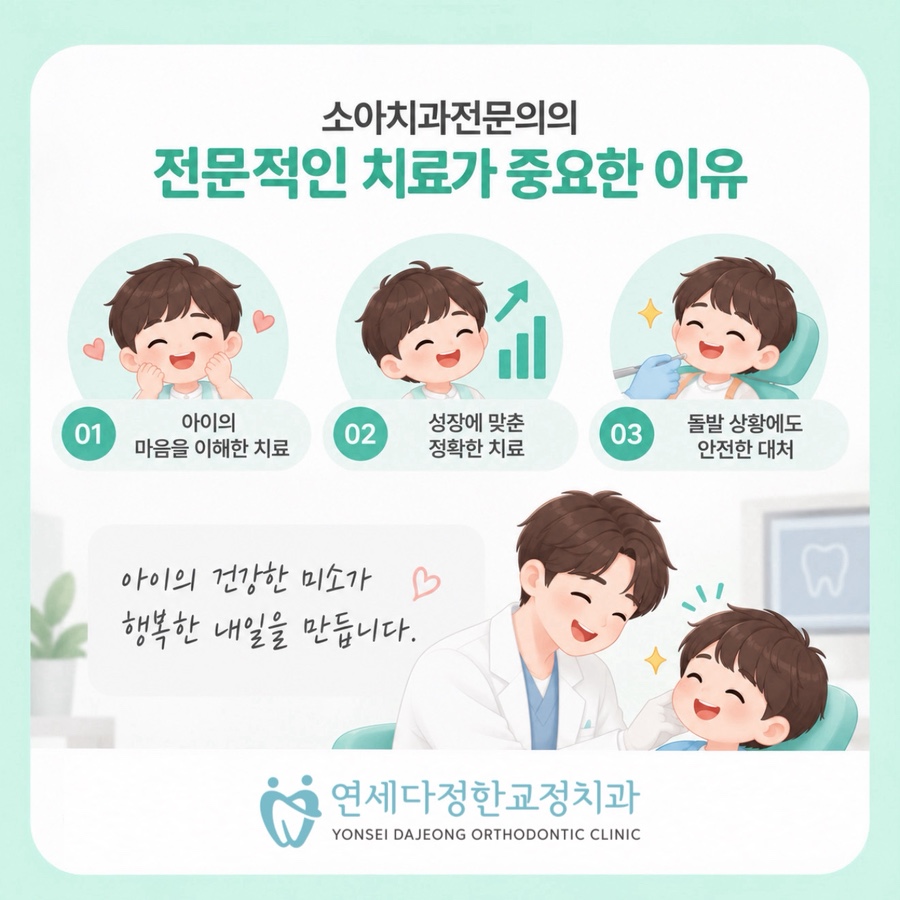
    Key competencies of a board-certified pediatric dentist include:

    1. Behavior-management techniques that consider a child’s emotional state
    2. Precise preventive care tailored to age-specific skeletal growth
    3. Clinical experience handling unexpected situations during treatment

    This kind of specialized approach can help ease stress
    not only for the child, but for parents as well.

    pediatric dentist in Seoul - image 10

    pediatric dentist in Seoul - image 11

    pediatric dentist in Seoul - image 12

    pediatric dentist in Seoul - image 13


    What Should You Check When Choosing a Pediatric Dentist in Seoul?

    The key is to look at the clinic’s environment and systems before considering distance.

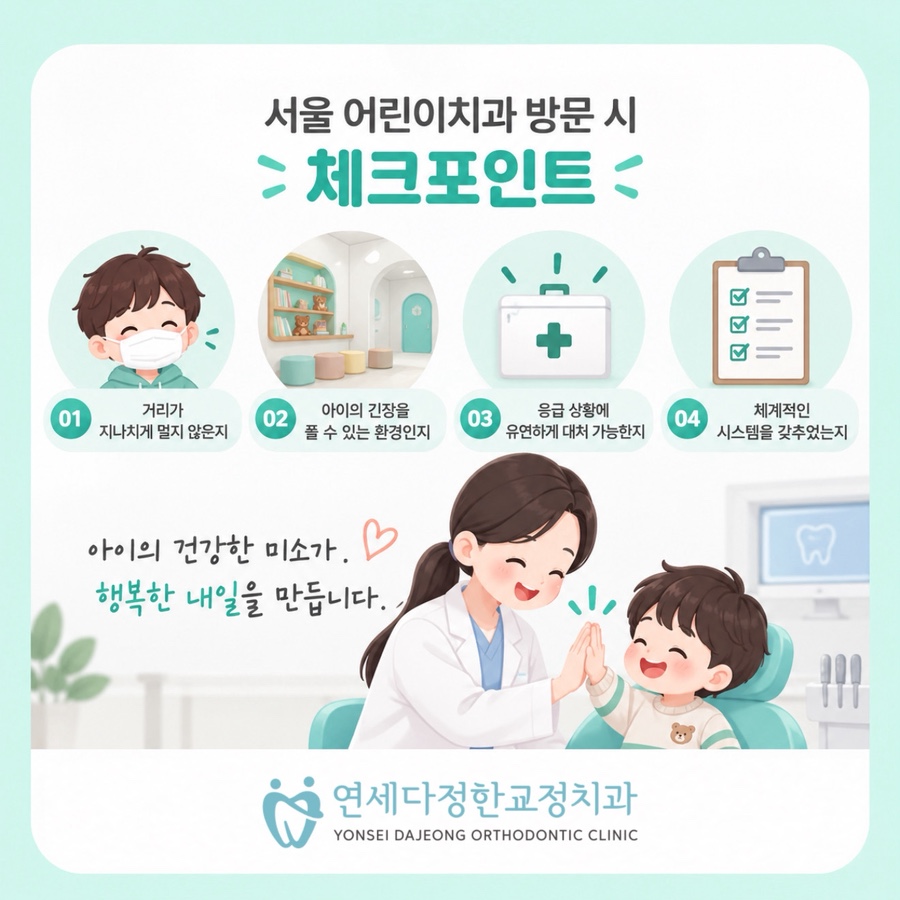
    The criteria for choosing a pediatric dentist in Seoul come down to three things: whether a board-certified specialist is on staff, a child-friendly environment, and an objective treatment plan.

    It’s worth checking whether the clinic has a welcoming interior and a dedicated waiting area to help ease a child’s nerves,
    as well as a system in place to respond flexibly to emergencies.

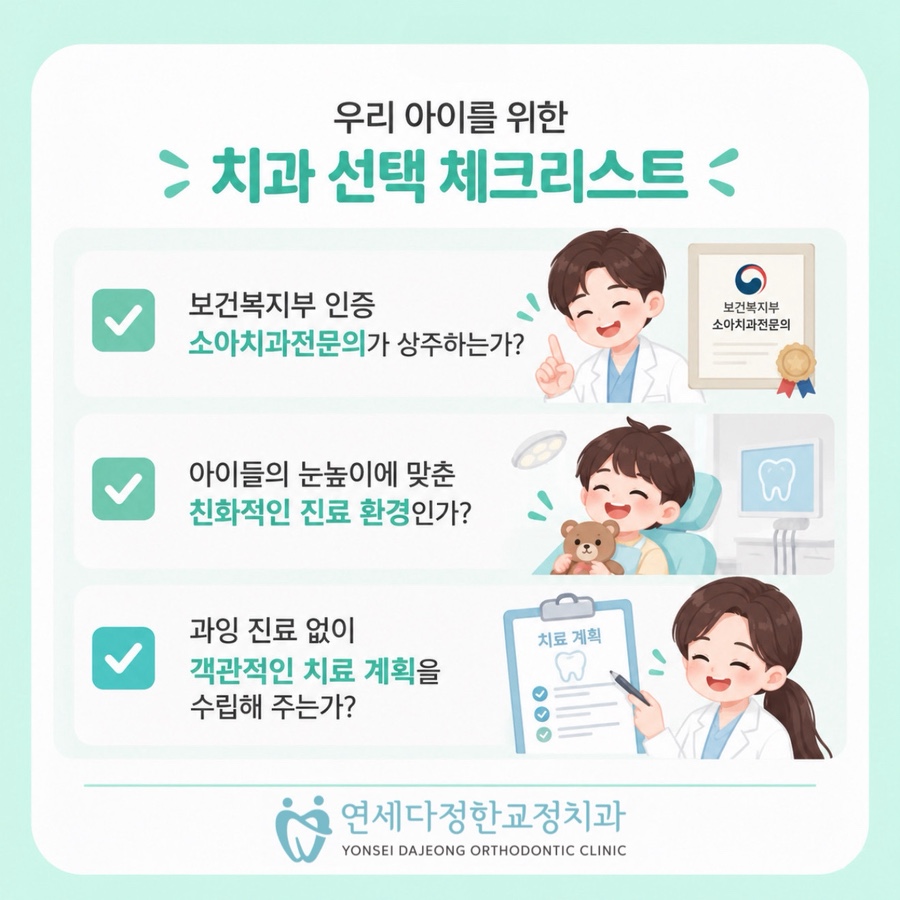
    Checklist
    ✅ Is a Ministry of Health and Welfare-certified pediatric dentist on staff?
    ✅ Is the treatment environment friendly and geared toward a child’s comfort?
    ✅ Does the clinic offer an objective treatment plan without overtreatment?

    Establishing a trusted pediatric dentist in Seoul as your child’s regular dental home
    can make it easier to track tooth development consistently as they grow.

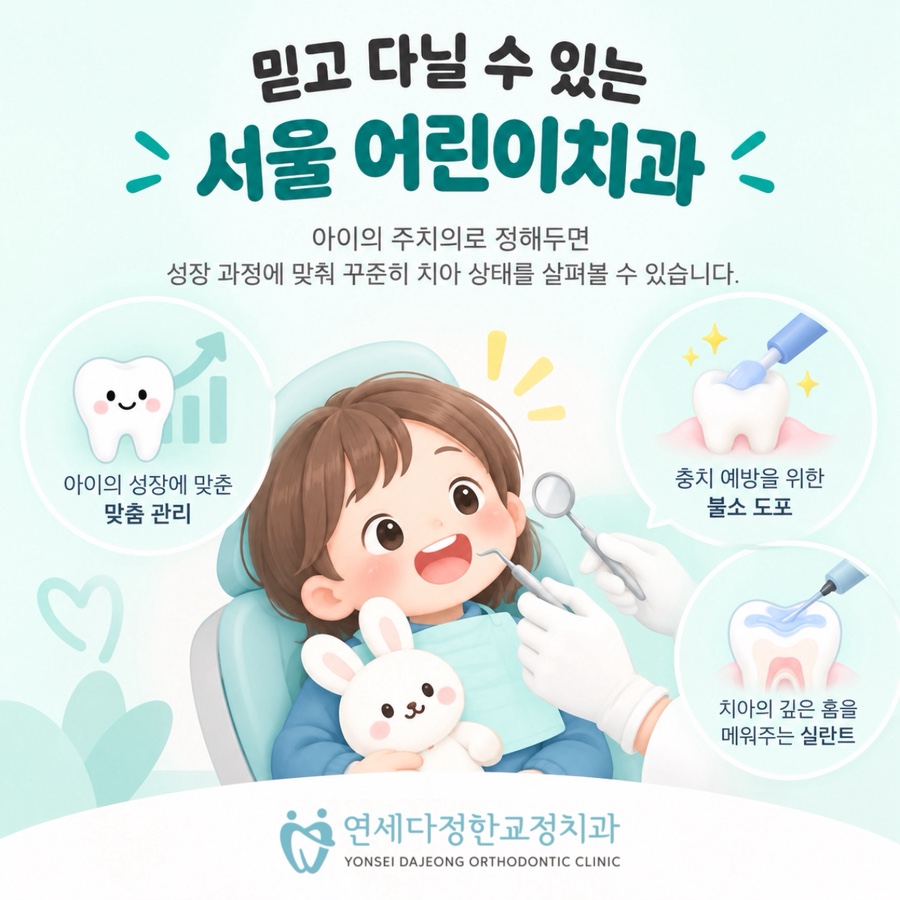
    Preventive measures such as fluoride treatment
    and sealants to protect the grooves of the teeth
    should also be applied based on each child’s individual needs.

    What You Can Expect
    Keeping up with regular specialist visits can help with early cavity detection and preventive care that preserves space for incoming permanent teeth.

    pediatric dentist in Seoul - image 14

    pediatric dentist in Seoul - image 15

    pediatric dentist in Seoul - image 16


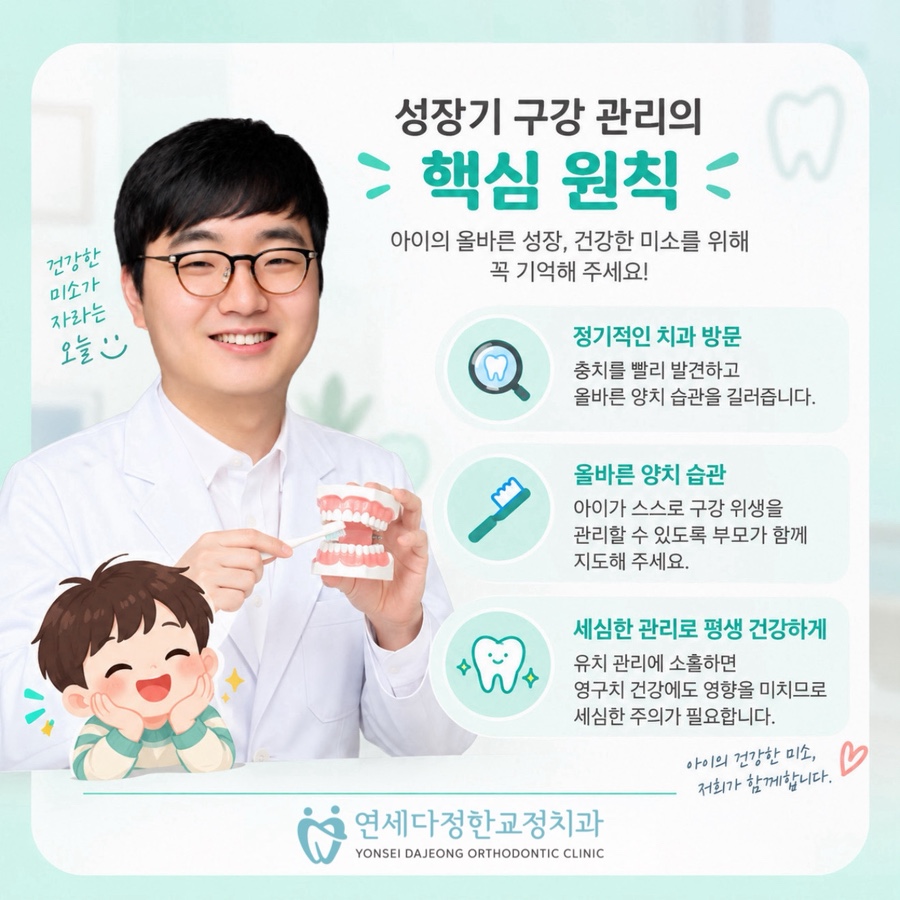
    How Should You Manage Oral Care for a Growing Child?

    The conclusion is simple: combine regular checkups with good brushing habits.

    Oral care during childhood growth means prevention-focused management that combines early cavity detection with healthy habit-building.

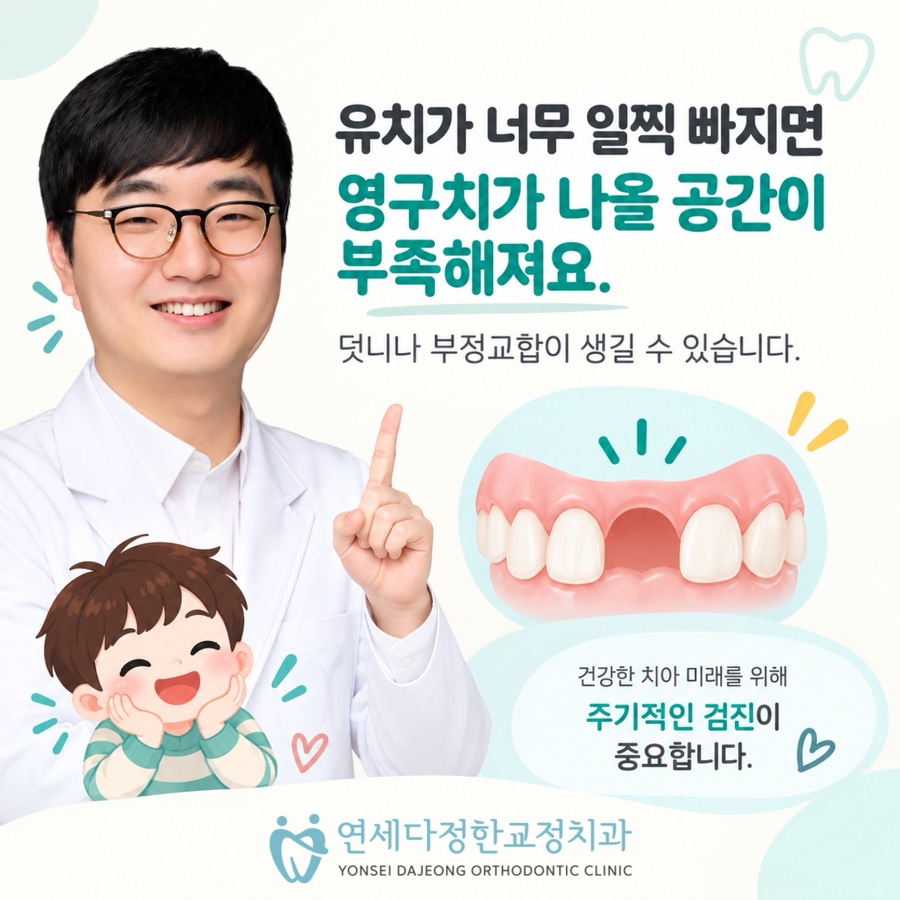
    If a baby tooth falls out too early, there may not be enough room left for the permanent tooth,
    which raises the likelihood of crowding or malocclusion.

    To help prevent this,
    it’s advisable to schedule regular checkups
    at a pediatric dentist in Seoul.

    Parents should also learn how to guide their child
    toward managing their own oral hygiene.

    Neglecting baby tooth care can end up affecting the health of permanent teeth as well,
    so careful attention matters.

    Important Note
    Even without pain, it’s a good idea to see a specialist for a checkup every 3 to 6 months to monitor oral development.

    Protecting your child’s healthy smile ultimately starts
    with choosing the right dental clinic
    for their needs.

    If you’d like more information on orthodontic treatment,
    you can learn more at the Cheongnyangni Yonsei Dajeonghan Orthodontic Clinic homepage.

    pediatric dentist in Seoul - image 17

    pediatric dentist in Seoul - image 18


    Frequently Asked Questions

    1. When should my child have their first dental visit?
    It’s recommended to schedule a first checkup when the first tooth starts to erupt, or between 6 and 12 months of age.

    2. Are regular checkups necessary even without cavities?
    Yes. Regular checkups are essential for confirming that the jawbone is developing properly and that there’s enough space for permanent teeth to come in.

    3. How is specialist care different from general dental care?
    A pediatric dentist has an in-depth understanding of a child’s physical and psychological needs and works to provide gentle, safe care that helps reduce fear.

    4. What should I do if my child has severe dental anxiety?
    Rather than restraining the child, it can help to find a pediatric dentist in Seoul with a well-developed behavior-management program that gently and gradually helps them adjust to the treatment environment.

    5. Are sealants and fluoride treatment mandatory?
    They’re not required for every child, but for tooth grooves at higher risk of cavities, they’re often applied preventively after a consultation with a specialist.

    pediatric dentist in Seoul - image 19


    References

    · Korean Academy of Pediatric Dentistry, “Introduction to Pediatric Dentistry and First Visit Guide,” Korean Academy of Pediatric Dentistry. View source
    · Health Kyunghyang, “How Can Permanent Teeth Come In Properly? Baby Tooth Care Is Key,” Health Kyunghyang. View source
    · MSD Manual Consumer Version, “Malocclusion,” Merck & Co. View source

    pediatric dentist in Seoul - image 20

    This article is intended for general health information purposes only and is not a substitute for individual diagnosis or treatment.
    If you have symptoms, please consult a specialist.

  • Kids Orthodontic Appliance Cleaner: 3 Tips to Protect PreOrtho Effectiveness

    Kids Orthodontic Appliance Cleaner: 3 Tips to Protect PreOrtho Effectiveness

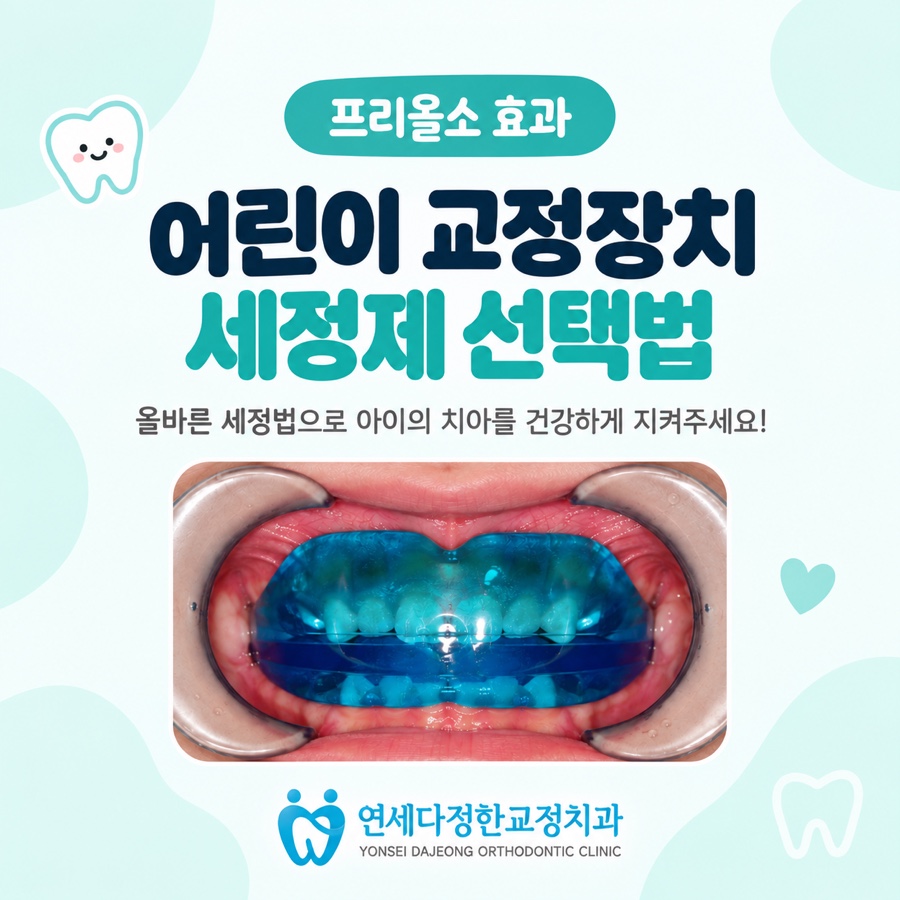
    SummaryChoosing the right kids orthodontic appliance cleaner is key to preserving PreOrtho effectiveness. This guide covers hygienic ways to care for kids’ silicone orthodontic appliances without toothpaste, precautions for use during the growth phase, and a handy checklist — routines even first-time parents can follow right away.

    Have you ever noticed a silicone orthodontic appliance turn cloudy after cleaning it with toothpaste?
    That’s because the abrasive particles in toothpaste leave tiny, invisible scratches on the surface — and bacteria multiply easily in those grooves.

    The PreOrtho effect, used to support oral myofunctional development in growing children, depends as much on proper cleaning habits as on the appliance itself.
    Let’s go over how to choose the right cleaner and care for the appliance correctly.

    PreOrtho effect

    This article covers the PreOrtho effect and how it works, how to choose the right cleaner for a silicone appliance, and what to watch for when a growing child wears it.
    Choosing the right cleaner can make a big difference in the appliance’s lifespan and hygiene, so we recommend reading through to the end.

    PreOrtho effect illustration 2

    What Kind of Kids’ Orthodontic Appliance Is PreOrtho?

    PreOrtho effect illustration 3

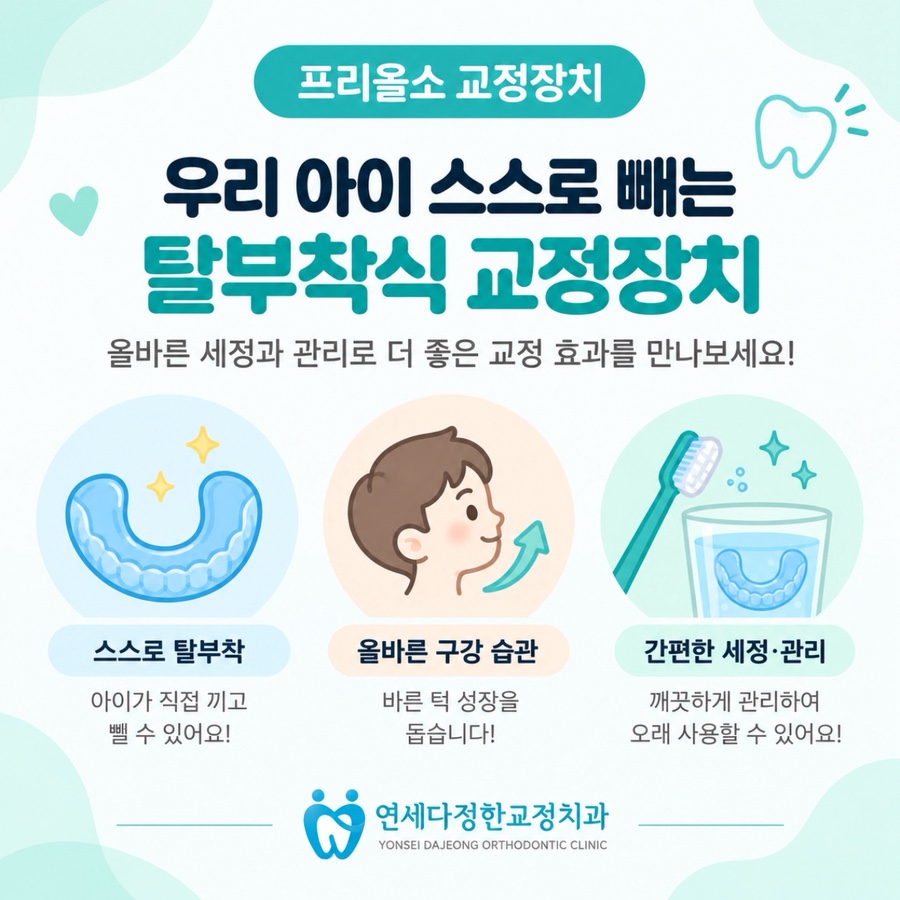
    PreOrtho isn’t a device that forces teeth into position — it’s a functional appliance designed to help balance the muscles inside the mouth.

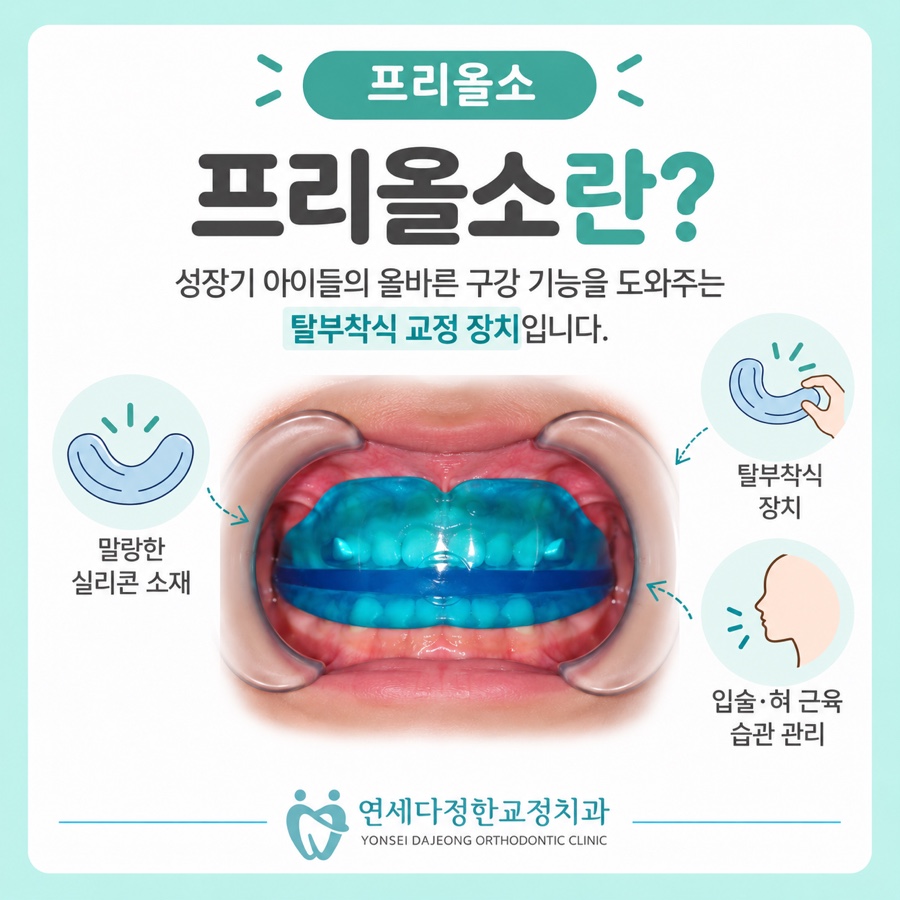
    PreOrtho is a removable silicone appliance that supports oral myofunctional development in growing children and can help teeth find their proper position.
    Because it’s made of soft silicone, it causes little discomfort, and children can insert and remove it themselves as part of their daily routine.

    By helping correct poor tongue and lip muscle habits, it can contribute to creating the space the jawbone and teeth need to grow naturally.

    PreOrtho effect illustration 4

    Key Point
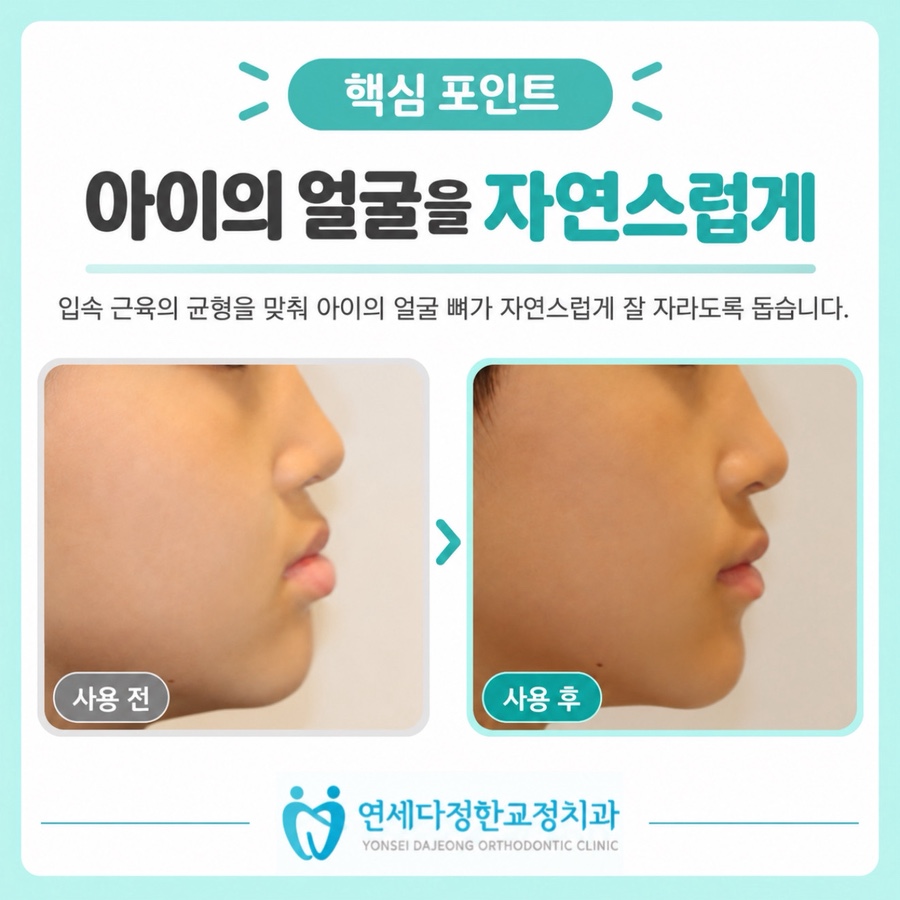
    Rather than pushing teeth directly, PreOrtho is a functional appliance that helps a child’s facial bones grow naturally by balancing the muscles inside the mouth.

    PreOrtho effect illustration 5

    This approach makes use of a growing child’s natural jaw growth to help the facial bones and teeth develop in harmony.
    It may also help lower the likelihood of needing more complex orthodontic treatment later on.

    That’s why it’s important not to miss the window when a child’s bones are growing most actively, and to start at the right time.

    PreOrtho effect illustration 6

    PreOrtho effect illustration 7


    What PreOrtho Effects Can You Actually Expect?

    PreOrtho effect illustration 8

    The PreOrtho effect varies depending on how consistently a child wears the appliance and how well poor oral habits are corrected.

    It helps guide the tongue into its proper resting position and encourages nasal breathing instead of mouth breathing, which can help relax tension in the jaw joint and surrounding muscles.
    Through this, the following changes can be expected.

    PreOrtho effect illustration 9

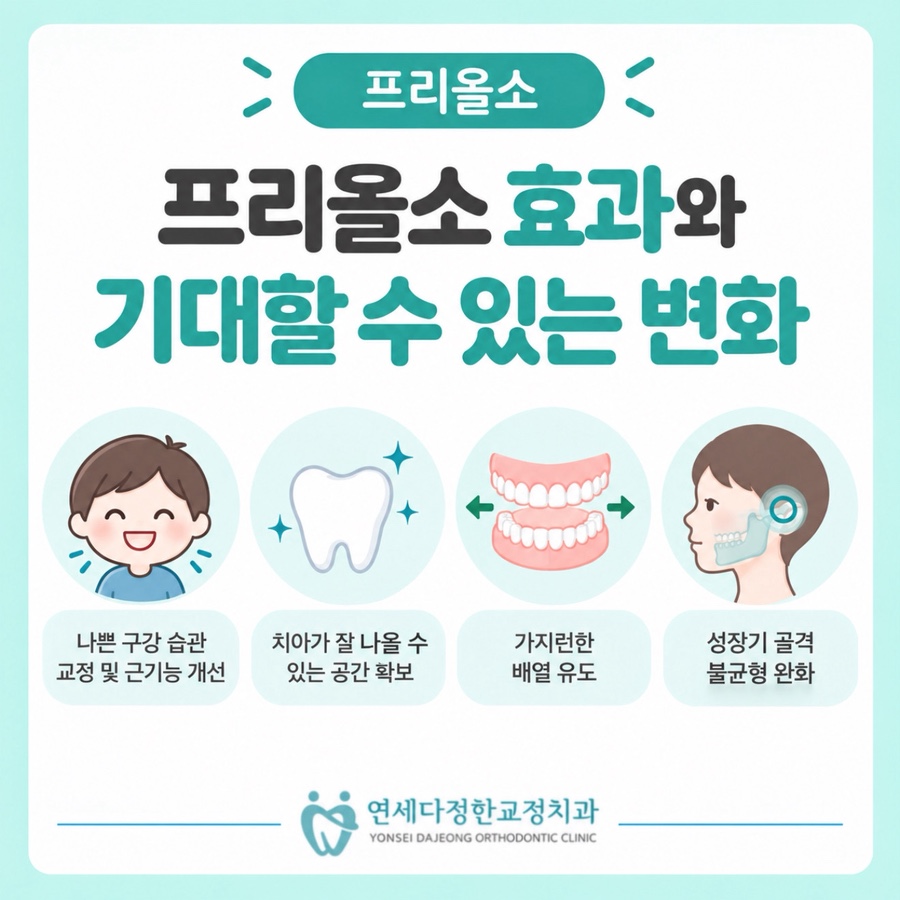
    • Correction of poor oral habits and improved muscle function
    • Creating space for teeth to erupt properly
    • Guiding teeth toward a more even alignment
    • Easing skeletal imbalance during the growth period

    PreOrtho effect illustration 10

    Expected Results
    Building a foundation for a healthy oral environment through consistent wear is an important part of the process.
    That said, results can vary somewhat depending on a child’s growth rate and dental condition.

    PreOrtho effect illustration 11


    How Should You Choose a Kids Orthodontic Appliance Cleaner?

    PreOrtho effect illustration 12

    Choosing the right cleaner is essential for keeping the appliance hygienic and usable for longer.
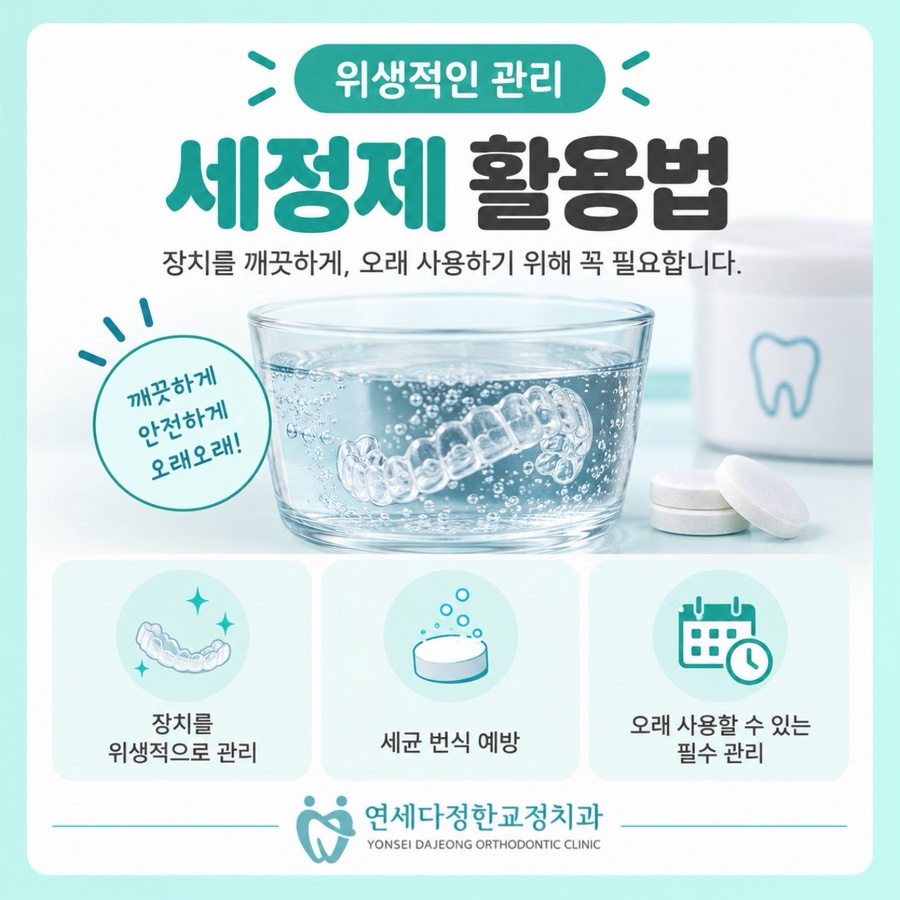
    A dedicated appliance cleaner is a product that cleans the silicone surface thoroughly without any abrasive ingredients.

    Because of the nature of silicone, cleaning it with regular toothpaste can leave invisible micro-scratches caused by the abrasive particles in the toothpaste.
    Bacteria can multiply easily within those scratches, so it’s safer to always use a cleaner made specifically for the appliance.

    Category Regular Toothpaste Dedicated Appliance Cleaner
    Abrasive ingredients Yes No
    Risk of surface scratches High Low
    Risk of bacterial growth Present Minimal

    PreOrtho effect illustration 13

    Checklist
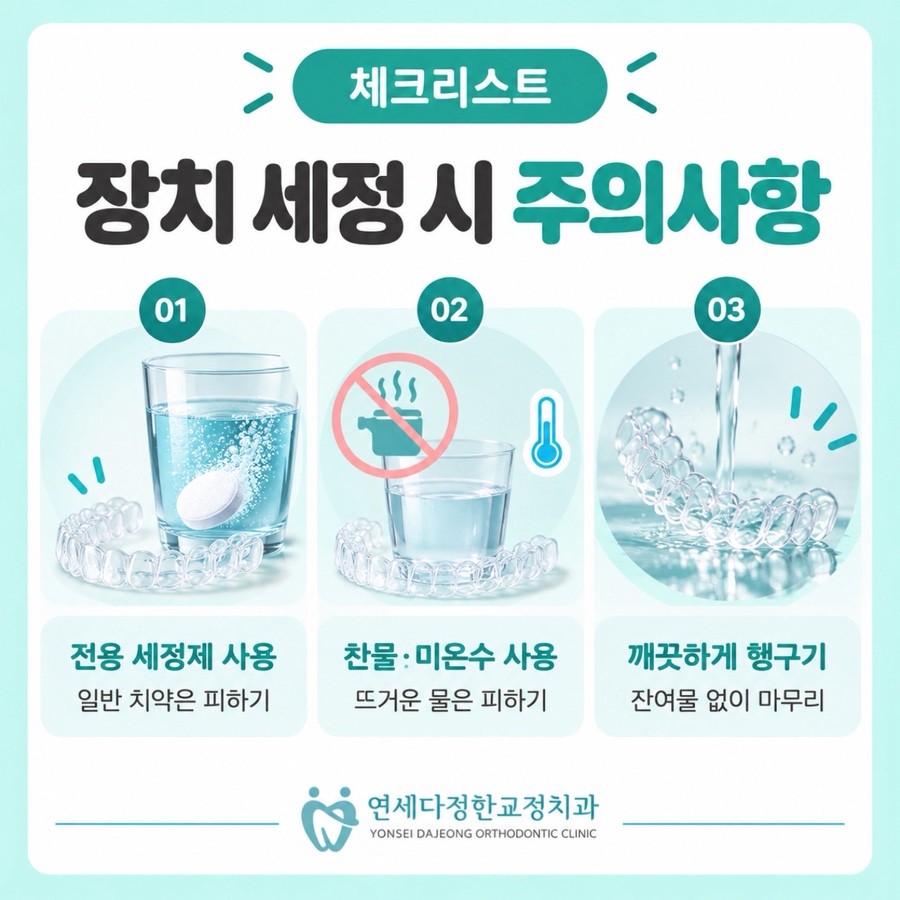
    ✅ Use a dedicated appliance cleaner instead of regular toothpaste
    ✅ Rinse with lukewarm or cold water instead of hot water
    ✅ Rinse thoroughly after cleaning so no residue remains
    ✅ Regularly check the appliance surface for warping or tears

    PreOrtho effect illustration 14

    Caution
    Silicone is sensitive to heat, so it can warp easily if left in hot water or inside a car during summer.
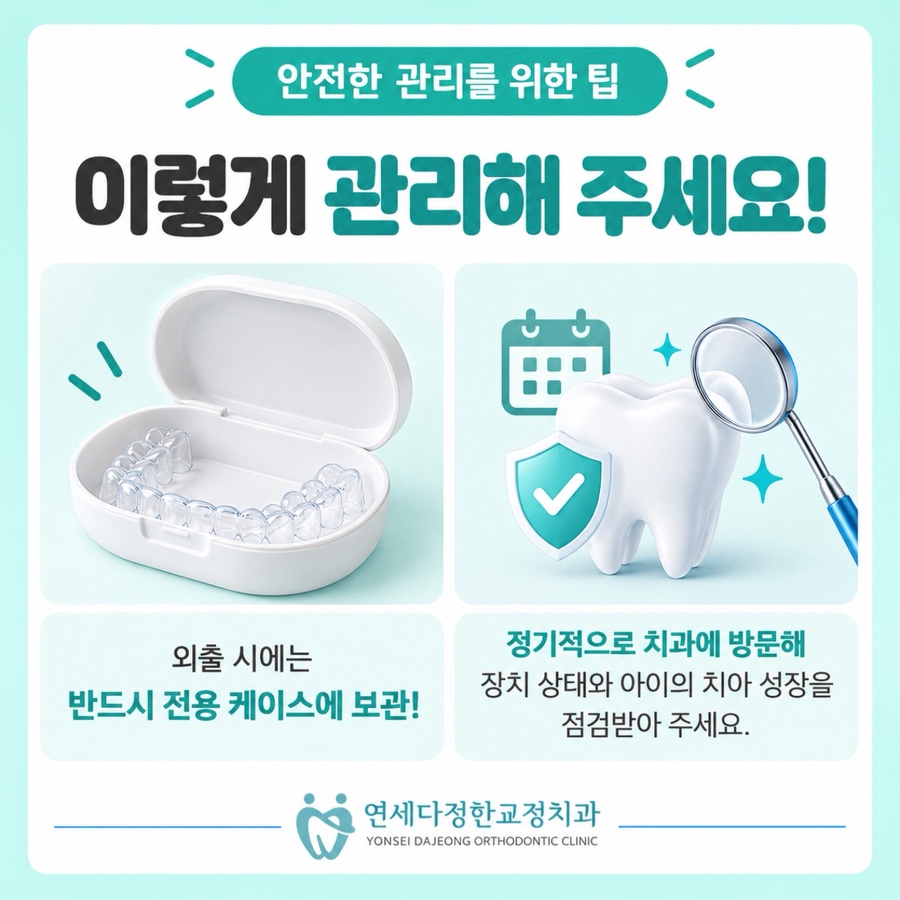
    After cleaning, always store the appliance in its dedicated case.

    What Should You Watch Out for When a Growing Child Uses the Appliance?

    PreOrtho effect illustration 15

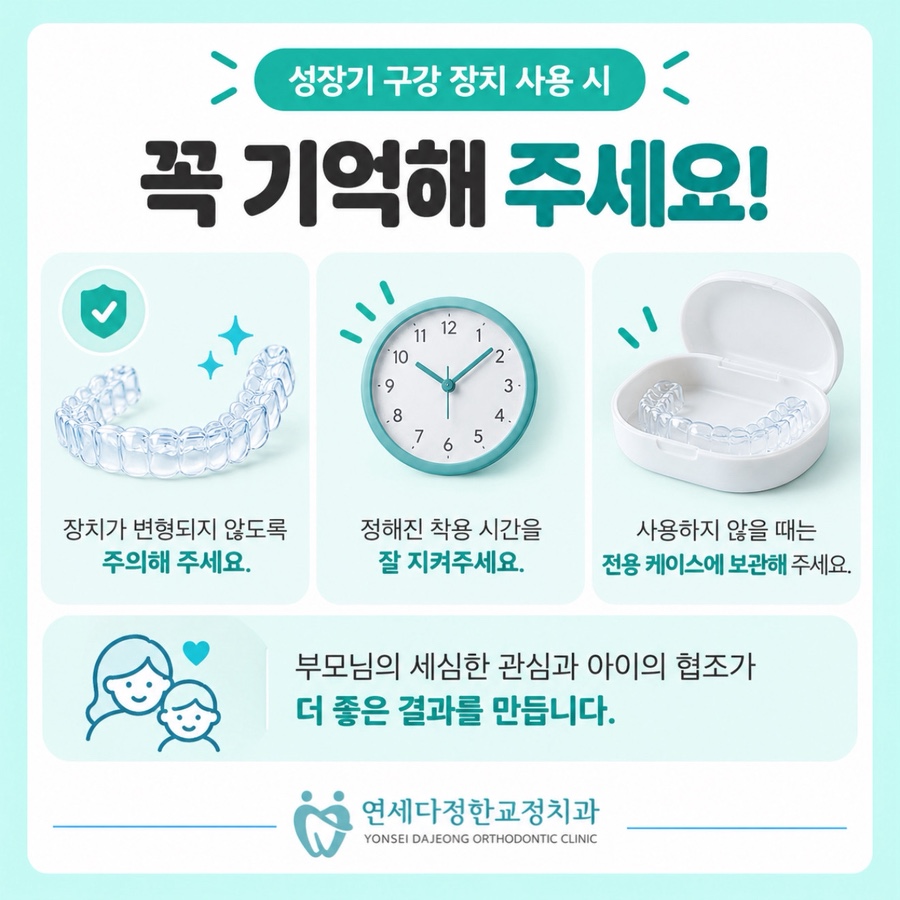
    To support the PreOrtho effect, it’s essential to keep the appliance from warping and to follow the recommended wear time.

    Because silicone is sensitive to heat, it can warp if left somewhere hot, so it’s important to build the habit of always storing it in its dedicated case.
    Good results are more likely when attentive parenting is combined with the child’s cooperation.

    It’s a good idea to visit the dentist regularly to have both the appliance and the child’s dental growth checked together.
    If you’d like a more detailed consultation, please visit the Yonsei Dajeonghan Orthodontics Cheongnyangni website.

    Tips for Safe Care
    When heading out, always keep the appliance in its dedicated case so it doesn’t get lost.
    Thorough hygiene care combined with proper wear habits together help build a healthy oral environment for your child.

    PreOrtho effect illustration 16


    Frequently Asked Questions

    PreOrtho effect illustration 17

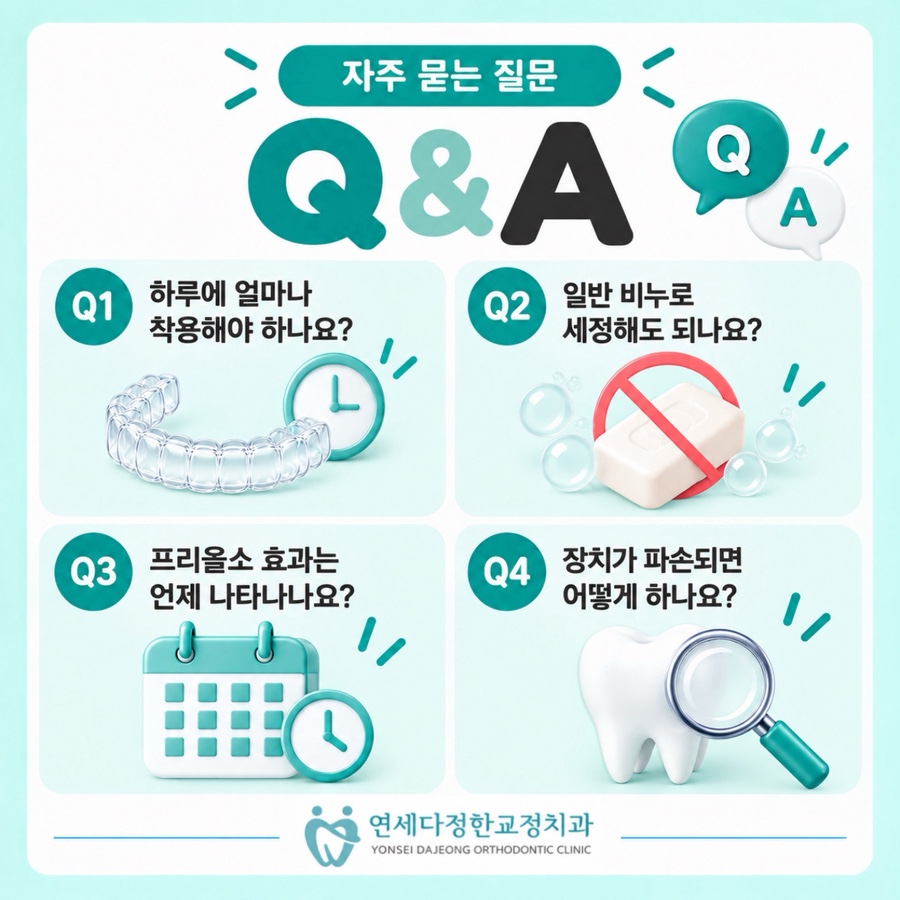
    1. How many hours a day should the appliance be worn?
    Typically, wear time combines nighttime sleep hours with periods after school, adding up to the recommended daily total.

    2. Can I use regular soap instead of a cleaner?
    Soaps with strong cleaning agents can leave residue in the mouth, so it’s best to use a kids orthodontic appliance cleaner made specifically for the appliance whenever possible.

    3. When does the PreOrtho effect start to show?
    This varies with a child’s growth rate and wear habits, but changes generally appear gradually after several months or more of consistent use.

    4. What should I do if the appliance breaks?
    Don’t try to adjust it yourself — be sure to visit the dental clinic for a checkup.

    5. Where can I buy a dedicated cleaner?
    Most are available through your dentist’s recommendation or at oral care product retailers.


    References

    · Asan Medical Center Children’s Hospital, \”Prevention of Oral Myofunctional Disorders,\” Pediatric Disease Information, Asan Medical Center. View source
    · \”Comparison of Maximum Tongue, Lip, and Cheek Pressure in Patients Undergoing Myofunctional Training and Appliance Therapy,\” Journal of the Korean Academy of Pediatric Dentistry, Korea Citation Index (KCI). View source

    PreOrtho effect illustration 18

    This article is intended for general health information purposes only and is not a substitute for individual diagnosis or treatment.
    If you have symptoms, please consult a specialist.